About this sheet
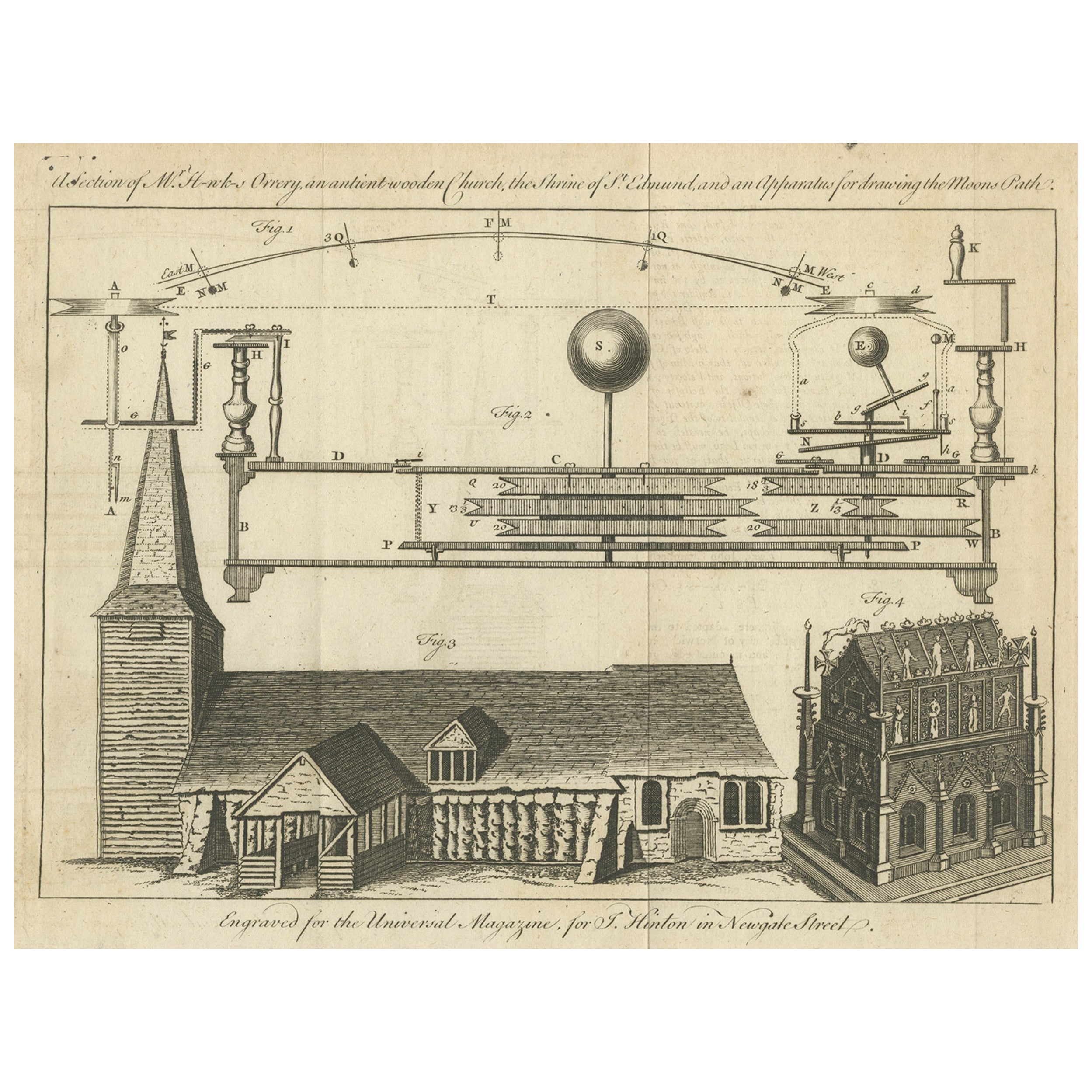
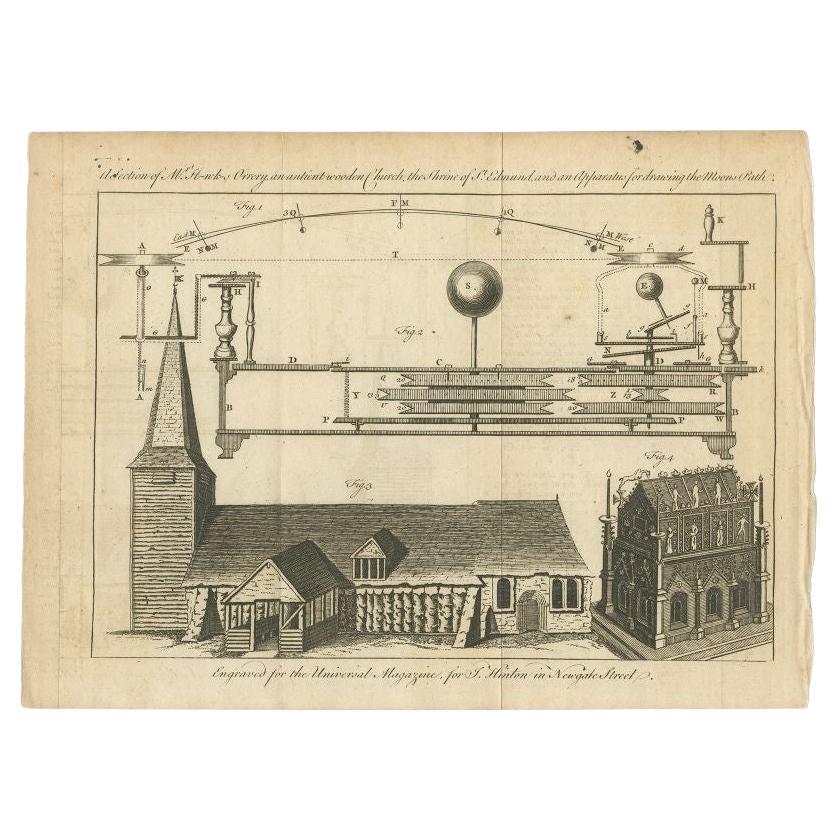
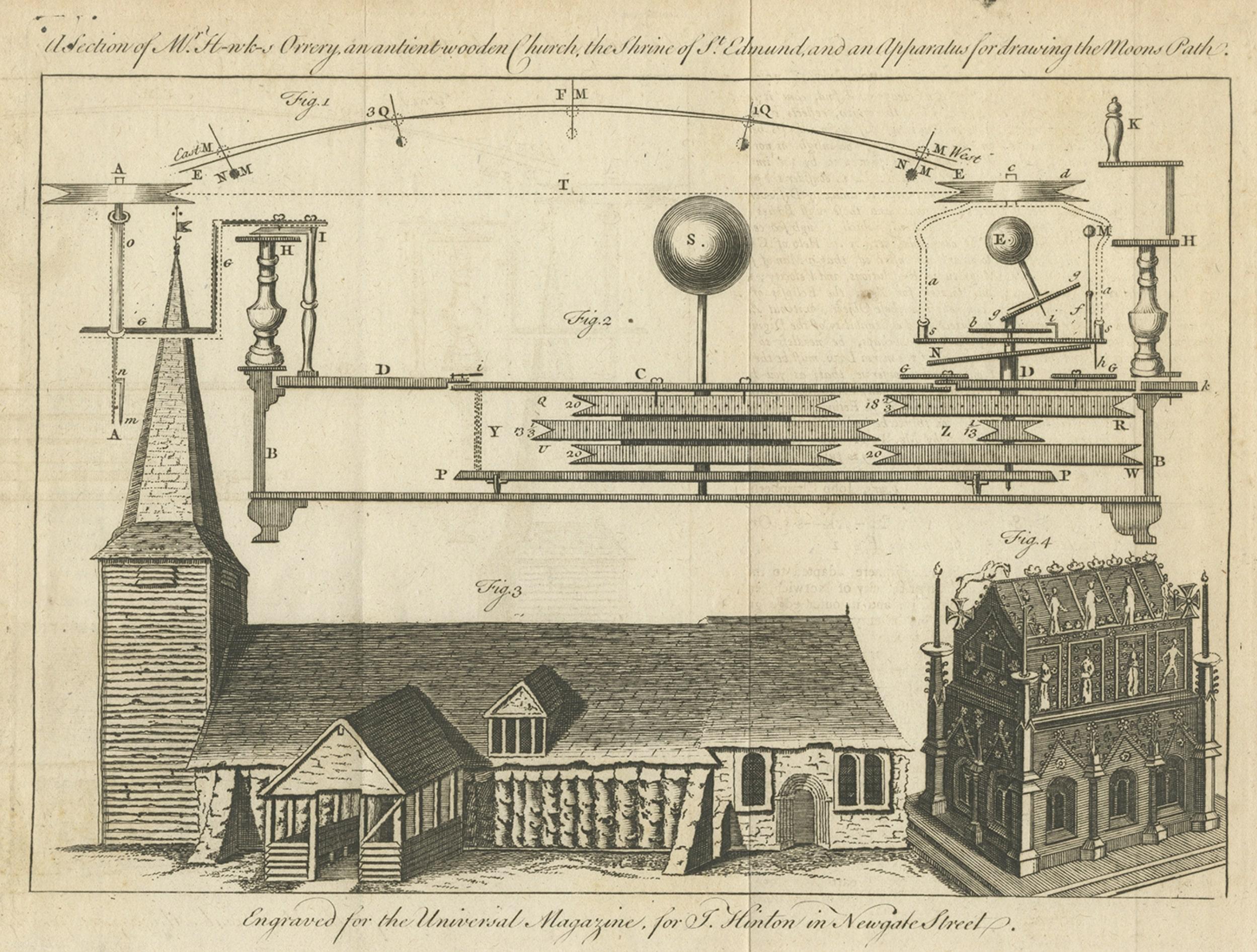
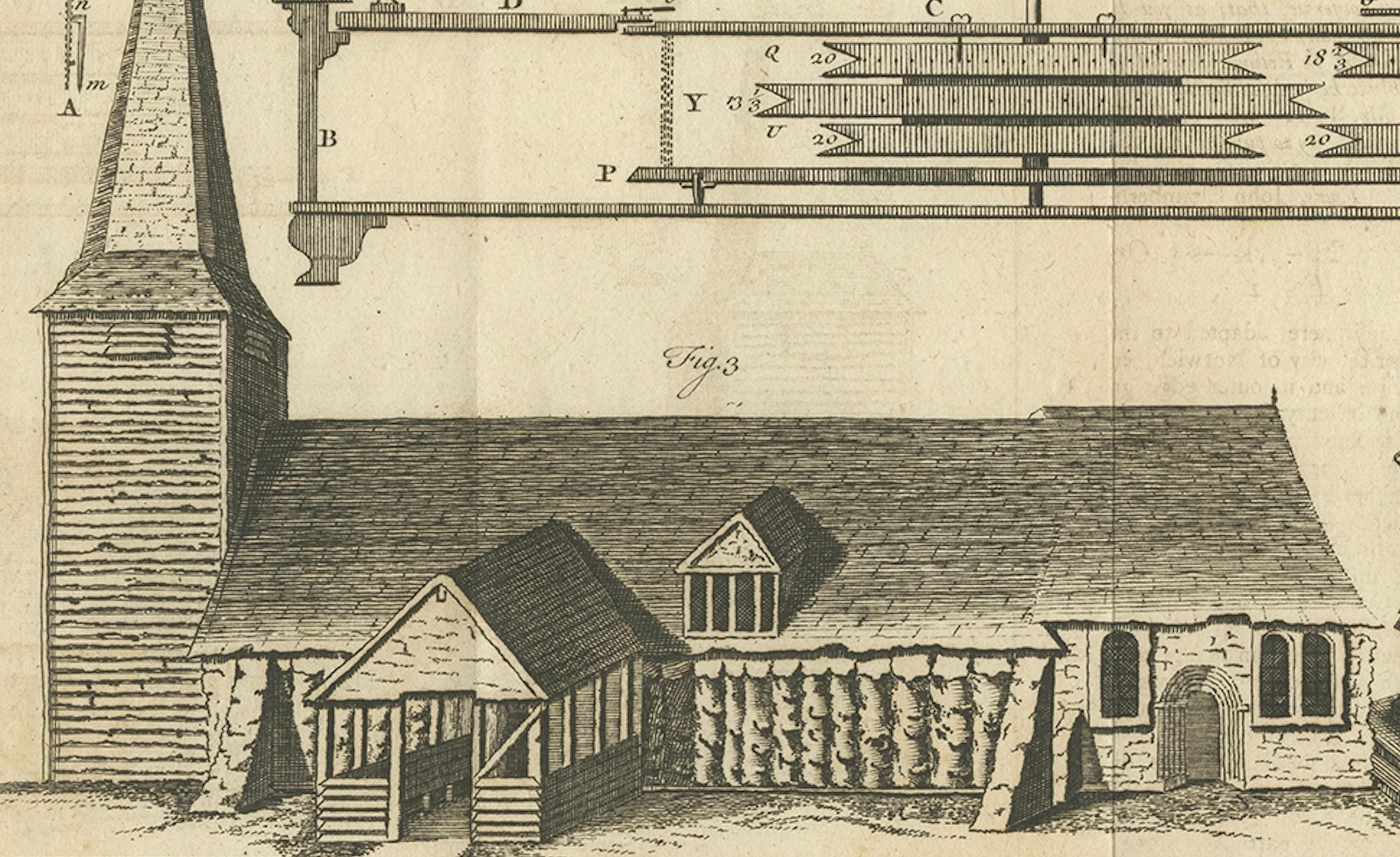
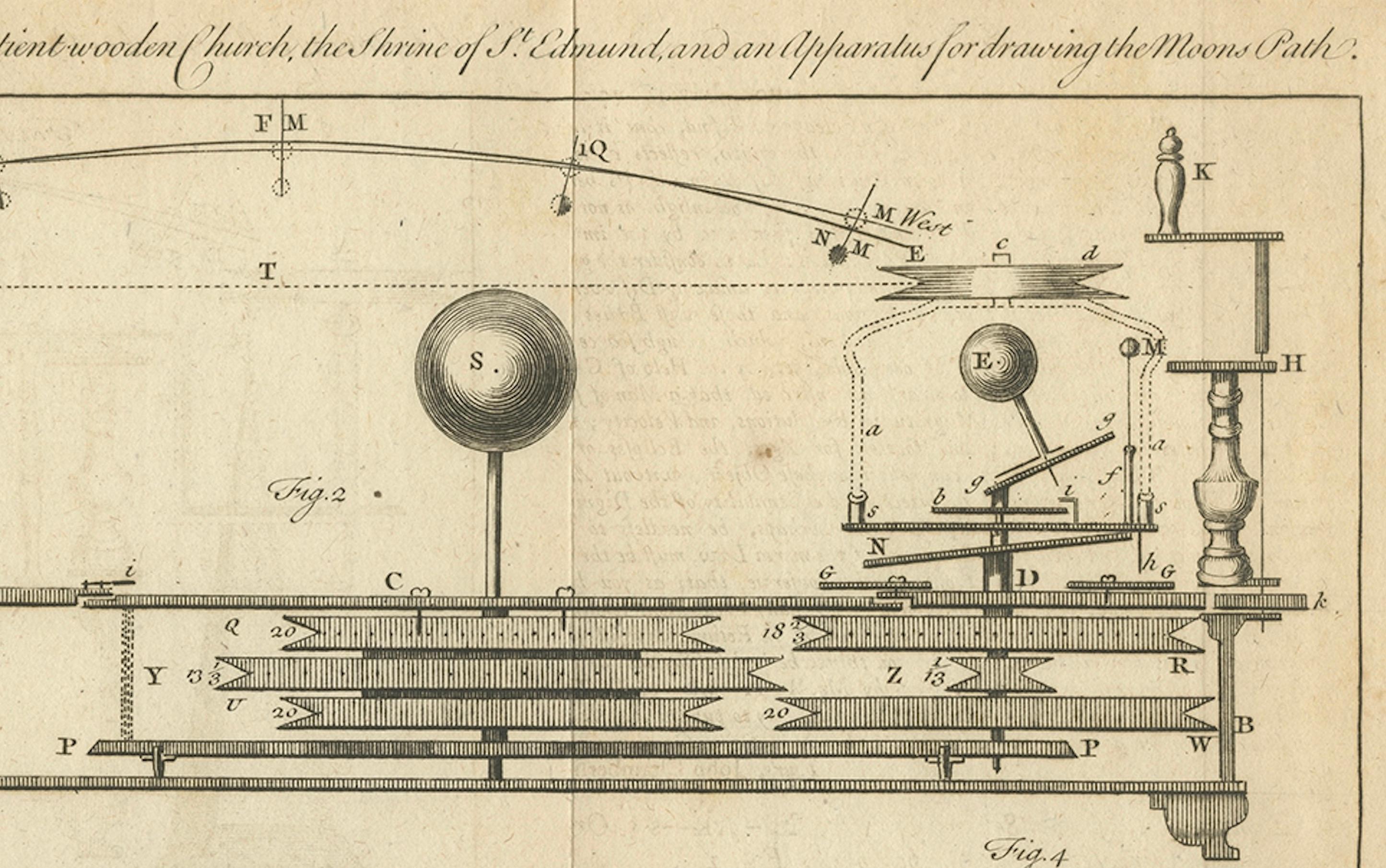
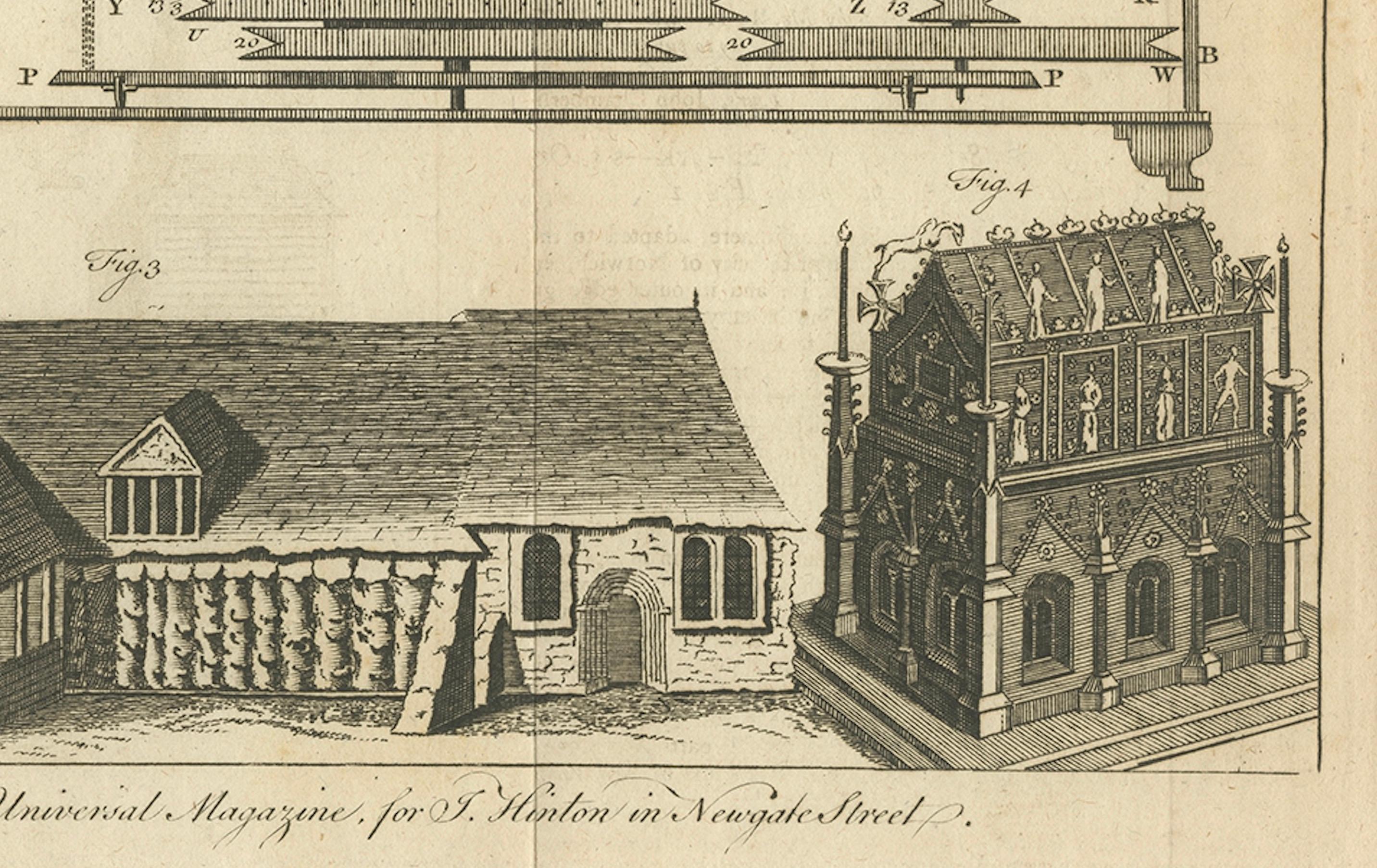
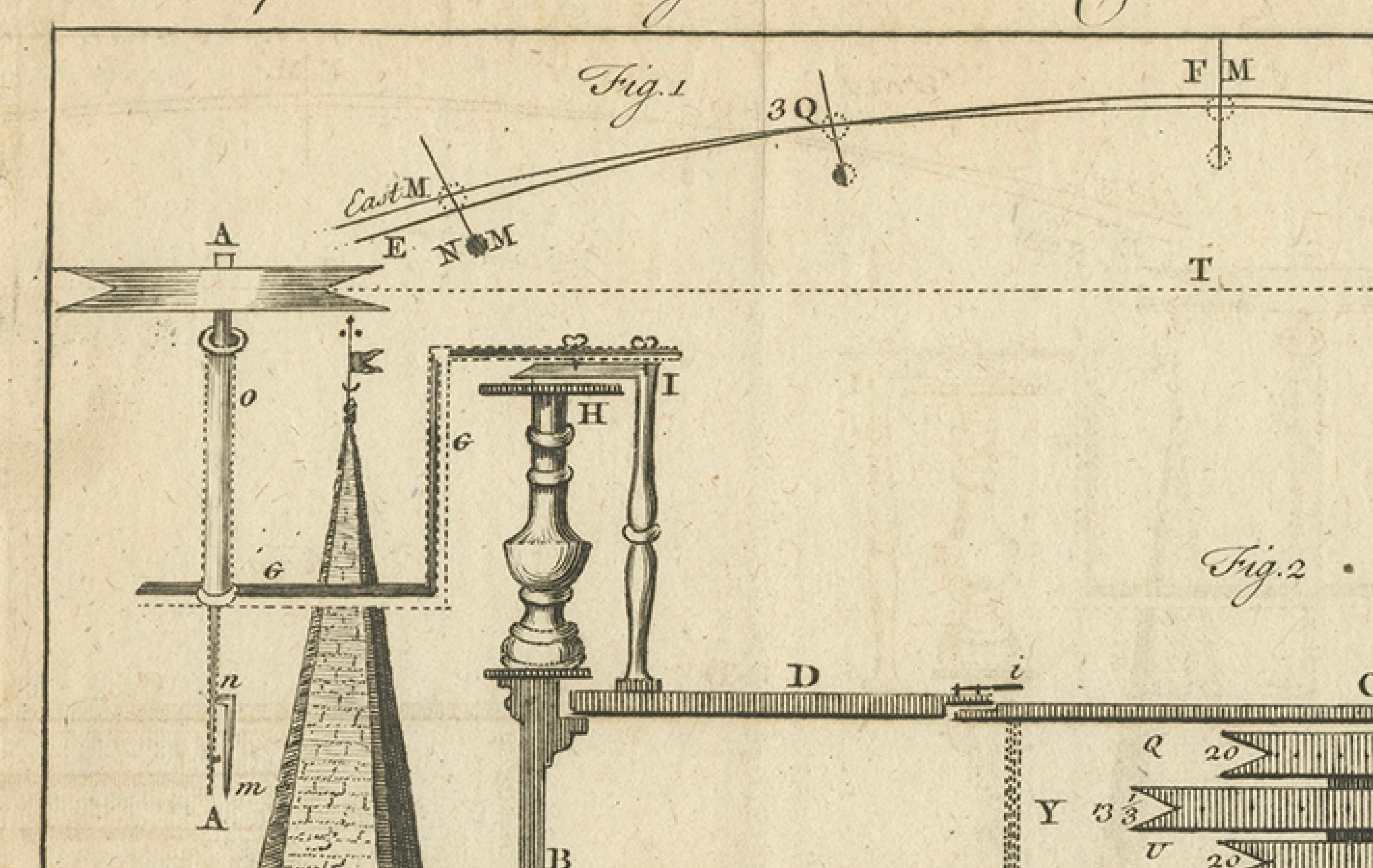
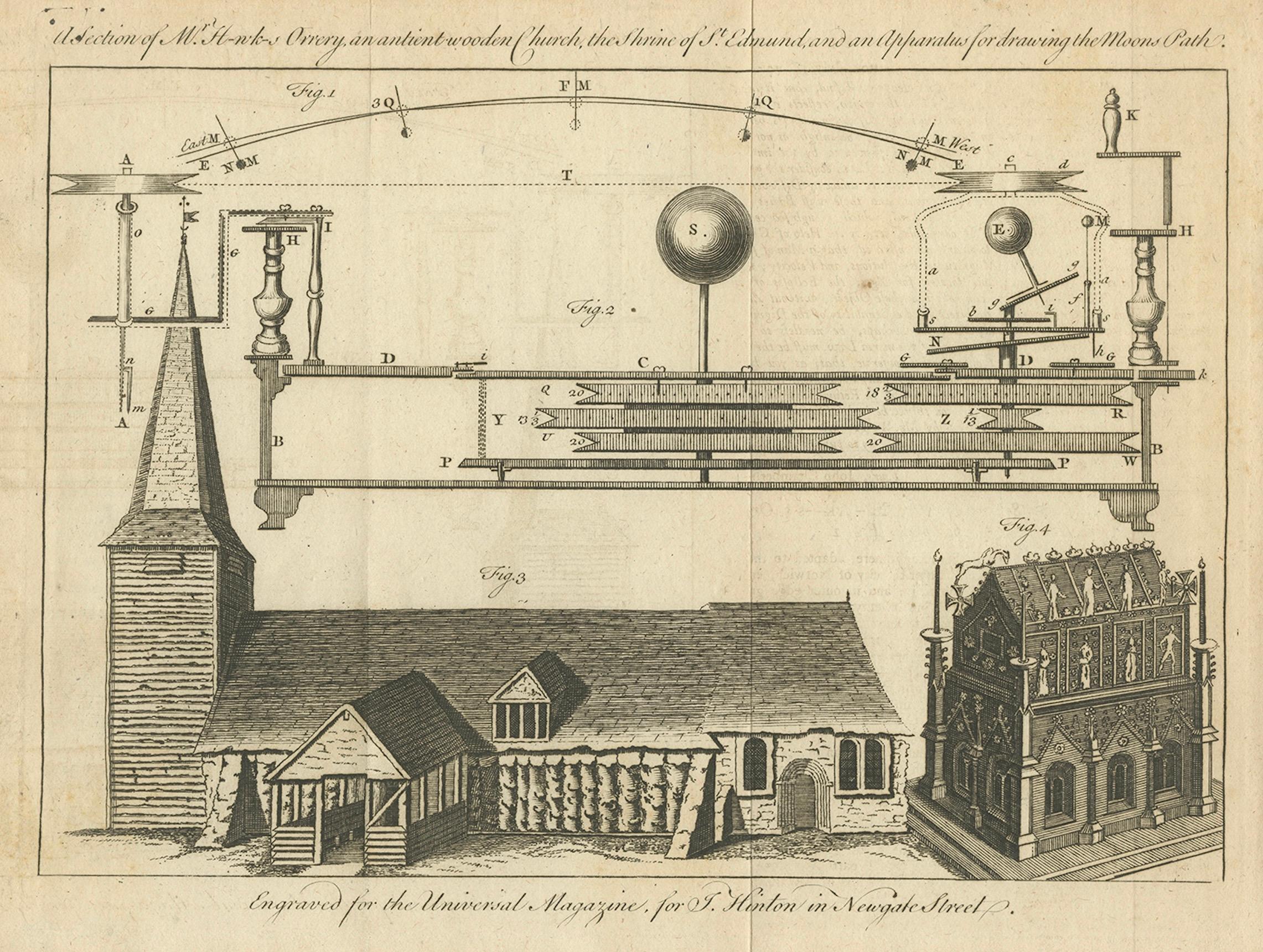
This antique print is titled "A Section of Mr. Hawk's Orrery, an Ancient Wooden Church, the Shrine of St. Edmund, and an Apparatus for Drawing the Moon's Path."
The illustration provides a fascinating look at a combination of historical and scientific subjects, including a mechanical model of the solar system, an ancient church, and the shrine of St. Edmund. This engraving was originally published in The Universal Magazine of Knowledge and Pleasure, a periodical that was printed in London between 1747 and 1814.
Description of the Print:
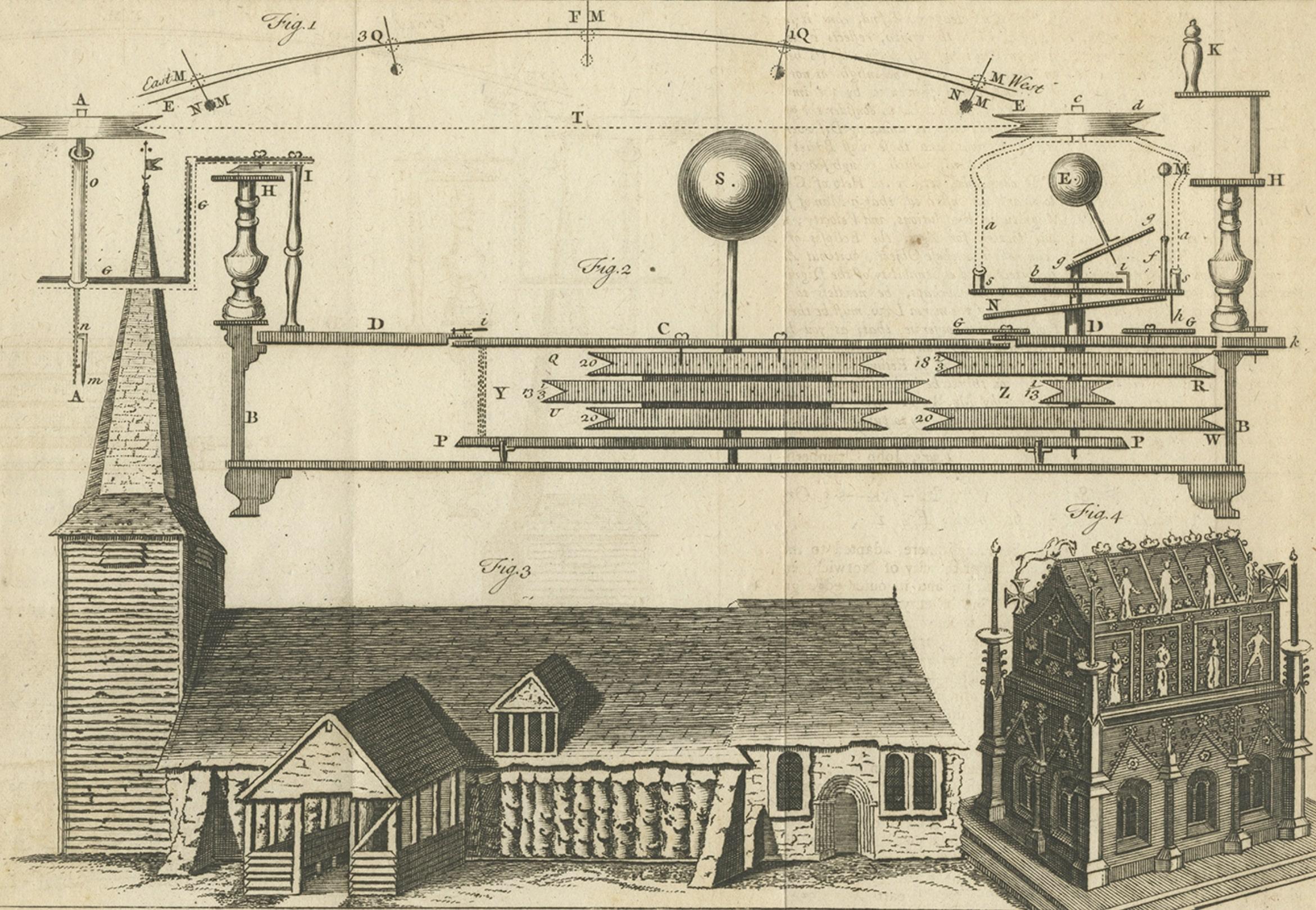
- Orrery (Fig. 1 & 2): The central feature of this engraving is Mr. Hawk's orrery, a mechanical model designed to demonstrate the positions and motions of the planets and moons within the solar system. The orrery follows the heliocentric model, showing the relative motions of the celestial bodies, including an apparatus specifically for illustrating the path of the moon. The detailed depiction of gears, rods, and other mechanical elements highlights the complexity of 18th-century scientific instruments.
- Ancient Wooden Church (Fig. 3): In the bottom-left portion of the print, there is a depiction of a simple, rustic wooden church. This church may have been selected to contrast the sophisticated orrery, symbolizing the connection between ancient architecture and scientific advancement. The building is small, with wooden paneling and a modest steeple, emphasizing its antiquity and humble design.
- Shrine of St. Edmund (Fig. 4): On the right side of the print is the elaborate shrine of St. Edmund, a saint who was venerated in medieval England. The shrine appears ornate, with Gothic architectural elements and figures adorning the structure. This contrast between religious art and scientific modeling suggests an interplay of faith and reason.
- Apparatus for Drawing the Moon’s Path: The upper portion of the print includes a smaller device designed to demonstrate the movement of the moon. This apparatus was likely part of the orrery, used to show the intricacies of lunar motion relative to the Earth and other planets.
Context:
The orrery is a classic example of Enlightenment-era scientific thought. These mechanical models were prized during the 18th century for their ability to explain complex celestial mechanics in a tangible, understandable way. Mr. Hawk’s orrery is a prime example of this type of invention, reflecting the period’s interest in astronomy and the mechanical arts.
This engraving, published in The Universal Magazine of Knowledge and Pleasure, would have been an educational tool for readers of the time, combining elements of scientific discovery with historical and religious interest. The magazine was a widely-read publication that sought to disseminate knowledge on a variety of subjects, from science to history, geography, and culture.
Artistic and Scientific Merit:
- Engraving Technique: The print is finely detailed, particularly in the mechanical parts of the orrery and the intricate design of the shrine. The precise lines and clear labeling of different components are typical of educational engravings from the period.
- Symbolism: The juxtaposition of the orrery with the ancient wooden church and the shrine of St. Edmund suggests a thematic exploration of the relationship between science, religion, and history. This reflects the broader intellectual trends of the Enlightenment, when scientific advancements were often discussed in relation to traditional beliefs.
This print offers both a historical insight into 18th-century scientific instruments and a visual representation of the period's blending of religion, architecture, and scientific discovery.
We sell original antique maps to collectors, historians, educators and interior decorators all over the world. Our collection includes a wide range of authentic antique maps from the 16th to the 20th centuries. Buying and collecting antique maps is a tradition that goes back hundreds of years. Antique maps have proved a richly rewarding investment over the past decade, thanks to a growing appreciation of their unique historical appeal. Today the decorative qualities of antique maps are widely recognized by interior designers who appreciate their beauty and design flexibility. Depending on the individual map, presentation, and context, a rare or antique map can be modern, traditional, abstract, figurative, serious or whimsical. We offer a wide range of authentic antique maps for any budget.