About this sheet
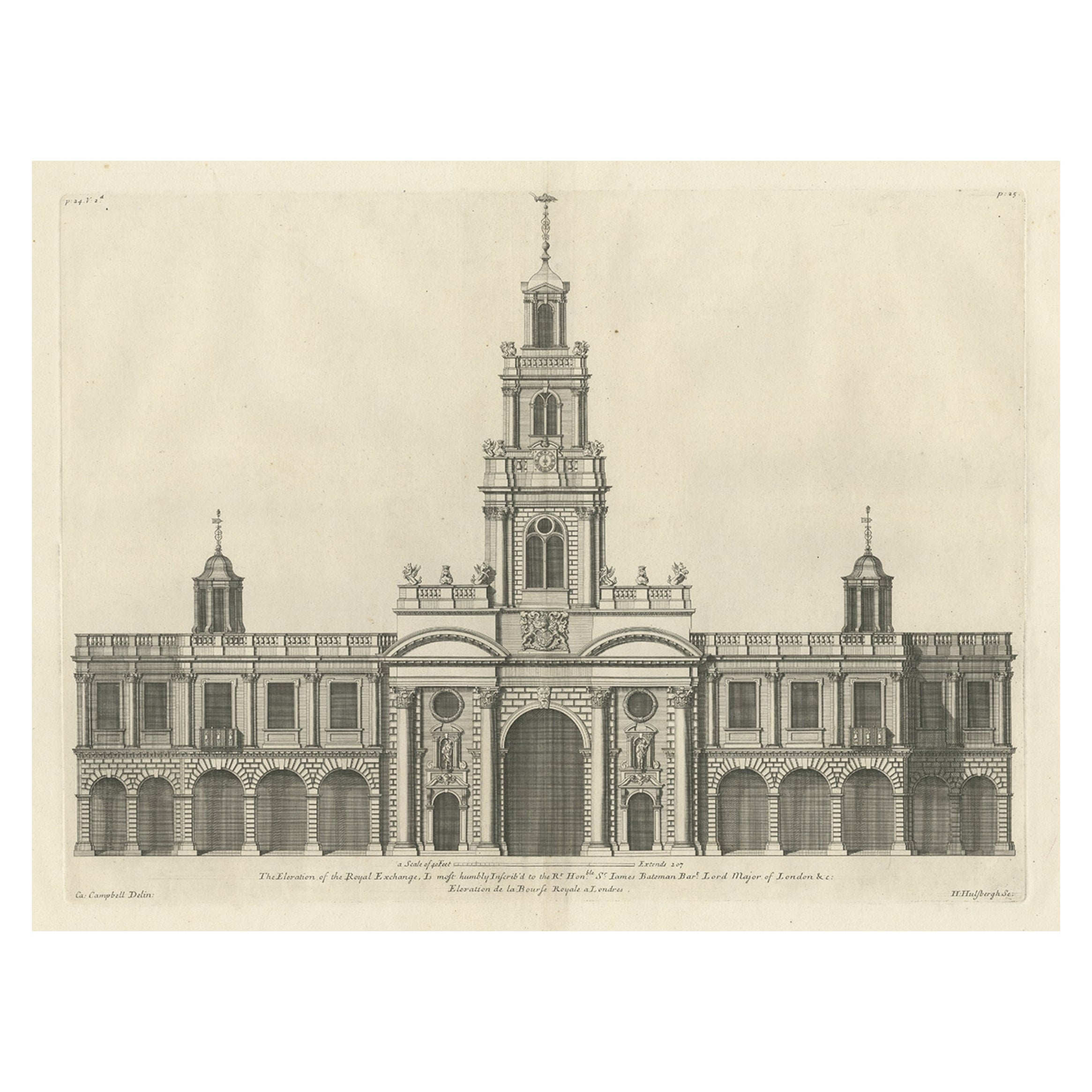
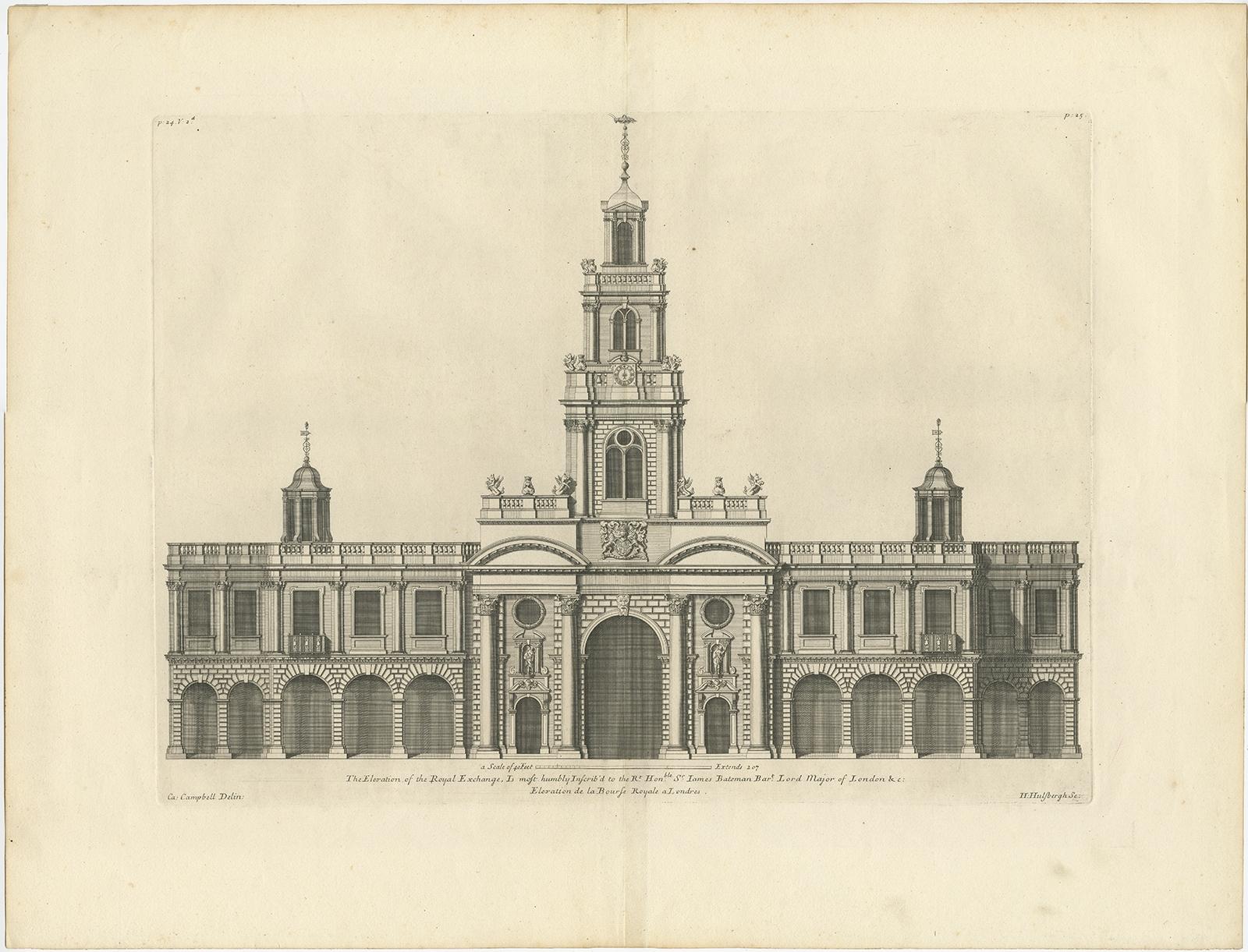
Antique print titled 'The Elevation of the Royal Exchange (..)'.
Old engraving of the entrance facade of the Royal Exchange, Cornhill. This print originates from 'Vitruvius Britannicus' by Colen Campbell.
The Royal Exchange was described by traveller Celia Fiennes in the late 17th century as ' a large space of ground enclosed round the cloisters and open arches on which are built many walkes of shopps of all trades; the middle space below was design'd and is used for the merchants to meet to concert their business and trade and bills, which is all open and on top of these piaza's are the effigies in stone of most of our Kings and queens since the Conquest, from whence this Exchange takes its name Royal' . The original Elizabethan exchange was destroyed by the Great Fire and a new baroque building, designed by City surveyor Edward Jarman, was opened in 1669. Daniel Defoe in his tour of the City of London (c.1720), noted that the Royal Exchange was 'finished and embellished in so exquisite a manner'. Although it 'cost the citizens an immense sum of money', Defoe thought it was money well spent. Jarman's Royal Exchange lasted until 1838, when it also burnt down.
Artists and Engravers: Colen Campbell's Vitruvius Britannicus is considered one of the greatest eighteenth-century English architectural works. Campbell published the first three volumes between 1715 and 1725, but the text was continued in two subsequent volumes by Woolfe and Gandon in 1767 and 1771. The work is comprised of large, finely engraved illustrations, plans, and cross sections of English country houses and parks.
Condition: Good, age-related toning. Blank verso. Minor wear, please study image carefully.