About this sheet
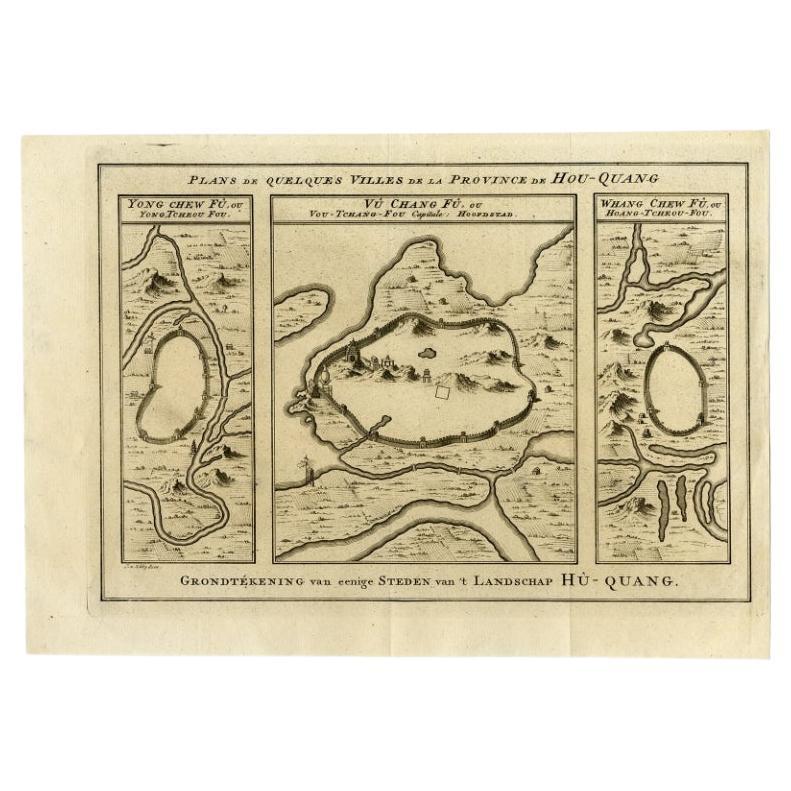
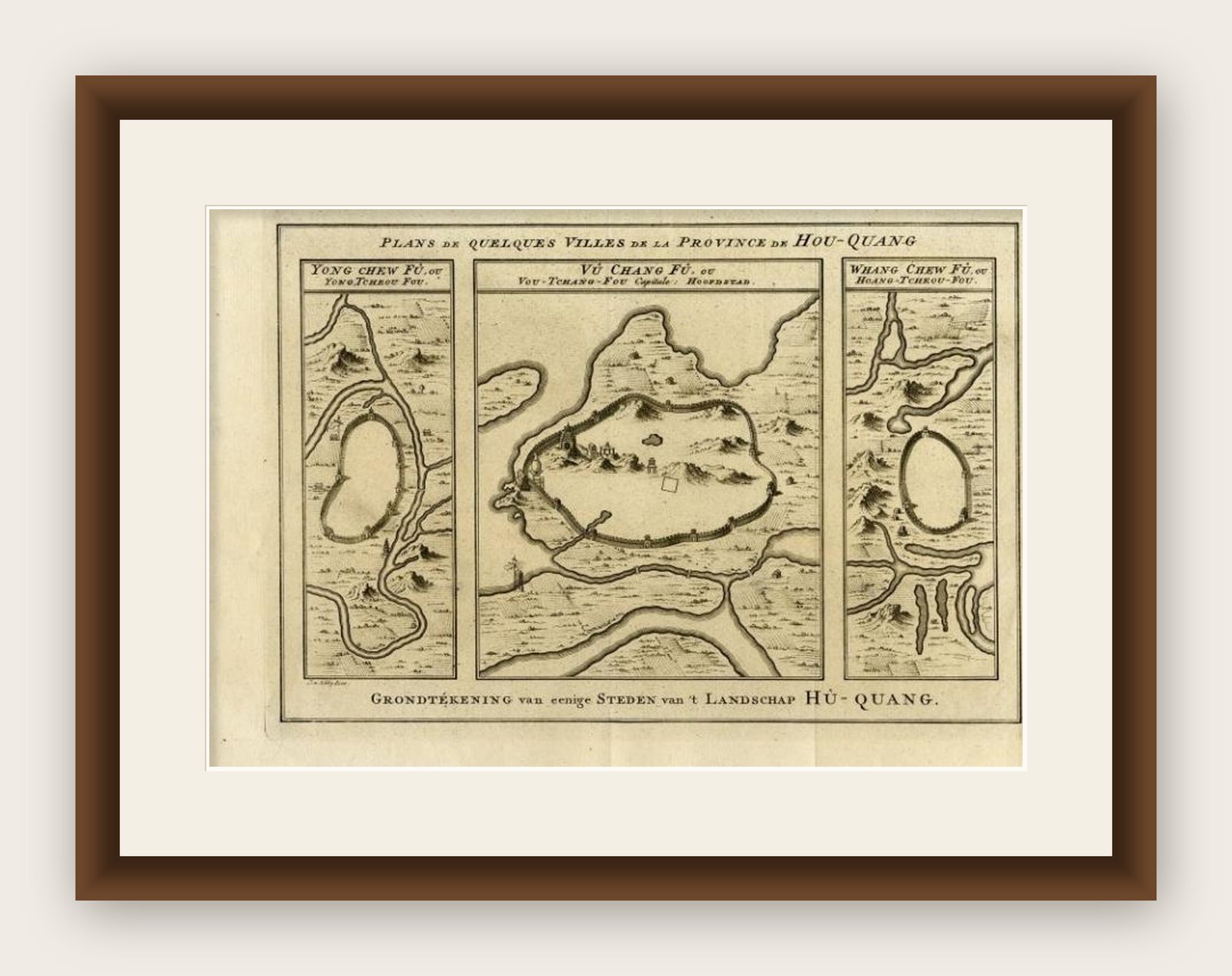
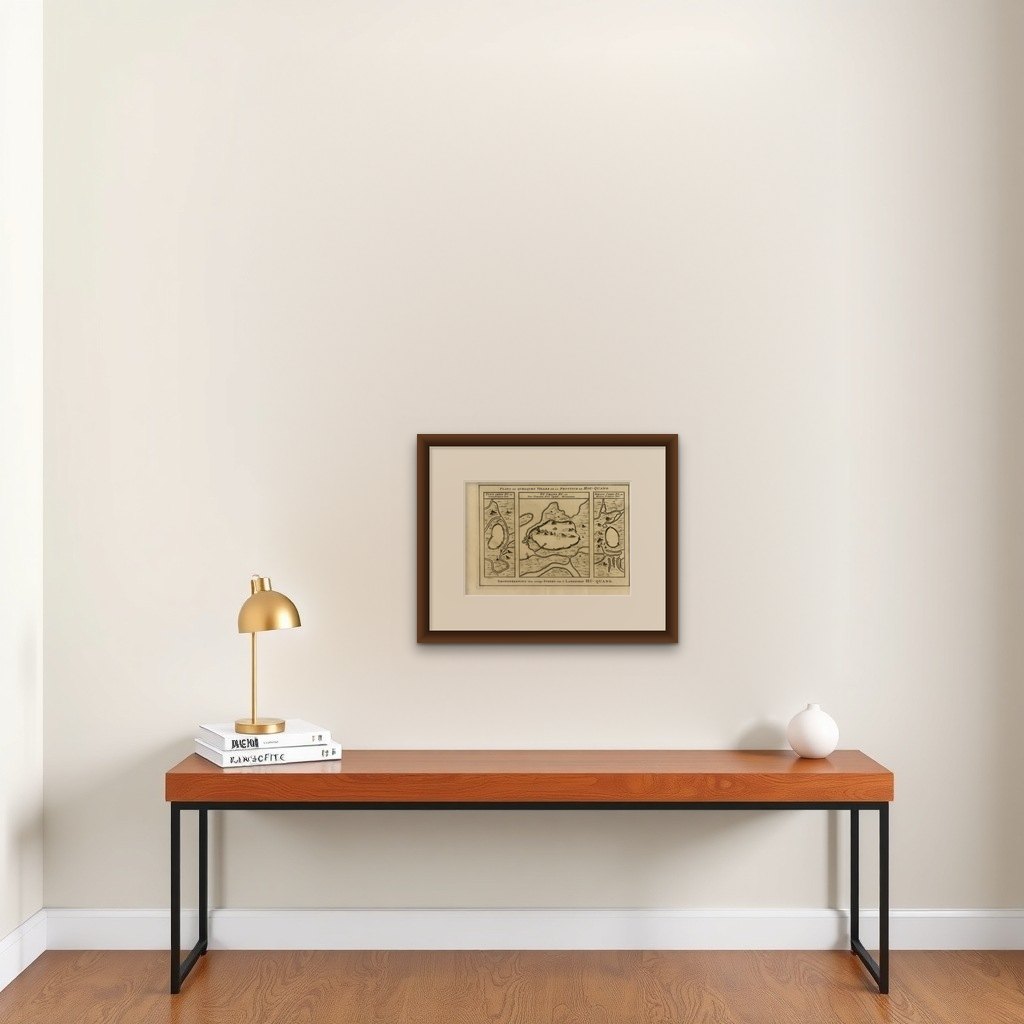
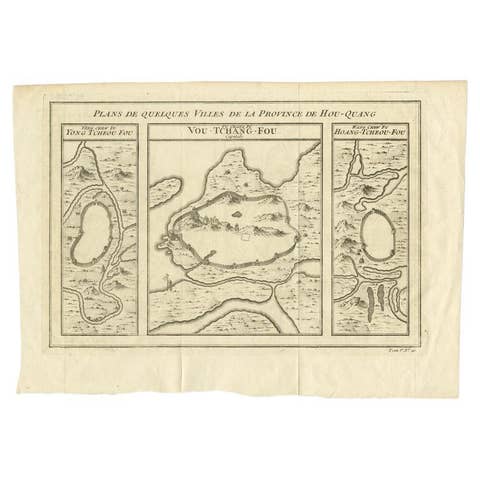
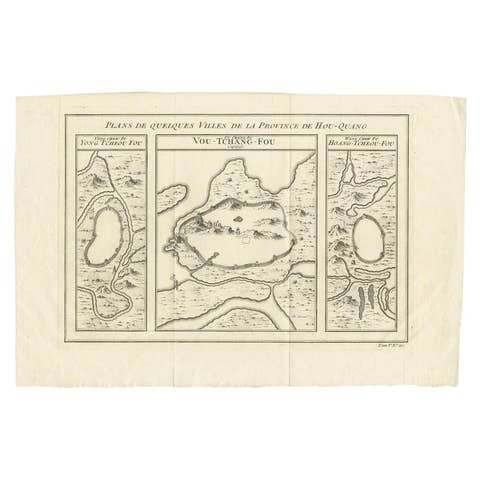
Antique map titled 'Plans de Quelques villes de la province de Hou-Quang.' Three plans of cities in a region named Hou-Quang (currently Hubei). While these maps by Van Schley after Bellin were initially made for 'Histoire Generale des Voyages' (Paris 1746-1759), this is from the 1758 Dutch edition of that work published by Arkstee & Merkus.
Hubei (/hu?'be?/;[6] Chinese: ??; alternately Hupeh) is a landlocked province of the People's Republic of China, and is part of the Central China region. The name of the province means "north of the lake", referring to its position north of Dongting Lake.[7] The provincial capital, Wuhan, serves as a major transportation hub and the political, cultural, and economic hub of central China.
Hubei's name is officially abbreviated to "?" (È), an ancient name associated with the eastern part of the province since the State of E of the Western Zhou dynasty of c.?1045–771 BCE; a popular name for Hubei is "?" (Chu) (suggested by that of the powerful State of Chu, which existed in the area during the Eastern Zhou dynasty of 770 – 256 BCE). Hubei borders the provinces of Henan to the north, Anhui to the east, Jiangxi to the southeast, Hunan to the south, Chongqing to the west, and Shaanxi to the northwest. The high-profile Three Gorges Dam is located at Yichang, in the west of the province. Source: Wikepedia.
Artists and Engravers: Made by 'Jakob van Schley' after 'Jacques Nicolas Bellin'. Jakob van der Schley (1715-1779) was a Dutch draughtsman and engraver, who studied under Bernard Picart. Jacques-Nicolas Bellin (1703-1772) was a French hydrographer, geographer and member of The Philosophes. His career, spanning over 50 years, caused an enormous outpt in maps, particular of maritime interest.
Image size: 0.001 x 30.9 x 21.5 cm.