About this sheet
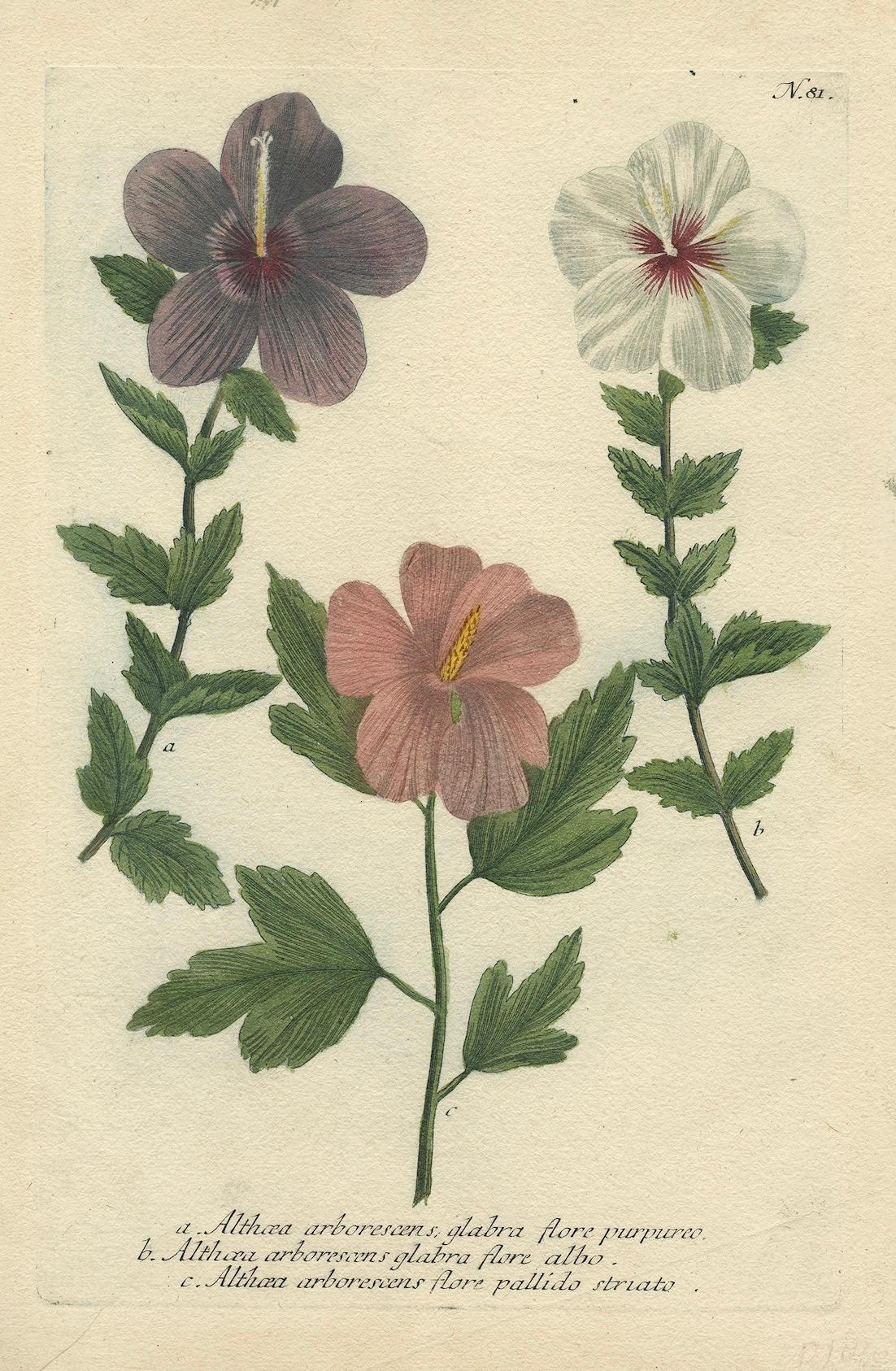
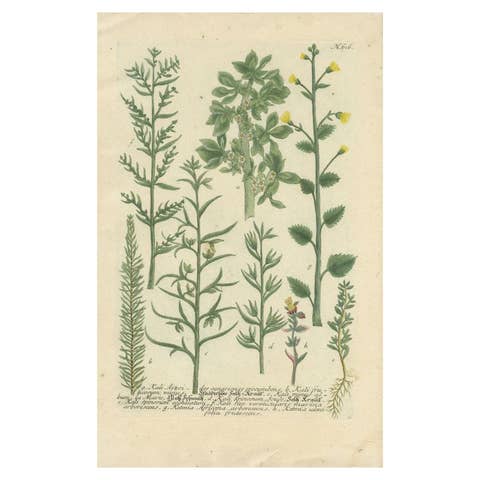
Althaea arborescens (Tree Mallow) – Antique Botany Print by Weinmann, 1737
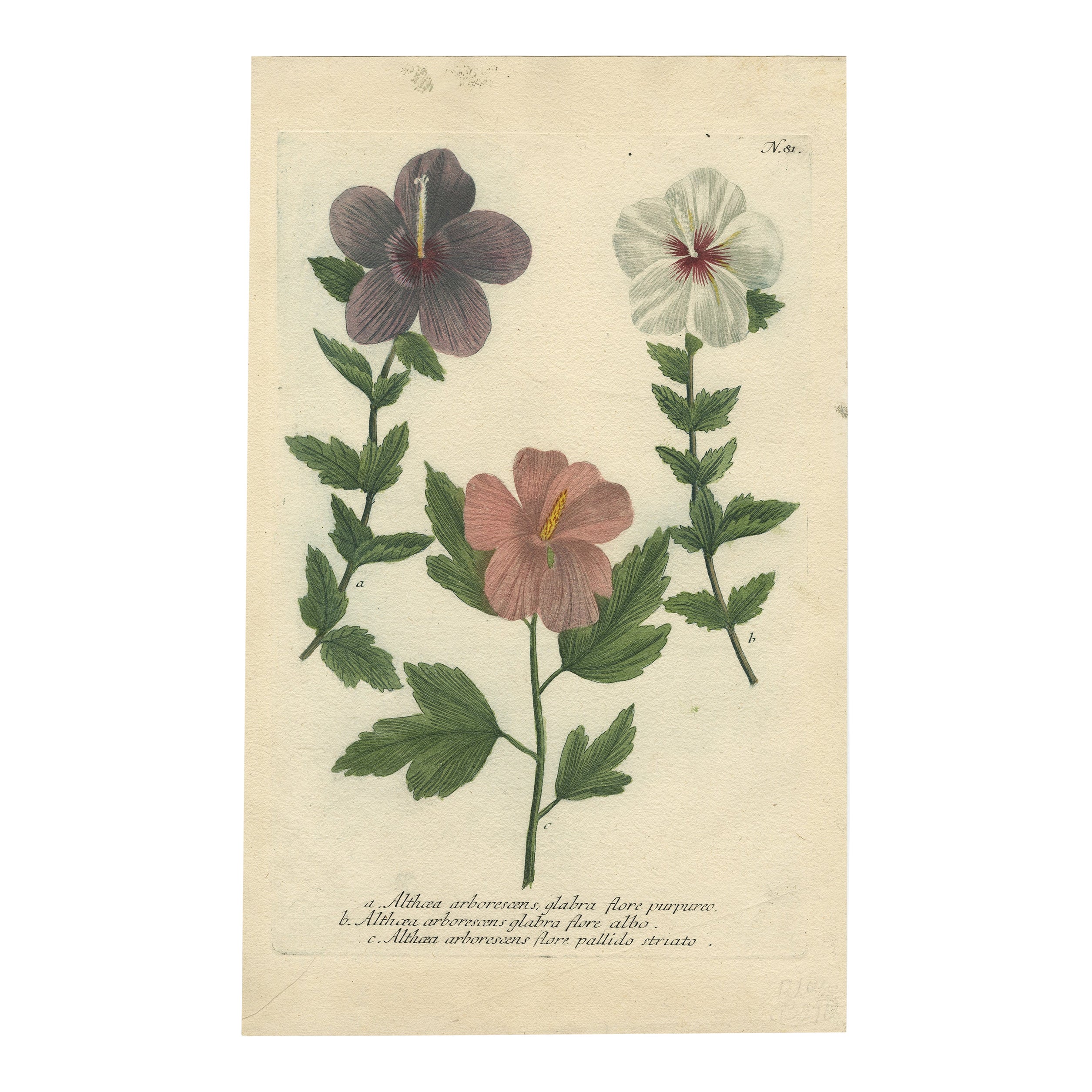
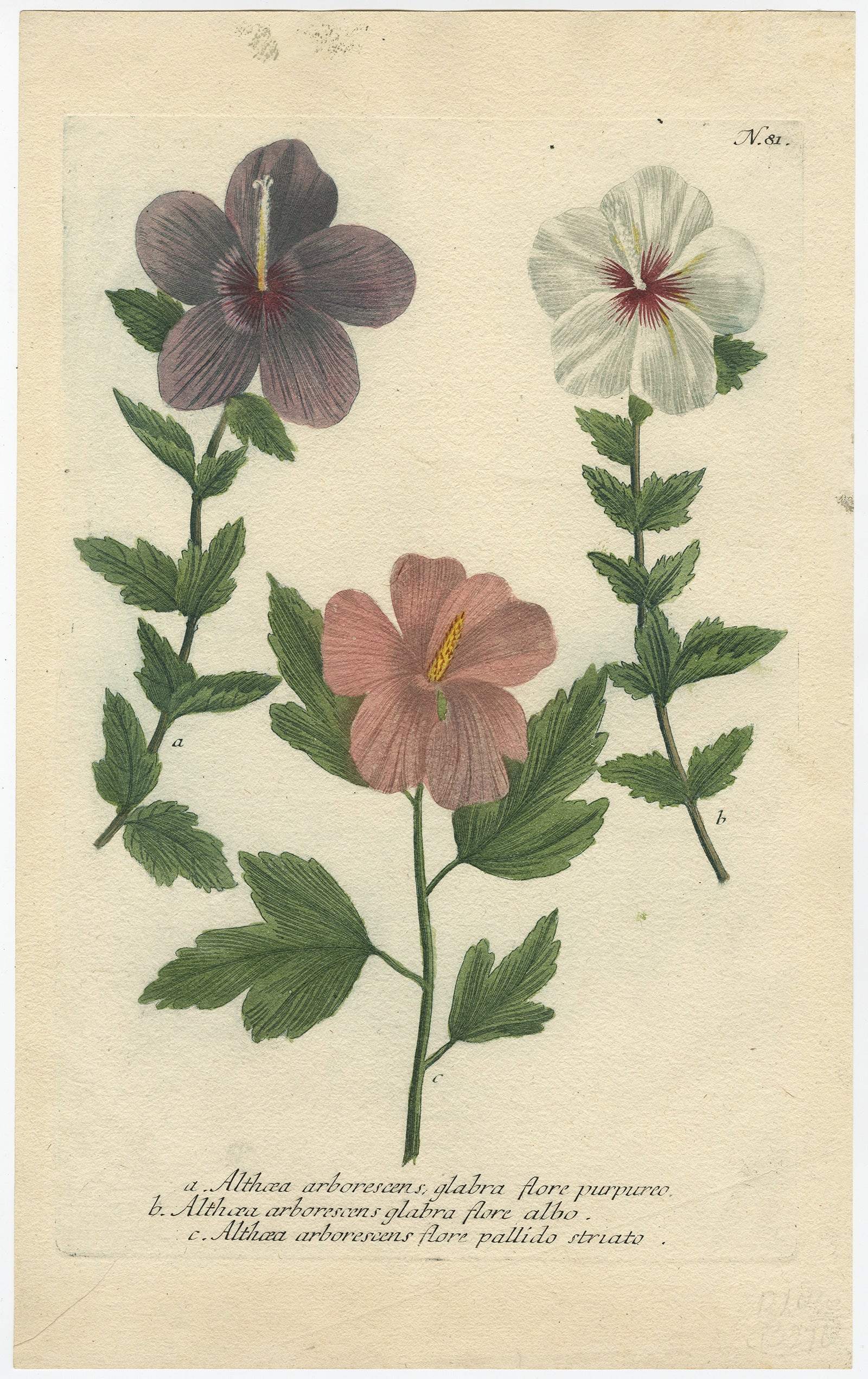
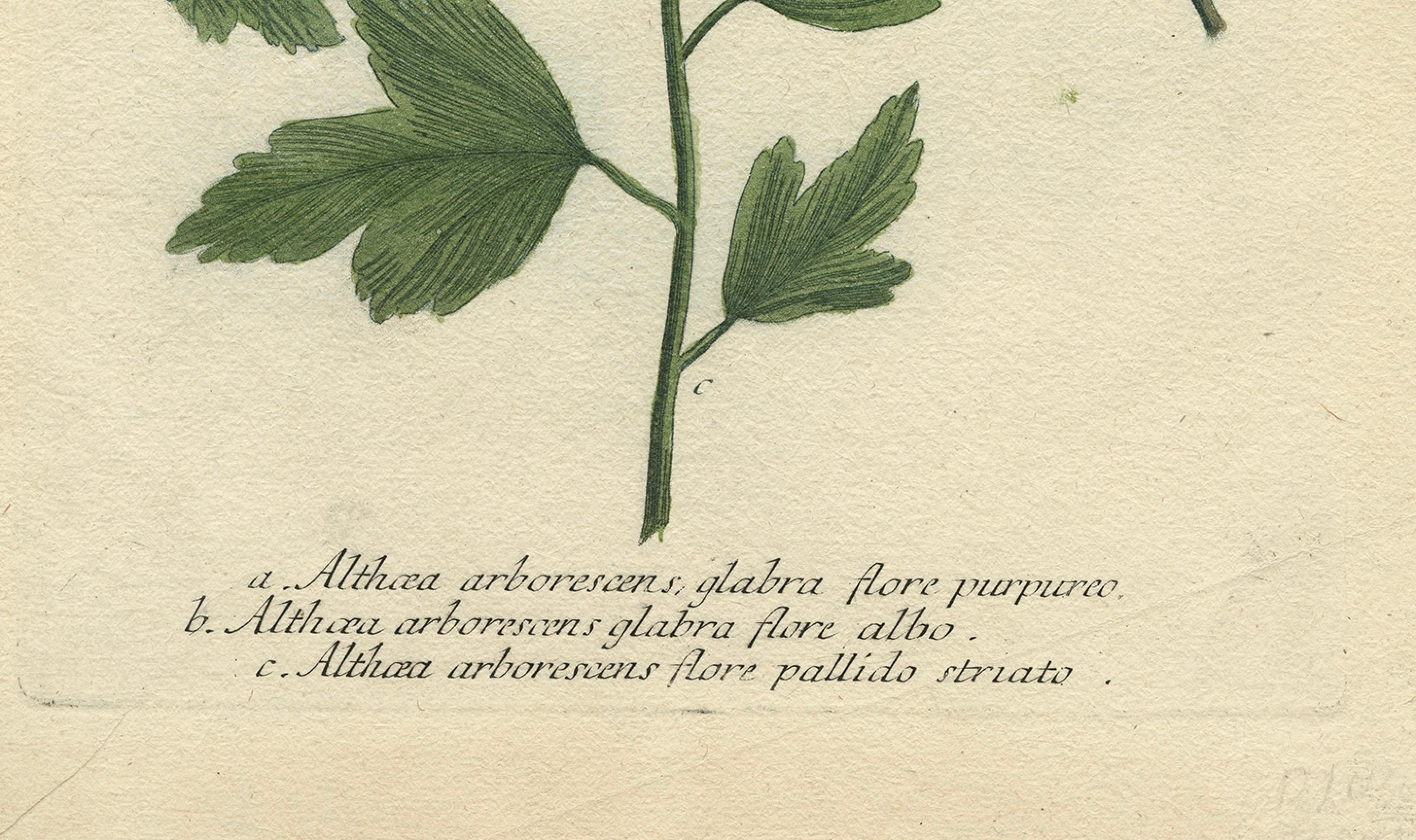
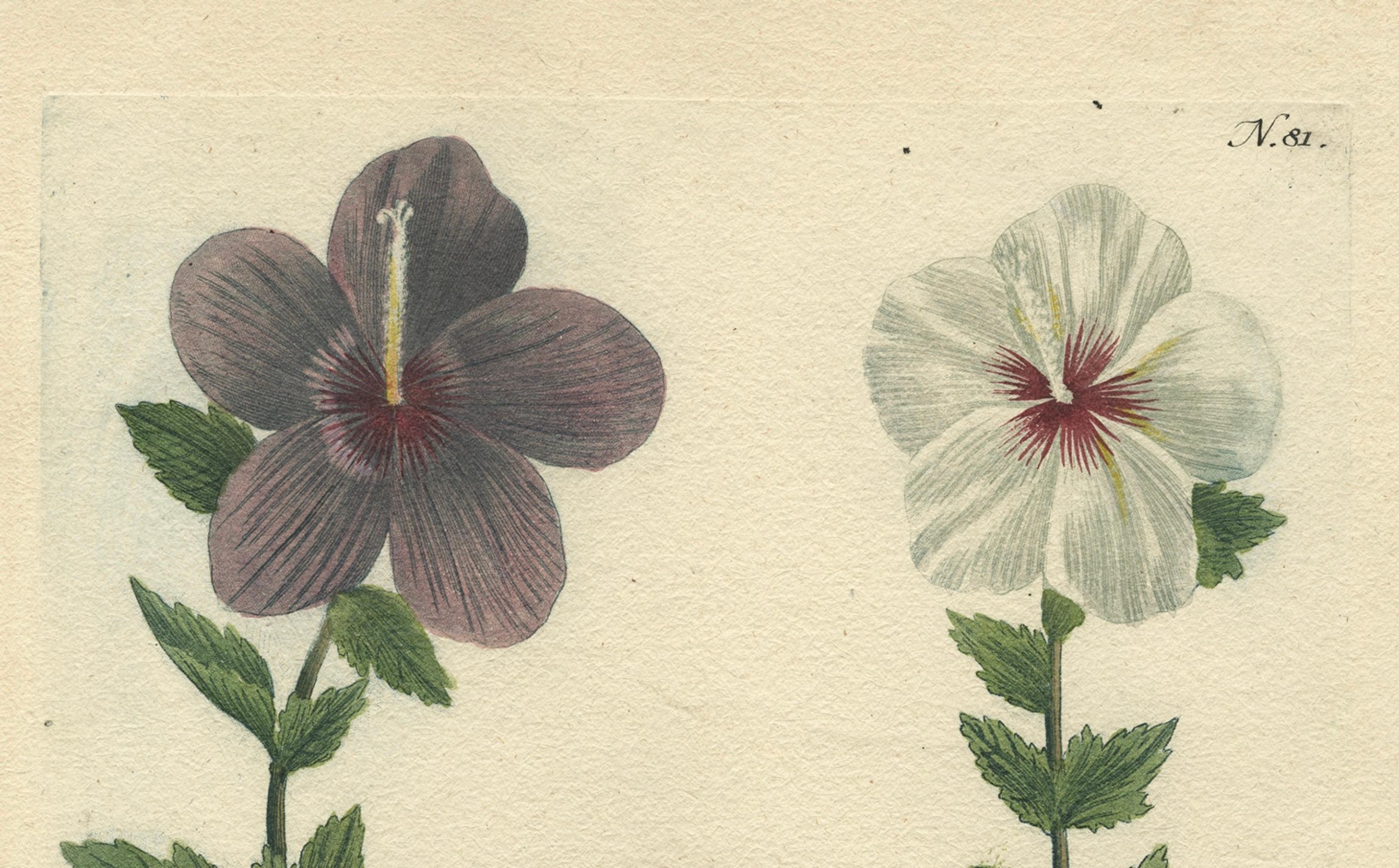
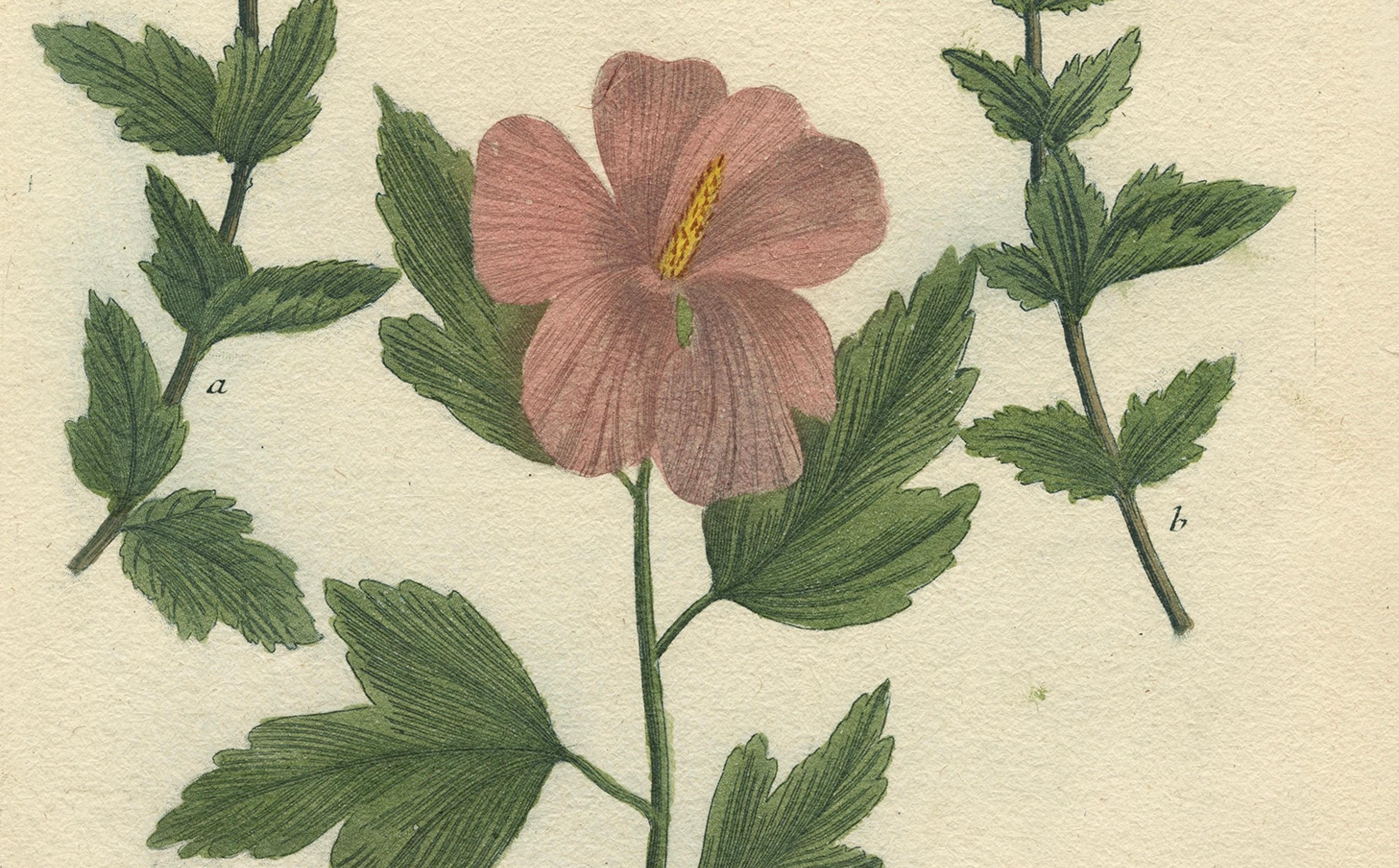
This finely detailed botanical engraving depicts three varieties of Althaea arborescens, known as the tree mallow, with blossoms shown in purple, white, and pale pink. Each flower is carefully labeled: a. Althaea arborescens glabra flore purpureo; b. Althaea arborescens glabra flore albo; and c. Althaea arborescens flore pallido striato. The composition highlights the elegant form of the plant, with its serrated leaves and open, hibiscus-like blooms rendered in delicate hand-applied color.
The print originates from Johann Wilhelm Weinmann’s monumental work Phytanthoza Iconographia (Regensburg, 1737–1745), one of the most ambitious botanical publications of the 18th century. Consisting of over 1,000 hand-colored engravings, it combined scientific accuracy with artistic refinement, serving as both a botanical reference and a collector’s treasure. Weinmann, a German apothecary and botanist, employed skilled engravers and artists to bring his vision to life, including Seuter, Haid, and Ehret, who contributed to the remarkable clarity and beauty of the plates.
Phytanthoza Iconographia was groundbreaking in its use of mezzotint combined with line engraving, a technique that allowed for remarkable shading and depth in the depiction of flowers, fruits, and leaves. This particular plate, No. 81, captures the subtle variations in coloration of the tree mallow, a plant valued both for its ornamental qualities and medicinal associations in early modern Europe.
For collectors, this print represents not only an elegant botanical subject but also an important milestone in the history of natural history illustration. Its finely balanced design and historic hand-coloring make it a striking display piece, ideal for botanical enthusiasts and interior decorators alike.
Condition: Very good impression with rich hand-coloring. Light toning and faint spotting to the margins, well away from the image. Plate mark clearly visible. No major tears or repairs.
Framing tips: Best displayed in a simple gilt or dark wood frame with a cream or light green mount to emphasize the natural hues of the flowers. A double mount with a thin green inner border can further enhance the botanical character.