Original antique · The actual sheet photographed · Certificate of authenticity on request · Sold unframed · Worldwide shipping from € 15 (rates)
Date
1809
Technique
Engraved
Sheet size
53 × 37 cm (20.9 × 14.6 in)
Condition
Good
Reference
BG-05991-157
What the condition grades mean
Excellent
Bright and clean, with no faults worth mentioning.
Very good
Only light signs of age, such as faint toning.
Good
Normal signs of age for a sheet of this period: toning, some foxing, small marks or neat old repairs.
Fair
Clear faults such as staining, tears or repairs, priced to match.
Every fault we see is written in the condition note, and the whole sheet is shown uncropped in the photos.
Condition
Good impression with general age-related toning; one small stain within the image (see photos). Original Dutch text page included; sound and clean with light, even toning.
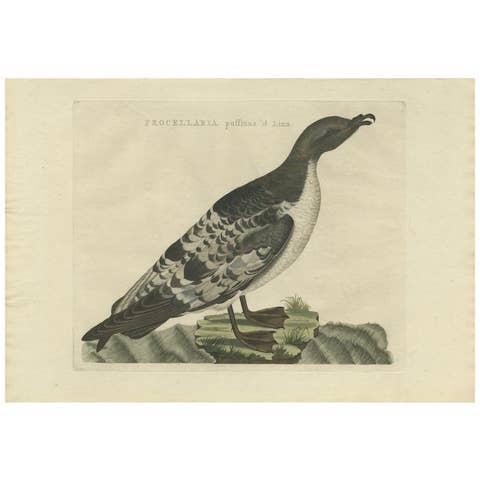
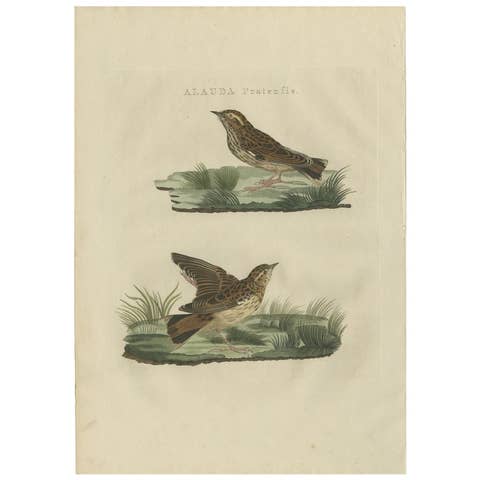
This finely hand-colored engraving shows the snow bunting (Plectrophenax nivalis), known in Dutch as the “sneeuwgors.” Two birds perch on a sinuous branch, their crisp brown-and-white plumage and neat conical bills rendered with scientific precision. An Arctic specialist, the snow bunting nests on tundra cliffs and rocky ground and winters farther south along coasts and open fields, including the Low Countries.
The plate comes from Nederlandsche Vogelen; volgens hunne huisdouding, aert, en eigenschappen beschreeven (Amsterdam, 1770–1829), the first comprehensive study of Dutch birds by Cornelis Nozeman, Martinus Houttuyn, and Jan Christiaan Sepp, renowned for accurate natural-history plates printed on fine laid paper and finished by hand. The accompanying Dutch text pages offer historical and scientific notes on the species, its behavior, nesting, and characteristics as understood in the late 18th and early 19th centuries, with Dutch names "strandputter, sneeuwvogel" noted.
Framing tips: A warm ivory mount will lift the white plumage; pair with a slim ebonised or dark oak frame for a classic natural-history look. A double mount with a narrow buff inner line nicely echoes the bird’s rufous tones. Use UV-protective glazing to preserve the hand-color.