About this sheet
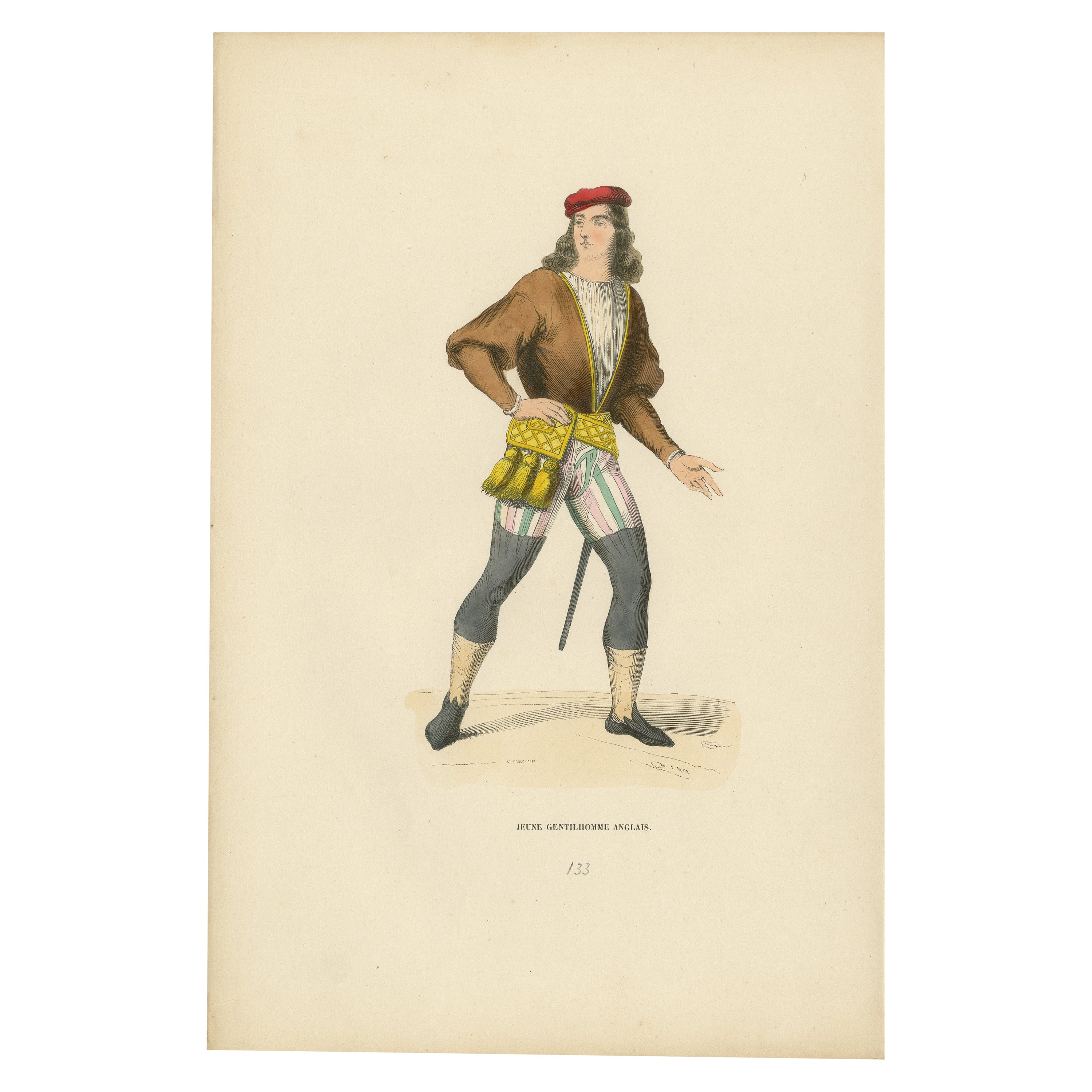
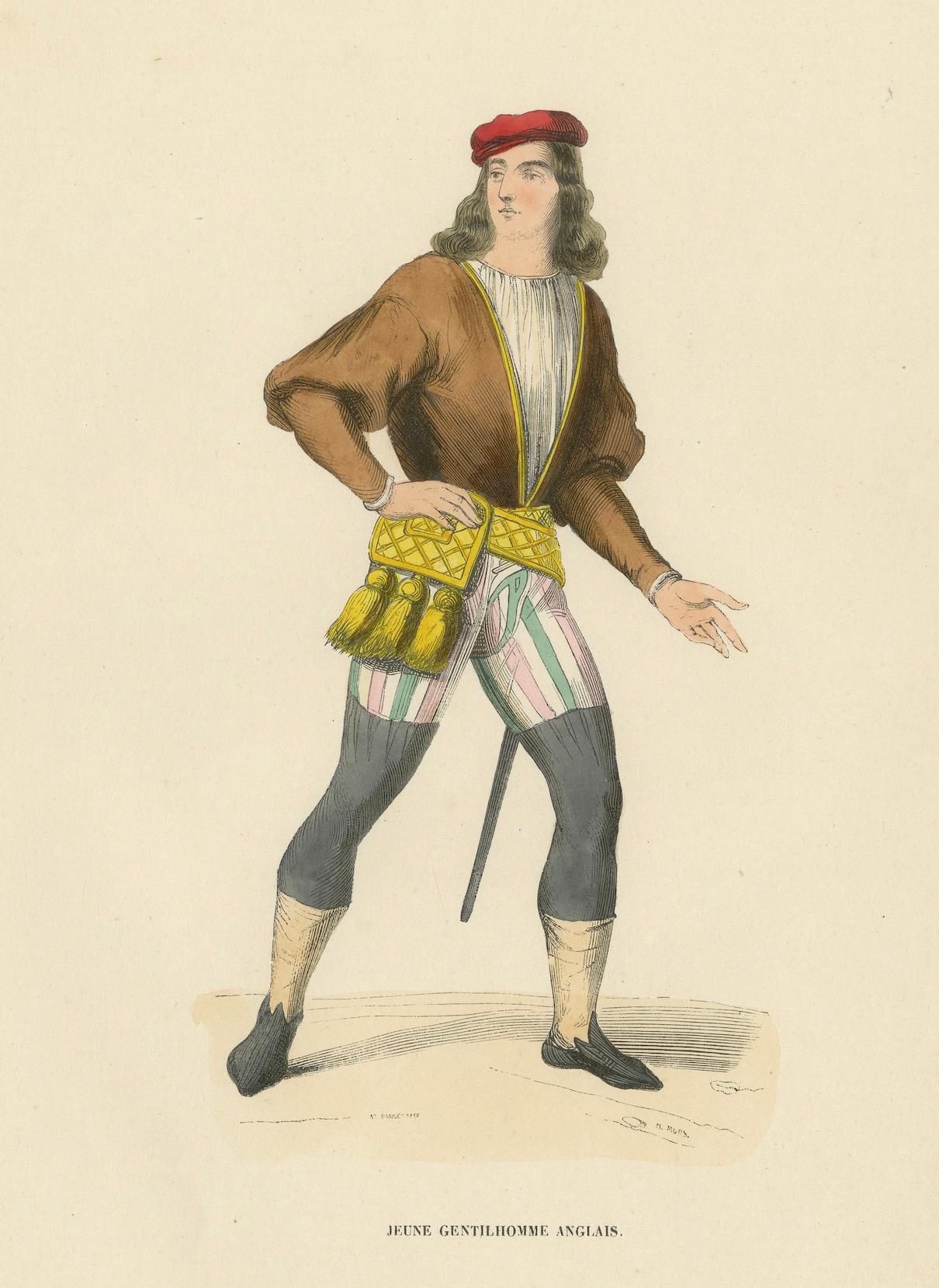
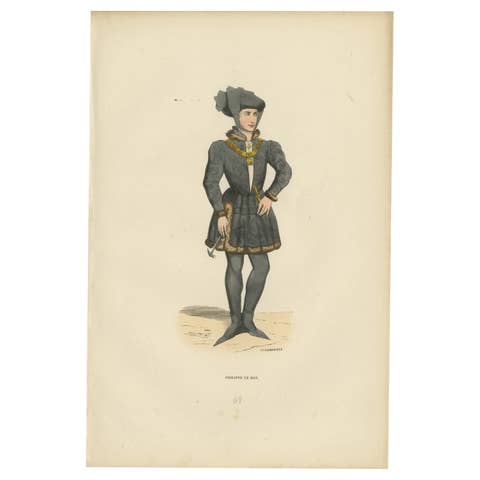
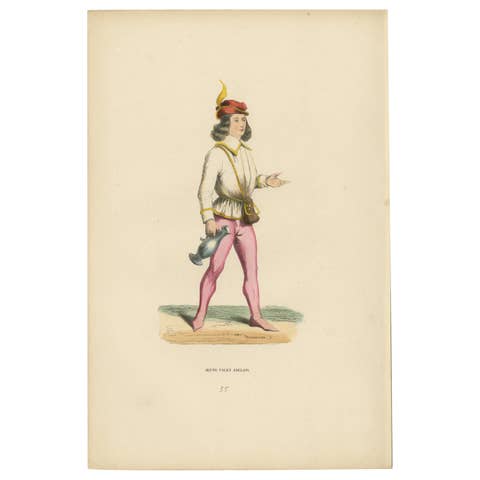
This lithograph from the 1847 publication "Costume du Moyen Âge" captures the confident stance of a young English gentleman. The figure is dressed in the fashion of the time, characterized by a rich brown doublet with a low-cut neckline, allowing the white pleated shirt beneath to peek through. The doublet's sleeves taper to the wrist, revealing the gentleman's slender hands, and the garment is tailored to accentuate his physique.
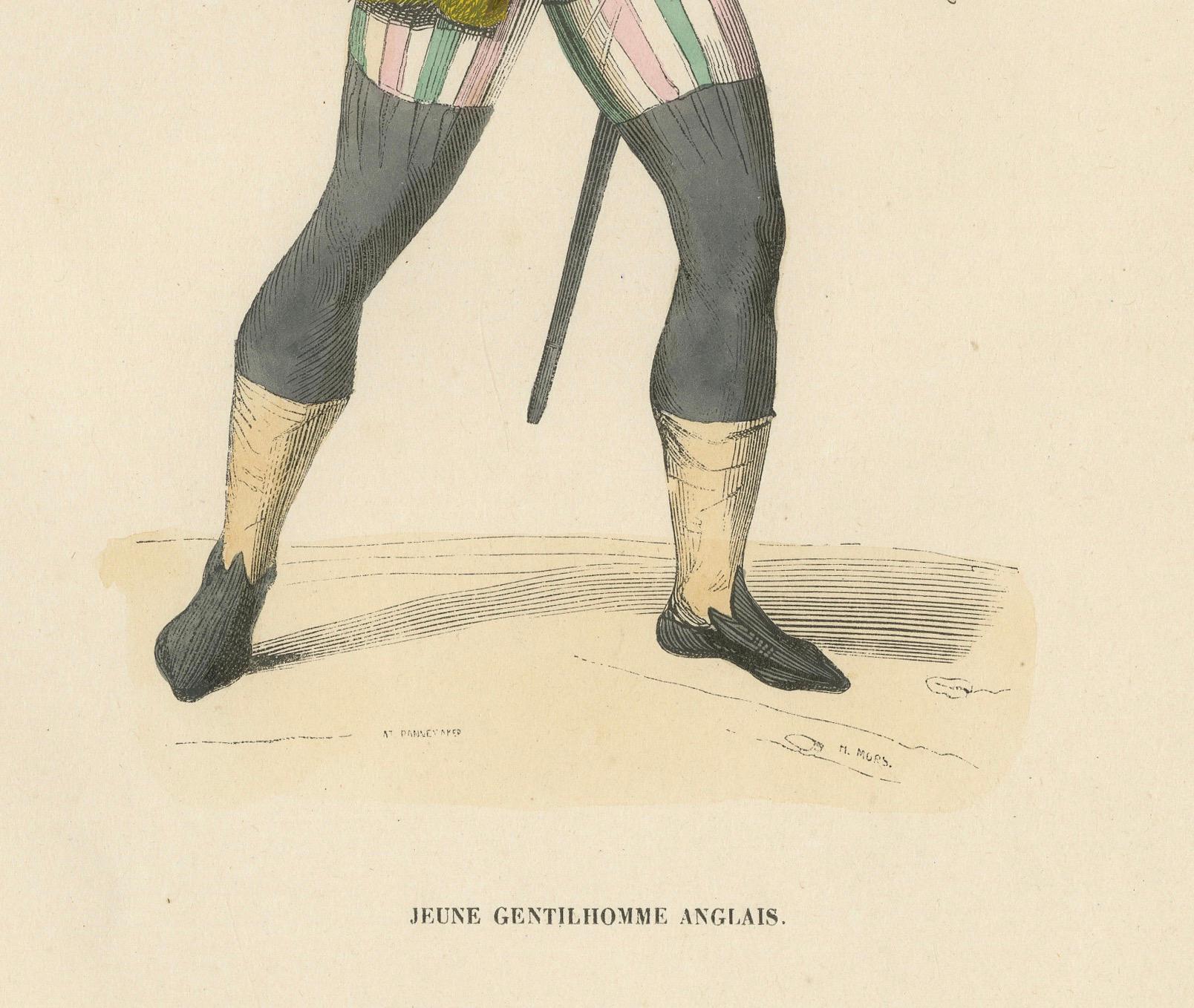
The young man's attire is completed with striped hose in alternating bands of pink, white, and black, tightly fitted to show the contours of his legs, a common style among the fashion-conscious youth of the nobility. His pointed black shoes are the finishing touch to his outfit, suggesting both practicality and a nod to the trends of the era.
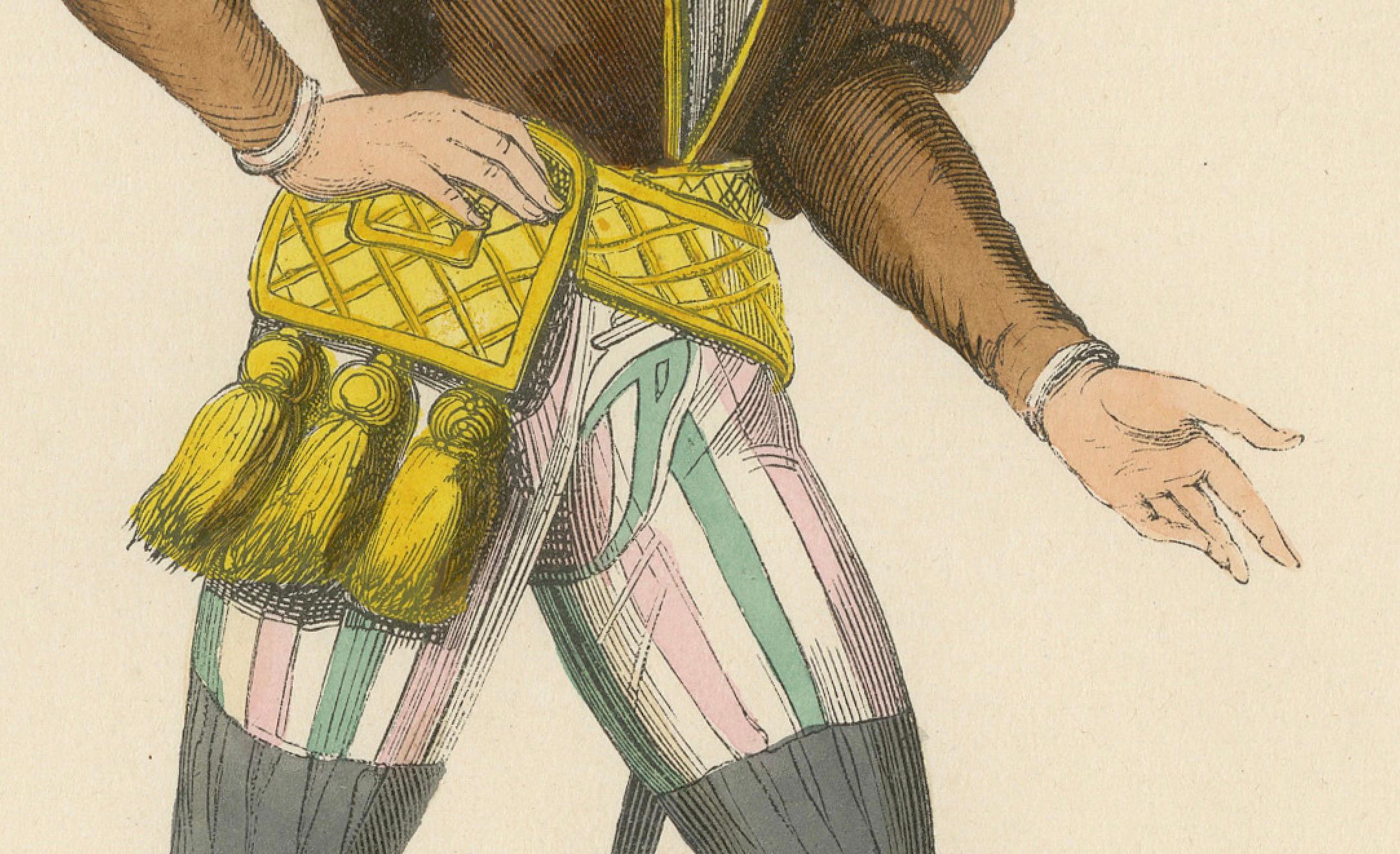
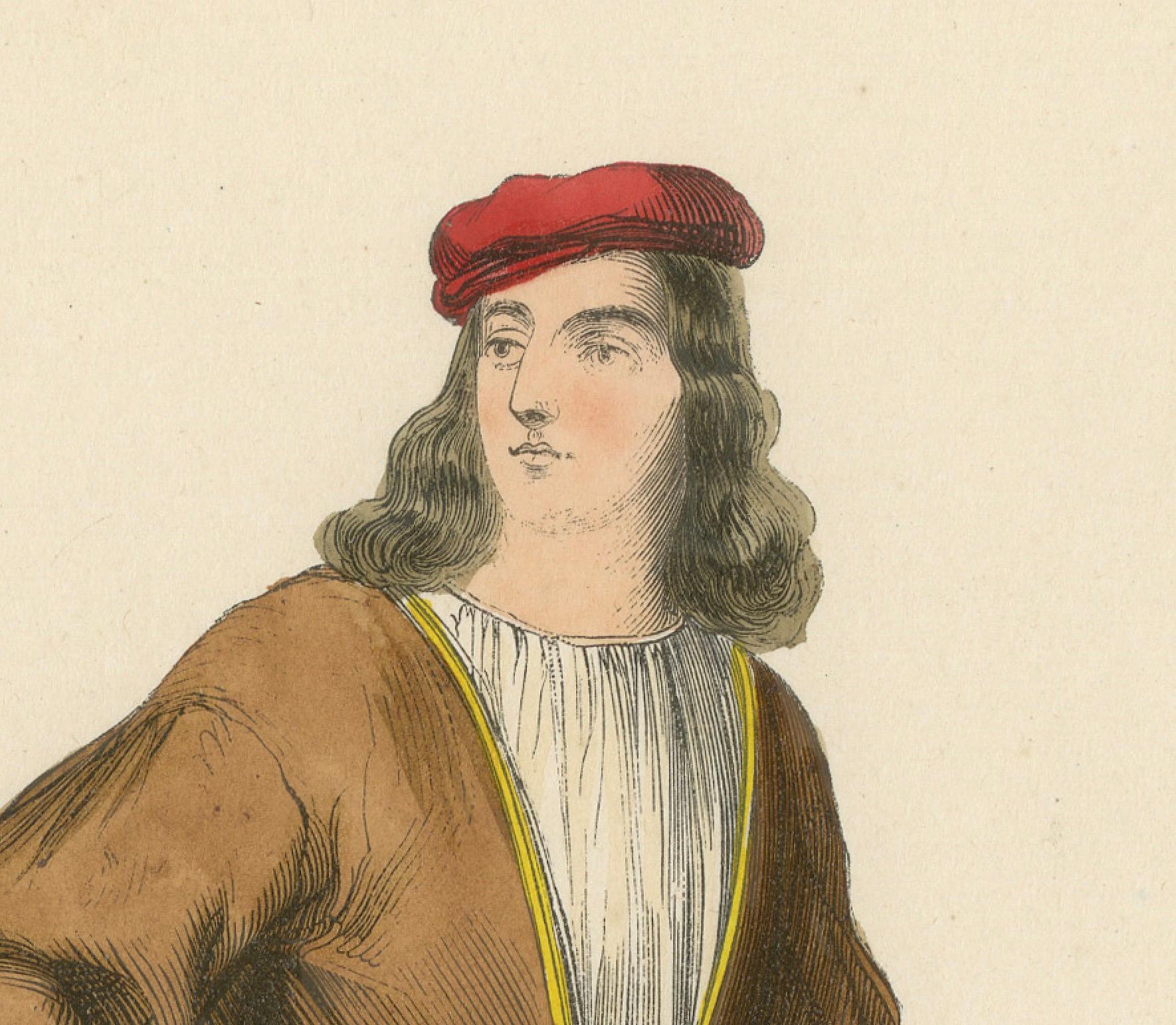
Around his waist, he sports a golden-yellow belt with a matching pouch, both adorned with what appear to be precious stones or intricate stitching, indicating wealth and attention to detail. His head is topped with a red cap, worn at a jaunty angle, giving him an air of nonchalance and flair.
The young gentleman's expression is one of self-assured ease, with his gaze directed off to the side, as if he is in mid-conversation or surveying his surroundings. His posture, with one hand on his hip and the other extended, reinforces his attitude of casual confidence.
This image is not only a study of the clothing of a young English noble but also conveys the social demeanor and style that was expected of a gentleman during the period. The lithograph offers a glimpse into the fashion sensibilities of the English aristocracy in the Middle Ages, reflecting the cultural norms and the importance placed on appearance and attire as a reflection of status.
The colors have a nice glow over them. Historically, egg whites, known as glair, and sometimes egg yolk were indeed used in illumination and painting, particularly in manuscripts, to give colors a brighter appearance and to add a sheen or gloss to the work. This technique was quite common during the Middle Ages and into the Renaissance.
Egg whites can be applied as a varnish over pigments to enhance their brightness and to protect the colors. This application could make the colors appear more vivid and also add a slight glossy sheen to the surface of the image.
Egg yolk, on the other hand, was commonly used as a binding agent in paint. It forms the basis of tempera paint, a medium that was widely used before the advent of oil painting. Egg yolk helps to create a durable and long-lasting color that adheres well to various surfaces.
In the context of the print from 1847, it's less likely that egg whites or yolks were used directly on the print, as by that time, commercial printing processes would have been more advanced and less reliant on such manual methods. However, if this print is a representation of an earlier style or is meant to mimic the appearance of hand-painted manuscripts, the original artists might have employed techniques or materials that gave a similar effect to those achieved with egg-based binders and varnishes.