About this sheet
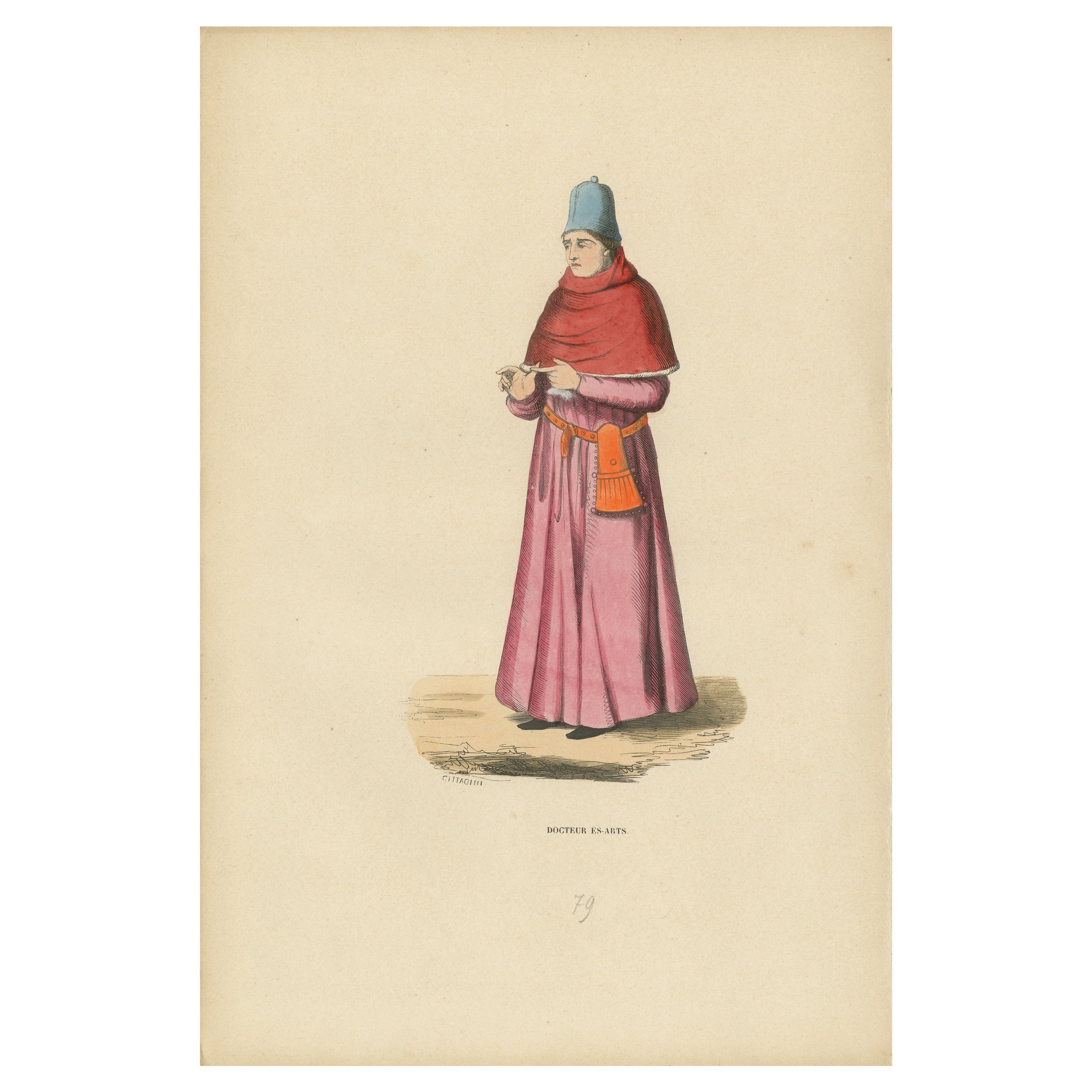
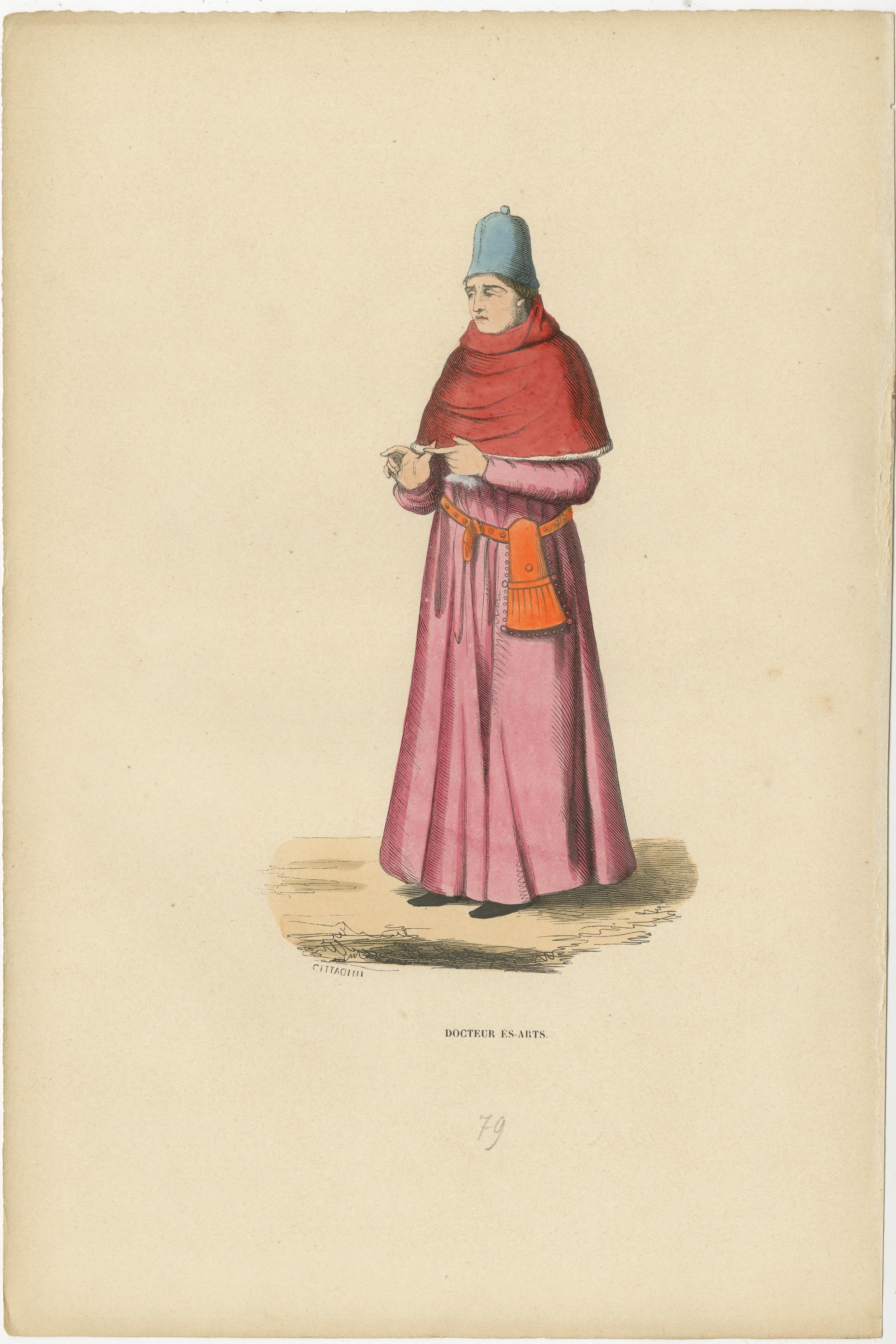
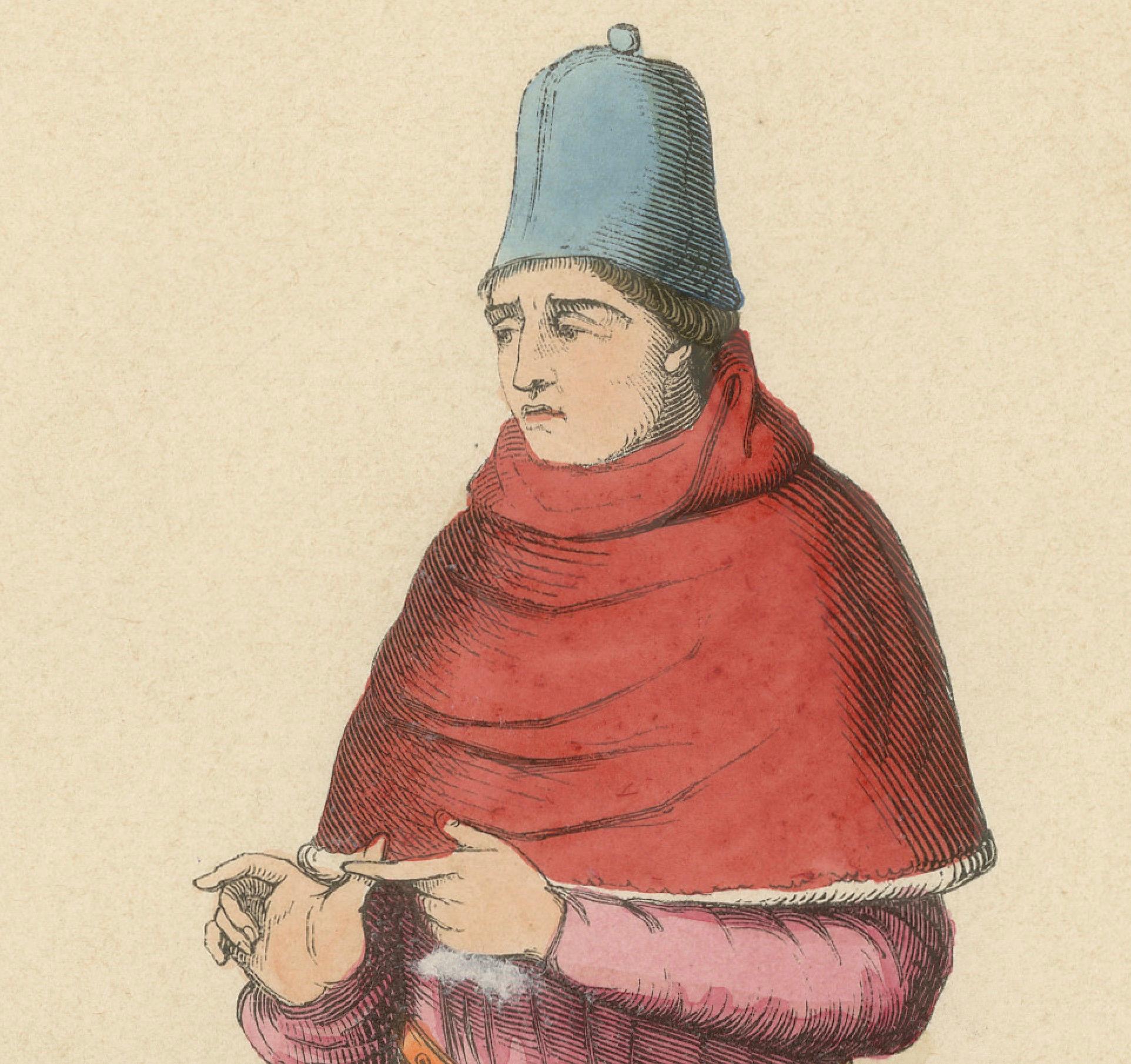
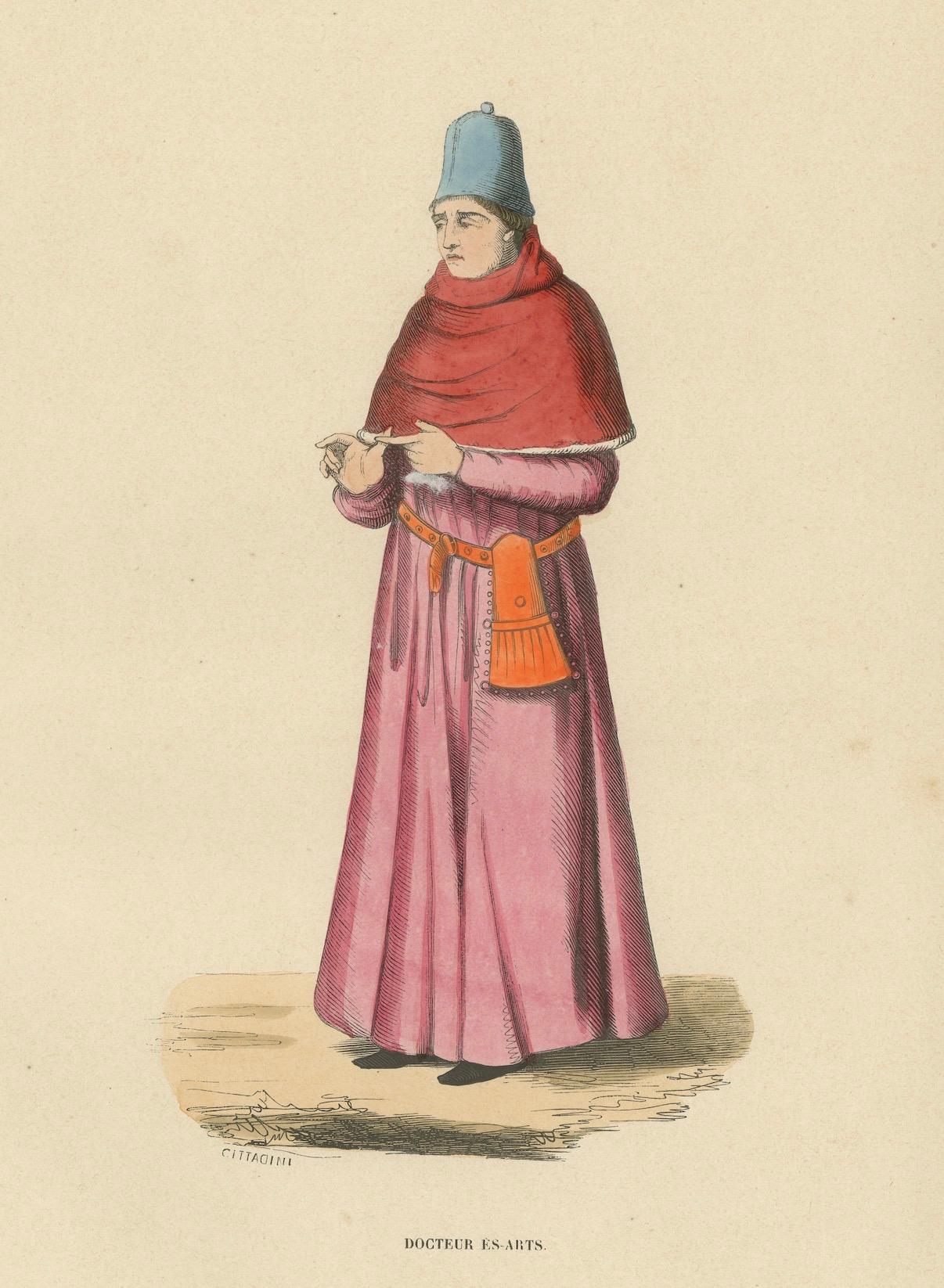
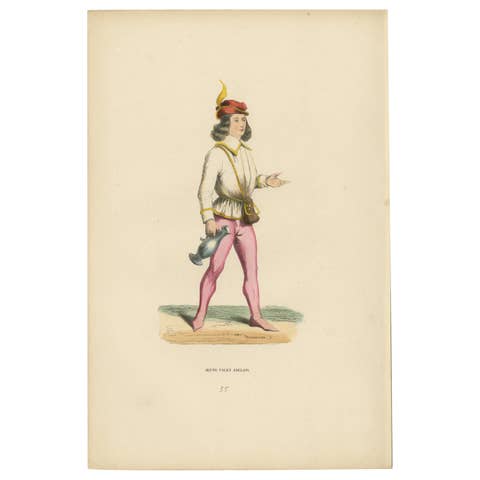
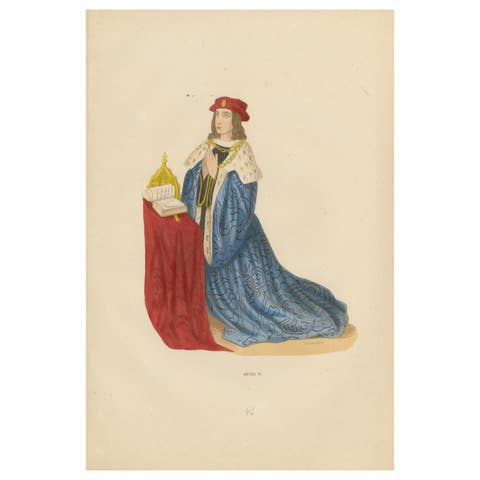
This print illustrates a learned individual, likely a doctor of the arts or a scholar, from the medieval period. The attire is indicative of a person of intellect and study, possibly associated with a university or a place of higher learning.
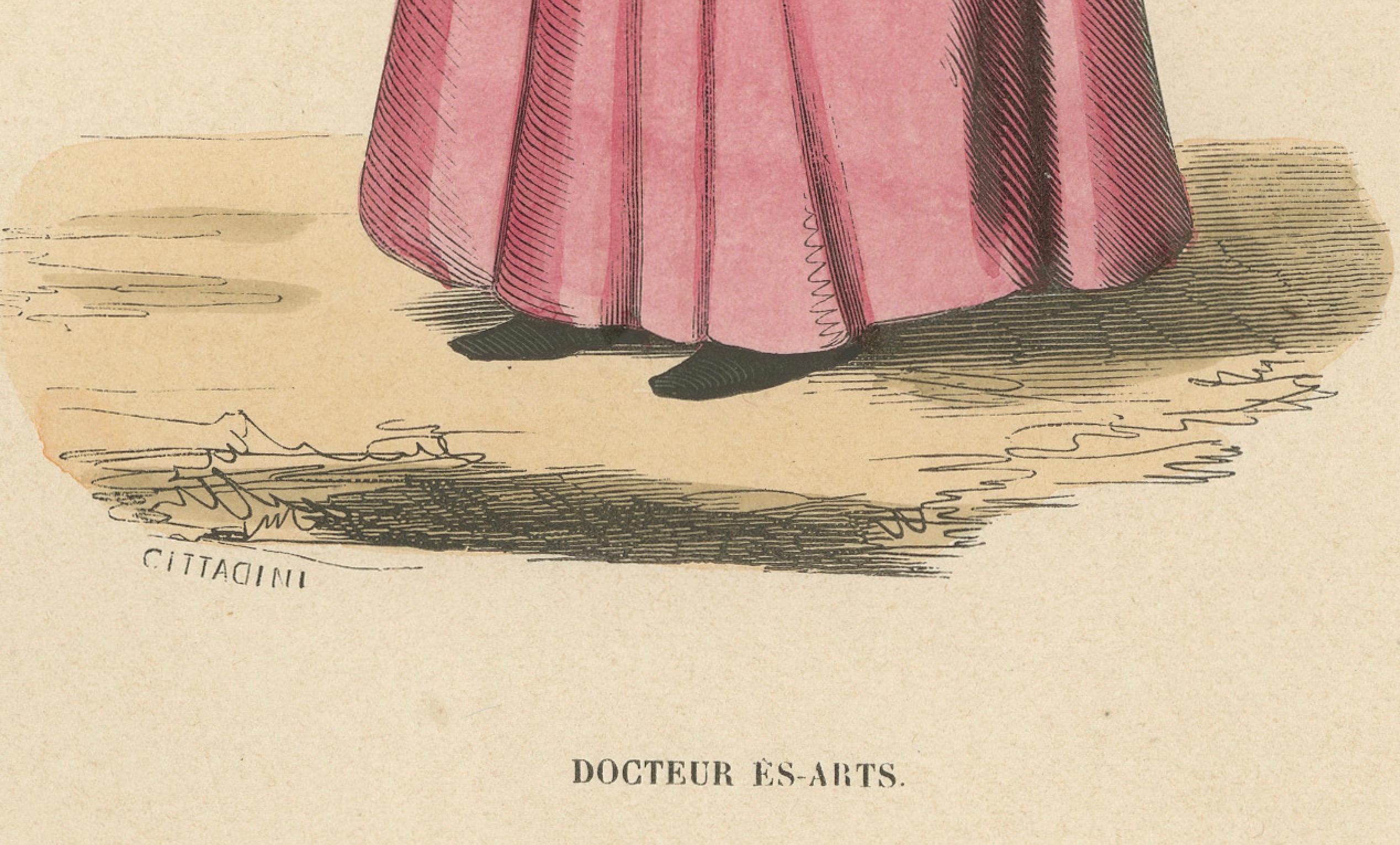
He is clothed in a long pink robe that extends to the ground, signifying his dedication to scholarly pursuits. The robe's color is vibrant, which may denote a specific rank or field of academic achievement, as distinct colors were often used to represent various faculties.
Around his shoulders, he wears a red shawl or mantle, providing warmth and perhaps indicating a higher status within the academic community. Such shawls could also symbolize the achievement of advanced academic degrees.
His head is covered with a simple blue cap, a common element of scholarly dress during the medieval period, which would have been particularly important in the scriptoriums and libraries where scholars spent much of their time.
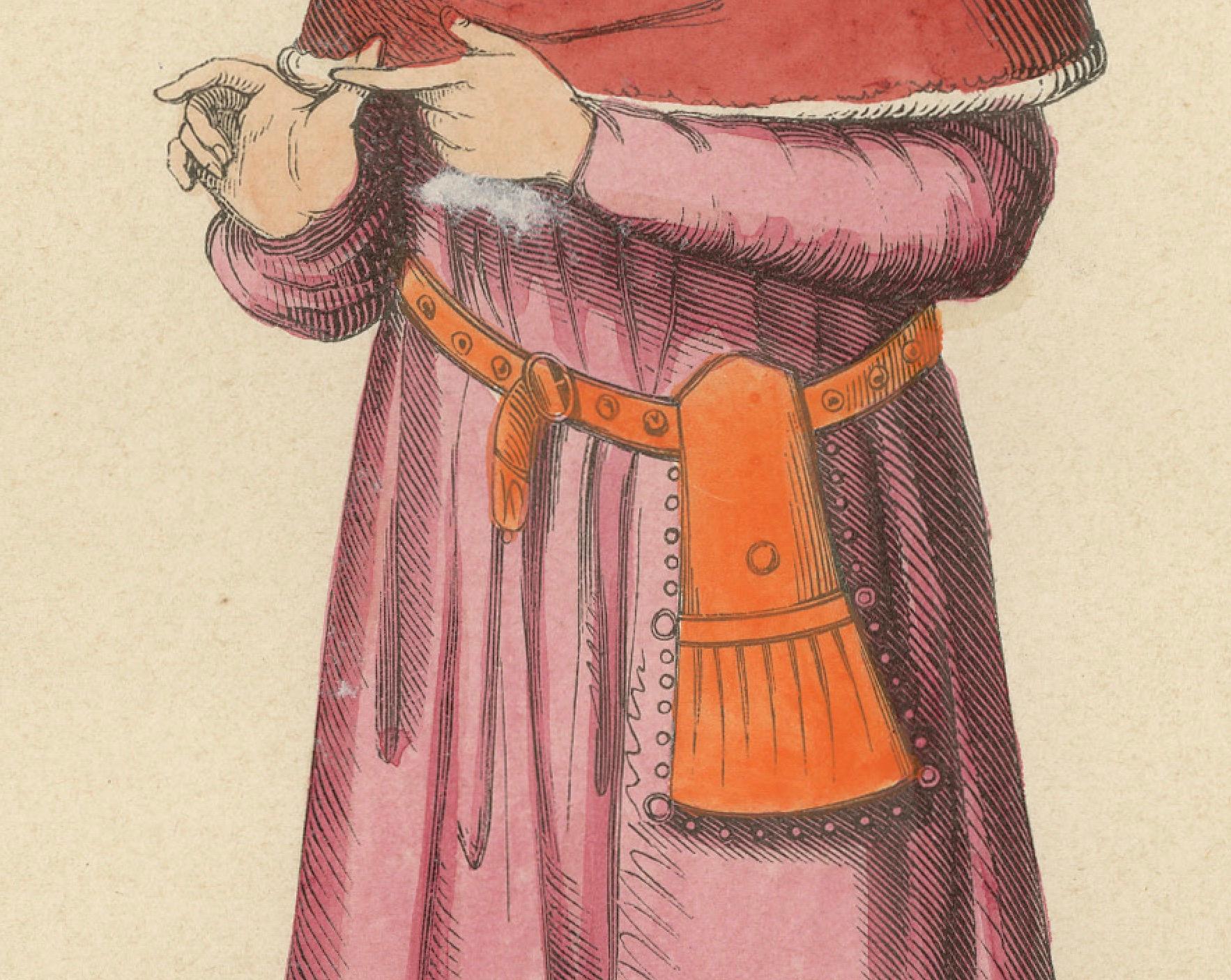
The belt around his waist holds a pouch, likely containing writing instruments, parchment, or other tools essential for his work. His hands are delicately clasped together, perhaps in a gesture of thought or conversation.
The figure's facial expression is one of contemplation, reflecting the meditative and inquisitive nature of his profession. His gaze is directed slightly downwards, possibly towards a text or object of his study.
This image captures the essence of the medieval academic, a figure central to the intellectual and cultural developments of the time. It is a reminder of the importance placed on learning and the respect accorded to those who pursued knowledge in the Middle Ages.
The colors have a nice glow over them. Historically, egg whites, known as glair, and sometimes egg yolk were indeed used in illumination and painting, particularly in manuscripts, to give colors a brighter appearance and to add a sheen or gloss to the work. This technique was quite common during the Middle Ages and into the Renaissance.
Egg whites can be applied as a varnish over pigments to enhance their brightness and to protect the colors. This application could make the colors appear more vivid and also add a slight glossy sheen to the surface of the image.
Egg yolk, on the other hand, was commonly used as a binding agent in paint. It forms the basis of tempera paint, a medium that was widely used before the advent of oil painting. Egg yolk helps to create a durable and long-lasting color that adheres well to various surfaces.
In the context of the print from 1847, it's less likely that egg whites or yolks were used directly on the print, as by that time, commercial printing processes would have been more advanced and less reliant on such manual methods. However, if this print is a representation of an earlier style or is meant to mimic the appearance of hand-painted manuscripts, the original artists might have employed techniques or materials that gave a similar effect to those achieved with egg-based binders and varnishes.