About this sheet
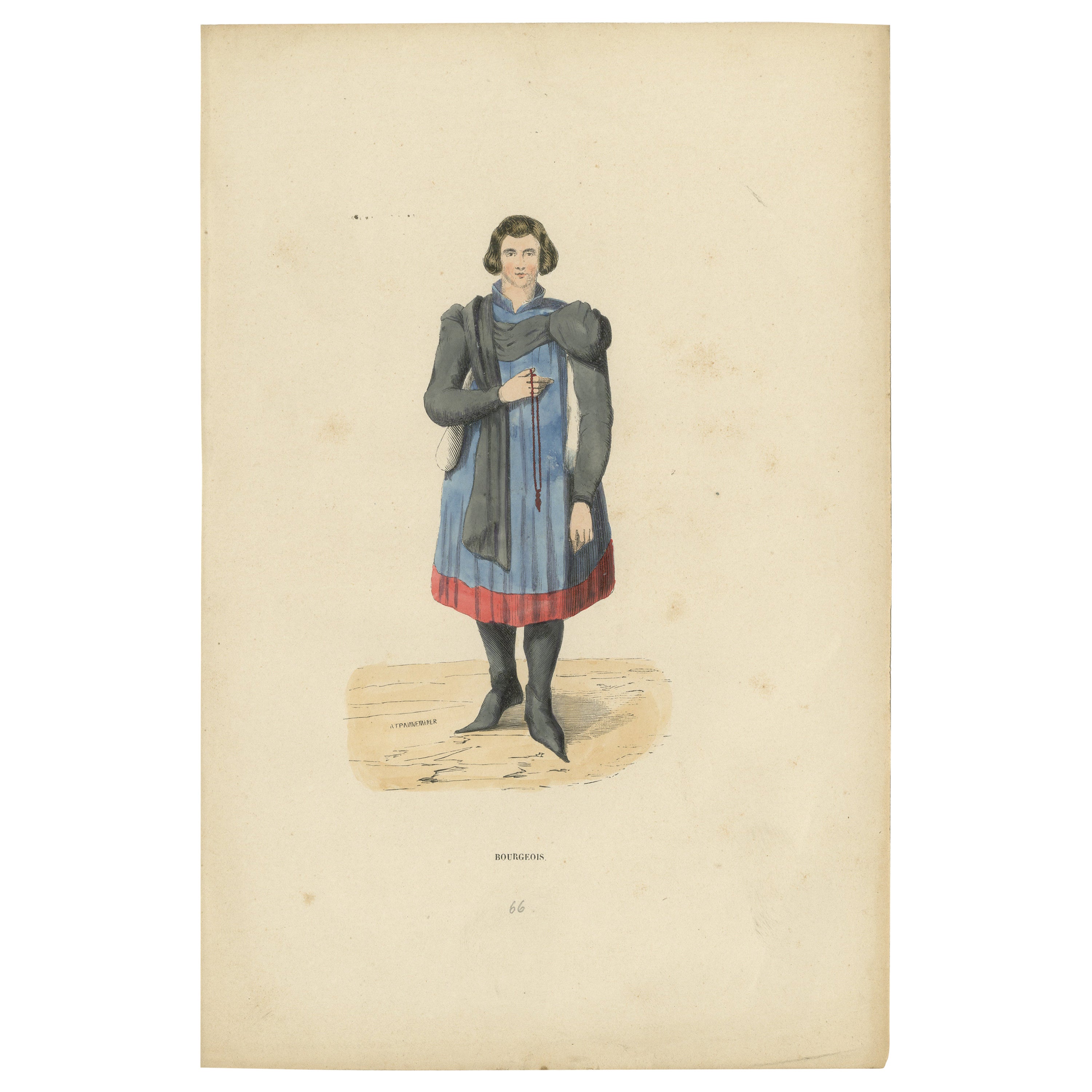
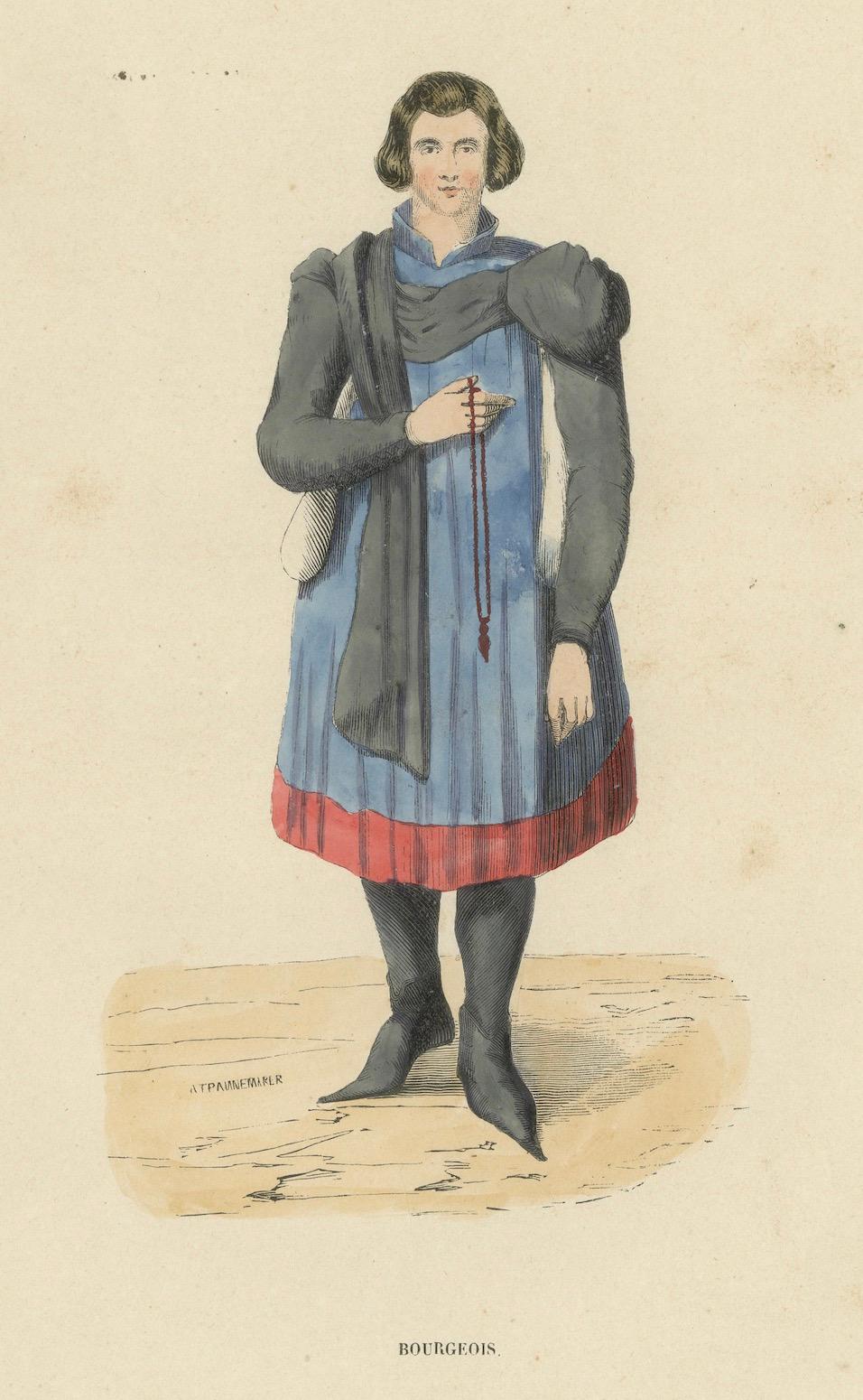
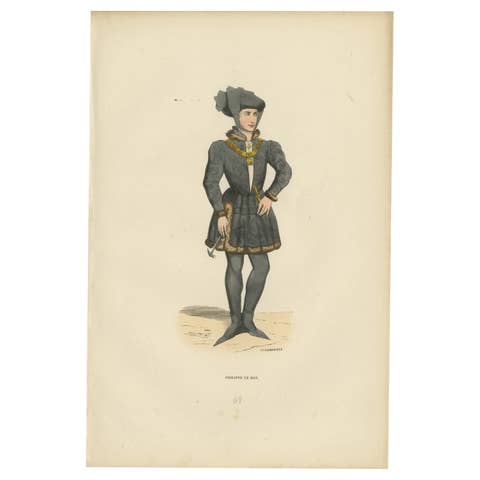
This print appears to depict a man of the bourgeoisie, the urban middle class, during the medieval period. The individual is portrayed in a stance that reflects confidence and self-assuredness, qualities befitting a prosperous member of medieval society.
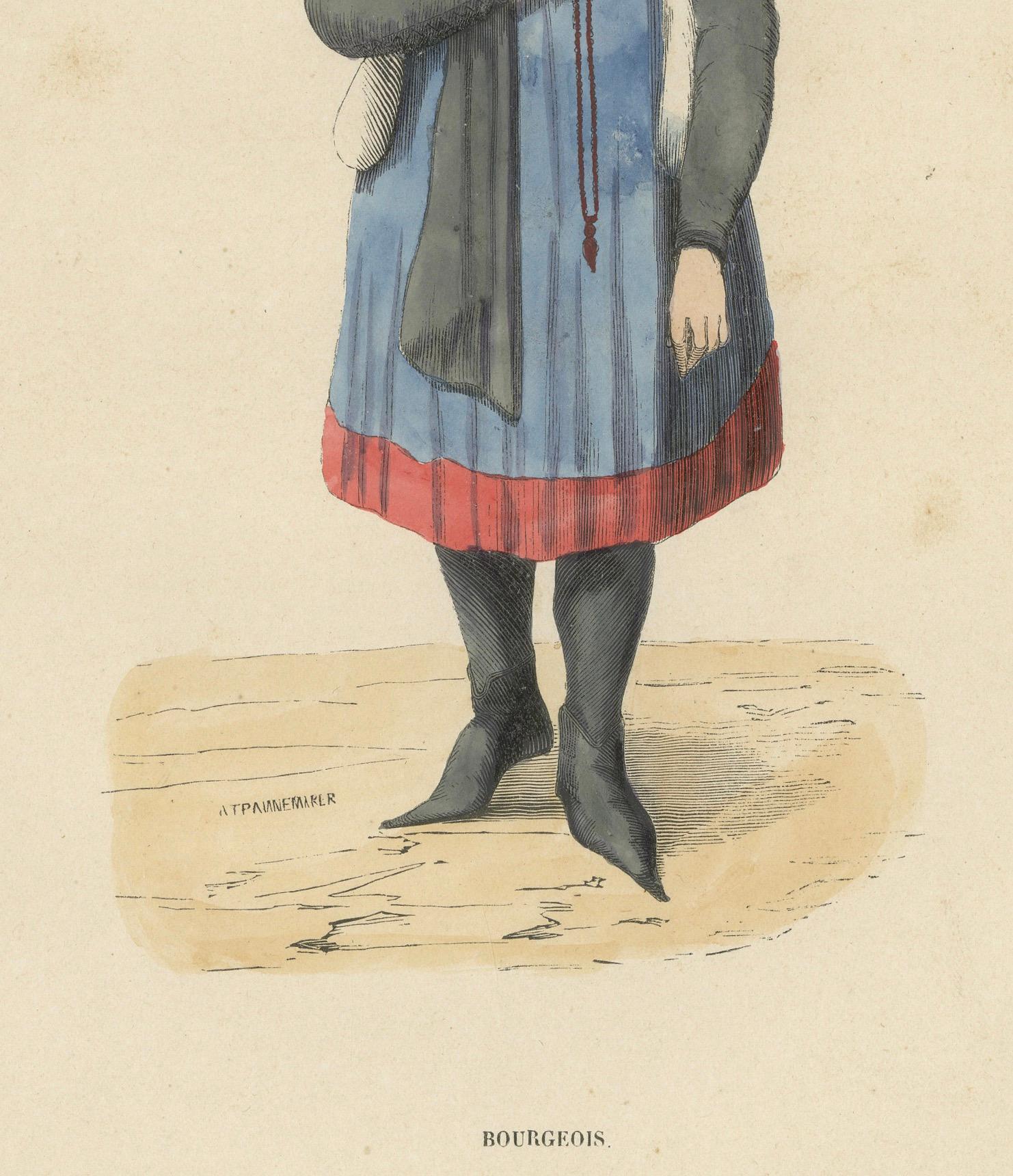
He wears a simple yet elegant blue tunic with a red hem, the colors vibrant yet not overly ostentatious, suggesting a balance between wealth and modesty appropriate for a bourgeois. The tunic is belted at the waist, a practical element for a citizen who may be involved in trade or administration.
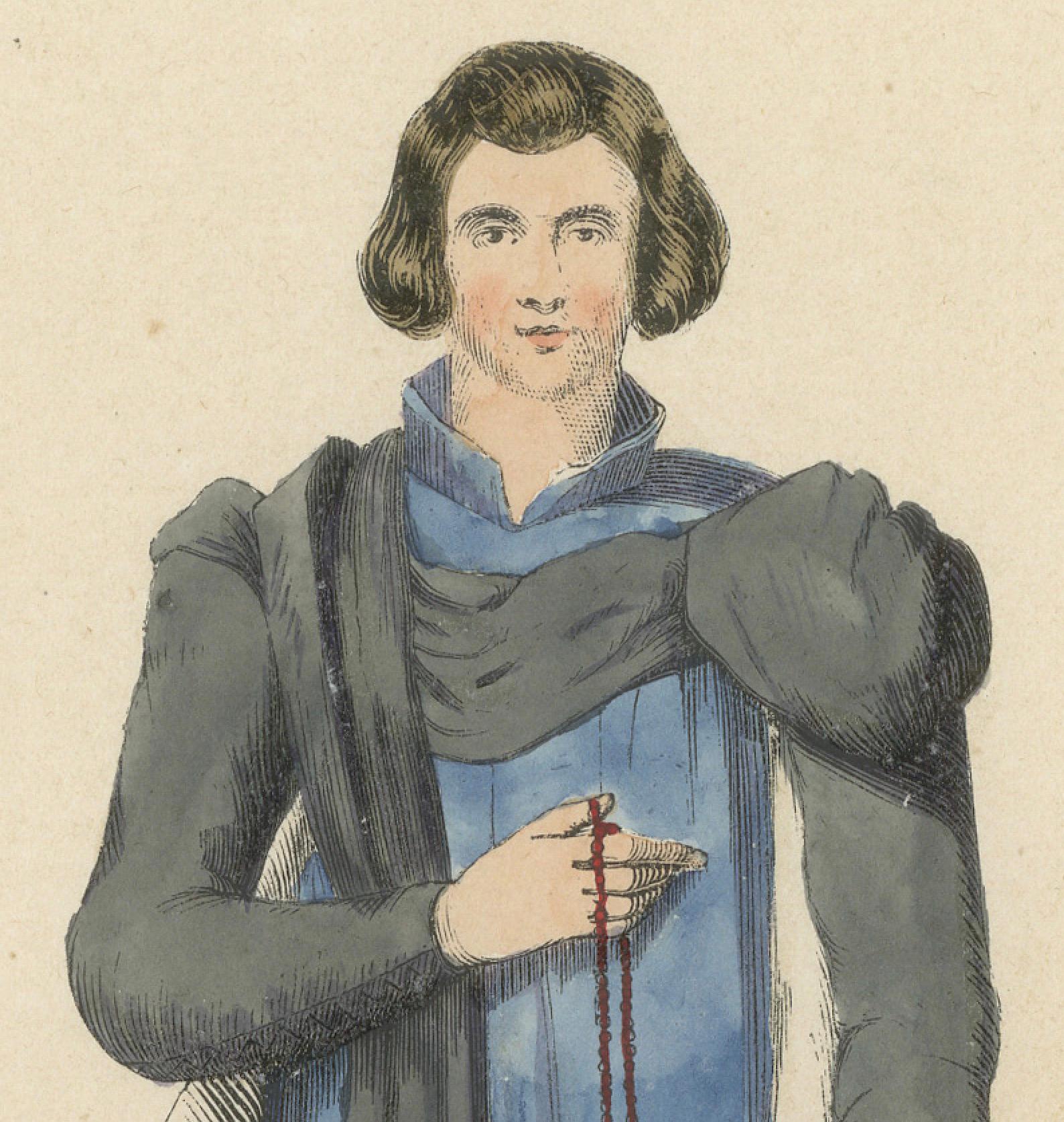
Over his tunic, he has a grey cloak that falls from his shoulders, indicative of the need for practical attire that could serve in various weather conditions. The cloak is fastened at the neck with a brooch, a small detail that suggests a certain level of prosperity and attention to fashion.
His black hose and shoes are typical of the period, practical for walking the cobbled streets of a medieval town. His hands are clasped before him, possibly holding gloves, an accessory that would denote status and sophistication.
The man's hair is cut in a style that is neat and frames his face, which bears a straightforward and earnest expression. He appears to be looking slightly to the side, as if engaged in observation or conversation.
This image captures the essence of the rising middle class during the medieval period—individuals who played a vital role in the economic and social fabric of urban life, balancing their emerging status with the traditional values of the time.
The colors have a nice glow over them. Historically, egg whites, known as glair, and sometimes egg yolk were indeed used in illumination and painting, particularly in manuscripts, to give colors a brighter appearance and to add a sheen or gloss to the work. This technique was quite common during the Middle Ages and into the Renaissance.
Egg whites can be applied as a varnish over pigments to enhance their brightness and to protect the colors. This application could make the colors appear more vivid and also add a slight glossy sheen to the surface of the image.
Egg yolk, on the other hand, was commonly used as a binding agent in paint. It forms the basis of tempera paint, a medium that was widely used before the advent of oil painting. Egg yolk helps to create a durable and long-lasting color that adheres well to various surfaces.
In the context of the print from 1847, it's less likely that egg whites or yolks were used directly on the print, as by that time, commercial printing processes would have been more advanced and less reliant on such manual methods. However, if this print is a representation of an earlier style or is meant to mimic the appearance of hand-painted manuscripts, the original artists might have employed techniques or materials that gave a similar effect to those achieved with egg-based binders and varnishes.