About this sheet
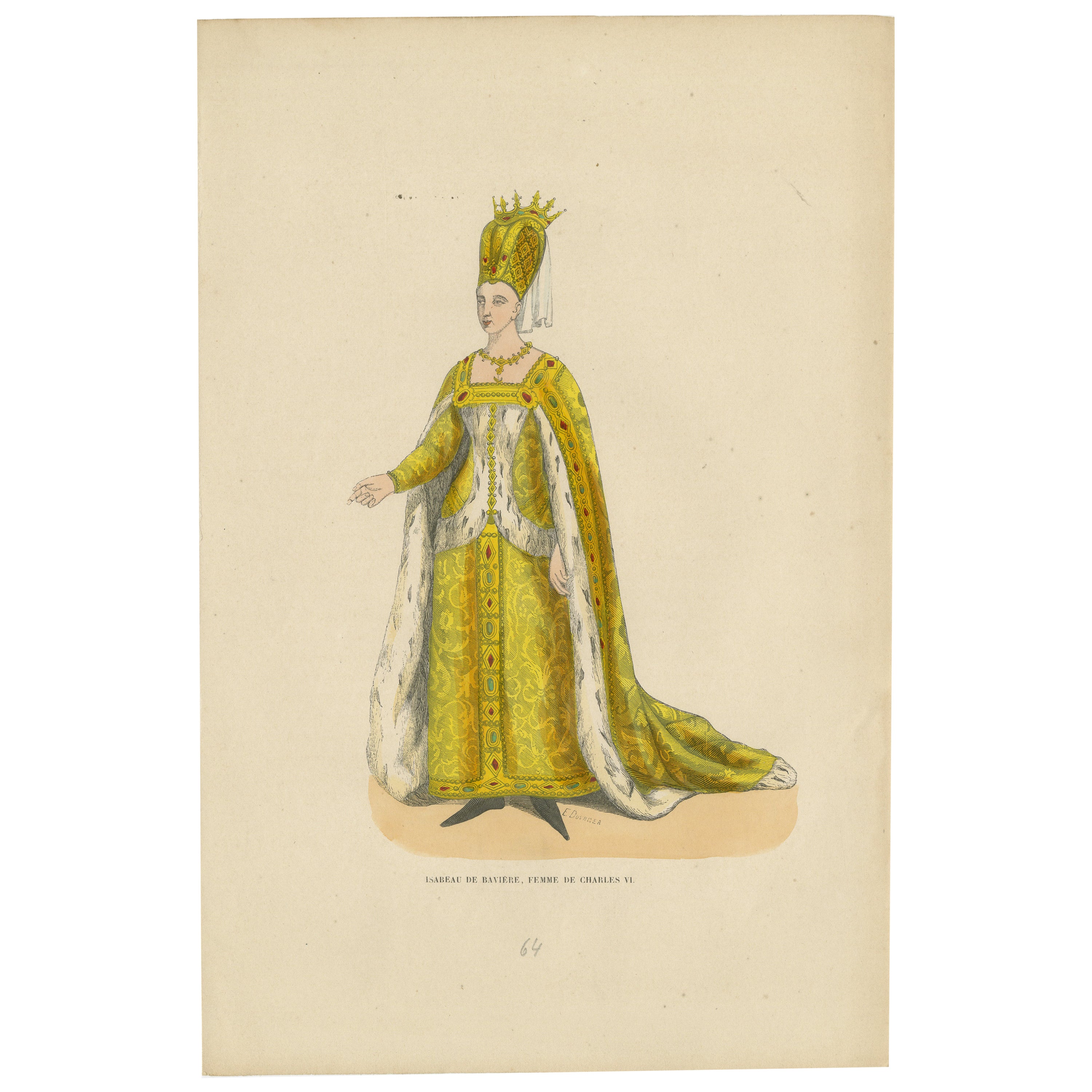
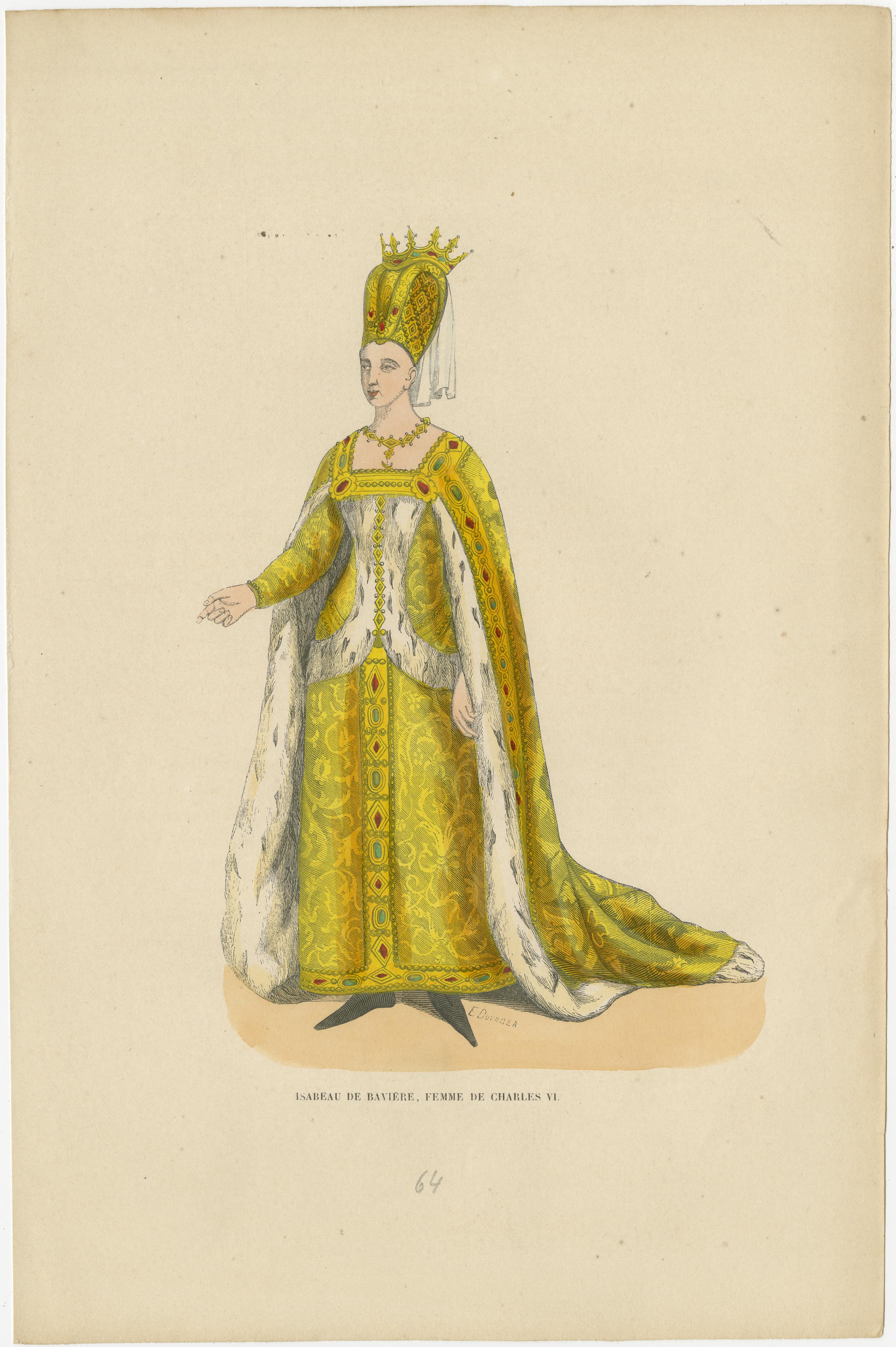
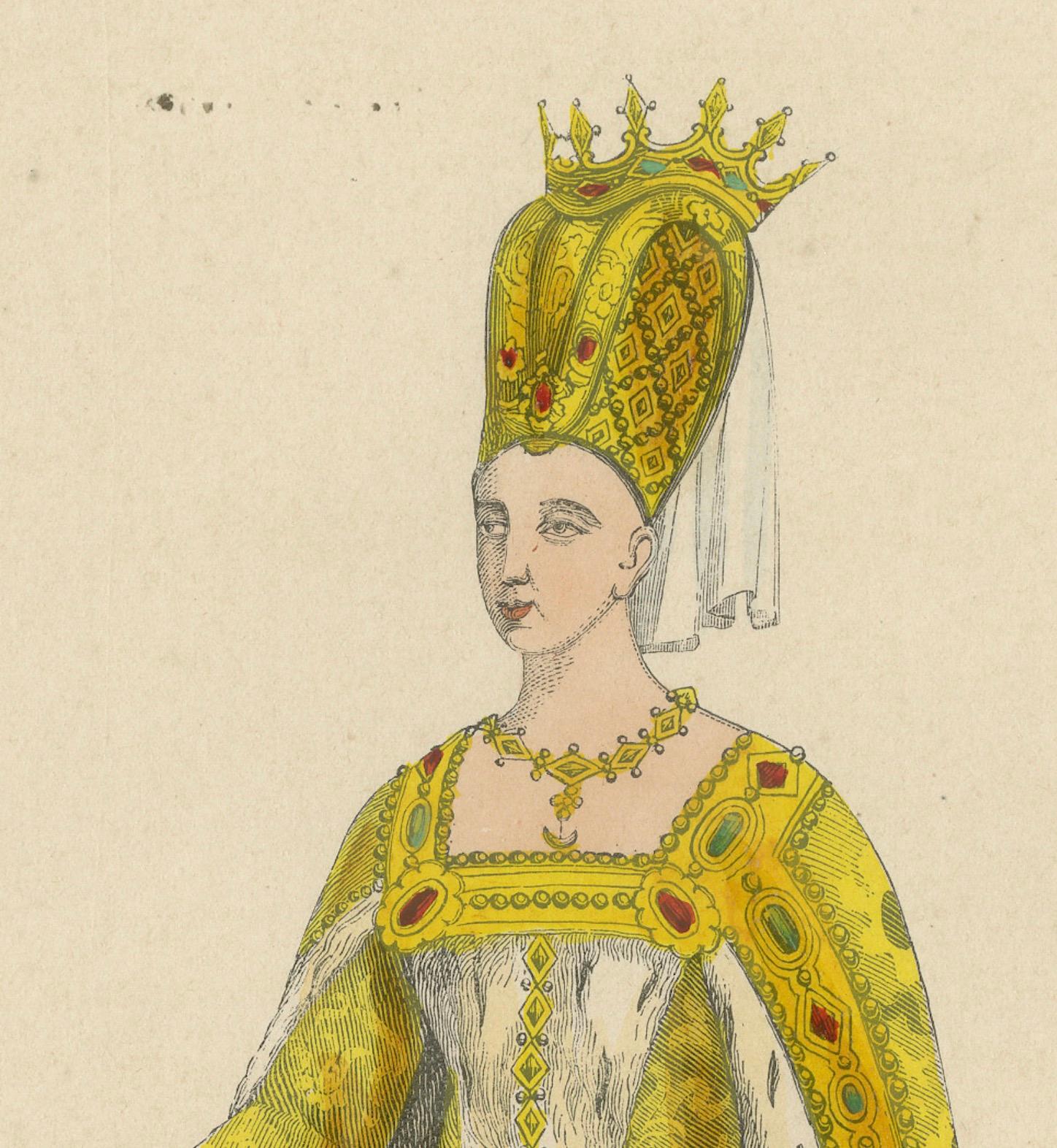
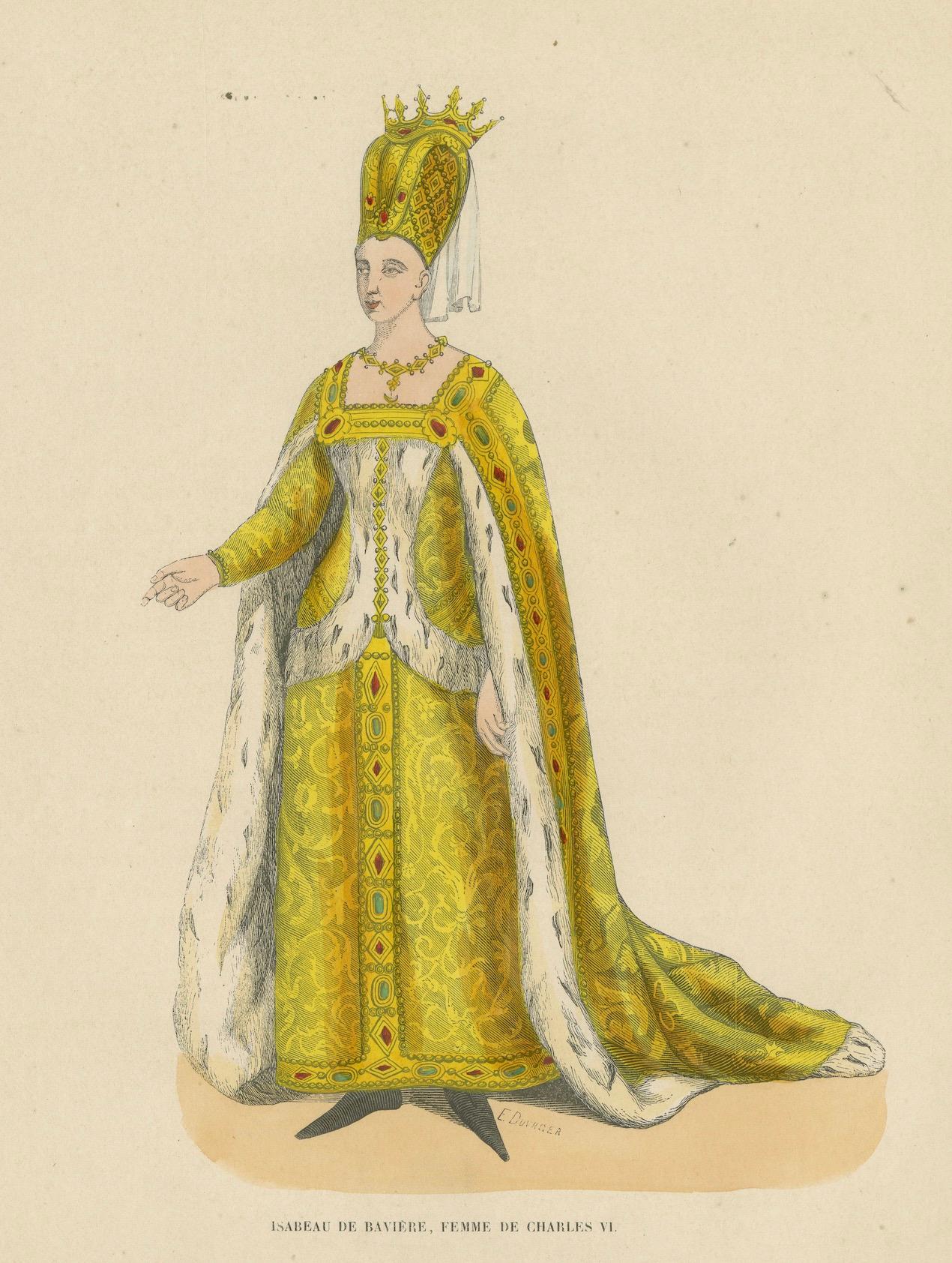
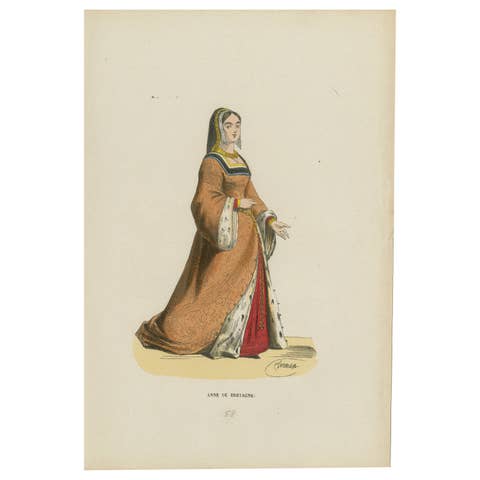
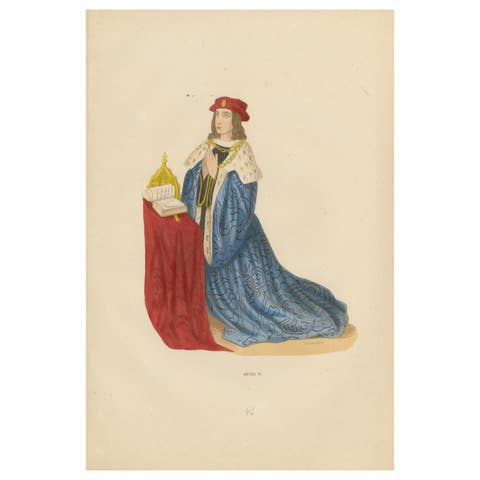
This print is a depiction of Isabeau of Bavaria, Queen Consort of King Charles VI of France. She is shown in an ornate and majestic pose, illustrative of her high rank and the fashion of the French court during her time.
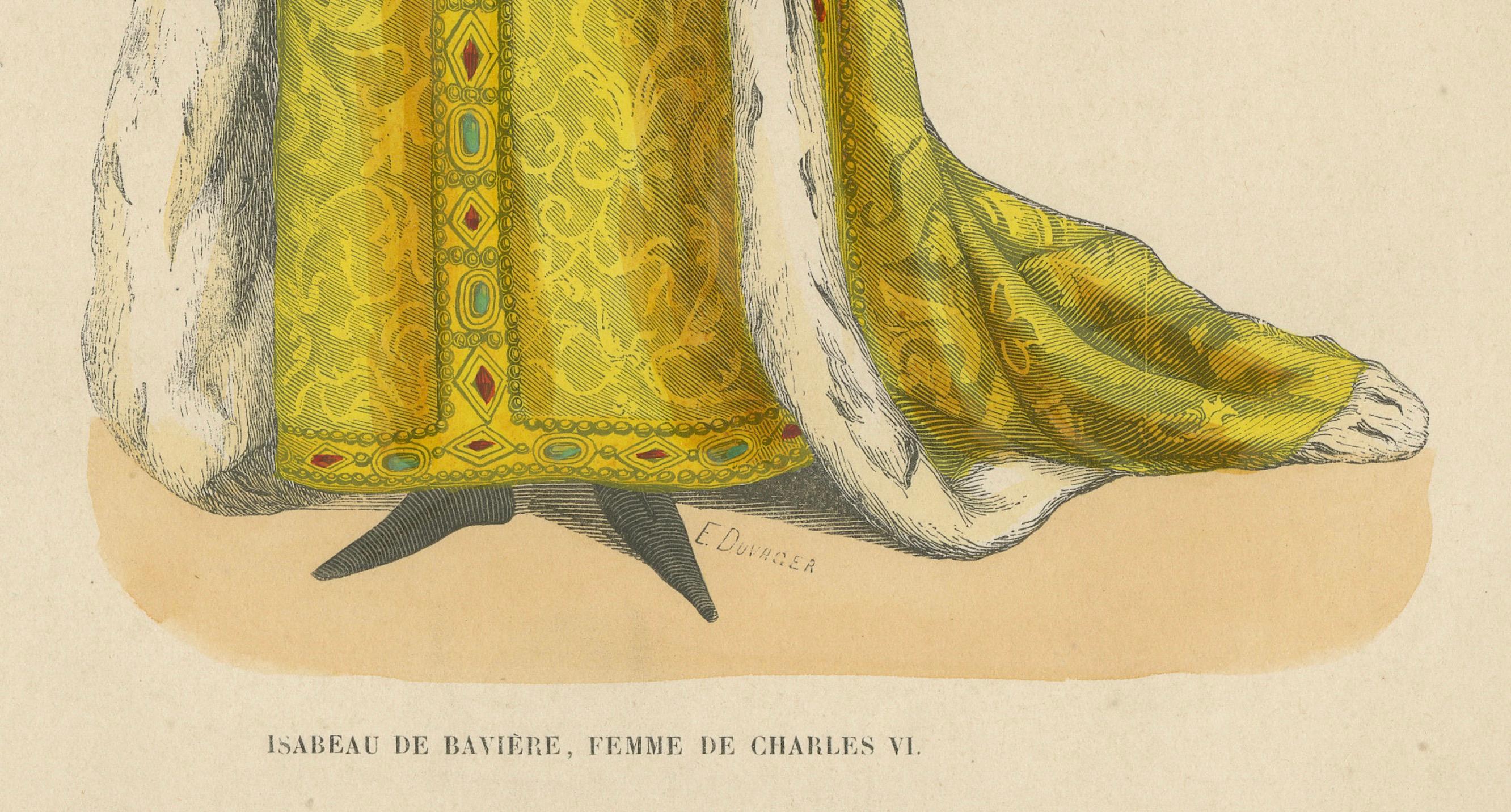
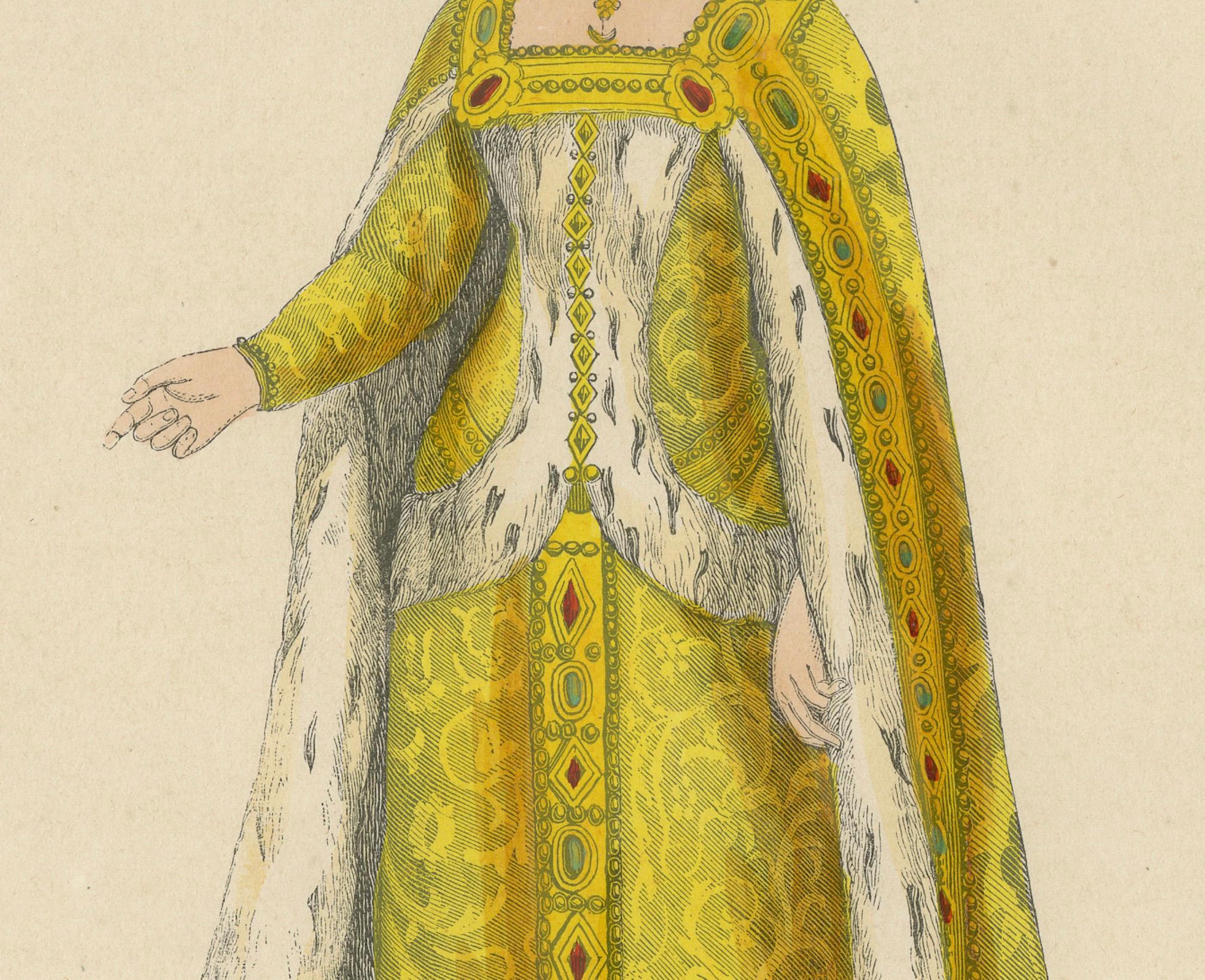
Isabeau is dressed in a sumptuous gown that exudes royal grandeur. The main body of the gown is a golden yellow, richly patterned with what appears to be a floral or fleur-de-lis motif, a design often associated with the French monarchy. The use of gold in her dress not only signifies wealth but also represents the divine right and status of a queen.
The gown features a square neckline, a style that was popular during her era, adorned with jewels and bordered with intricate designs. Over her shoulders, she wears a cloak lined with fur, signifying her royal status and the luxury befitting a queen. The cloak is also edged with a pattern that complements the gown's design.
Her head is adorned with a distinctive hennin, a tall, pointed headdress that was fashionable among the nobility in the 15th century. The hennin is draped with a veil, adding an element of grace and modesty to her attire. Atop the hennin sits a crown, a clear symbol of her position as queen.
Isabeau's expression is composed and dignified, with a faint hint of a smile, suggesting the poise required of a queen. Her hands are delicately extended, as if in a gesture of benevolence or in the midst of courtly etiquette.
This print captures the elegance and elaborate nature of royal fashion in the medieval period, as well as the significant role of the queen consort within the court and the wider realm.
The colors have a nice glow over them. Historically, egg whites, known as glair, and sometimes egg yolk were indeed used in illumination and painting, particularly in manuscripts, to give colors a brighter appearance and to add a sheen or gloss to the work. This technique was quite common during the Middle Ages and into the Renaissance.
Egg whites can be applied as a varnish over pigments to enhance their brightness and to protect the colors. This application could make the colors appear more vivid and also add a slight glossy sheen to the surface of the image.
Egg yolk, on the other hand, was commonly used as a binding agent in paint. It forms the basis of tempera paint, a medium that was widely used before the advent of oil painting. Egg yolk helps to create a durable and long-lasting color that adheres well to various surfaces.
In the context of the print from 1847, it's less likely that egg whites or yolks were used directly on the print, as by that time, commercial printing processes would have been more advanced and less reliant on such manual methods. However, if this print is a representation of an earlier style or is meant to mimic the appearance of hand-painted manuscripts, the original artists might have employed techniques or materials that gave a similar effect to those achieved with egg-based binders and varnishes.