About this sheet
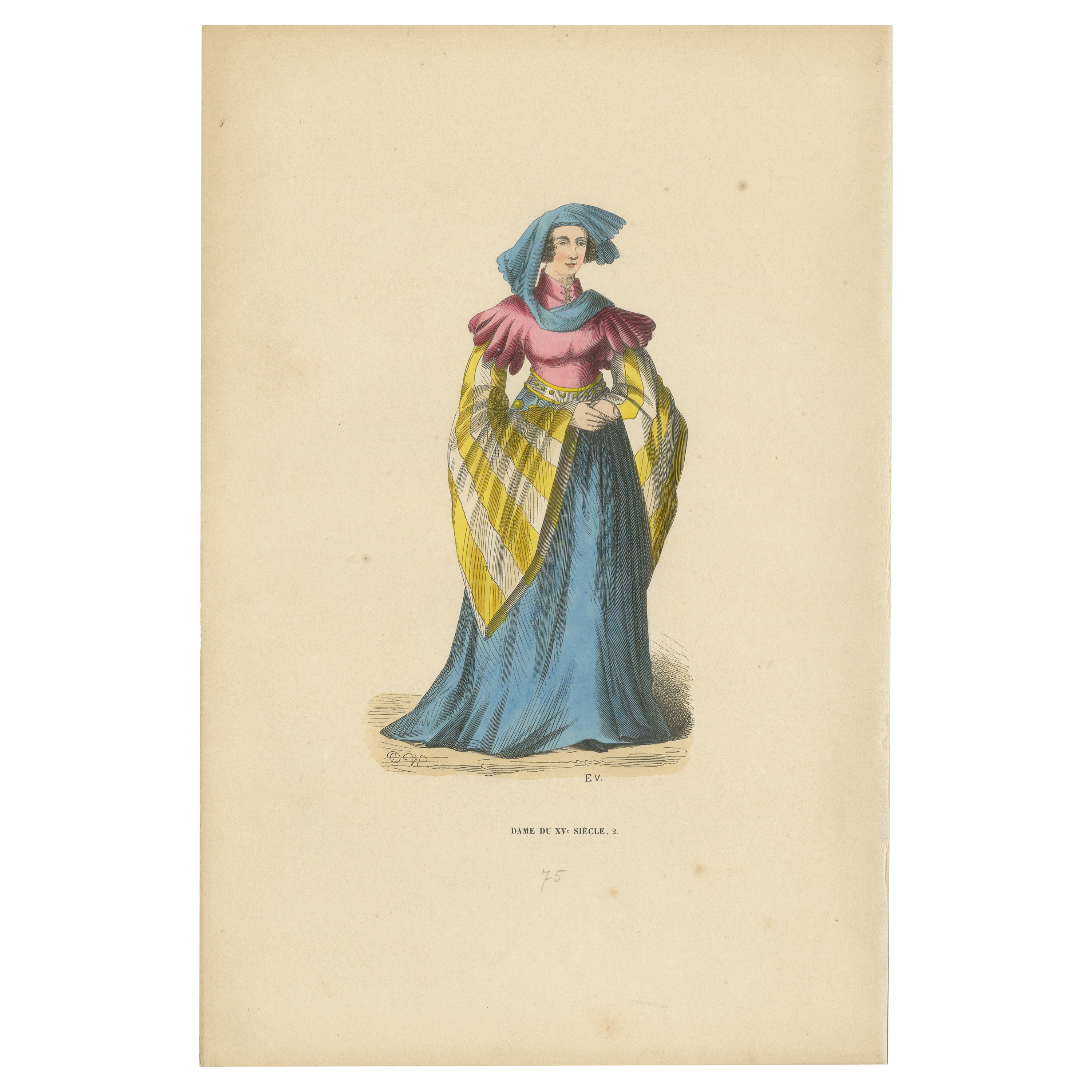
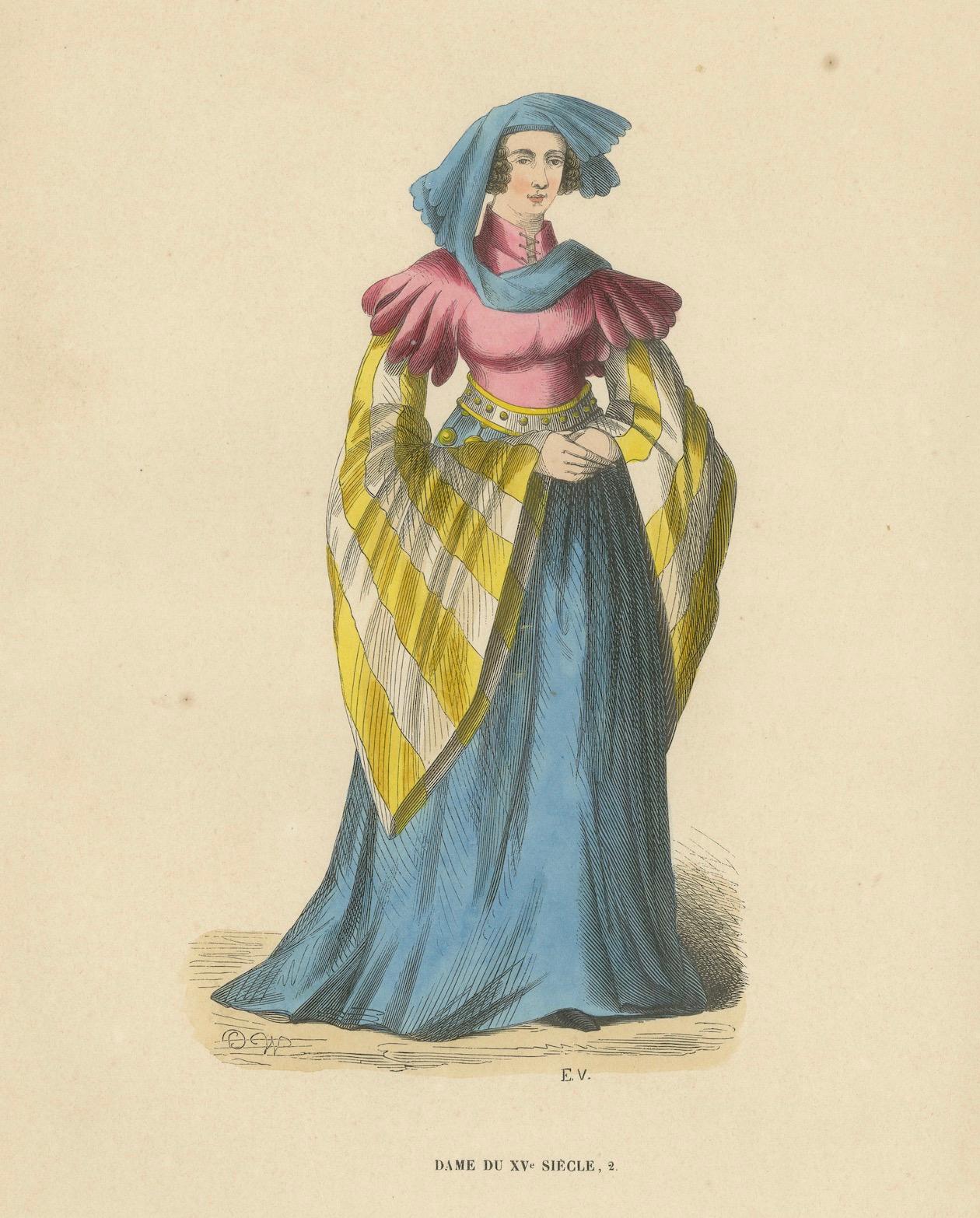
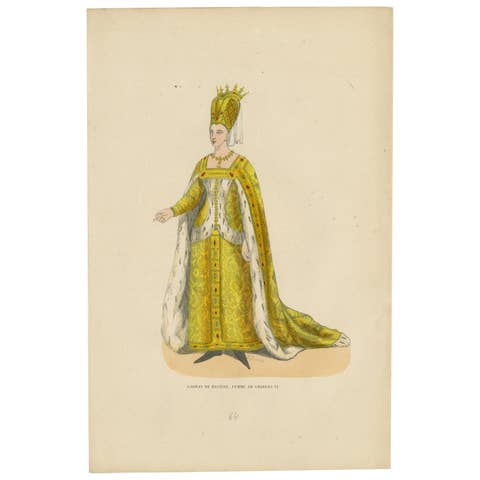
This print presents a lady of the 15th century, elegantly attired in the fashion of the European high nobility. Her dress is a visual narrative of her status and the styles that were prevalent among the affluent classes of the time.
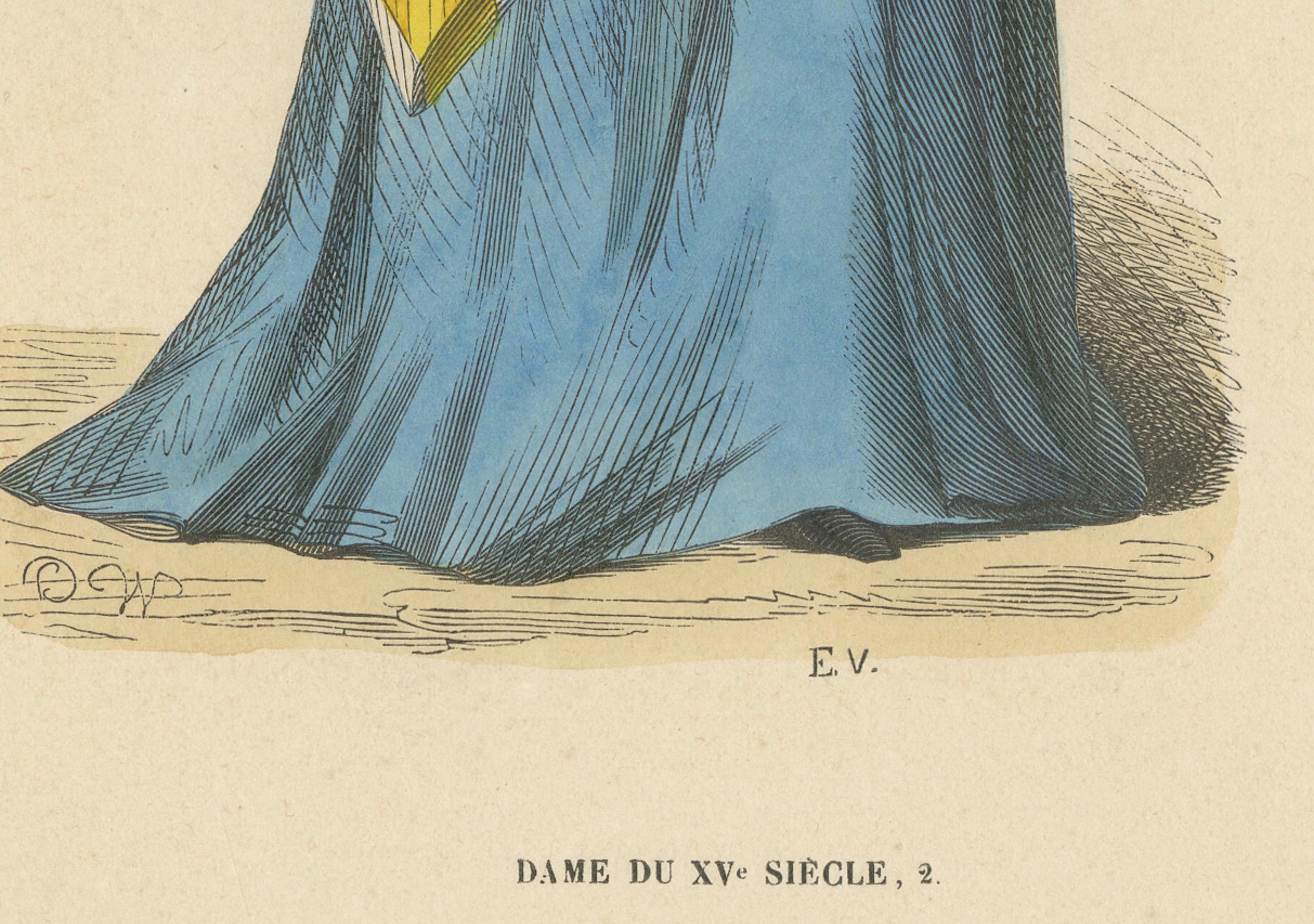
She wears a rich blue gown that gracefully drapes to the floor, the fabric likely a luxurious velvet, which was a favored material among the wealthy. The dress is fitted at the waist, highlighting the period's silhouette, and has a full skirt that suggests both modesty and grandeur.
The lady's overgown or surcoat is an eye-catching display of heraldic design, with a bold checkered pattern in yellow and a deep gold. Such patterns were often associated with noble families and were a way to display lineage and connections. The surcoat is lined with fur, a status symbol during the period, and trimmed with a complementary color that adds an extra dimension of luxury.
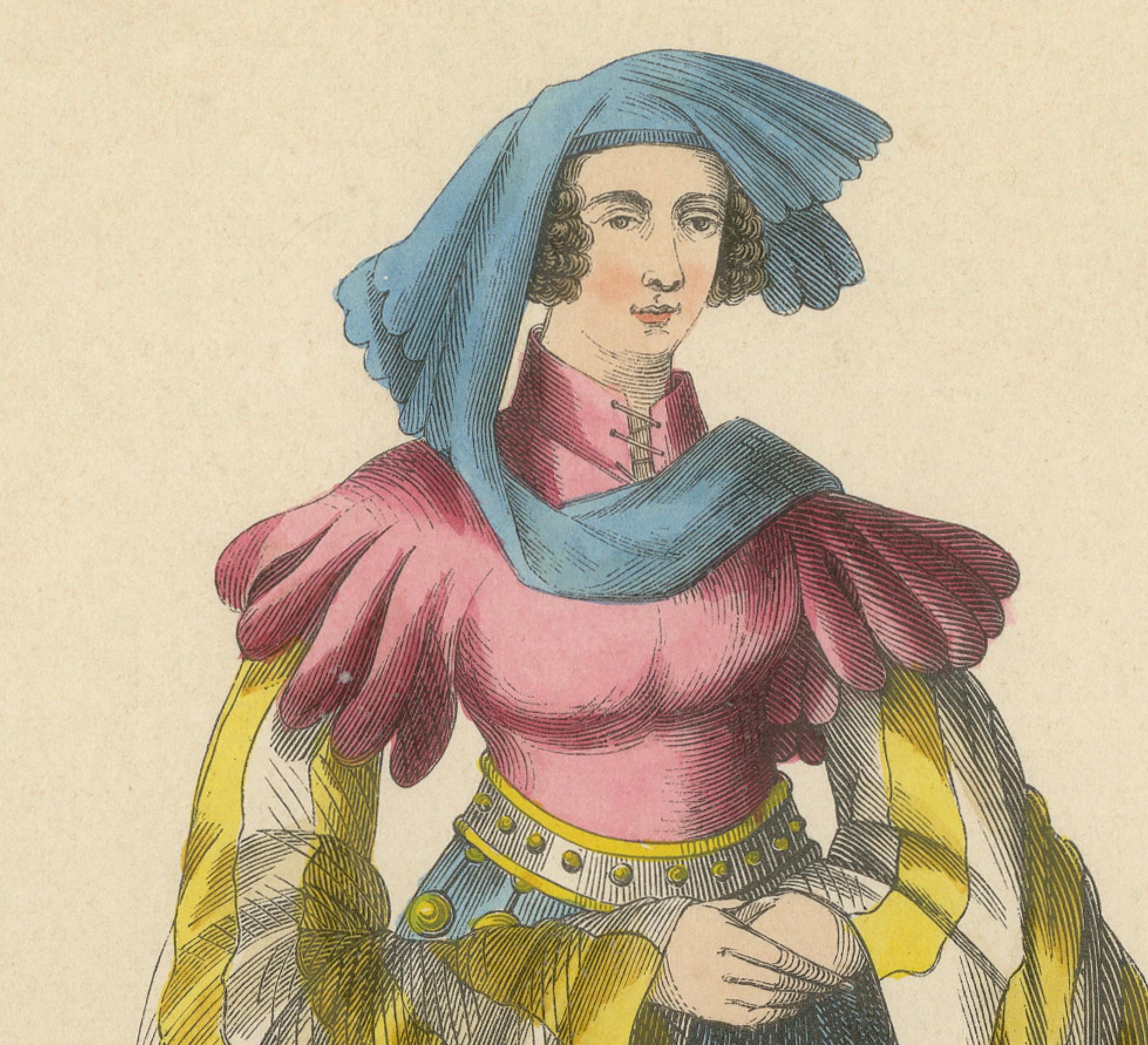
Her sleeves are distinctively puffed at the shoulders—a style known as "gigot" sleeves—before tapering to the wrist, showcasing the era's dramatic fashion sensibilities. A narrow belt cinches her waist, and from it hangs what appears to be a pouch or accessory, further accenting her attire.
She wears a headdress that includes a cornette—a type of bonnet with flowing fabric that frames the face and falls behind the shoulders. The headdress is practical while also serving as a canvas for personal expression and style.
Her expression is serene, with a slight smile, conveying the composure and refined demeanor expected of a woman of her standing. Her hands are clasped in front, perhaps holding a prayer book or a handkerchief, accessories that were common among noblewomen of her time.
This print captures the essence of the sophistication and detailed fashion of a lady in the European court during the 15th century, highlighting the intricate blend of social status, personal identity, and cultural norms of the day.
The colors have a nice glow over them. Historically, egg whites, known as glair, and sometimes egg yolk were indeed used in illumination and painting, particularly in manuscripts, to give colors a brighter appearance and to add a sheen or gloss to the work. This technique was quite common during the Middle Ages and into the Renaissance.
Egg whites can be applied as a varnish over pigments to enhance their brightness and to protect the colors. This application could make the colors appear more vivid and also add a slight glossy sheen to the surface of the image.
Egg yolk, on the other hand, was commonly used as a binding agent in paint. It forms the basis of tempera paint, a medium that was widely used before the advent of oil painting. Egg yolk helps to create a durable and long-lasting color that adheres well to various surfaces.
In the context of the print from 1847, it's less likely that egg whites or yolks were used directly on the print, as by that time, commercial printing processes would have been more advanced and less reliant on such manual methods. However, if this print is a representation of an earlier style or is meant to mimic the appearance of hand-painted manuscripts, the original artists might have employed techniques or materials that gave a similar effect to those achieved with egg-based binders and varnishes.