About this sheet
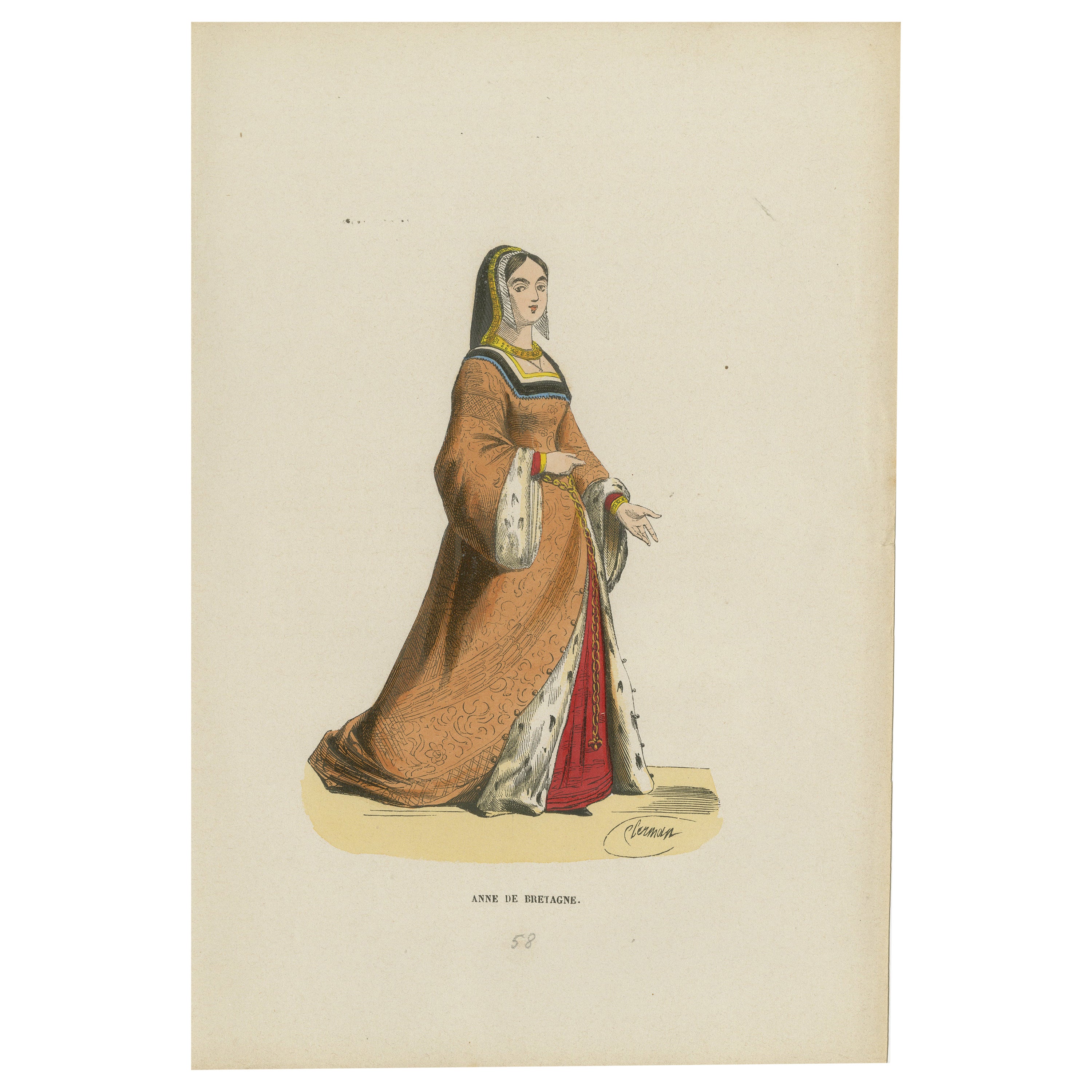
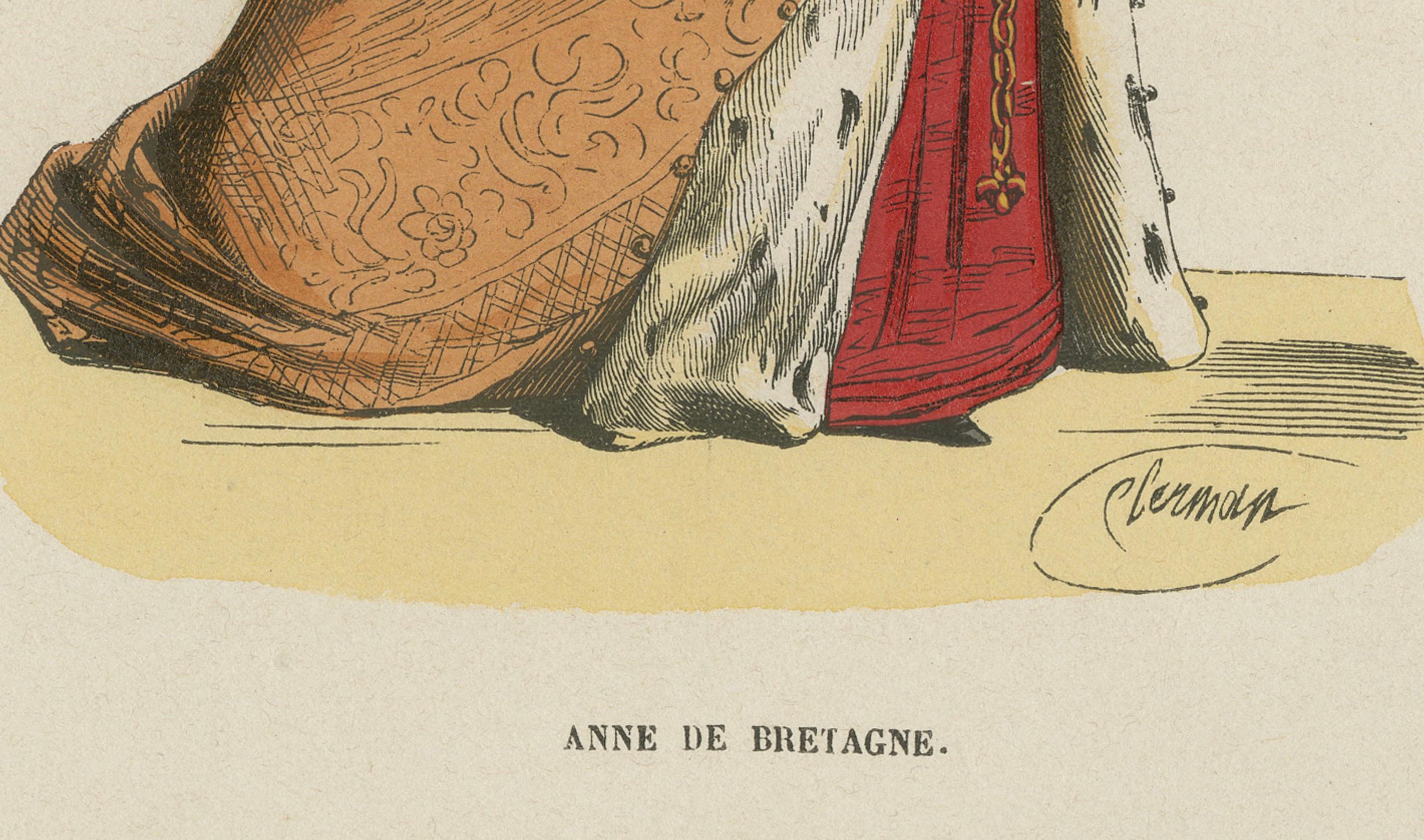
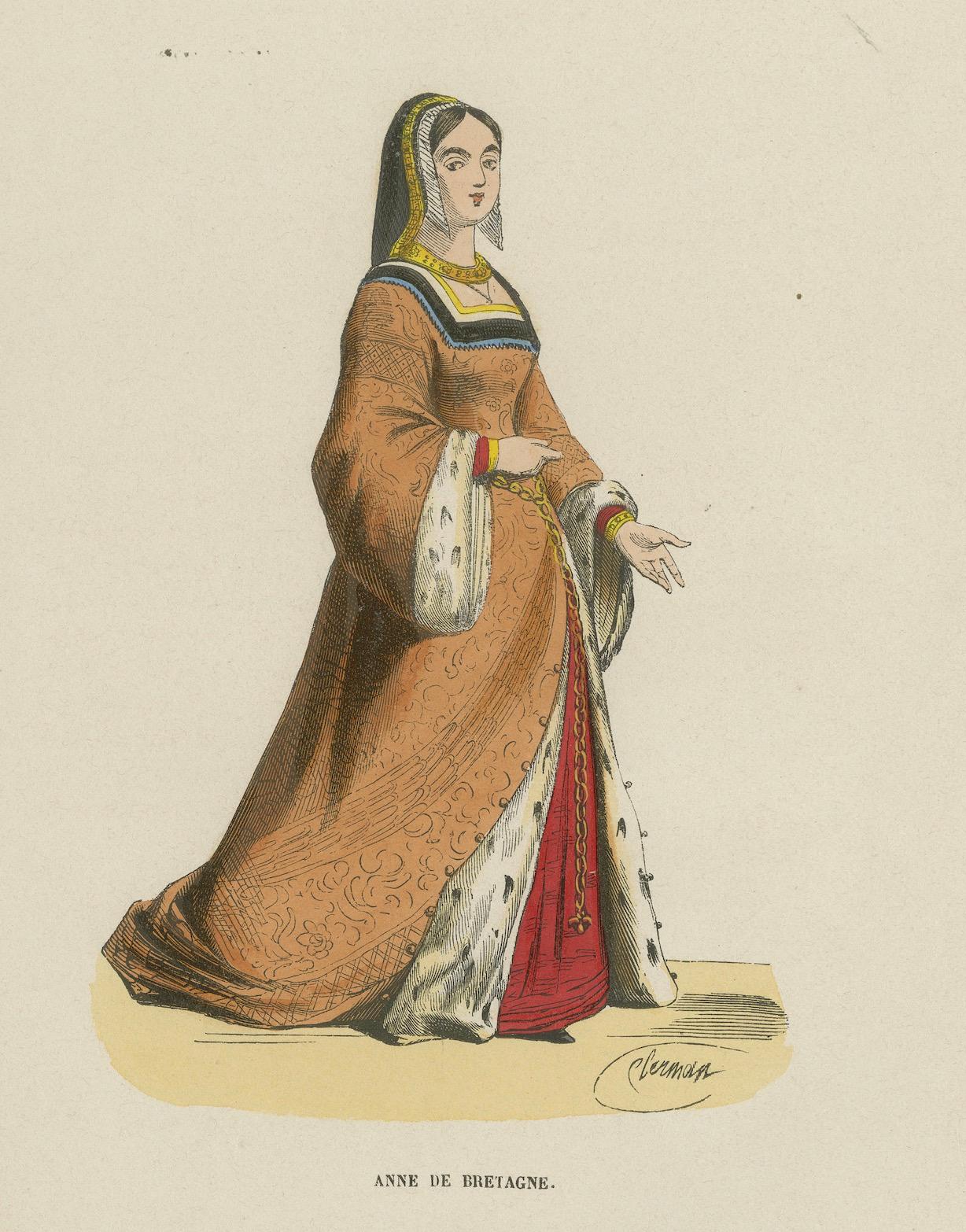
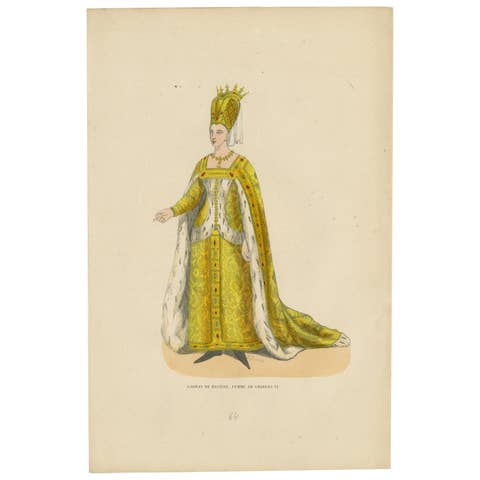
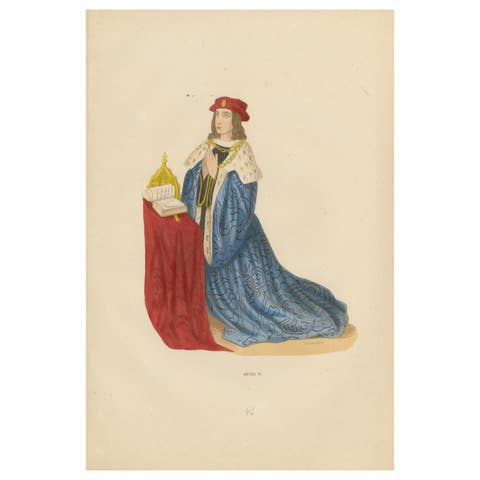
This antique print represents Anne of Brittany, a significant historical figure who was Duchess of Brittany and twice Queen of France. She stands poised, exuding an air of quiet dignity and regal composure. Her attire is indicative of high medieval fashion and likely reflects her status as a person of nobility.
She is dressed in an elegant gown with a fitted bodice and full skirt, a typical silhouette of the time for women of her rank. The gown is a rich caramel color, ornamented with a pattern that could be indicative of her personal heraldry or simply a fashion of the time. The hem and edges of the dress are trimmed with a blue and yellow border, adding a delicate contrast to the ensemble.
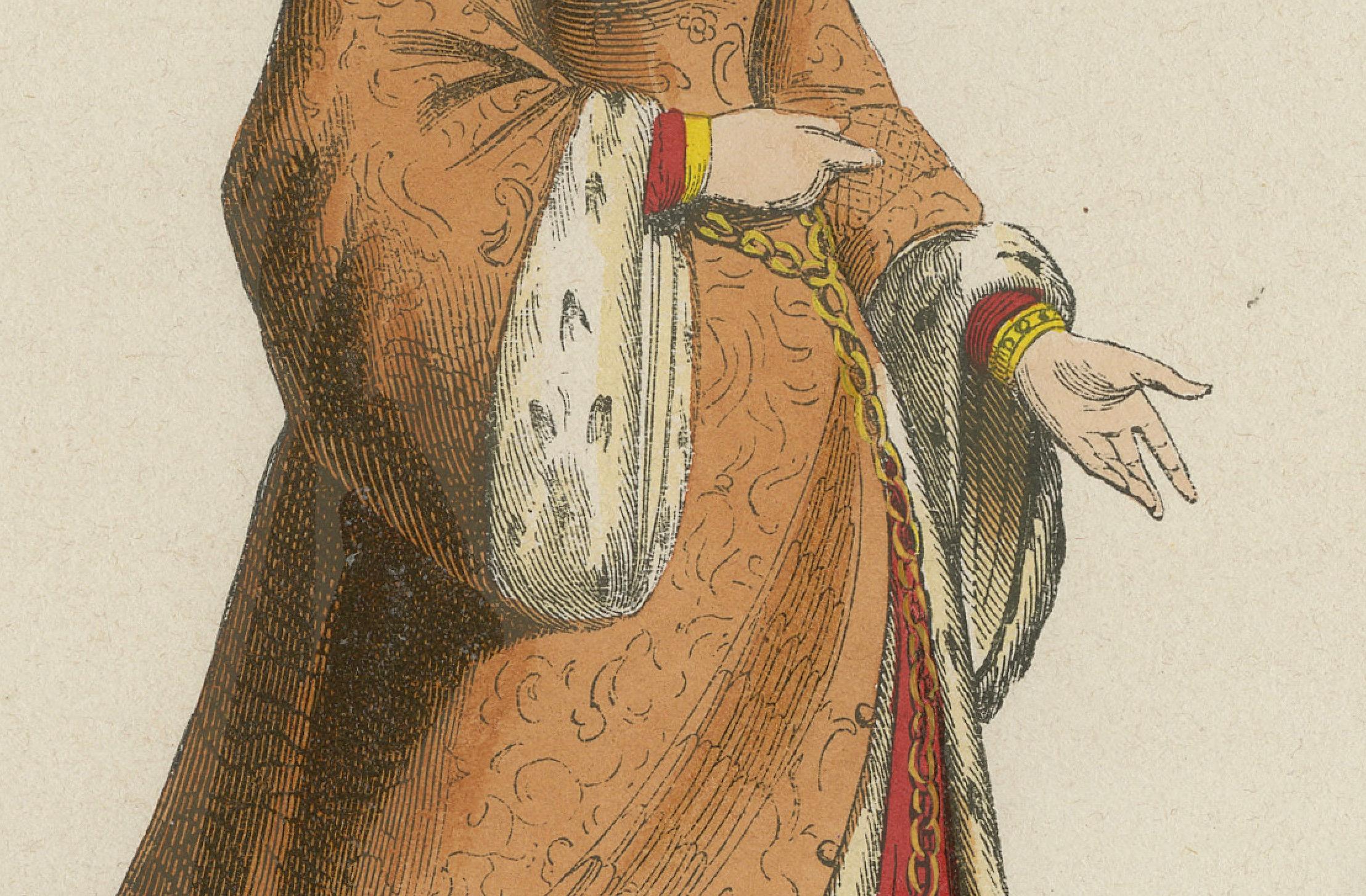
Anne’s sleeves are long and flowing, with a hint of red undersleeves visible at the wrists, matching the vibrant red of the undergarment that peeks out from beneath her skirt. This layering of clothing is characteristic of the era's fashion, where multiple layers were a sign of wealth and status.
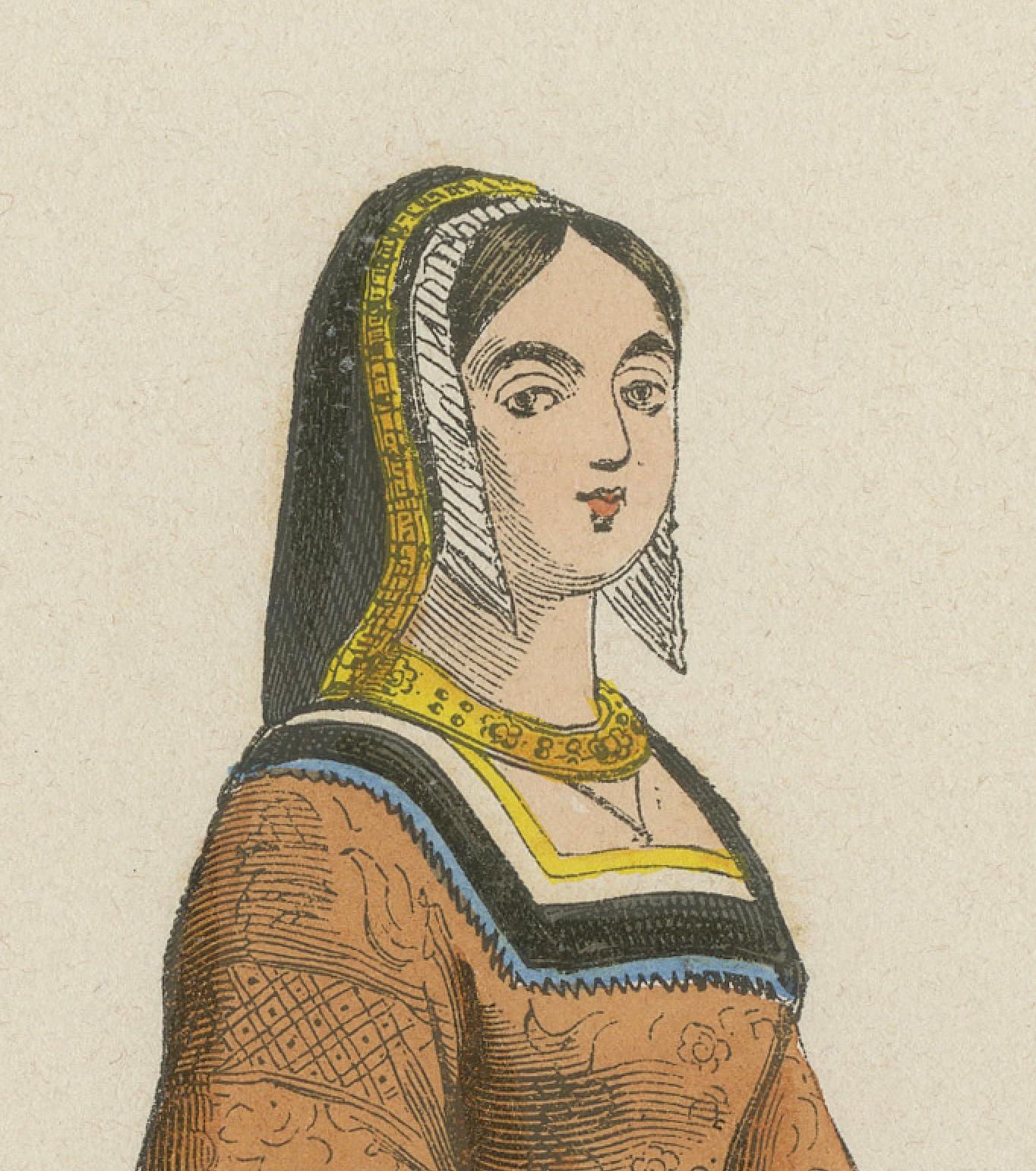
Around her neck, she wears a simple yet elegant necklace, and her hands are adorned with rings, further signifying her nobility. Her hair is neatly tucked under a black headdress, framing her face and emphasizing her solemn expression.
Her posture, with one hand slightly extended, could suggest a moment of greeting or a gesture indicative of her role as a mediator or ruler. The understated backdrop ensures the focus remains on her, highlighting the intricate details of her attire and the poise that her position demands. This print captures the essence of a prominent historical figure, showcasing the attire and bearing befitting her station in the courts of France and Brittany.
The colors have a nice glow over them. Historically, egg whites, known as glair, and sometimes egg yolk were indeed used in illumination and painting, particularly in manuscripts, to give colors a brighter appearance and to add a sheen or gloss to the work. This technique was quite common during the Middle Ages and into the Renaissance.
Egg whites can be applied as a varnish over pigments to enhance their brightness and to protect the colors. This application could make the colors appear more vivid and also add a slight glossy sheen to the surface of the image.
Egg yolk, on the other hand, was commonly used as a binding agent in paint. It forms the basis of tempera paint, a medium that was widely used before the advent of oil painting. Egg yolk helps to create a durable and long-lasting color that adheres well to various surfaces.
In the context of the print from 1847, it's less likely that egg whites or yolks were used directly on the print, as by that time, commercial printing processes would have been more advanced and less reliant on such manual methods. However, if this print is a representation of an earlier style or is meant to mimic the appearance of hand-painted manuscripts, the original artists might have employed techniques or materials that gave a similar effect to those achieved with egg-based binders and varnishes.