About this sheet
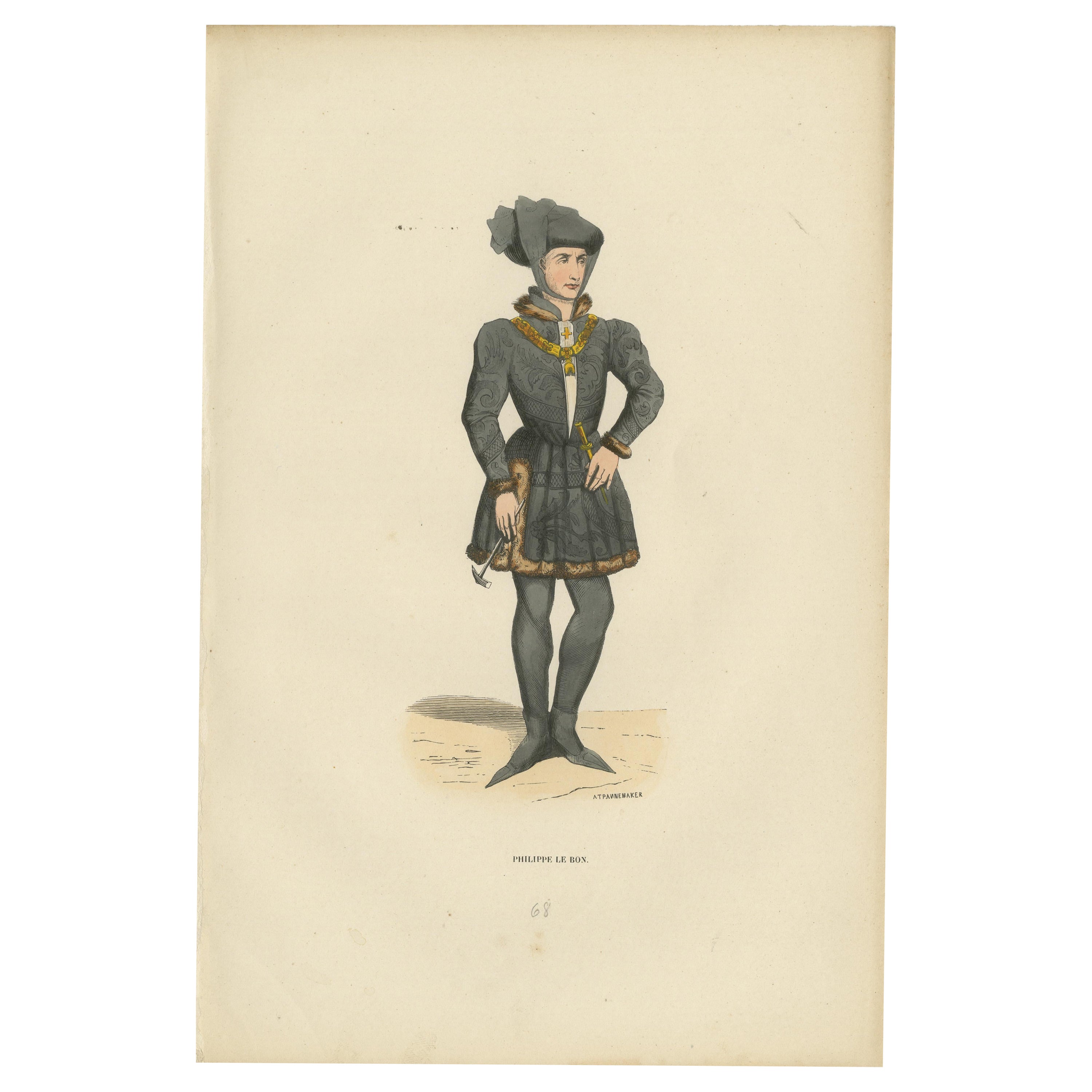
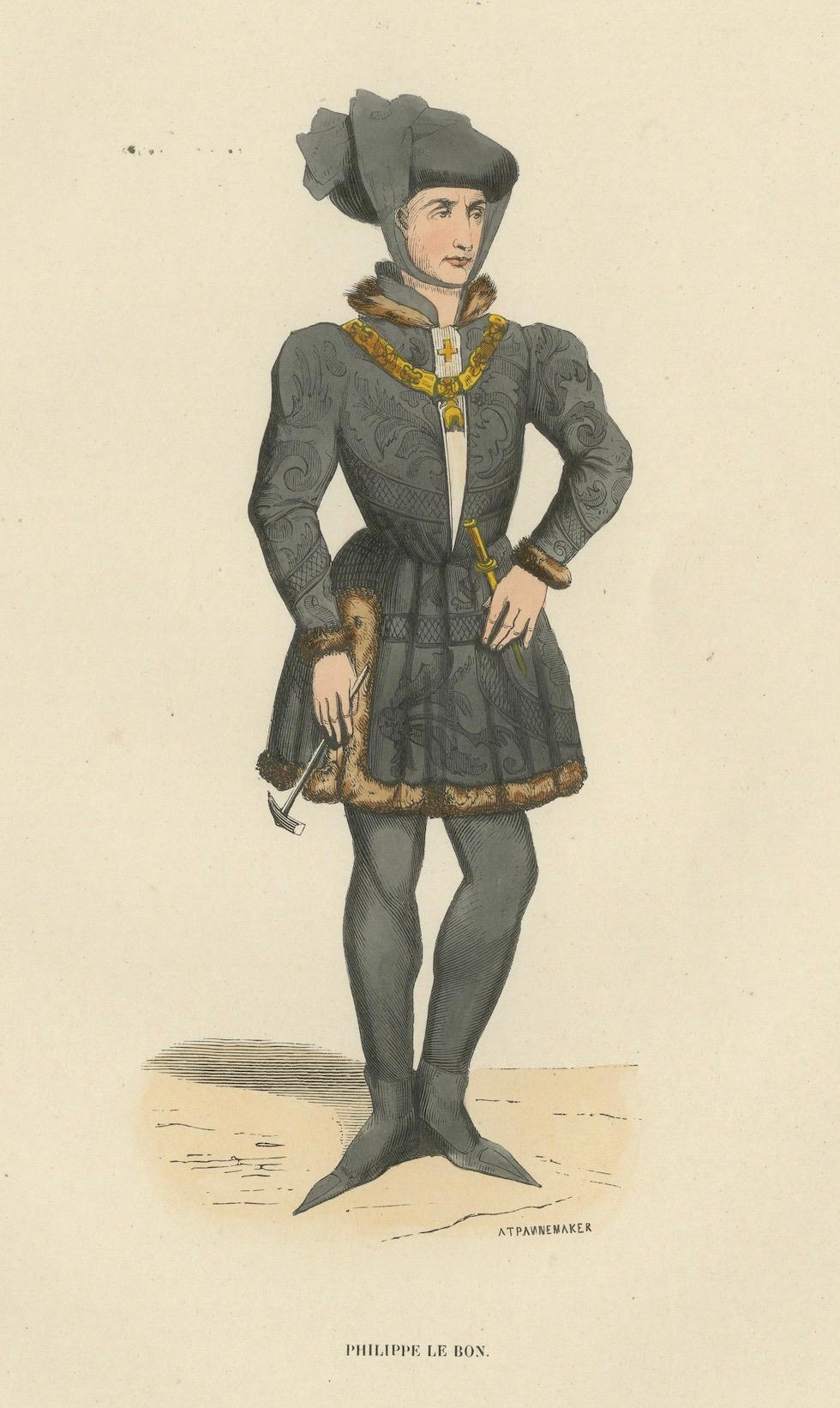
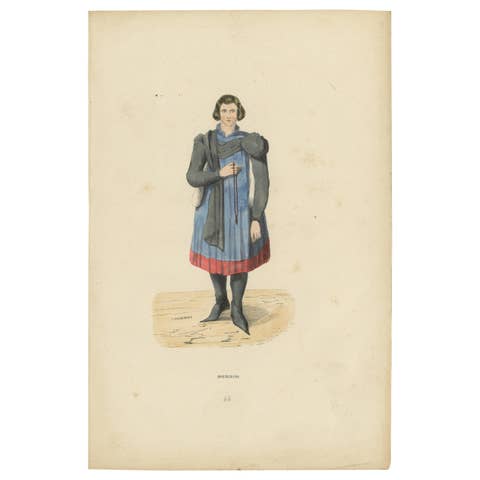
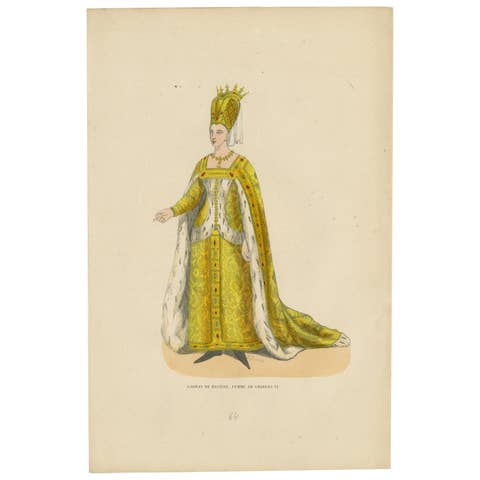
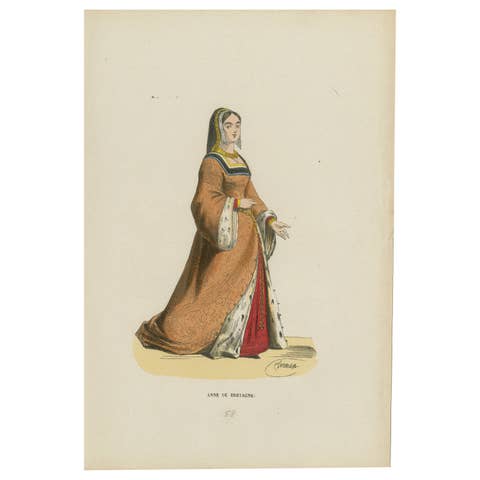
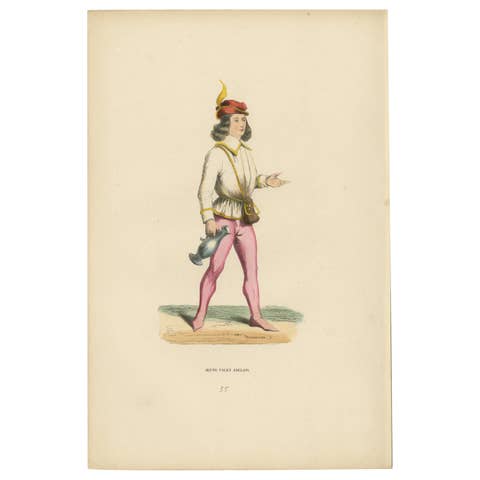
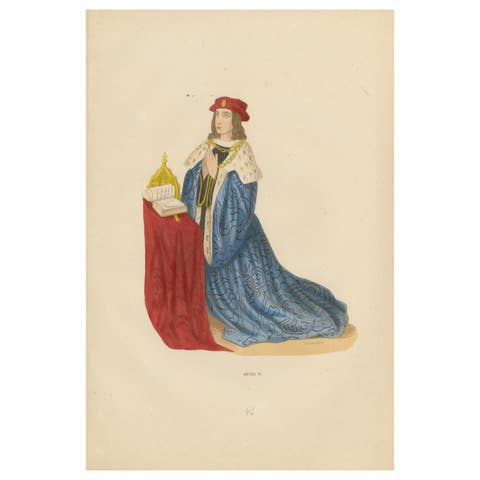
The print showcases Philippe le Bon, also known as Philip the Good, Duke of Burgundy, standing in a dignified pose that conveys authority and nobility. He was known for his patronage of the arts and the opulence of his court, and this is reflected in the intricate detail of his attire.
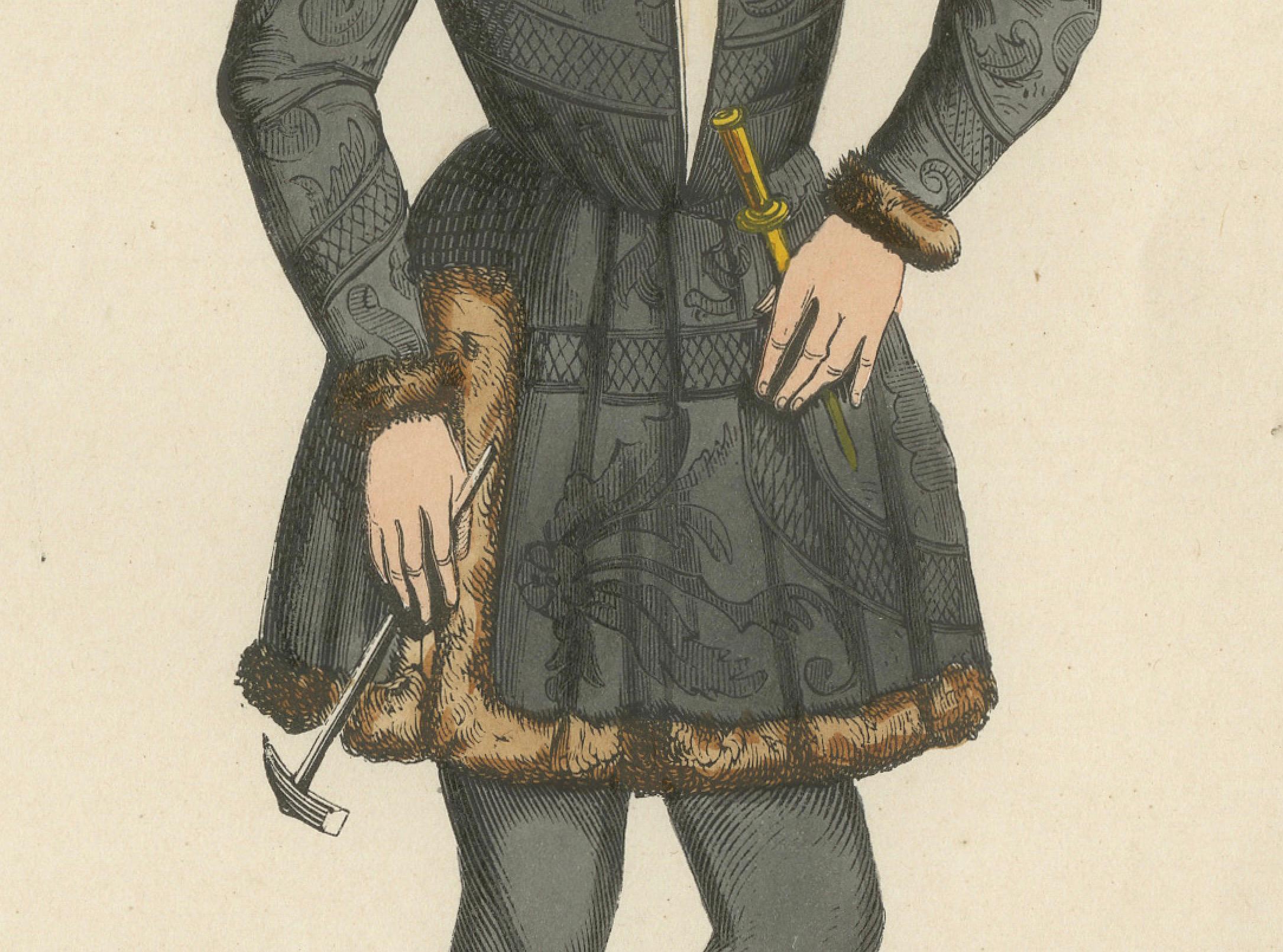
Philippe is dressed in a doublet with a patterned design, possibly embroidered with gold thread, which would have been a symbol of wealth and status during his time. The garment fits snugly to his form, a style that was fashionable among the nobility in the 15th century. The lower part of the doublet extends into a skirt, which is edged with fur, adding to the luxuriousness of his ensemble.
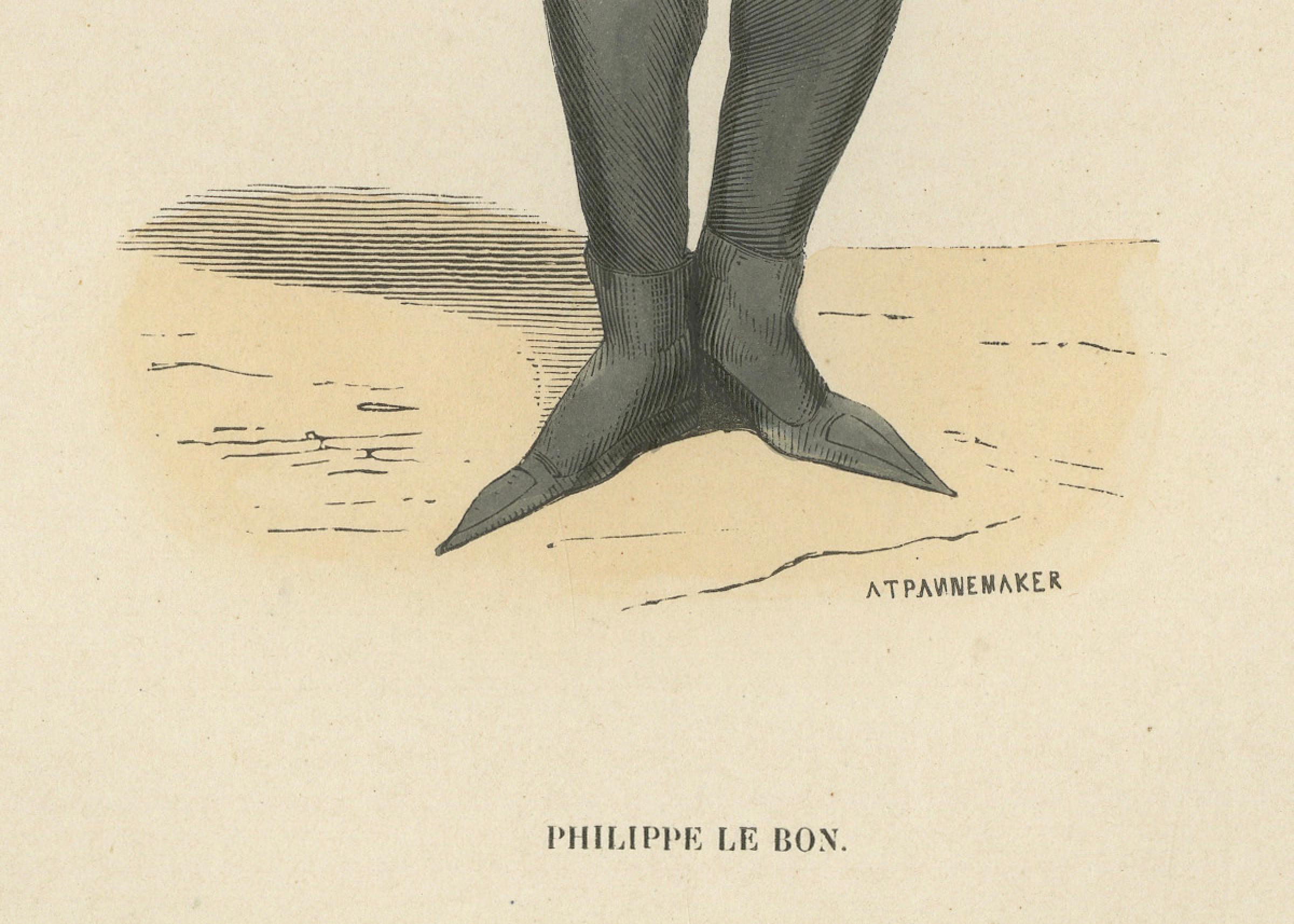
He wears hose that fit tightly to his legs, a common fashion of the time, which are practical for riding and daily activities of a nobleman. His shoes are pointed, following the style of the Burgundian court.
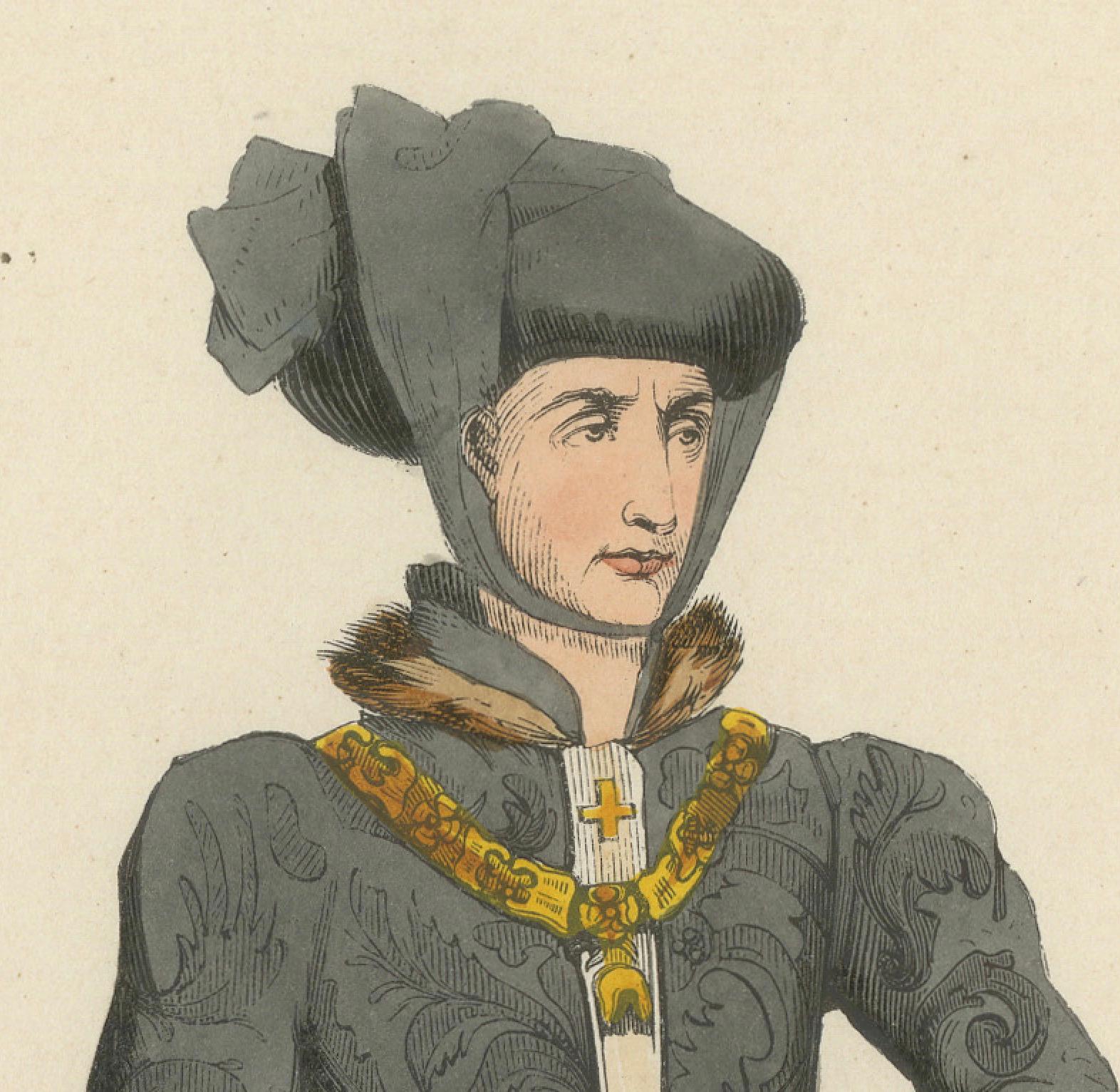
On his head, Philippe sports a chaperon, a type of headgear that was popular among men of rank. The chaperon features a rolled brim and an extended tail, known as a 'liripipe', which adds a distinctive flair to his profile.
Around his neck, he has a chain, from which hangs a badge or medallion, denoting his high rank and perhaps an order of chivalry. His right hand rests on the hilt of a dagger, hinting at the martial aspect of his role as a duke and the necessity for self-defense, even in courtly life.
Philippe's expression is serious and contemplative, with a gaze that seems focused on matters of state or court intrigue. This portrait encapsulates the image of a powerful ruler during the height of Burgundian influence in Europe.
The colors have a nice glow over them. Historically, egg whites, known as glair, and sometimes egg yolk were indeed used in illumination and painting, particularly in manuscripts, to give colors a brighter appearance and to add a sheen or gloss to the work. This technique was quite common during the Middle Ages and into the Renaissance.
Egg whites can be applied as a varnish over pigments to enhance their brightness and to protect the colors. This application could make the colors appear more vivid and also add a slight glossy sheen to the surface of the image.
Egg yolk, on the other hand, was commonly used as a binding agent in paint. It forms the basis of tempera paint, a medium that was widely used before the advent of oil painting. Egg yolk helps to create a durable and long-lasting color that adheres well to various surfaces.
In the context of the print from 1847, it's less likely that egg whites or yolks were used directly on the print, as by that time, commercial printing processes would have been more advanced and less reliant on such manual methods. However, if this print is a representation of an earlier style or is meant to mimic the appearance of hand-painted manuscripts, the original artists might have employed techniques or materials that gave a similar effect to those achieved with egg-based binders and varnishes.