About this sheet
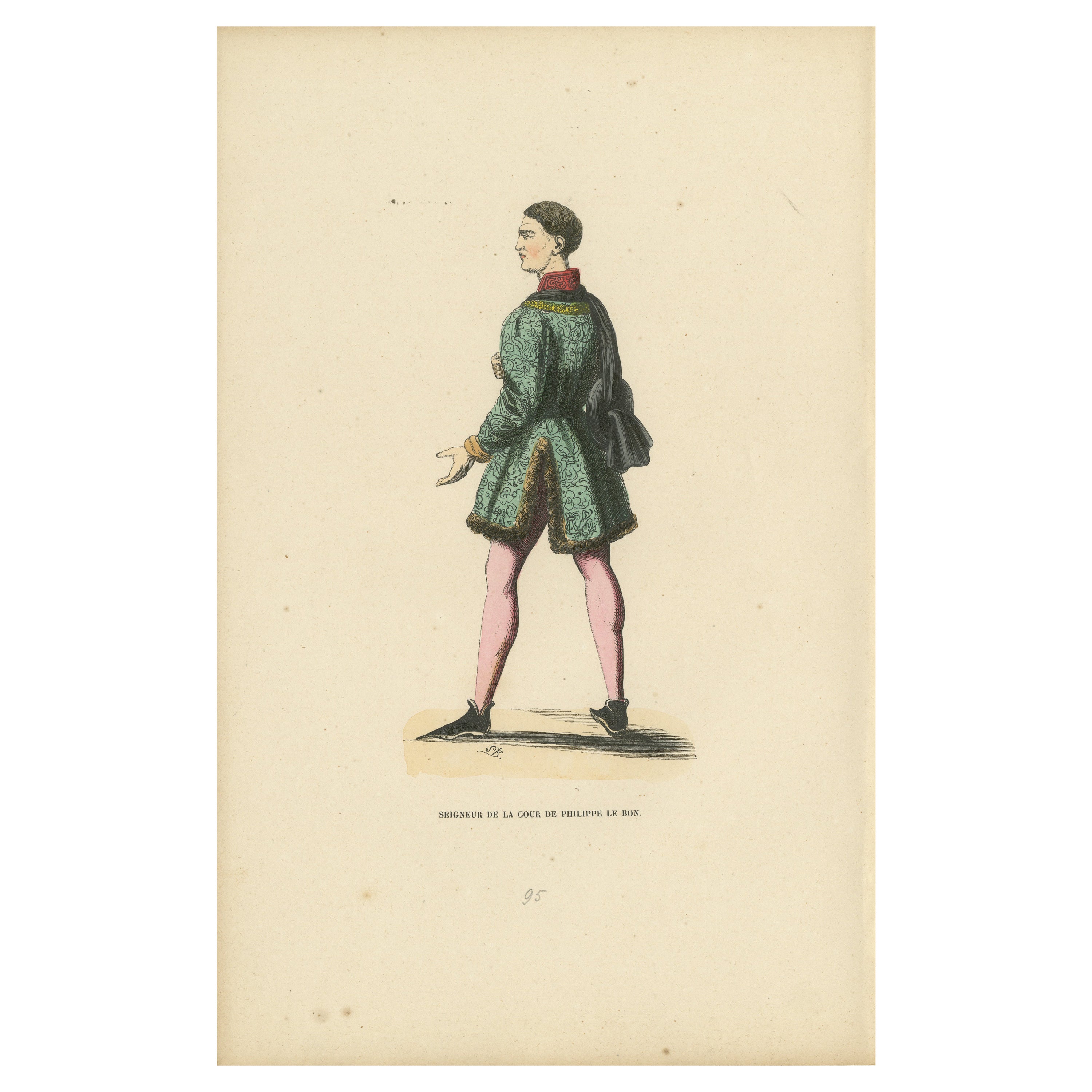
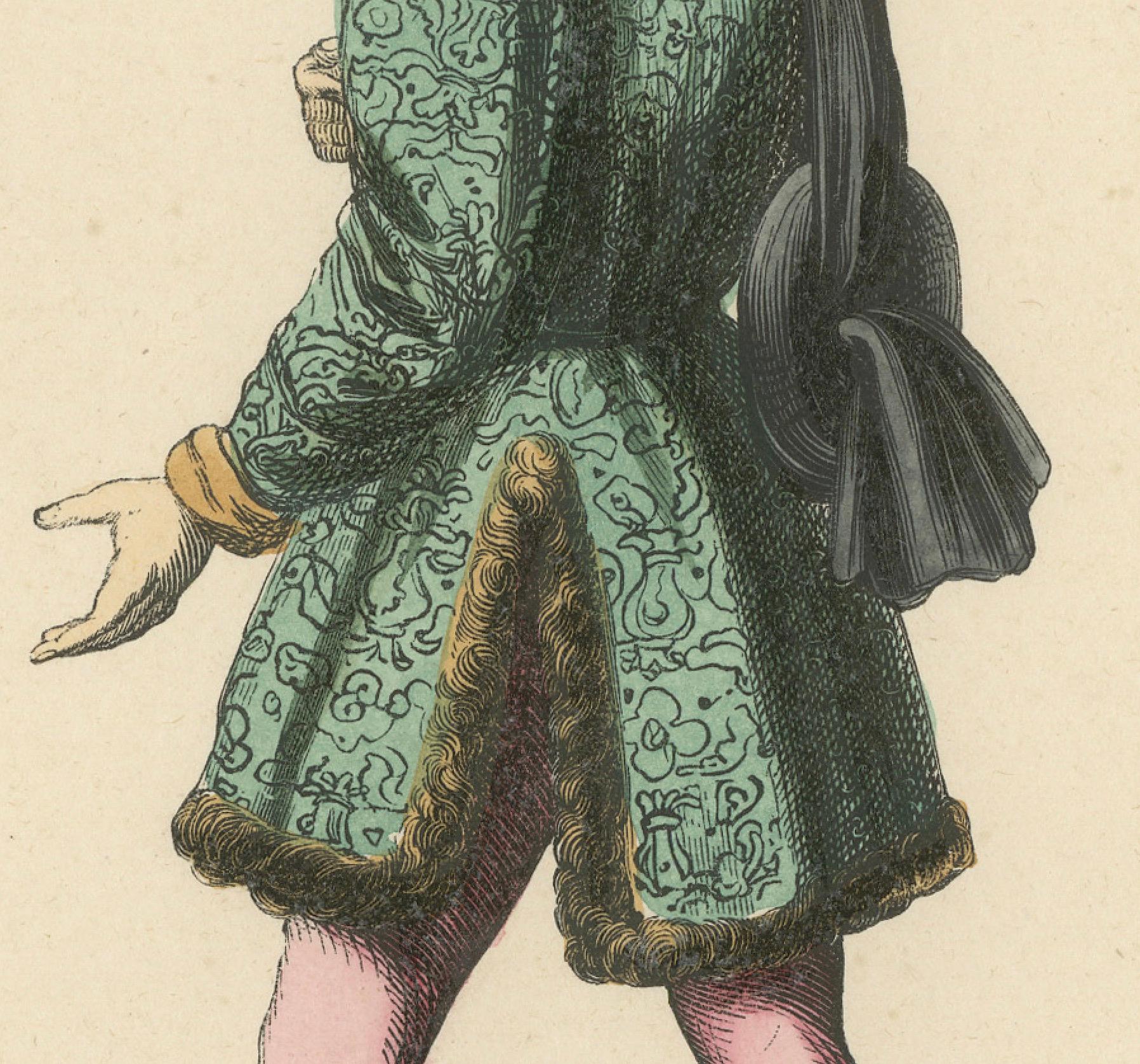
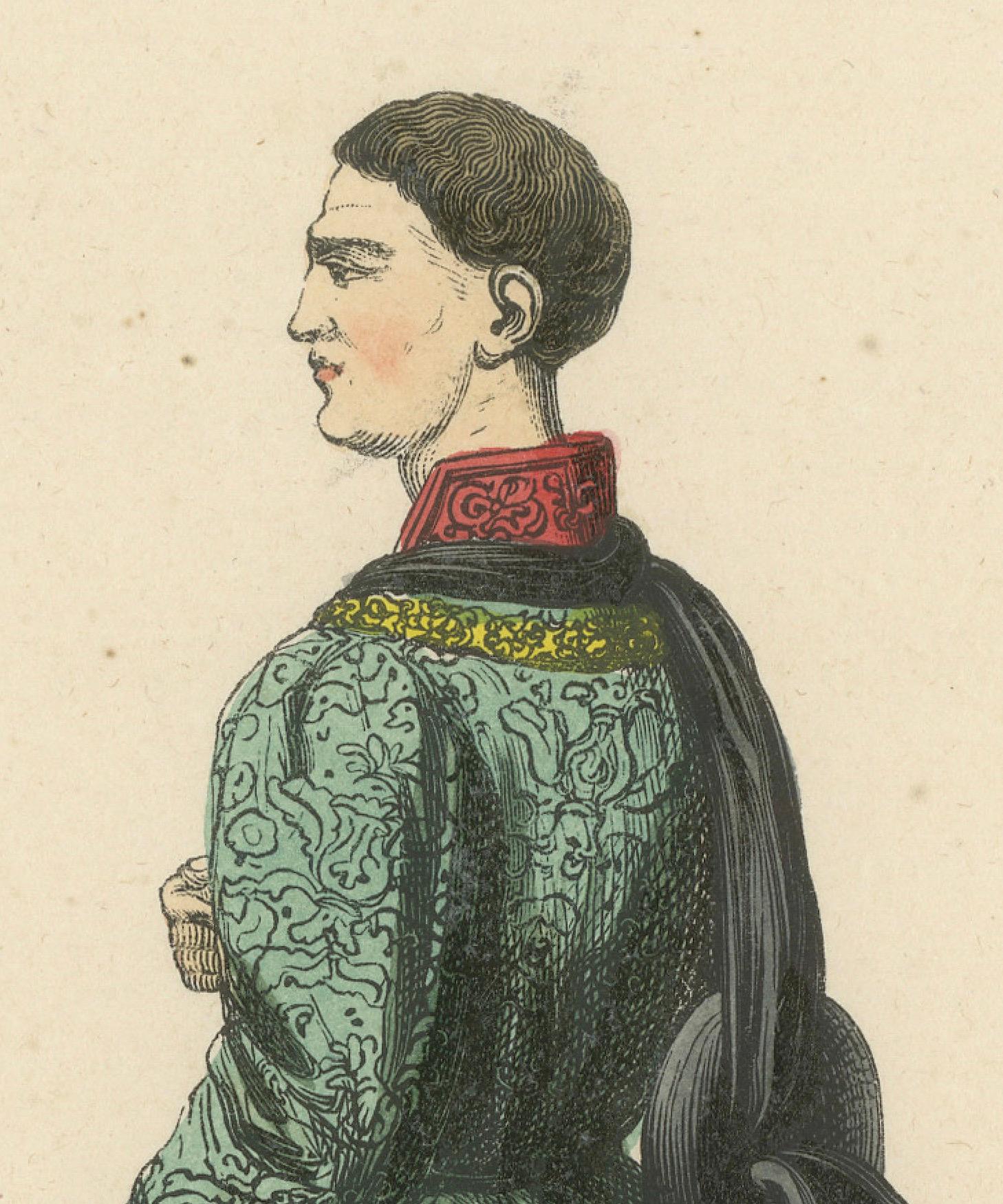
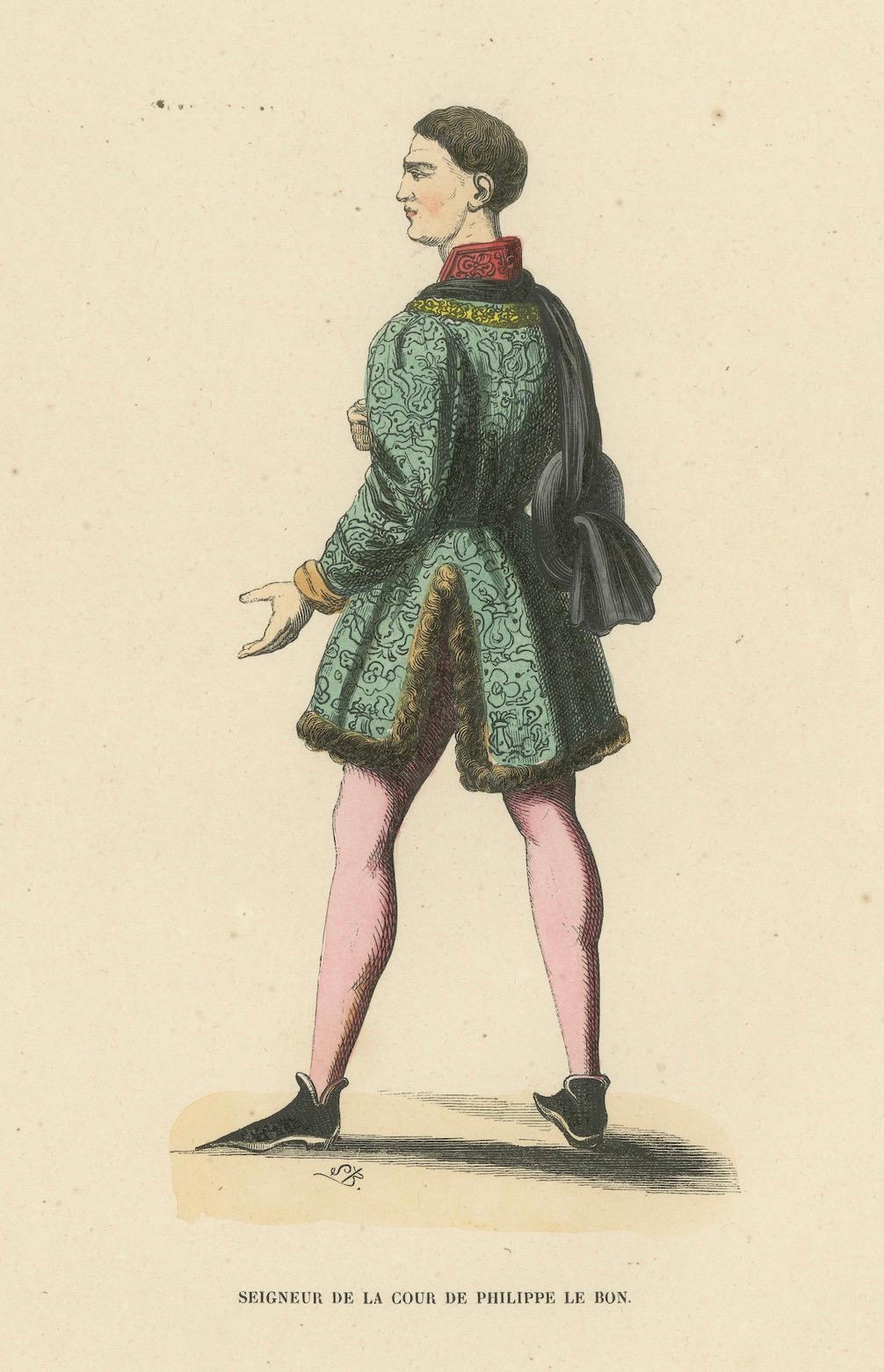
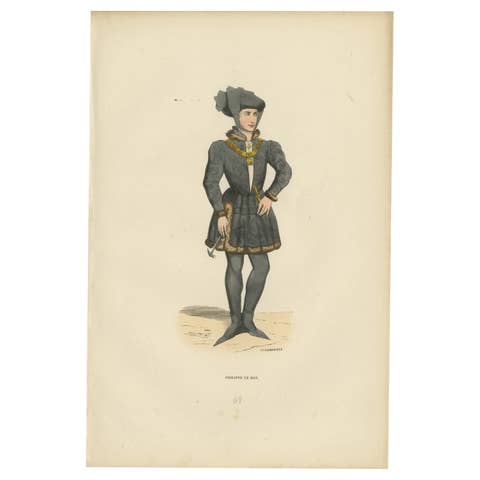
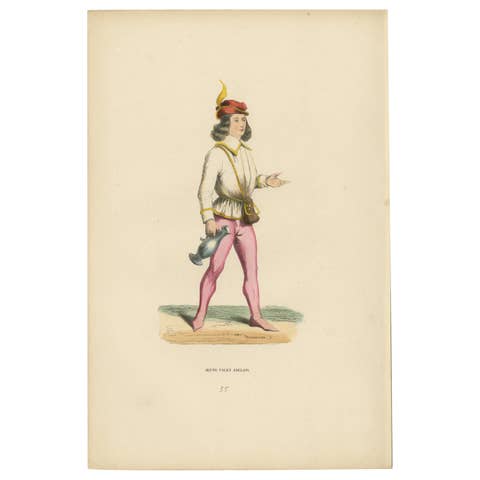
The image presents a nobleman of the court of Philippe le Bon (Philip the Good), Duke of Burgundy. The nobleman stands in profile, gazing into the distance, with an air of contemplation or perhaps awaiting an audience. He is dressed in a richly decorated doublet with a pattern of swirls, a hallmark of the luxurious textiles favored by the Burgundian court. The sleeves are slashed, revealing a contrasting fabric underneath, a fashionable style of the time.
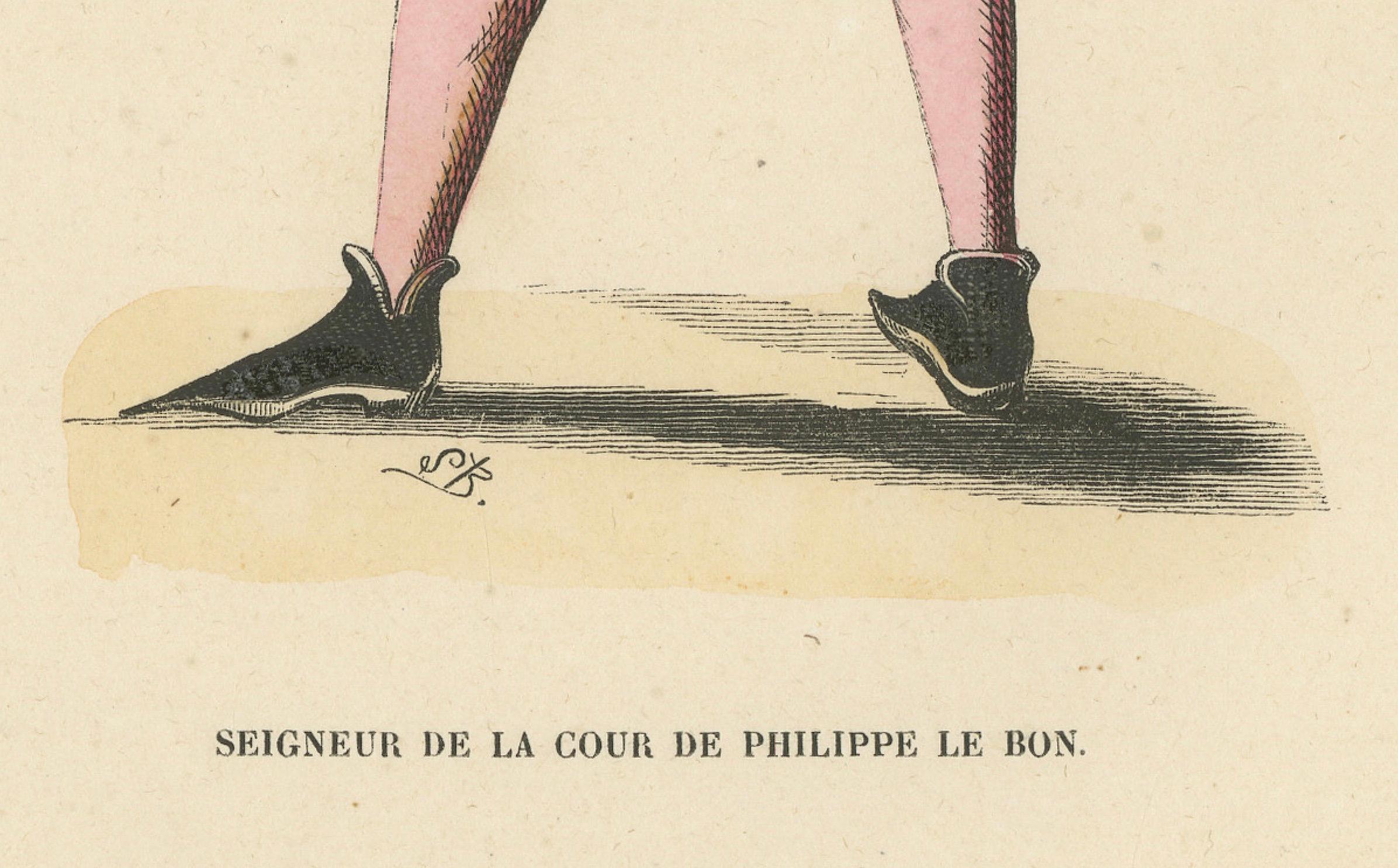
His hose are pink, fitting tightly to show the shape of his legs, a common feature in men's fashion during the period. Over his doublet, he wears a dark cape that drapes elegantly from his shoulders. The cape's inner lining matches the decorative elements of his doublet. His footwear is modest and functional, suitable for indoor settings of a court.
The nobleman's hat is simple, complemented with a feather, which adds a touch of prestige to his appearance. His facial features are rendered with care, depicting a youthful man with a neat haircut and a clean-shaven face, which was typical of the higher echelons of society during this era.
The inscription "SEIGNEUR DE LA COUR DE PHILIPPE LE BON" confirms his status and the courtly context. This image captures the refined elegance and the richness of attire that was characteristic of the Burgundian nobility in the 15th century, a time when the Burgundian court was one of the most splendid in Europe.
The colors have a nice glow over them. Historically, egg whites, known as glair, and sometimes egg yolk were indeed used in illumination and painting, particularly in manuscripts, to give colors a brighter appearance and to add a sheen or gloss to the work. This technique was quite common during the Middle Ages and into the Renaissance.
Egg whites can be applied as a varnish over pigments to enhance their brightness and to protect the colors. This application could make the colors appear more vivid and also add a slight glossy sheen to the surface of the image.
Egg yolk, on the other hand, was commonly used as a binding agent in paint. It forms the basis of tempera paint, a medium that was widely used before the advent of oil painting. Egg yolk helps to create a durable and long-lasting color that adheres well to various surfaces.
In the context of the print from 1847, it's less likely that egg whites or yolks were used directly on the print, as by that time, commercial printing processes would have been more advanced and less reliant on such manual methods. However, if this print is a representation of an earlier style or is meant to mimic the appearance of hand-painted manuscripts, the original artists might have employed techniques or materials that gave a similar effect to those achieved with egg-based binders and varnishes.