Original antique · The actual sheet photographed · Certificate of authenticity on request · Sold unframed · Worldwide shipping from € 15 (rates)
Date
1847
Sheet size
27 × 18 cm (10.6 × 7.1 in)
Condition
Good
Reference
BG-13635-15
What the condition grades mean
Excellent
Bright and clean, with no faults worth mentioning.
Very good
Only light signs of age, such as faint toning.
Good
Normal signs of age for a sheet of this period: toning, some foxing, small marks or neat old repairs.
Fair
Clear faults such as staining, tears or repairs, priced to match.
Every fault we see is written in the condition note, and the whole sheet is shown uncropped in the photos.
Condition
Good. Overal very light toning and light soiling but the image itself clean and hand-colored almost 200 years ago and still in expliciet colors. Aged paper with typically warm, yellowish-brown hue, mostly around the edges. Study the image carefully.
About this sheet
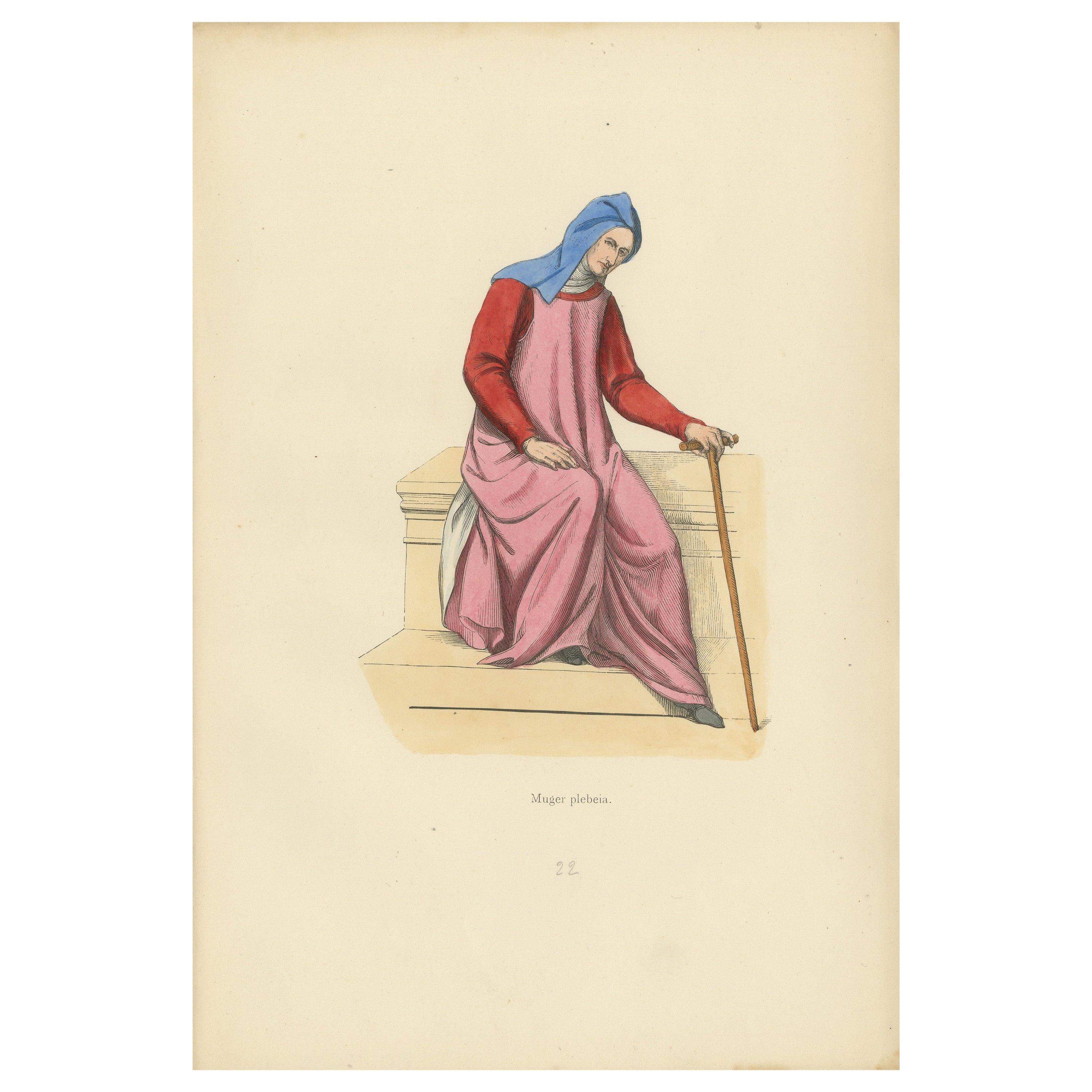
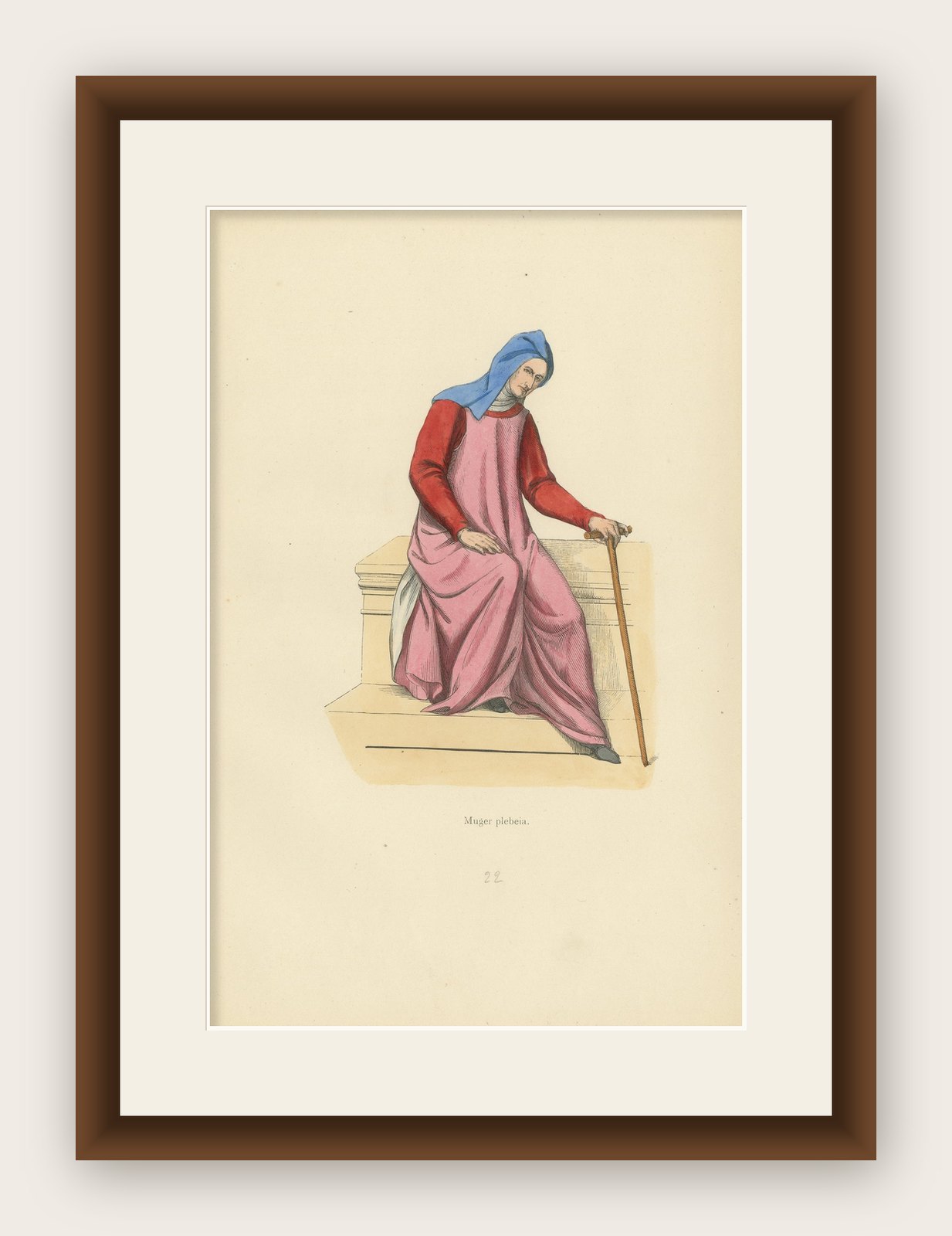
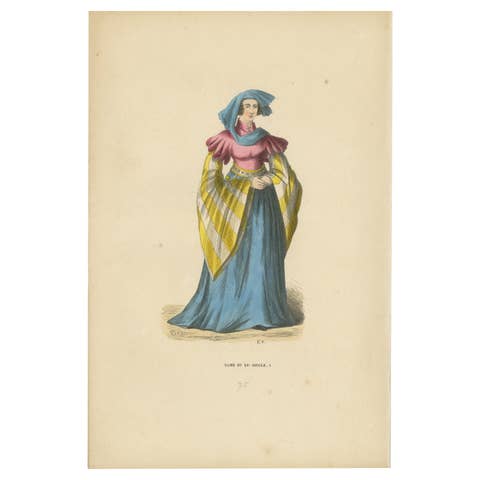
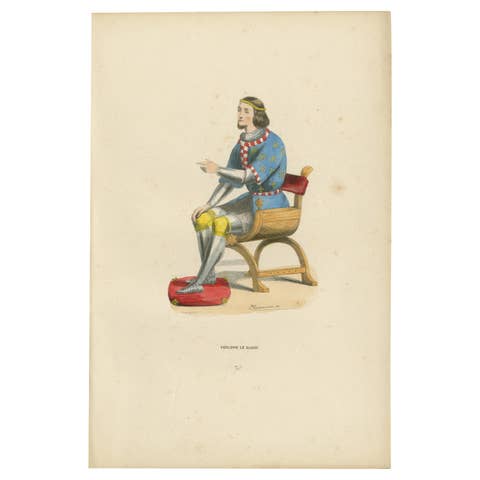
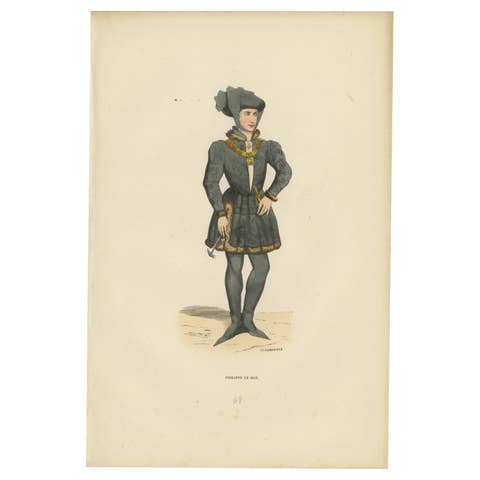
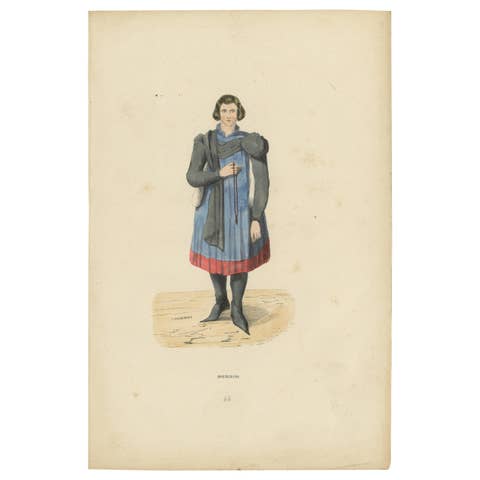
The original antique print shows a seated figure labeled "Muger plebeia," which translates from Spanish to "Plebeian Woman" or "Common Woman." The woman is dressed in a simple yet elegant manner, indicative of the common people of the time.
She is wearing a long dress in a pinkish hue with a red overdress or tunic, which drapes gracefully around her. On her head, she wears a blue hood that covers her hair, which was typical for women during various historical periods to denote modesty or as a fashion statement.
Her seated position and the presence of the cane suggest rest or perhaps age. The simplicity of her clothing, without elaborate jewelry or adornments, signifies her status as part of the lower social class, although her clothing is neat and well-kept.
Egg whites can be applied as a varnish over pigments to enhance their brightness and to protect the colors. This application could make the colors appear more vivid and also add a slight glossy sheen to the surface of the image.
Egg yolk, on the other hand, was commonly used as a binding agent in paint. It forms the basis of tempera paint, a medium that was widely used before the advent of oil painting. Egg yolk helps to create a durable and long-lasting color that adheres well to various surfaces.
In the context of the print from 1847, it's less likely that egg whites or yolks were used directly on the print, as by that time, commercial printing processes would have been more advanced and less reliant on such manual methods. However, if this print is a representation of an earlier style or is meant to mimic the appearance of hand-painted manuscripts, the original artists might have employed techniques or materials that gave a similar effect to those achieved with egg-based binders and varnishes.