About this sheet
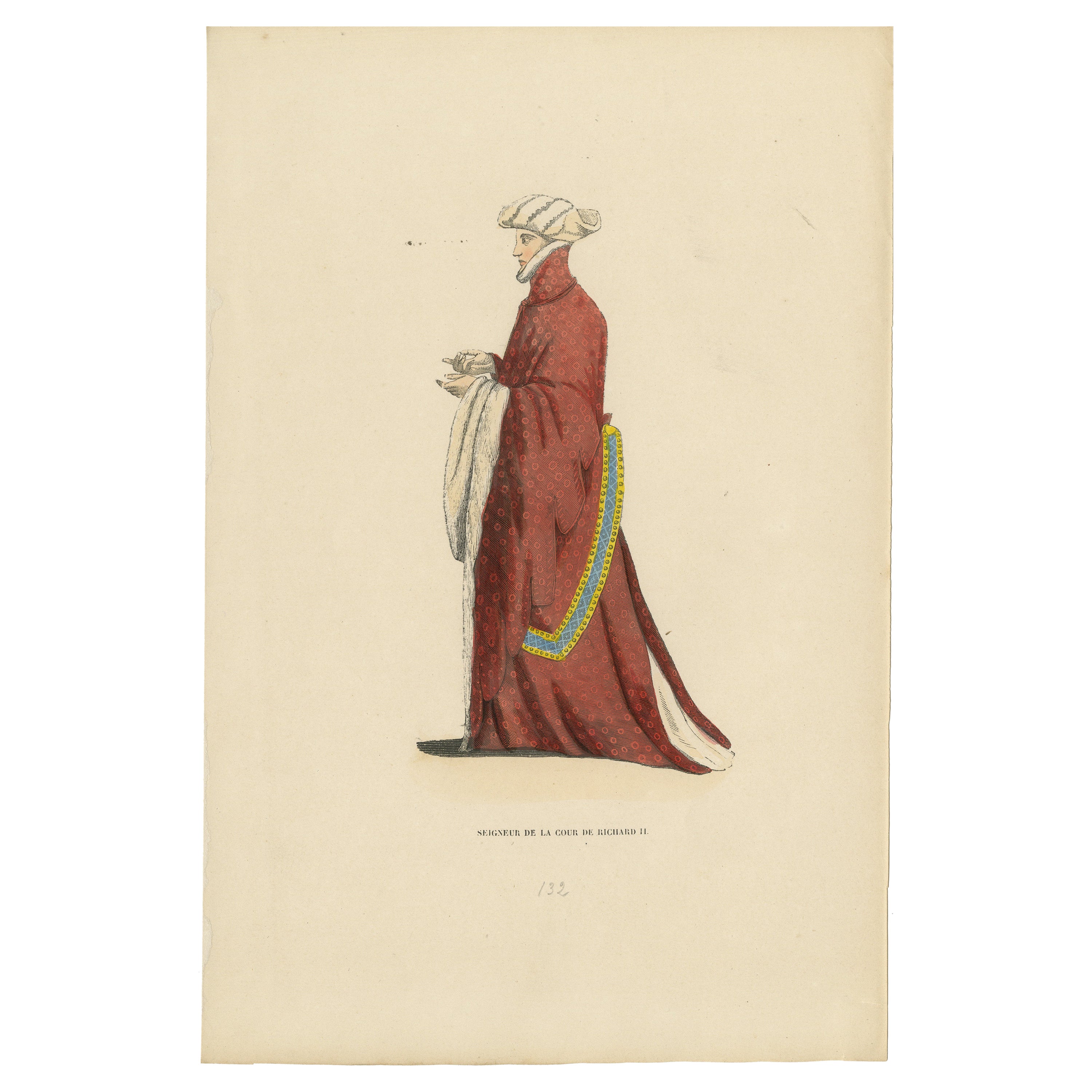
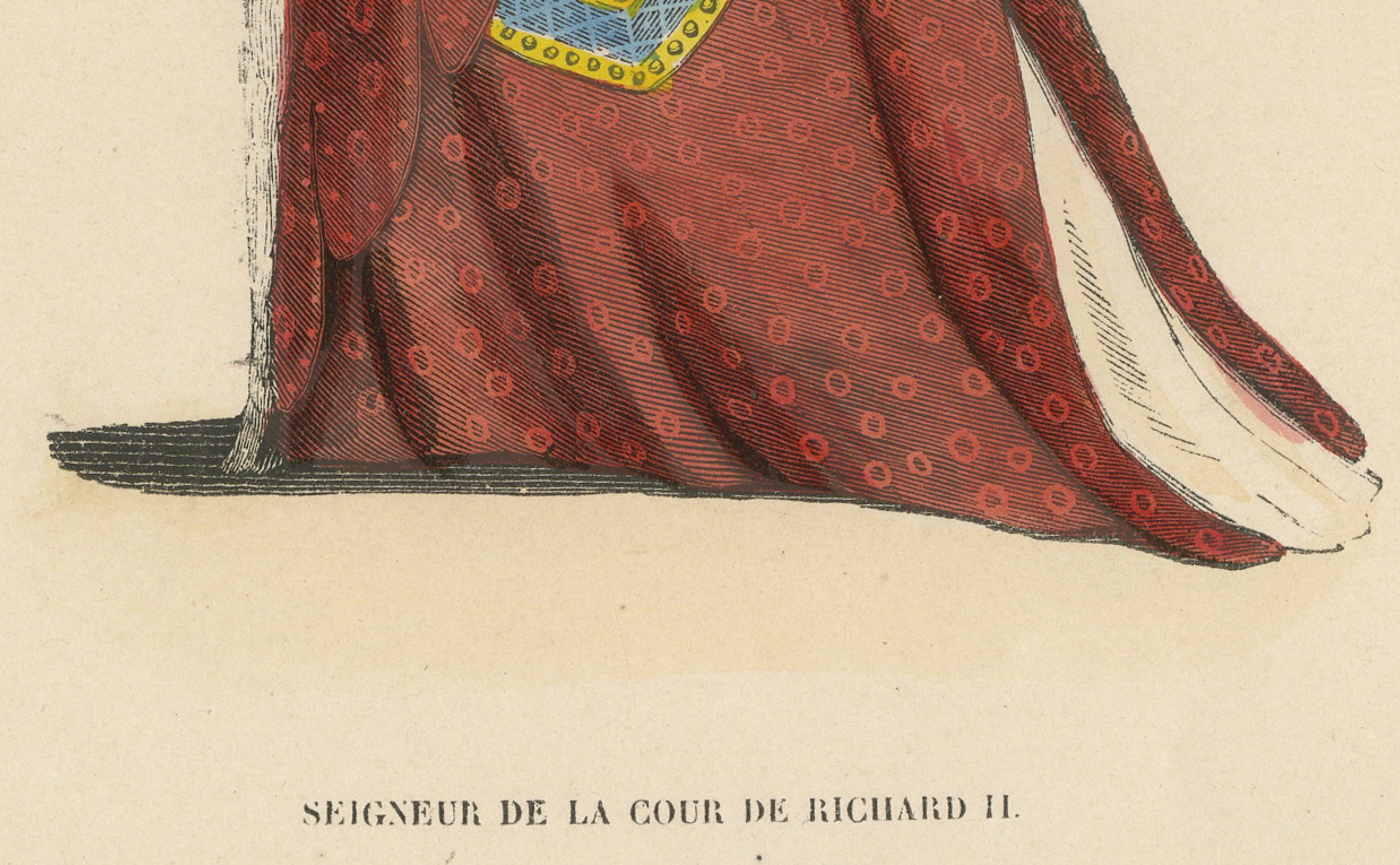
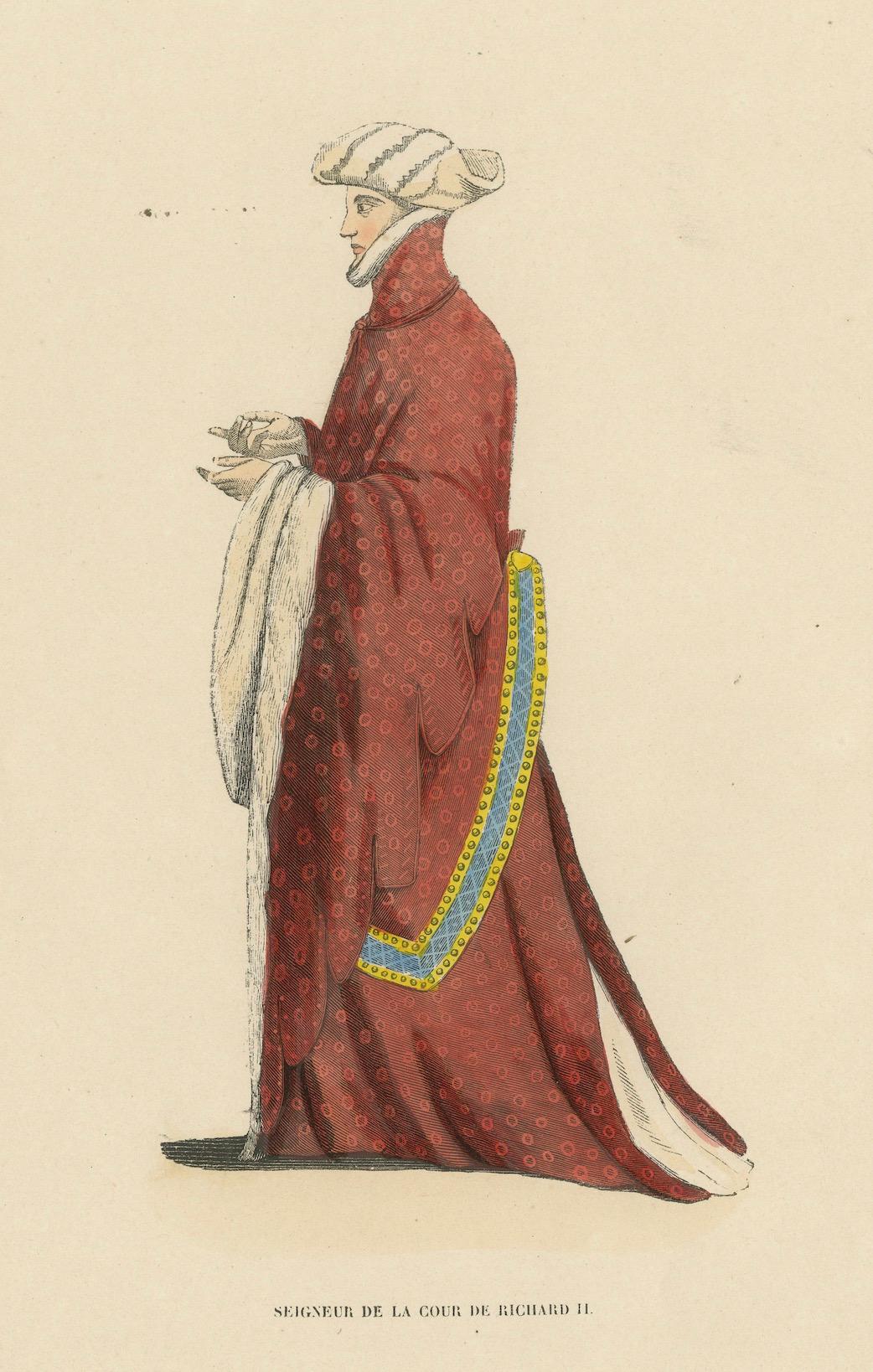
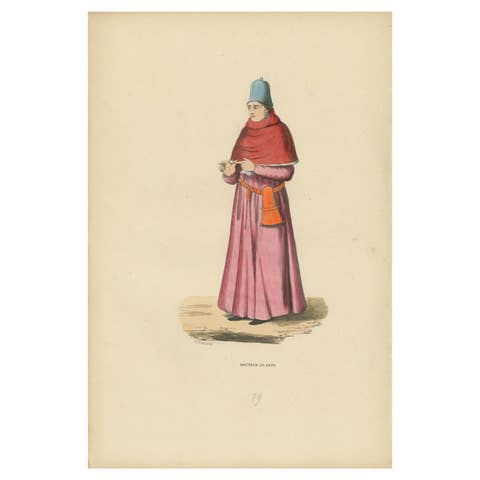
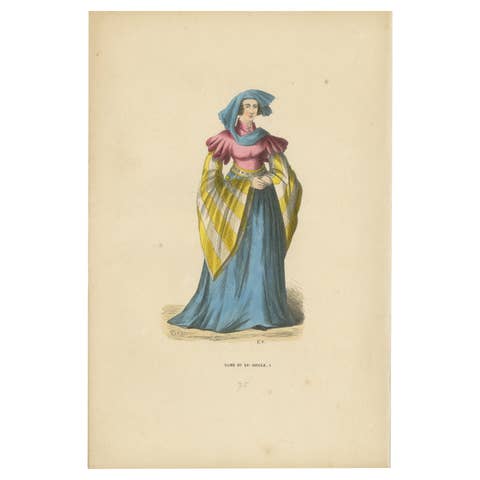
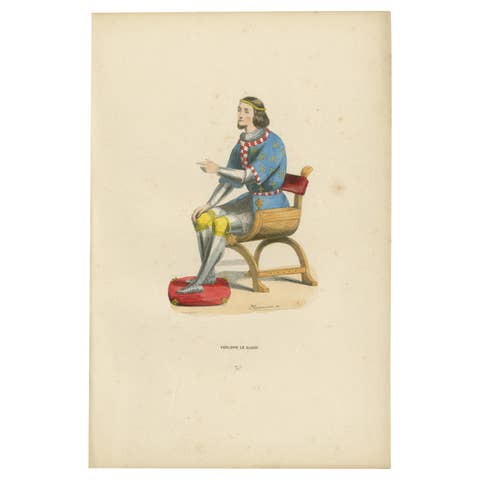
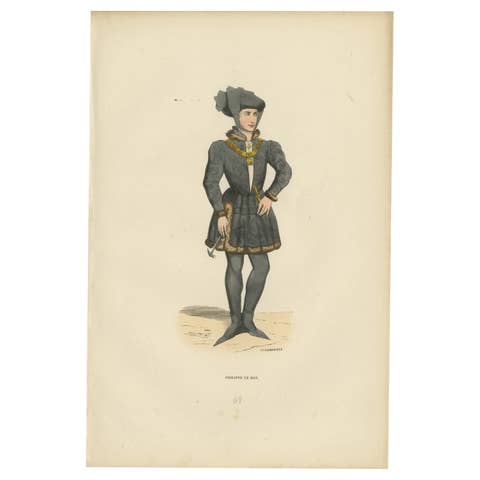
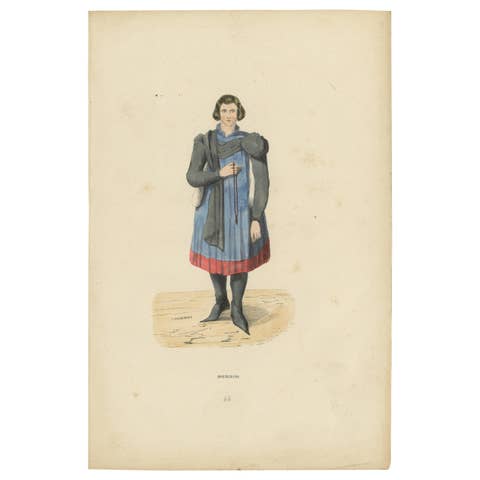
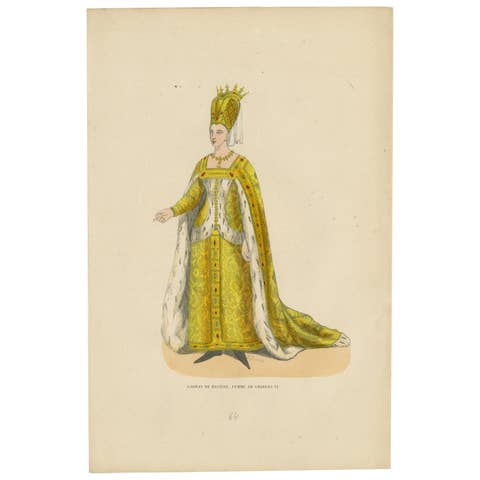
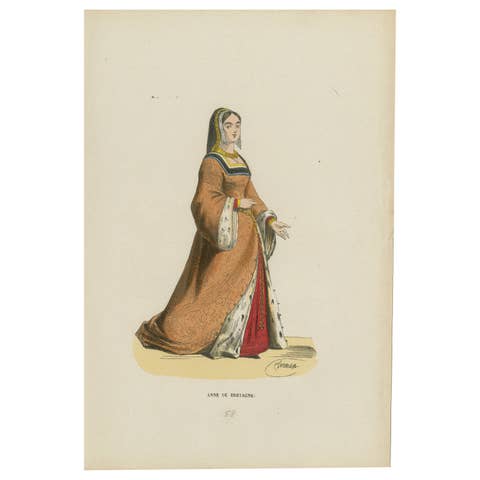
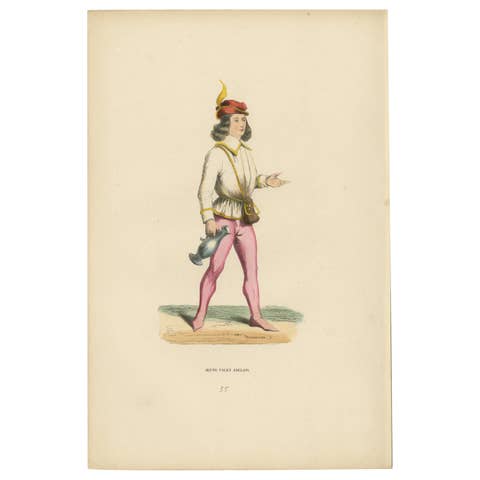
This lithograph from "Costume du Moyen Âge," dated 1847, presents a nobleman from the court of King Richard II. The figure is robed in a long, deep red gown, which is ornamented with a pattern of golden circles, each possibly representing a coin or noble emblem, signifying wealth and status. The gown is lined with a bright yellow border that is punctuated with blue, creating a striking contrast against the red.
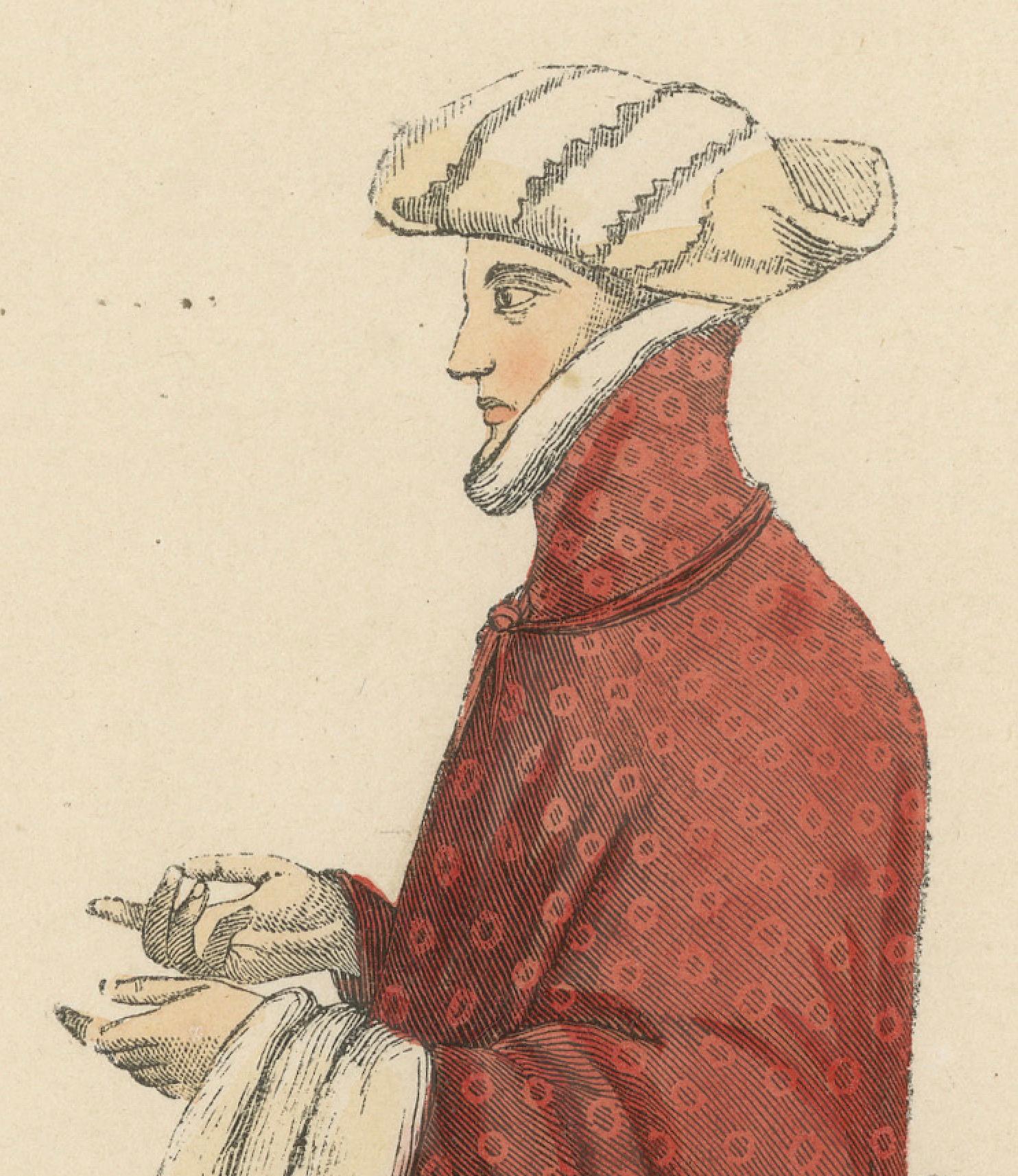
The nobleman is depicted in profile, with his head turned towards the viewer, offering a glimpse of his facial features that are marked by a contemplative expression. He wears a white headdress that wraps around his head and chin, suggesting a style that denotes his high social rank. In his hands, he holds what appears to be a piece of fabric or a garment, indicating a moment of quietude or preparation for an event.
The simplicity of the background focuses attention on the rich colors and textures of the nobleman's attire. The image captures the refined aesthetic and decorum that would be expected at the court of Richard II, a time known for its attention to fashion and the arts.
This lithograph not only portrays the individual style of a nobleman but also serves as an illustrative record of the sartorial standards of the English court in the late 14th century. It reflects the era's keen interest in detailed, luxurious clothing as a symbol of status and identity, providing an insightful look into the visual culture of the medieval nobility.
The colors have a nice glow over them. Historically, egg whites, known as glair, and sometimes egg yolk were indeed used in illumination and painting, particularly in manuscripts, to give colors a brighter appearance and to add a sheen or gloss to the work. This technique was quite common during the Middle Ages and into the Renaissance.
Egg whites can be applied as a varnish over pigments to enhance their brightness and to protect the colors. This application could make the colors appear more vivid and also add a slight glossy sheen to the surface of the image.
Egg yolk, on the other hand, was commonly used as a binding agent in paint. It forms the basis of tempera paint, a medium that was widely used before the advent of oil painting. Egg yolk helps to create a durable and long-lasting color that adheres well to various surfaces.
In the context of the print from 1847, it's less likely that egg whites or yolks were used directly on the print, as by that time, commercial printing processes would have been more advanced and less reliant on such manual methods. However, if this print is a representation of an earlier style or is meant to mimic the appearance of hand-painted manuscripts, the original artists might have employed techniques or materials that gave a similar effect to those achieved with egg-based binders and varnishes.