About this sheet
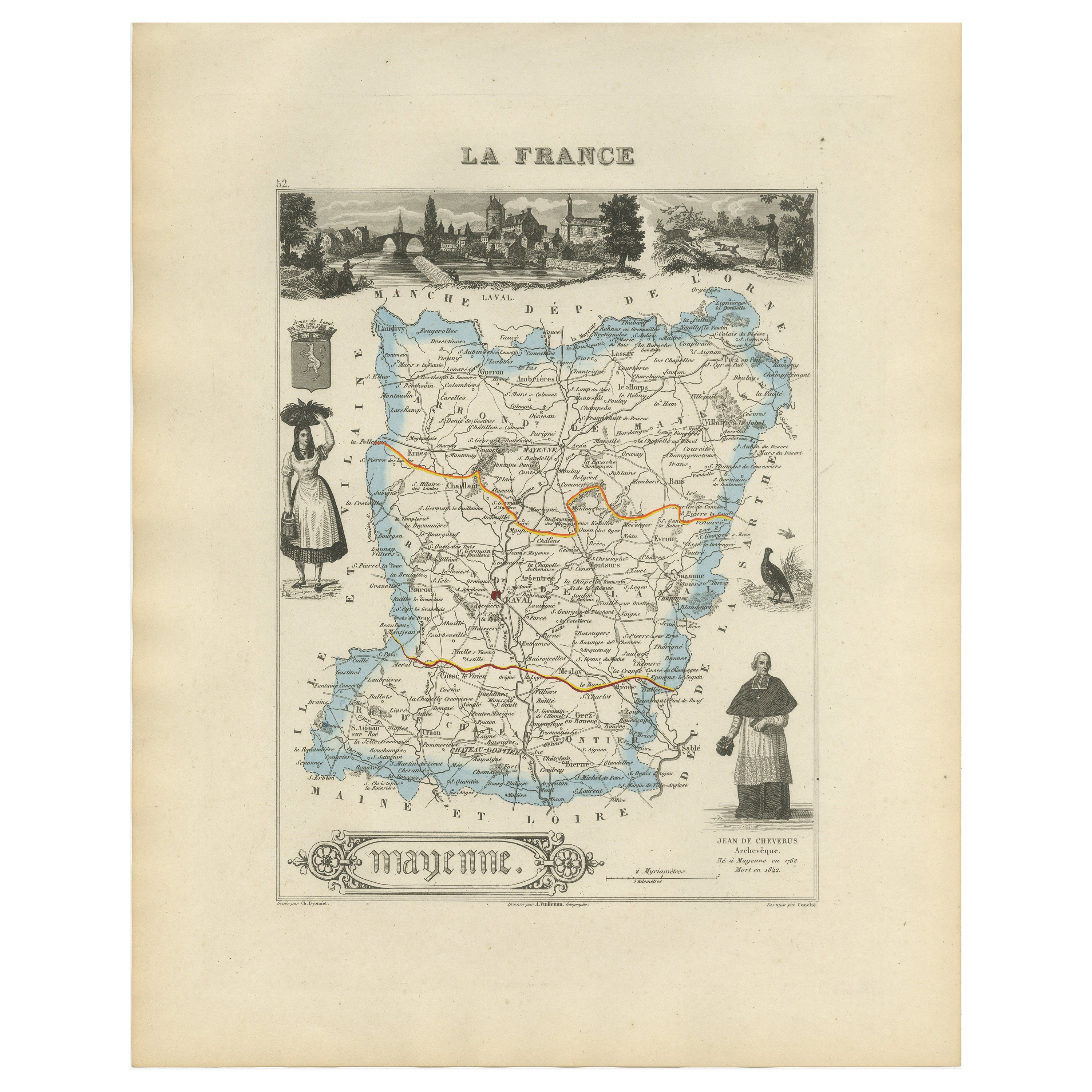
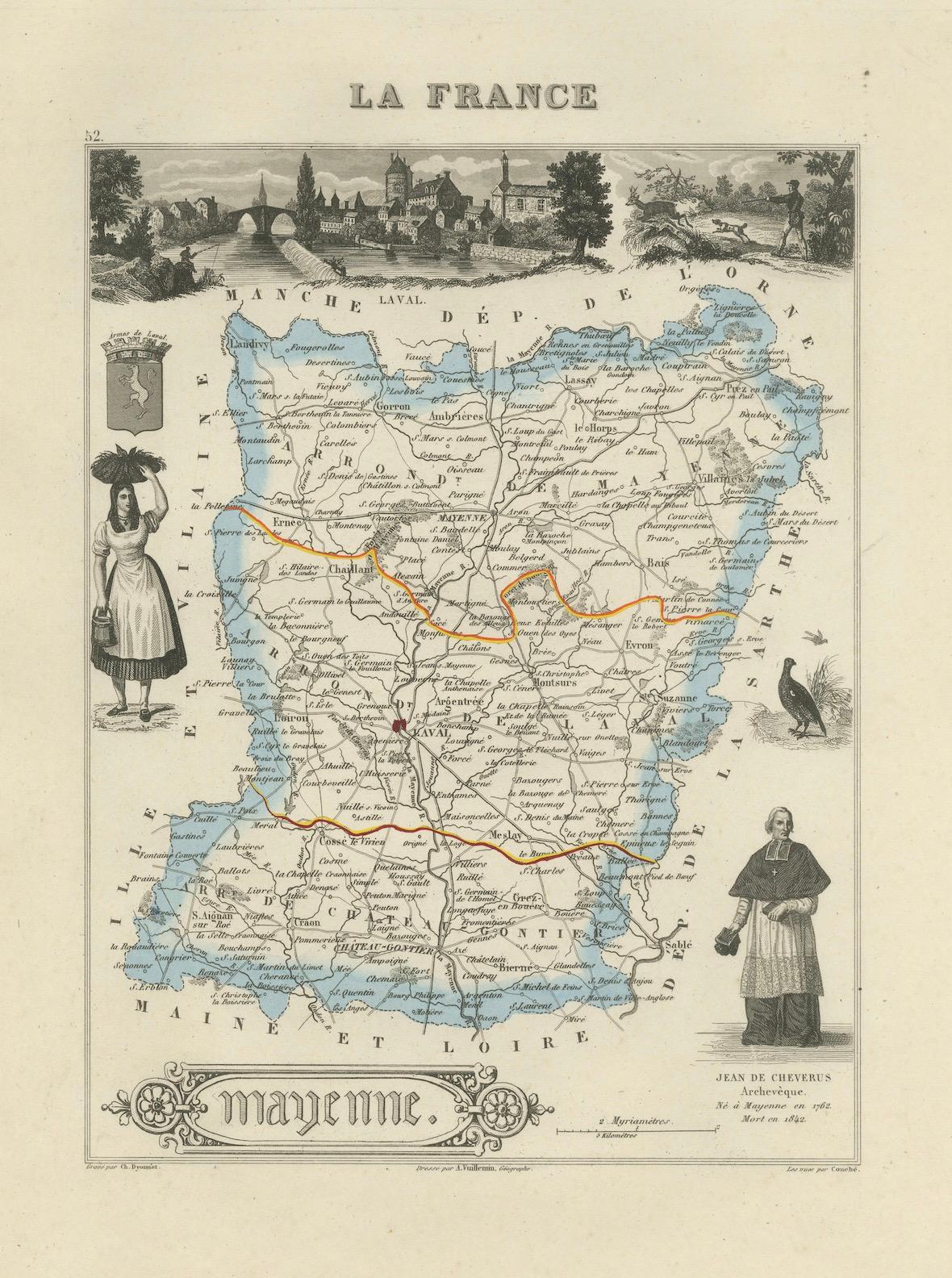
Antique Map of Mayenne – Hand-Colored Engraving by Levasseur, France c.1850
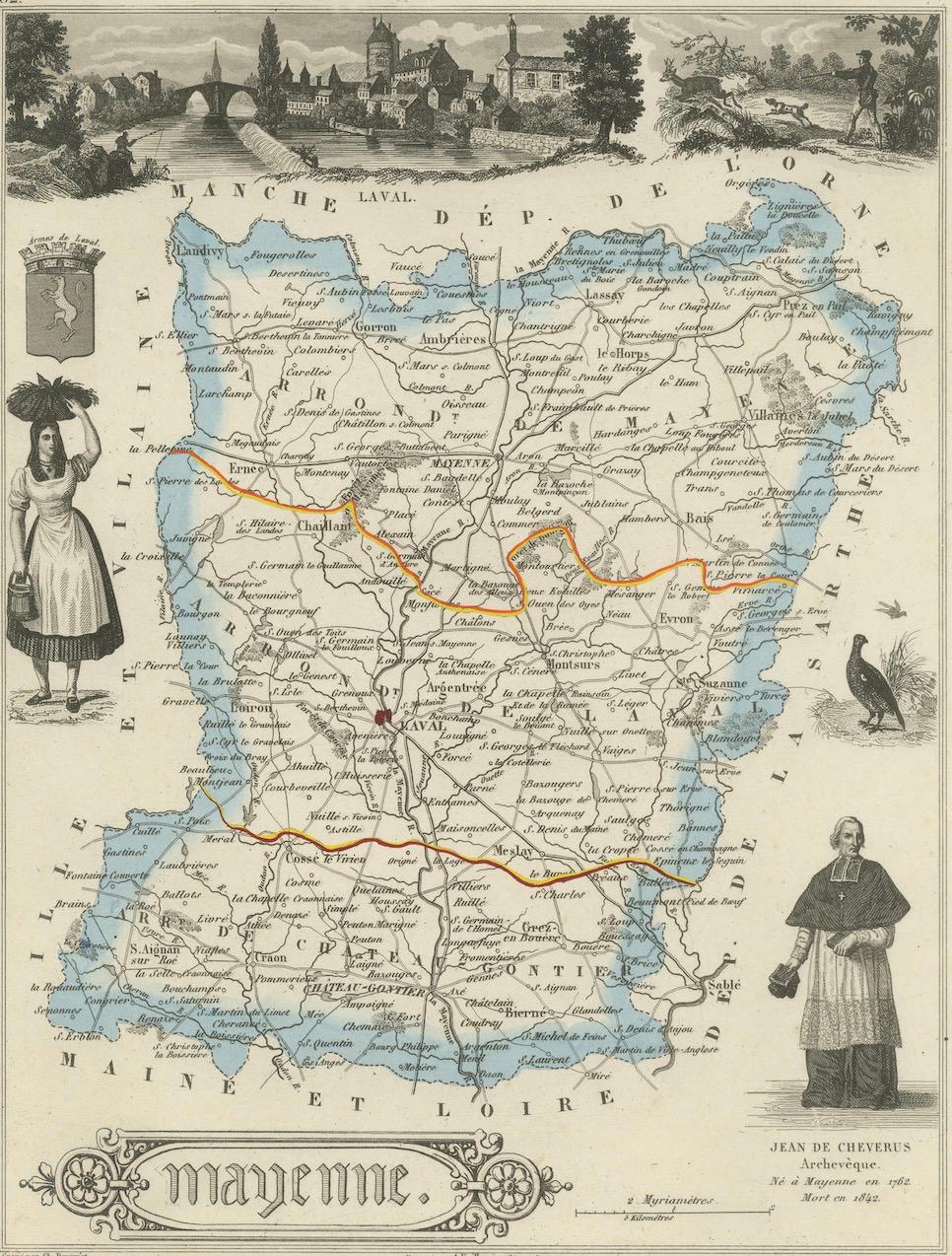
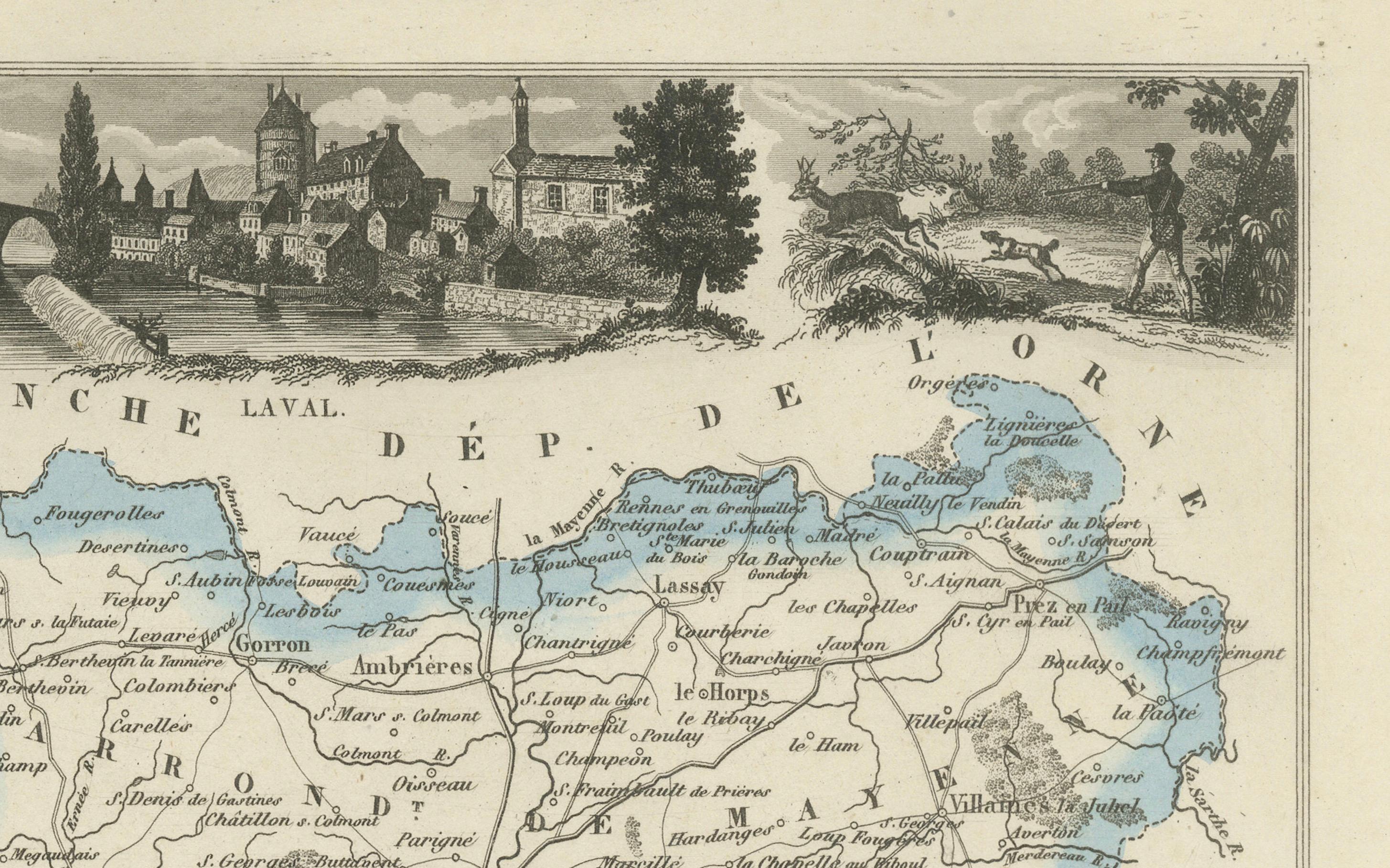
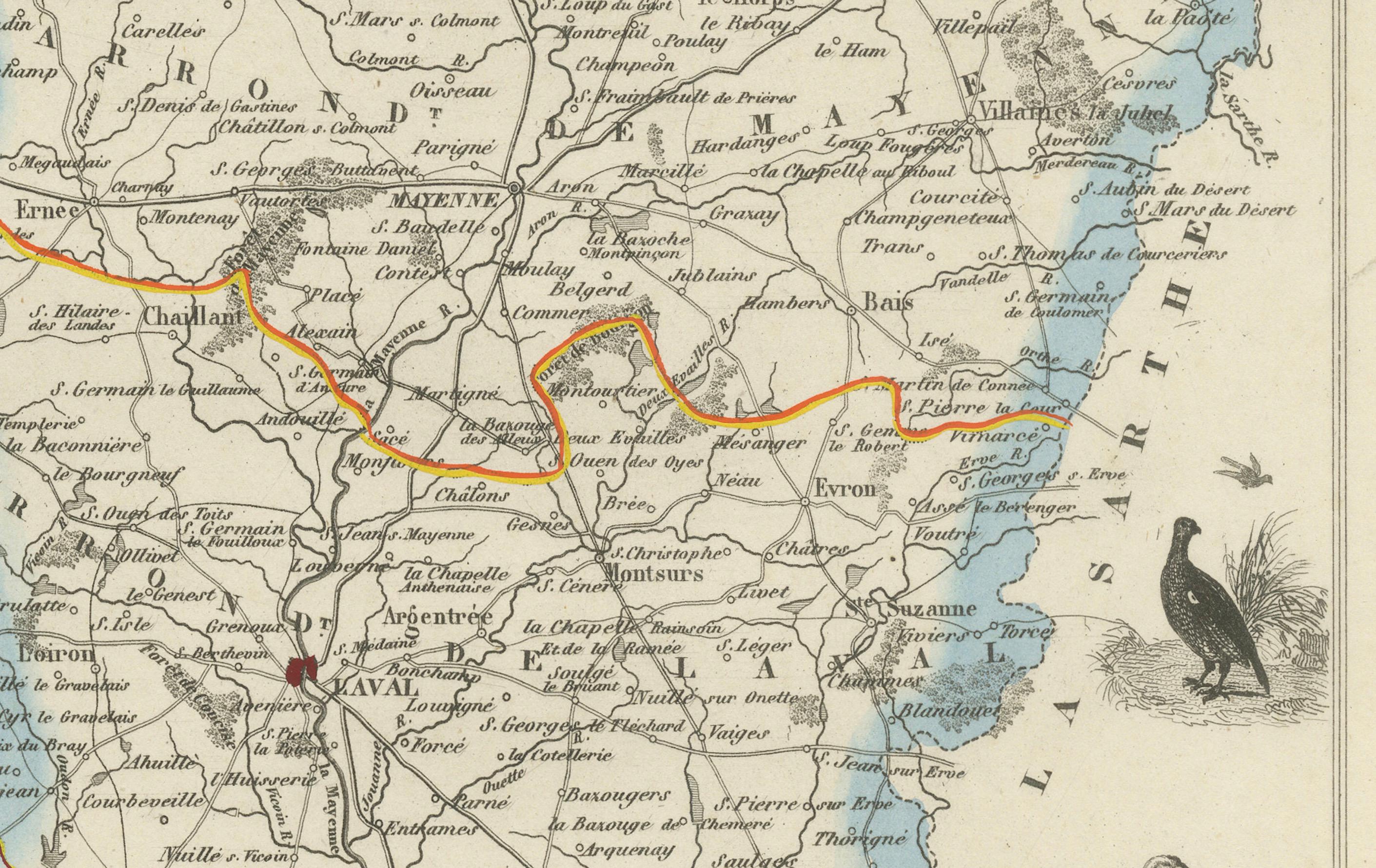
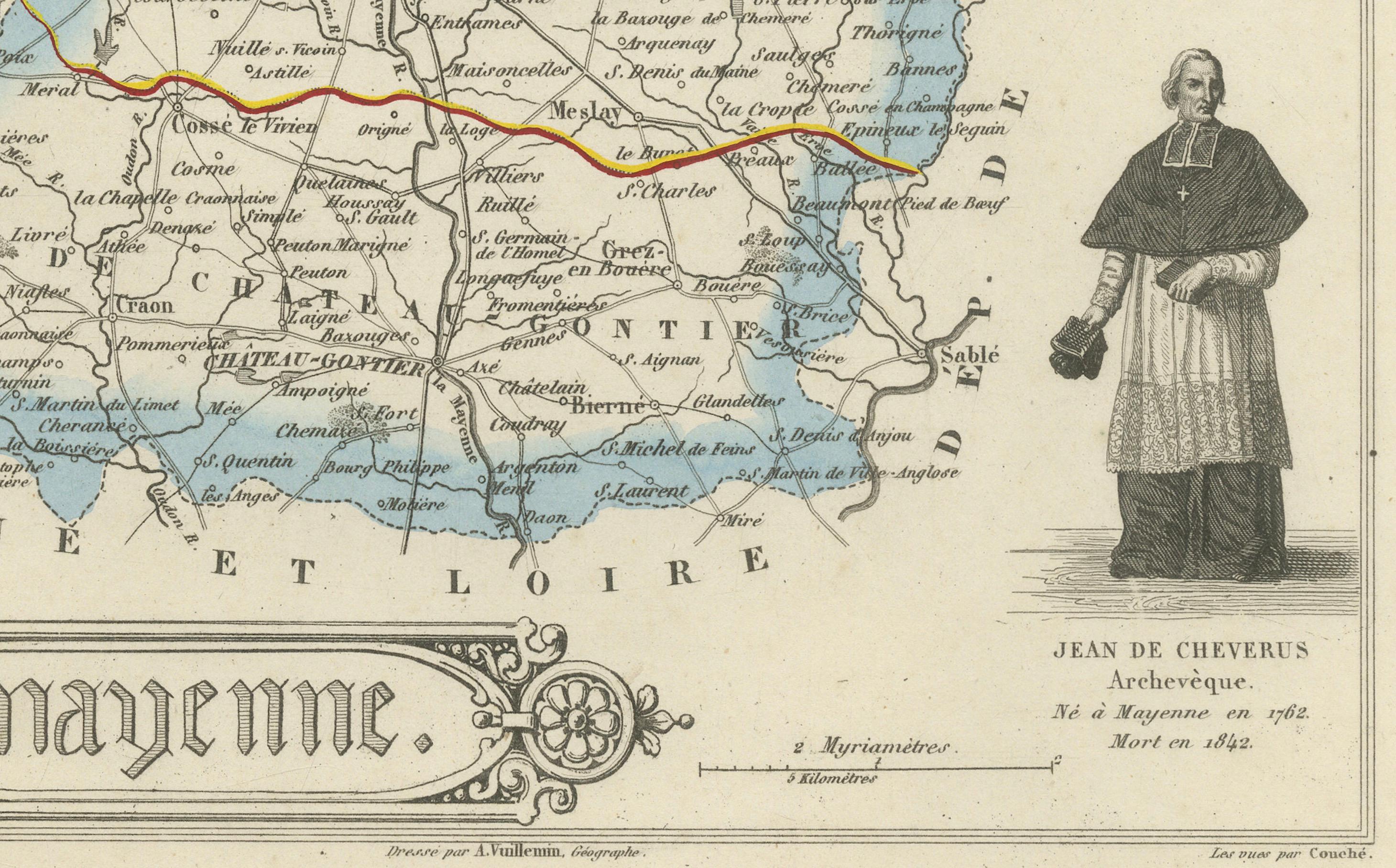
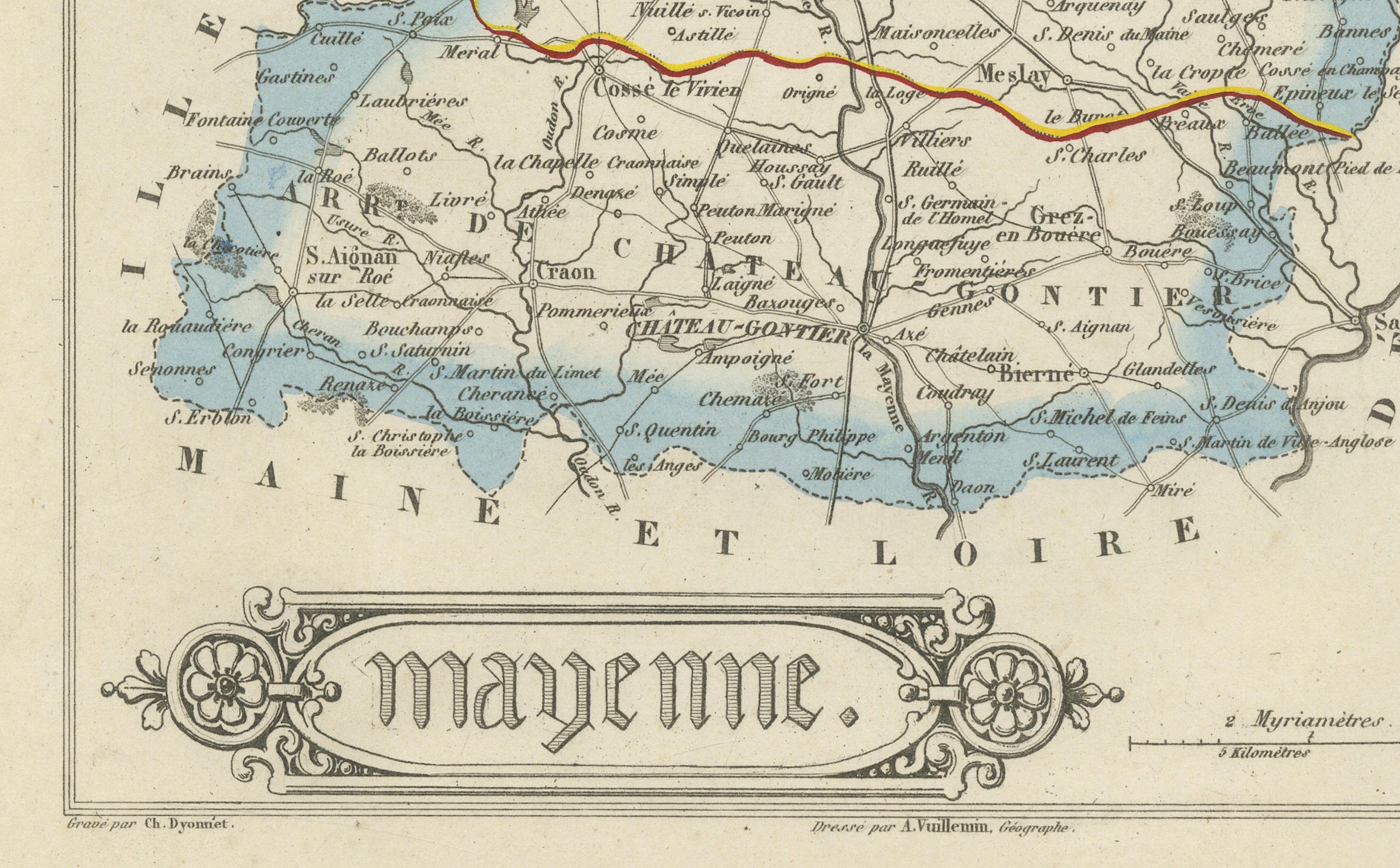
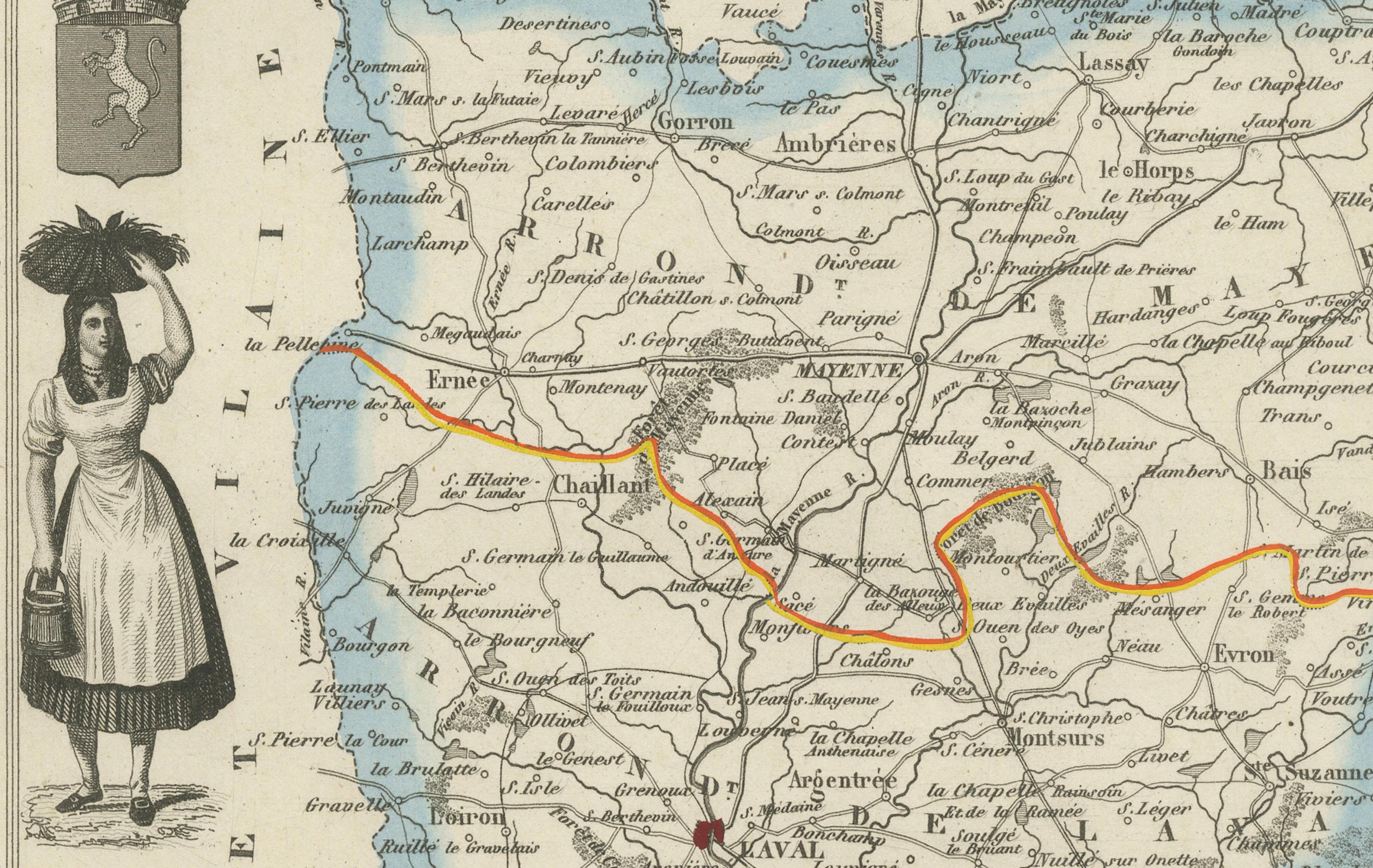
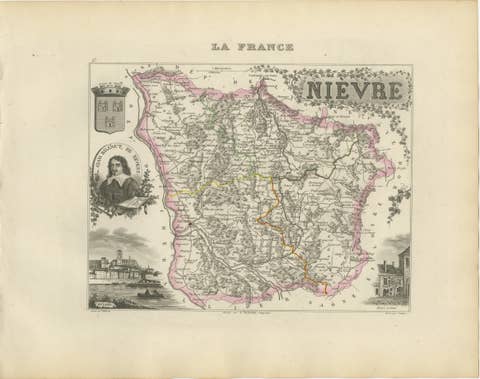
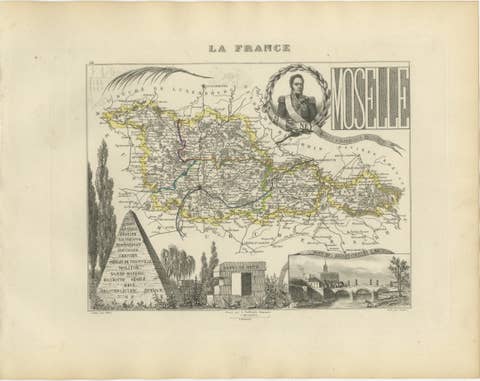
This finely detailed 19th-century engraved map of the department of Mayenne in northwestern France was created by the esteemed French cartographer Victor Levasseur and published around 1850 as part of his celebrated Atlas National Illustré. Known for combining accurate geography with richly decorative elements, Levasseur's maps remain among the most visually striking and collectible of the 19th century.
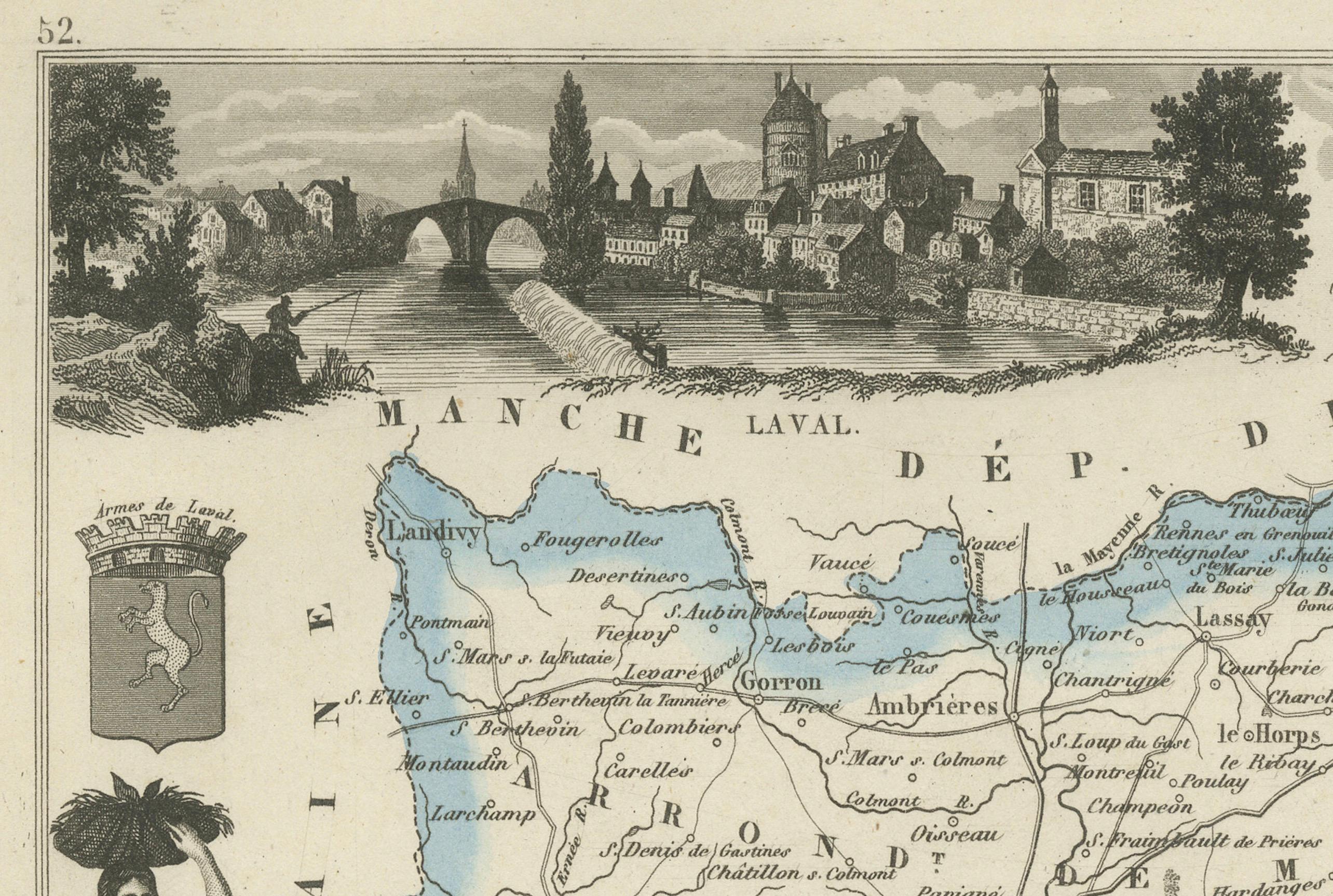
The map itself outlines the boundaries of Mayenne and is enhanced with original hand-coloring that highlights département borders, roads, rivers, and communes. The surrounding steel-engraved vignettes add an artistic and ethnographic dimension: at the top, a detailed townscape of Laval is shown in a scenic panoramic view; at left and right, depictions of local inhabitants in traditional dress provide insight into regional culture. In the lower right corner is a portrait of Jean de Cheverus (1768–1836), a prominent Laval-born bishop who became the first Archbishop of Boston and later Archbishop of Bordeaux.
Additional illustrations include the Mayenne coat of arms, regional flora and fauna, and agricultural motifs—emphasizing the rural and historical identity of the department. The layout is vertically oriented, with a baroque cartouche at the bottom framing the name "Mayenne" in an ornate style typical of Levasseur’s aesthetic. Printed text in the lower margin confirms the engraver as Levasseur and the publisher as A. Combette.
This map not only serves as a geographical reference but also as a visual document of French provincial life in the mid-19th century. It is ideal for collectors of historical cartography, Francophiles, or anyone with an interest in Mayenne’s local heritage.
Selected towns and why they matter:
1. Laval – departmental capital
2. Mayenne – historic town
3. Château-Gontier – commercial hub
4. Ernée – cultural center
5. Craon – medieval heritage
6. Gorron – rural economy
7. Saint-Berthevin – growing suburb
8. Evron – Romanesque architecture
9. Villaines-la-Juhel – scenic location
10. Andouillé – traditional farming
11. Pré-en-Pail – forested uplands
12. Ambrières-les-Vallées – natural park access
13. Montsûrs – historic structures
14. Meslay-du-Maine – Roman origins
15. Cossé-le-Vivien – art museum
16. Loiron – pilgrimage route
17. Saint-Pierre-des-Nids – outdoor recreation
18. Sainte-Suzanne – listed heritage site
19. Renazé – mining history
20. L'Huisserie – near Laval
21. Quelaines-Saint-Gault – rural crafts
22. Martigné-sur-Mayenne – riverside town
23. Argentré – rural landscape
24. Saint-Denis-de-Gastines – religious architecture
25. Louverné – Laval proximity
26. La Baconnière – scenic plateau
27. Landivy – border village
28. Chantrigné – regional farming
29. Congrier – local markets
30. Bouère – historic church
31. Vaiges – Roman road route
32. Bais – quiet village
33. Ballée – local traditions
34. Courbeveille – picturesque setting
35. Gesvres – forested commune
36. Bazougers – agricultural fair
37. Fromentières – traditional life
38. La Gravelle – transport junction
39. Chemazé – pastoral charm
40. Nuillé-sur-Vicoin – green countryside
41. Saint-Aignan-sur-Roë – rural heritage
42. Saint-Georges-Buttavent – artisan town
43. Sacé – natural surroundings
44. Saint-Loup-du-Dorat – farming village
45. La Bigottière – peaceful hamlet
46. Parigné-sur-Braye – fertile valley
47. Saint-Fort – near Château-Gontier
48. Saint-Mars-sur-Colmont – small community
49. Saint-Germain-d’Anxure – charming locale
50. Saint-Ouën-des-Toits – local heritage
Condition report:
Excellent condition overall. Light age toning to margins; central image clean. No visible tears, folds, or major foxing. Crisp plate mark present.
Framing tips:
This map would look especially attractive with a cream or soft grey mat and a thin black or antique gold frame to emphasize the engraved detail and blue-colored borders. A double mat with a pale blue inner line could echo the border color and bring subtle harmony to the composition.
Technique: Hand-colored engraving
Maker: V. Levasseur, Paris, c.1850