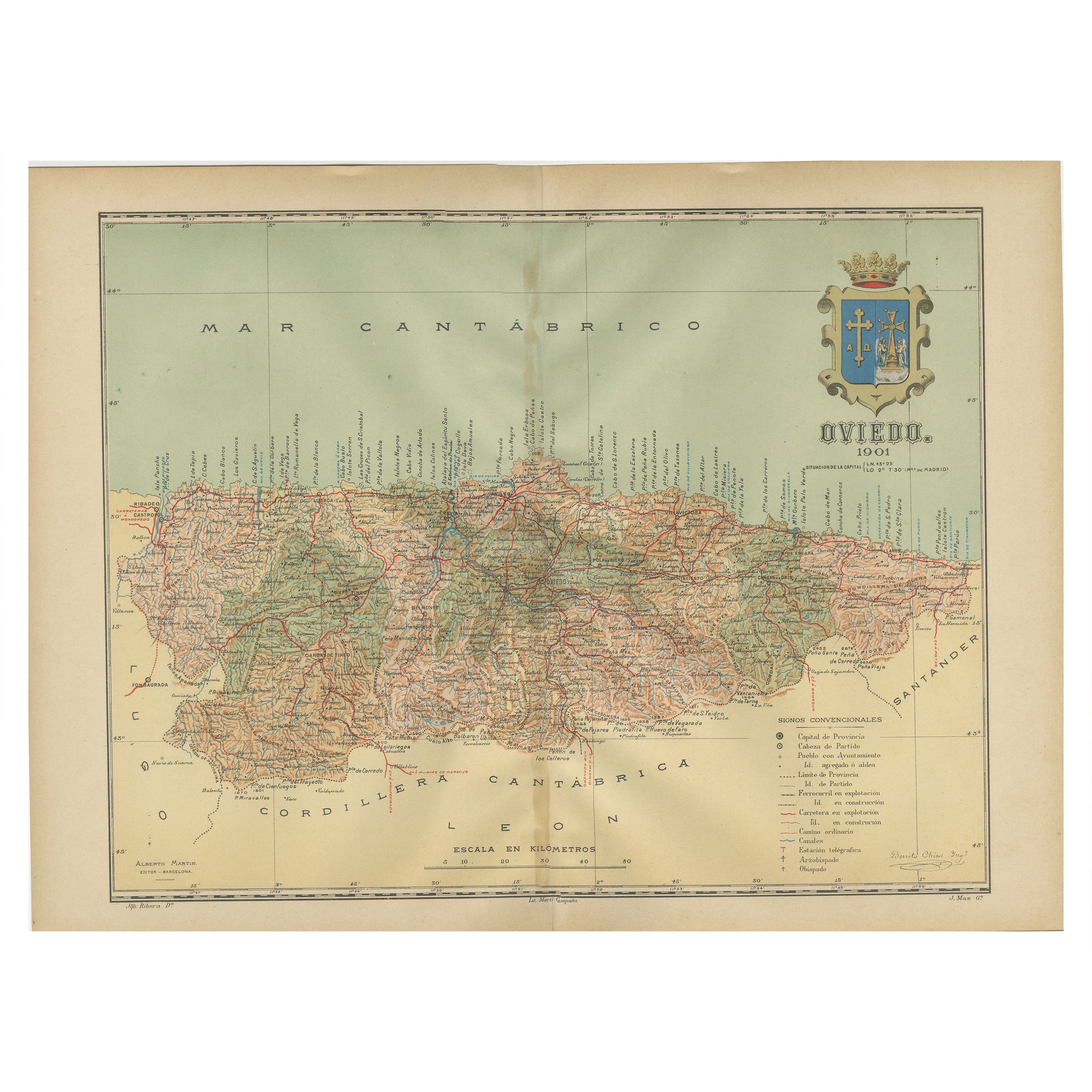
About this sheet
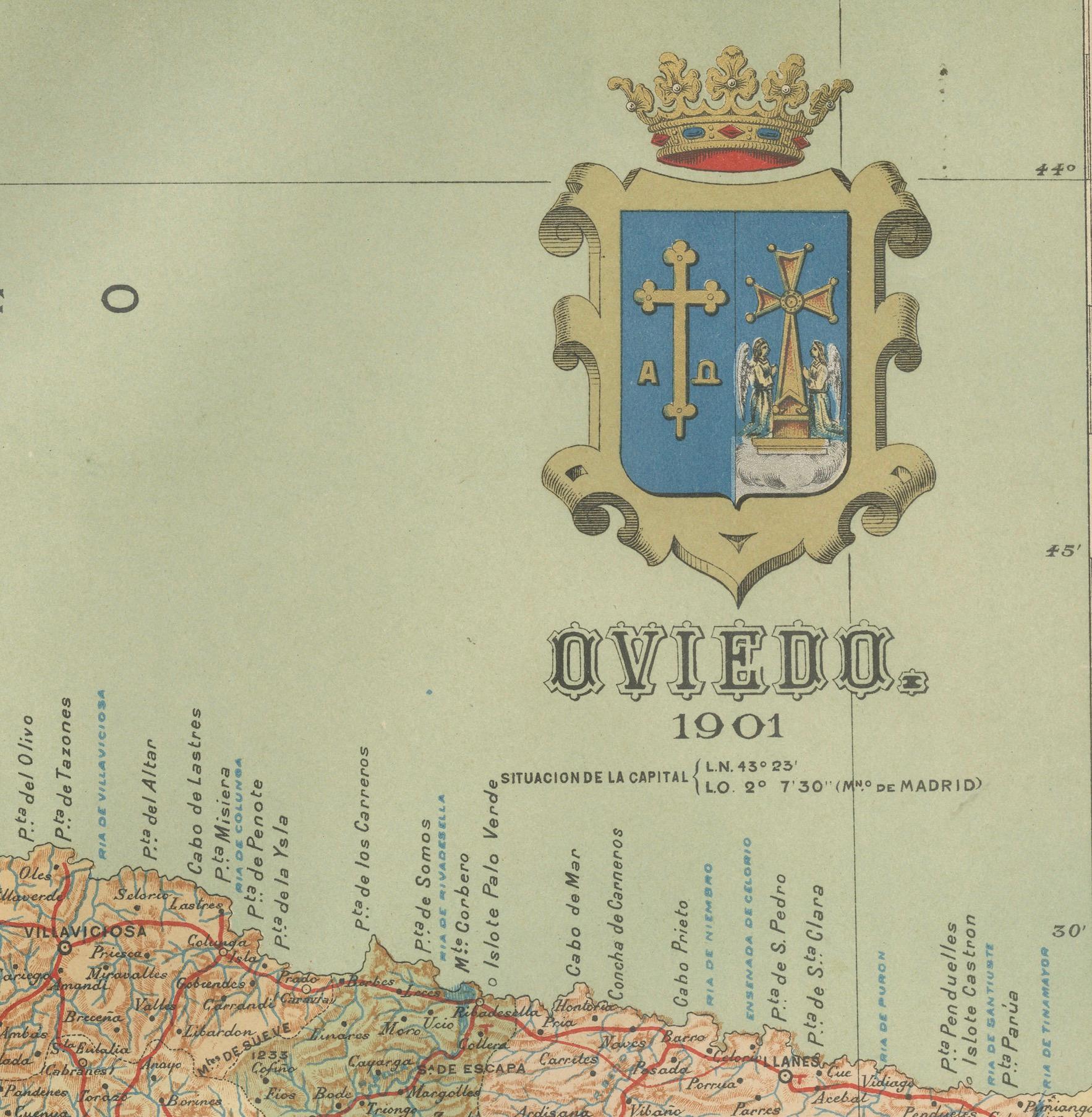
The province depicted on the historical map on offer, Oviedo, corresponds to the modern-day autonomous community of Asturias in northwestern Spain. Here are some points about Asturias:
1. **Geography**: Asturias is known for its rugged coastline, mountainous landscapes, and rich greenery, which is quite distinct from the drier regions of Spain. The Cantabrian Mountains, including the Picos de Europa National Park, provide stunning landscapes and are popular for hiking and other outdoor activities.
2. **Climate**: The region has a maritime climate, with mild temperatures throughout the year. It's famous for its "Green Spain" moniker due to its verdant landscapes, which result from higher rainfall than much of the rest of Spain.
3. **History**: Asturias has a rich history, often referred to as the cradle of the Spanish reconquest, or "Reconquista," against the Moors. The Battle of Covadonga, won by the Visigothic nobleman Pelayo, is cited as the beginning of this reconquest.
4. **Culture**: Asturias has a distinct cultural identity within Spain. The traditional bagpipe, or "gaita," is a symbol of Asturian music. The region has its own language, Asturian (Bable), recognized as a regional language.
5. **Economy**: Historically, Asturias was an industrial and mining powerhouse, with coal mining and steel production being major industries. While these have declined, the region has diversified into service industries and tourism.
6. **Gastronomy**: The cuisine of Asturias is renowned, particularly for its seafood, hearty stews like "fabada Asturiana," and cider, known as "sidra," which is poured in a unique way to aerate it before drinking.
7. **Capital**: The capital city, also named Oviedo, is known for its medieval old town, pre-Romanesque churches, and as a starting point for the Northern Route of the Camino de Santiago.
The province of Oviedo, now Asturias, is a region with a strong sense of identity, rich natural beauty, and historical significance.