About this sheet
Alpine Botanical Prints Set, Primula & Cortusa, Palla Atlas, 1897
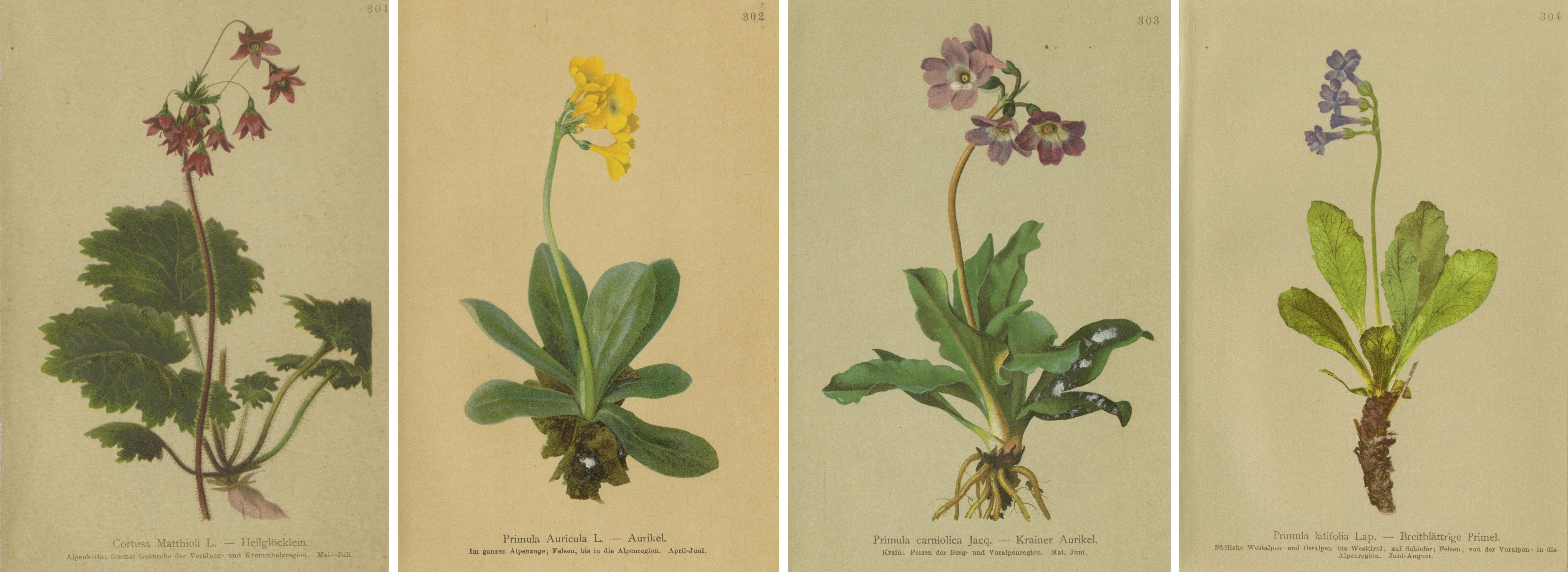
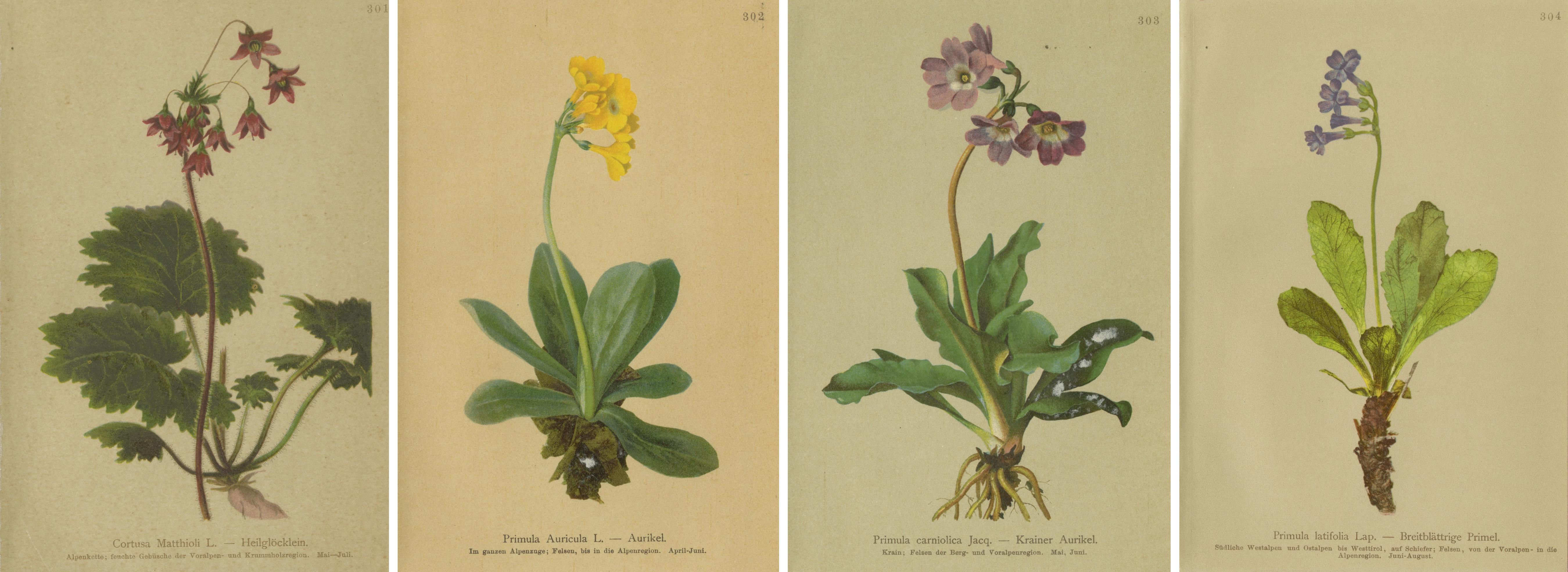
A refined and visually harmonious set of four original antique botanical prints from Dr. Eduard Palla’s Atlas der Alpenflora, Volume IV, published in Munich by J. Lindauer'schen in 1897. This attractive group presents a carefully selected range of alpine flora, rendered with exceptional clarity and naturalistic color, typical of late 19th-century scientific botanical illustration.
Each plate depicts a distinct species native to the Alpine regions, shown in full botanical detail including root structure, leaves, and flowering forms. The compositions are elegantly isolated against a soft neutral background, allowing the forms and colors to stand out with decorative strength while maintaining scientific accuracy. These prints were produced using high-quality chromolithography, a technique widely used in the late 19th century to achieve rich, layered color and fine tonal transitions.
The set includes the following species:
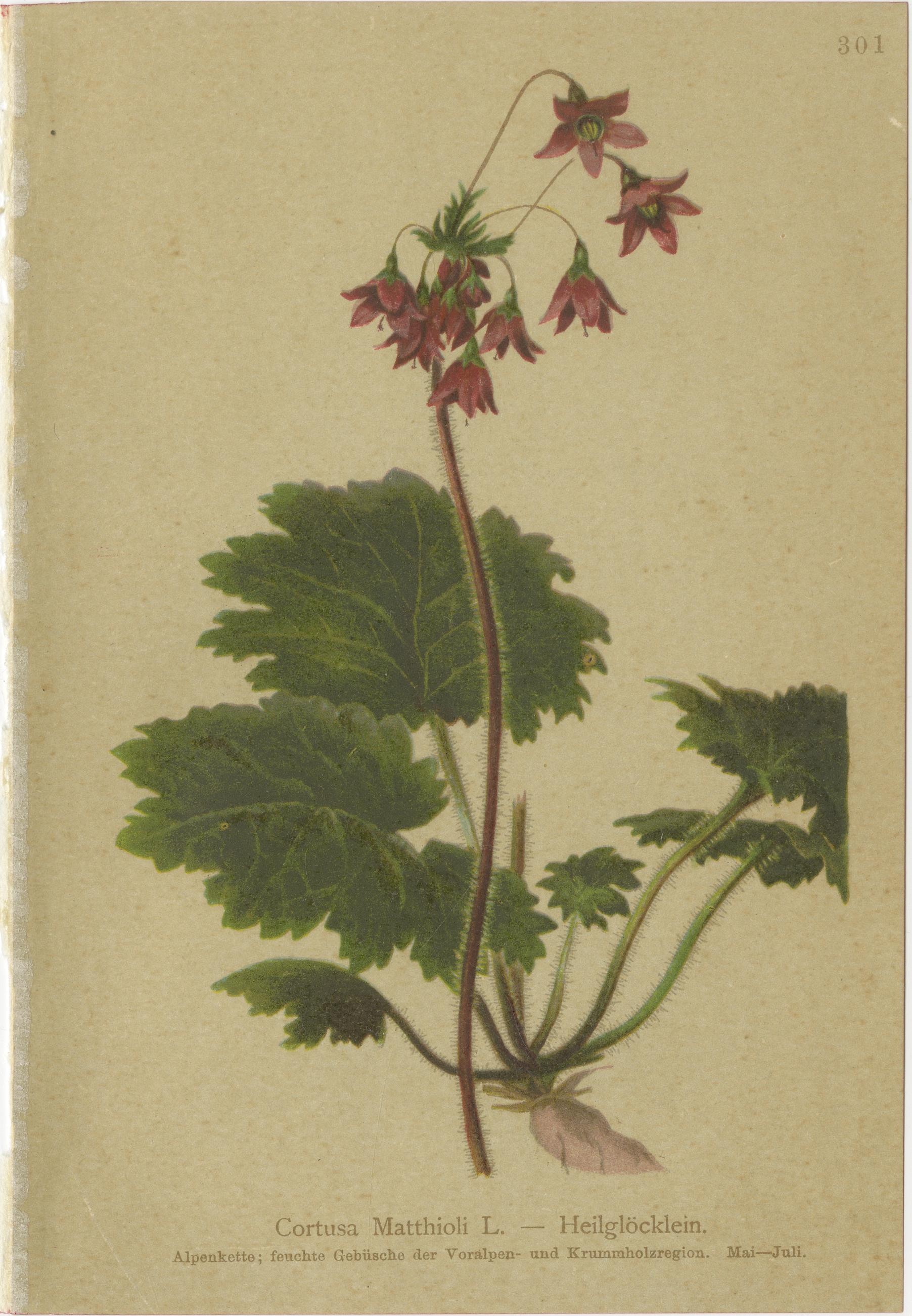
1. Cortusa Matthioli L.
German: Heilglöcklein
French: Cortuse de Matthiole
English: Alpine Bells / Cortusa
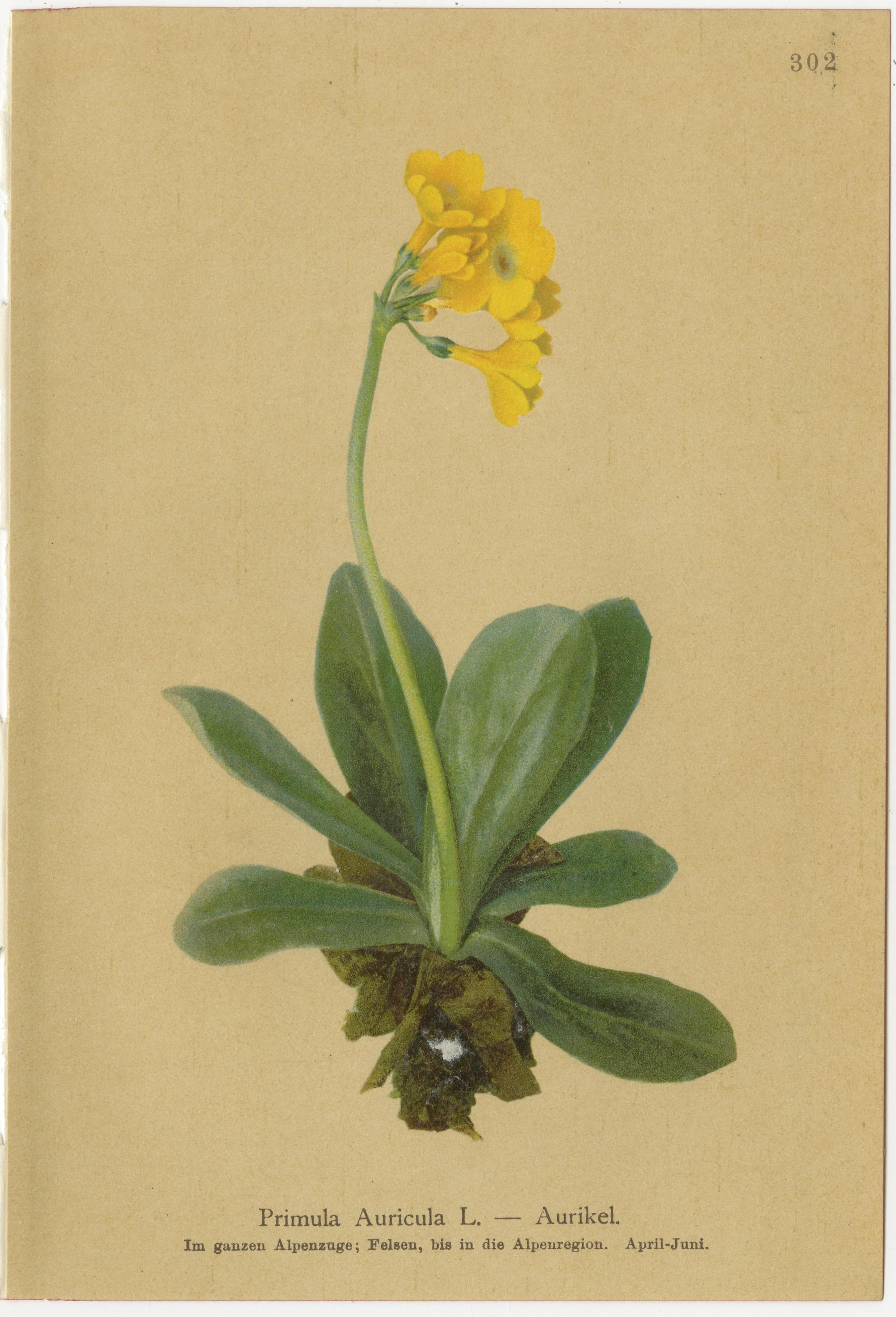
2. Primula Auricula L.
German: Aurikel
French: Auricule
English: Bear’s Ear Auricula
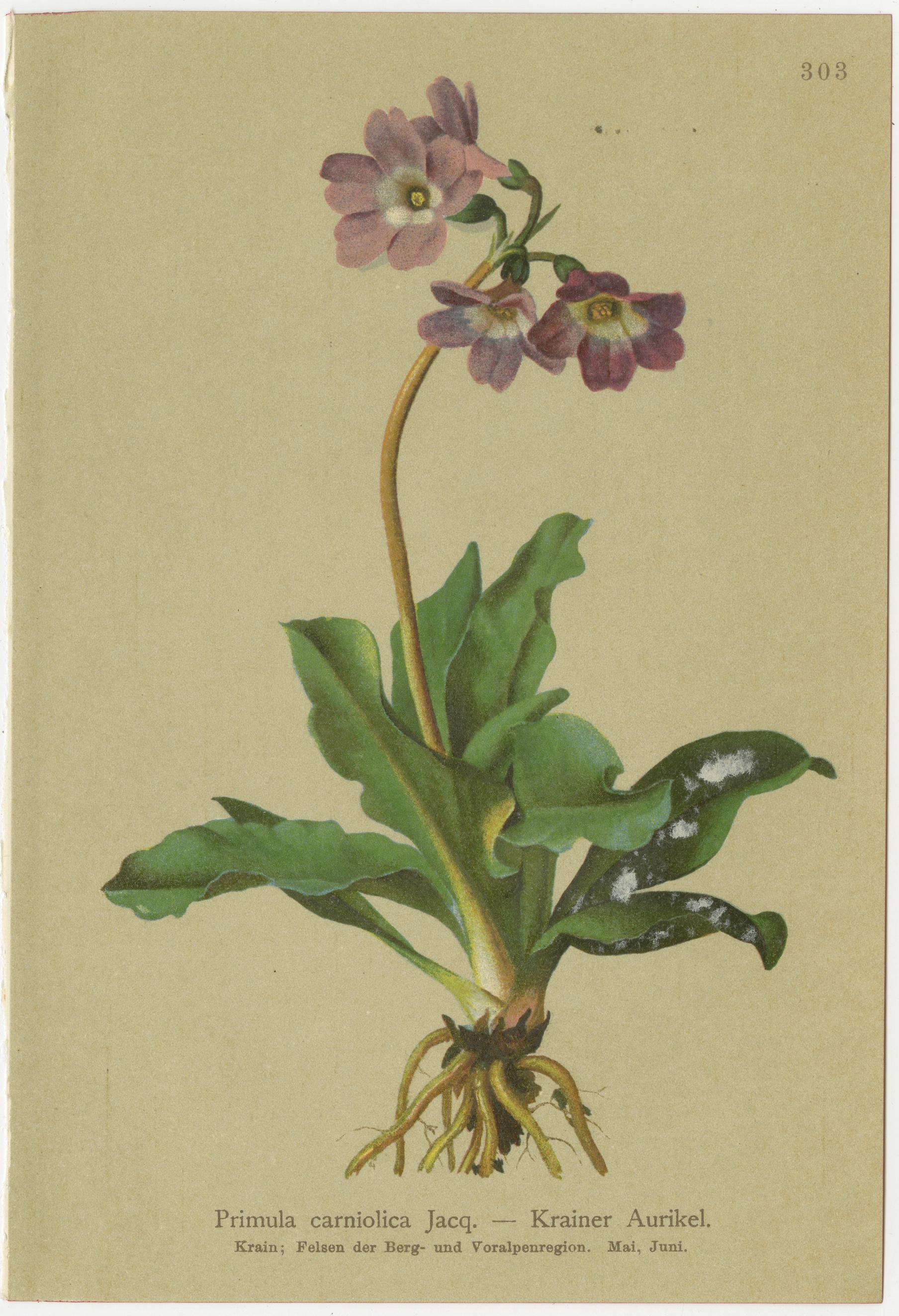
3. Primula carniolica Jacq.
German: Krainer Aurikel
French: Primevère de Carniole
English: Carniolan Primrose
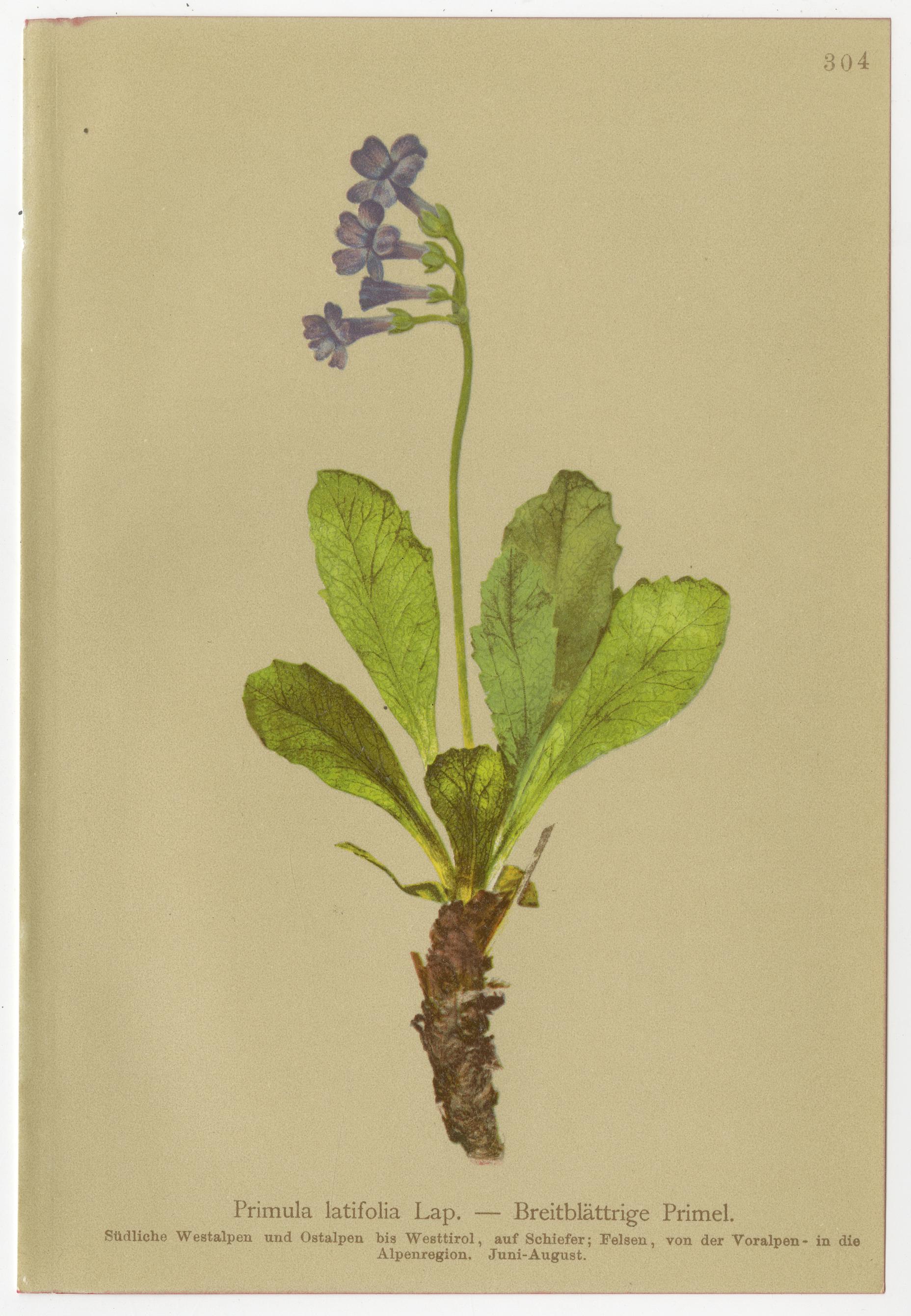
4. Primula latifolia Lap.
German: Breitblättrige Primel
French: Primevère à larges feuilles
English: Broad-leaved Primrose
The combination of soft aged paper tones, delicate botanical rendering, and vibrant yet natural colors makes this set particularly appealing for both collectors and interior designers. Displayed together, the prints form a cohesive botanical wall arrangement, ideal for classic, country house, or refined contemporary interiors.
Please note: these are small-format botanical prints (approx. 19 × 15 cm / 7.5 × 5.9 inches each). The interior mockup is for visual inspiration only and does not represent the exact scale.
Condition:
Good antique condition with age-related toning to the paper. Minor edge wear and light handling marks consistent with bound atlas plates. Occasional faint spotting. Overall well-preserved with strong color.
Framing tips:
These prints display beautifully as a unified set in matching frames. Use wide ivory or off-white mats with thin dark walnut, black, or ebonized frames for a refined gallery look. Hang as a vertical or grid arrangement to emphasize the botanical diversity while maintaining visual balance.
Technique: Chromolithograph
Maker: Dr. Eduard Palla, Austria/Germany, published Munich, 1897
Note: This is an original antique engraving and not a reproduction. It is offered unframed. Frame shown for presentation purposes only.