About this sheet
Swedish Life Guards on Horseback – Royal Cavalry Uniforms, c.1860
Description
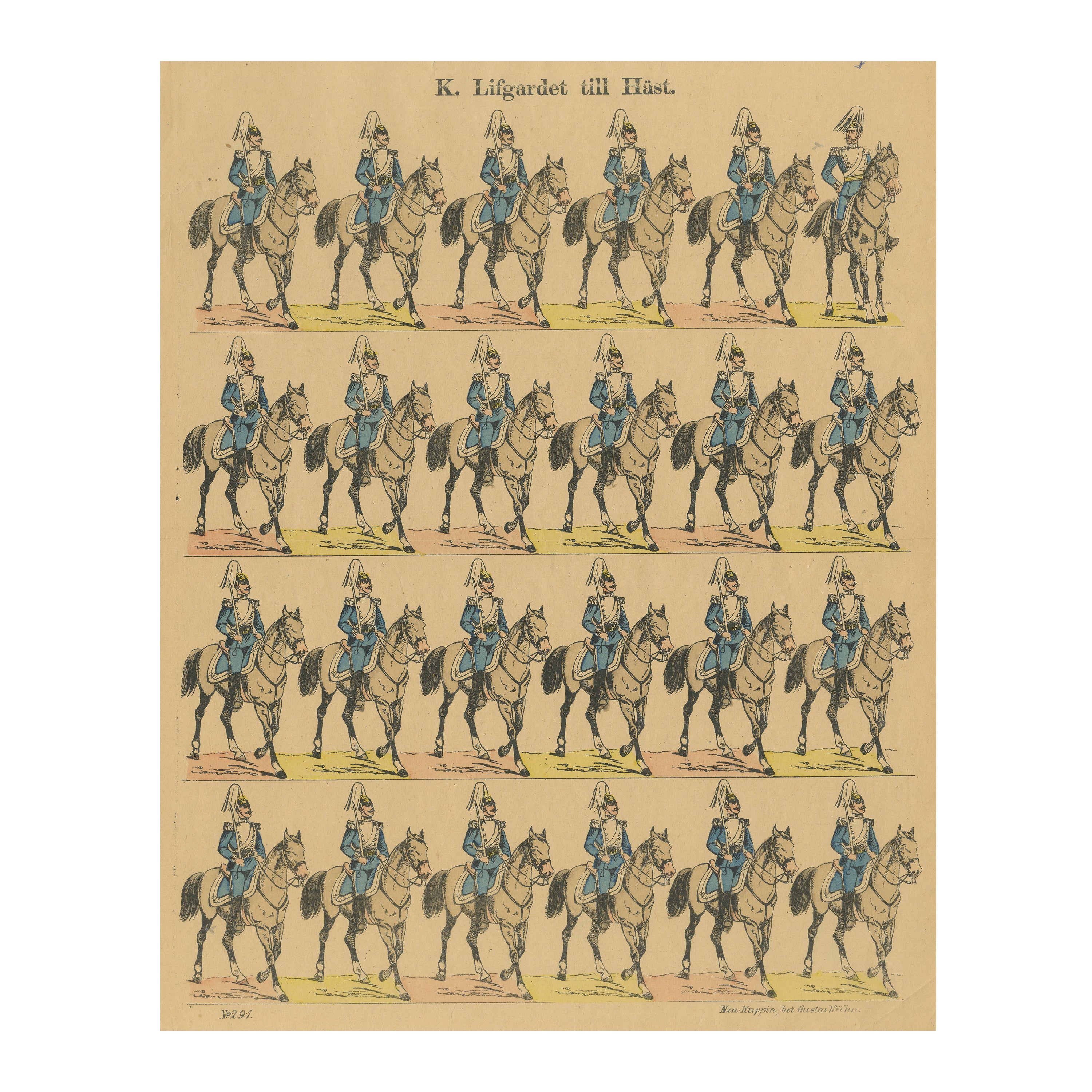
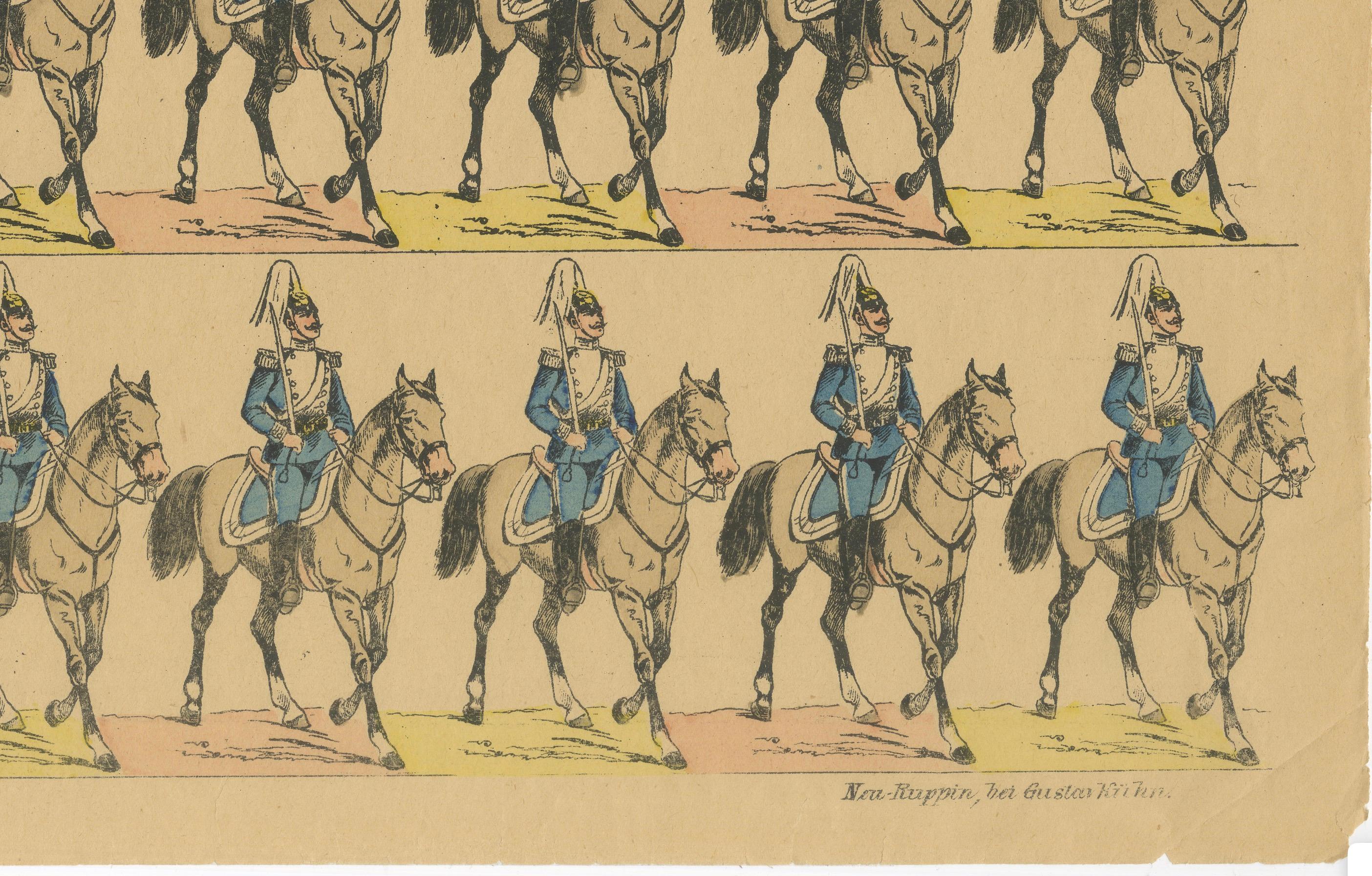
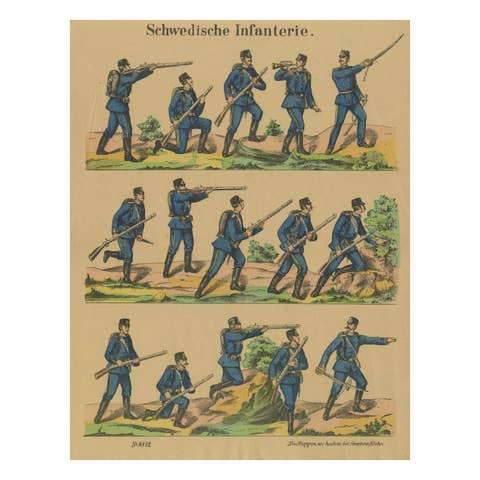
This finely hand-colored military print depicts the Swedish Royal Life Guards on horseback, presenting mounted cavalrymen in ceremonial procession and uniform formation. Issued in Neuruppin and published by Gustav Kühn, the sheet belongs to the long tradition of 19th-century European military imagery documenting elite regiments through clear, repetitive visual structure.
The composition is arranged in four horizontal registers, each showing a continuous line of mounted guardsmen advancing at a measured pace. The repetition of figures emphasizes discipline, order, and regimental unity, while subtle variations in horse stance and movement introduce rhythm and visual interest. The cavalrymen are shown upright in the saddle, reinforcing the ceremonial and elite character of the unit.
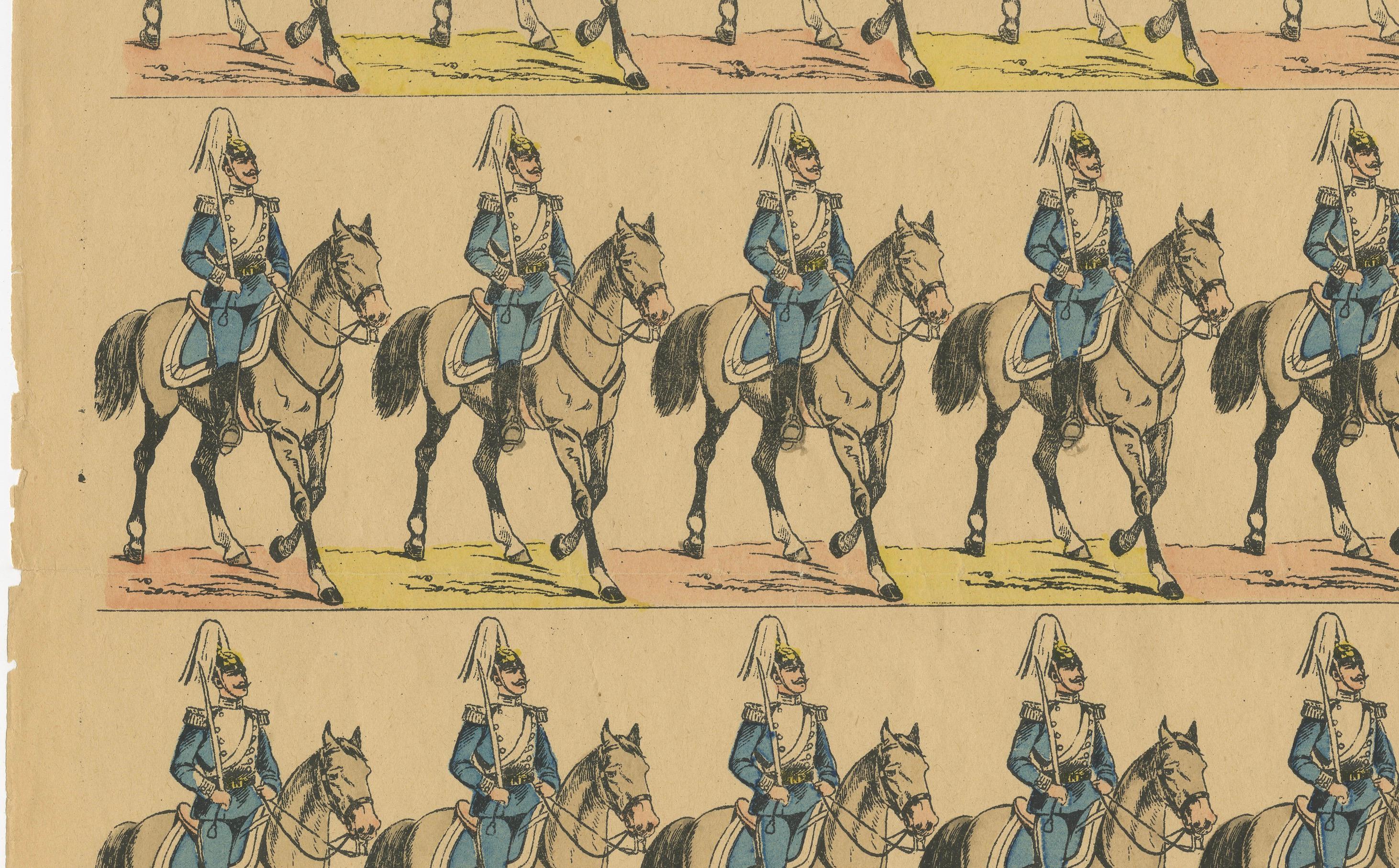
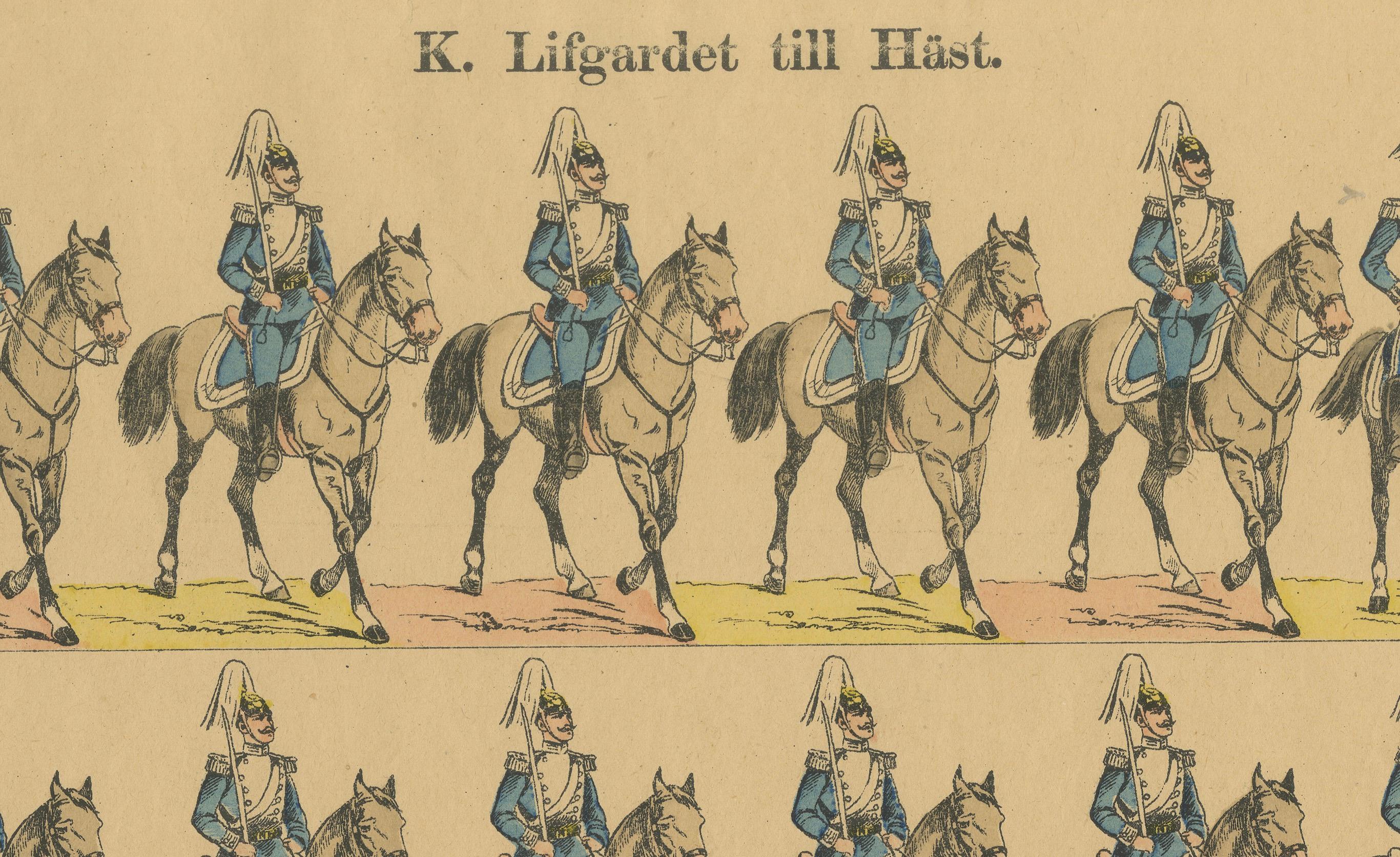
Uniform details are rendered with precision and restraint. The riders wear light blue tunics with pale facings, plumed helmets, white crossbelts, and polished riding boots, while the horses are depicted with neatly arranged tack and saddlecloths. The hand coloring is controlled and harmonious, enhancing legibility and reinforcing the instructional and documentary purpose of the image.
The title “K. Lifgardet till Häst” identifies the Royal Life Guard Cavalry, one of Sweden’s most prestigious military formations. Such prints were widely circulated across Europe as visual records of national armies and royal guard units, appealing to officers, collectors, and the general public alike. Swedish cavalry imagery is encountered less frequently than French, Prussian, or Austrian equivalents, adding to the desirability of this sheet.
This work is particularly appealing to collectors of cavalry history, Scandinavian military heritage, royal guard units, and 19th-century uniform studies. Its balanced composition, equestrian subject matter, and restrained color palette also make it an elegant decorative piece, well suited to both classic and contemporary interiors.
Condition
Fair overall condition. Noticeable age toning consistent with 19th-century paper. Minor creases, edge wear, and small surface marks. Hand coloring remains clear and well preserved.
Framing tips
A wide off-white or light grey mat will complement the aged paper and emphasize the rhythmic horizontal layout. A dark wood or walnut frame works particularly well with the equestrian subject. Museum or UV-filtering glass is recommended to protect the original coloring and paper.
Technique: Hand-colored wood engraving
Maker: Gustav Kühn, Neuruppin, Germany, c.1860