About this sheet
Swedish Infantry – Rifle Drill and Combat Movements, c.1860–1870
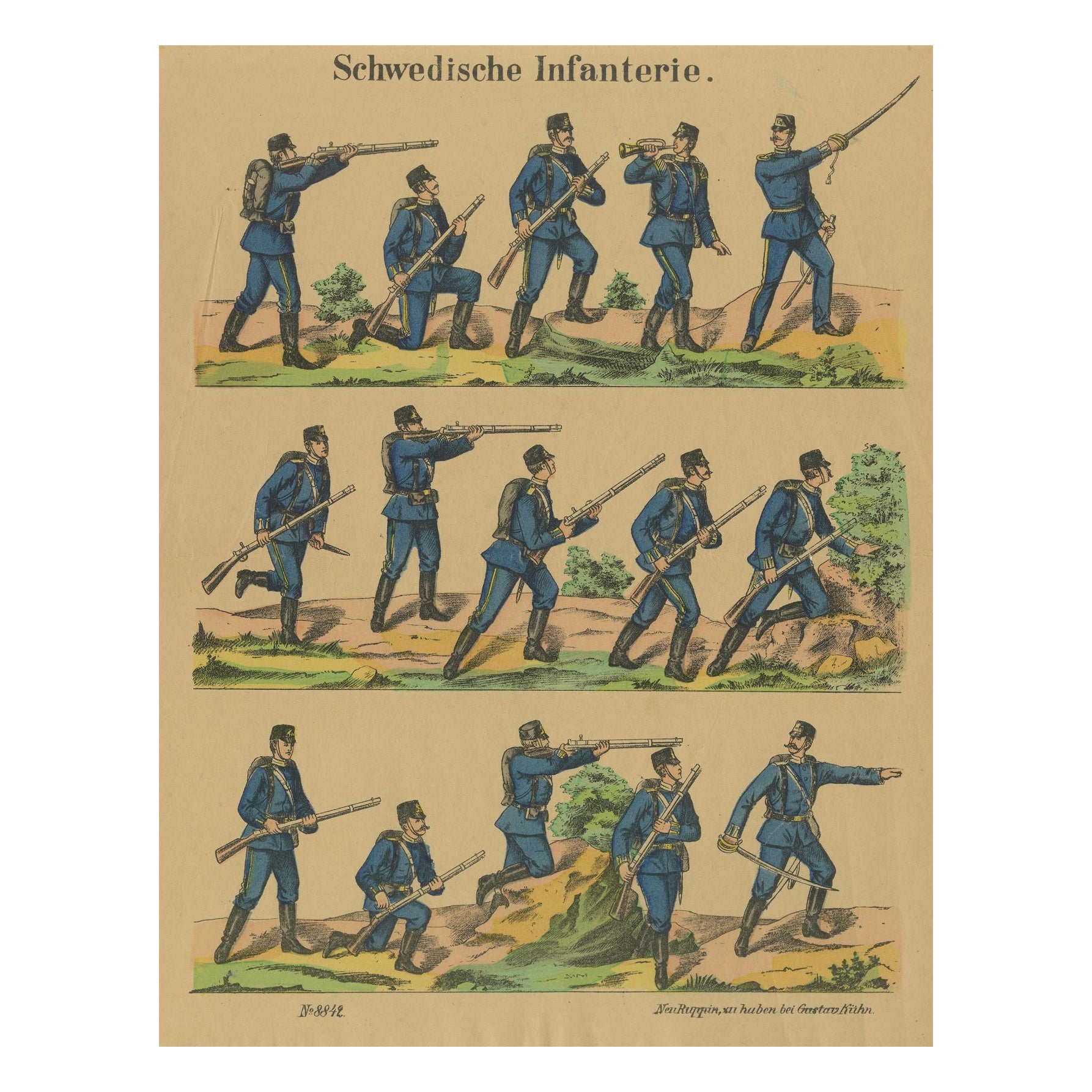
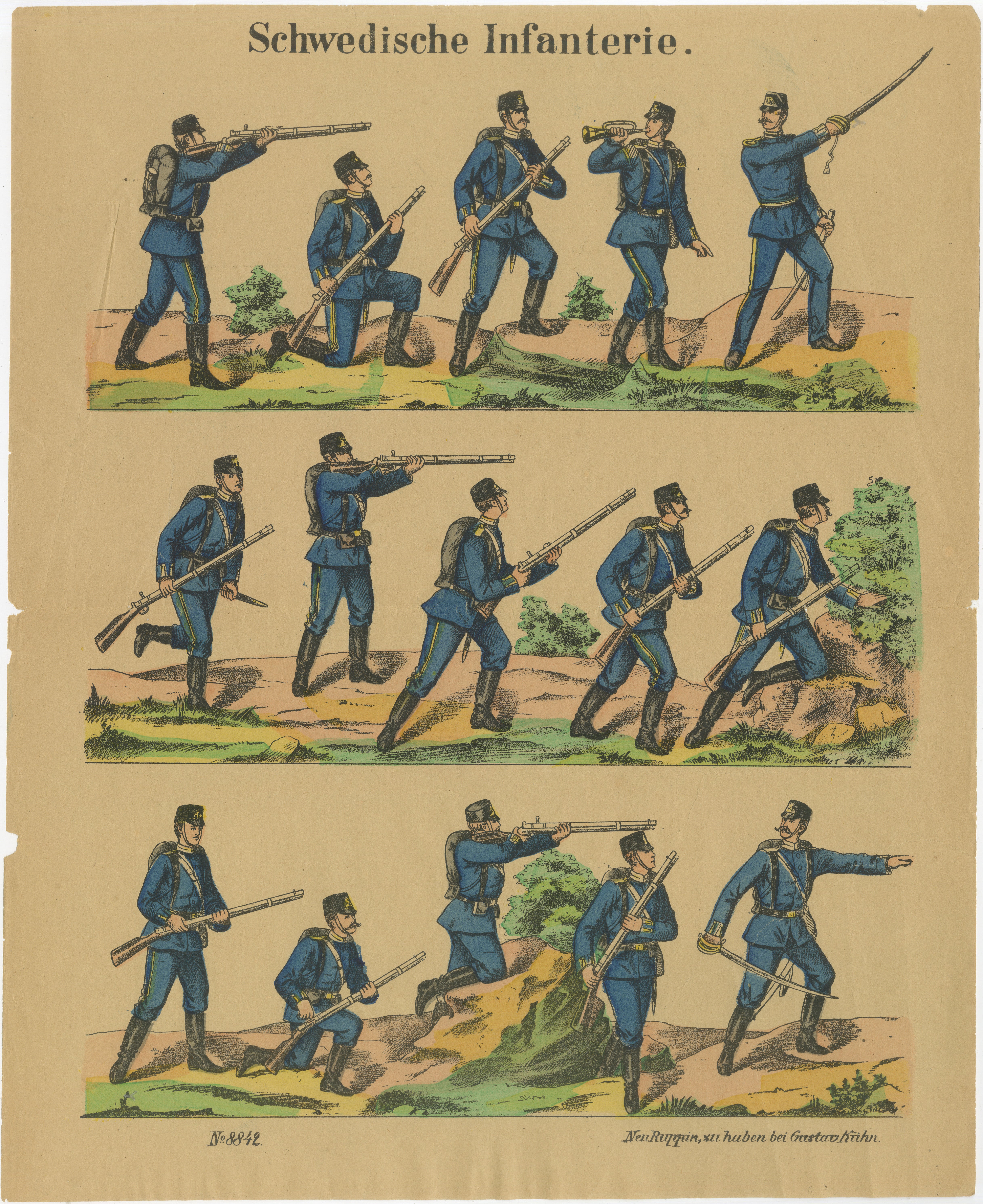
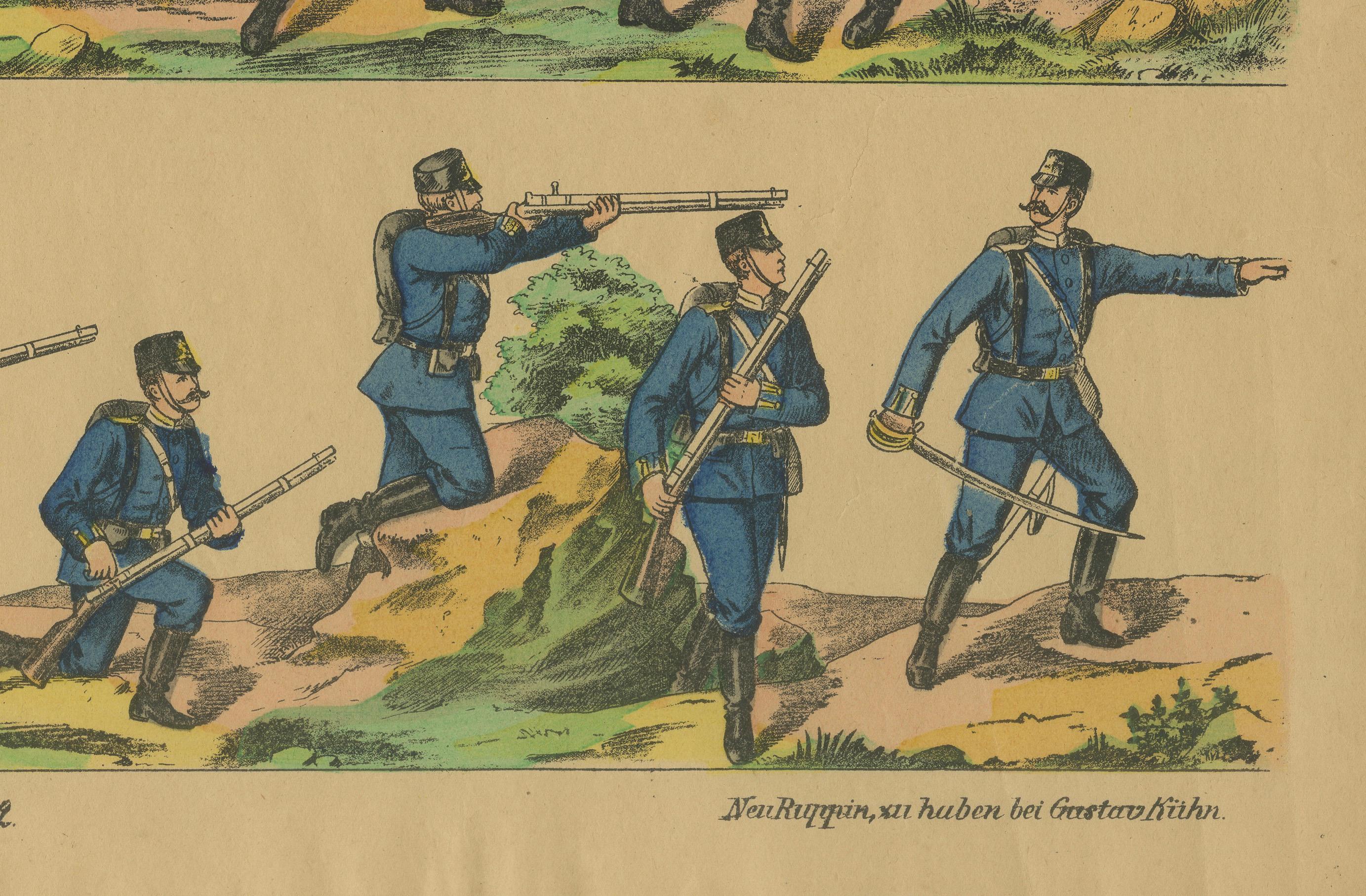
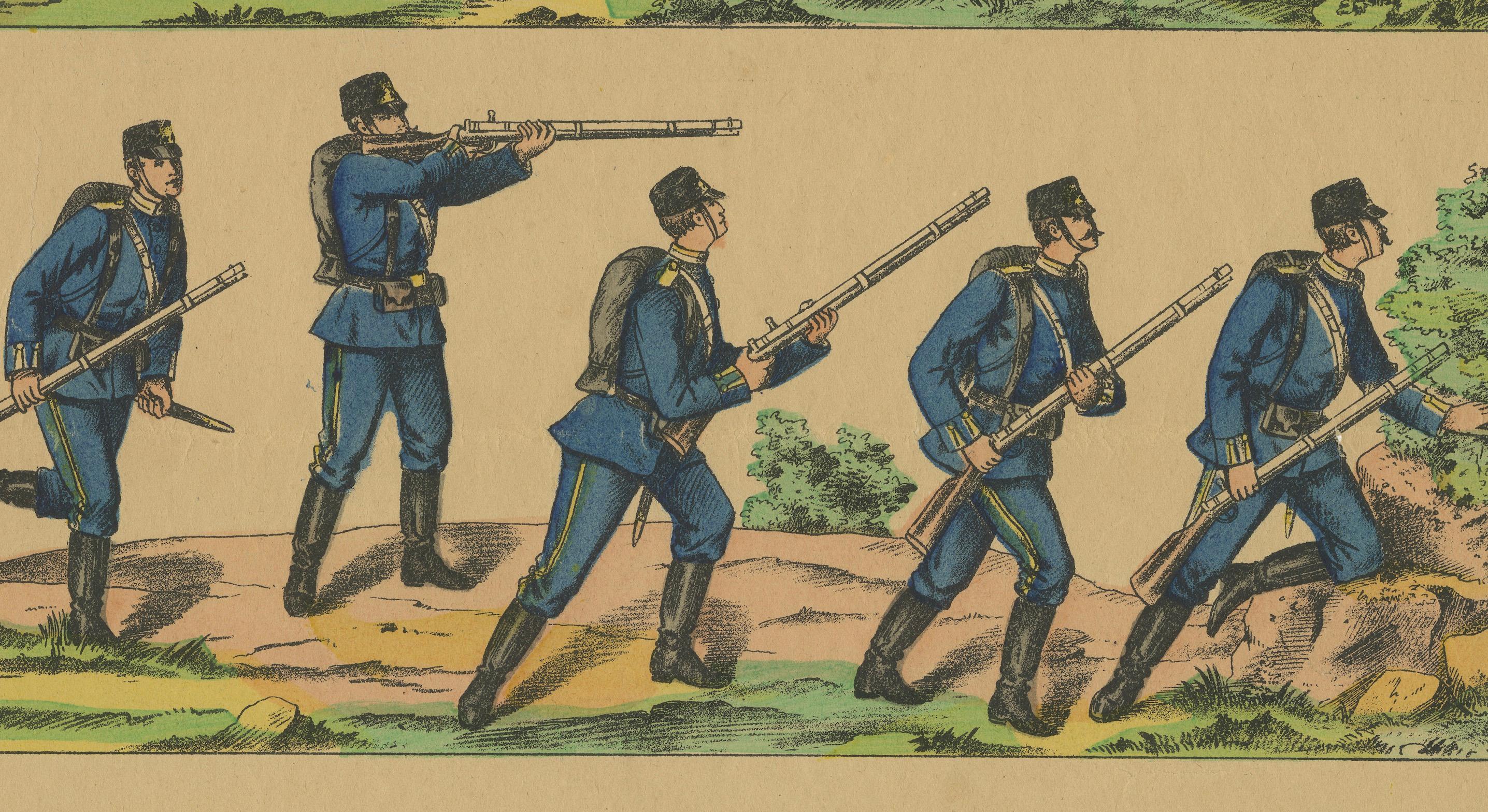
This finely hand-colored military print illustrates Swedish infantry soldiers performing rifle drill and tactical movements, presented in a clear and instructional sequence. Produced in Neuruppin and published by Gustav Kühn, the sheet belongs to a long German tradition of military imagery documenting contemporary European armies for educational and popular audiences.
The composition is arranged in three horizontal registers, each showing a progression of infantrymen advancing, firing, kneeling, and maneuvering with rifles and bayonets. The figures are depicted in motion across gently undulating terrain, emphasizing field tactics rather than ceremonial parade. Each posture is carefully differentiated, allowing the viewer to follow the sequence of commands and actions step by step.
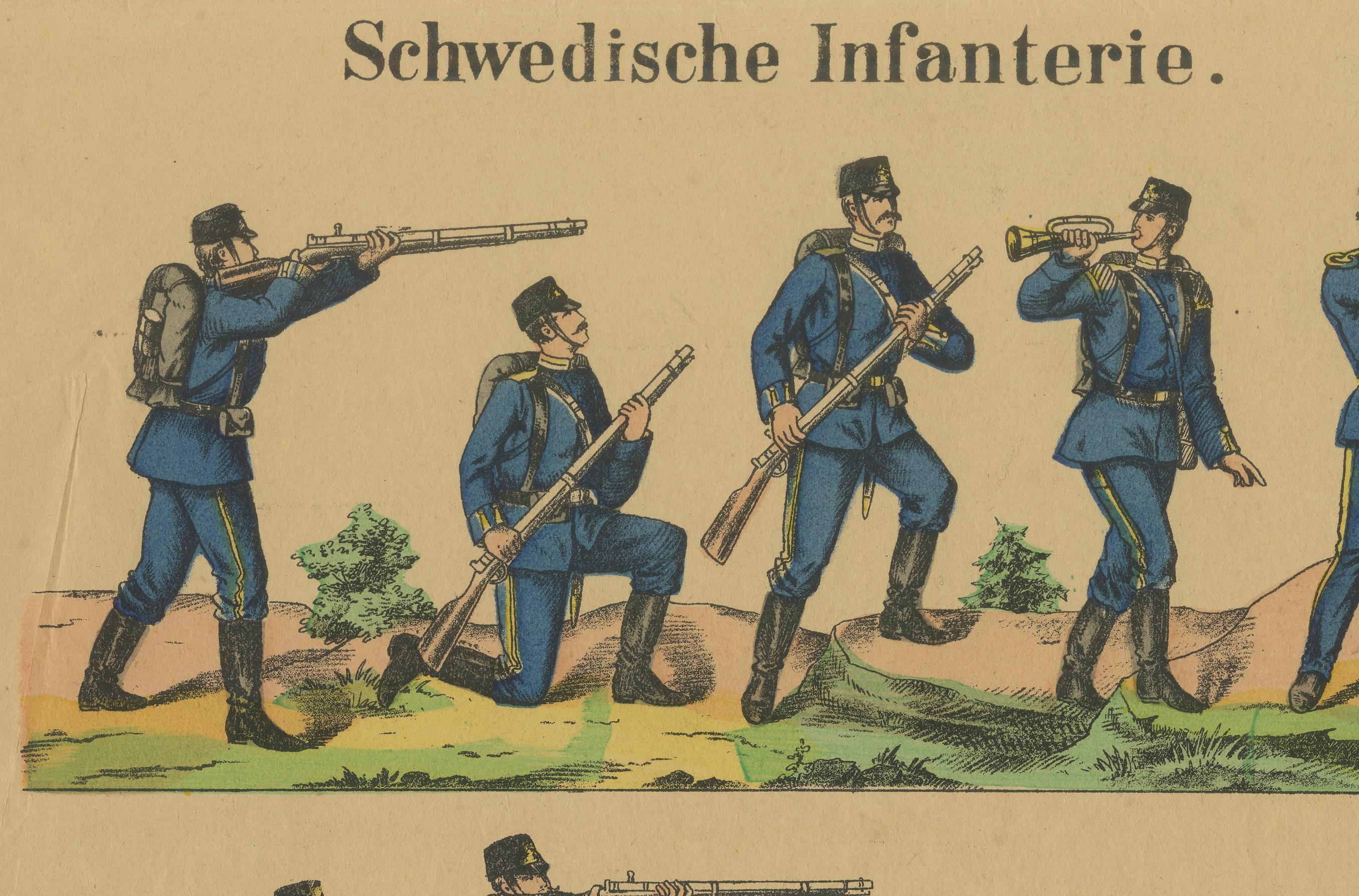
Uniform details are rendered with precision. The soldiers wear dark blue tunics with contrasting piping, matching trousers, and regulation caps, consistent with mid-19th-century Swedish military dress. Rifles, bayonets, belts, and packs are clearly defined, underscoring the practical and instructional purpose of the print. The restrained but effective hand coloring enhances legibility without overwhelming the scene.
The title “Schwedische Infanterie” identifies the subject succinctly, reflecting widespread European interest in the organization and modernization of national armies during this period. Neuruppin was a major center for popular military prints, and sheets such as this were used both as visual references and as decorative wall prints, appealing to soldiers, enthusiasts, and collectors alike.
Swedish military imagery is encountered less frequently than French, Prussian, or Austrian examples, adding to the appeal of this sheet. Its dynamic figures, balanced composition, and clear documentary value make it particularly attractive to collectors of military history, Scandinavian history, and 19th-century uniform studies. It also works well as a decorative piece in both classic and modern interiors.
Condition
Good overall condition. Noticeable age toning consistent with 19th-century paper. Minor creases, edge wear, and small surface marks. Hand coloring remains strong and well preserved. Overall a clean and appealing example.
Framing tips
A wide off-white or light grey mat will enhance separation between the three registers and complement the aged paper tone. A dark wood or walnut frame suits the subject well. Museum or UV-filtering glass is recommended to protect the original coloring and paper.
Technique: Hand-colored wood engraving
Maker: Gustav Kühn, Neuruppin, Germany, c.1860–1870