About this sheet
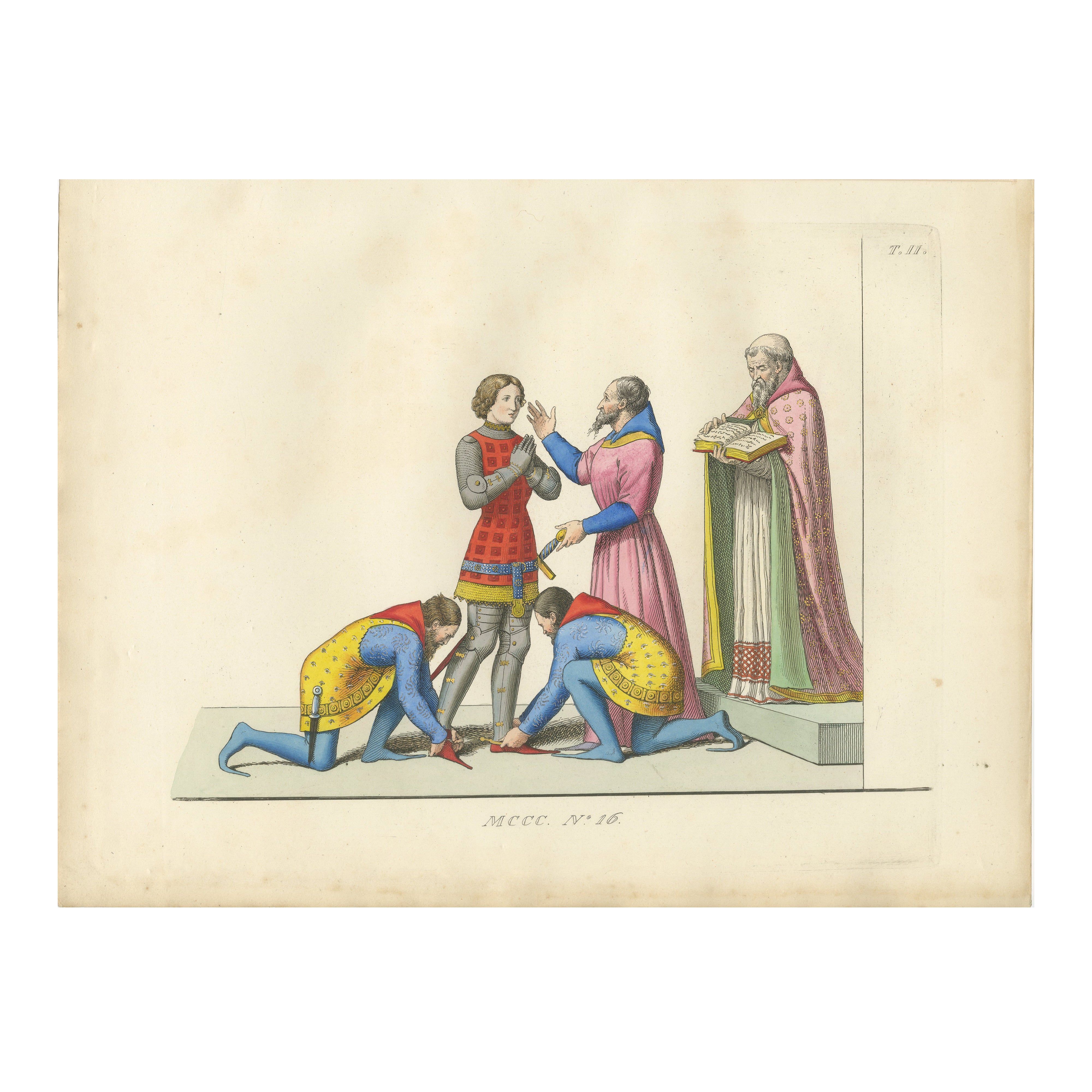
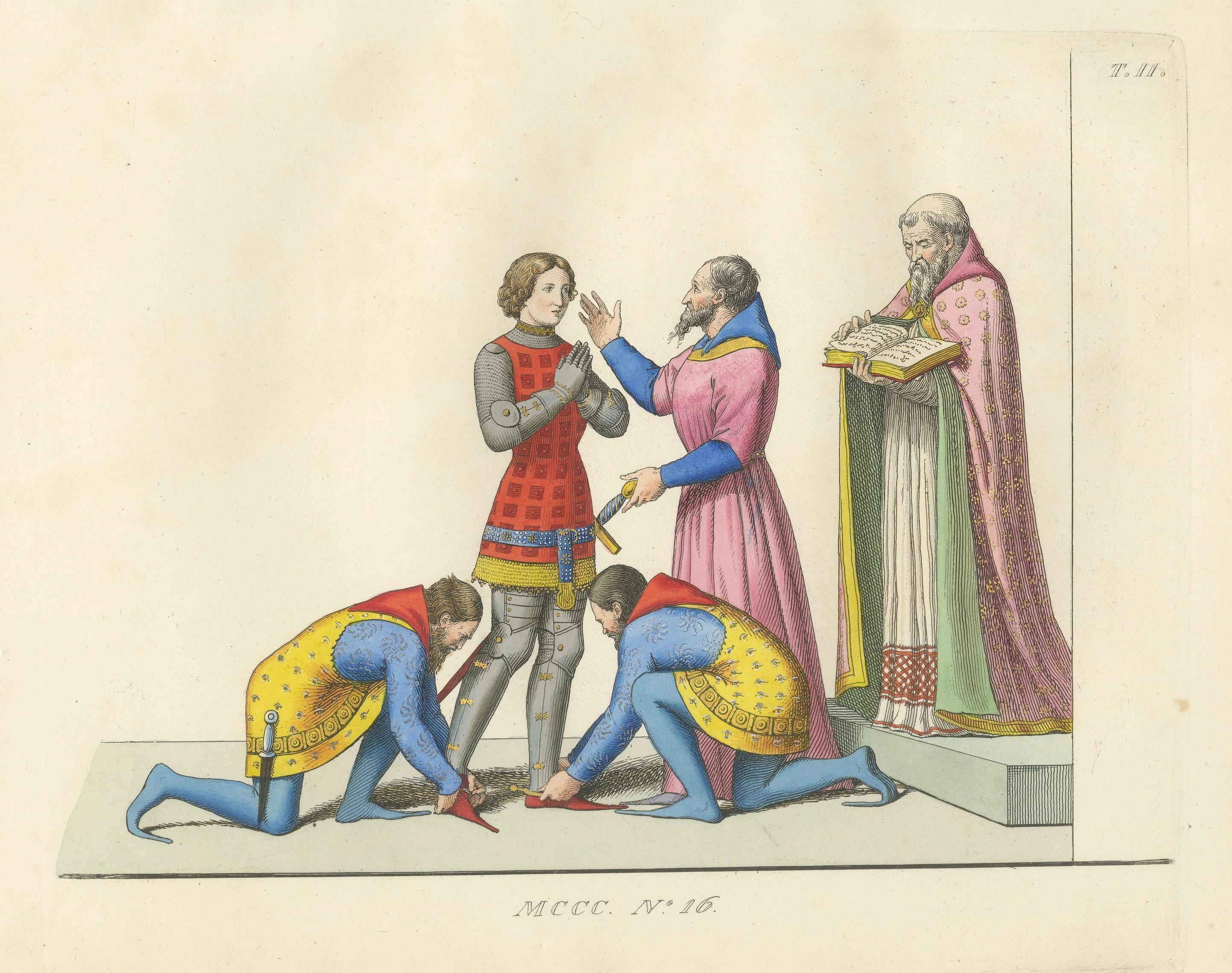
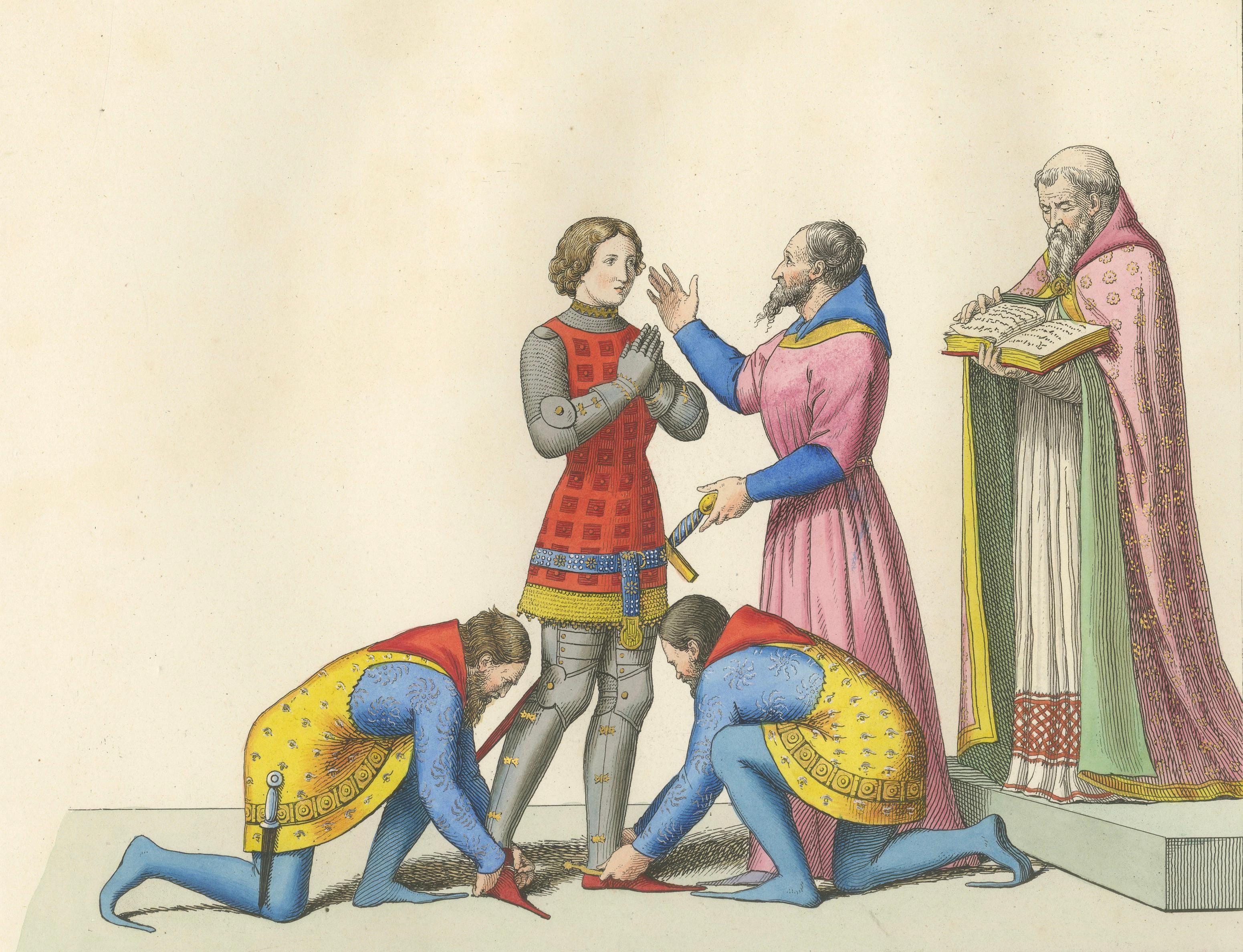
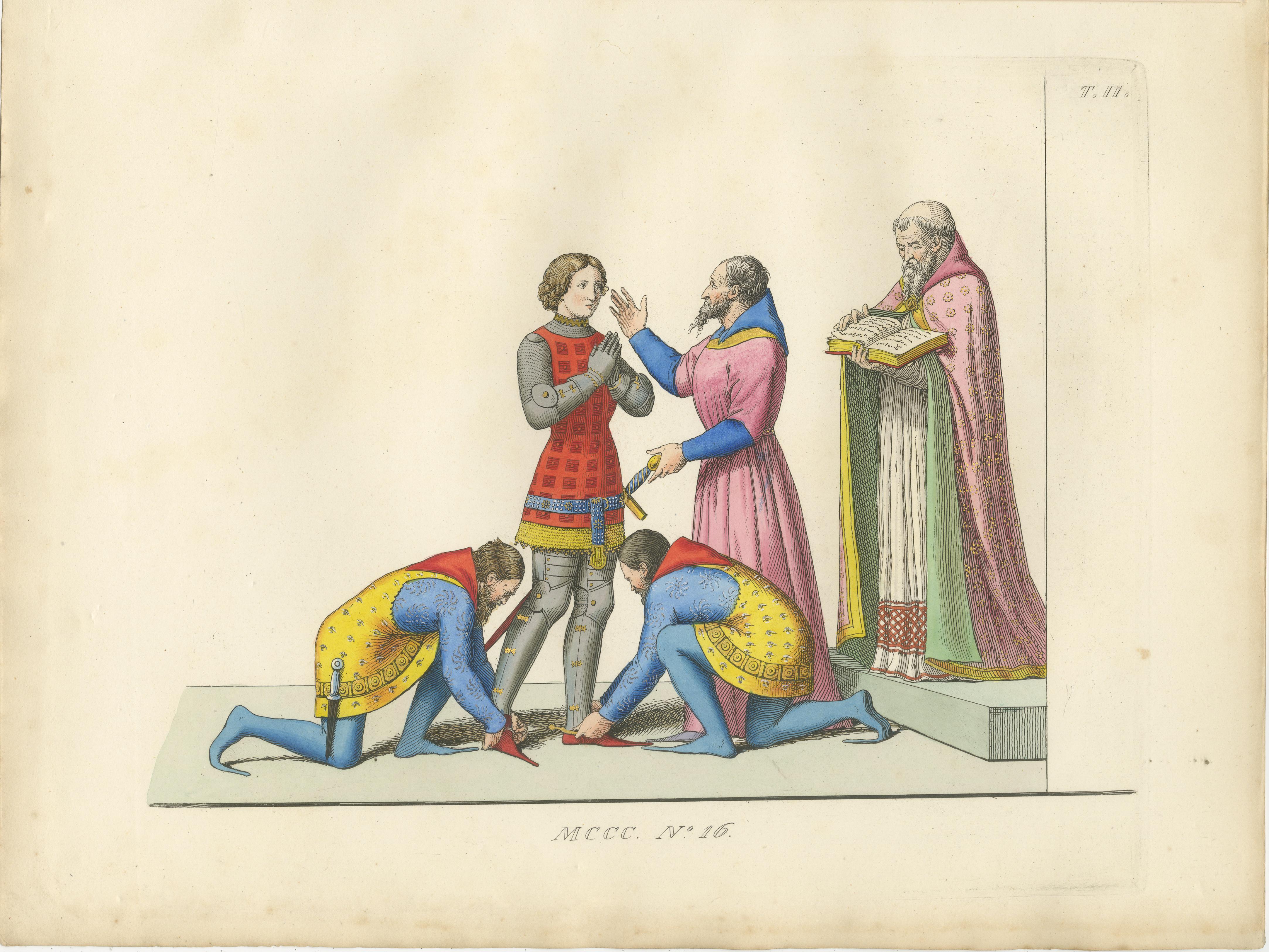
This finely detailed hand-colored lithograph depicts the ceremonial creation of a knight in the 14th century, a key ritual within medieval chivalric culture. The scene represents the formal moment at which a young man is admitted into knighthood, combining religious blessing, martial symbolism, and strict ceremonial order. The composition is both didactic and visually refined, intended to accurately convey medieval practice as understood through 19th-century historical scholarship.
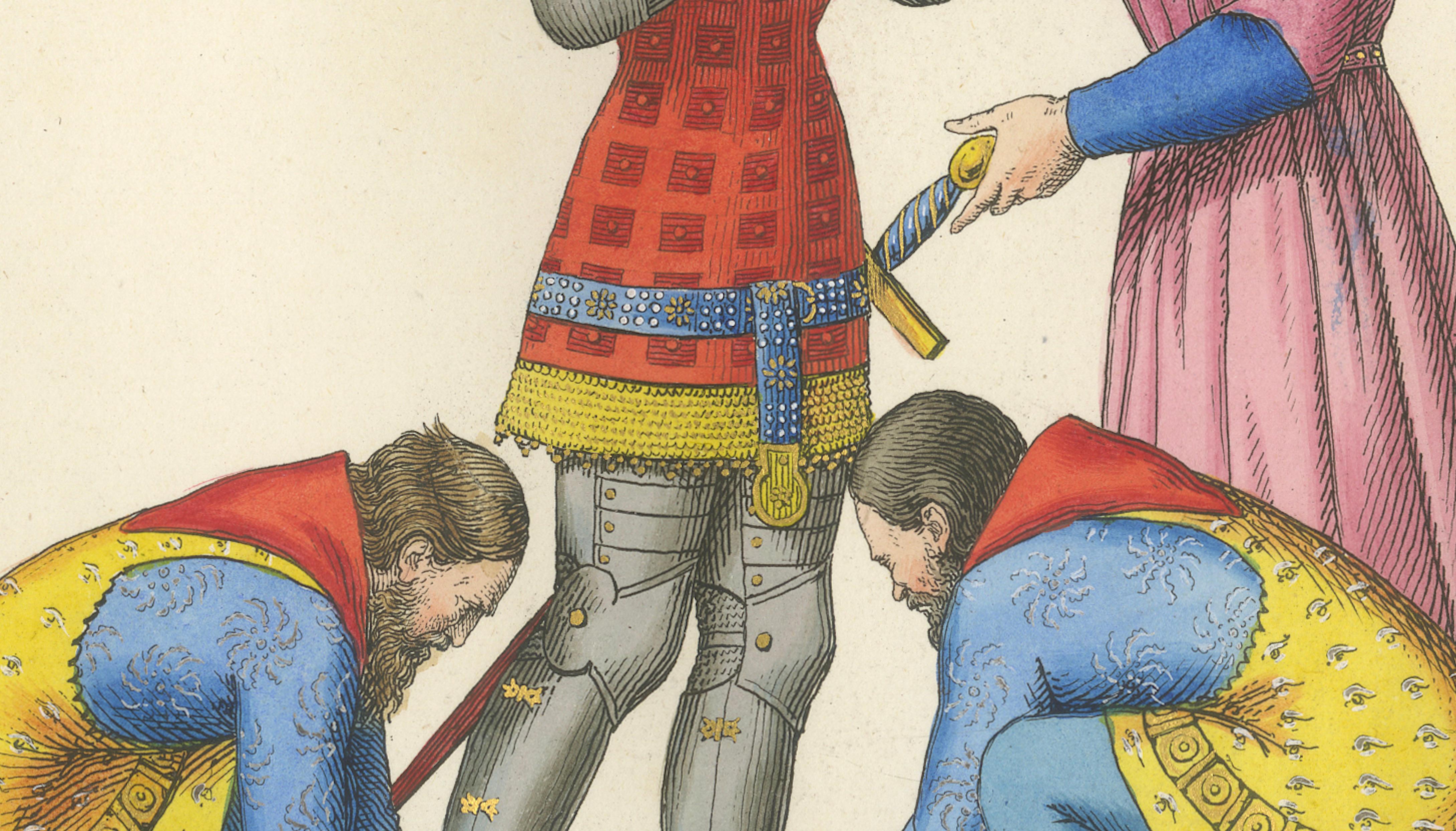
At the center stands the newly created knight, wearing a vivid red tabard over a full suit of armor, symbolizing honor, valor, and readiness for martial service. His composed posture and clasped hands reflect humility and moral responsibility, virtues expected of a knight beyond mere military skill. Two fellow knights kneel at his feet, dressed in gold tabards with red hoods, fastening the spurs to his shoes. This act was a crucial symbolic gesture, marking his formal acceptance as a mounted warrior entitled to bear arms.
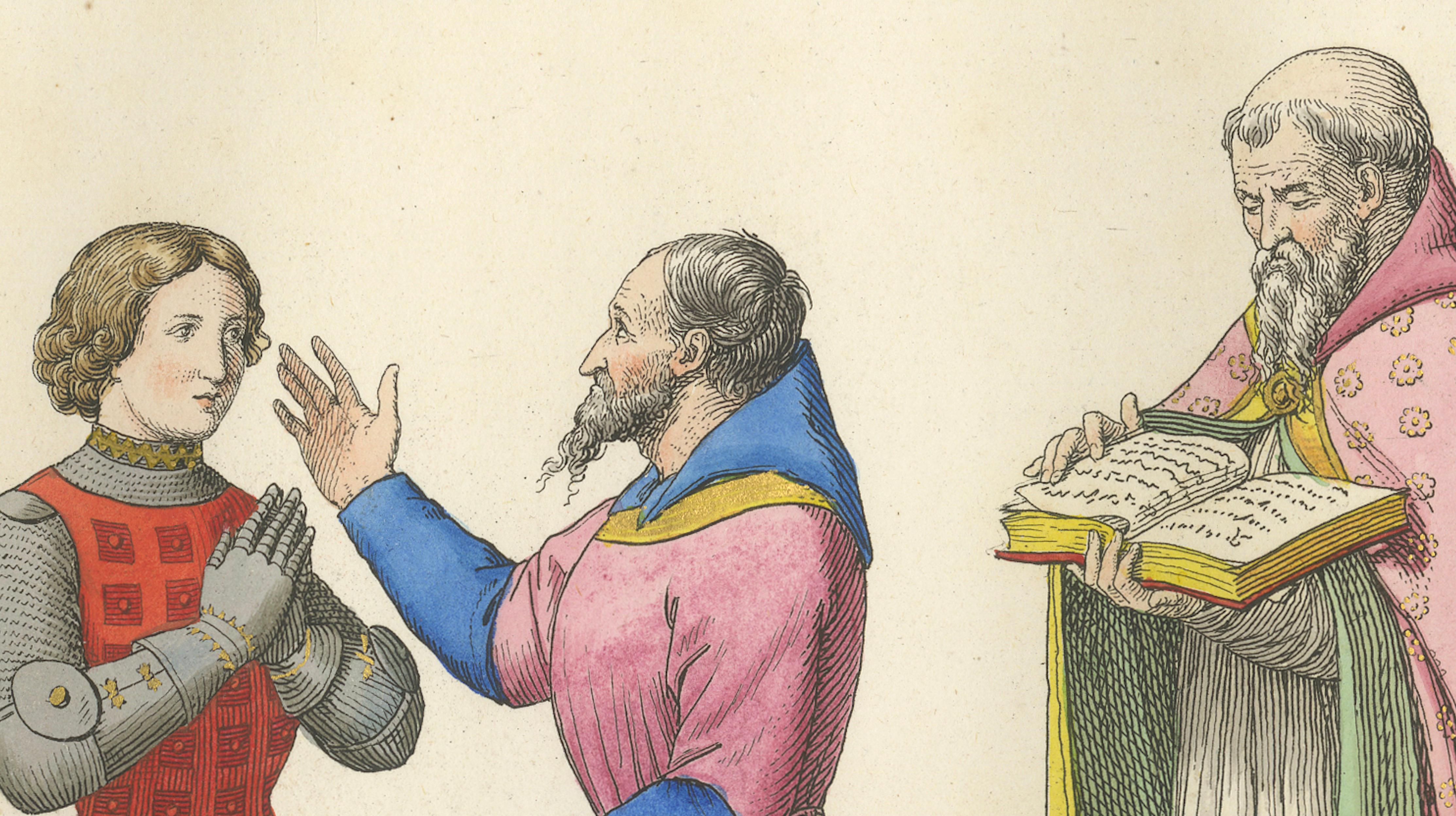
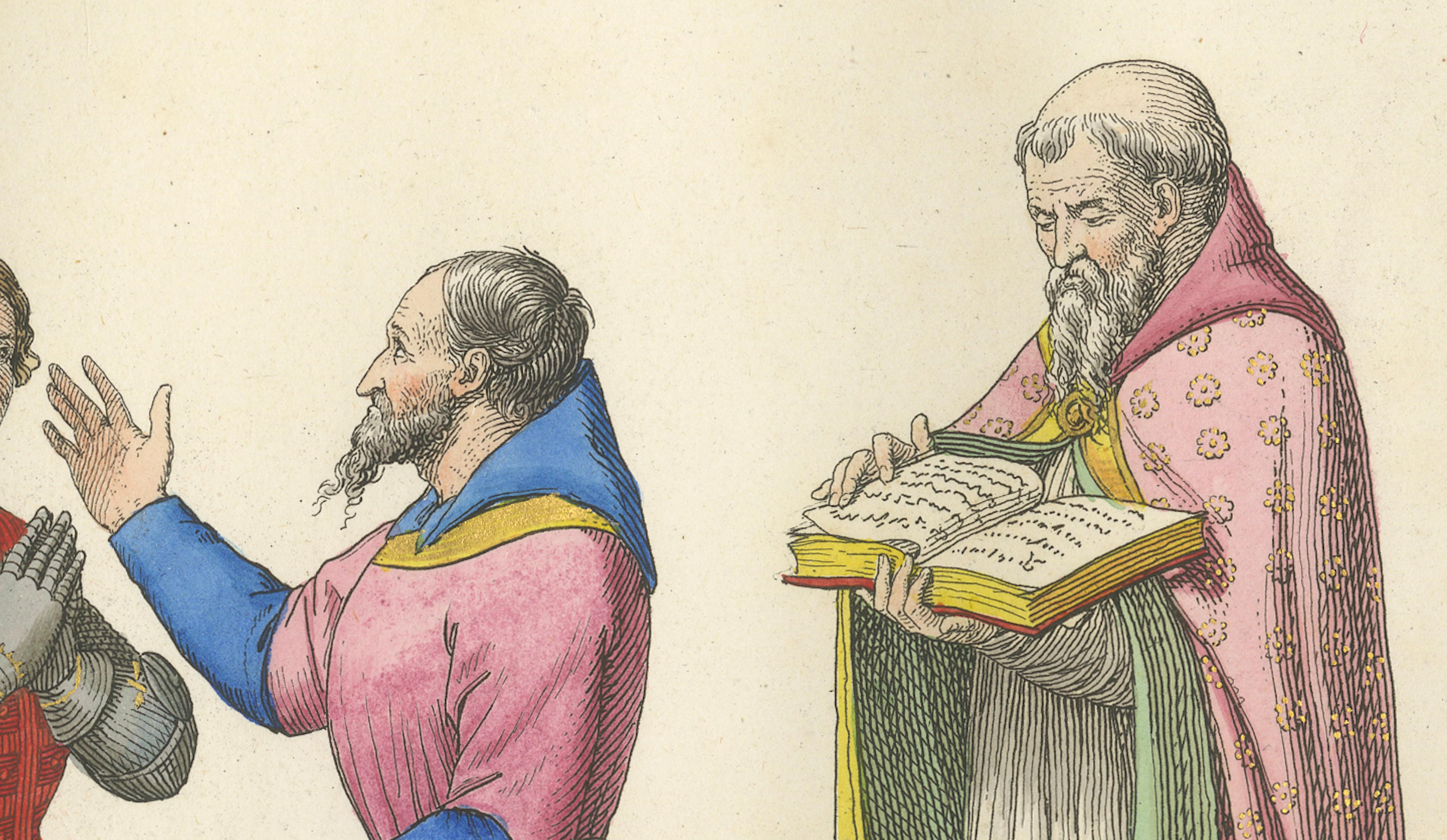
To the right, a priest blesses the knight’s sword, underscoring the sacred dimension of knighthood. Medieval chivalry was deeply intertwined with Christian doctrine, and the blessing of the sword emphasized that martial power was to be exercised under moral and spiritual guidance. The presence of both clergy and armed knights highlights the fusion of religious authority and feudal order that defined medieval society.
The illustration was drawn and lithographed by Paolo (Paul) Mercuri, an Italian artist known for his precise historical reconstructions, with accompanying scholarly text by Camille Bonnard. It was published in Paris by Levy Fils in 1861 as part of the influential work *Historical Costumes from the 12th to 15th Centuries*. Rather than depicting a specific historical individual, the image serves as a generalized yet carefully researched reconstruction of a 14th-century knighting ceremony, based on medieval manuscripts, chronicles, and visual sources.
This print is particularly appealing to collectors of medieval history, chivalry, arms and armor, and historical costume. It also functions exceptionally well as a decorative yet intellectually grounded work for a study, library, or refined interior.
Condition report:
Good to very good antique condition. Light overall age toning and scattered foxing consistent with age. Hand-coloring remains strong and well-preserved. Margins ample with visible plate impression. No major tears or restorations noted.
Framing tips:
Best presented in a dark walnut or blackened wood frame with a wide ivory or parchment-toned mat to enhance the ceremonial gravity and clarity of the composition. A museum-style presentation suits both classical and contemporary interiors.
Technique: Hand-colored lithograph
Maker: Paolo (Paul) Mercuri, Italy / text by Camille Bonnard, Paris, 1861