About this sheet
Antique Print – Javanese & Dayak Weapons, Spears, Kris & Ceremonial Arms – c.1860
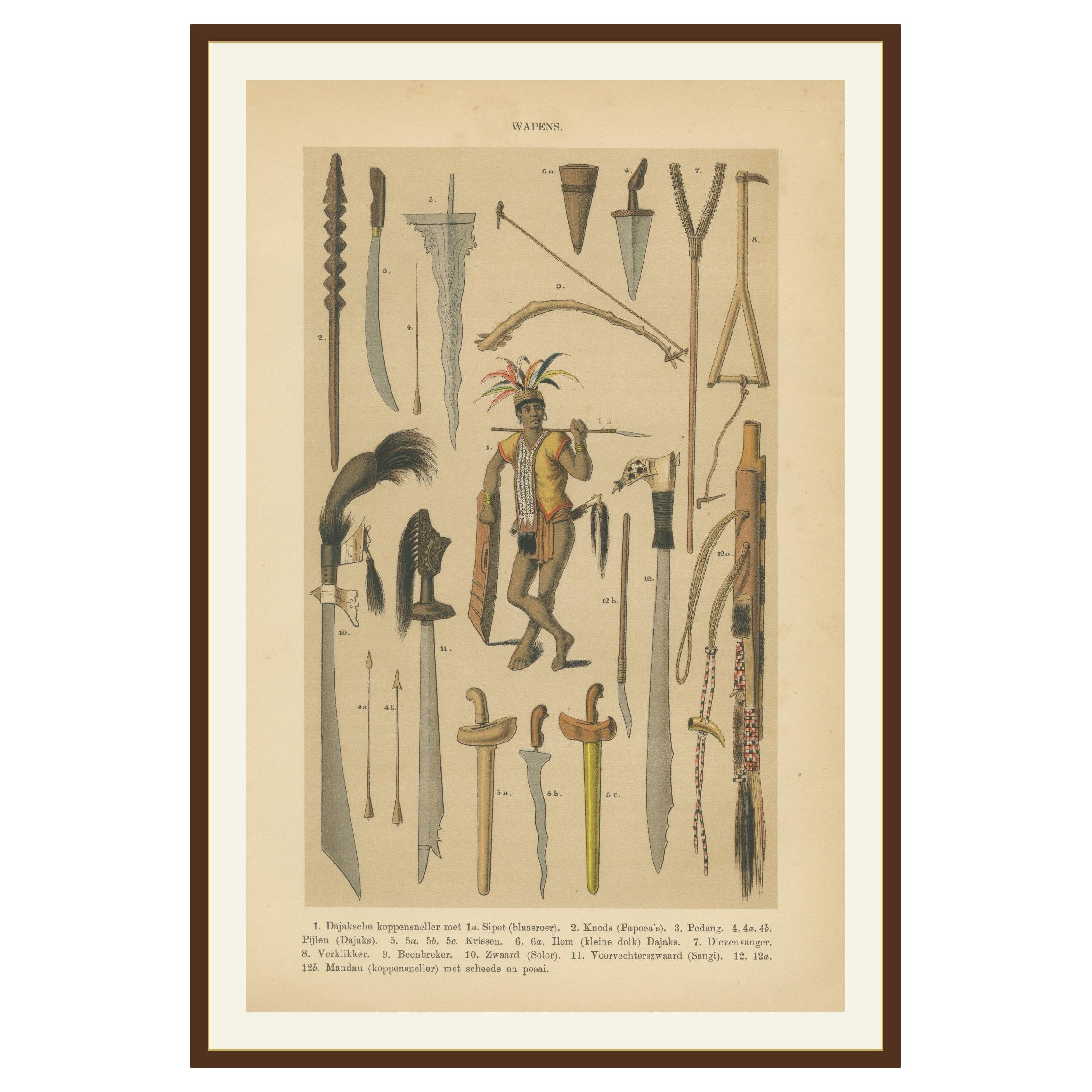
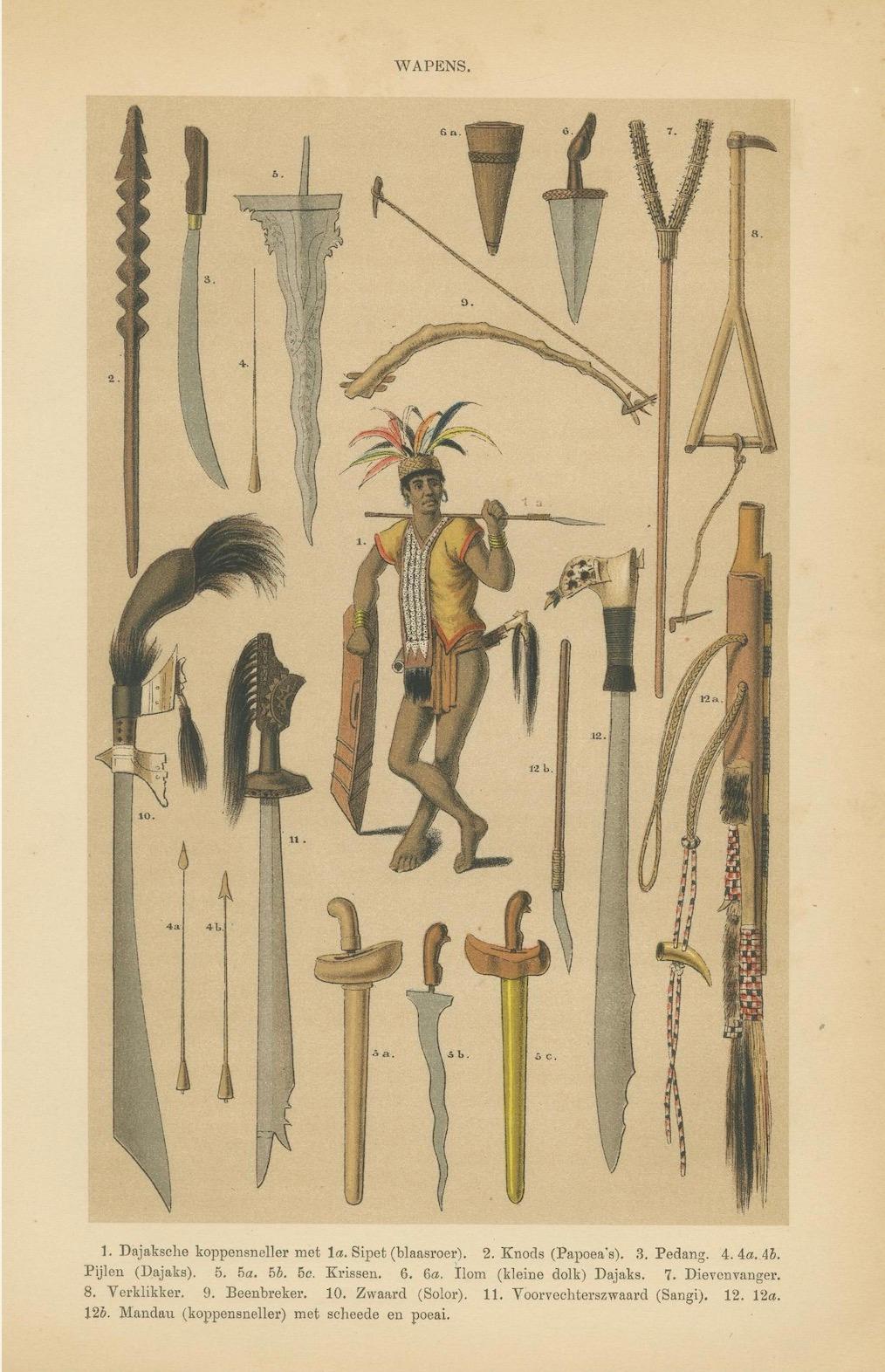
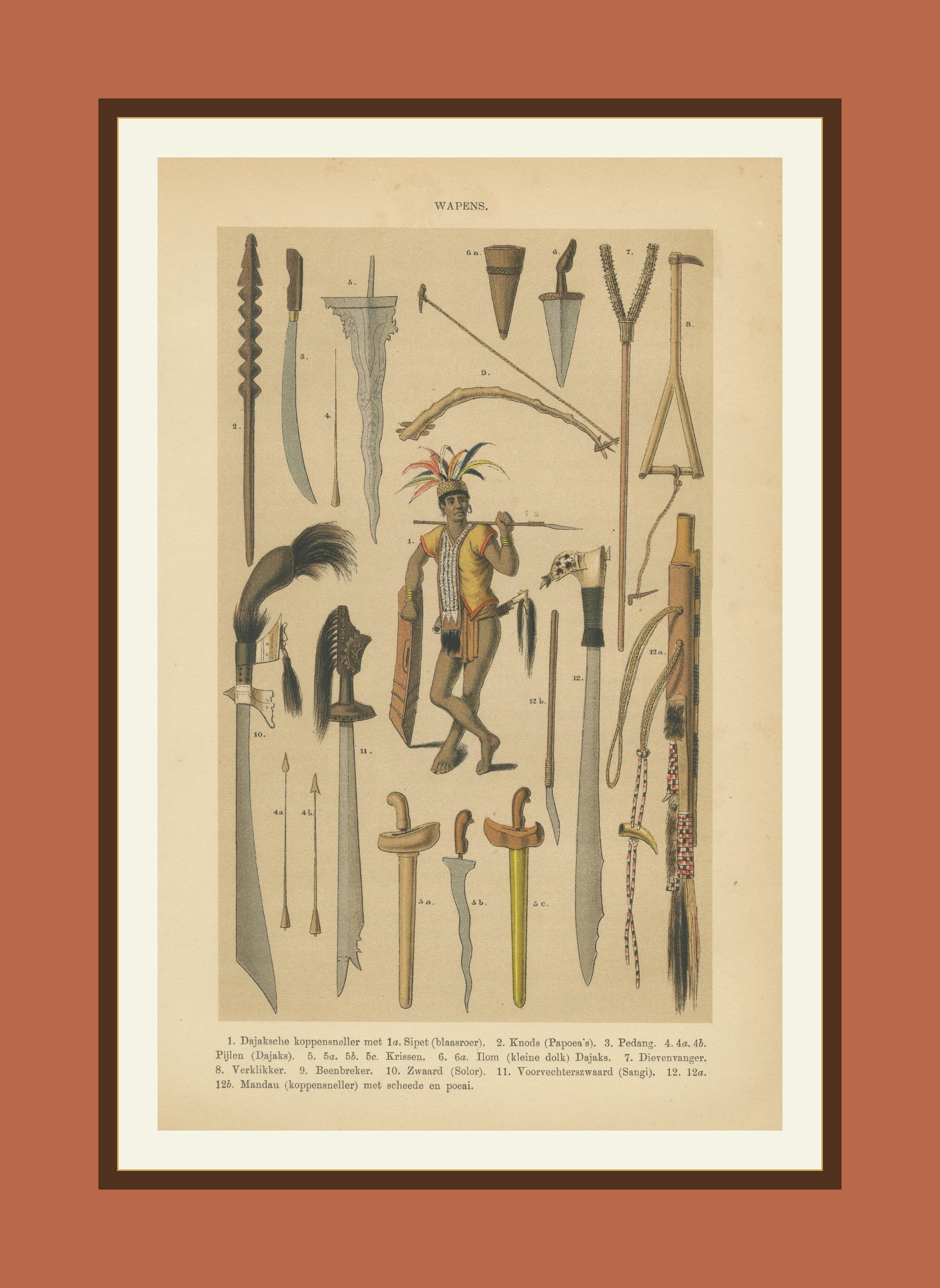
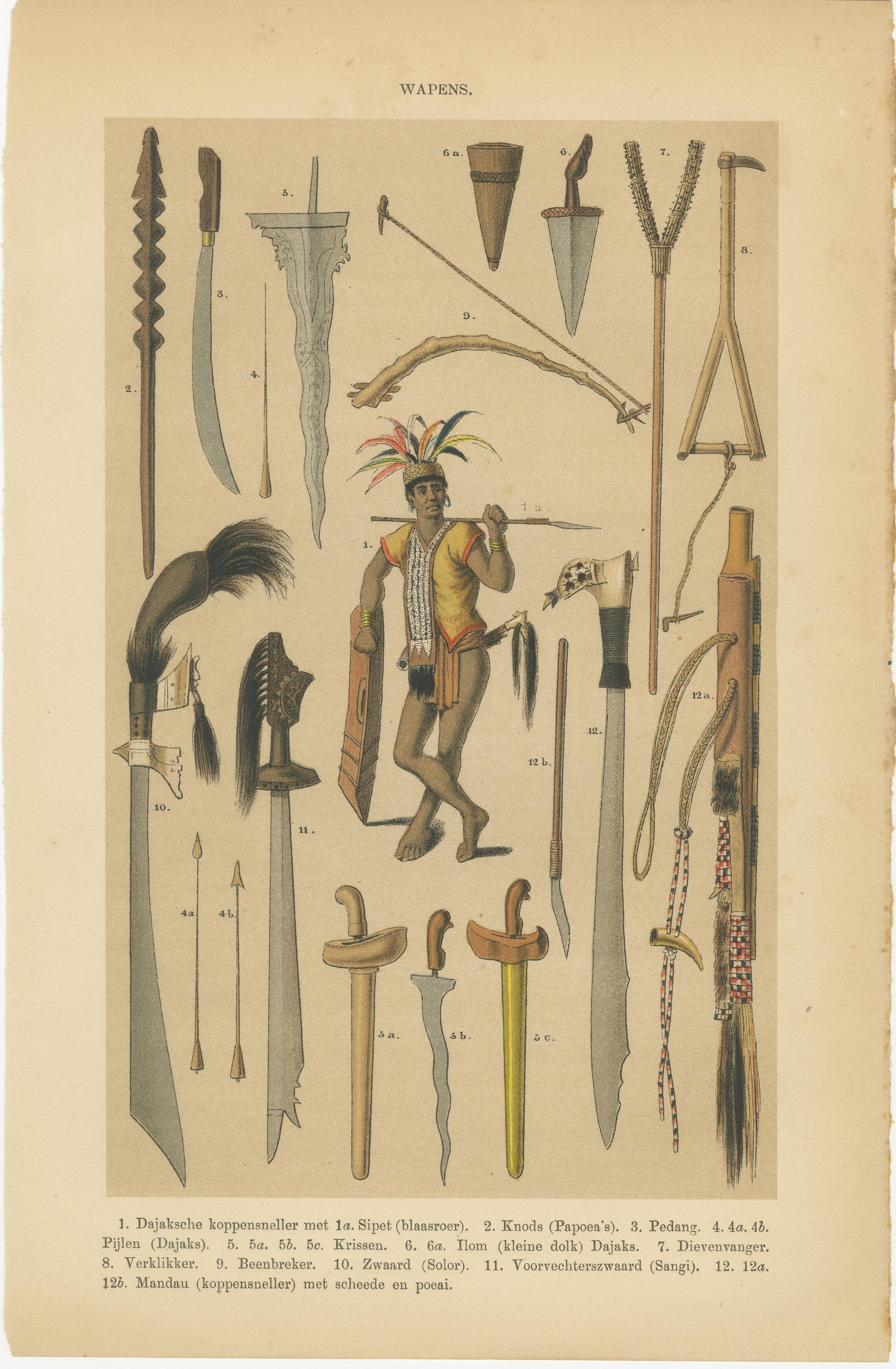
This finely hand-colored lithograph, titled Wapens (Weapons), provides a remarkable ethnographic survey of traditional arms from the Indonesian archipelago, particularly Java, Borneo, and surrounding islands. Published around 1860 for a Dutch East Indies ethnographic series, it offers detailed depictions of weapons used in warfare, ritual, and status display.
At the center of the composition stands a Dayak warrior in ceremonial attire, holding a spear (*sipet*, or blowpipe spear) and shield, wearing a feathered headdress and decorated ornaments. Surrounding him are carefully illustrated examples of regional arms:
– Sipet (blowpipe) with poisoned darts, characteristic of the Dayaks of Borneo
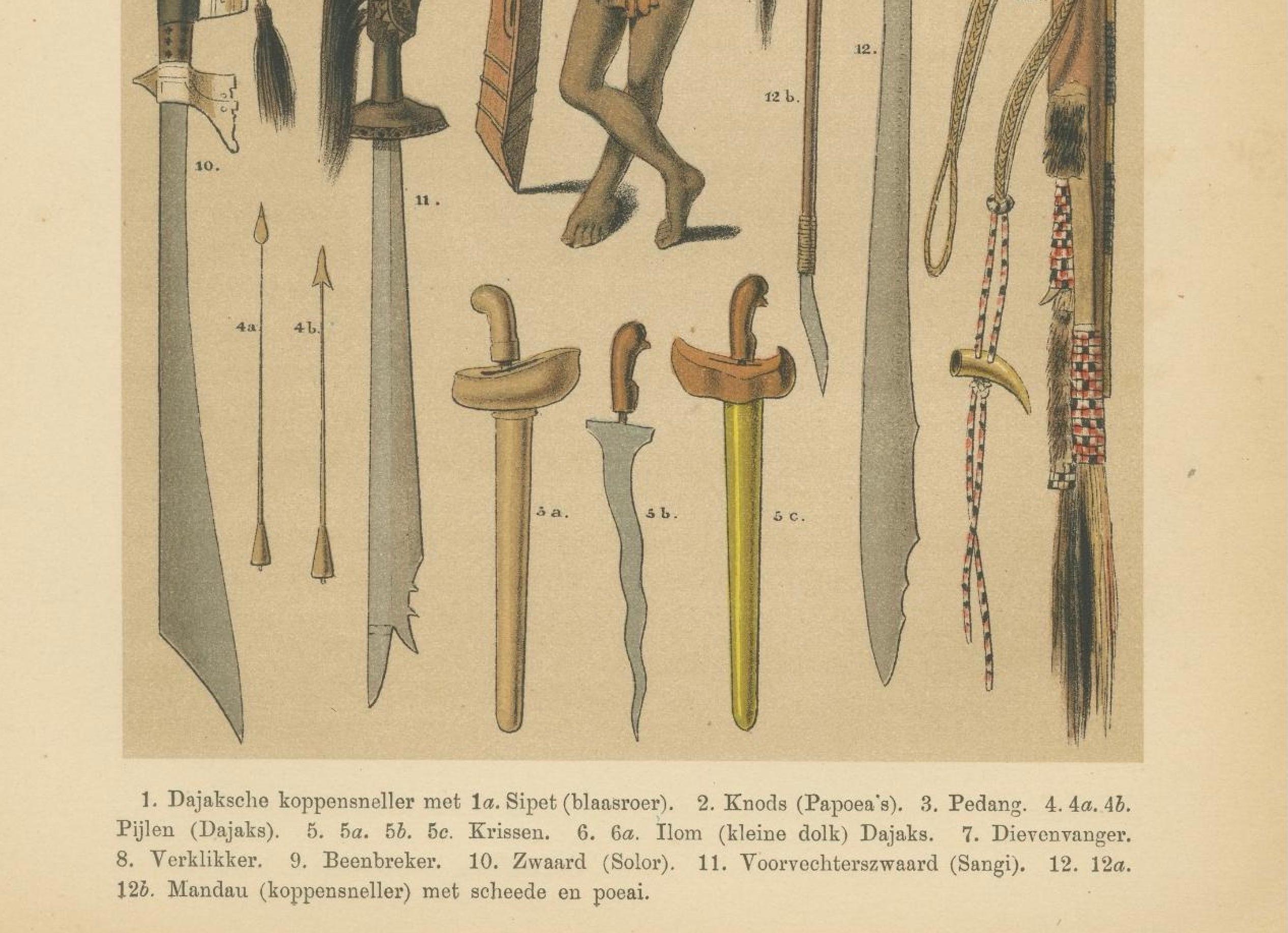
– Mandau, the iconic Dayak headhunter’s sword, complete with sheath and poeai (ornamental binding)
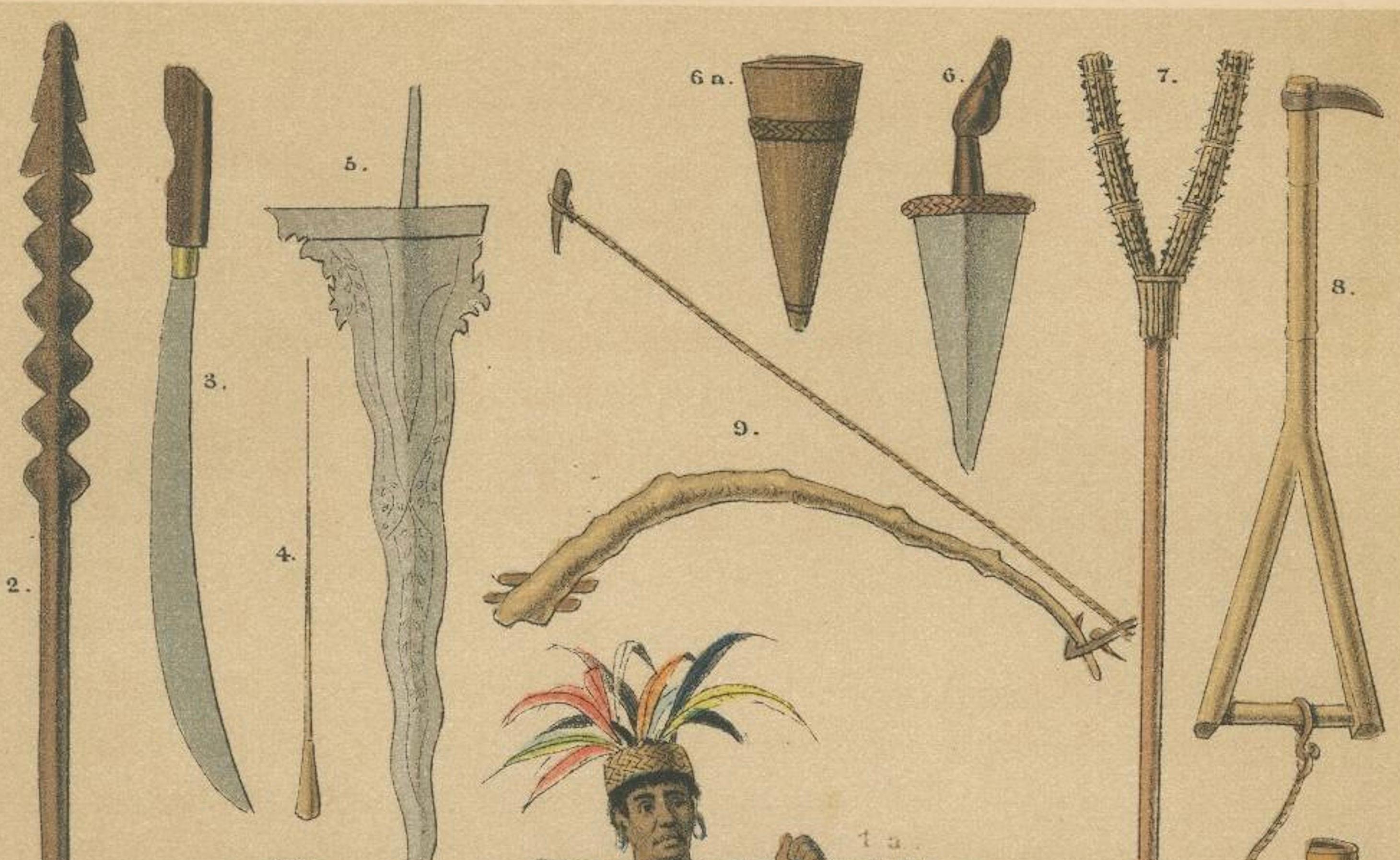
– Kris (Keris), the famous wavy-bladed dagger, represented in multiple forms, both simple and elaborately forged
– Pedang, a straight sword used across the archipelago
– Knobs and clubs (notably those of the Papuans), used in close combat
– Spears and arrows, with barbed and leaf-shaped blades
– Bone breaker clubs and animal snares, reflecting both combat and hunting tools
– Ceremonial swords from Solor and Sangi, distinct with ornamented hilts and symbolic associations
Each weapon is numbered and identified below the image, serving not only as a visual record but also as a didactic reference for European audiences seeking to understand the martial cultures of the East Indies. Such prints combined ethnography with a sense of the exotic, reinforcing the fascination of 19th-century Europe with the diversity of colonial territories.
Condition summary: Good condition with vibrant hand coloring and clear details. Minor toning and light foxing near the margins, consistent with age. Plate image remains clean and sharp, with no tears or repairs. Unframed.
Framing tips: A strong print that works well as a standalone piece or paired with other ethnographic weapon studies. Best suited to a dark wood or teak frame, with a light ivory or cream mount to emphasize the fine details of the arms and the central warrior figure.
Technique: Hand-colored lithograph
Maker: Unknown European lithographer, c.1860, from a Dutch East Indies ethnographic series