About this sheet
Jerusalem, Holy City View – Early Renaissance Woodcut, c.1560
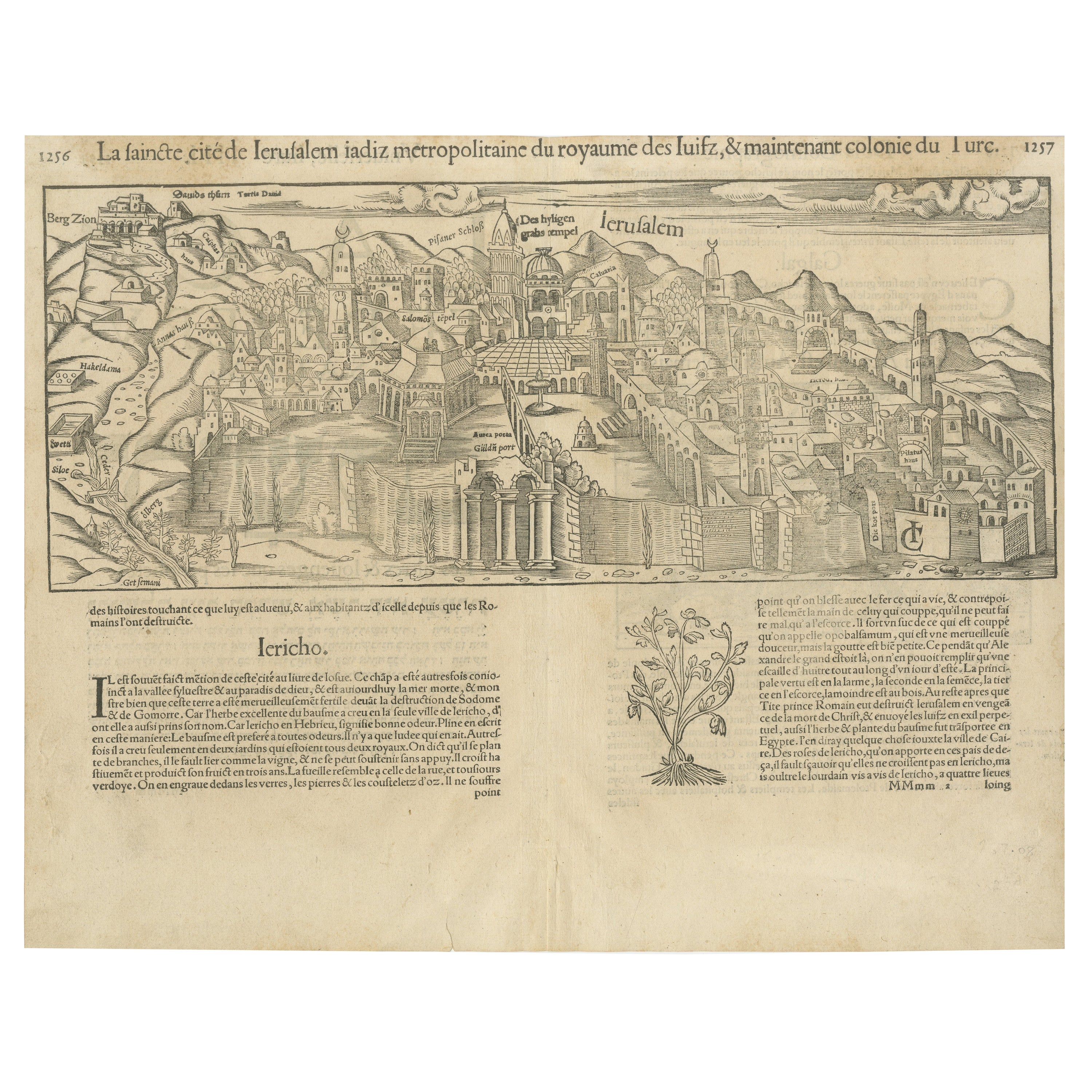
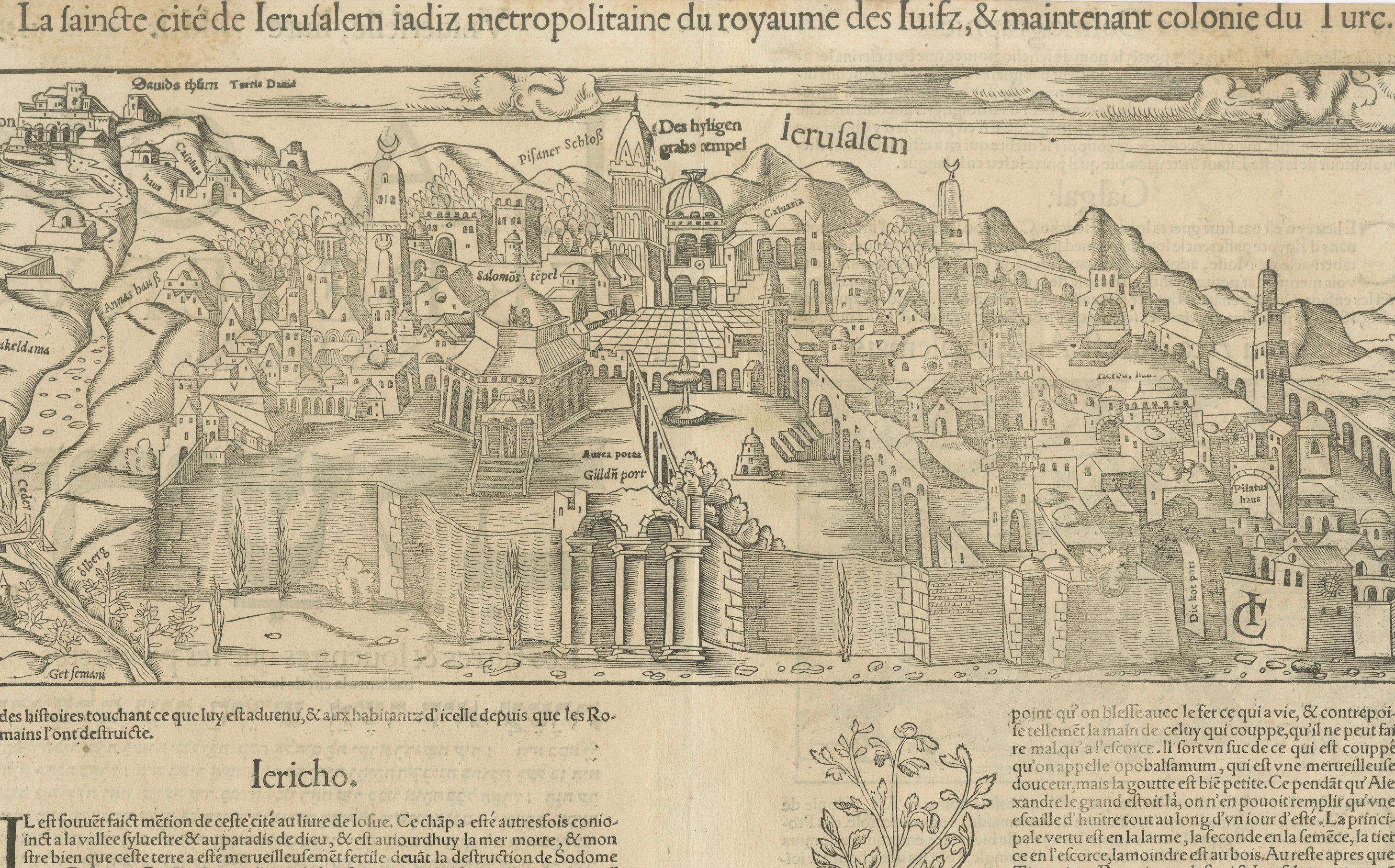
This rare and evocative Renaissance woodcut depicts the Holy City of Jerusalem as imagined in early modern Europe, shown as a fortified, densely built sacred city surrounded by hills, valleys, and biblical landmarks. The view presents Jerusalem as the spiritual and historical heart of the Holy Land, combining biblical tradition, medieval cartographic conventions, and early Renaissance city imagery.
The city is rendered in a panoramic bird’s-eye perspective, with major sacred sites clearly identified, including the Temple of Solomon, the Holy Sepulchre, Mount Zion, the Valley of Jehoshaphat, and the Garden of Gethsemane. Towers, gates, walls, domes, and churches fill the composition, creating a powerful visual narrative of Jerusalem as both an earthly city and a divine center. The emphasis is symbolic rather than topographically exact, reflecting how Jerusalem was understood and revered in 16th-century Christian Europe.
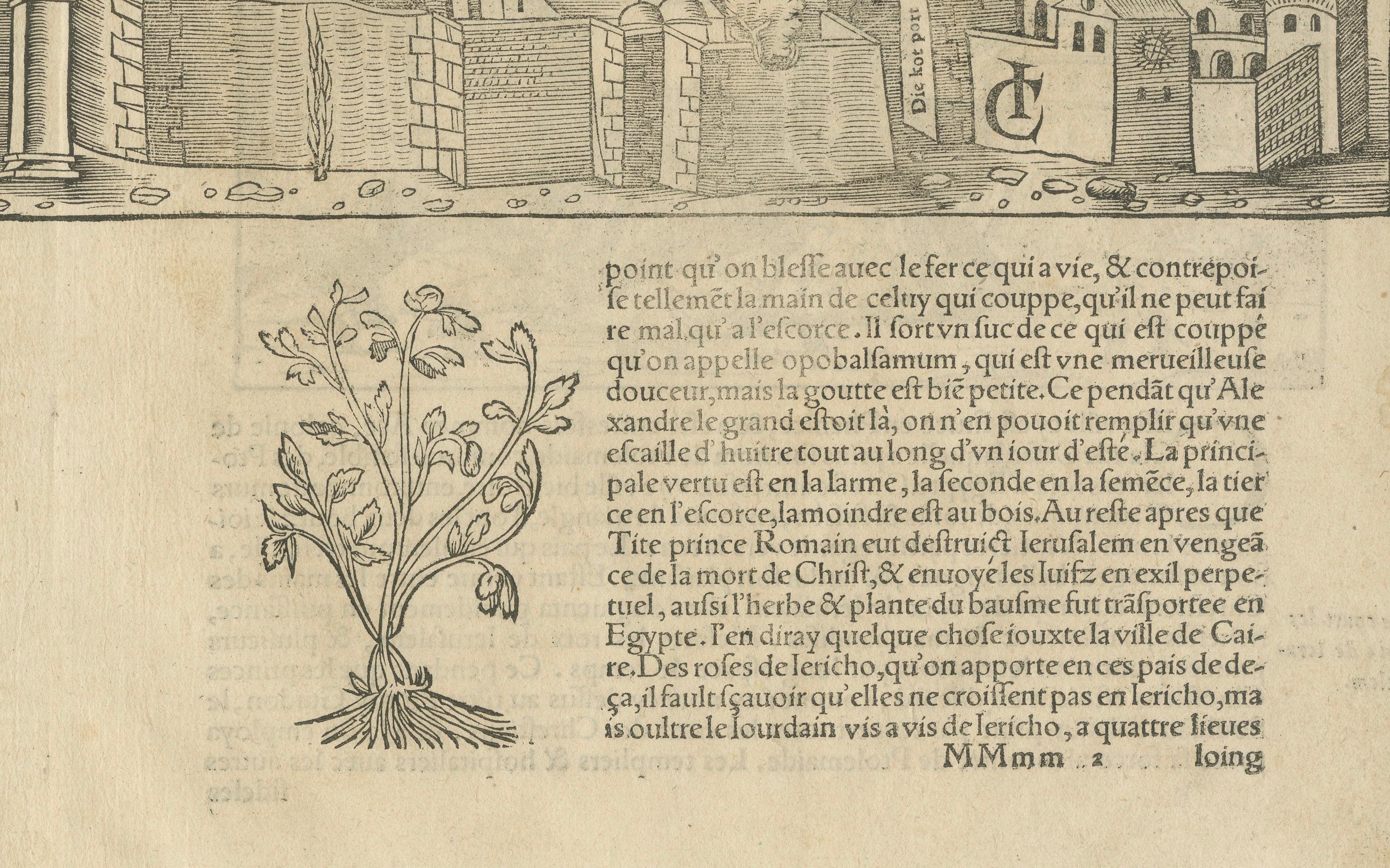
The French title at the top identifies Jerusalem as the former metropolitan city of the Kingdom of the Jews and notes its later status as a Roman colony, anchoring the image firmly within biblical and classical historical tradition. Below the city view, extensive French text discusses Jericho and biblical geography, accompanied by a decorative botanical woodcut, a characteristic feature of Renaissance cosmographical and biblical publications.
This print originates from a mid-16th-century French cosmographical or biblical work, influenced by Sebastian Münster and related Renaissance scholars. The woodcut technique, Gothic-Renaissance lettering, and dense narrative imagery place the print firmly within the great age of European biblical geography and early historical illustration.
Highly decorative and rich in symbolic detail, this view of Jerusalem is equally appealing to collectors of early Holy Land imagery, Renaissance prints, and biblical cartography, as well as to interior designers seeking a visually striking and intellectually layered historical work on paper.
Condition report
Good condition for a 16th-century woodcut. Central vertical fold as issued. General age toning and some discoloration consistent with period. Light creasing and minor edge wear. Text and image clear and well preserved. No major losses.
Framing tips
This print benefits from a wide off-white or light parchment-colored mat to emphasize the historic paper tone. A dark walnut, ebonized, or softly gilt frame enhances the Renaissance character and architectural detail. Particularly effective as a statement piece in a study, library, or classical interior.
Technique
Woodcut
Maker: Sebastian Münster (1488–1552) was a German cartographer/scholar, even when the book edition (and many surviving sheets) were printed in Basel and sometimes in French., c.1560
Keywords: Jerusalem, Holy Land, Holy City, Renaissance Jerusalem view, antique Jerusalem print, biblical Jerusalem, Holy Sepulchre, Temple of Solomon, Mount Zion, Gethsemane, Valley of Jehoshaphat, Jericho, biblical geography, early Holy Land map, 16th century woodcut, Renaissance woodcut, Sebastian Münster circle, antique religious print, Christian cartography, biblical city view, antique Israel print, Palestine, sacred geography, early modern cosmography