About this sheet
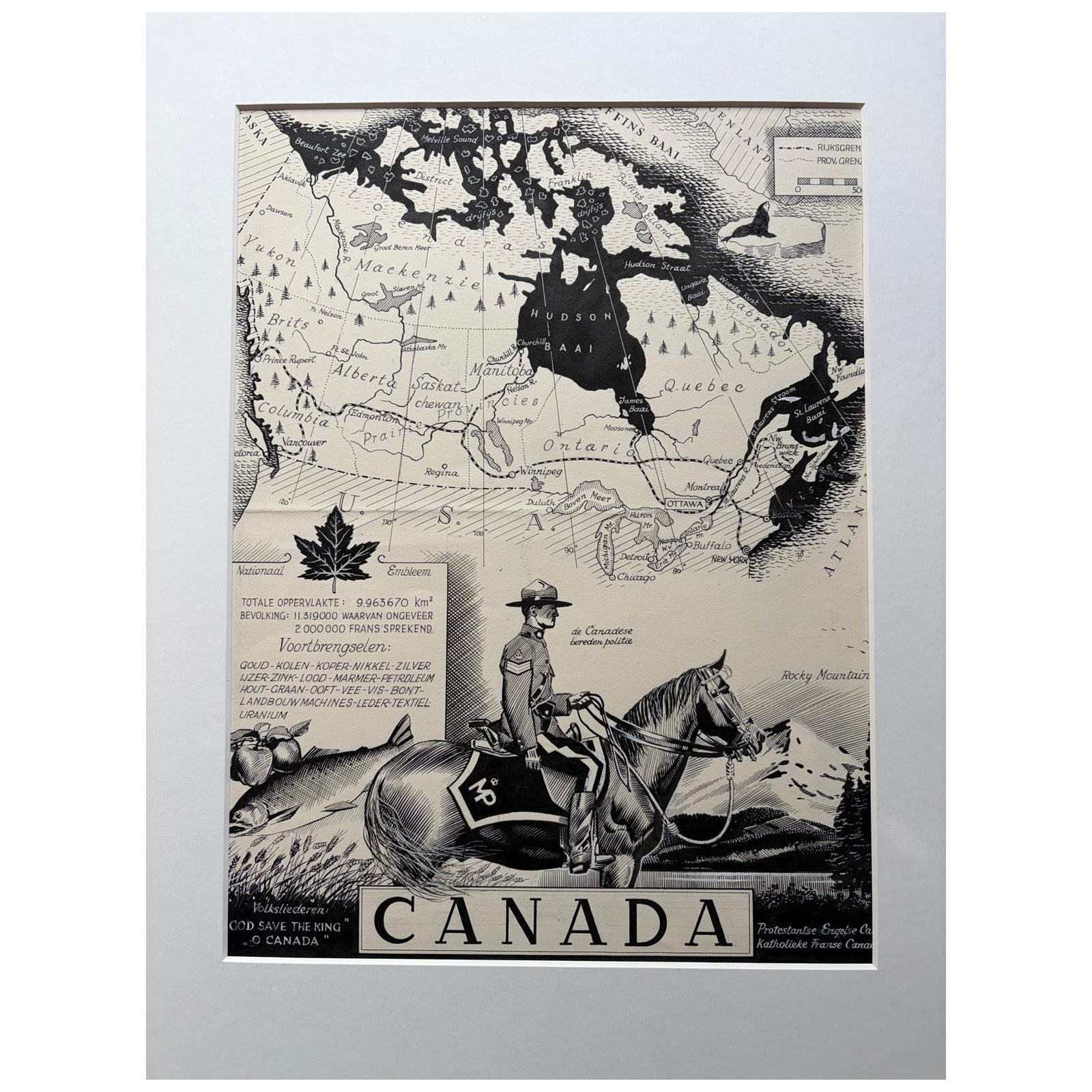
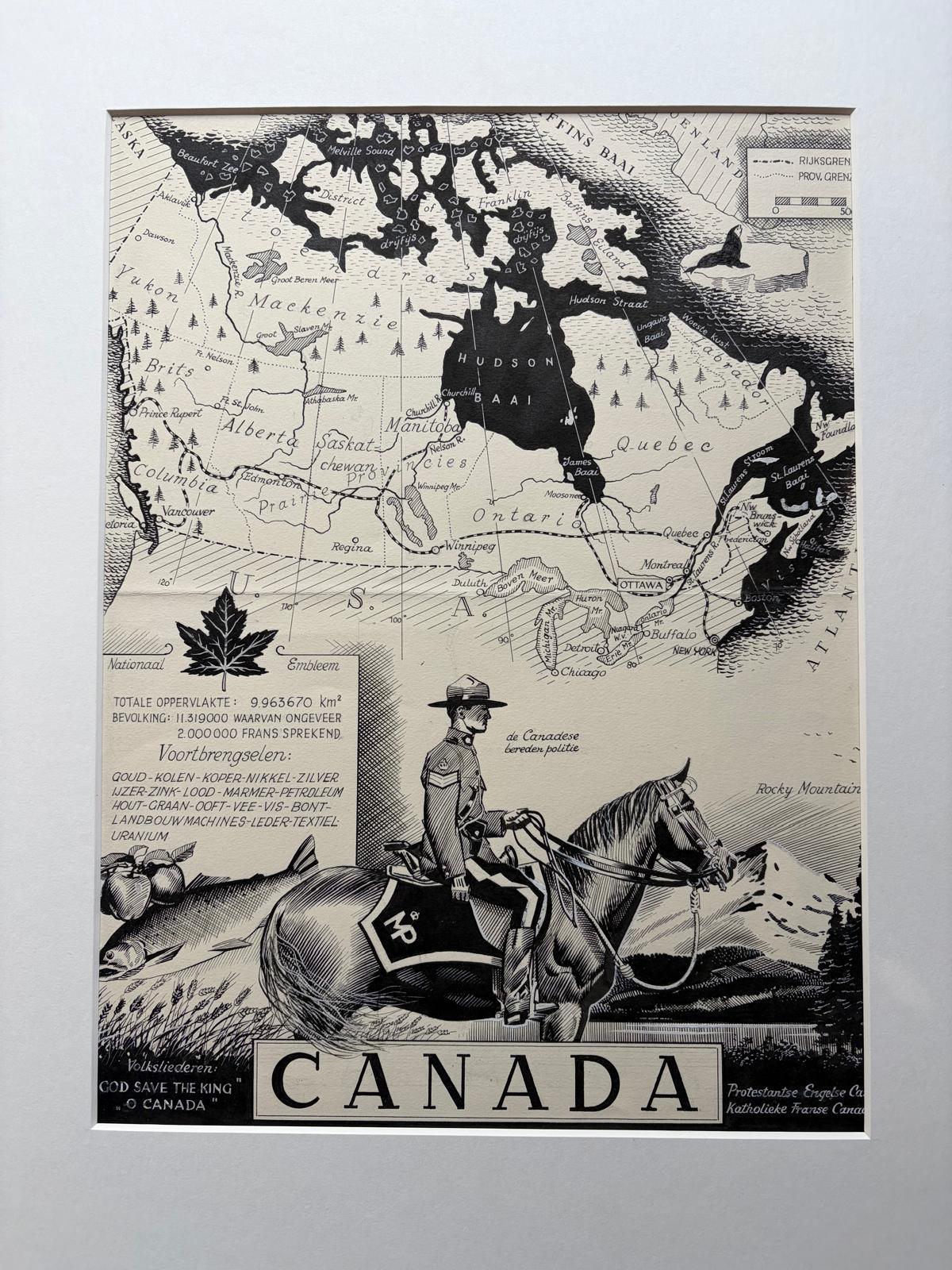
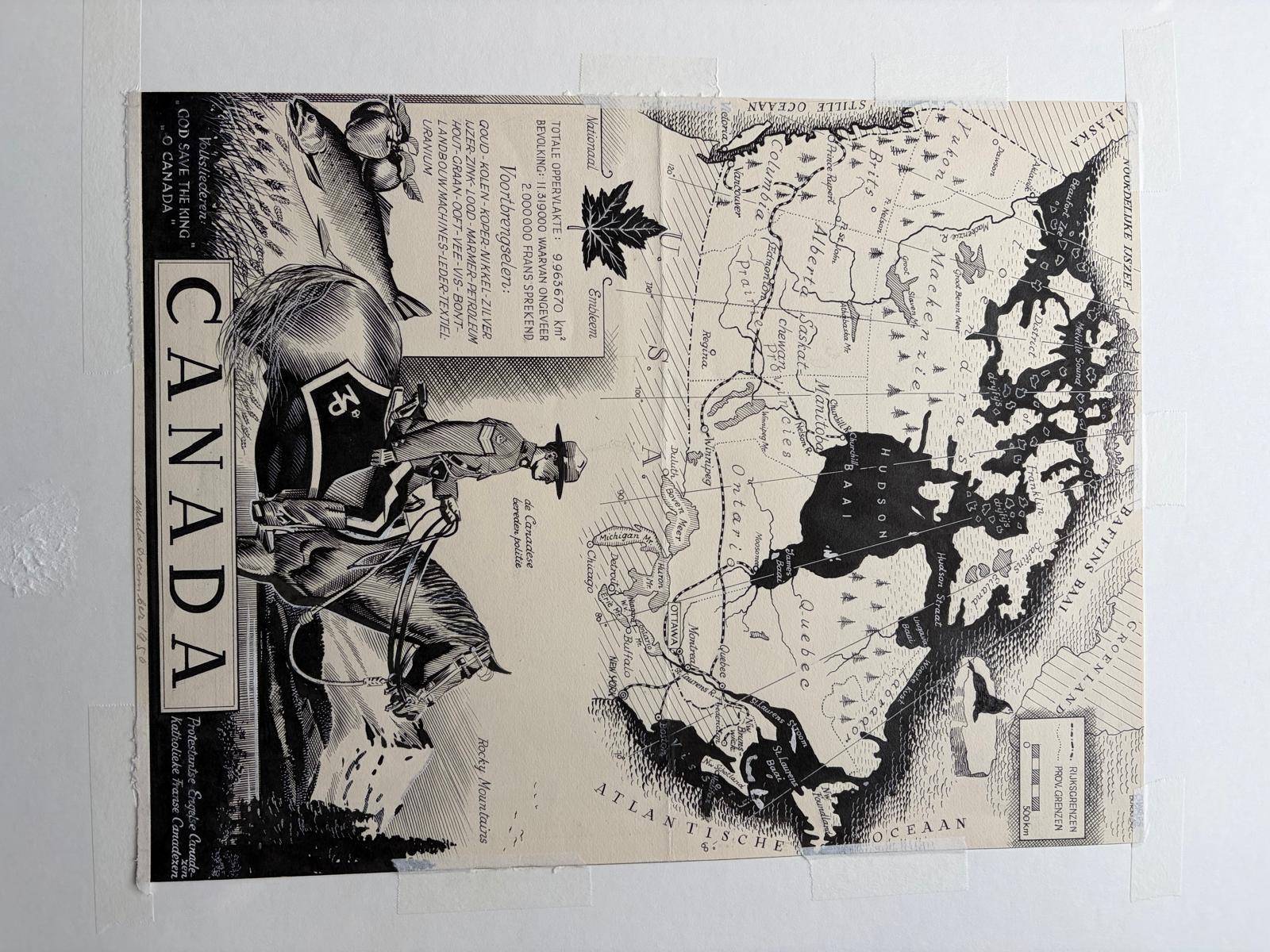
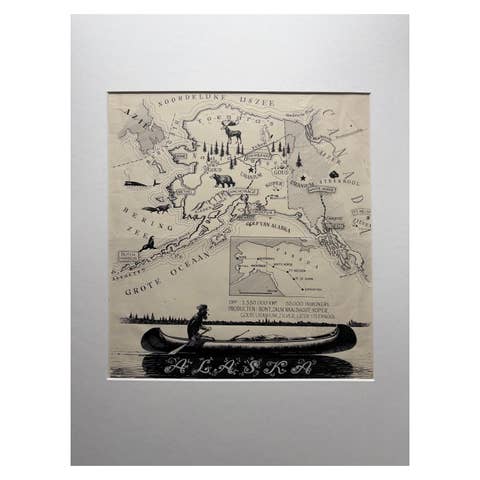
This original 1948 pen-and-ink map of Canada by Charles Burki (1909–1994) masterfully combines geographical clarity, artistic finesse, and postwar optimism. It captures the vastness of Canada through meticulous linework and decorative illustration, rendered in Burki’s hallmark Art Deco style that blends precision, order, and elegance.
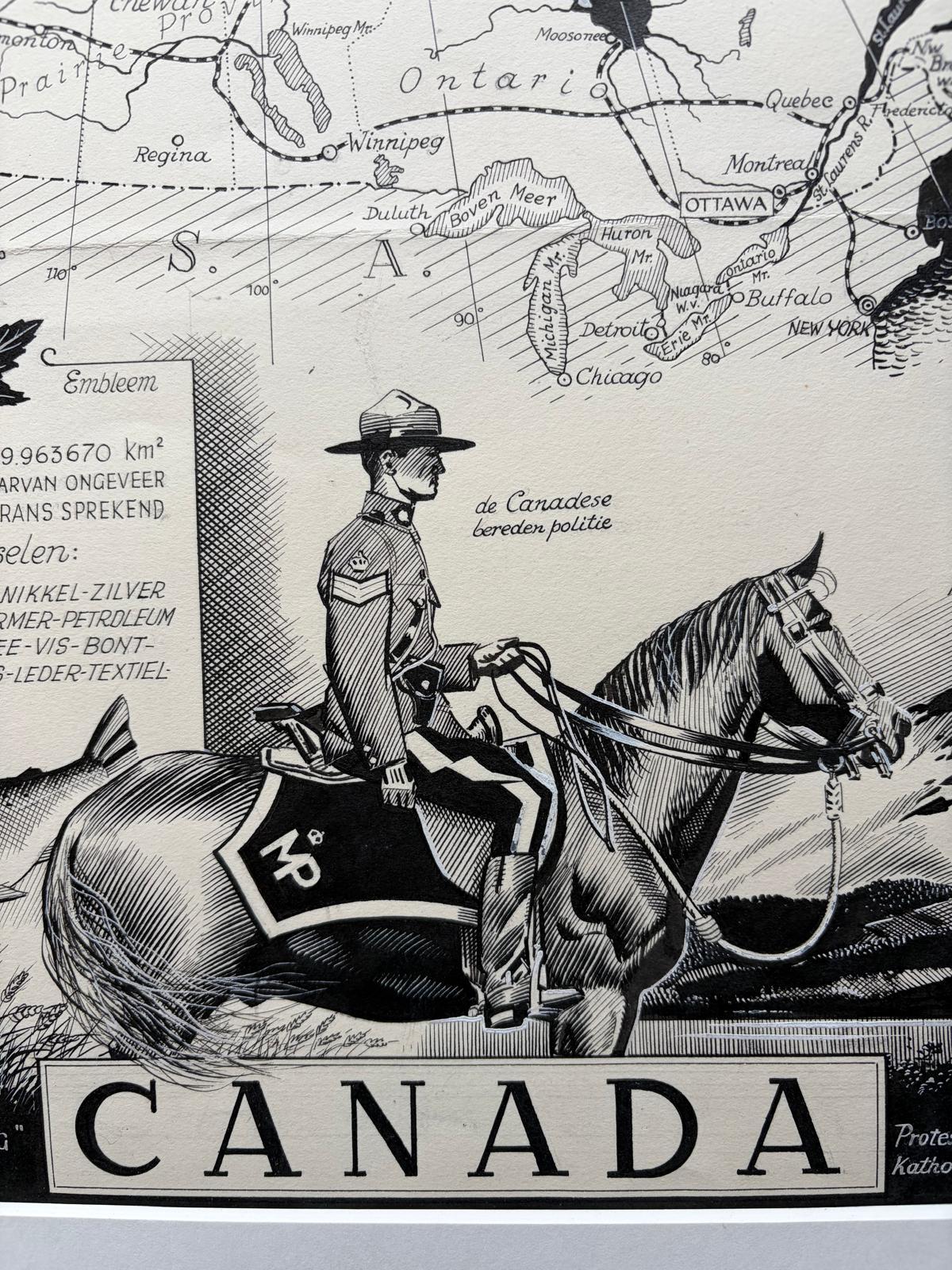
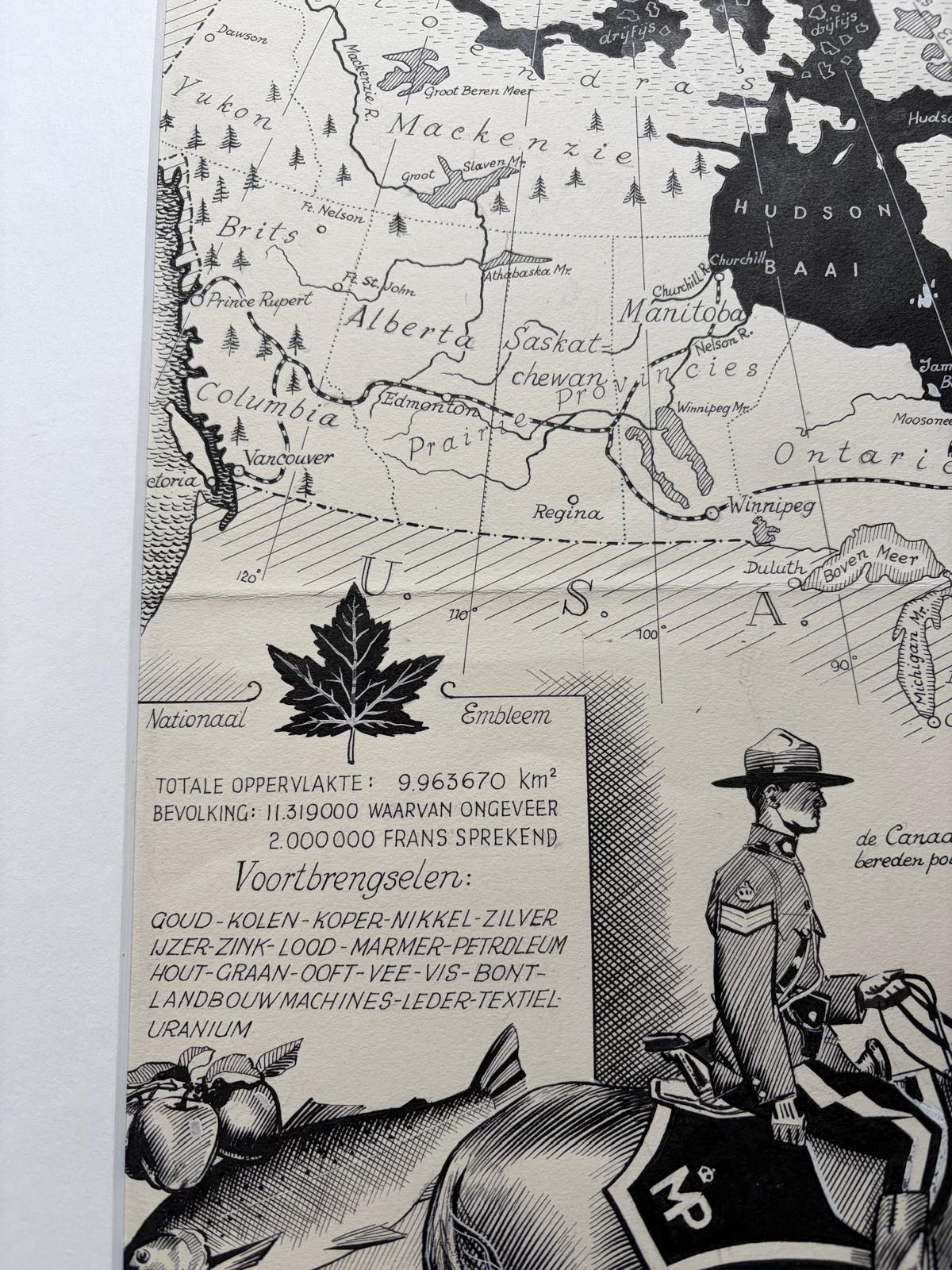
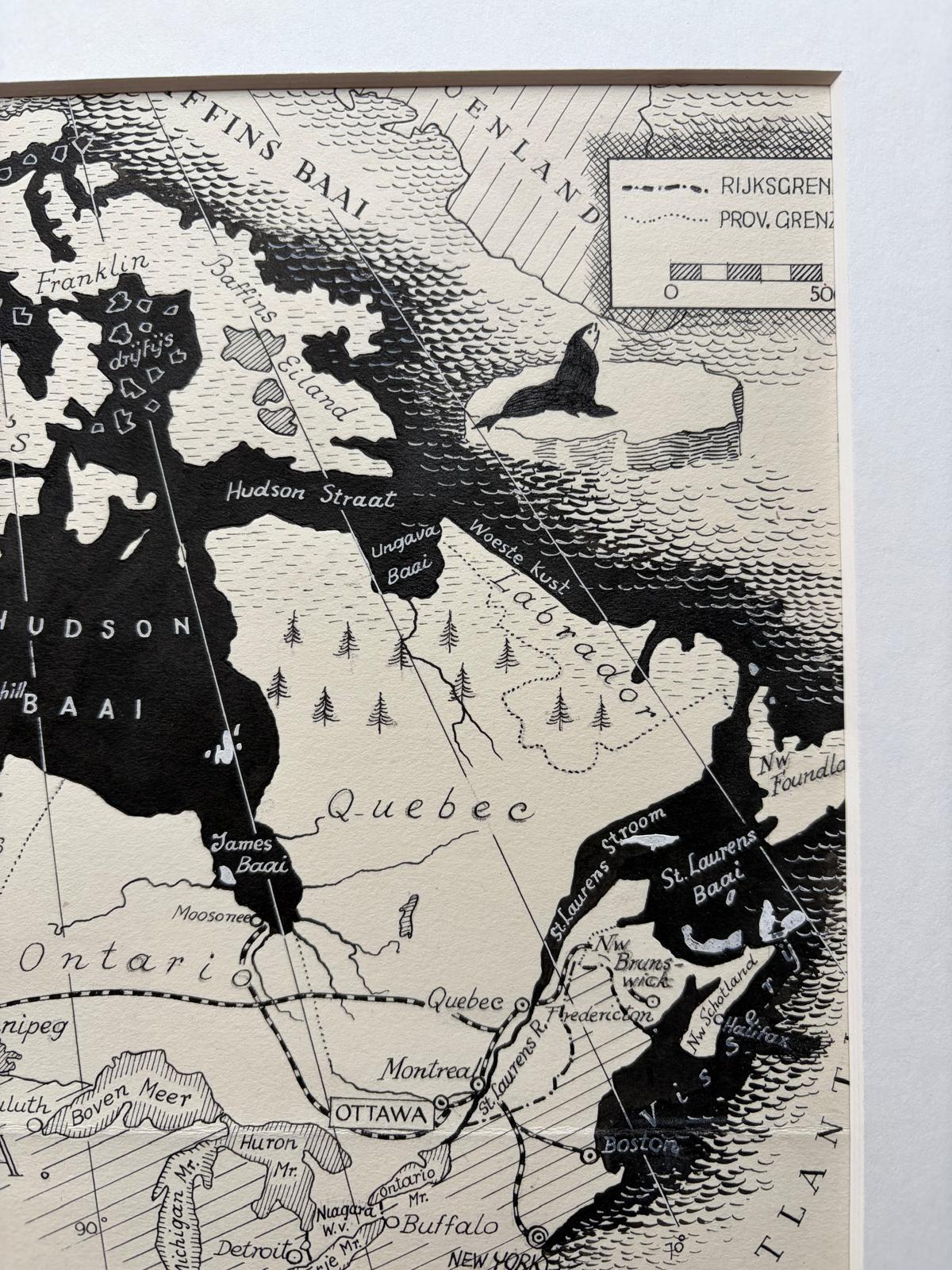
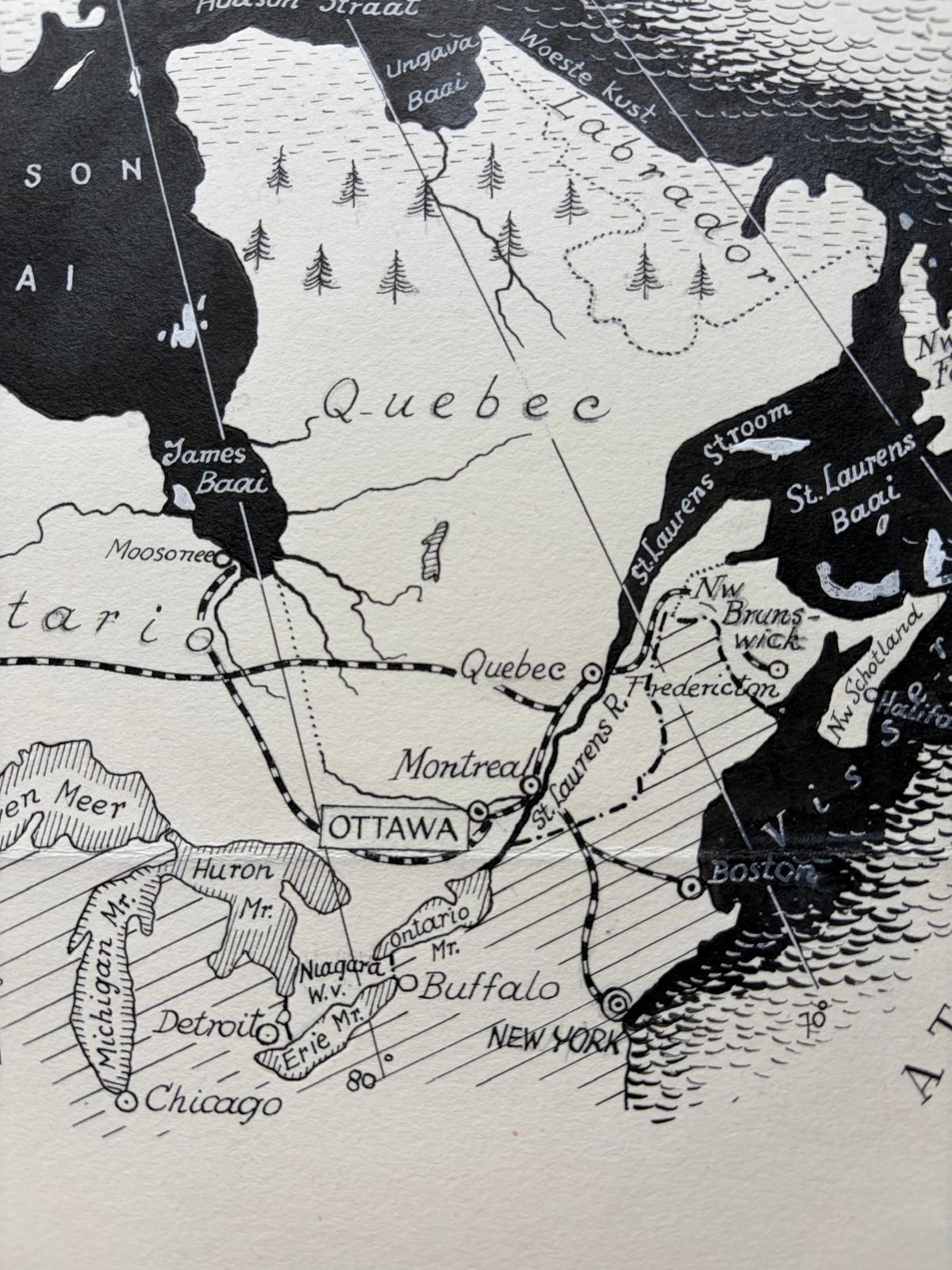
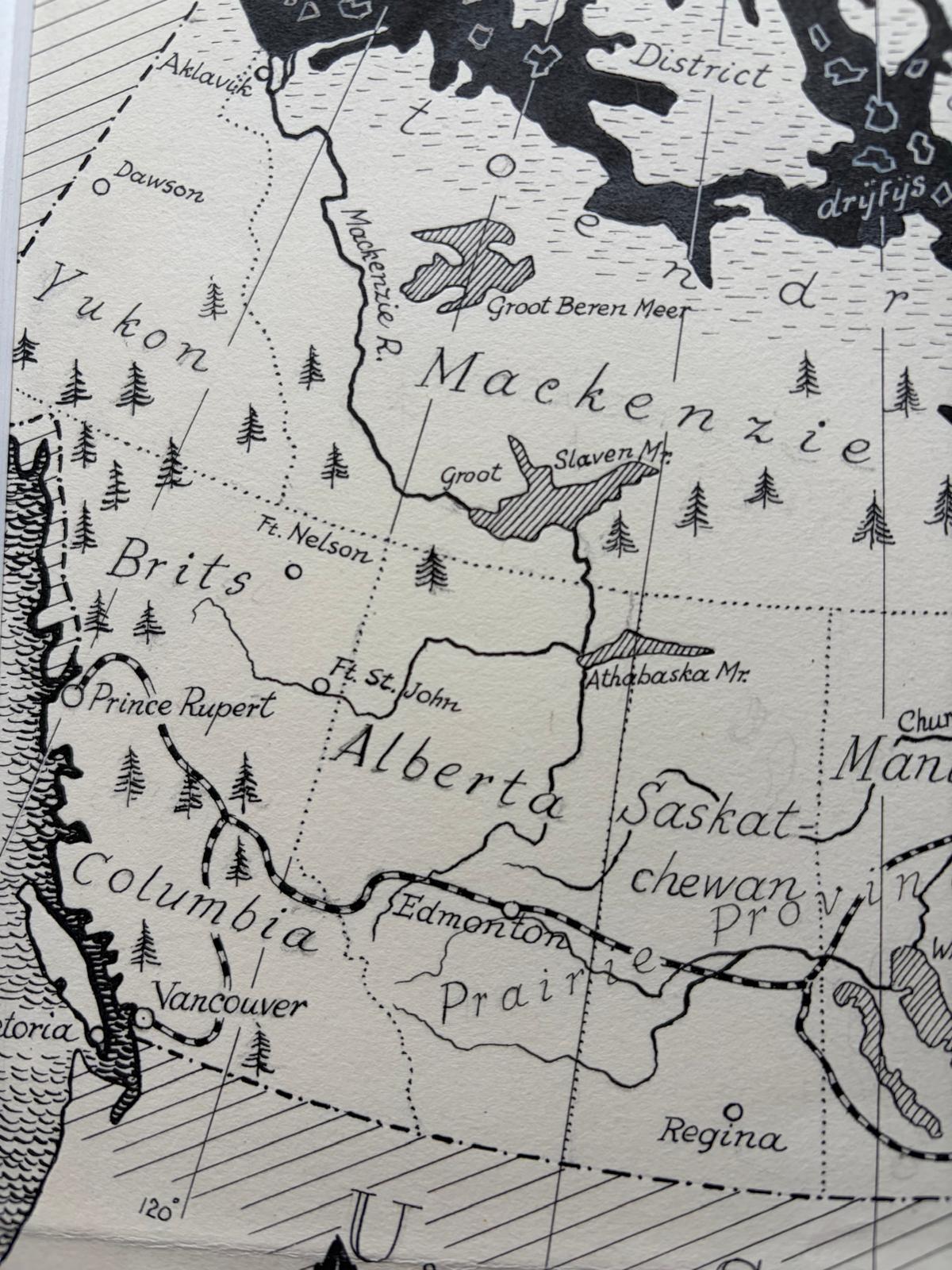
The map details Canada’s provinces, major cities, and natural landmarks—from Hudson Bay and the Mackenzie River to the St. Lawrence Seaway and the Rocky Mountains—with crisp, balanced composition. Surrounding the map are graphic symbols of national identity and resources. A Royal Canadian Mounted Police officer on horseback dominates the foreground, representing discipline and frontier spirit, while a maple leaf emblem marks the nation’s identity. Additional vignettes—apples, fish, and northern fauna—highlight the country’s agricultural and natural abundance.
A boxed legend lists Canada’s key exports, including gold, coal, copper, nickel, silver, iron, zinc, petroleum, and agricultural products, alongside text in Dutch describing its bilingual population (“waarvan ongeveer 2.000.000 Frans sprekend”). Burki’s rendering of coastlines, topography, and typography demonstrates his architectural training and eye for harmony. The crisp black ink and subtle use of negative space lend the work the refined simplicity typical of his postwar output for *Uitgeverij Succes* and similar educational publishers.
The lower section features the words “God Save the King – Canada,” situating the work in the immediate postwar era, when Canada’s identity was firmly rooted within the British Commonwealth. Burki’s choice to depict the Mounted Police and the Rockies reflects a sense of strength and endurance—qualities that mirrored his own life story.
Charles Burki’s experience during World War II profoundly shaped his art. Born in the Dutch East Indies, he was captured by the Japanese army and endured years of imprisonment and forced labor. He survived the sinking of a prisoner transport ship and later witnessed the atomic bombing of Nagasaki, experiences that left an indelible mark on his outlook. After the war, he moved to the Netherlands, where he turned his trauma into disciplined creativity, producing architectural designs, illustrations, and maps that emphasized structure, resilience, and clarity.
This map of Canada embodies those same traits. Its fine drafting and calm balance express order and optimism after chaos, turning geography into a symbol of renewal.
Condition report: Very good condition with light toning and faint handling traces consistent with age. Minor mounting tape visible on the edges. The black ink remains bold and even.
Framing suggestion: Best presented in a thin black or walnut frame with a cream or off-white mat to accentuate the sharp contrast and precision of Burki’s linework.
Technique: Pen and ink on paper
Maker: Charles Burki (Dutch-Indonesian, 1909–1994), signed and dated 1948