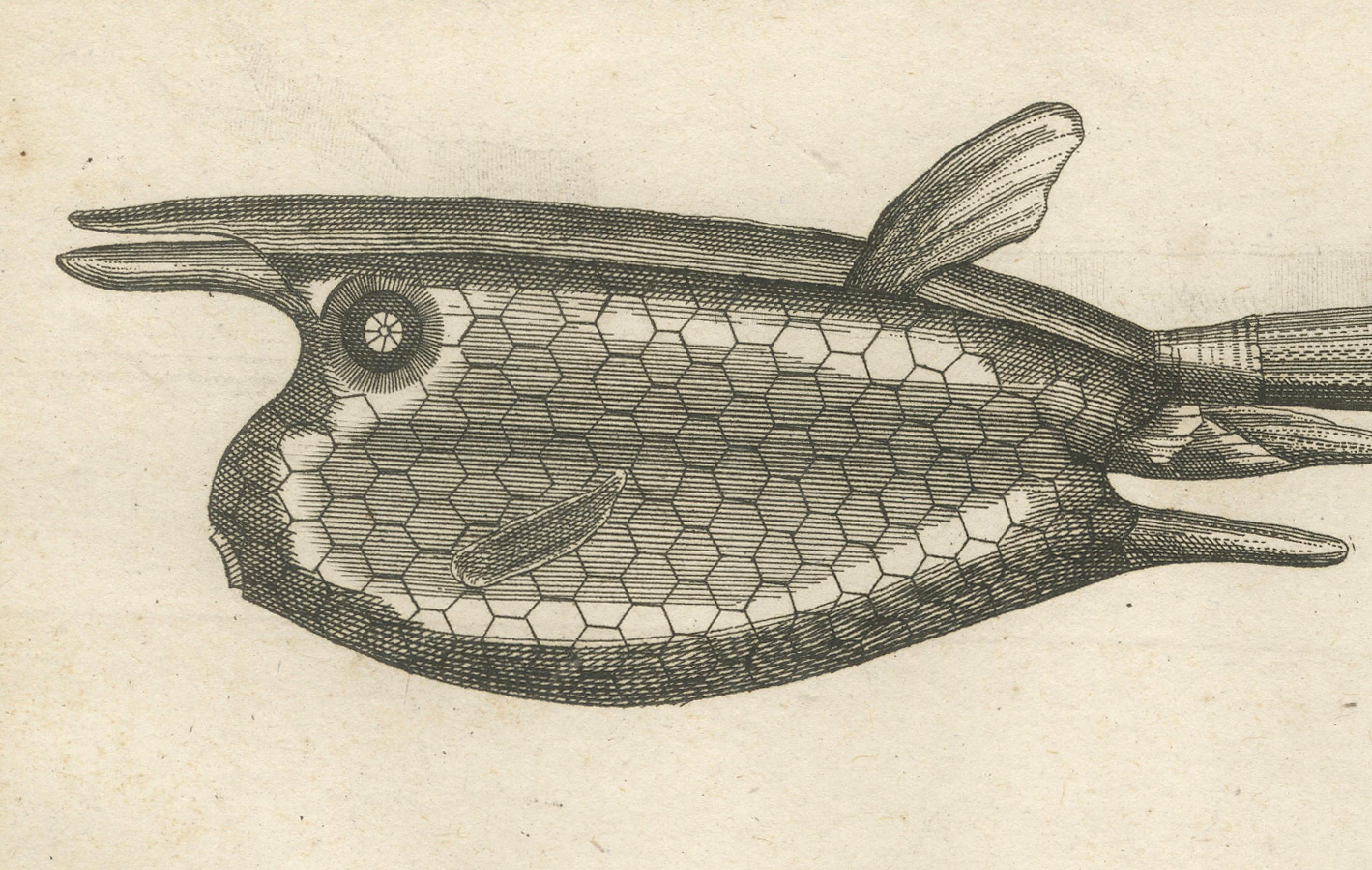
Poisson Cornu dit “Le Diable” – Antique French Engraving of a Horned Fish, 1790
€ 190
One of a kind: this is the sheet in the photographs. Ships from Langweer, the Netherlands.
Date
1790
Sheet size
16.7 × 20 cm (6.6 × 7.9 in)
Condition
Good
Reference
BG-14078-11
Condition
Condition report: Good condition, with a strong plate mark and rich impression. Minor horizontal fold at the center, as issued, light toning and small foxing spots in the margins.
About this sheet
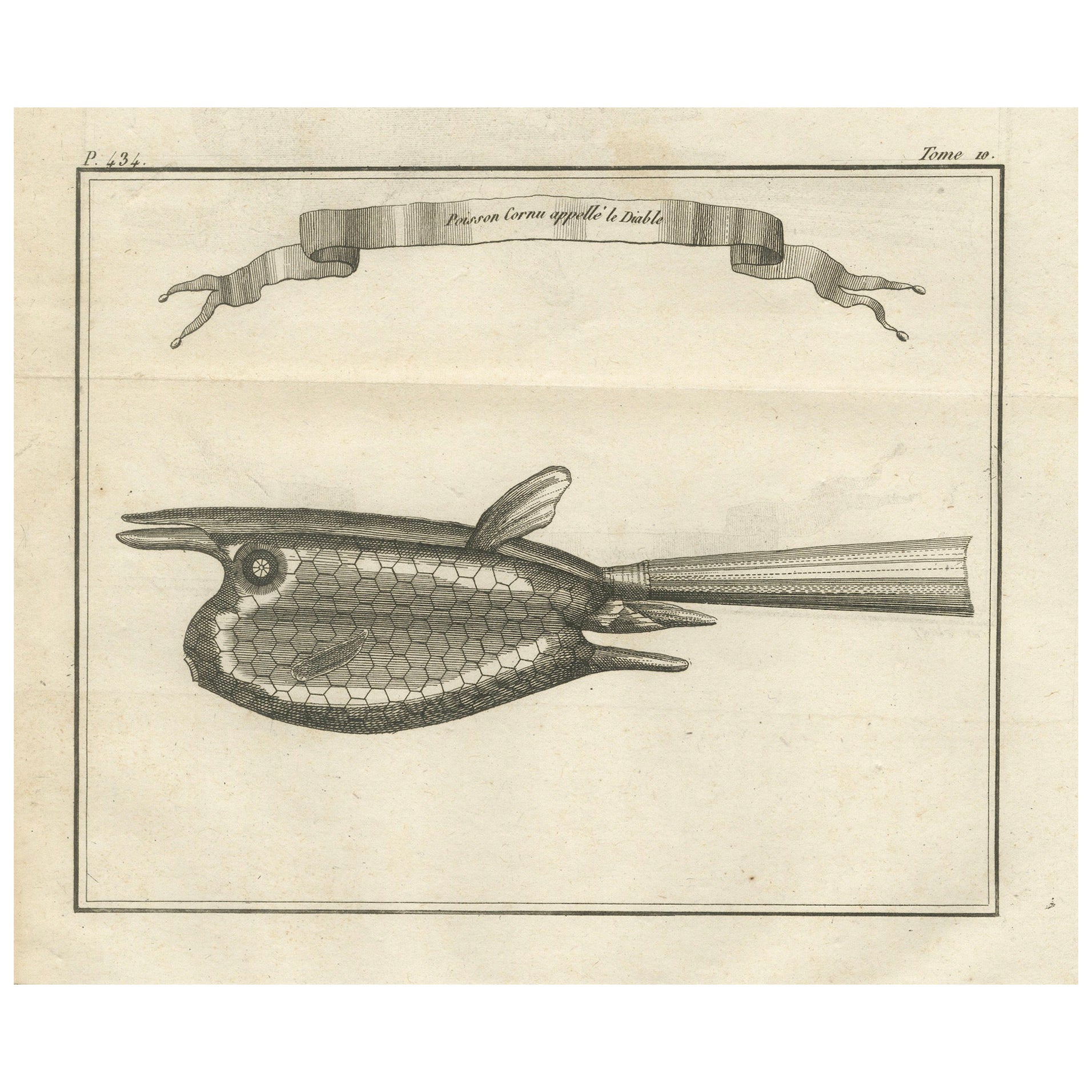
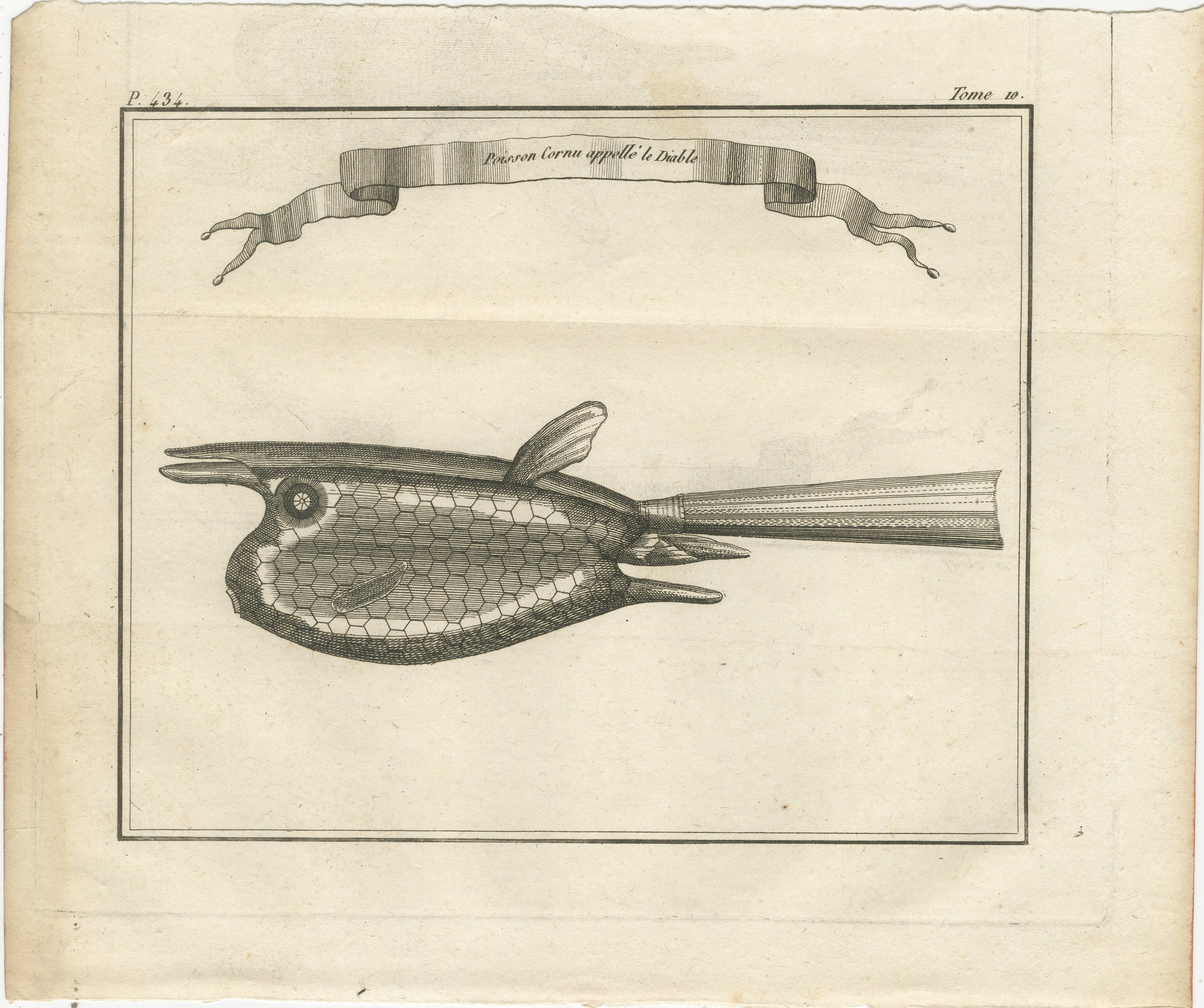
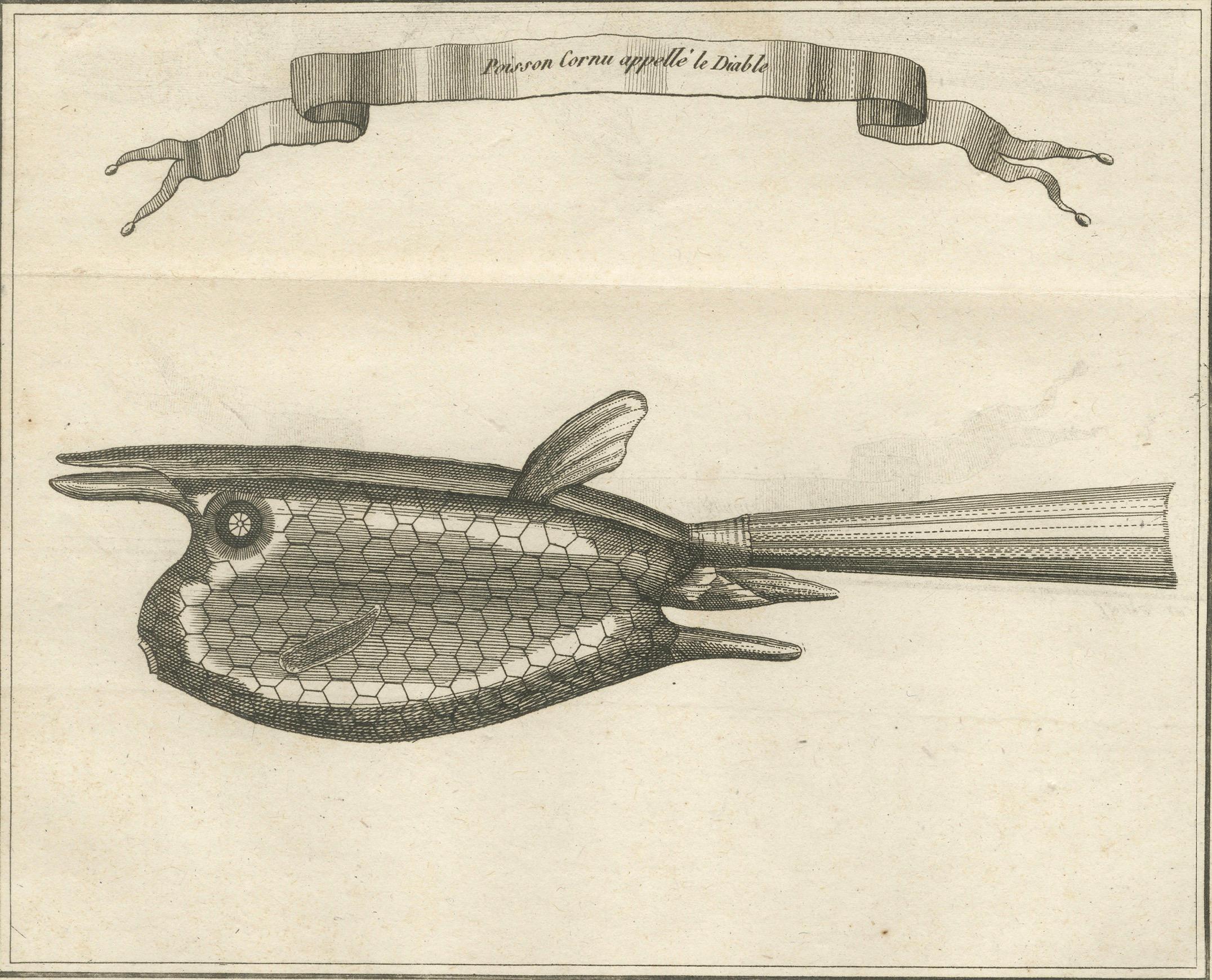
Poisson Cornu dit “Le Diable” – Antique French Engraving of a Horned Fish, c.1790
This striking antique engraving depicts a horned fish, identified in the French caption as “Poisson Cornu appelé le Diable” (“Horned Fish called the Devil”). Created around 1790, the engraving belongs to the tradition of natural history illustration popular in Enlightenment-era France, where exotic marine life from distant oceans was documented for scientific and popular audiences alike.
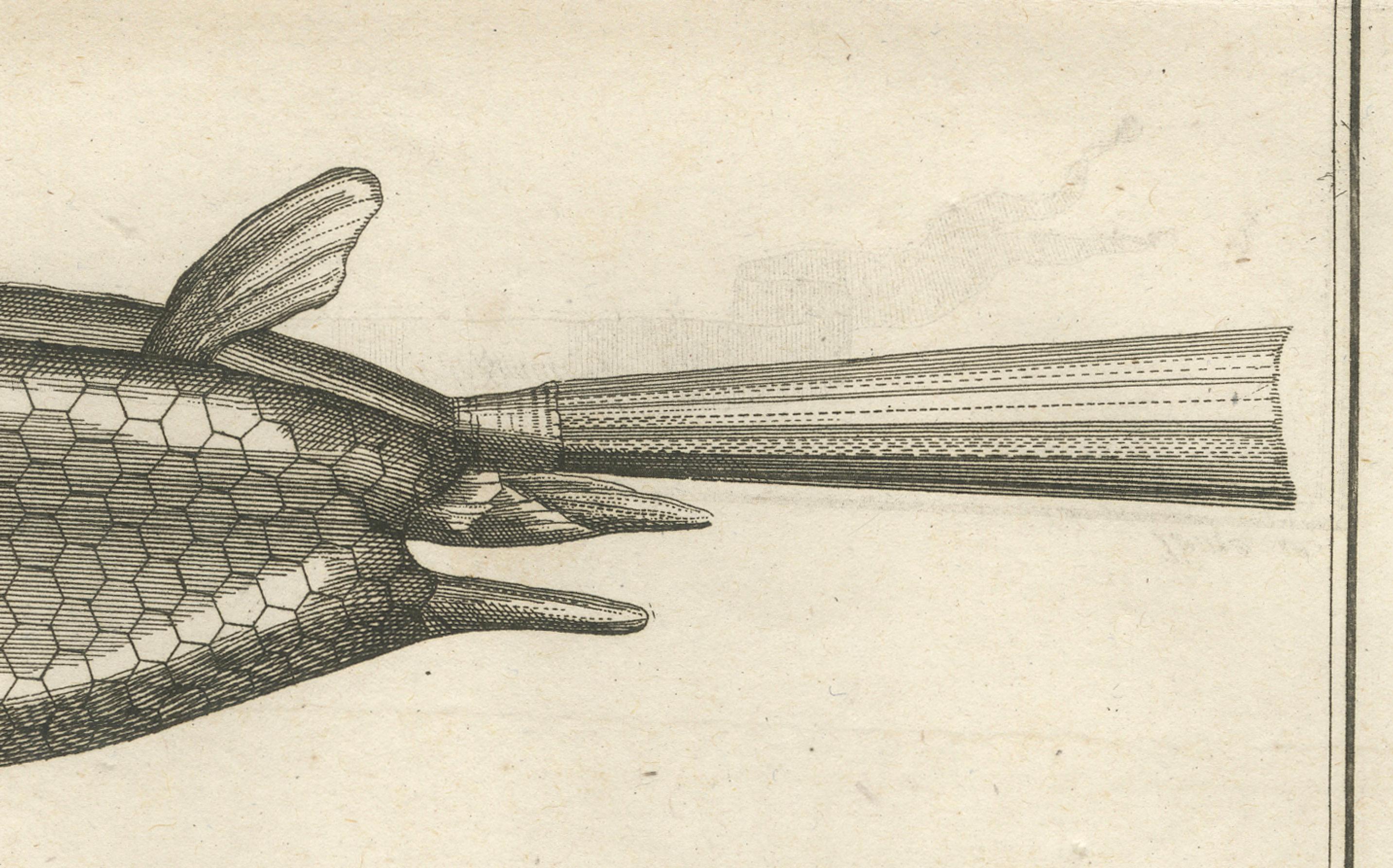
The fish is shown in precise profile, its body covered in hexagonal scales, and featuring distinctive anatomical traits: a beak-like mouth, a forward-pointing horn above the eye, pectoral fins set low on the body, and a long, textured tail. The careful linework of the engraving captures both the texture and form of the animal, while a decorative ribbon banner at the top bears its name. Such species may have been based on early observations of tropical boxfish or cowfish (family Ostraciidae), known for their rigid carapace and horn-like projections, though often exaggerated or stylized in period engravings.
In the late 18th century, illustrations like this often appeared in encyclopedic works or travel accounts by explorers and missionaries, many of whom encountered unusual marine species in the waters of the Indian and Pacific Oceans. The fanciful nickname “Le Diable” reflects a mix of curiosity and superstition common to the period’s interpretation of exotic fauna.
The plate’s elegant framing line and classical ribbon title cartouche are typical of French natural history engravings, making it not only a scientific record but also an object of decorative appeal.
Condition report: Good condition, with a strong plate mark and rich impression. Minor horizontal fold at the center, as issued, light toning and small foxing spots in the margins.
Framing tips: This engraving would suit a narrow black or dark oak frame with a wide cream mat to enhance the fine detail and contrast. A double mat with a subtle inner line in dark grey could complement the monochrome tones.
Technique: Engraving Maker: Unknown engraver, France, c.1790