About this sheet
Chinese Calligraphy Inscription – Antique Engraving with Kangxi-era Text, c.1770
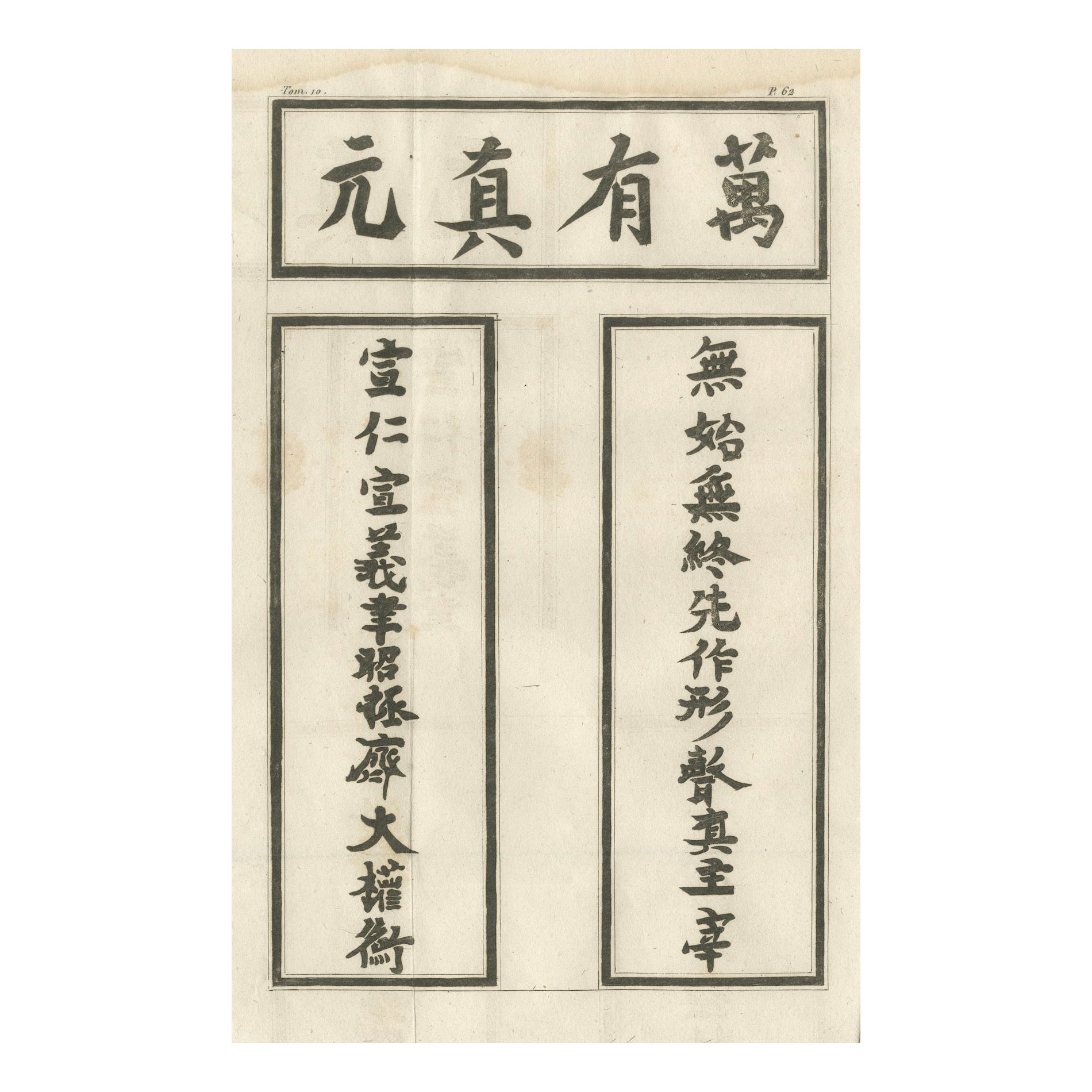
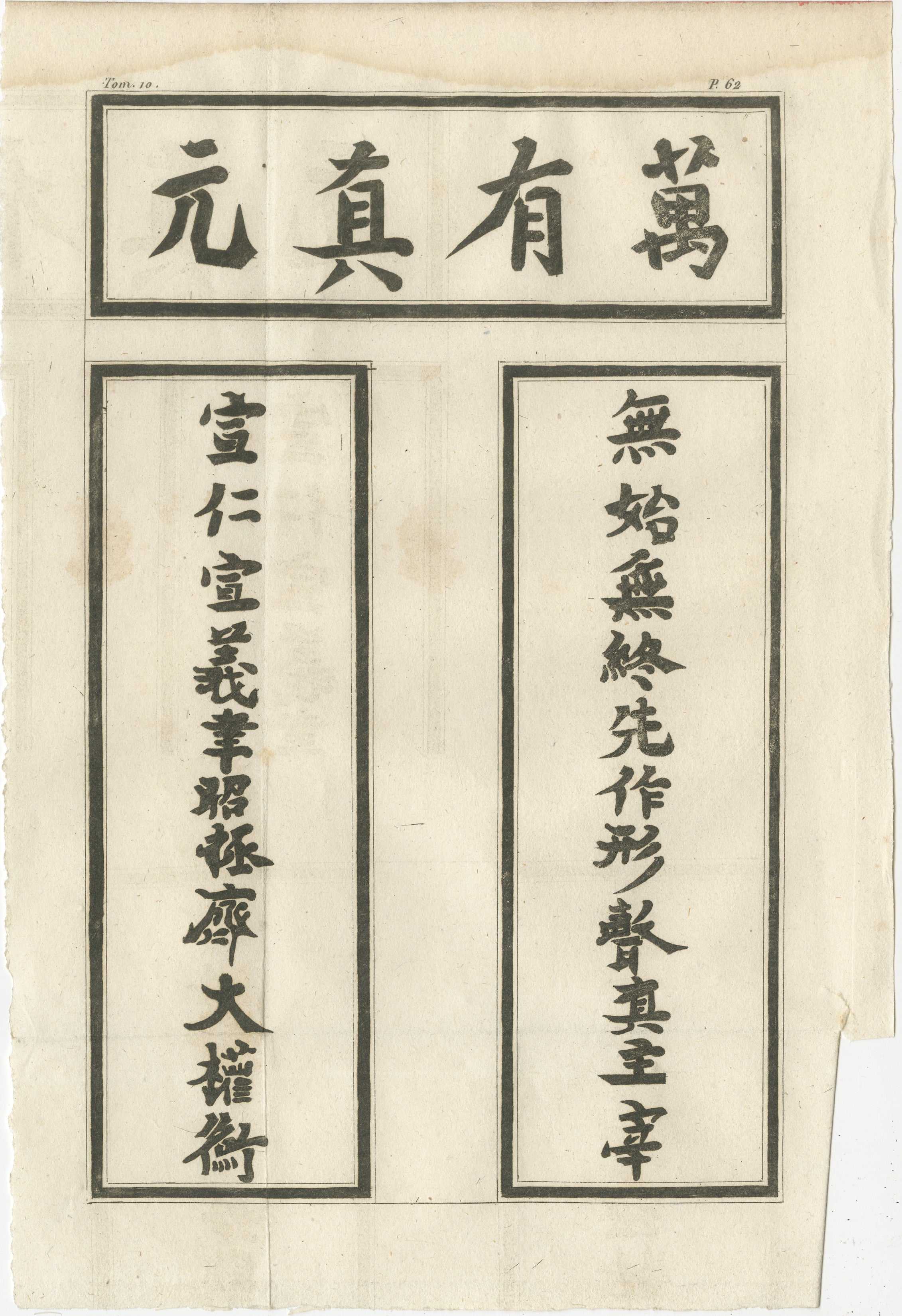
This elegant 18th-century copperplate engraving reproduces a Chinese inscription, framed within three bordered panels.
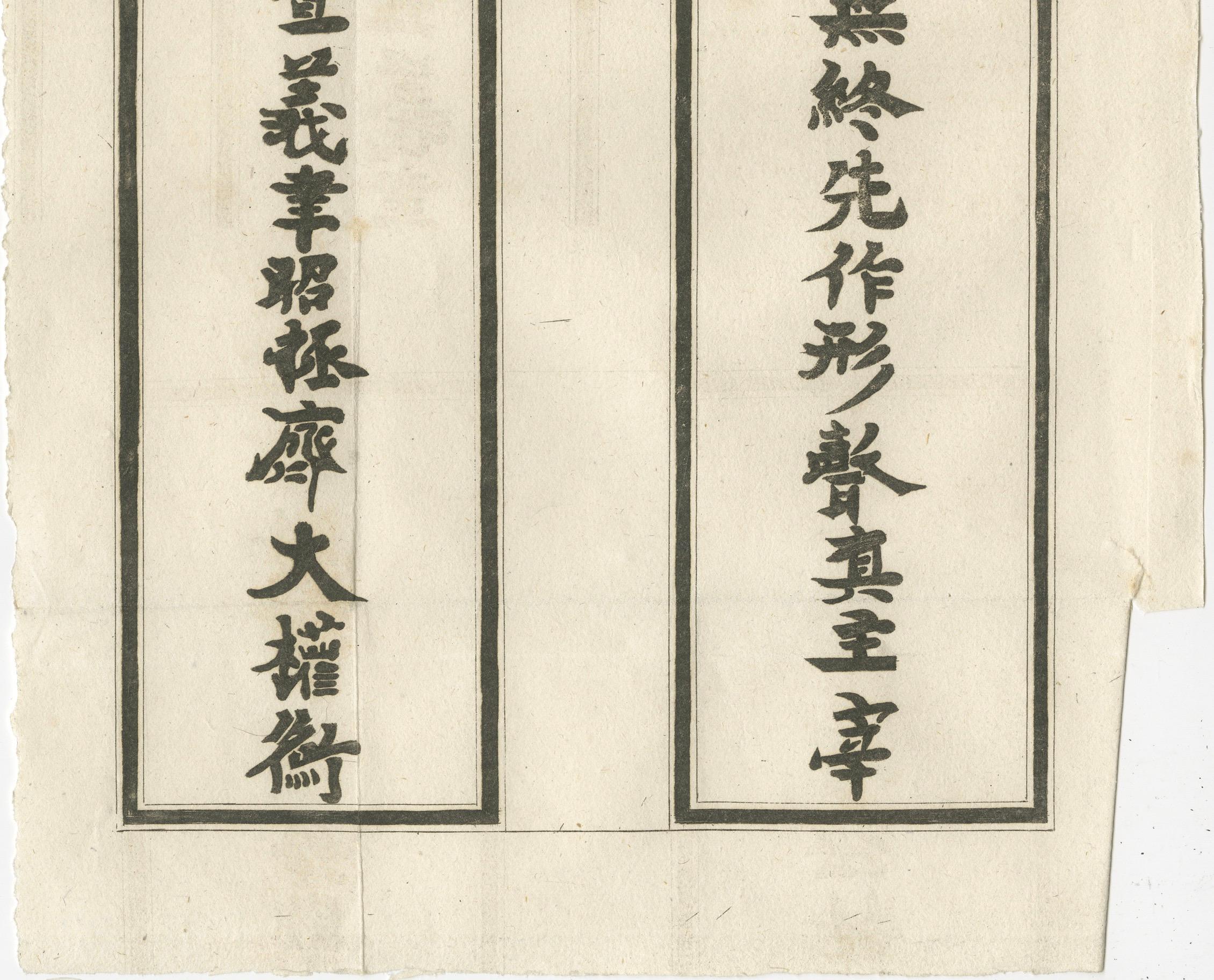
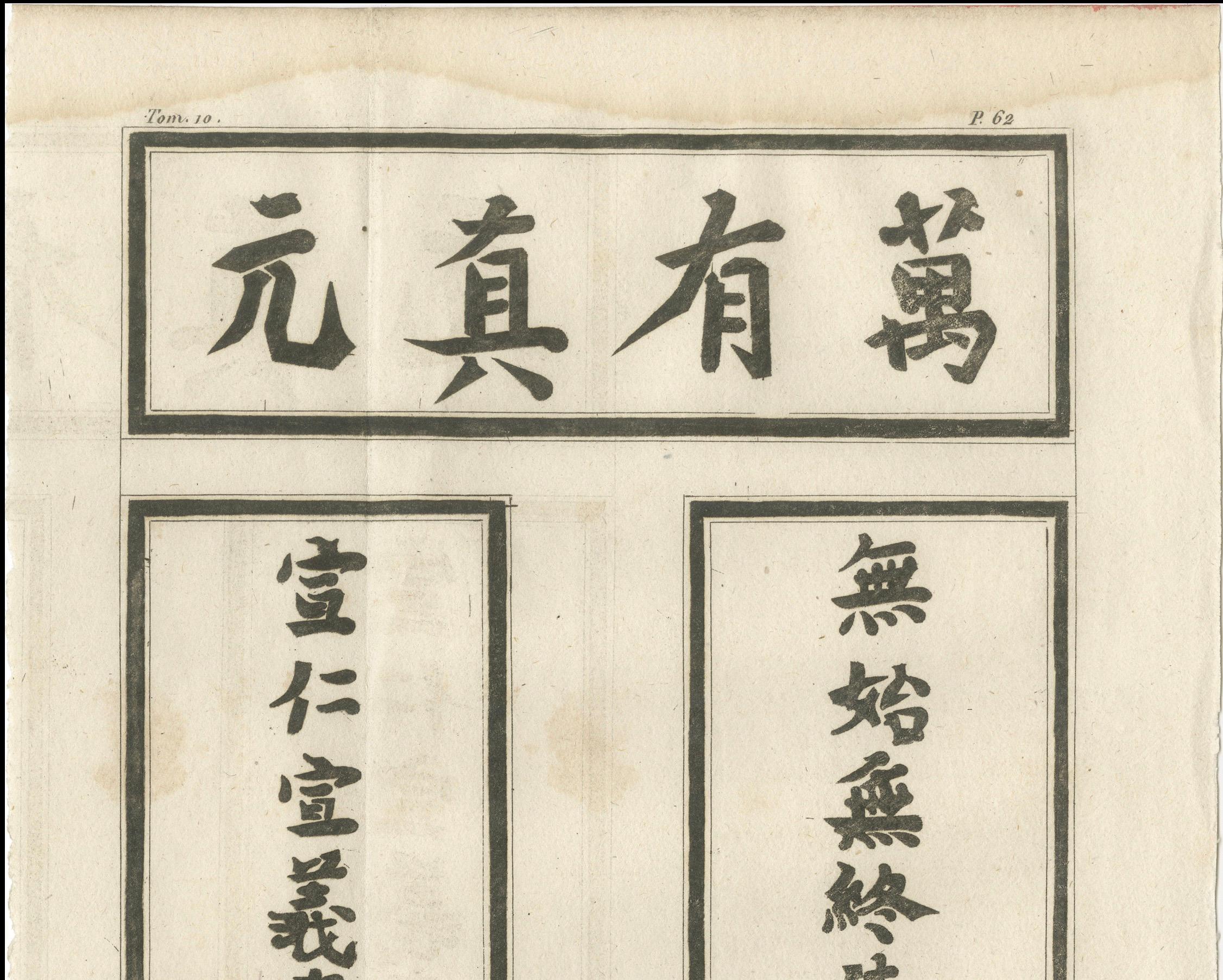
The large characters across the top read **萬有真元** (*Wàn yǒu zhēn yuán*), meaning “The true origin of all things.” The right-hand vertical panel continues: **無始無終先作形聲真主宰** — “Without beginning or end, First made form and sound; the True Sovereign reigns.” The left-hand panel reads: **宣仁宣義聿昭拯濟大權衡** — “Proclaiming benevolence and righteousness, clearly manifesting salvation; upholding great authority and balance.”
The text is attributed to the Kangxi Emperor and is believed to have been composed in April 1711 as an epigraph for a Jesuit-built church in Beijing. Its philosophical content blends timeless cosmology (“true origin,” “form and sound,” “without beginning or end”) with moral and political virtues central to Confucian governance (“benevolence,” “righteousness,” “salvation,” “authority,” “balance”). Such inscriptions, while firmly rooted in Chinese literary tradition, were sometimes crafted to resonate with both Chinese and European audiences, particularly in the context of Qing-era interactions with Jesuit missionaries.
The page is marked “Tome 10” and “P. 63,” indicating its place in a larger multi-volume Enlightenment-era travel or encyclopedic work documenting the natural history and cultures of Asia.
For collectors, this piece offers a rare combination of fine engraving technique, historical significance, and cross-cultural resonance. It appeals to those with interests in sinology, Qing dynasty history, missionary interactions, or the transmission of Asian culture into European publications.
Condition: Good for age, with a central fold as issued. Light toning and minor foxing in the margins. Strong plate impression with crisp detail in the calligraphic strokes.
Framing tips: A minimalist black or dark rosewood frame with a cream or soft parchment-coloured mount will enhance the elegance of the calligraphy while echoing the tones of the antique paper. For a dramatic presentation, a double mount with a thin black inner bevel could provide additional visual depth.
Technique: Copperplate engraving
Maker: French school, c.1770