About this sheet
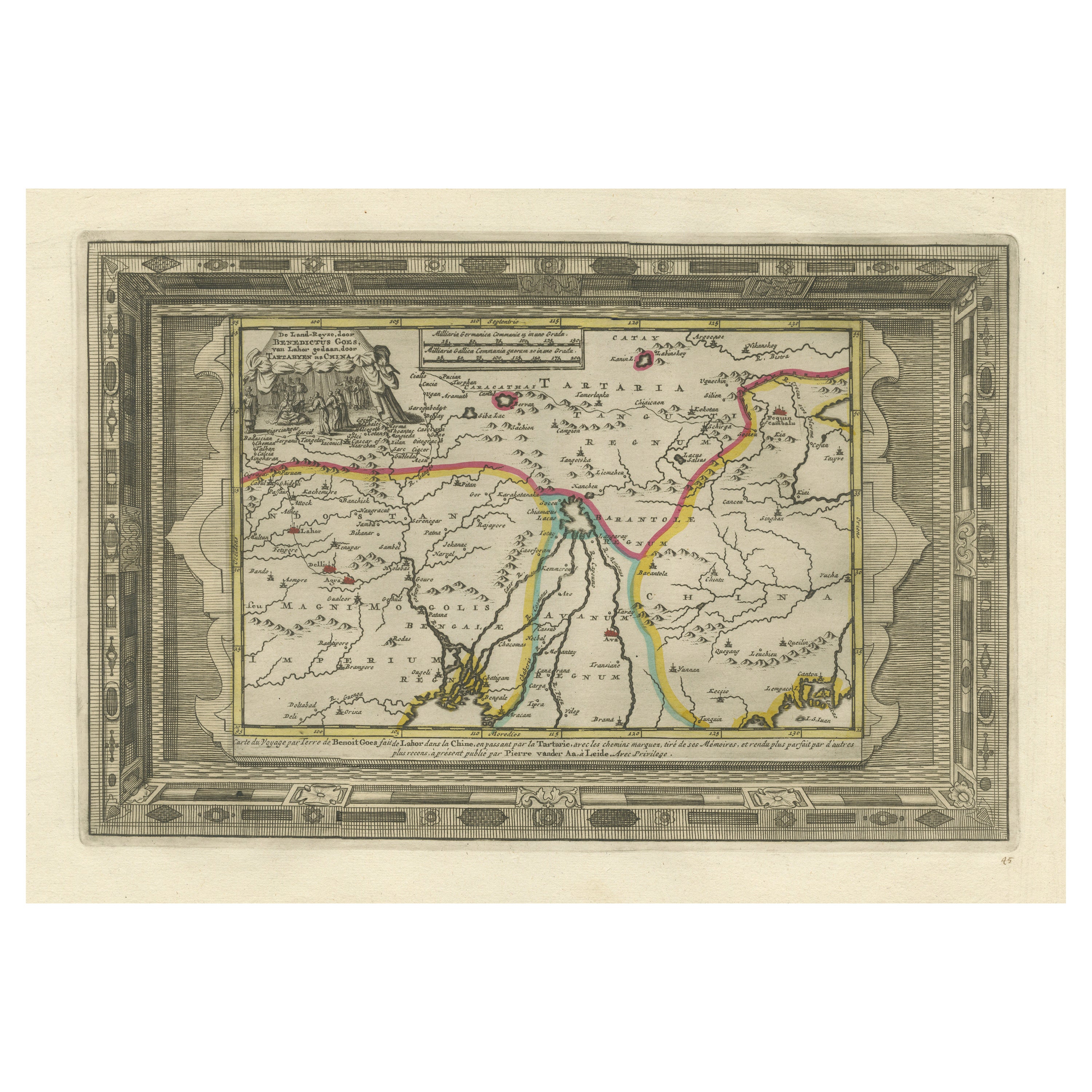
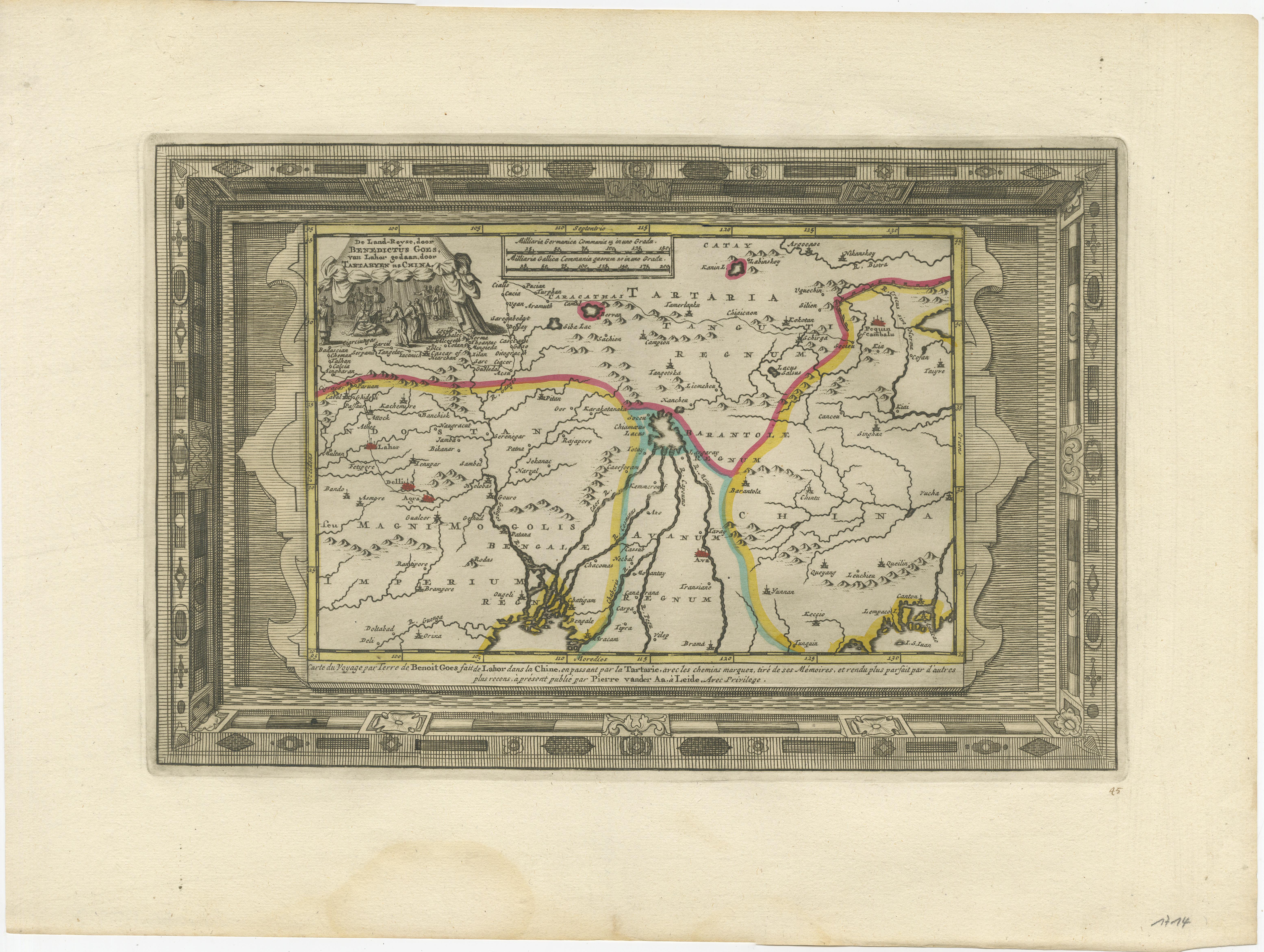
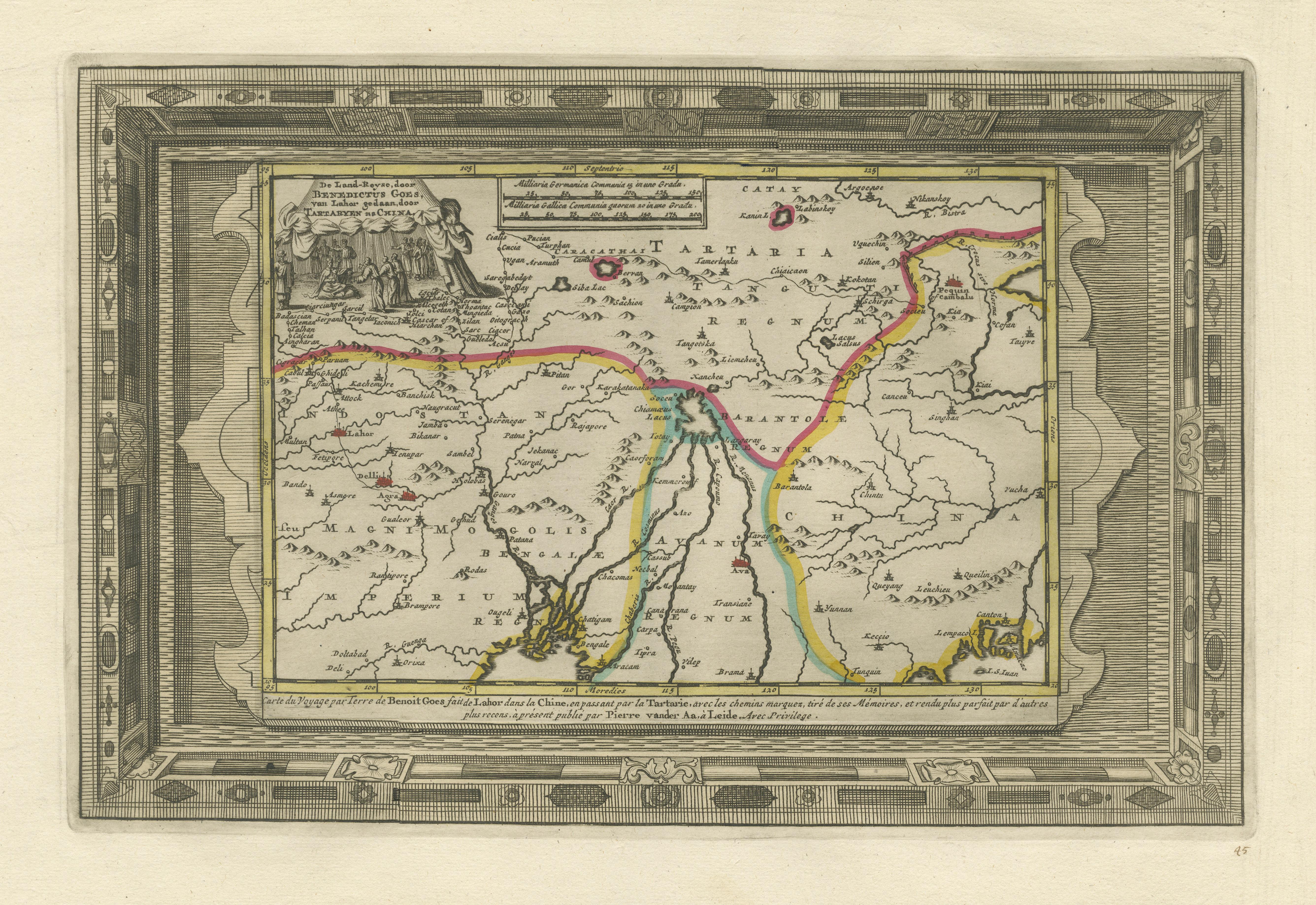
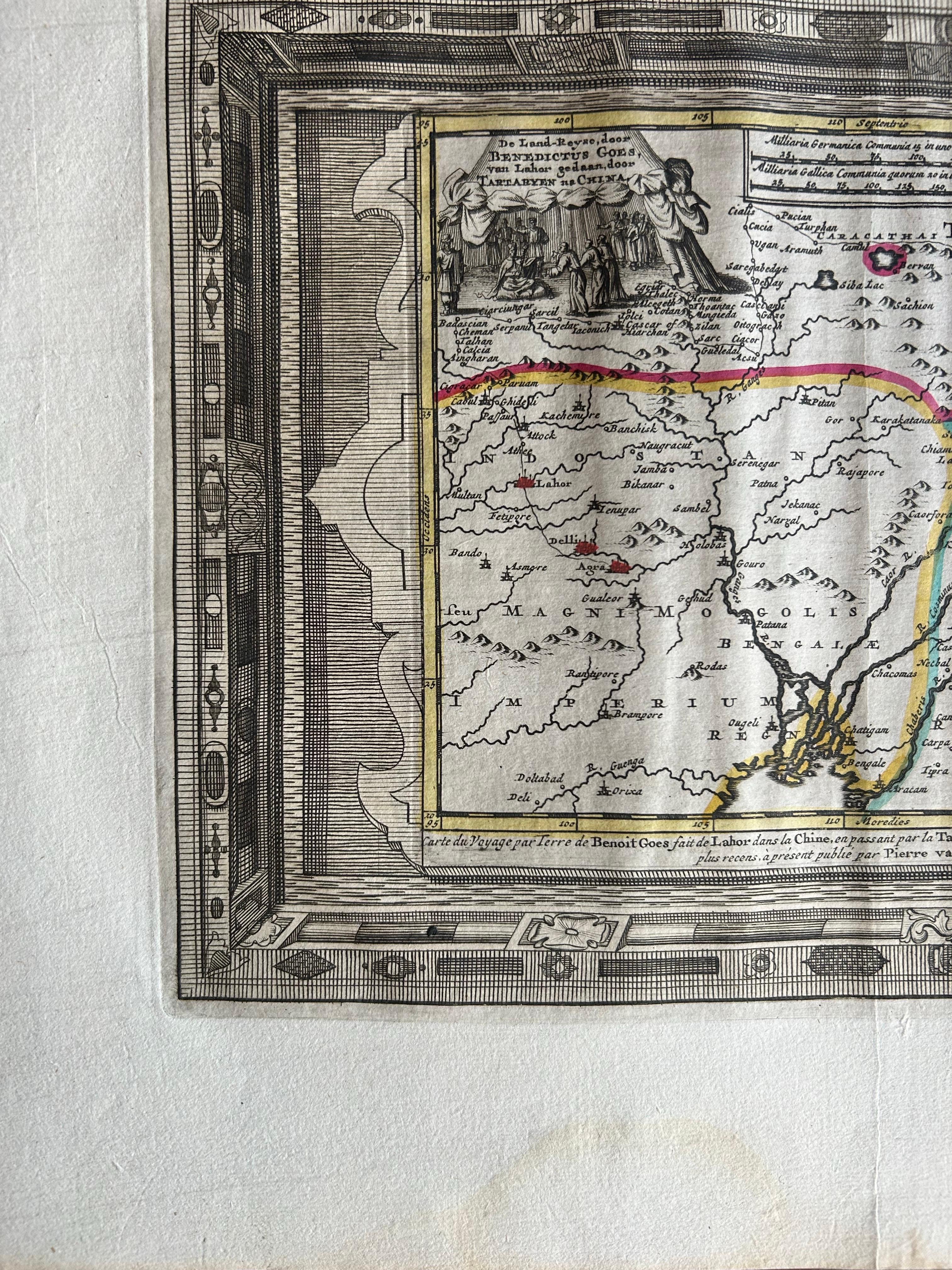
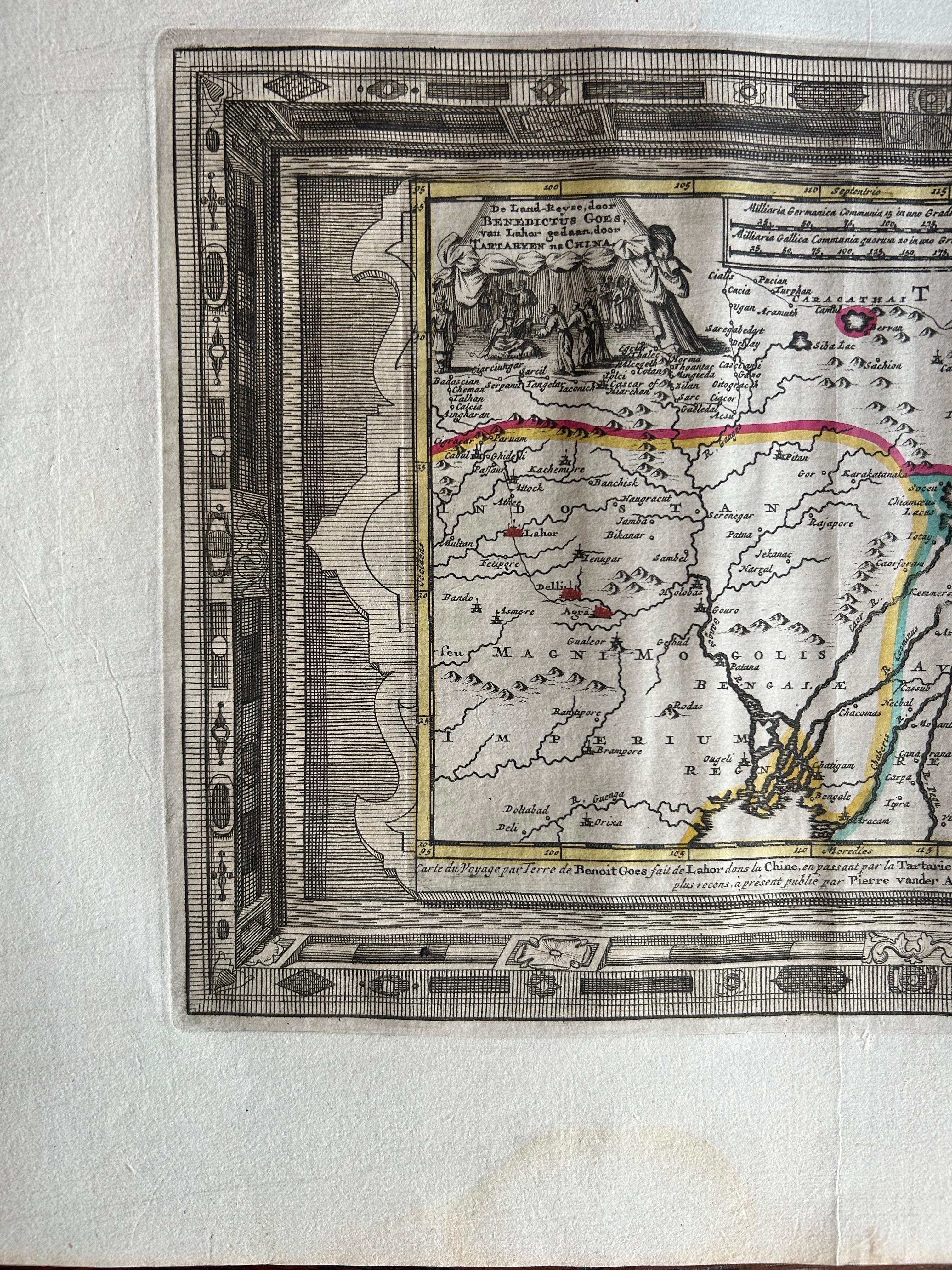
Benedictus Goes’ Route – Antique Map of Tartary to China by Van der Aa, 1714
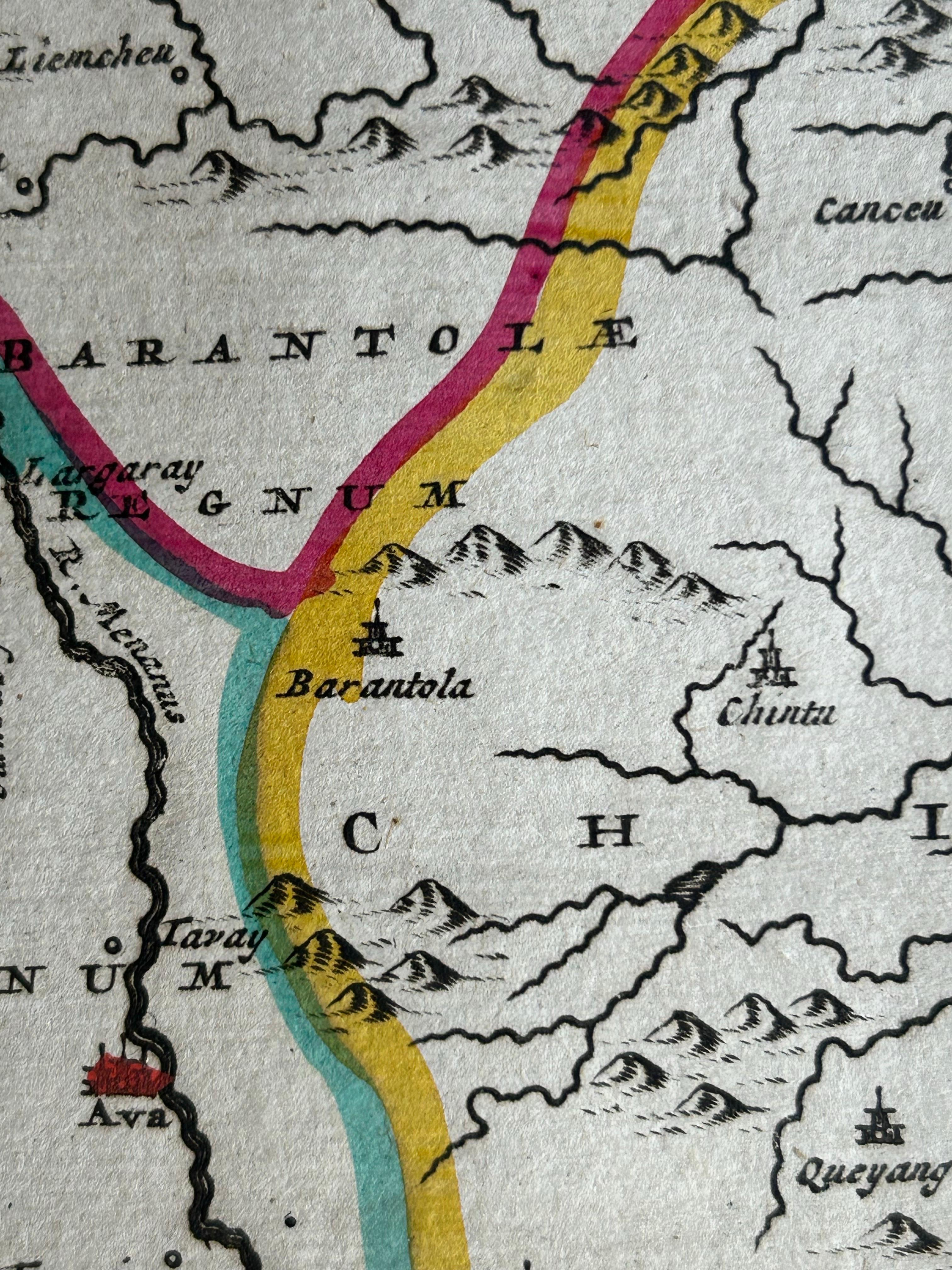
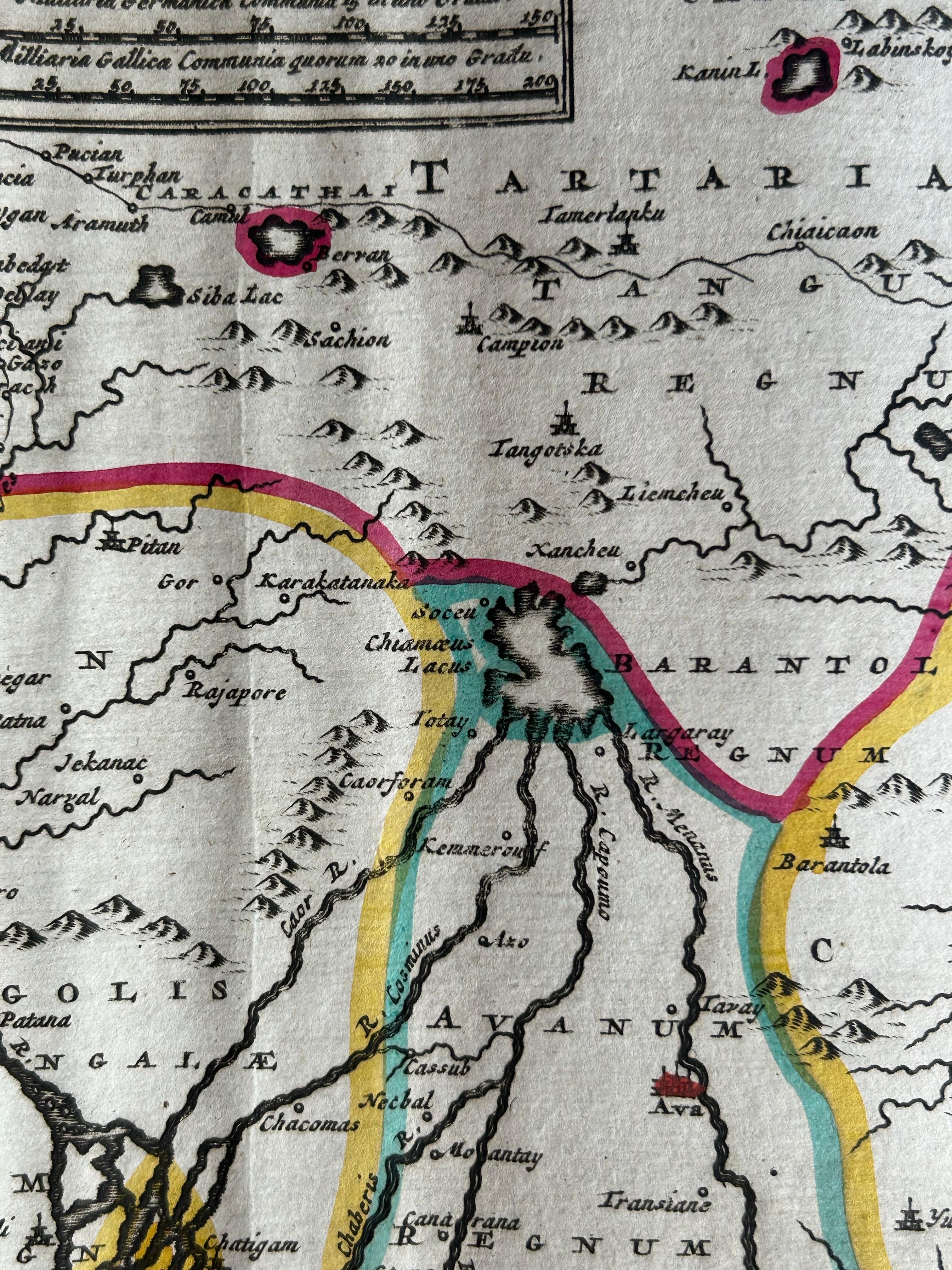
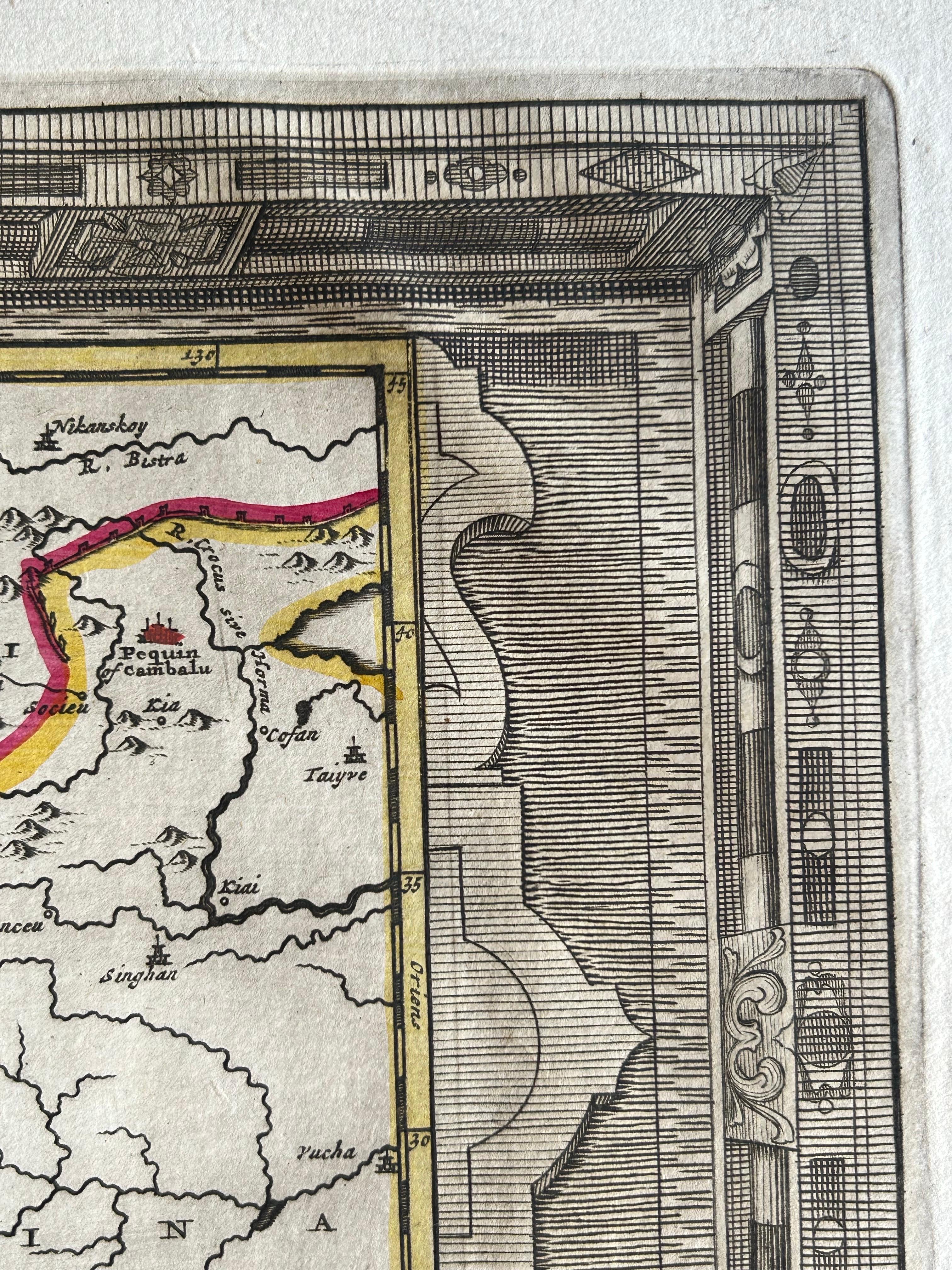
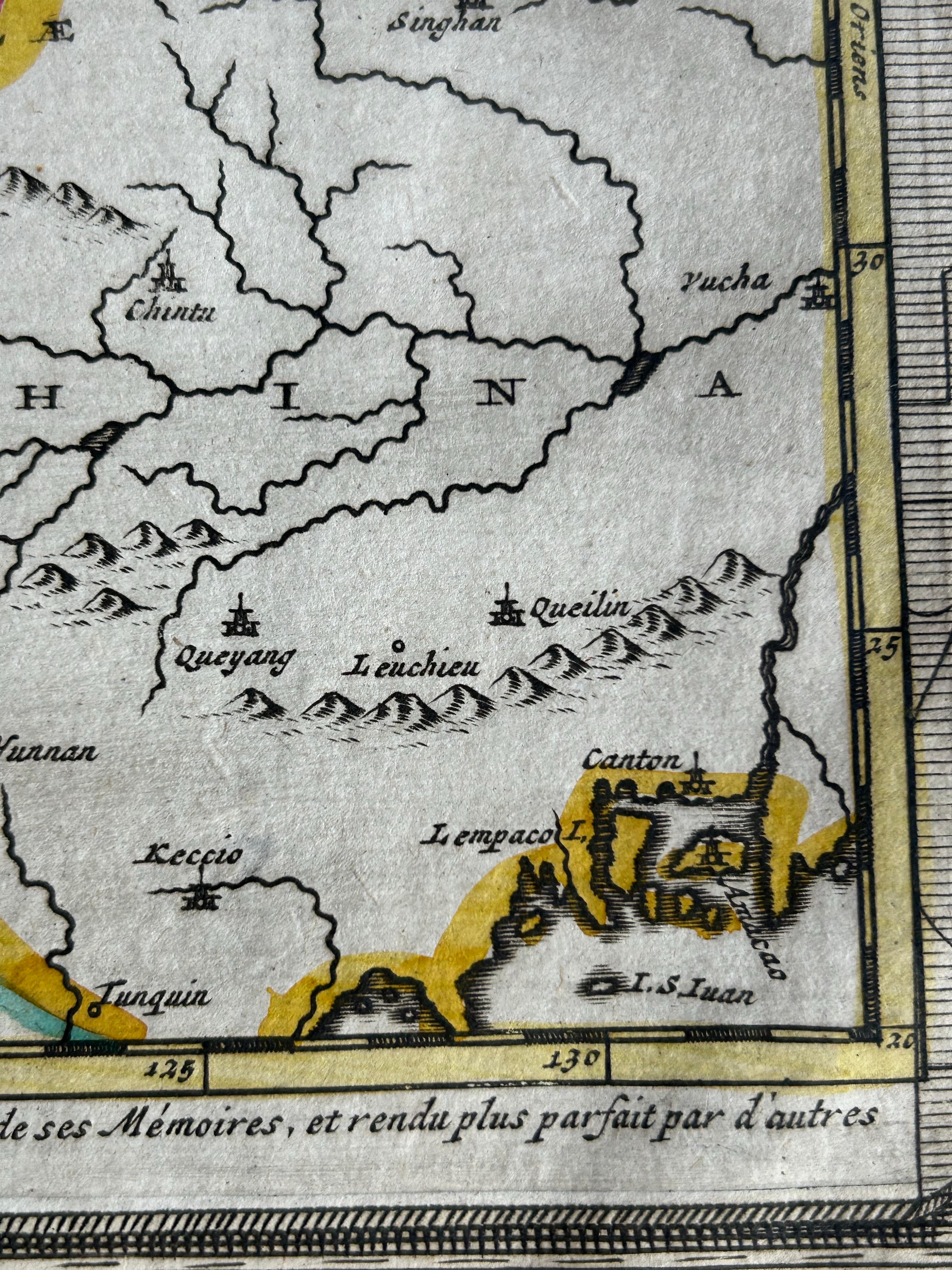
This fascinating antique map titled De Land-Reyse door Benedictus Goes, van Lahor gedaan, door Tartaryen na China charts the exploratory journey of the Jesuit missionary Benedictus Goes through parts of Asia in the early 17th century. The map depicts a vast region stretching from northeastern India through present-day Nepal, Bhutan, Assam, and Bangladesh, with a route heading toward China through the lands once known as Tartary.
Published by Pieter van der Aa around 1714, this map visually narrates the journey Goes undertook beginning in 1603, departing from Lahore and crossing into Central Asia. Of particular note is the inclusion of the mythical Chiamaeus Lacus (Lake Chiamay), a legendary source of several major rivers in Southeast Asia. Though now disproven, Lake Chiamay was frequently included in European maps from the 16th to 18th centuries, reflecting both the gaps and ambitions of early geographical knowledge.
In the upper left, a finely illustrated cartouche shows a council or court scene, featuring figures in a richly decorated tent, evoking the cultural and religious diversity of the lands Benedictus Goes traversed. The region labelled “Capherstam,” believed to be Kafiristan, is also referenced from the missionary’s travel journal, which recounted stories of wine, resistance to Islamic authority, and hospitality to Christian travelers.
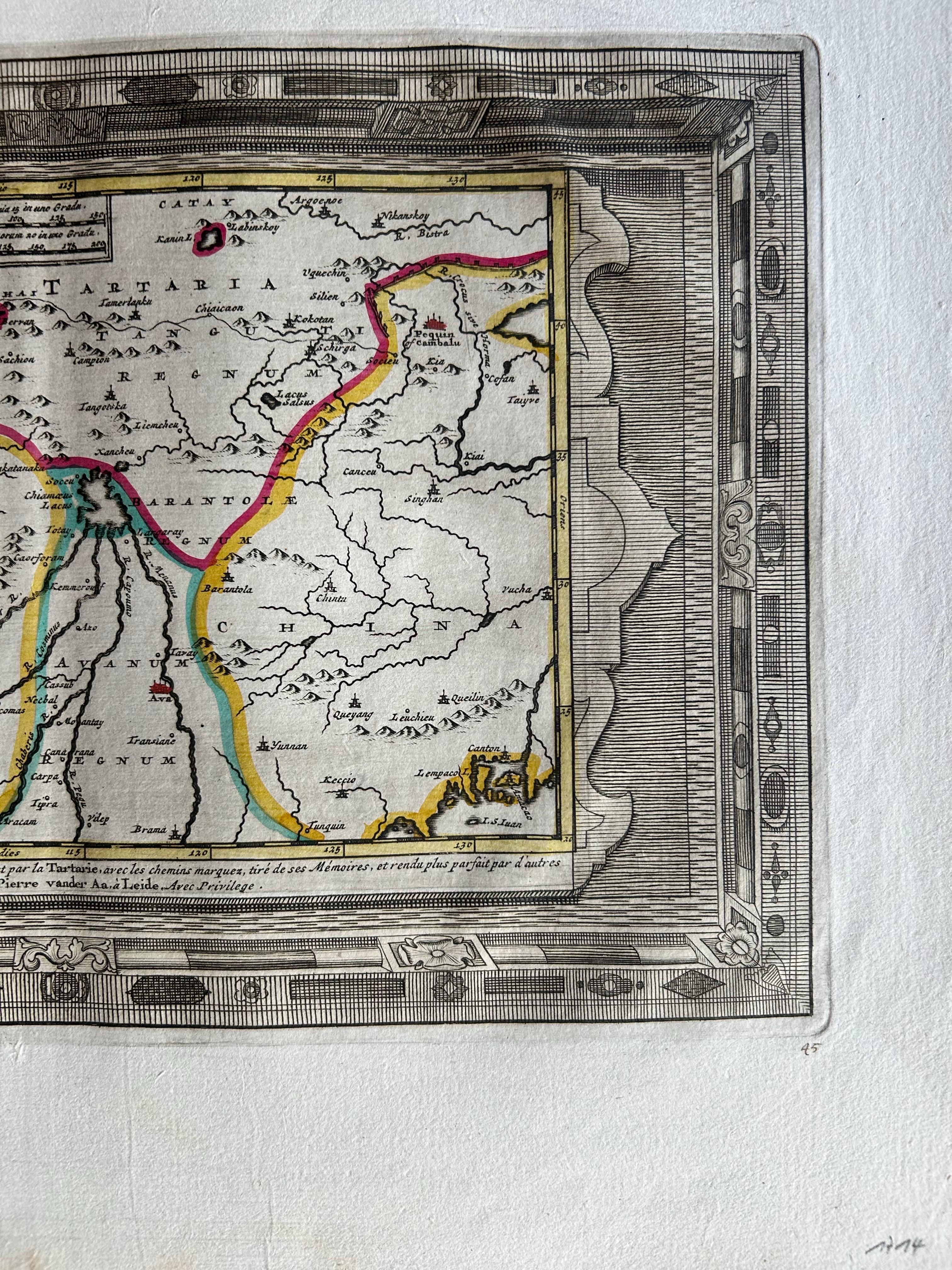
This map stands out for its unusual framing device: a bold ornamental border engraved to resemble a carved frame, enhancing its visual impact. The coloring of rivers and territorial lines adds dimension to the otherwise black-and-white cartographic elements.
Condition report: Fine condition with excellent hand-coloring along borders and rivers. The paper is strong with slight age toning and one circle of age toning in the margin. No tears or repairs noted. Plate marks visible.
Framing tips: Frame in dark wood or black to contrast with the decorative printed border. A cream-colored mat will highlight the map’s pastel hand-coloring, while a gold fillet could echo the richness of the period style.