About this sheet
Frog Print of Mexican Treefrog and Map Frog, c.1850, by Orbigny
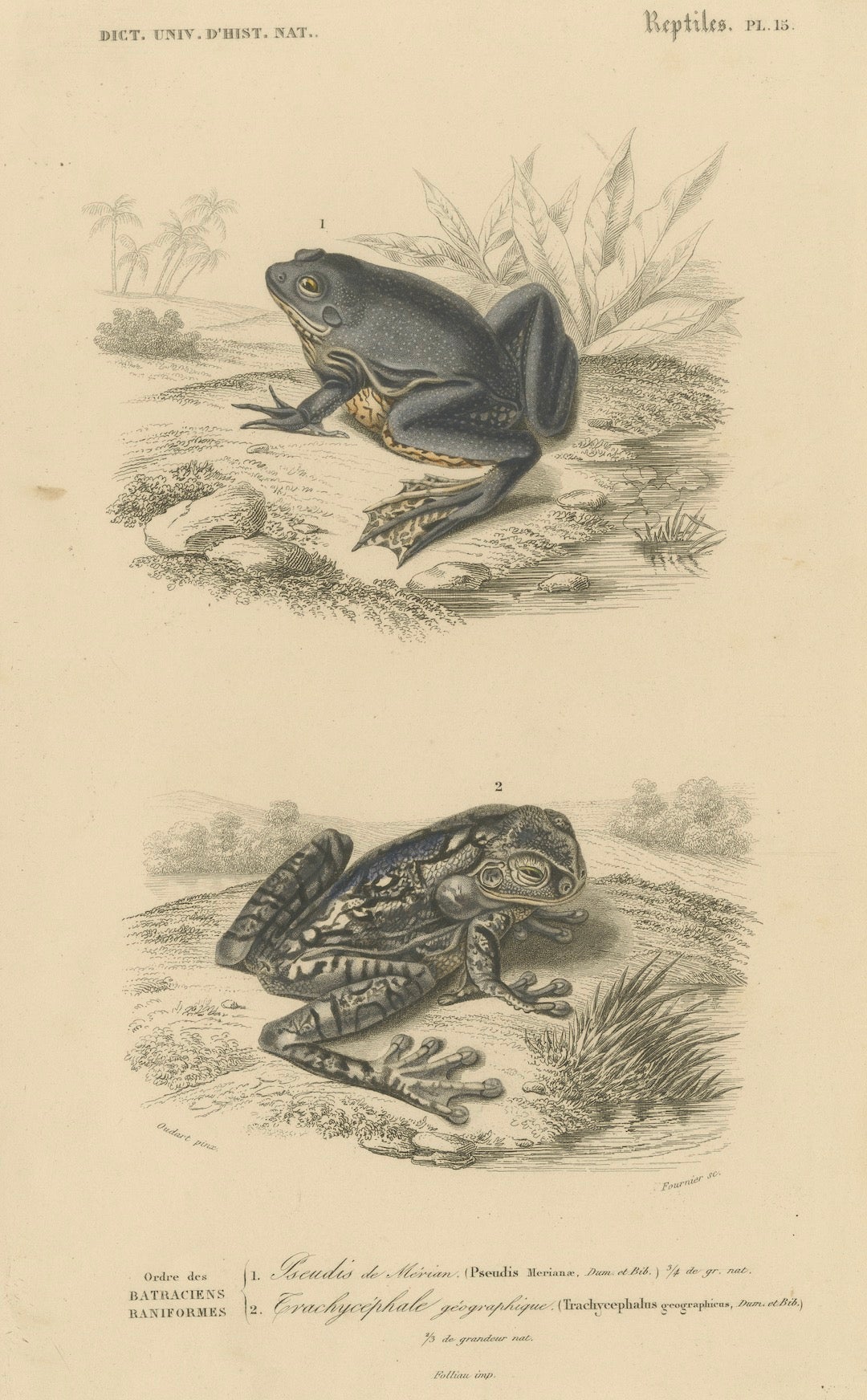
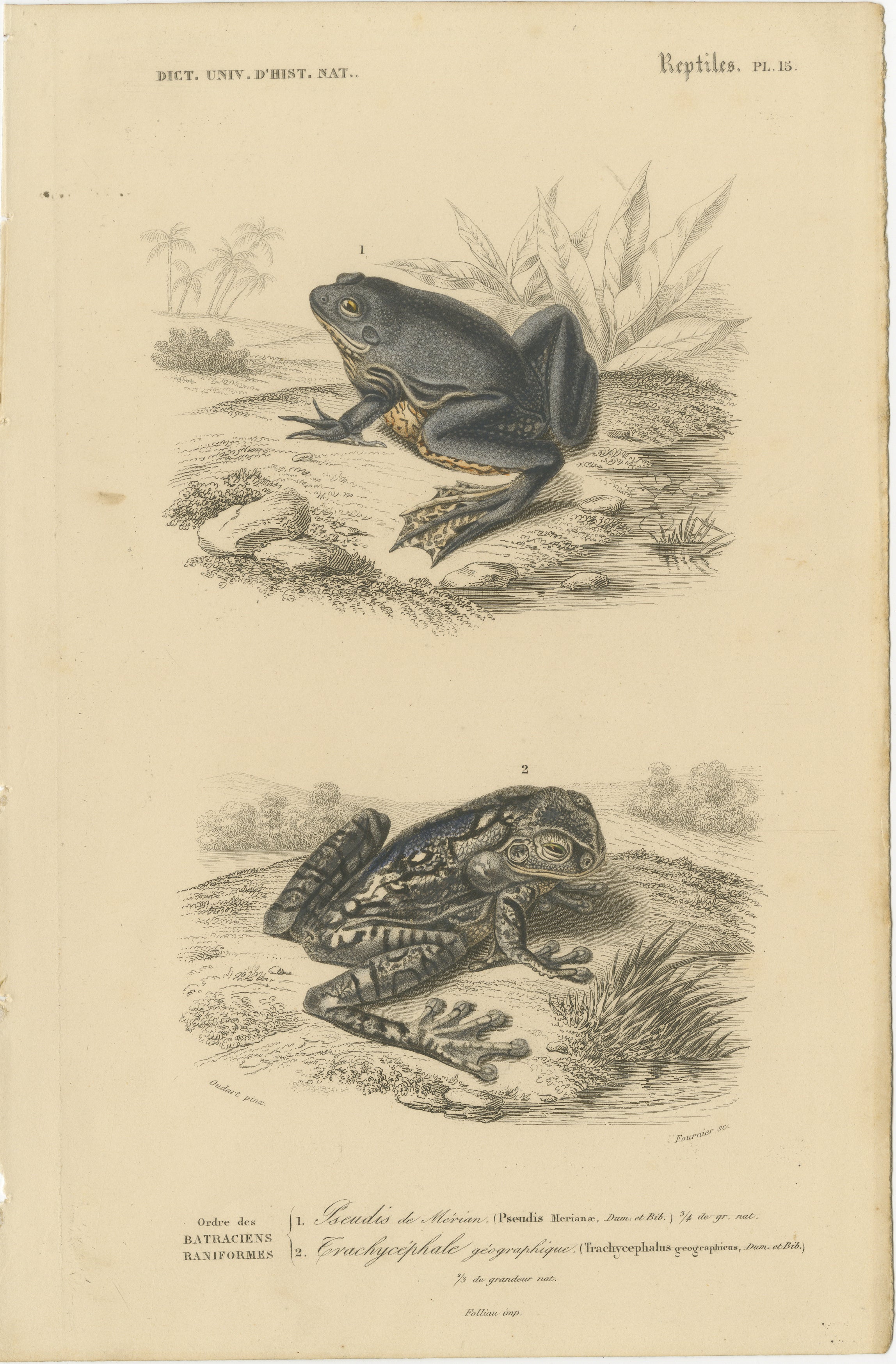
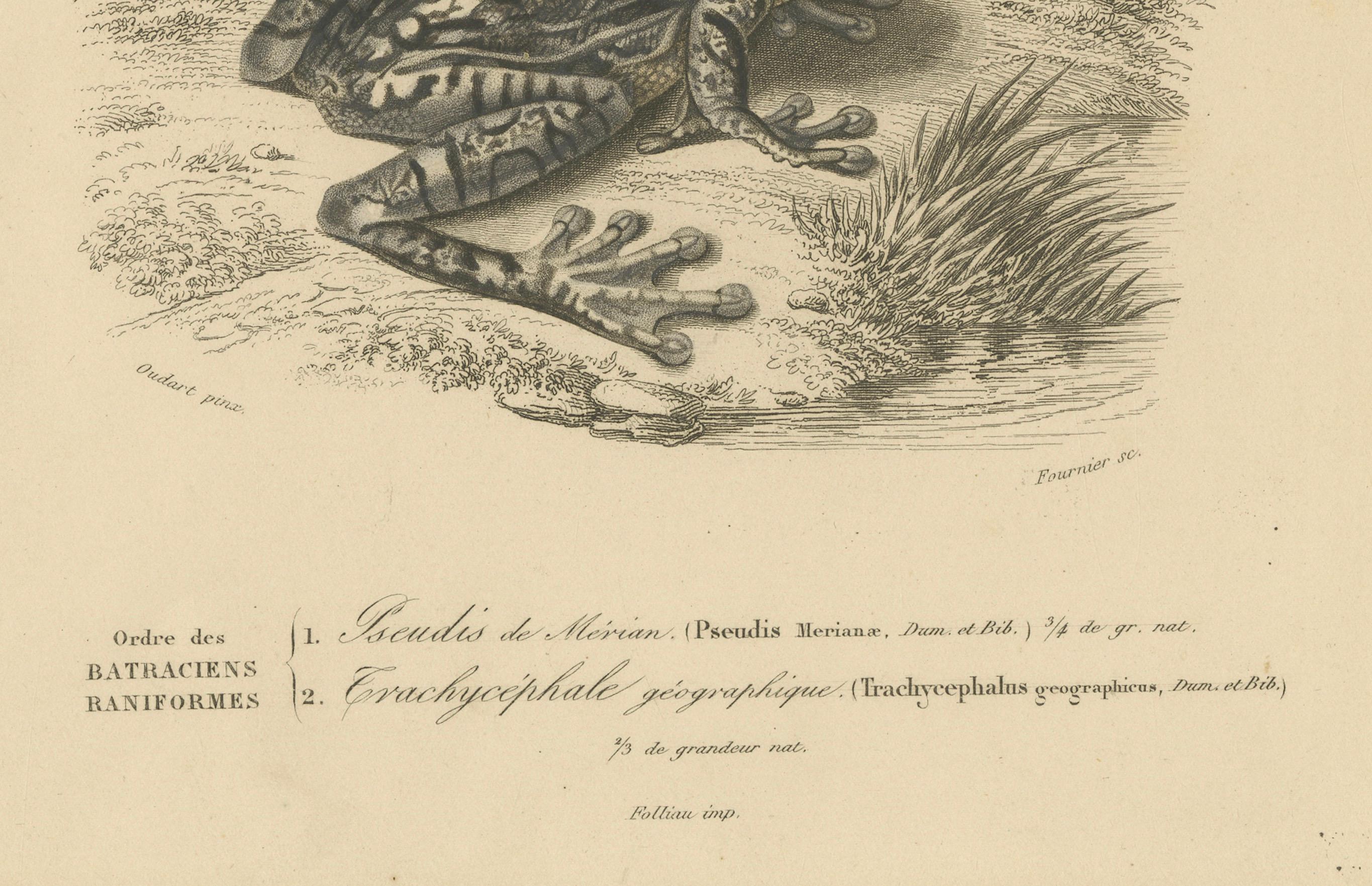
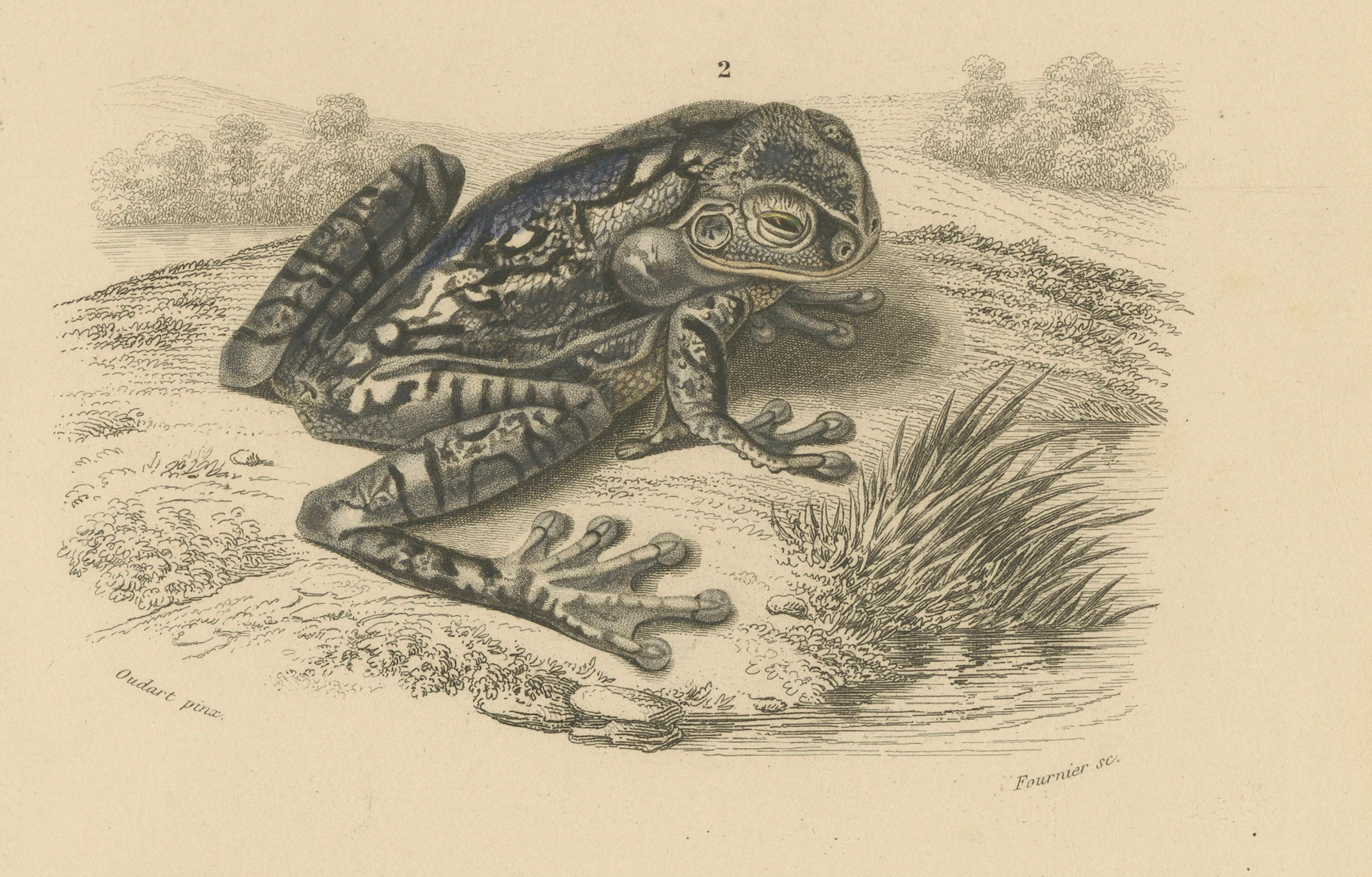
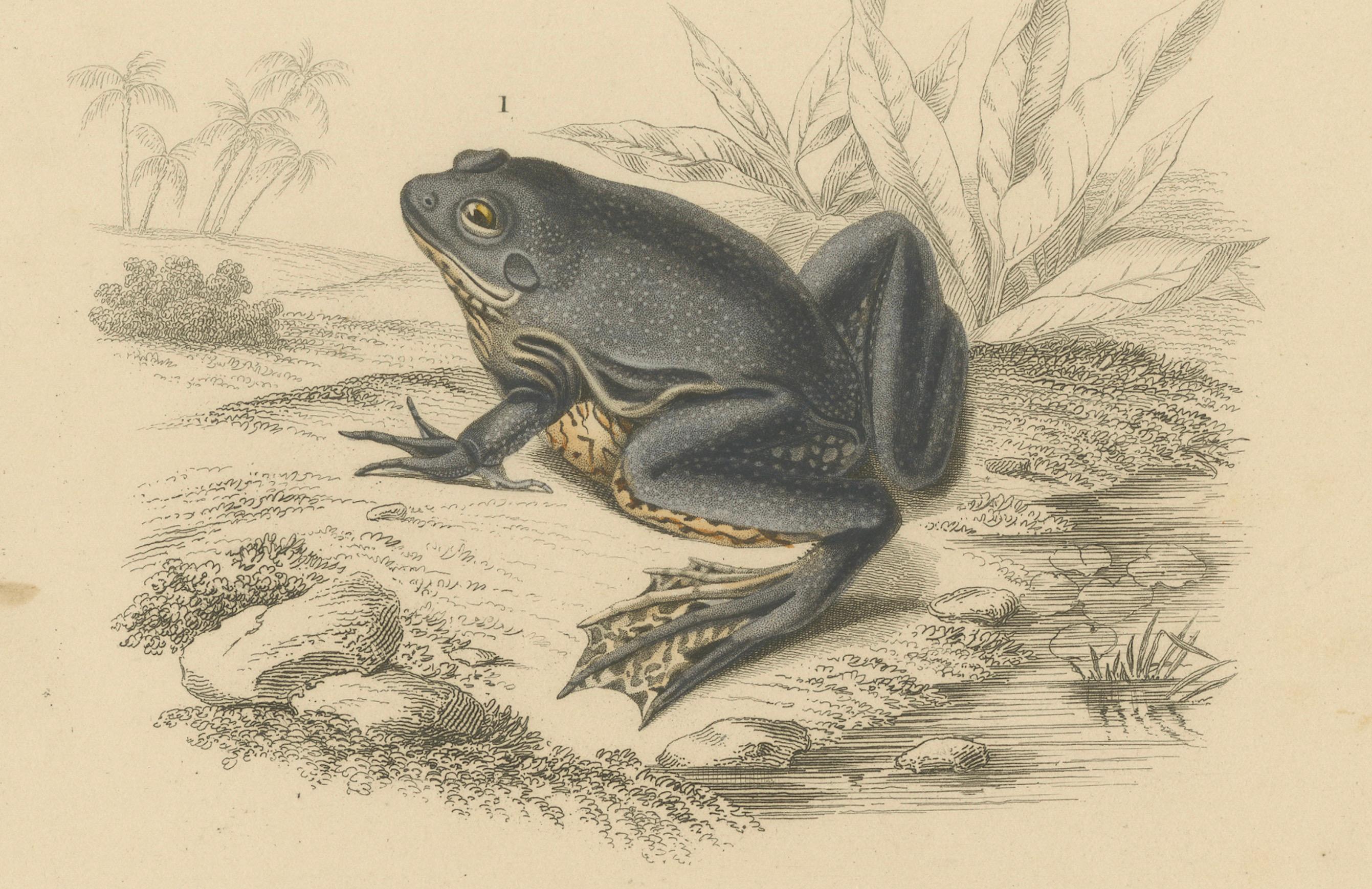
This charming 19th-century hand-colored engraving, Reptiles Pl. 15, features two distinct frog species: the Mexican Treefrog (*Pseudis meriana*) and the so-called Map Frog (*Trachycephalus geographicus*), formerly referred to in French as *Cérocephale géographique*. The print was produced in Paris around 1850 for the *Dictionnaire Universel d’Histoire Naturelle*, edited by Charles Dessalines d’Orbigny, a landmark encyclopedia of natural history combining zoological precision with artistic elegance.
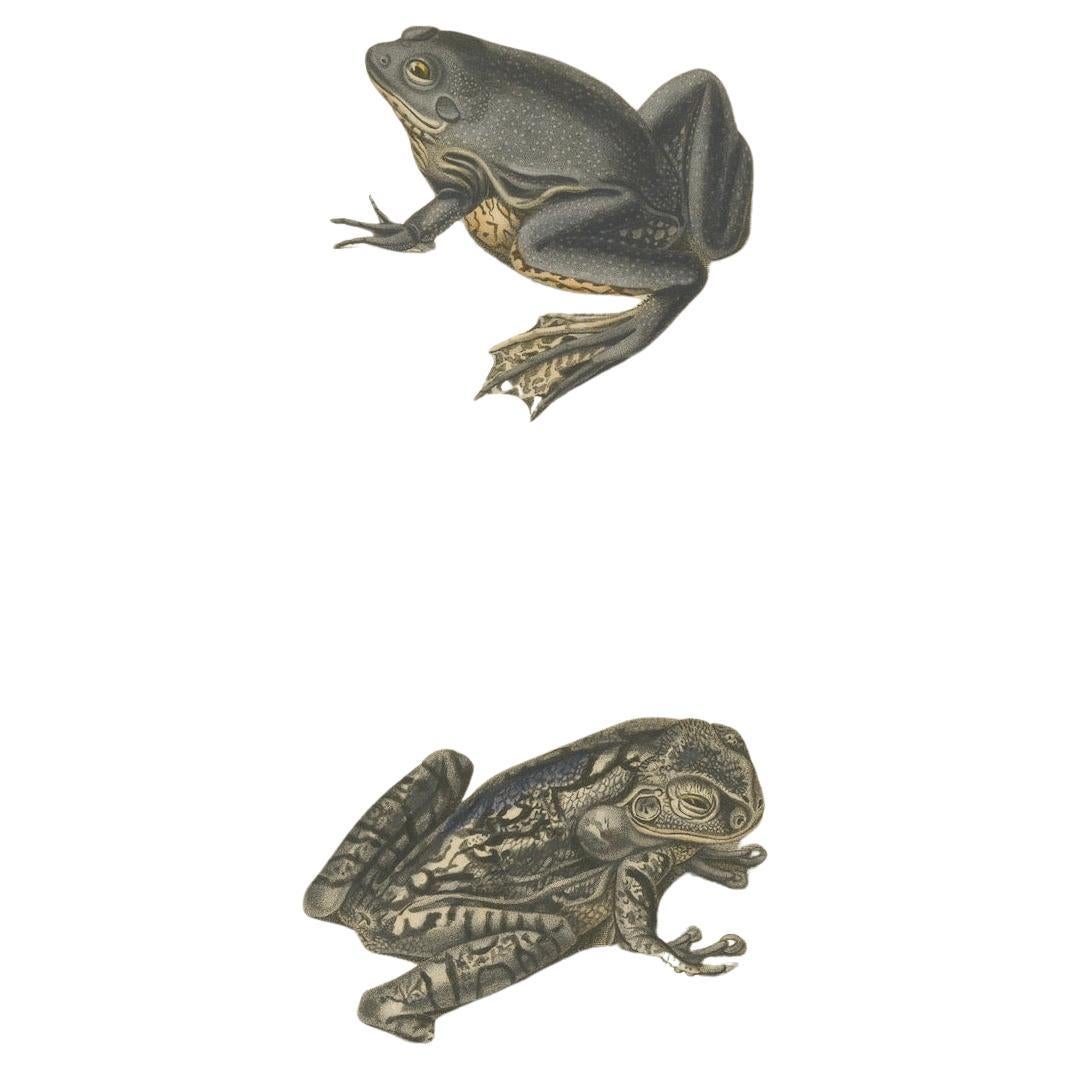
Figure 1, at the top, presents the Mexican Treefrog, shown in a dynamic pose on the edge of a tropical pond. This species is known for its large size, long limbs, and powerful swimming ability. The illustration captures the smooth, slightly glossy skin and subtle coloration of this frog, enhanced with blue-grey tones and pale underparts. Native to Central and South America, *Pseudis meriana* thrives in aquatic environments, where its long legs are well adapted for leaping and swimming.
Figure 2, at the bottom, depicts the Map Frog, *Trachycephalus geographicus*, a species named for the striking, map-like pattern that often appears on its back. This print captures the intricate skin markings in dark greys, browns, and hints of blue, suggesting both camouflage and character. The species is part of the Hylidae family of treefrogs, typically found in South America, and is known for its unique vocalizations and secretive habits.
Drawn by Oudart and engraved by Fournier, the plate shows the same level of anatomical care and aesthetic sensibility found throughout the Orbigny series. Each frog is depicted in its natural setting, giving life and context to these carefully studied amphibians.
A perfect addition for collectors of herpetological prints, antique zoological illustrations, or natural history enthusiasts seeking decorative yet educational art.
Condition Summary:
Minor foxing and age toning at margins, main image area clean and well preserved. Colors remain vivid. No tears or repairs. Strong impression with fine detailing.
Framing Tips:
Frame in dark wood or black with a soft ivory or light green mat to complement the cool tones of the frogs. UV glass recommended to protect the delicate hand coloring and fine linework from fading. Suitable for study or naturalist display.