About this sheet
Pair of Hand-Colored Botanical Engravings of Spring Flowers, London 1828
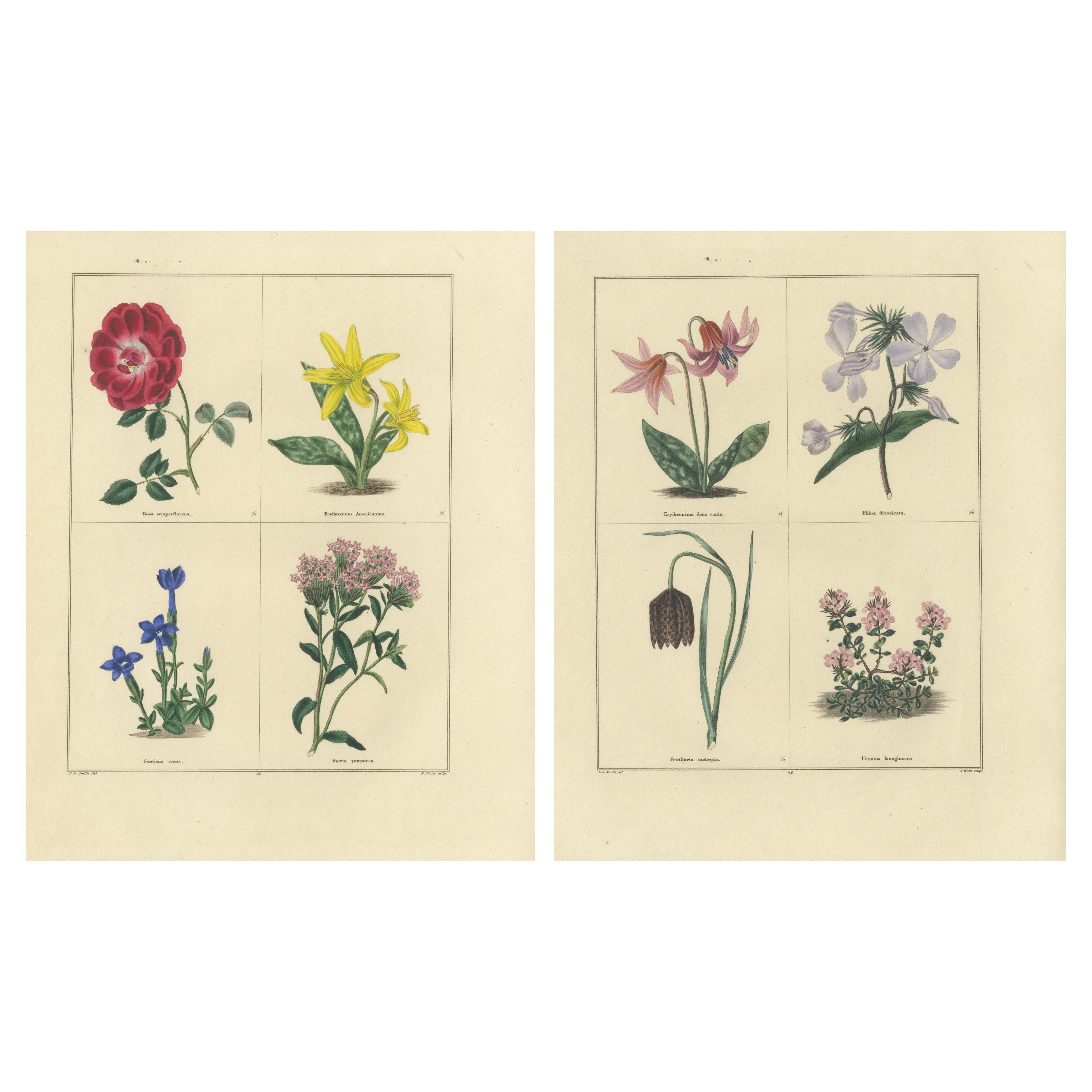
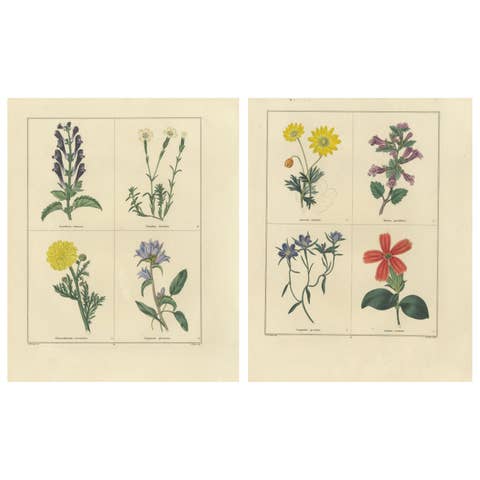
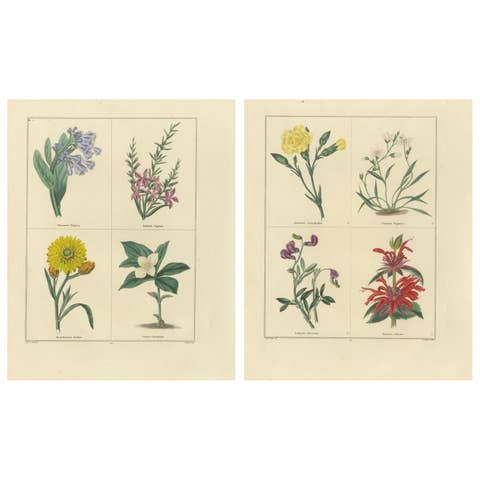
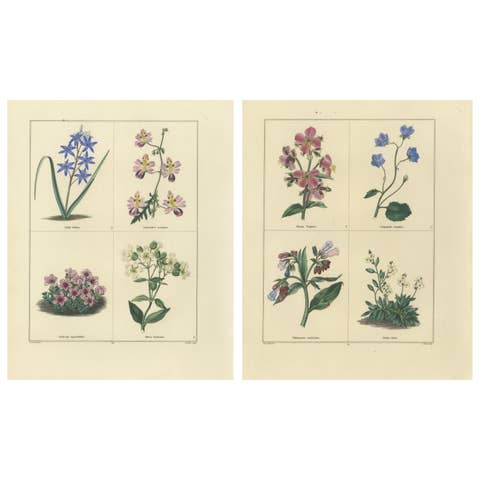
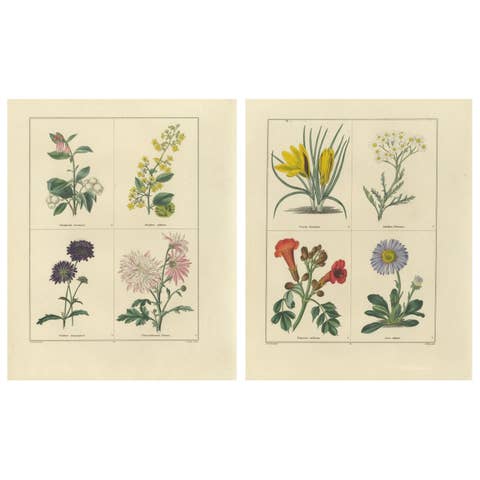
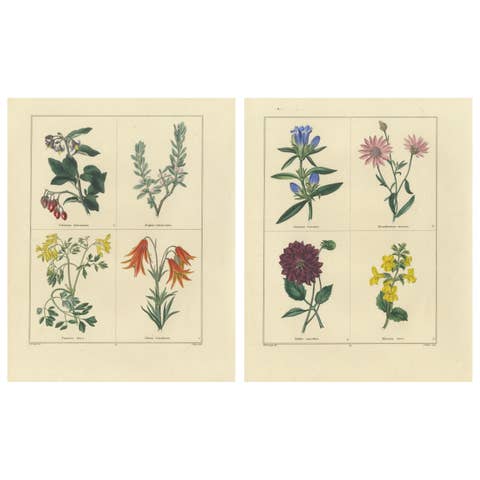
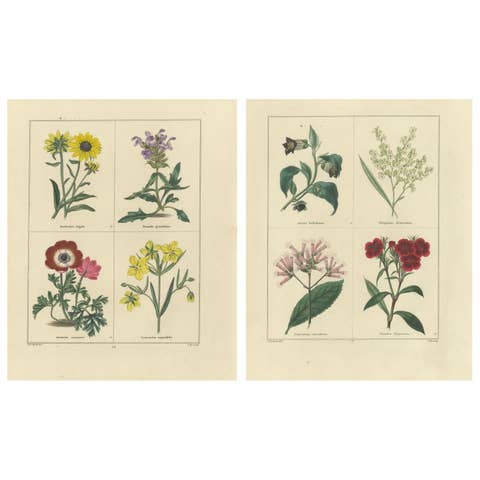
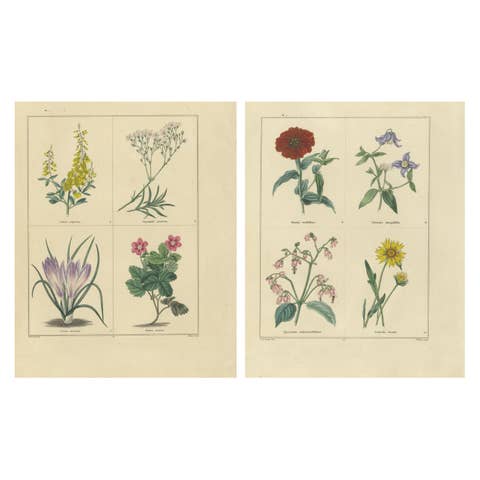
This elegant pair of early 19th-century botanical engravings captures the charm and precision of British botanical illustration during the Georgian era. Published in London in 1828 as part of The Botanic Garden, these finely detailed and hand-colored plates depict some of the most admired wild and cultivated flowers of the period. Each species is beautifully rendered with an eye for natural form and color harmony, demonstrating the exquisite craftsmanship that made Benjamin Maund’s series one of the most treasured horticultural works of its time.
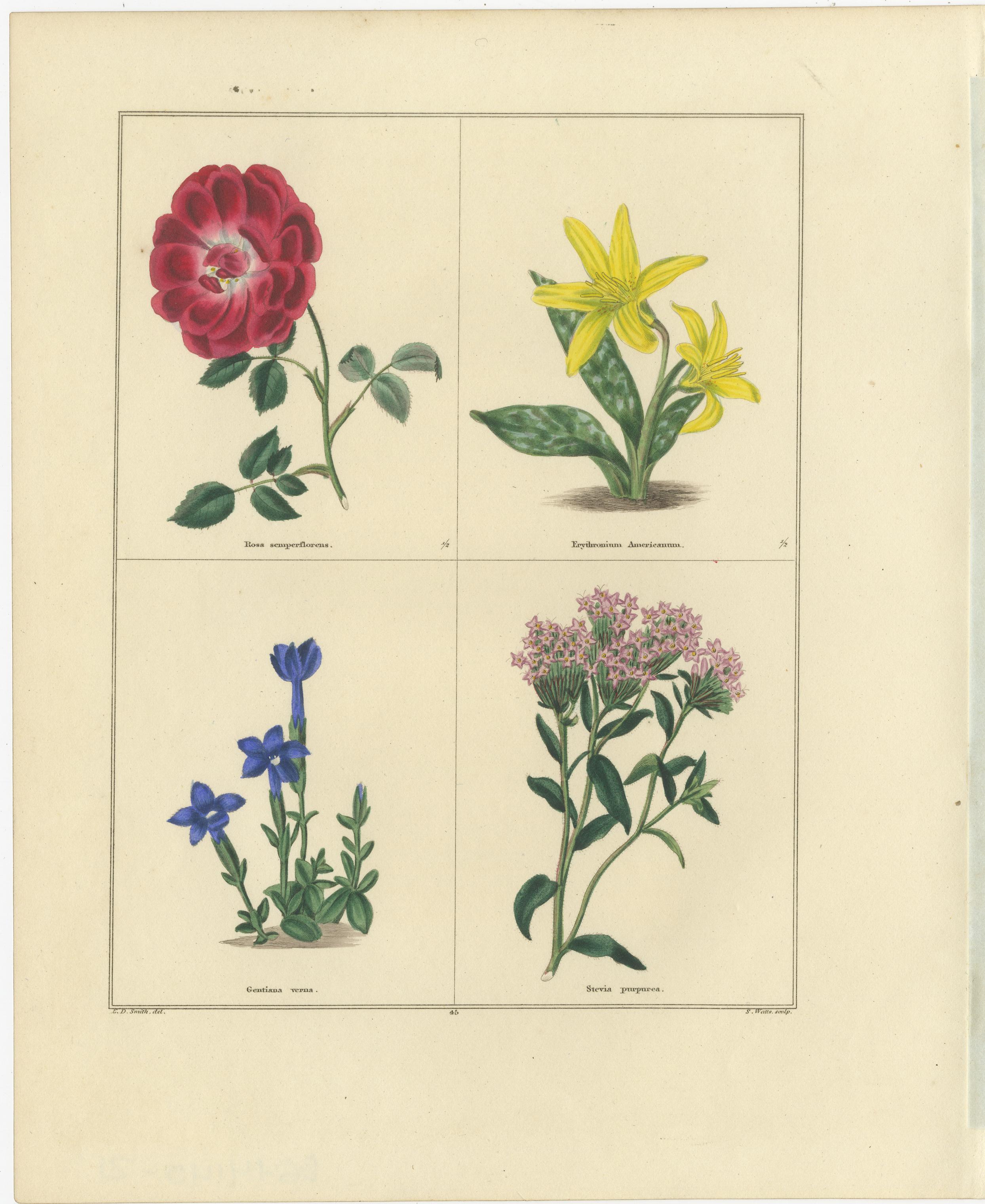
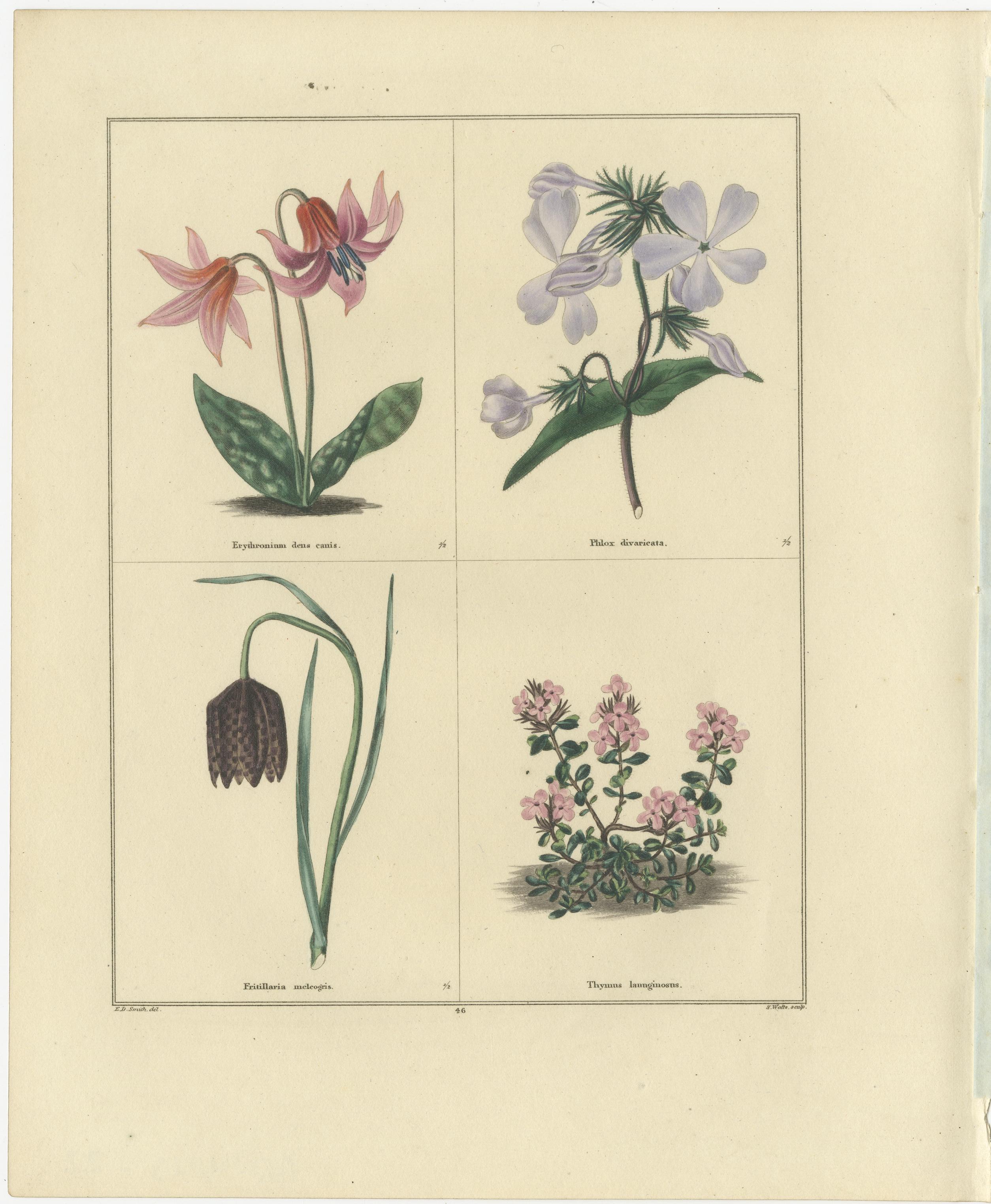
The left plate features the China Rose (Rosa semperflorens), Yellow Trout Lily (Erythronium americanum), Spring Gentian (Gentiana verna), and Purple Valerian (Valeriana purpurea). The right plate depicts the Dog’s Tooth Violet (Erythronium dens-canis), Blue Woodland Phlox (Phlox divaricata), Snake’s Head Fritillary (Fritillaria meleagris), and Creeping Thyme (Thymus serpyllum). The balance of vivid reds, purples, yellows, and blues across the two sheets creates a harmonious botanical composition, while the fine line engraving and delicate hand-coloring bring out the freshness of each bloom.
The Botanic Garden was designed to educate and delight, combining botanical accuracy with aesthetic appeal. Each engraving was printed in London, then carefully hand-colored by skilled artists to achieve a lifelike result. The series reflects the fascination with botany that swept through 19th-century Britain, when garden cultivation and scientific study were both fashionable and enlightening pursuits. These prints stand as enduring examples of the period’s dedication to natural beauty and technical excellence.
Condition report: Excellent condition with strong impressions and fresh original coloring. Minor toning and faint handling marks consistent with age. Wide margins with distinct plate marks; verso blank.
Framing tips: A refined and cheerful pair, ideal for framing in matching antique gold, walnut, or ebonized frames with ivory or soft green acid-free mats. Their springlike palette of pink, yellow, and violet tones makes them especially well-suited for a study, drawing room, or conservatory.
Technique: Hand-colored engraving
Maker: Benjamin Maund, London, 1828