About this sheet
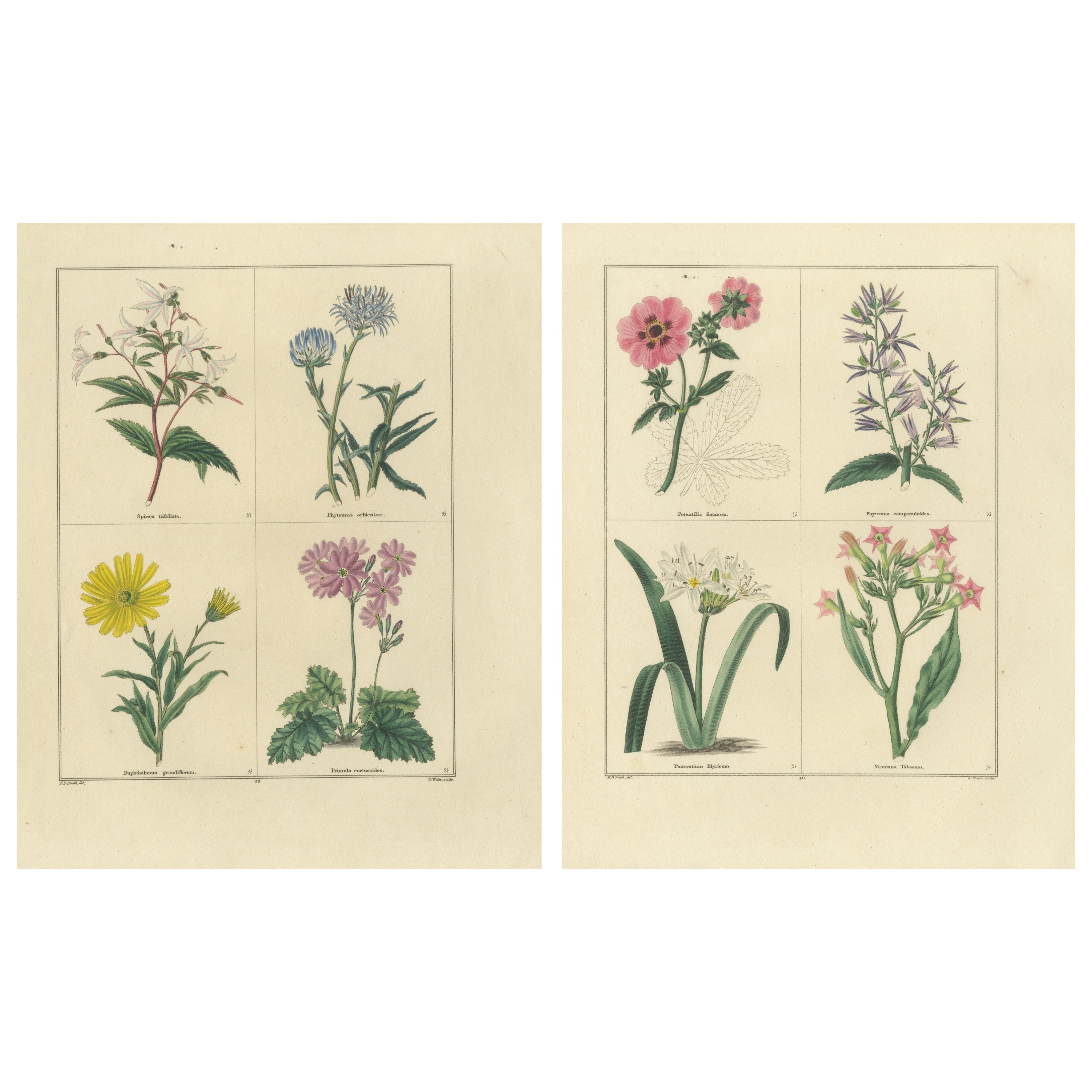
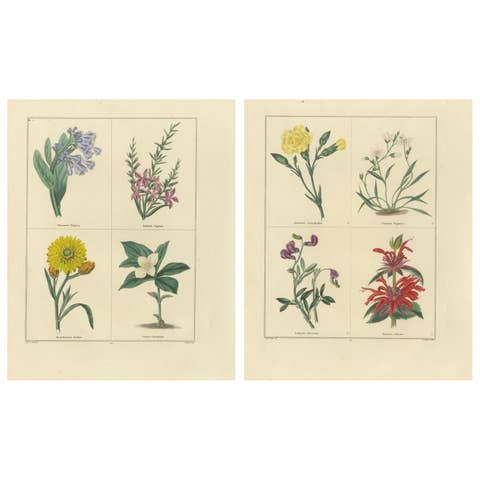
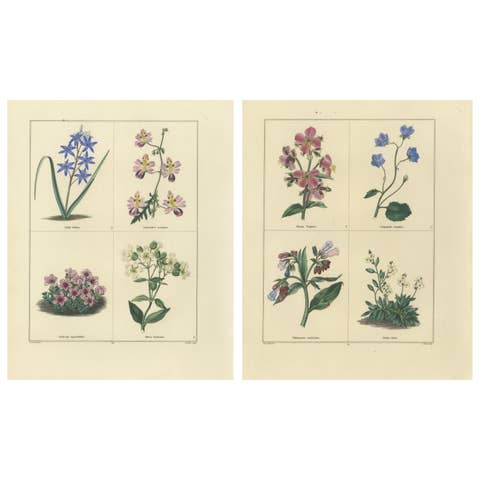
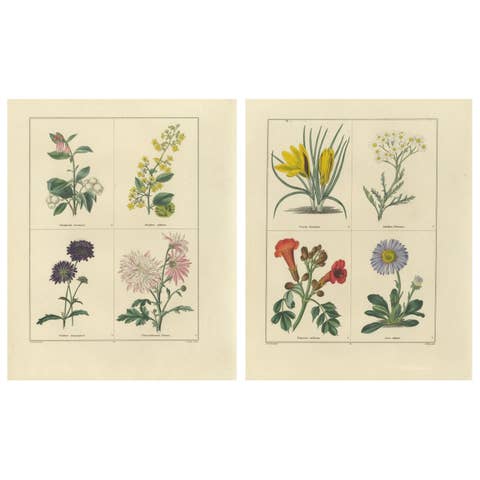
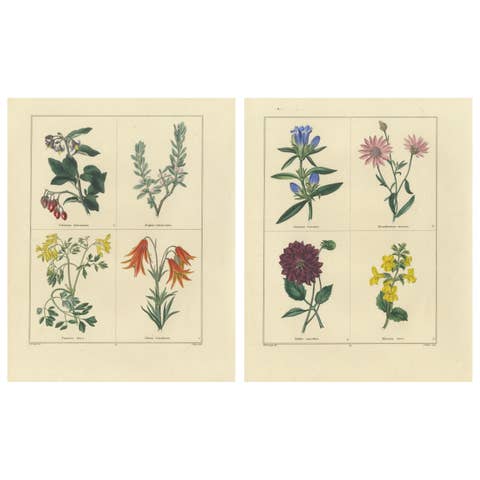
Pair of Hand-Colored Botanical Engravings of Decorative Garden Flowers, London 1828
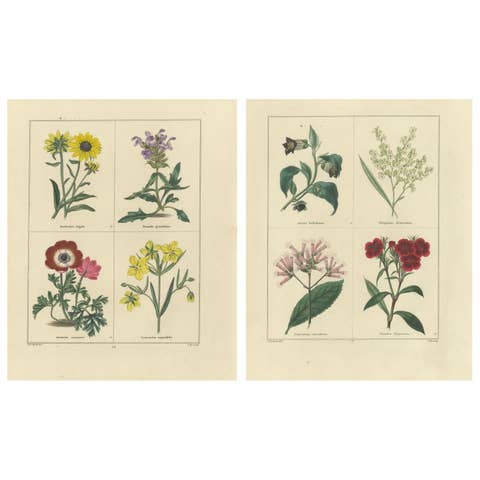
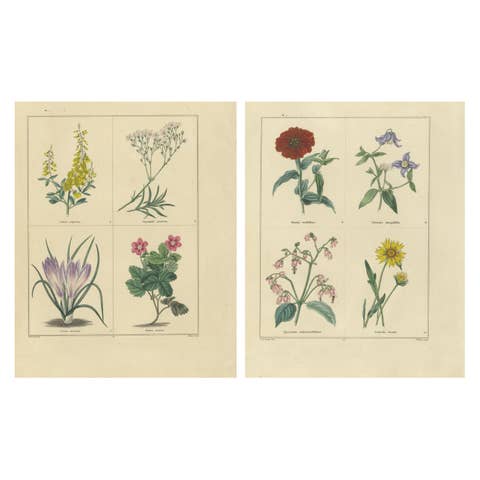
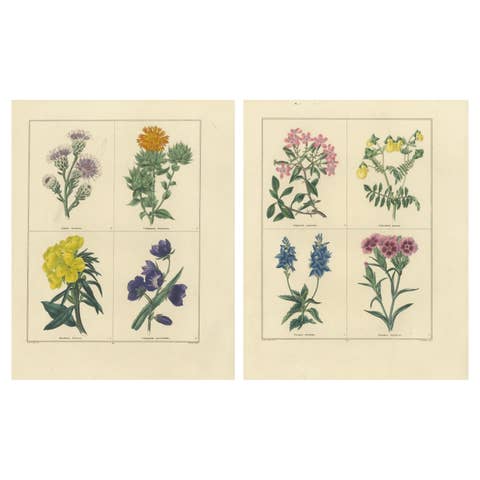
This exquisite pair of early 19th-century botanical engravings showcases the grace and precision of English natural history art at its height. Published in London in 1828 as part of The Botanic Garden, these plates depict ornamental flowering plants cultivated in Great Britain. Each engraving combines scientific accuracy with refined hand-coloring, capturing the beauty and diversity of popular garden species in soft yet vibrant tones.
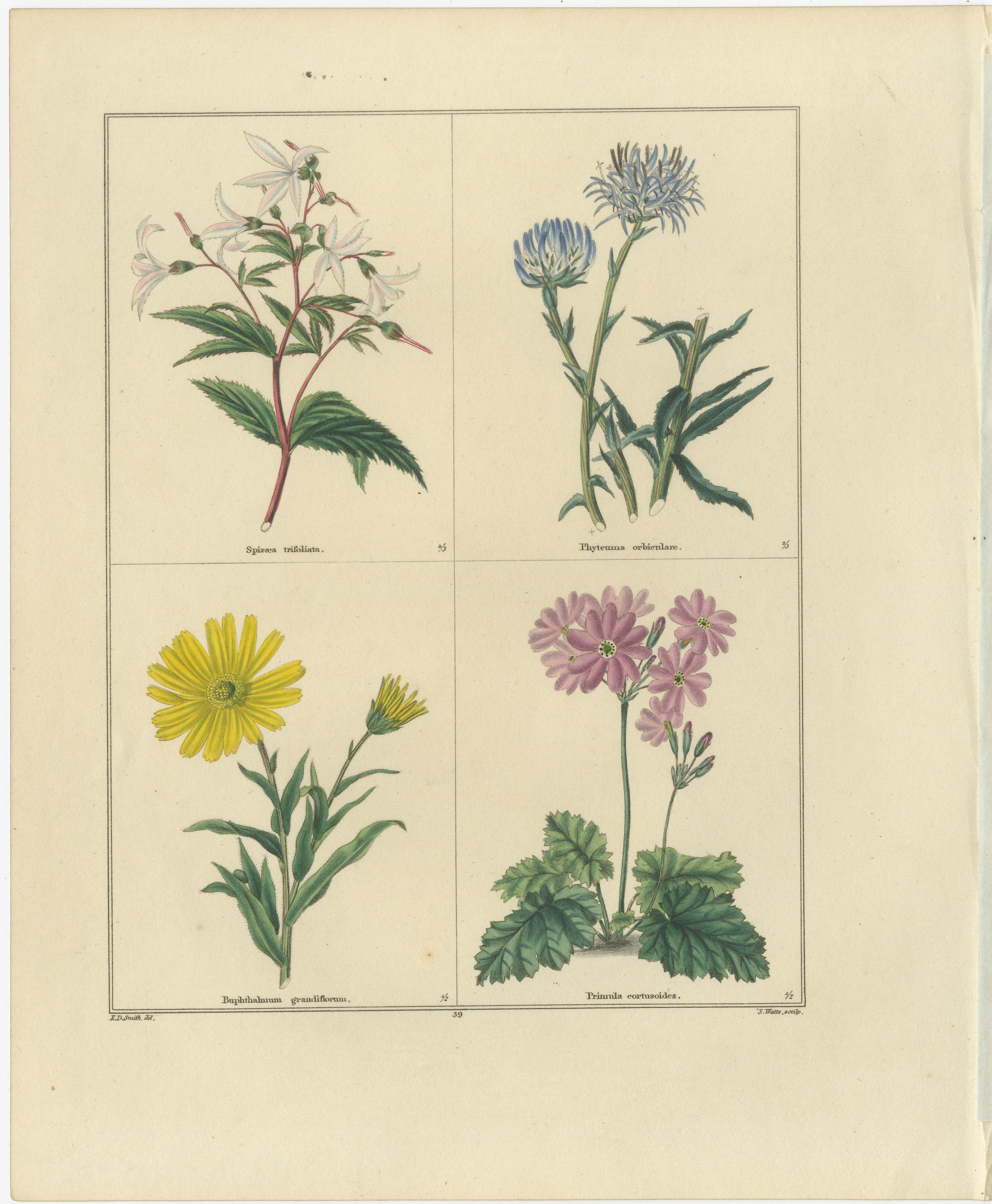
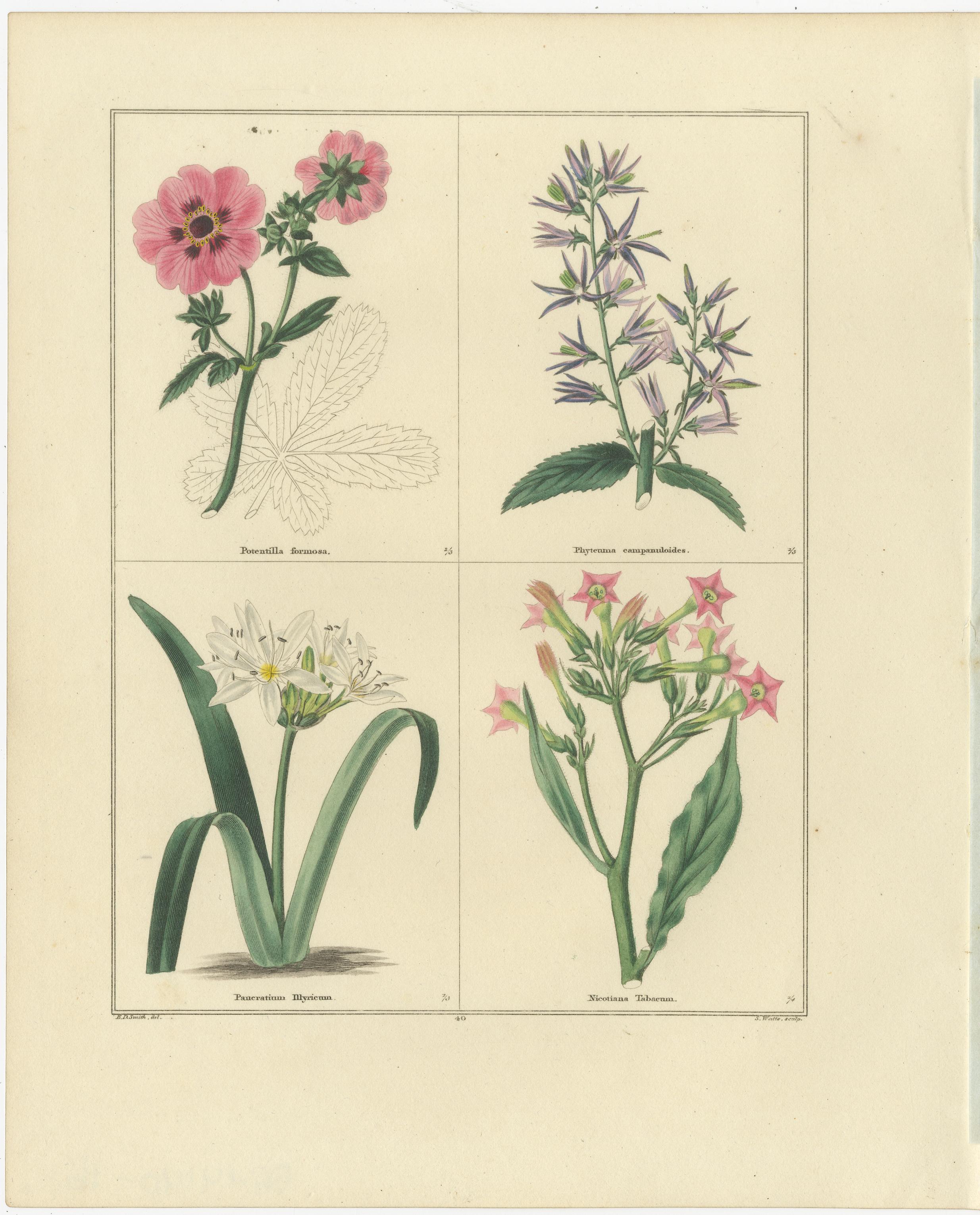
The left plate features the Nettle-Leaved Bellflower (Specularia trichotoma), Blue Globe Thistle (Echinops sphaerocephalus), Cape Marigold (Dimorphotheca pluvialis), and Himalayan Primrose (Primula cortusoides). The right plate includes the Scarlet Cinquefoil (Potentilla formosa), Blue Star (Rhysosma consanguinea), Spider Lily (Pancratium illyricum), and Flowering Tobacco (Nicotiana tabacum). Each specimen is neatly presented within ruled borders, allowing the intricate details of each petal and leaf to stand out against the cream wove paper. The subtle application of color—especially the soft pinks, purples, and yellows—enhances their natural delicacy.
The Botanic Garden, edited by Benjamin Maund, was among the most beloved botanical publications of its time, intended to educate and delight both scientists and amateur gardeners. These engravings reflect the merging of art and science during the early Victorian period, when interest in horticulture, collecting, and botanical illustration flourished across Britain. The series remains highly prized for its elegance, accuracy, and harmonious compositions.
Condition report: Excellent impressions with vivid original coloring. Light, even toning and minor handling marks typical of age. Wide margins with clearly visible plate marks. Verso blank.
Framing tips: A delicate and refined pair, ideal for display in classic or botanical-themed interiors. Best presented in matching gold, walnut, or ebonized frames with cream or soft green acid-free mats. Their balanced composition and soft hues make them a perfect choice for a conservatory, study, or drawing room.
Technique: Hand-colored engraving
Maker: Benjamin Maund, London, 1828