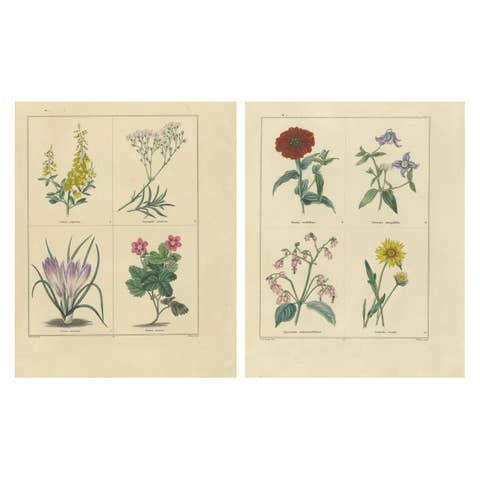
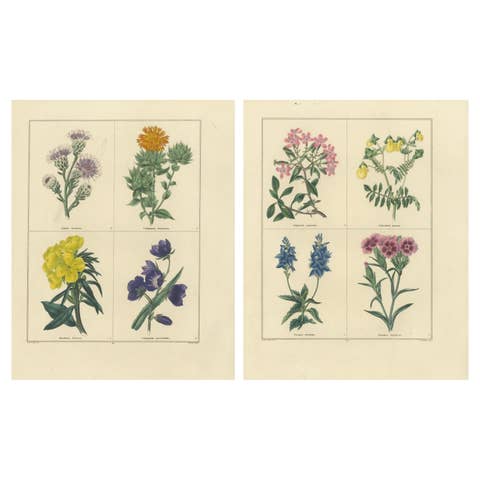
Pair of Hand-Colored Botanical Engravings of Ornamental Flowers, London 1828
€ 340
Original antique · The actual sheet photographed · Certificate of authenticity on request · Sold unframed · Worldwide shipping from € 15 (rates)
Date
1828
Mapmaker / artist
Benjamin Maund, London, 1828
Technique
Hand-colored engraving
Sheet size
21 × 17 cm (8.3 × 6.7 in)
Condition
Good
Reference
BG-14140-7 & BG-14140-8
What the condition grades mean
Excellent
Bright and clean, with no faults worth mentioning.
Very good
Only light signs of age, such as faint toning.
Good
Normal signs of age for a sheet of this period: toning, some foxing, small marks or neat old repairs.
Fair
Clear faults such as staining, tears or repairs, priced to match.
Every fault we see is written in the condition note, and the whole sheet is shown uncropped in the photos.
Condition
Condition report: Excellent, with rich and well-preserved hand coloring. Very light toning and minimal handling marks typical of age. Plate marks clearly visible on all sides; verso blank.
About this sheet
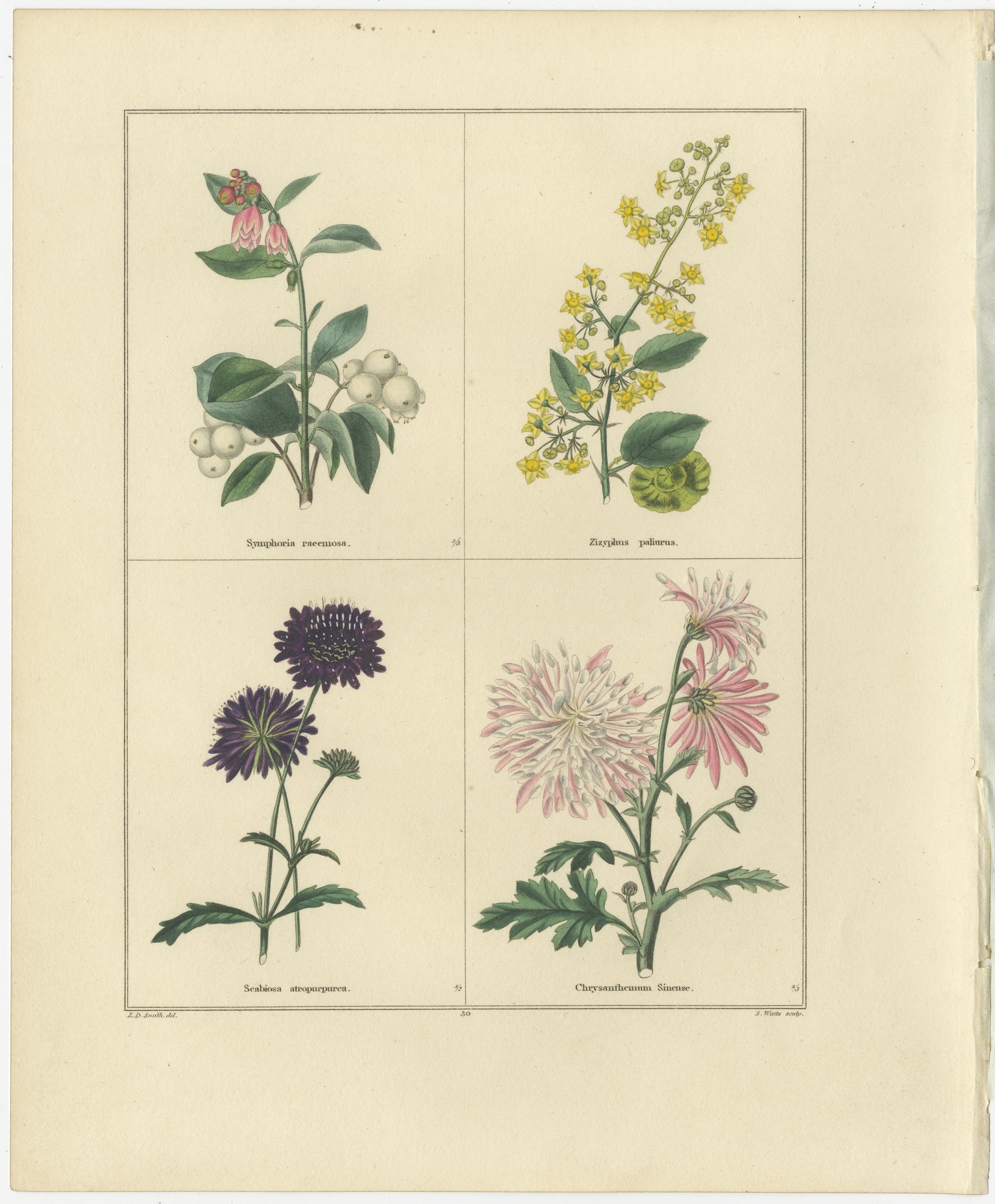
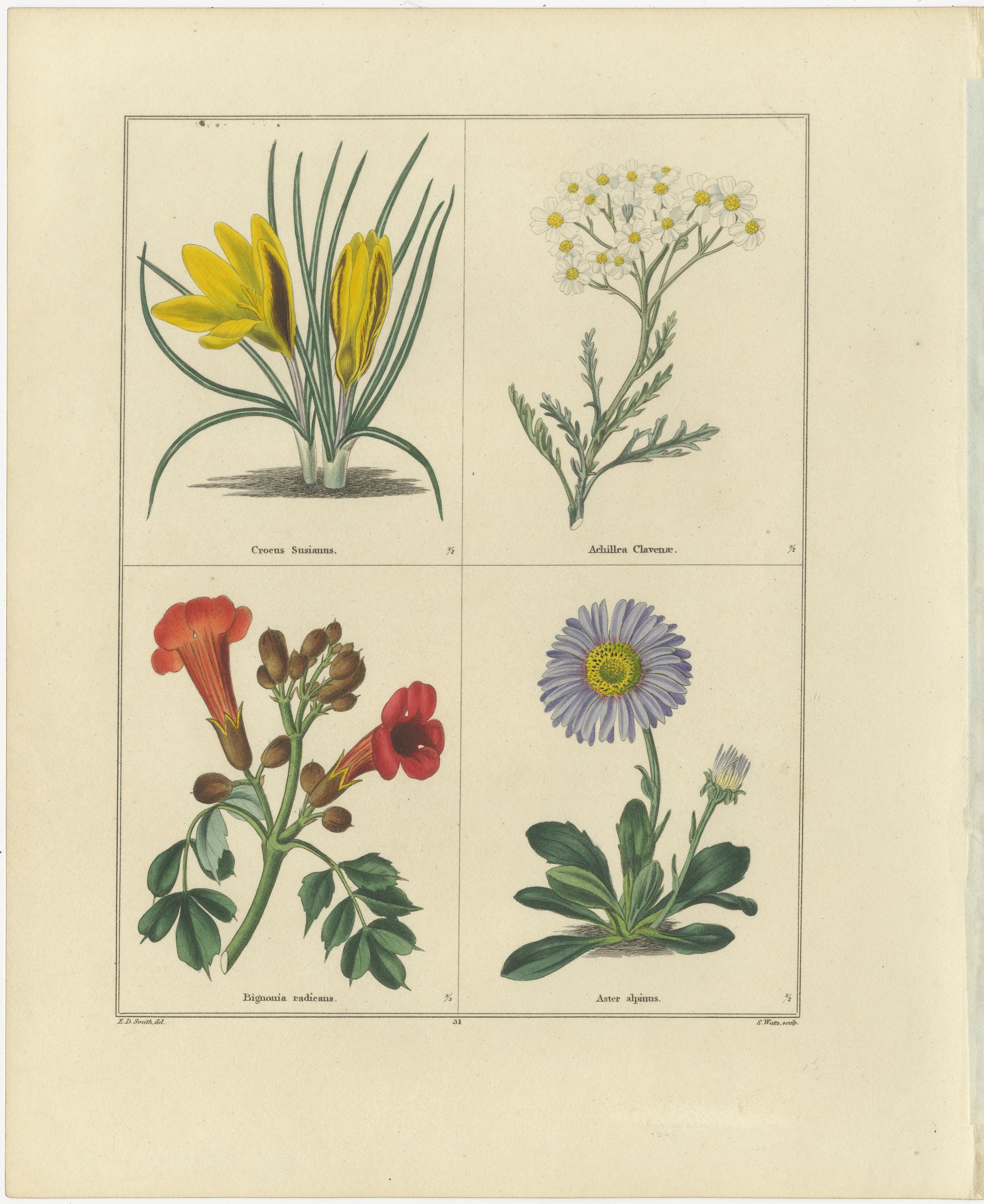
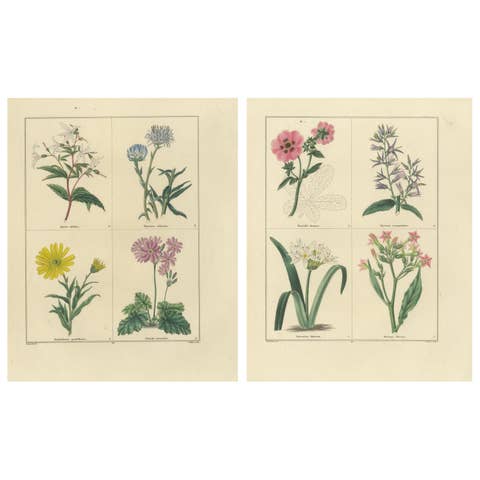
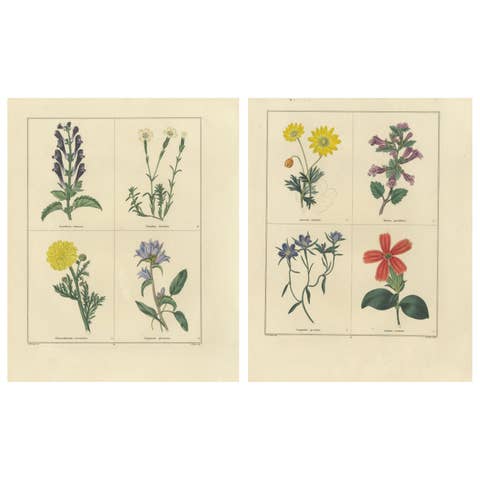
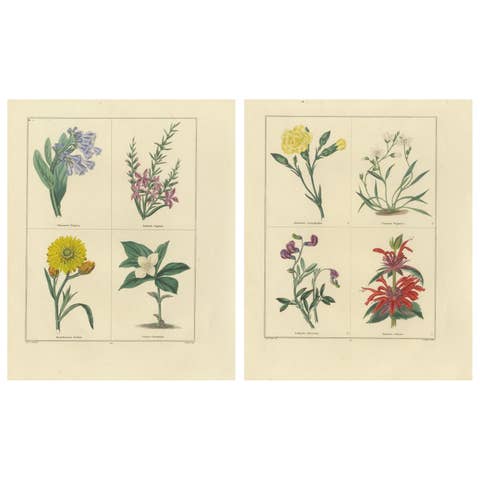
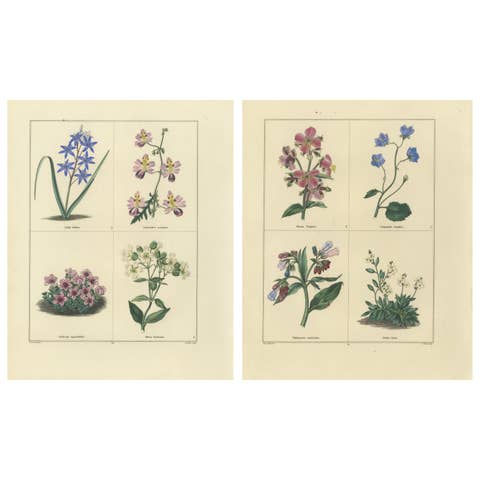
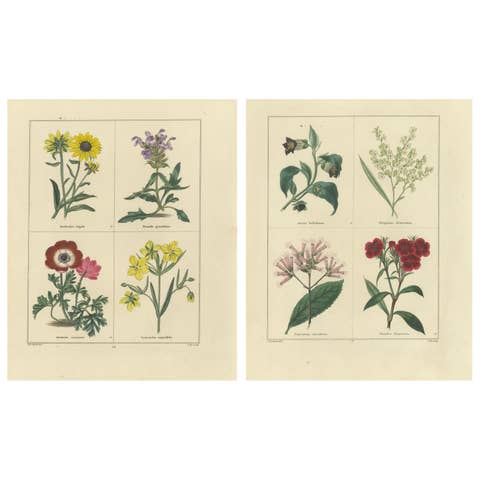
This striking pair of early 19th-century botanical engravings offers a vivid glimpse into the elegance of Georgian-era natural history illustration. Published in London in 1828 as part of The Botanic Garden, these detailed hand-colored prints depict a selection of ornamental flowering plants admired in British gardens of the time. Each specimen is presented with scientific precision and artistic grace, capturing the refined intersection of botany and art that defined Benjamin Maund’s influential publication.
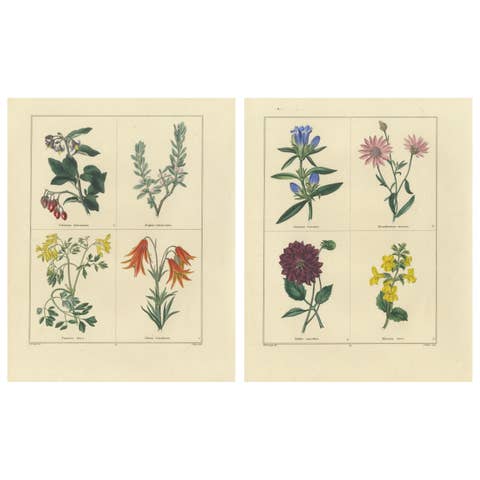
The two plates feature a diverse group of eight flowering species, each framed within fine borders and labeled in Latin. The left sheet depicts the Woody Nightshade (Solanum dulcamara), Alpine Daphne (Daphne tartonraira), Yellow Fumitory (Fumaria lutea), and Canada Lily (Lilium canadense). The right sheet presents the Clustered Gentian (Gentiana catechu), Annual Everlasting (Xeranthemum annuum), Dahlia (Dahlia superflua), and Yellow Monkey Flower (Mimulus luteus). The careful line engraving and subtle watercolor tinting produce a naturalistic effect that highlights the variety of color, texture, and structure among these popular ornamental plants.
Created at a time when botanical collecting was both a scholarly pursuit and a mark of cultural refinement, these engravings embody the early 19th-century fascination with nature’s beauty and diversity. The crisp outline and luminous coloring reflect the exceptional craftsmanship of Maund’s London workshop, where artists, engravers, and colorists collaborated to create one of Britain’s most admired horticultural publications. The compositions balance scientific clarity with decorative appeal, making them equally suited for study or elegant interior display.
Condition report: Excellent, with rich and well-preserved hand coloring. Very light toning and minimal handling marks typical of age. Plate marks clearly visible on all sides; verso blank.
Framing tips: These plates form a perfectly balanced pair, ideal for display in botanical or period-inspired interiors. Best framed in matching antique gold, oak, or dark walnut frames with off-white or pale green acid-free mats to enhance their vibrant hues and refined symmetry.