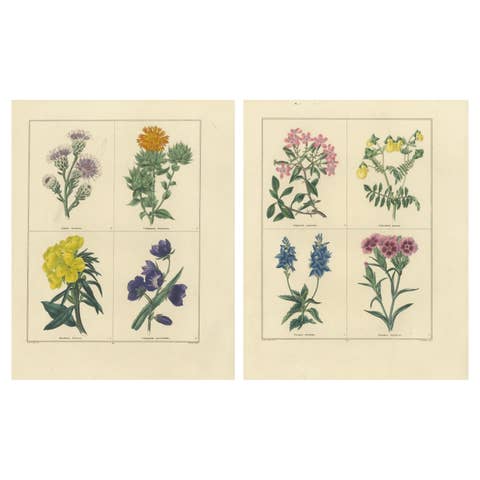
Pair of Hand-Colored Botanical Engravings of Garden Flowers, London 1828
€ 340
One of a kind: this is the sheet in the photographs. Ships from Langweer, the Netherlands.
Date
1828
Sheet size
21 × 17 cm (8.3 × 6.7 in)
Condition
Good
Reference
BG-14140-1 & BG-14140-2
Condition
Condition report: Excellent, with strong impressions and original hand coloring in fresh tones. Light even toning and minimal handling marks consistent with age; wide margins with visible plate marks all around. Verso blank.
About this sheet
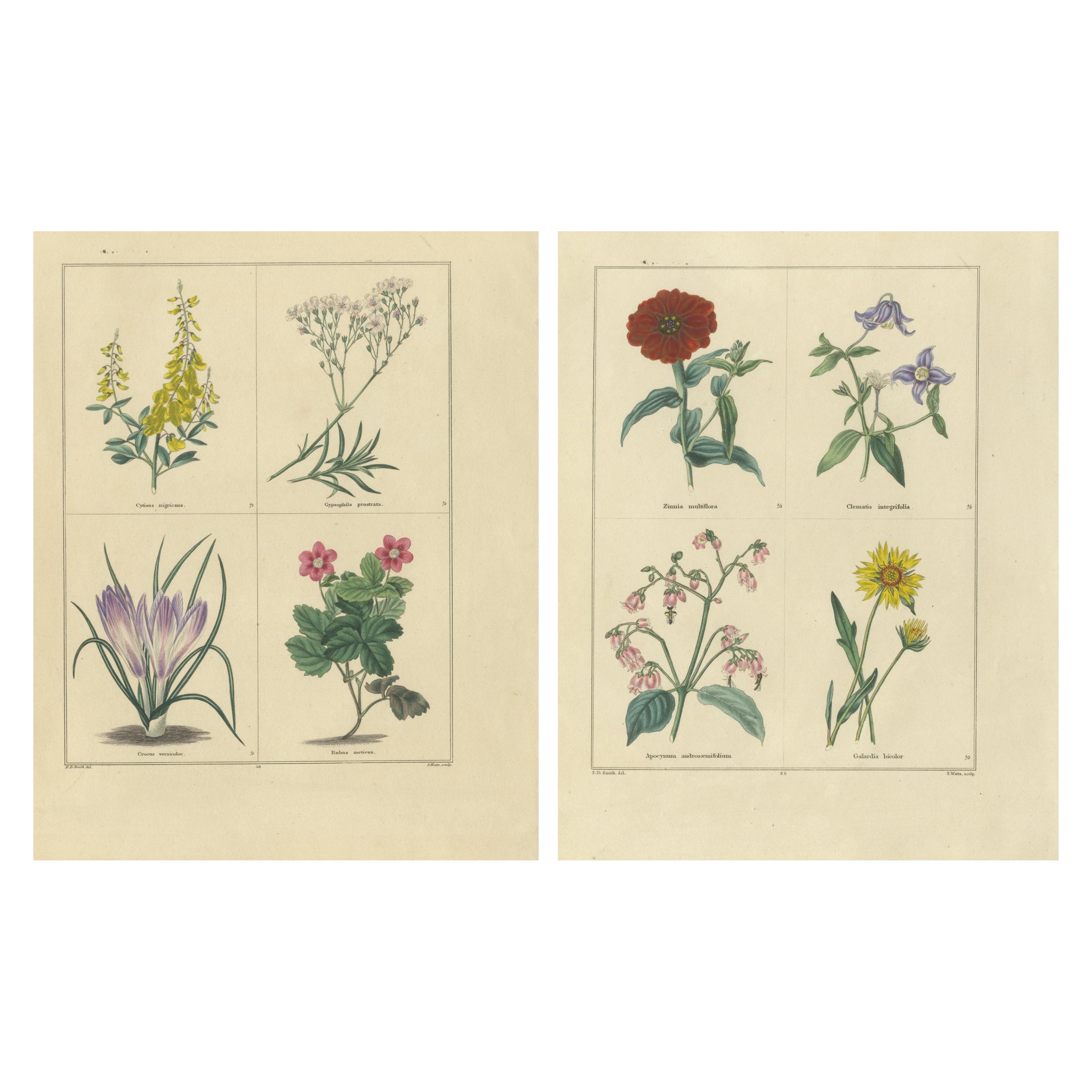
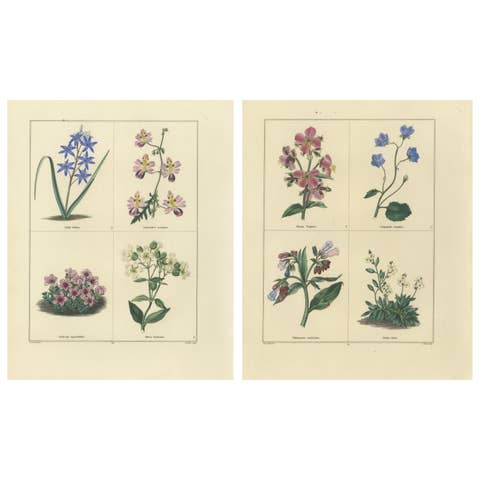
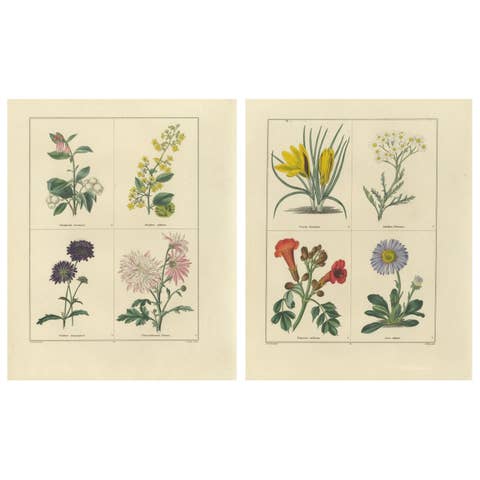
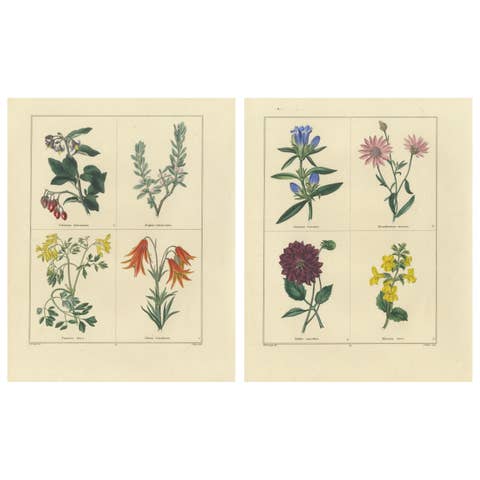
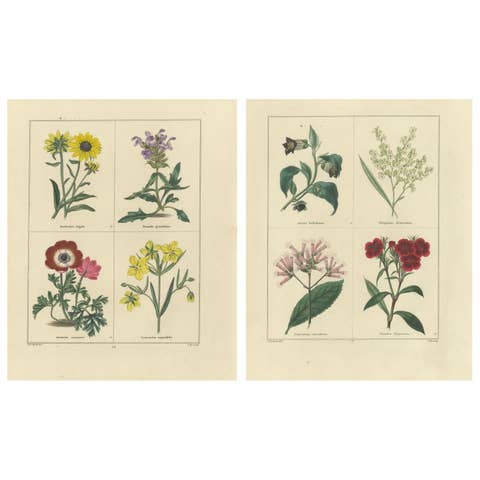
Pair of Hand-Colored Botanical Engravings of Garden Flowers, London 1828 This elegant pair of early 19th-century botanical engravings beautifully illustrates the spirit of British horticultural art at its height. Published in London in 1828, these finely detailed plates were part of The Botanic Garden, one of the most admired series of the period devoted to ornamental flowering plants cultivated in Great Britain. Each engraving combines precise scientific observation with the charm of hand-applied watercolor, producing compositions that remain as appealing today as when they first adorned the parlors and libraries of Georgian England.
The two sheets together feature eight distinct garden species, each identified with both grace and accuracy. Included are the Black Broom (Cytisus nigricans), Creeping Baby’s Breath (Gypsophila prostrata), Spring Crocus (Crocus versicolor), Arctic Bramble (Rubus arcticus), Zinnia (Zinnia multiflora), Solitary Clematis (Clematis integrifolia), Spreading Dogbane (Apocynum androsaemifolium), and Blanket Flower (Gaillardia bicolor). Together they form a vivid parade of color and form—from the soft lilac crocus to the bright scarlet zinnia—rendered with the accuracy that made British botanical illustration both a science and an art.
These engravings exemplify the ideals of early Victorian botany, when learning and aesthetic pleasure were closely entwined. Collectors and amateur gardeners treasured such works for their blend of usefulness and beauty. The finely ruled borders, clear lettering, and luminous coloring reveal the meticulous care of Maund’s engravers and colorists, whose goal was to present nature’s diversity in its most elegant form.
Condition report: Excellent, with strong impressions and original hand coloring in fresh tones. Light even toning and minimal handling marks consistent with age; wide margins with visible plate marks all around. Verso blank.
Framing tips: A refined pair best displayed in matching frames—antique gold, black, or walnut—with soft cream or pale green acid-free mats. Their balanced composition and warm coloring make them ideal for display in a study, sitting room, or conservatory.
Technique: Hand-colored engraving Maker: Benjamin Maund, London, 1828