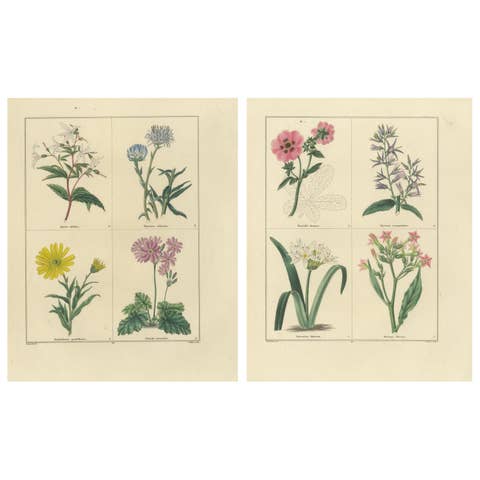
Hand-Colored Floral Engravings, Pair of 1828 Botanical Prints, London
€ 340
Original antique · The actual sheet photographed · Certificate of authenticity on request · Sold unframed · Worldwide shipping from € 15 (rates)
Date
1828
Mapmaker / artist
Benjamin Maund, London, 1828
Technique
Hand-colored engraving
Sheet size
21 × 17 cm (8.3 × 6.7 in)
Condition
Good
Reference
BG-14140-5 & BG-14140-6
What the condition grades mean
Excellent
Bright and clean, with no faults worth mentioning.
Very good
Only light signs of age, such as faint toning.
Good
Normal signs of age for a sheet of this period: toning, some foxing, small marks or neat old repairs.
Fair
Clear faults such as staining, tears or repairs, priced to match.
Every fault we see is written in the condition note, and the whole sheet is shown uncropped in the photos.
Condition
Condition report: Excellent, with rich original coloring and strong impressions. Very light toning and occasional handling marks consistent with age, but overall beautifully preserved. Plate marks clearly visible on all sides; verso blank.
About this sheet
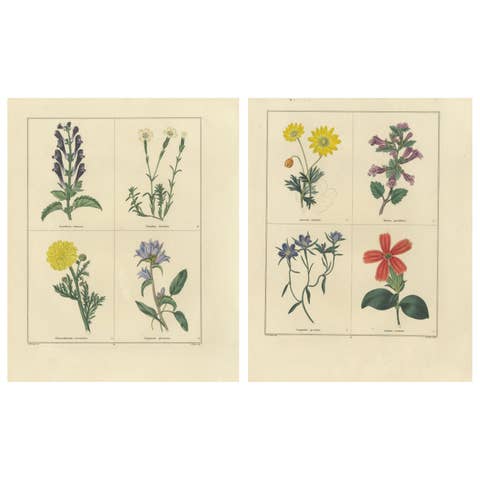
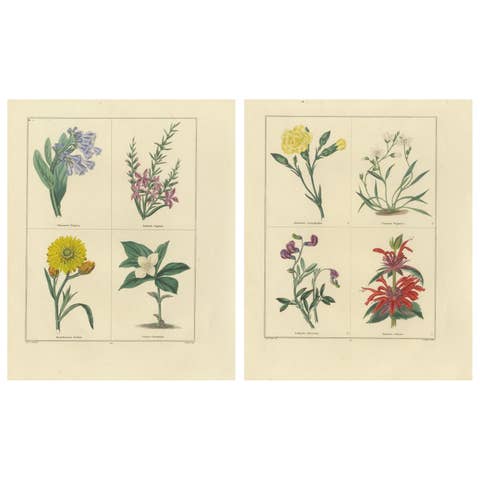
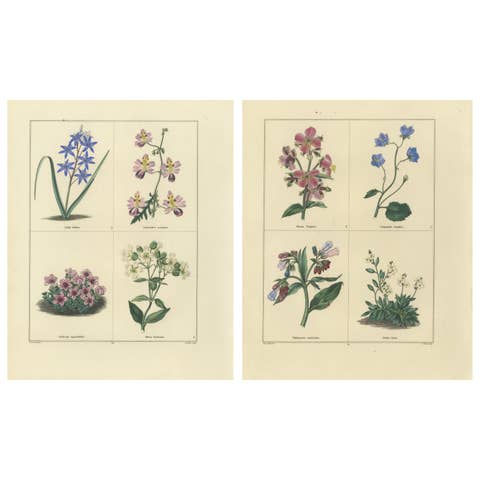
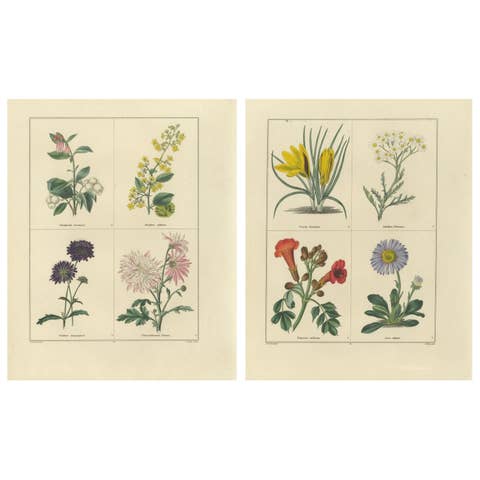
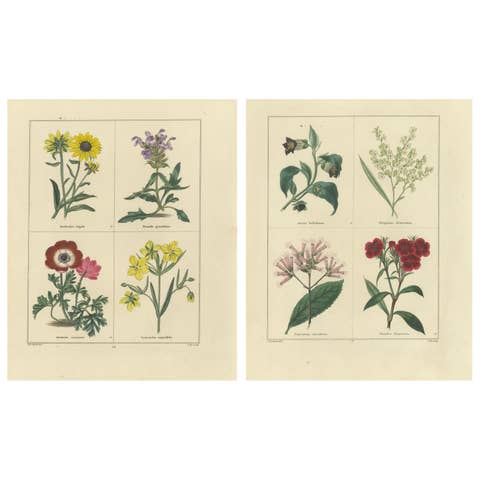
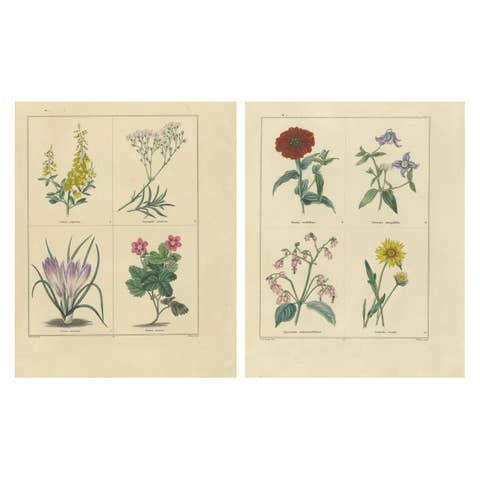
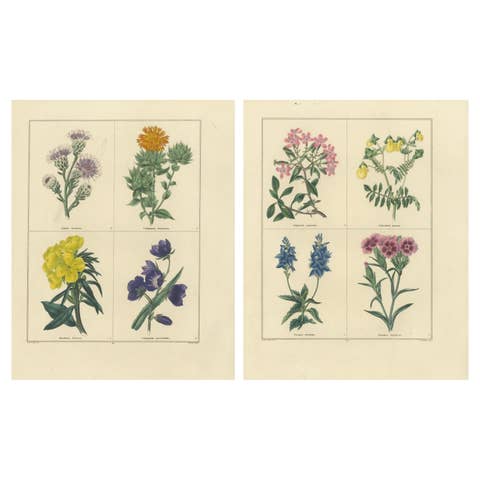
Pair of Hand-Colored Botanical Engravings of Garden Flowers, London 1828 This beautifully preserved pair of early 19th-century botanical engravings exemplifies the artistry and precision of English natural history illustration during the Georgian period. Published in London in 1828 as part of The Botanic Garden, these plates capture the diverse beauty of ornamental flowering plants cultivated in Great Britain. Each plant is rendered with meticulous scientific detail, then finished by hand in watercolor to enhance its natural color and form, creating a refined harmony between art and botany.
Together, the two sheets depict eight flowering species, each labeled in Latin and framed within fine ruled borders. The left plate features the Black-Eyed Susan (Rudbeckia fulgida), Large-Flowered Self-Heal (Prunella grandiflora), Poppy Anemone (Anemone coronaria), and Yellow Loosestrife (Lysimachia angustifolia). The right plate presents the Deadly Nightshade (Atropa belladonna), Bishop’s Weed (Polygonum divaricatum), Spotted Joe-Pye Weed (Eupatorium maculatum), and Spanish Pink (Dianthus hispanicus). Each species is carefully observed, with delicate shading and vibrant pigments that retain remarkable freshness nearly two centuries later.
Issued at a time when the study and cultivation of plants had become both a fashionable and intellectual pursuit, The Botanic Garden reflected the growing appreciation for horticulture among British society. Its illustrations balanced accuracy and elegance, making the work as suitable for scientific reference as for interior display. The crisp engraving lines and subtle color gradations on these sheets attest to the high standards maintained by Benjamin Maund and his London engravers.
Condition report: Excellent, with rich original coloring and strong impressions. Very light toning and occasional handling marks consistent with age, but overall beautifully preserved. Plate marks clearly visible on all sides; verso blank.
Framing tips: An ideal decorative pair for botanical or classical interiors. Best presented in matching gold or dark wood frames with soft ivory or sage-green acid-free mats. Their balance of red, yellow, and violet tones creates a pleasing visual contrast that complements both modern and traditional settings.