About this sheet
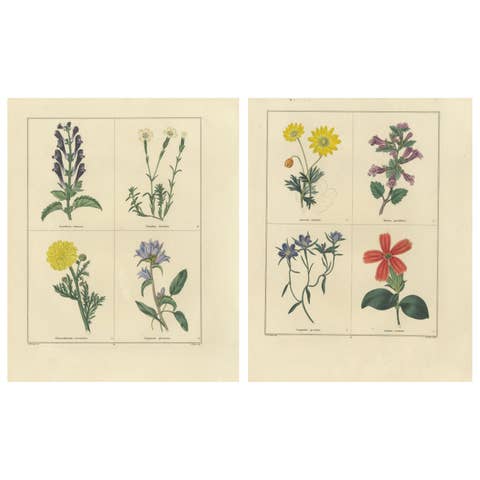
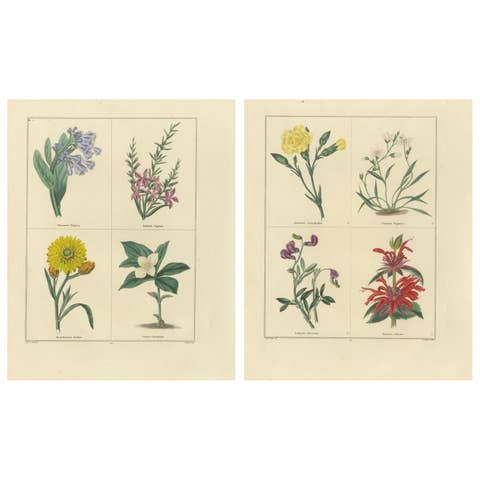
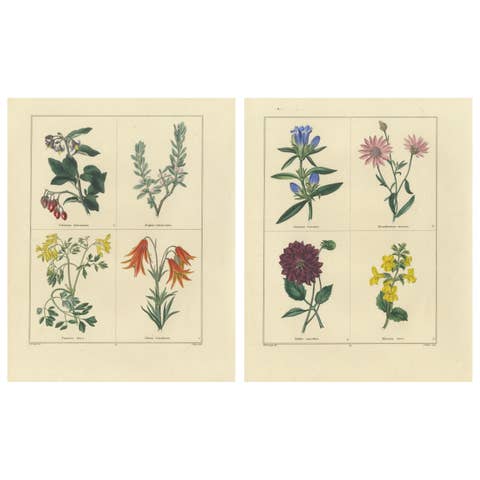
Pair of Hand-Colored Botanical Engravings of Flowering Plants, London 1828
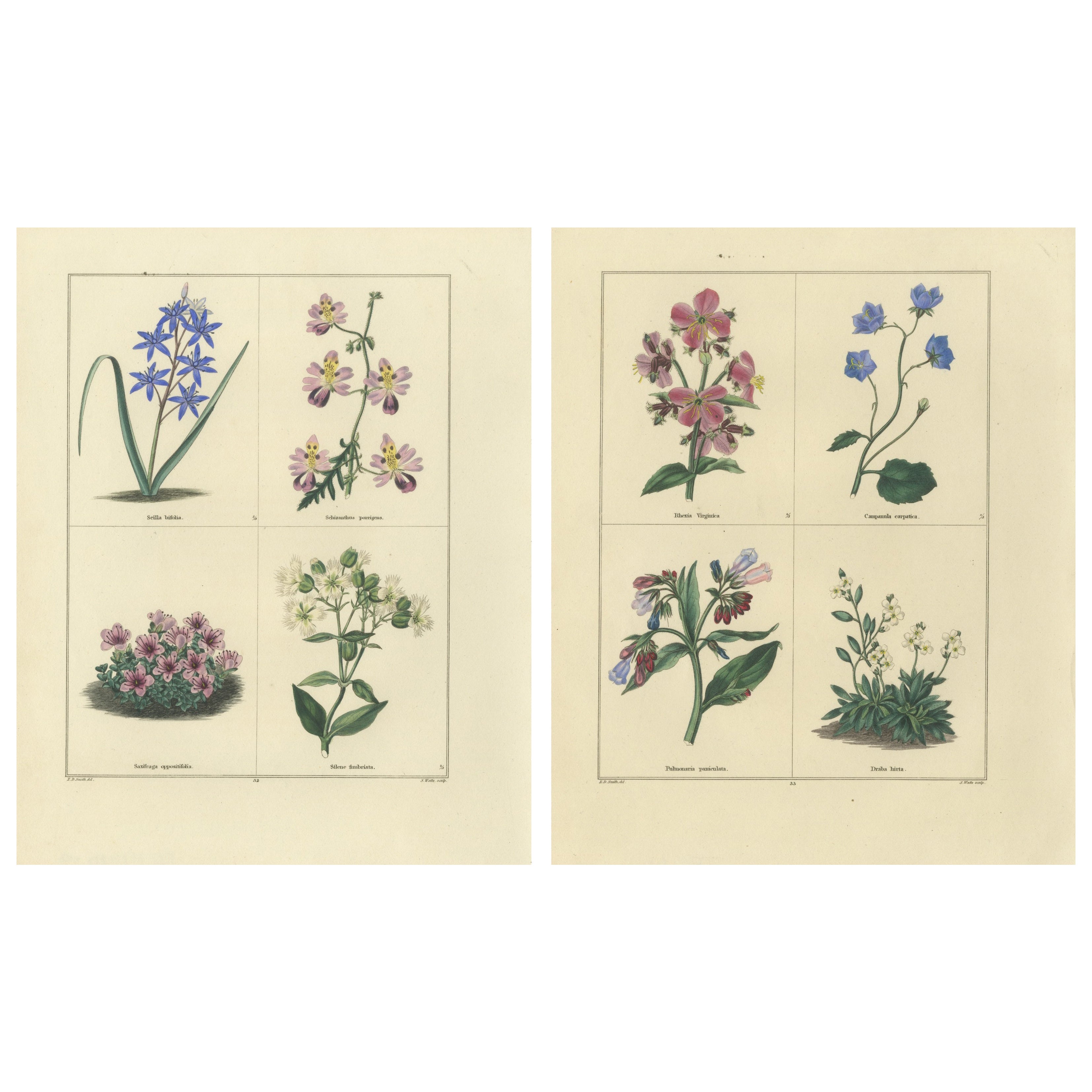
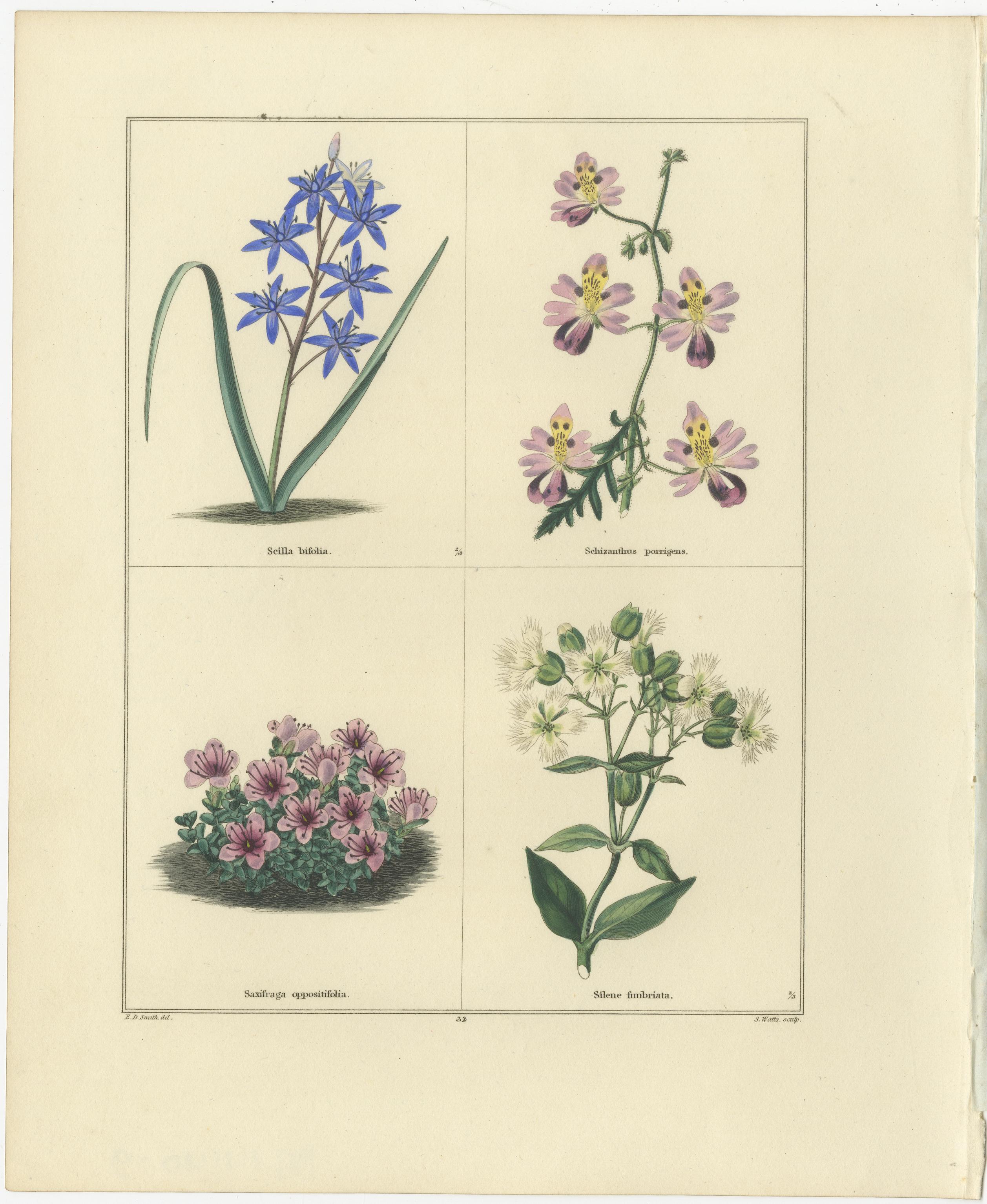
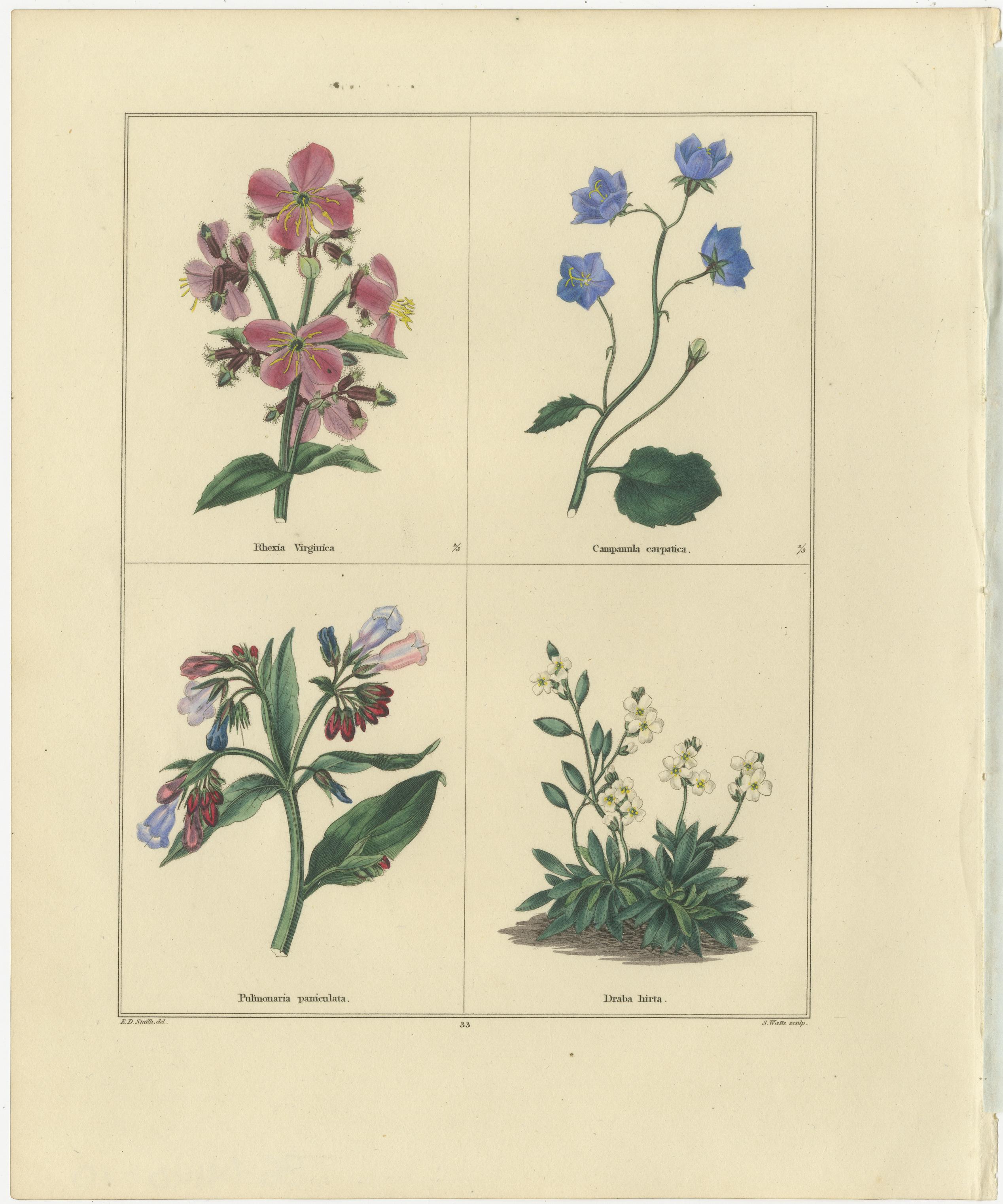
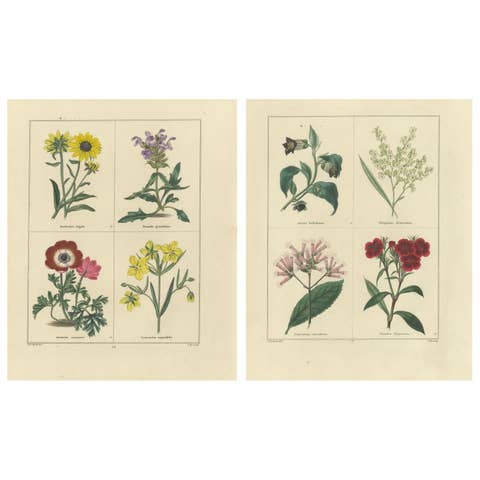
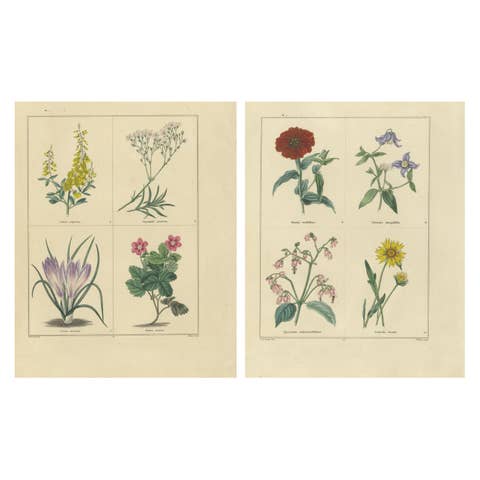
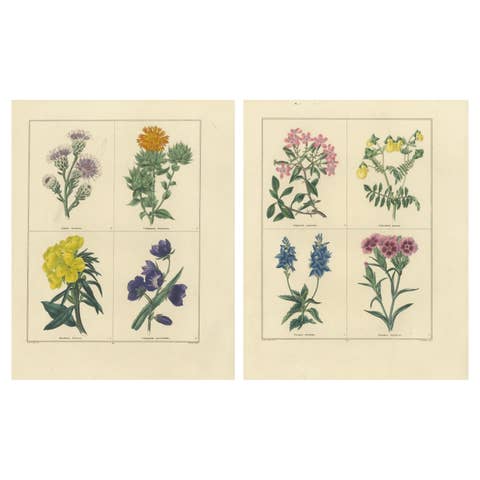
This graceful pair of early 19th-century botanical engravings captures the refinement and scientific curiosity of British horticultural art. Published in London in 1828 as part of The Botanic Garden, these hand-colored plates showcase ornamental flowering plants prized in English gardens for their color, form, and delicacy. Each species is drawn with botanical accuracy and artistic elegance, demonstrating the high standards of engraving and coloring that made this series one of the most admired botanical works of its time.
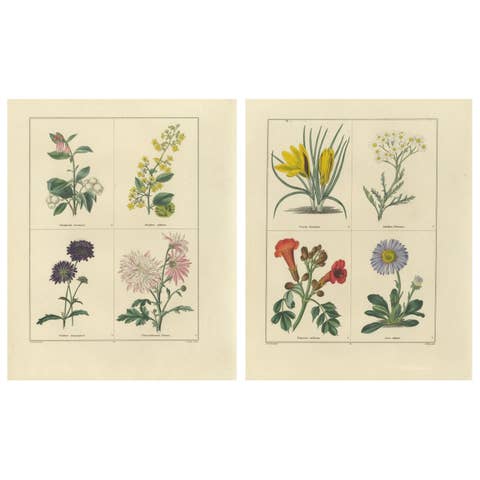
The two sheets together feature eight carefully illustrated species, each named in Latin and framed within elegant ruled borders. The left plate depicts the Snowberry (Symphoricarpos racemosus), Jujube (Zizyphus vulgaris), Pincushion Flower (Scabiosa atropurpurea), and Chinese Chrysanthemum (Chrysanthemum sinense). The right plate includes the Yellow Crocus (Crocus susianus), Clove-Scented Yarrow (Achillea clavennae), Trumpet Creeper (Bignonia radicans), and Alpine Aster (Aster alpinus). Each flower is rendered with remarkable delicacy—vivid hues of yellow, violet, crimson, and white harmoniously balanced against the soft cream background of the original wove paper.
At the time of publication, The Botanic Garden was a pioneering example of popular botanical art, designed to appeal to both amateur gardeners and naturalists. Benjamin Maund’s publication united accurate botanical representation with aesthetic charm, serving as both an educational reference and an elegant decorative object. The engravings, executed by skilled craftsmen and finished with subtle watercolors, exemplify the union of art and science that defined early 19th-century natural history illustration.
Condition report: Excellent condition with strong impressions and vibrant original hand coloring. Minor toning and a few faint handling marks consistent with age. Plate marks clearly visible on all sides; verso blank.
Framing tips: A refined pair ideal for display in a study, conservatory, or drawing room. Best framed in matching antique gold or walnut frames with off-white or light green acid-free mats to emphasize the balance of soft and vivid botanical tones.
Technique: Hand-colored engraving
Maker: Benjamin Maund, London, 1828