About this sheet
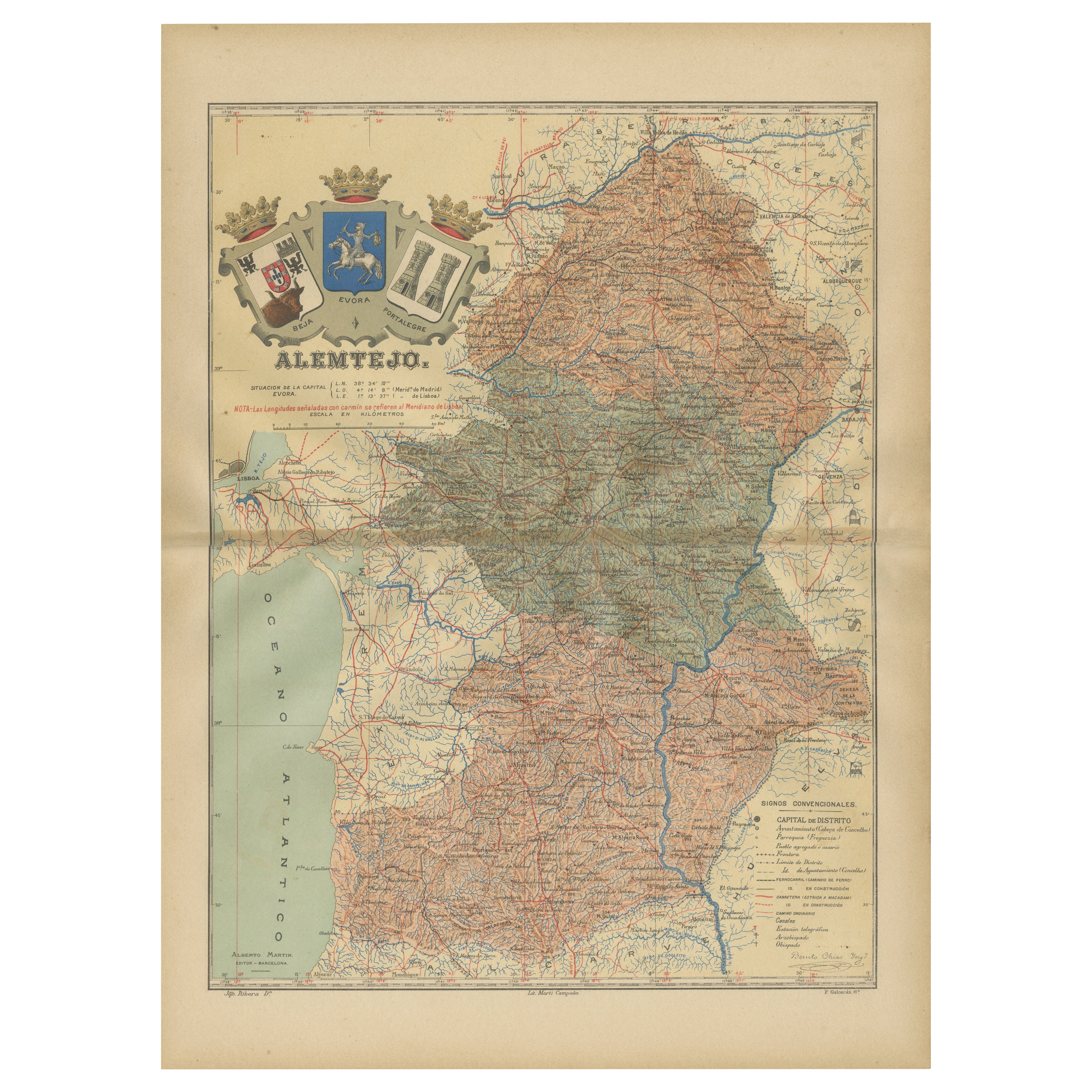
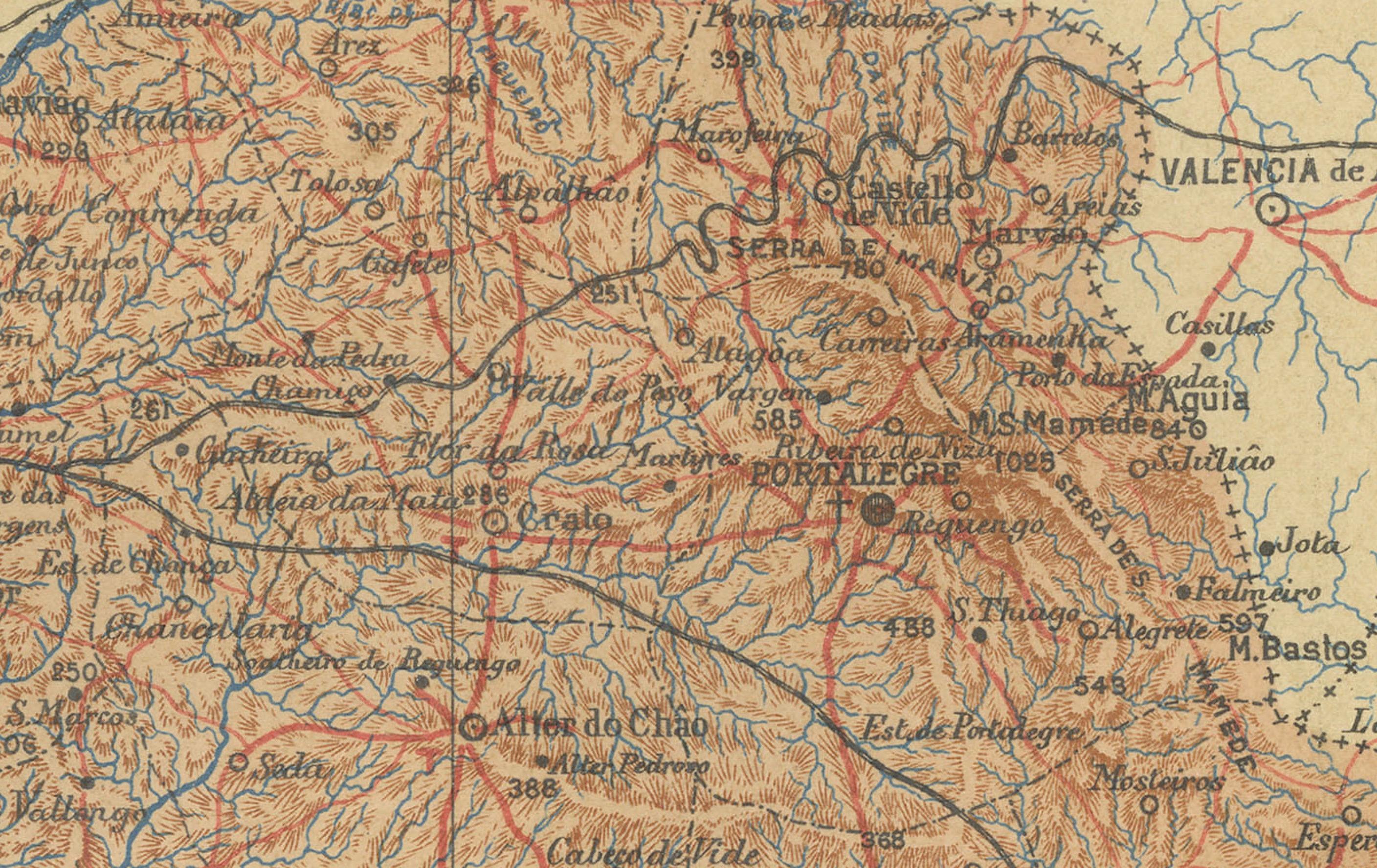
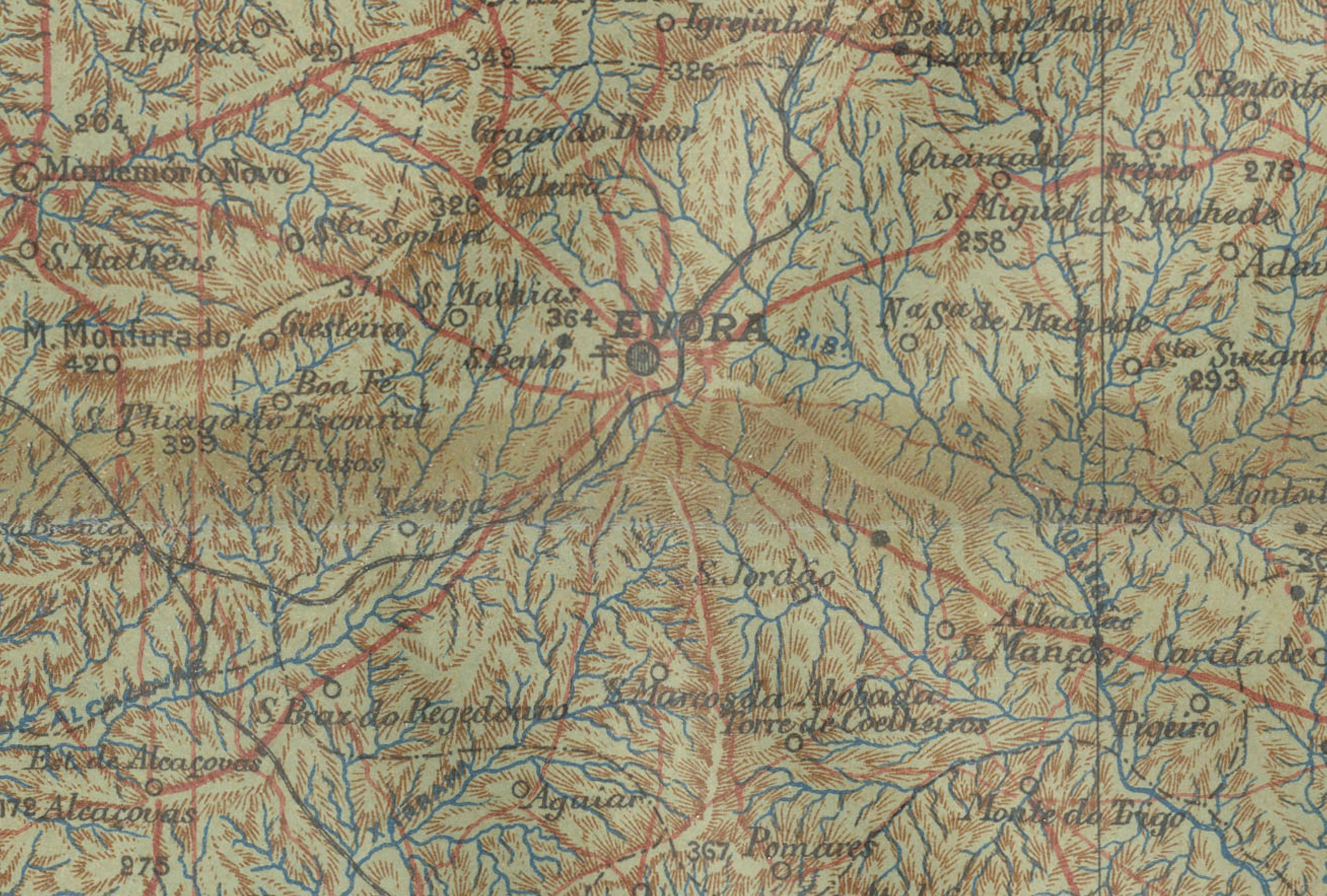
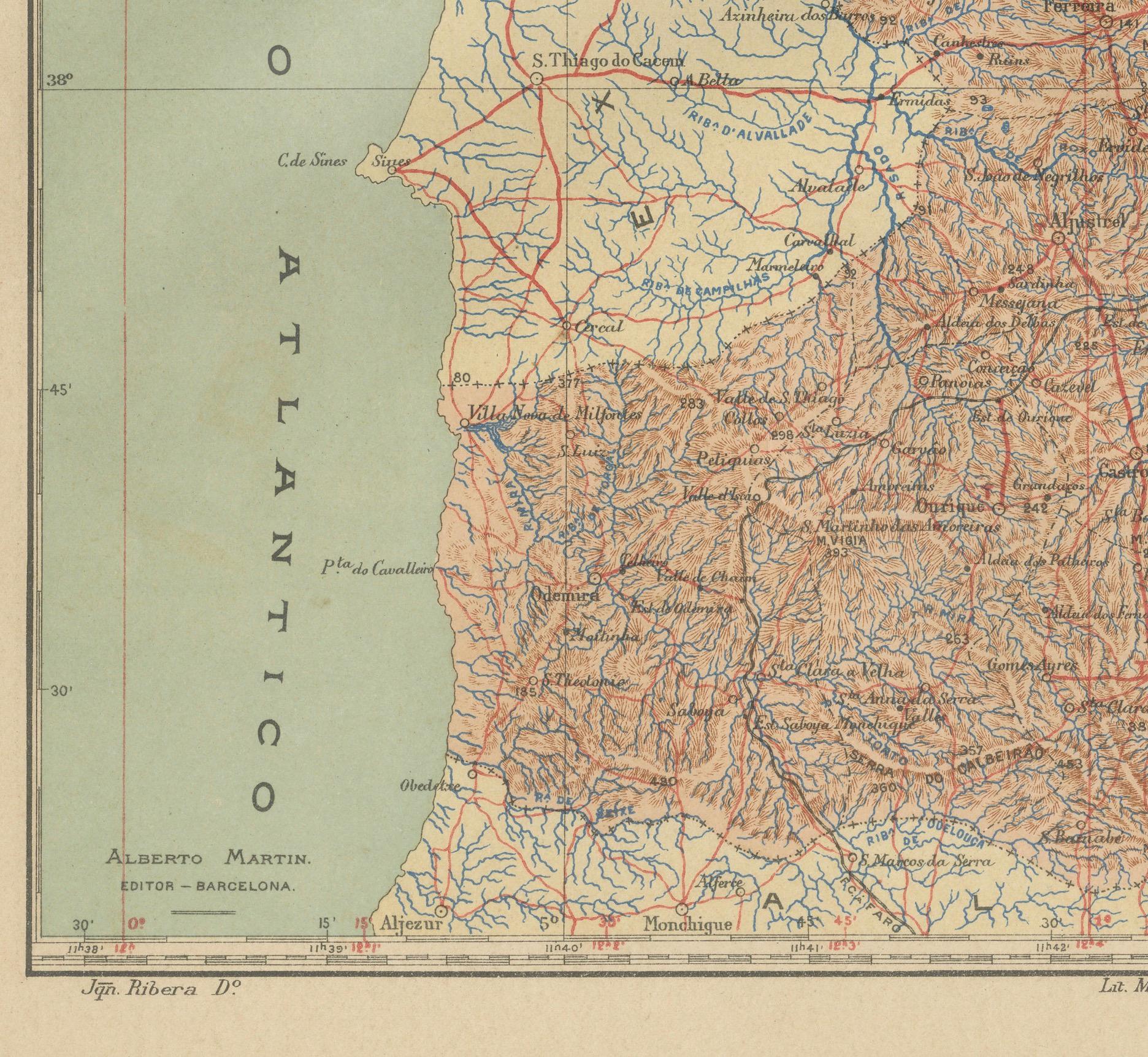
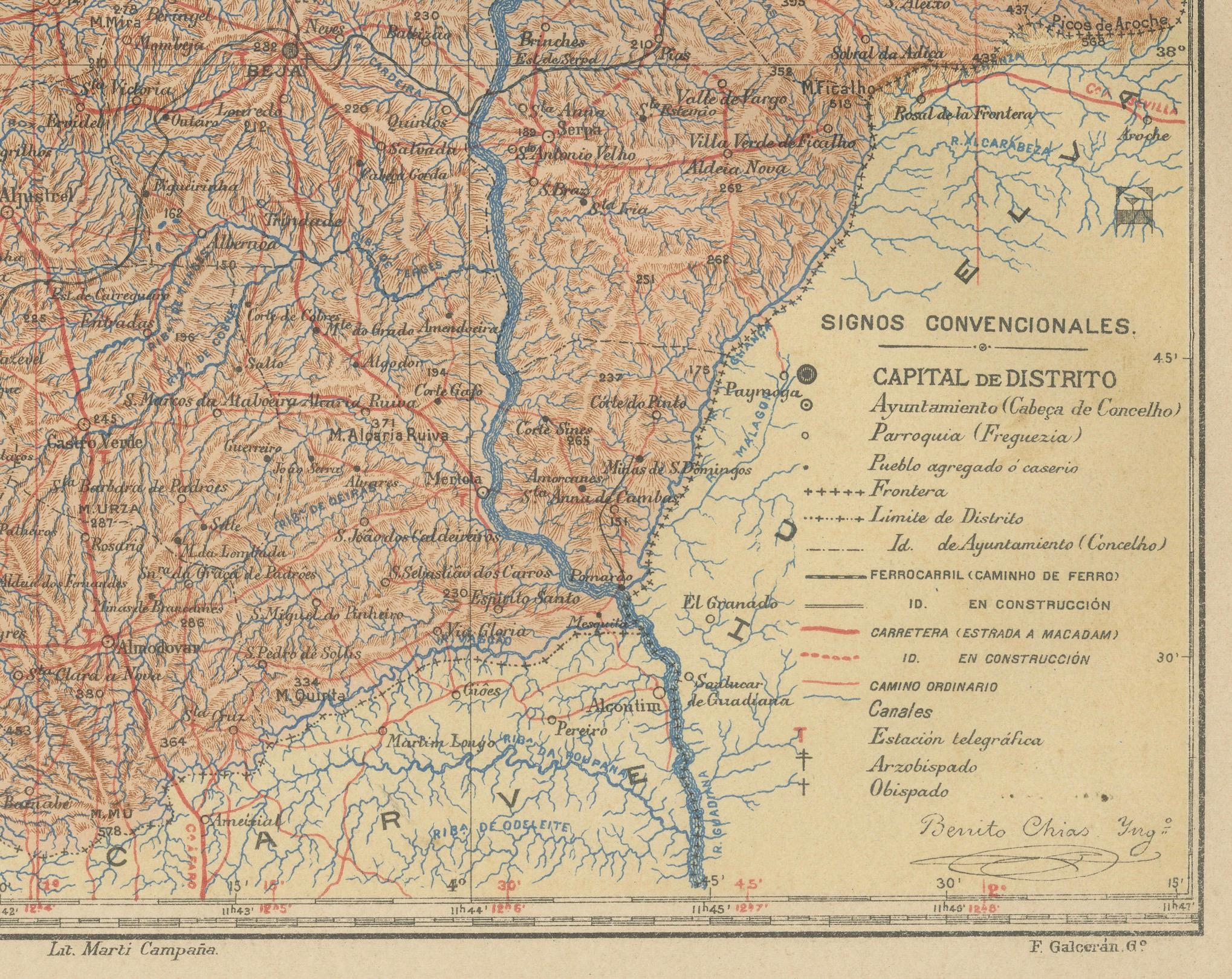
The image is a historical original antique map of the Alentejo region in Portugal. This map includes the topographical layout of the region, with its complex network of roads and waterways, and features the city of Évora, which seems to be highlighted as an important location. The Alentejo is known for its rolling landscapes, vineyards, olive groves, and rich history, including numerous prehistoric and Roman sites. Évora itself is a UNESCO World Heritage site, known for its well-preserved old town center, Roman temple, and chapel of bones.
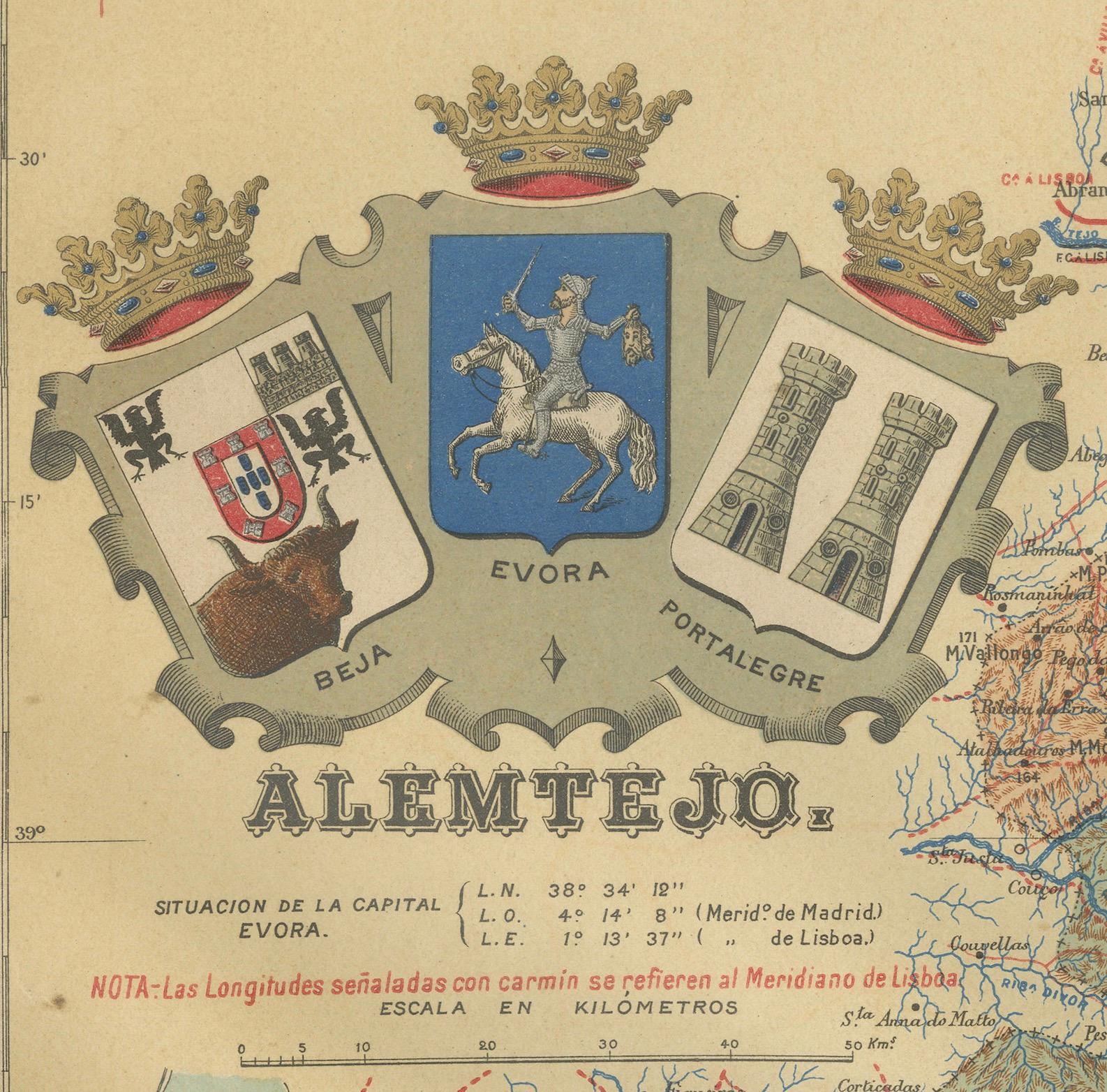
The map also includes the coats of arms of Beja and Évora, suggesting the map's focus on the administrative divisions within Alentejo. The region's vast plains, cork production, and historical significance are some of the key characteristics that would be of interest in a catalogue or guide.
The Alentejo region, encompassing a considerable portion of central and southern Portugal, is notable for several distinctive characteristics:
1. **Cultural Heritage**: Alentejo is home to a rich array of cultural landmarks. The historic center of Évora, a UNESCO World Heritage Site, is a treasure trove of history, featuring a Roman temple, medieval walls, and a 16th-century aqueduct.
2. **Agriculture**: The region is known for its extensive olive groves and vineyards, producing high-quality olive oil and wines. It's also a major producer of cork, with vast cork oak forests that are sustainably harvested.
3. **Cuisine**: Alentejo's culinary tradition is robust and flavorsome, with dishes like açorda (bread-based dish with garlic, cilantro, eggs, and olive oil), and carne de porco à alentejana (pork with clams).
4. **Landscapes**: The area is characterized by rolling plains, which in spring are covered with a blanket of wildflowers. The Alqueva Dam has created a large artificial lake, offering recreational activities and beautiful scenery.
5. **Prehistoric Sites**: Alentejo is rich in prehistoric remains, including the Cromeleque dos Almendres, one of the largest groups of structured menhirs in Europe.
6. **Architecture**: The region's architecture is marked by white-washed houses, historic castles, and Roman ruins, providing a picturesque setting that reflects its history.
7. **Tranquility**: Alentejo is less densely populated than other regions in Portugal, offering a sense of tranquility and an escape from the hustle and bustle of city life.
8. **Coastline**: The Alentejo coast boasts some of the most pristine and least crowded beaches in Portugal, with dramatic cliffs and clear waters.
9. **Music and Dance**: Traditional Alentejo music, particularly the Cante Alentejano, a form of polyphonic singing, is recognized by UNESCO as an Intangible Cultural Heritage.
These elements make Alentejo a region of serene beauty, deep historical roots, and rich cultural expressions.