1897 Botanical Compilation – Bloodleaf, Joyweed, and Globe Amaranth
€ 340
One of a kind: this is the sheet in the photographs. Ships from Langweer, the Netherlands.
Date
1897
Sheet size
24 × 15.5 cm (9.4 × 6.1 in)
Condition
Good
Reference
BG-13692-3-75
Condition
These 1897 botanical prints are well-preserved with vibrant colors, minimal edge yellowing, and crisp details, making them stunning pieces for display or collection.
About this sheet
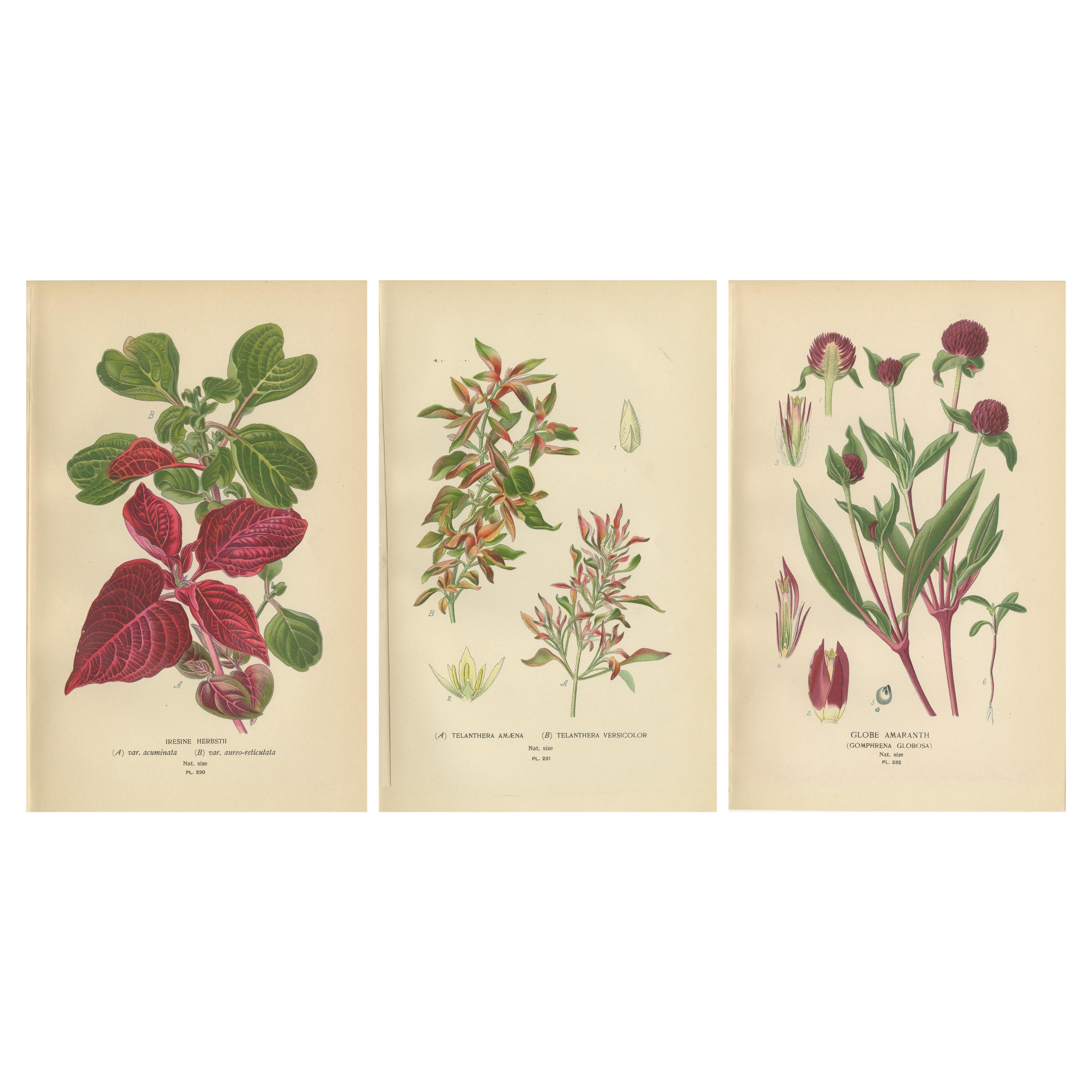
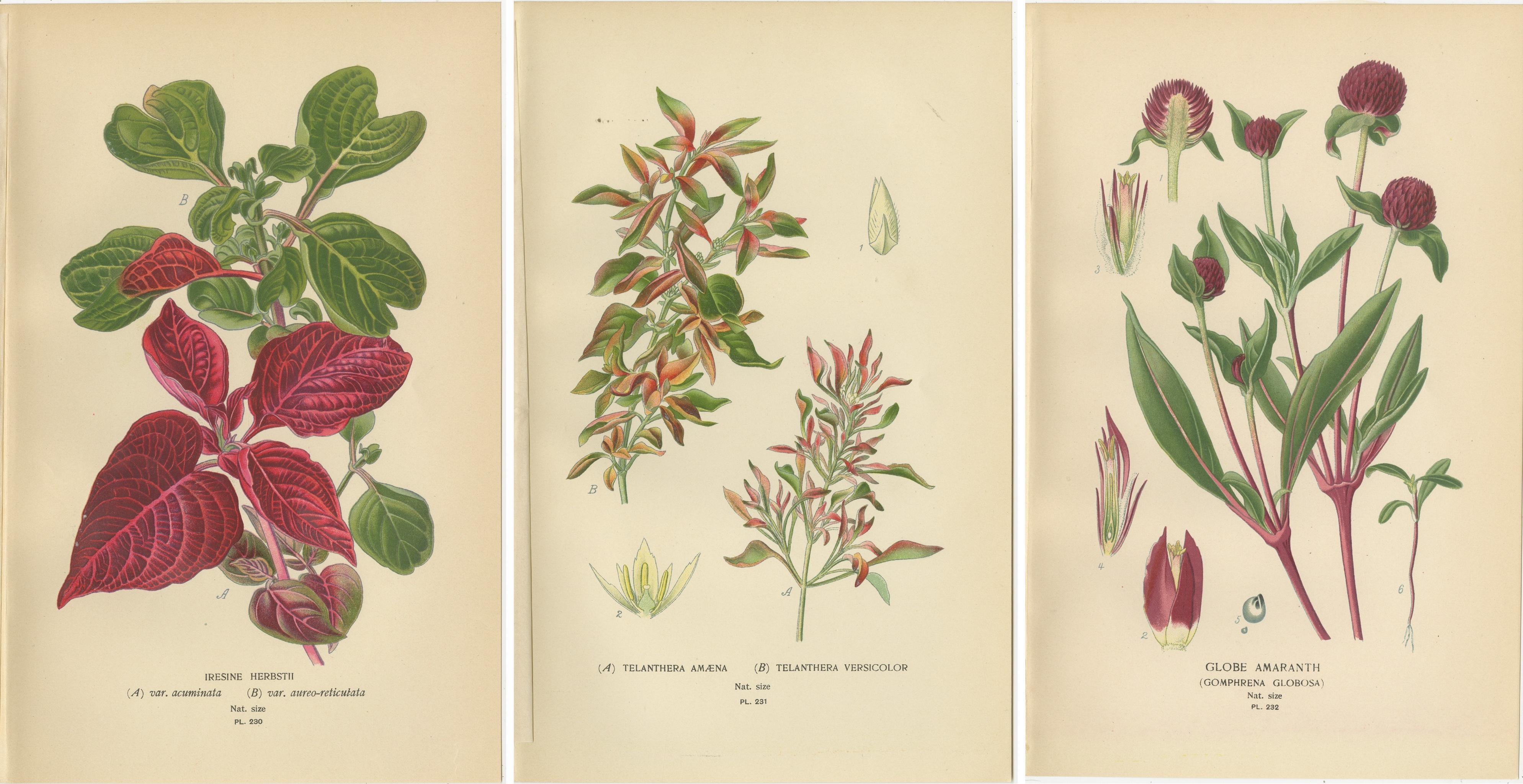
1897 Botanical Compilation – Bloodleaf, Joyweed, and Globe Amaranth
This compilation features three vibrant botanical illustrations from 1897, showcasing stunning foliage and flowers with unique characteristics that make them prized for their ornamental value and cultural significance.
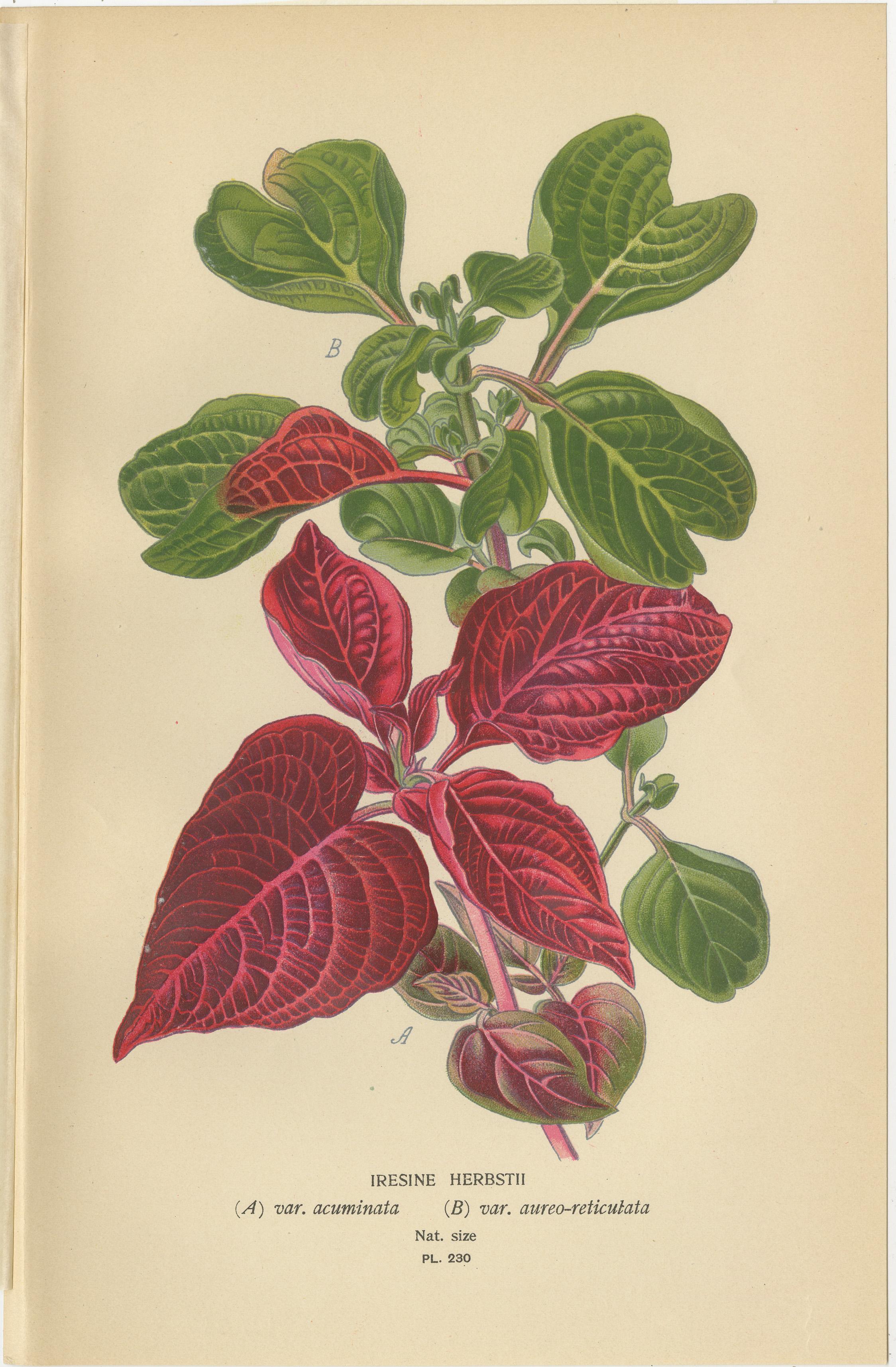
1. Bloodleaf (Iresine herbstii) Recognized for its striking, deep crimson-red leaves with intricate veins, bloodleaf is a popular foliage plant. It thrives in warm climates and adds a vivid pop of color to gardens and indoor spaces. Bloodleaf is notable for its resilience and adaptability, growing in both sun and shade. In traditional medicine, parts of the plant are believed to have cooling properties.
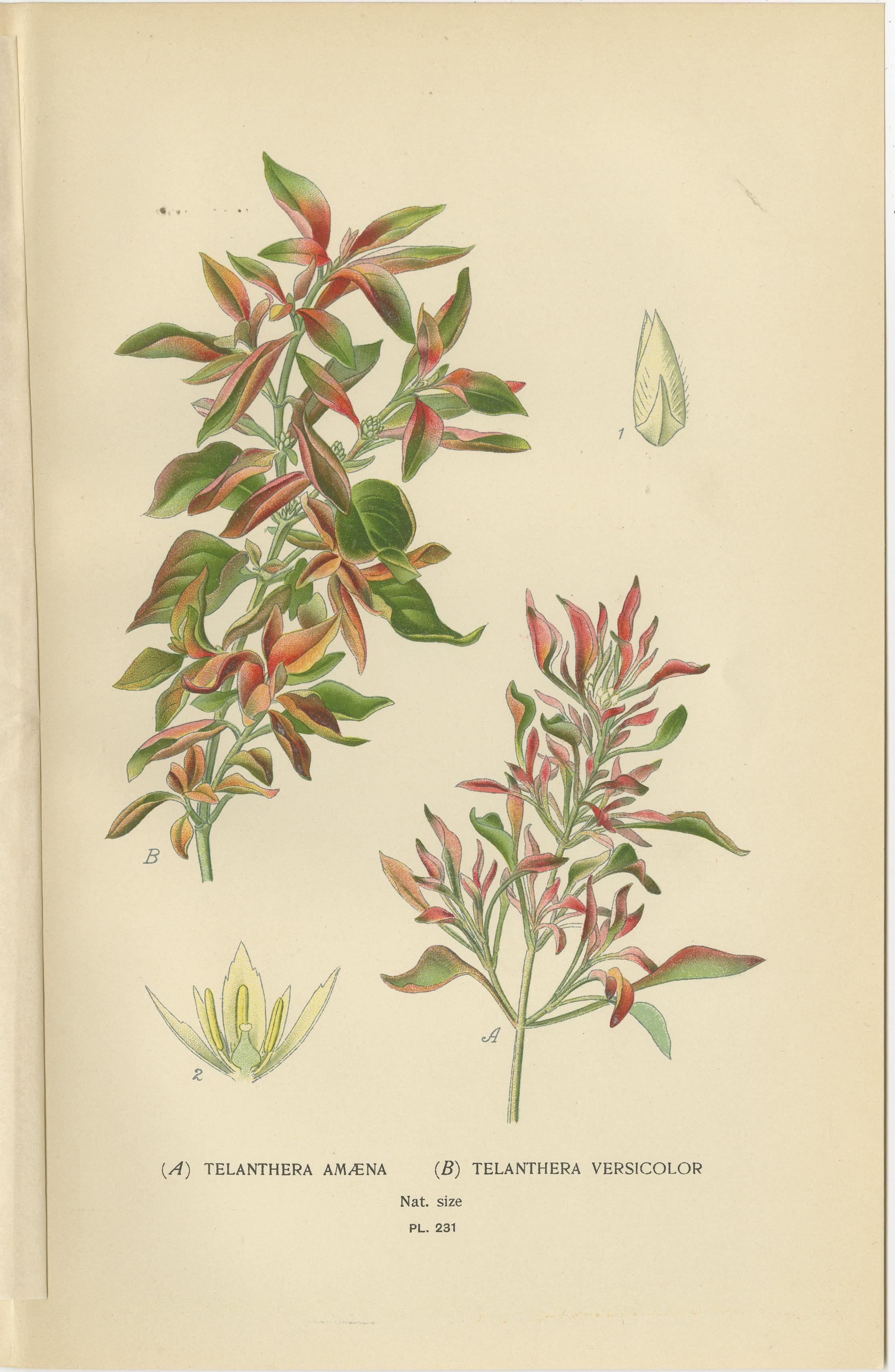
2. Joyweed (Telanthera amæna and Telanthera versicolor) Also known as alternanthera, joyweed showcases a blend of red, green, and gold-hued leaves, creating a visually dynamic plant. Known for its ornamental versatility, joyweed is often used as a groundcover or as colorful edging in garden beds. Its ability to thrive in tropical and subtropical climates makes it an attractive choice for gardeners looking to brighten landscapes year-round.
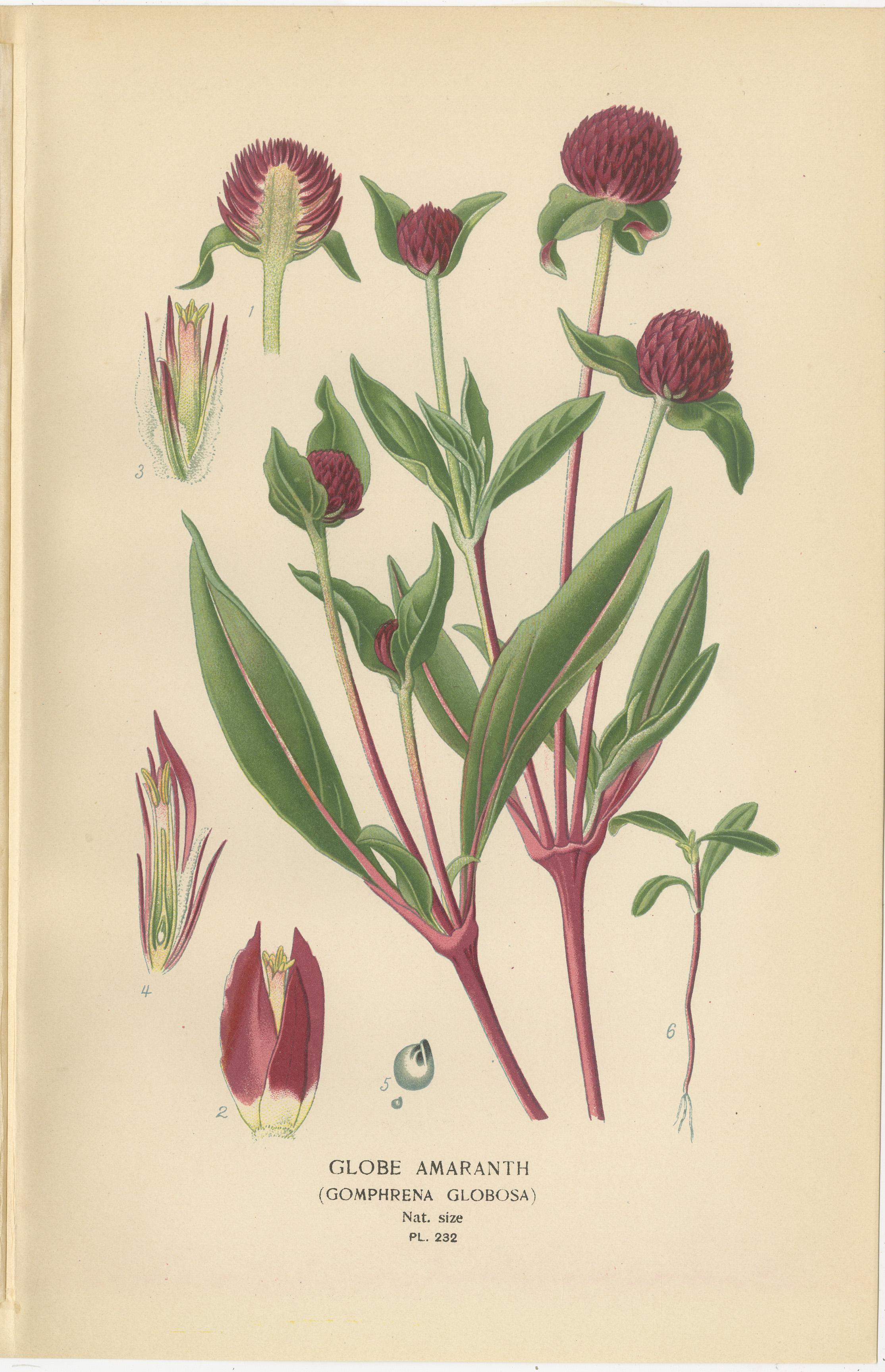
3. Globe Amaranth (Gomphrena globosa) This beloved flower produces vibrant, globe-shaped blooms in shades of magenta, red, and purple. It is long-lasting both on the plant and when dried, making it a favorite for floral arrangements and crafts. Native to Central America, globe amaranth symbolizes immortality and enduring love, a reflection of its hardiness and ability to retain beauty even after harvest. Additionally, it attracts pollinators like bees and butterflies, supporting biodiversity in gardens.
Why They Are Interesting: These plants exemplify nature's diversity, offering eye-catching foliage (bloodleaf and joyweed) and long-lasting blooms (globe amaranth). They are not only aesthetically valuable but also historically significant, as they have been used in gardens for centuries and hold cultural importance worldwide. Their adaptability to various climates and uses in landscaping, crafts, and traditional practices underscore their enduring appeal.