About this sheet
Antique Javanese Prints – Houses, Farming Tools & Household Utensils – c.1860
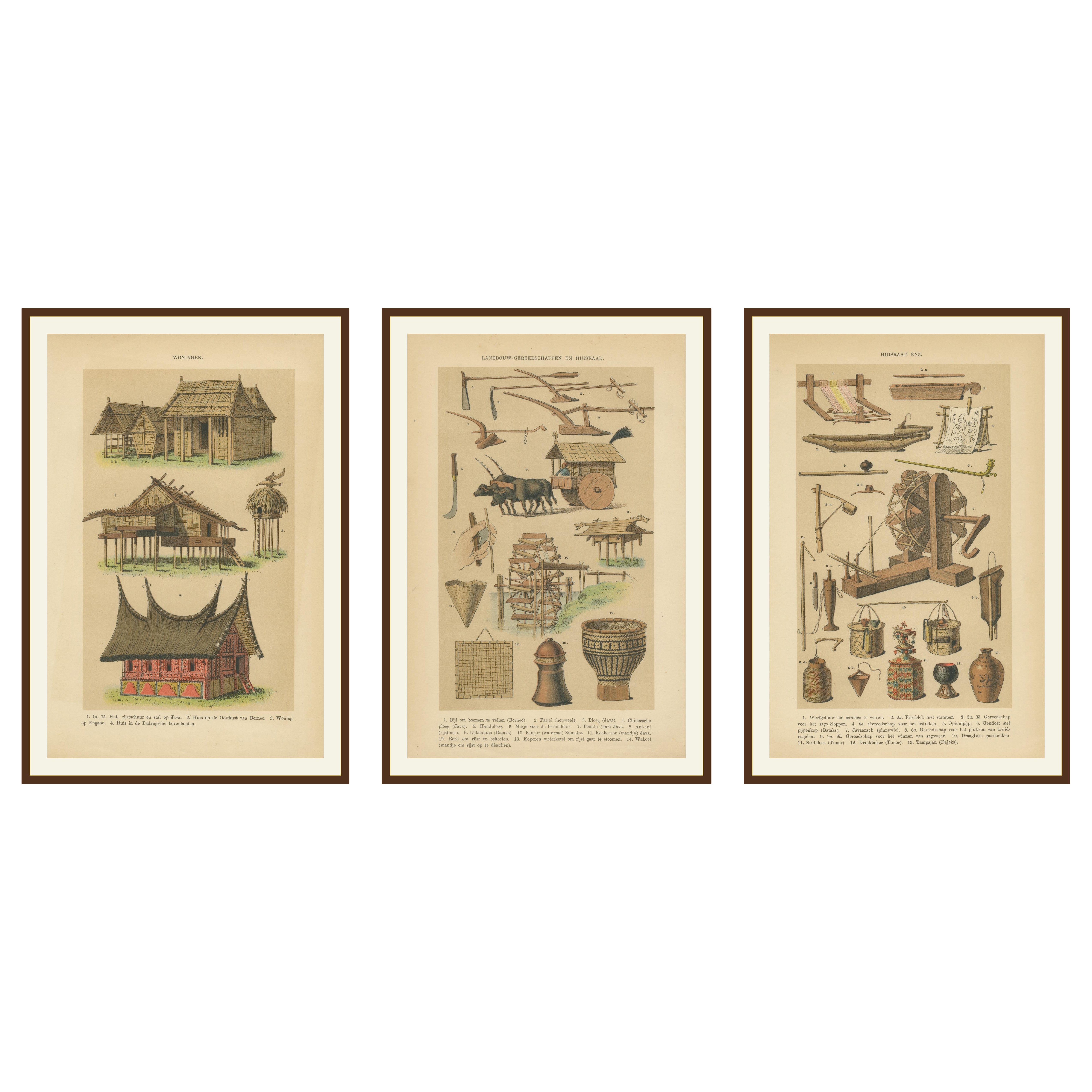
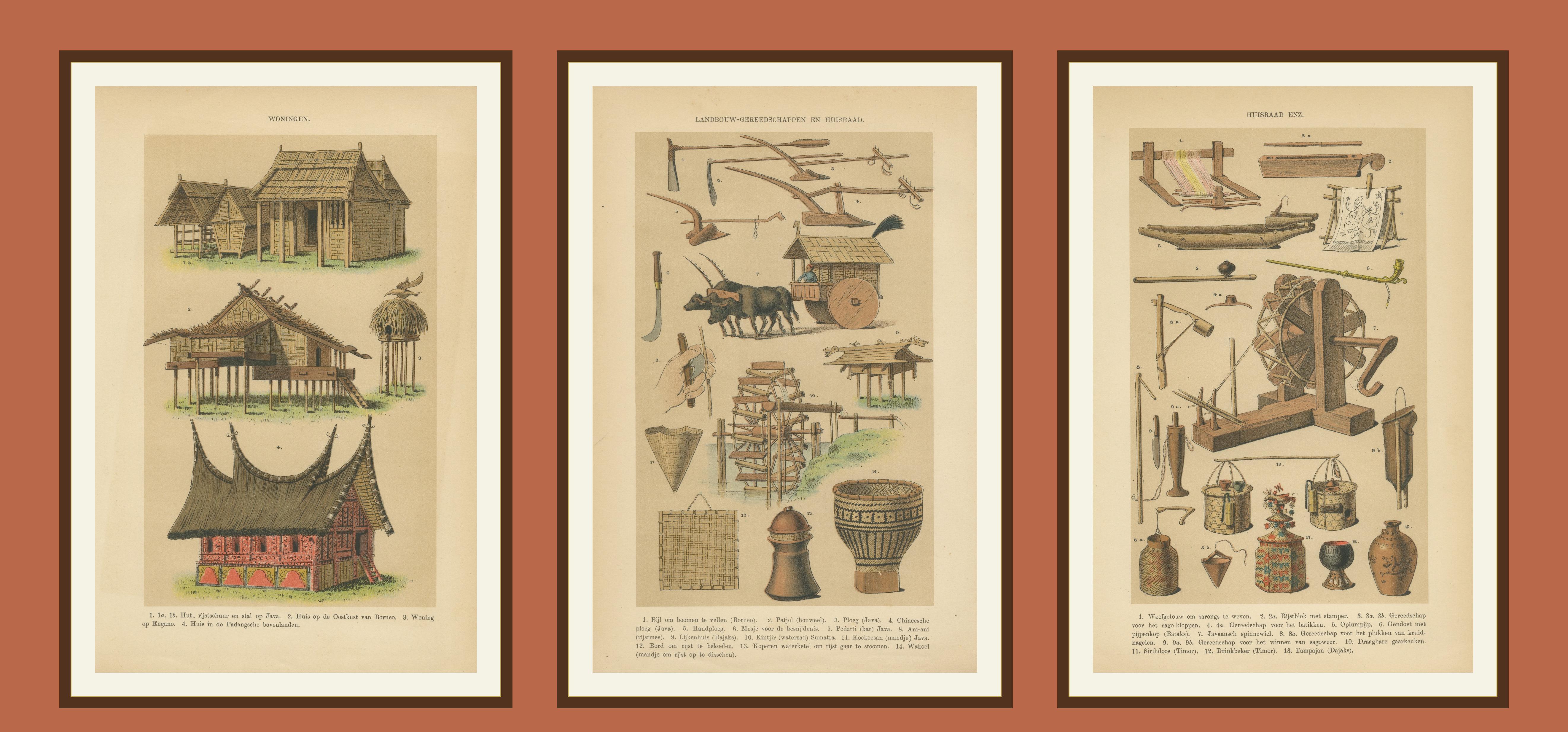
This striking set of three finely hand-colored lithographs documents aspects of daily life and material culture in 19th-century Java and Sumatra. Produced for European audiences during the colonial period, they provide rare insight into the architecture, agricultural practices, and domestic implements of the Indonesian archipelago.
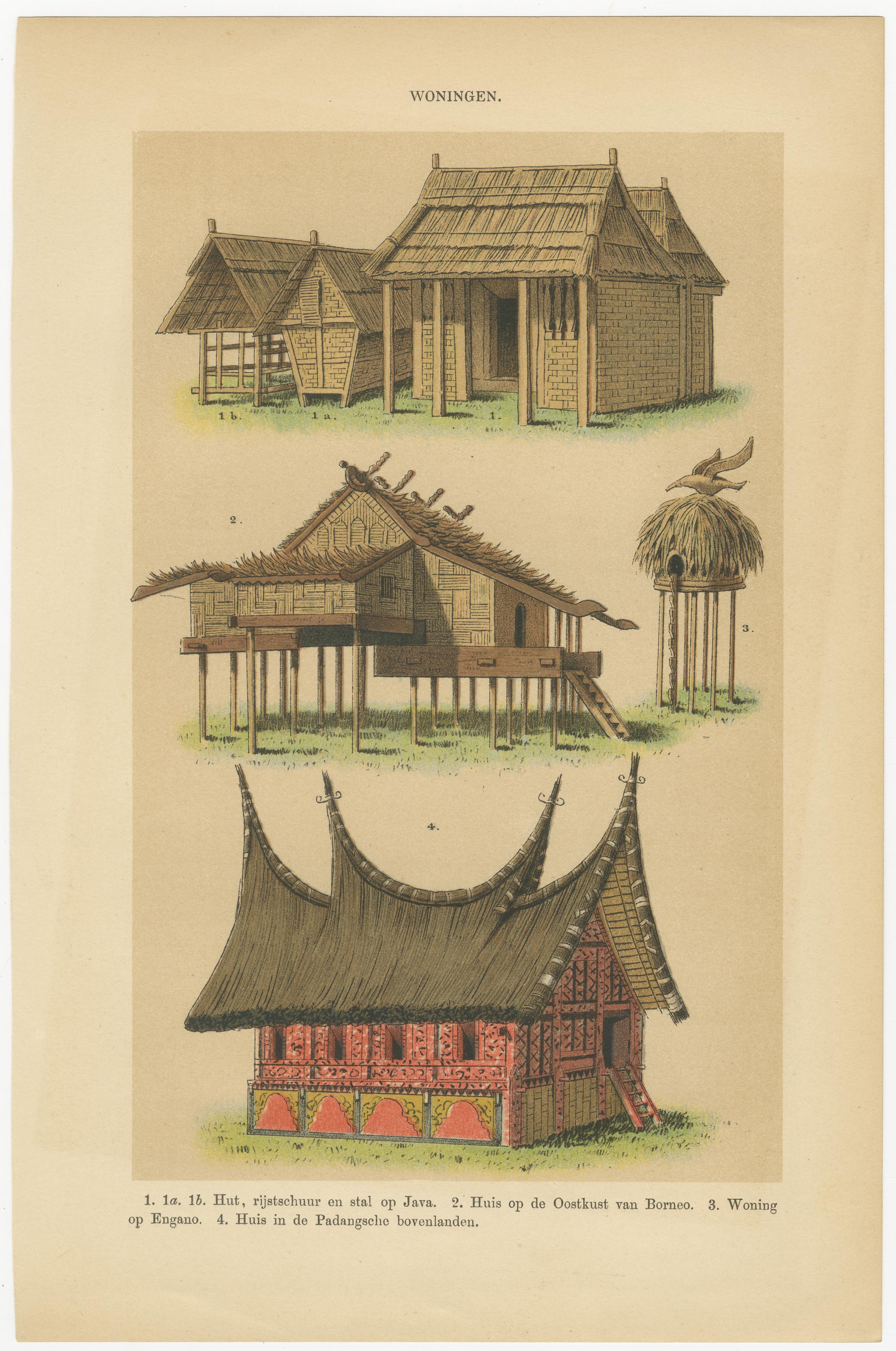
The first plate, Woningen (Houses), illustrates vernacular architecture from different regions. Shown are typical bamboo and thatched houses on stilts from Java, elevated dwellings from Borneo and Begoor, and a richly decorated Batak house from Sumatra with its sweeping rooflines. These buildings, constructed with natural materials, were designed to adapt to tropical climates and local traditions.
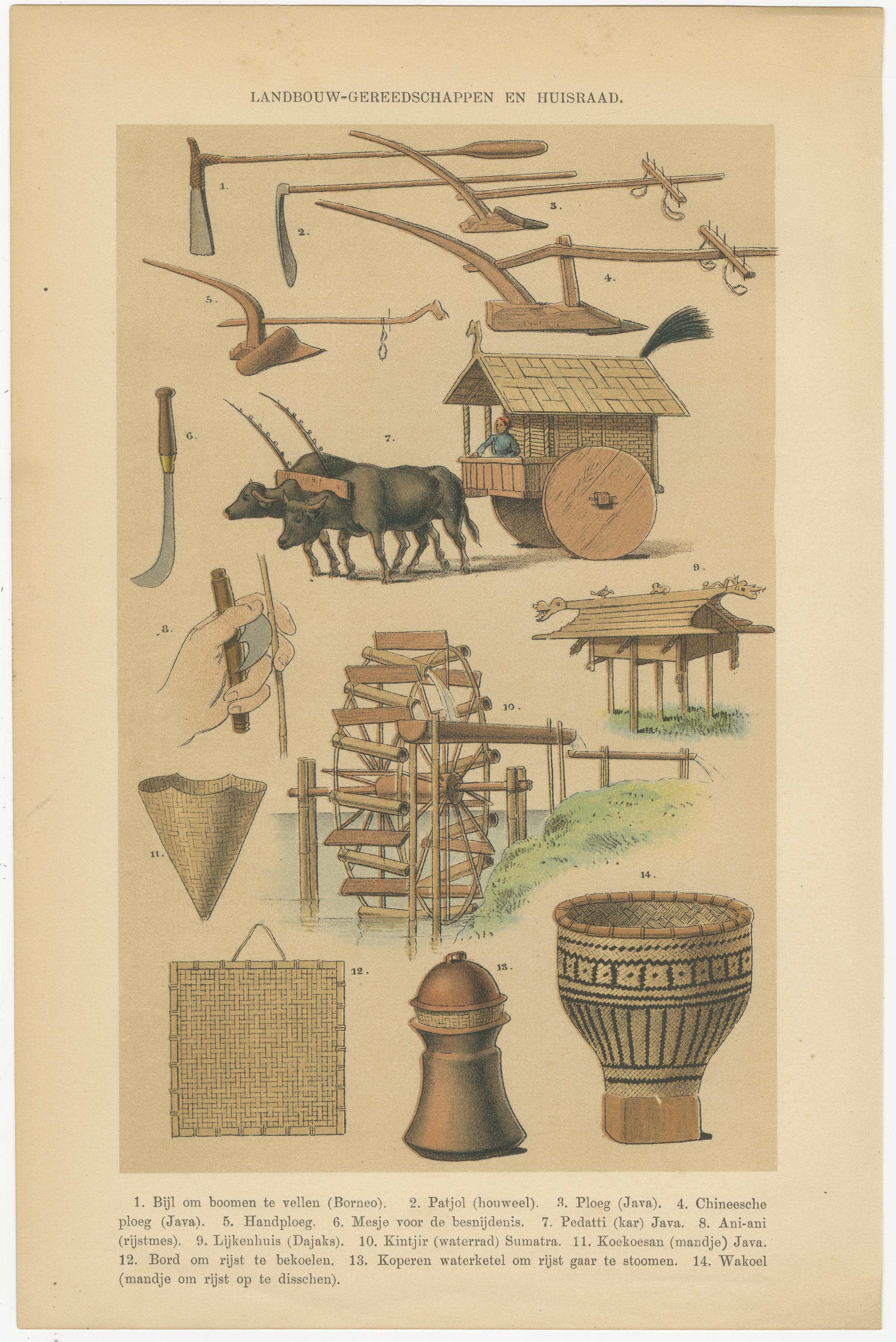
The second plate, Landbouw-Gereedschappen en Huisraad (Farming Tools and Implements), depicts a range of agricultural equipment and village technology. Included are ploughs for rice fields, buffalo-drawn carts, irrigation devices, pestles, mortars, baskets, and tools for planting and harvesting. Each object reflects the ingenuity of local craftsmanship and the central role of rice cultivation in sustaining village life.
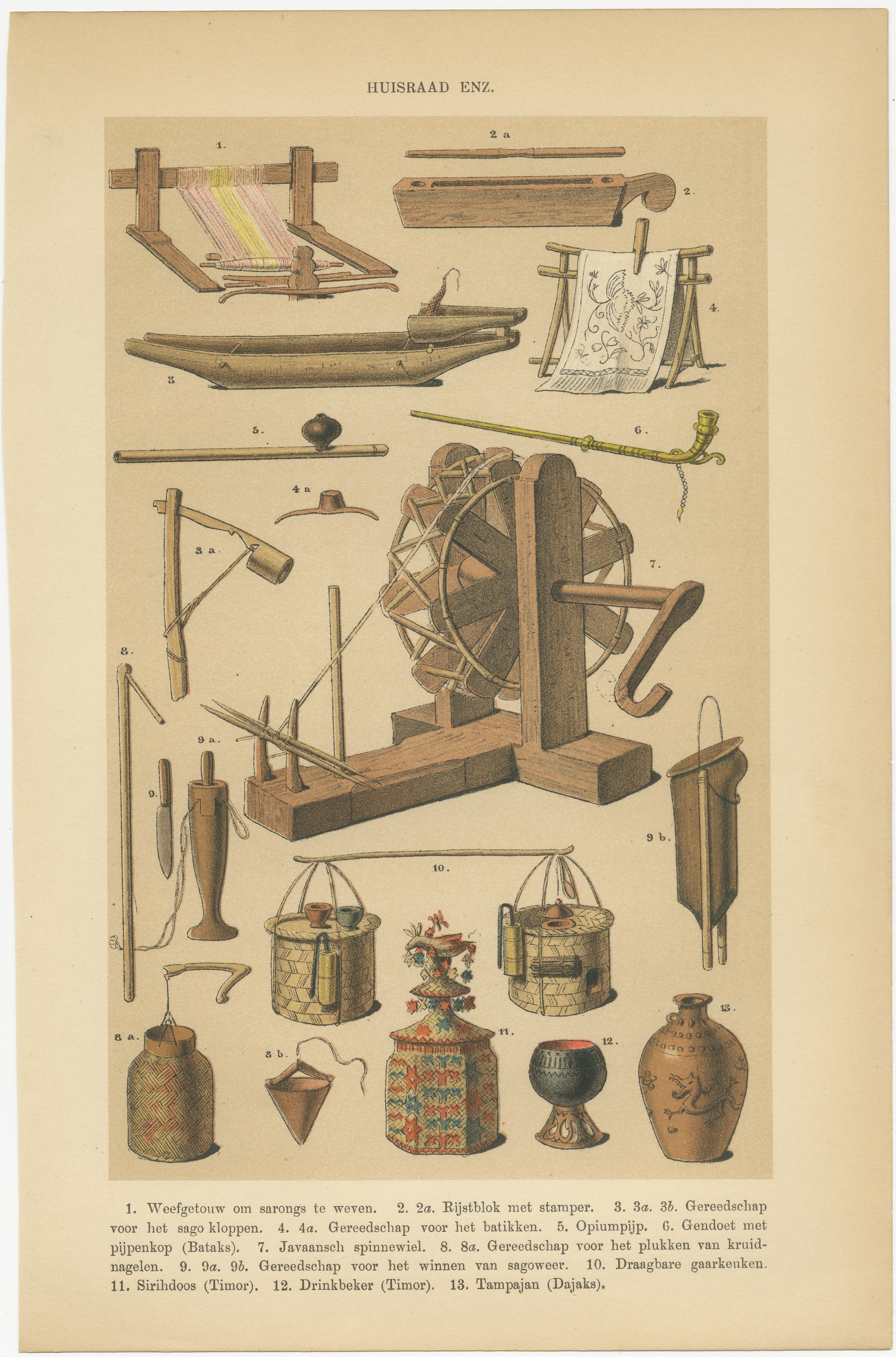
The third plate, Huisraad enz. (Household Utensils), presents domestic tools and containers used in everyday life. Among them are weaving looms, spinning wheels, kitchen implements, water jars, baskets, spice containers, and cooking vessels. These objects not only illustrate practical functions but also embody aesthetic traditions, with many featuring decorative patterns and refined workmanship.
Together, these three lithographs provide a detailed ethnographic record of 19th-century Javanese and Sumatran society, bridging anthropology and art. Their precision and color make them valuable both as historical documentation and as decorative works.
Condition summary: Very good impressions with vibrant hand coloring. Minor toning and occasional light foxing, mainly in the margins, consistent with age. No tears or repairs observed.
Framing tips: These three prints are ideally displayed as a set. Matching dark wood frames with ivory or cream mounts will emphasize their ethnographic detail. Grouping them vertically or side by side enhances their narrative character, making them suitable for study, living, or cultural interiors.
Technique: Hand-colored lithograph
Maker: Unknown European lithographer, c.1860, from a Dutch East Indies ethnographic series