Venom & Vibrance: A Study of European Vipers & North American Copperheads, 1780
€ 200
One of a kind: this is the sheet in the photographs. Ships from Langweer, the Netherlands.
Date
1780
Sheet size
13 × 21 cm (5.1 × 8.3 in)
Condition
Good
Reference
BG-13674-23
Condition
Condition is good. Lower margin cut short. Overall toning and other small incorrections due to age and handling over a few hundred years. Please study the images carefully.
About this sheet
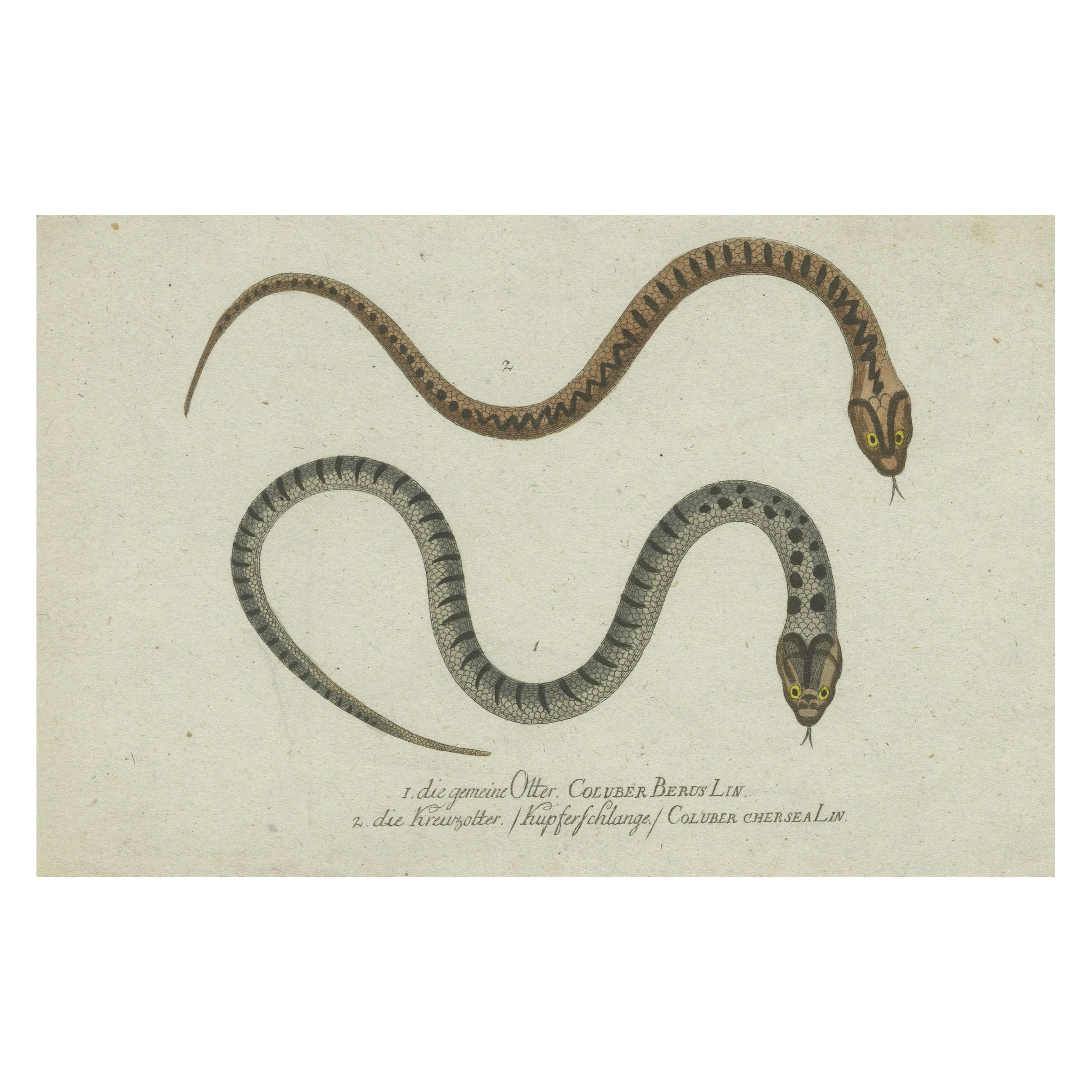
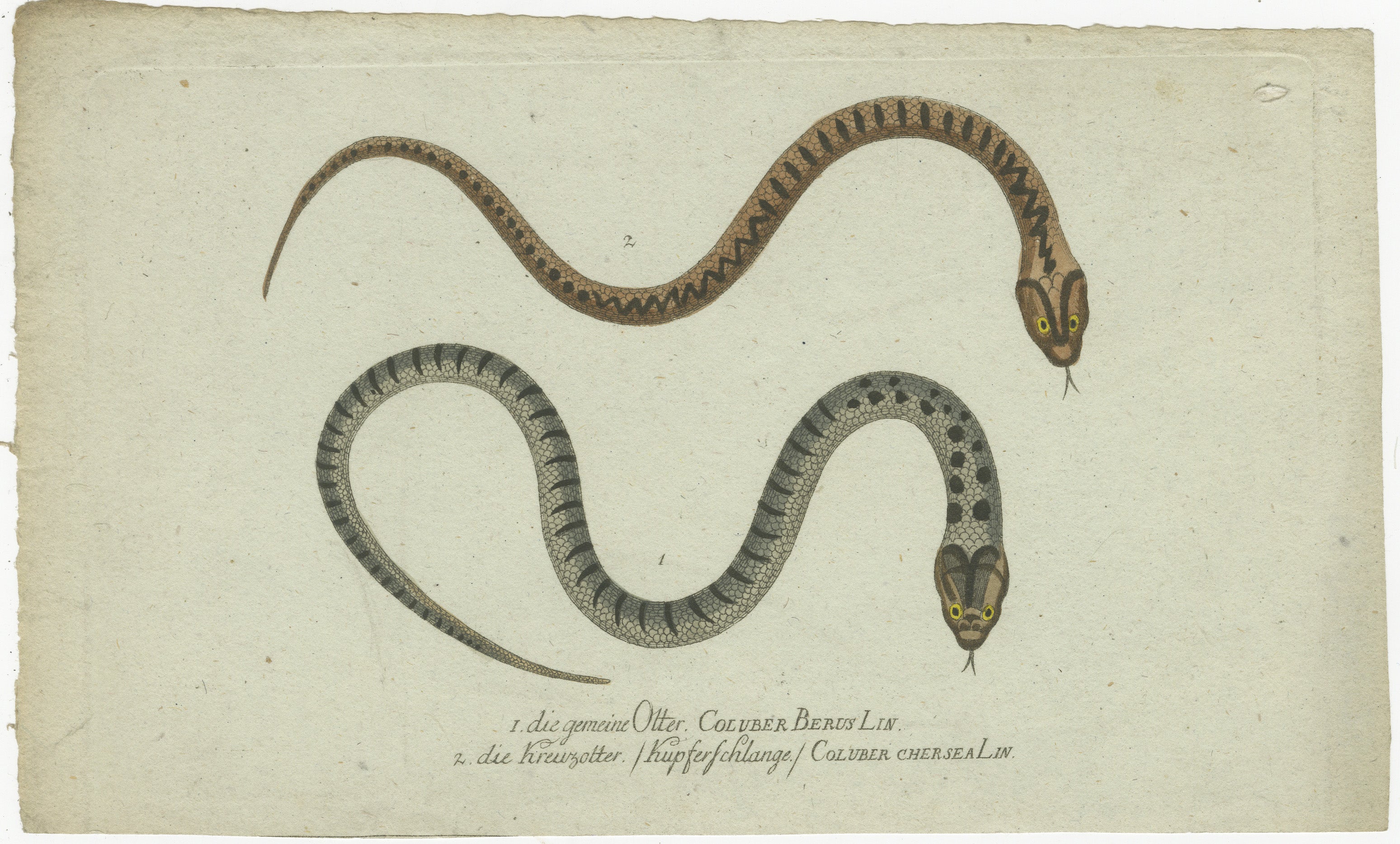
The illustration features two distinct snake species, each labeled in German with their scientific names. Here are the translations and descriptions:
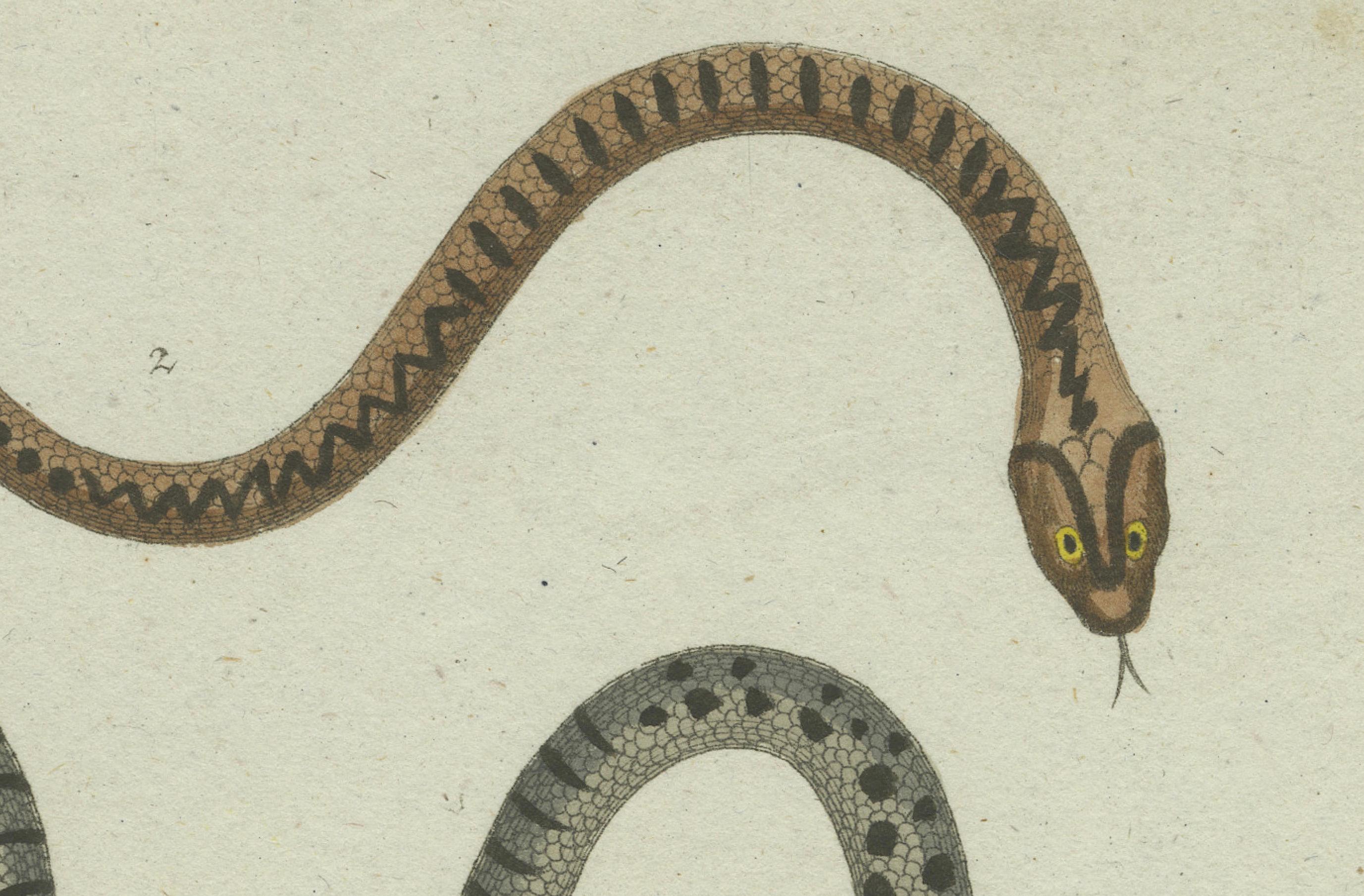
Description of Snakes in the Illustration 1. "die gemeine Otter, Coluber Berus Linn." - Translation: The common viper, *Vipera berus*. - Description: This snake is depicted with its characteristic zigzag pattern along the back, which is typical of the common European viper. The detailing captures the muted coloration and the distinct dorsal pattern, which helps in camouflage and warning.
2. "die kreuzotter, kupferschlange, Coluber chersea Linn."* - Translation: The cross viper, known as the copperhead, *Agkistrodon contortrix*. - Description: This depiction shows a snake with the distinctive copper-red head and hourglass-shaped banding across the body, which are hallmarks of the North American copperhead. The illustration emphasizes the striking color contrast that makes this species recognizable.
Each snake is illustrated with a focus on anatomical accuracy, particularly in the patterns and coloration that are key to species identification. The hand-coloring is detailed, adding depth and realism to the illustrations. Such coloring techniques were critical in scientific illustrations to aid observers in recognizing specific features in natural settings. These illustrations would have served as vital educational tools in herpetology, helping to educate about species characteristics and distinctions.
Maker of the Engravings The specific artist and engraver are indicated by "I.E. Ihle del." and "L.C. Bock fc.", pointing to the individuals responsible for the drawing and the engraving, respectively. This collaboration between draughtsman and engraver was typical in producing scientific illustrations of this era. These engravings likely formed part of a larger work focused on natural history, aiming to document and disseminate knowledge about various species, including their physical descriptions and habitats.