Antique America Engraving Chile Natives & Guatemala Serpents Drake, 1771
€ 279
Original antique · The actual sheet photographed · Certificate of authenticity on request · Sold unframed · Worldwide shipping from € 15 (rates)
Date
1771
Sheet size
28.2 × 19.5 cm (11.1 × 7.7 in)
Condition
Good
Reference
BG-13599-96
What the condition grades mean
Excellent
Bright and clean, with no faults worth mentioning.
Very good
Only light signs of age, such as faint toning.
Good
Normal signs of age for a sheet of this period: toning, some foxing, small marks or neat old repairs.
Fair
Clear faults such as staining, tears or repairs, priced to match.
Every fault we see is written in the condition note, and the whole sheet is shown uncropped in the photos.
Condition
Good antique condition with age-appropriate toning and light foxing. Minor handling marks and faint creases consistent with an eighteenth-century book plate. A small tear touching the lower plate mark.
About this sheet
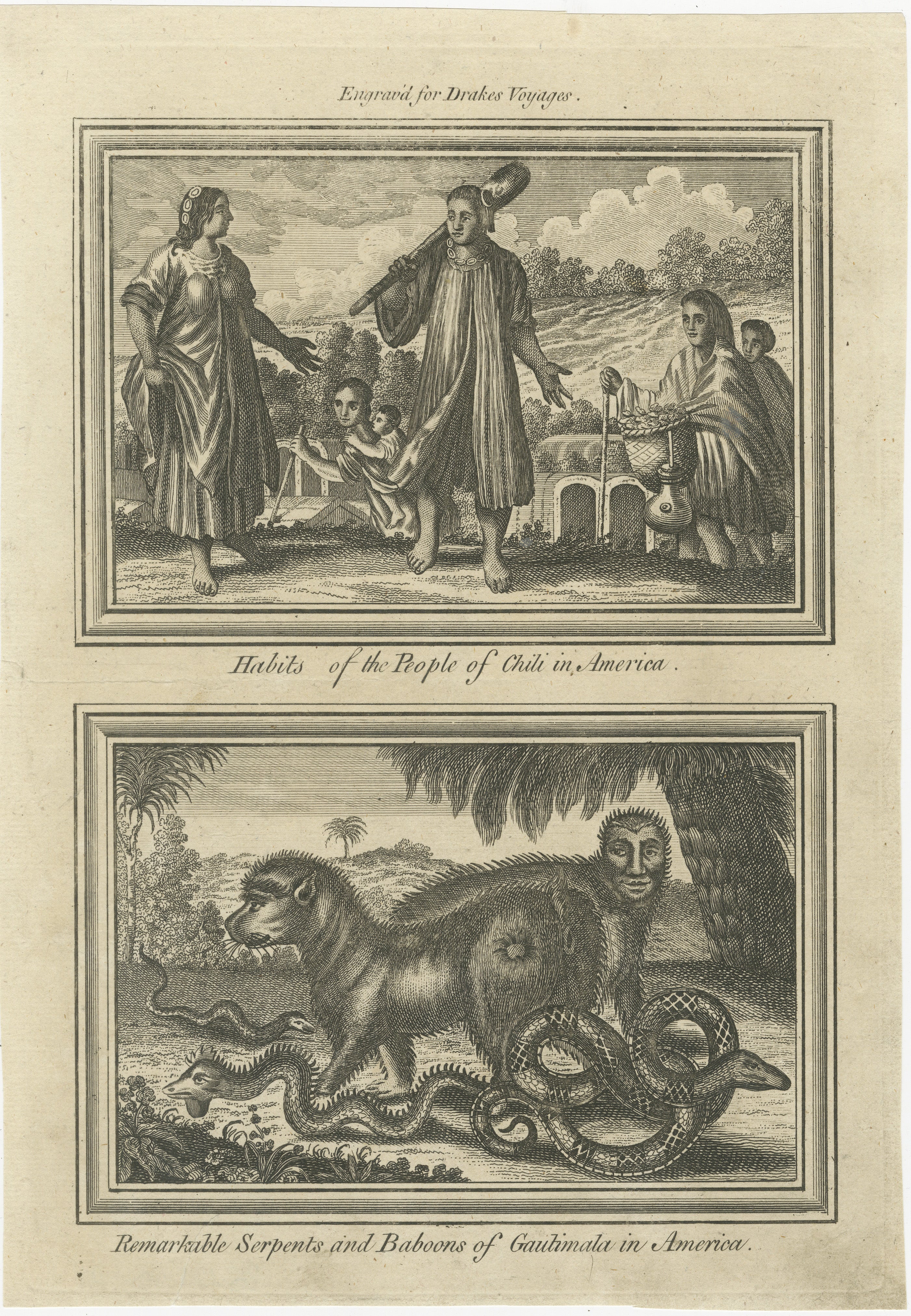
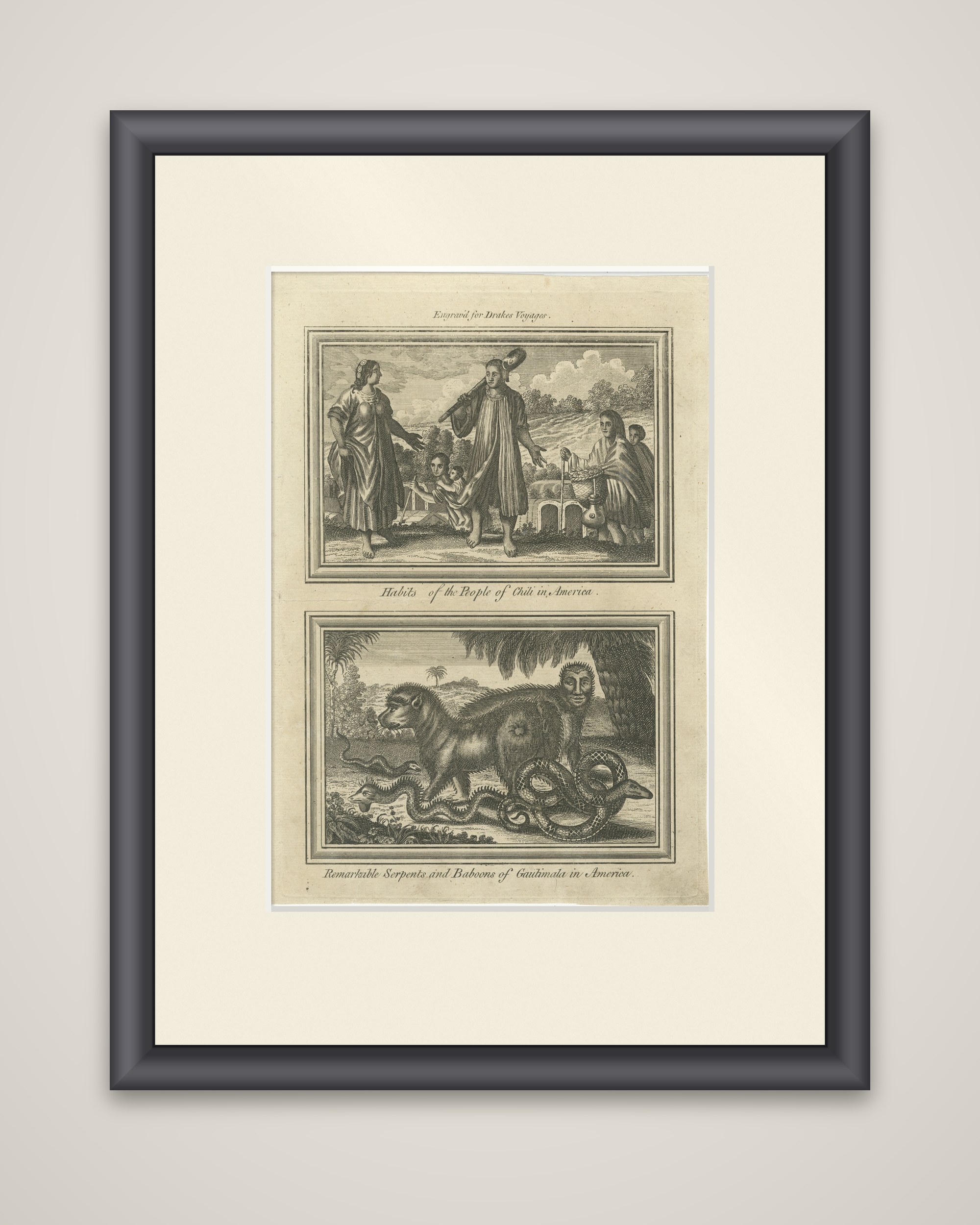
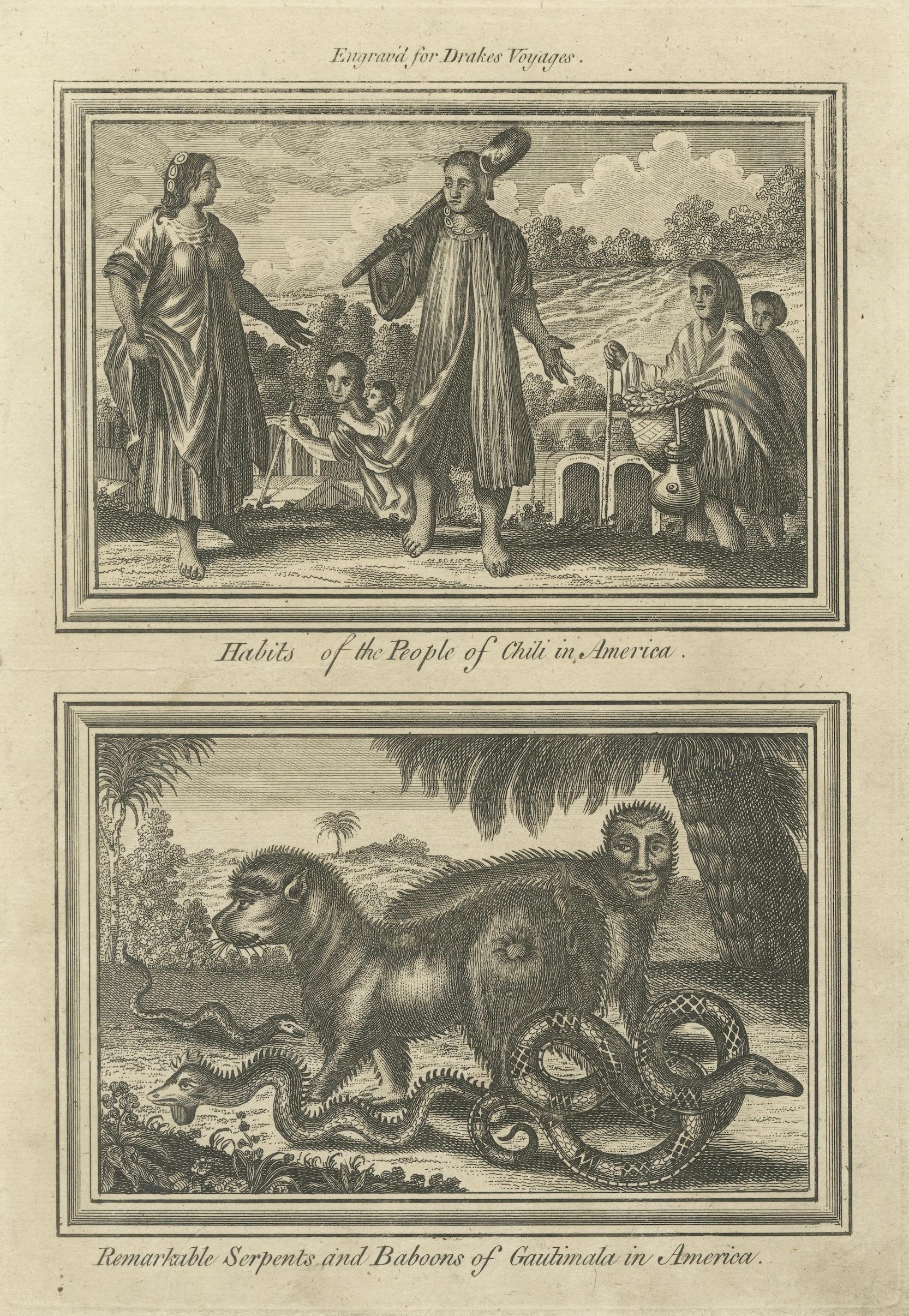
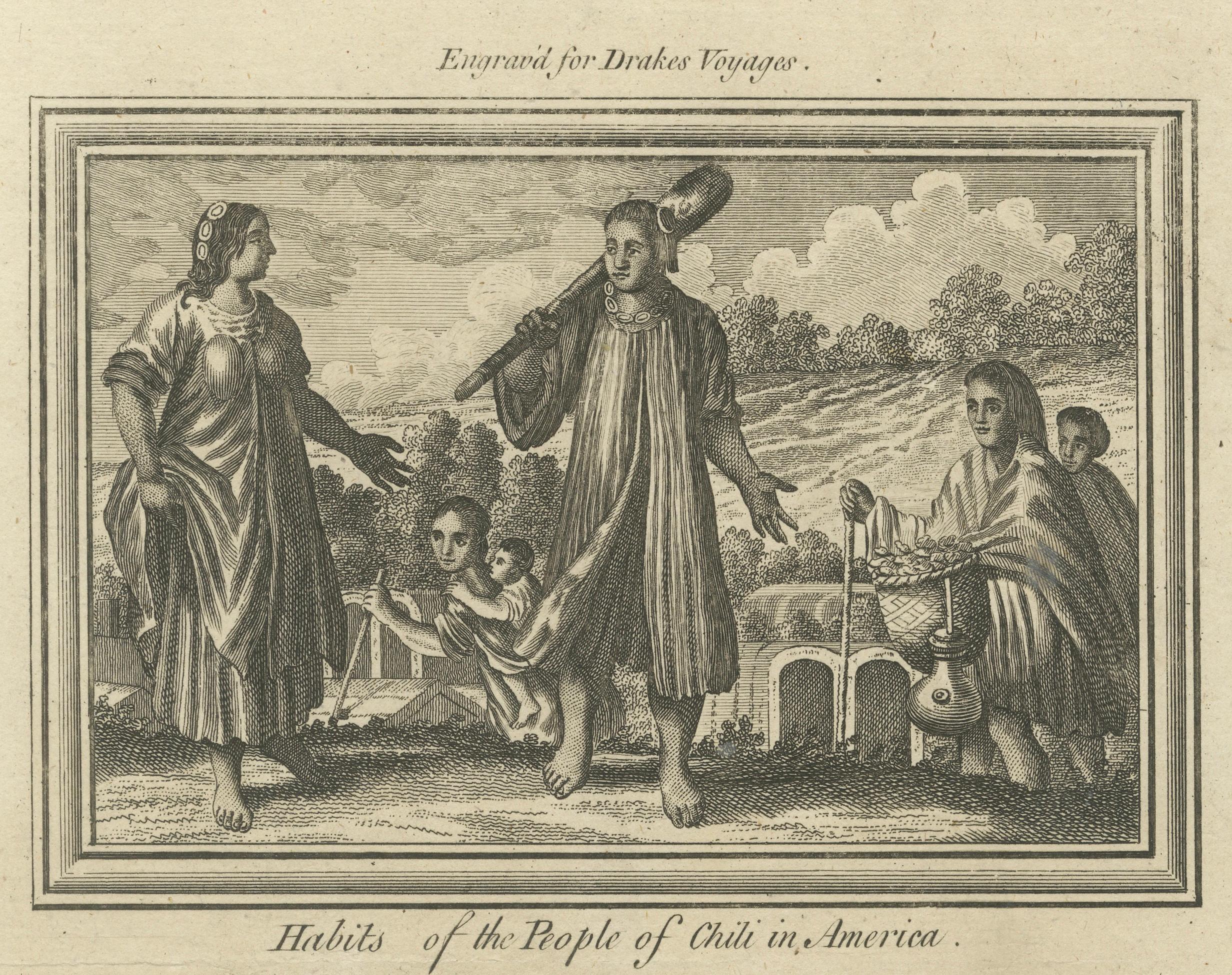
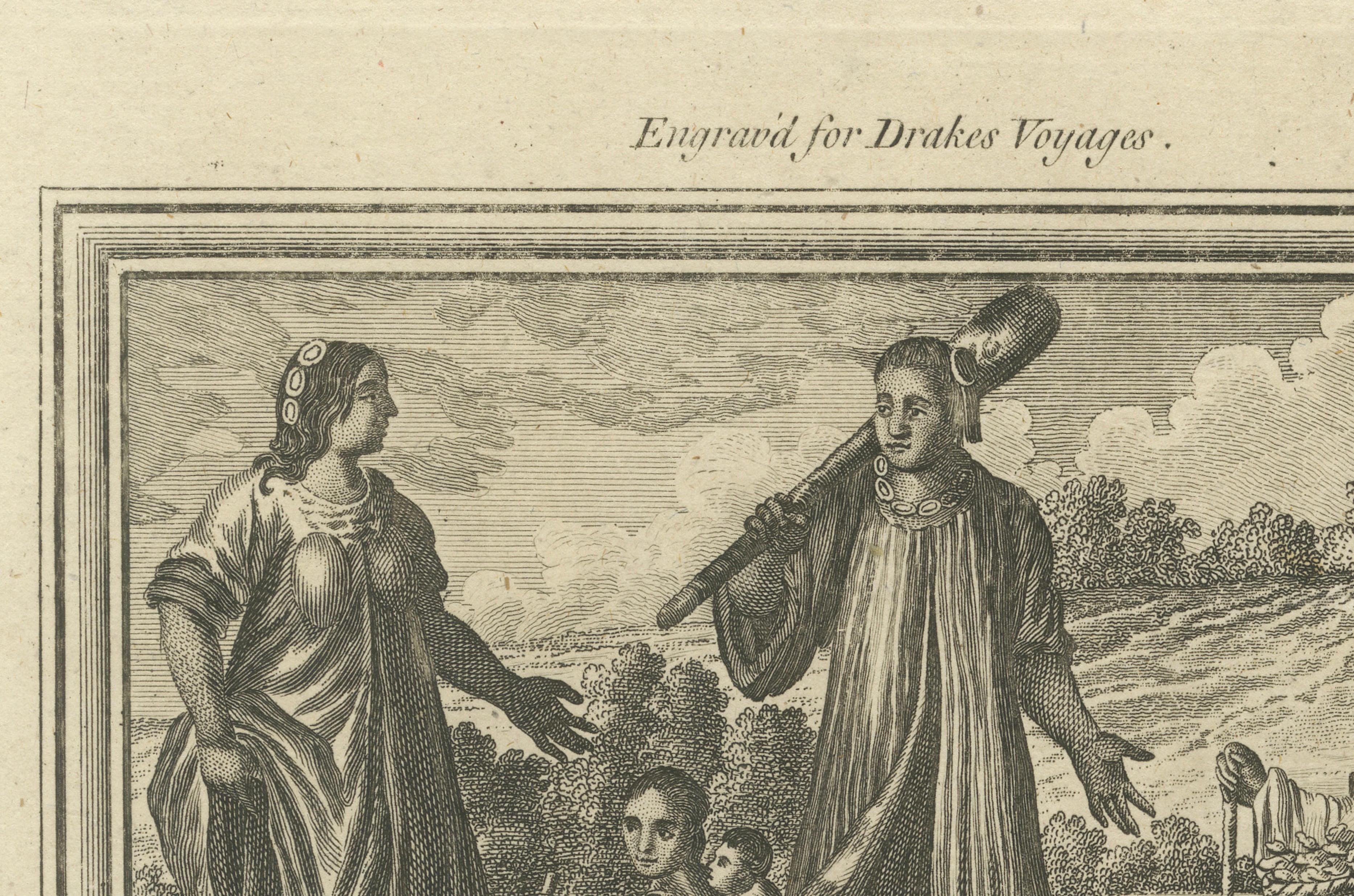
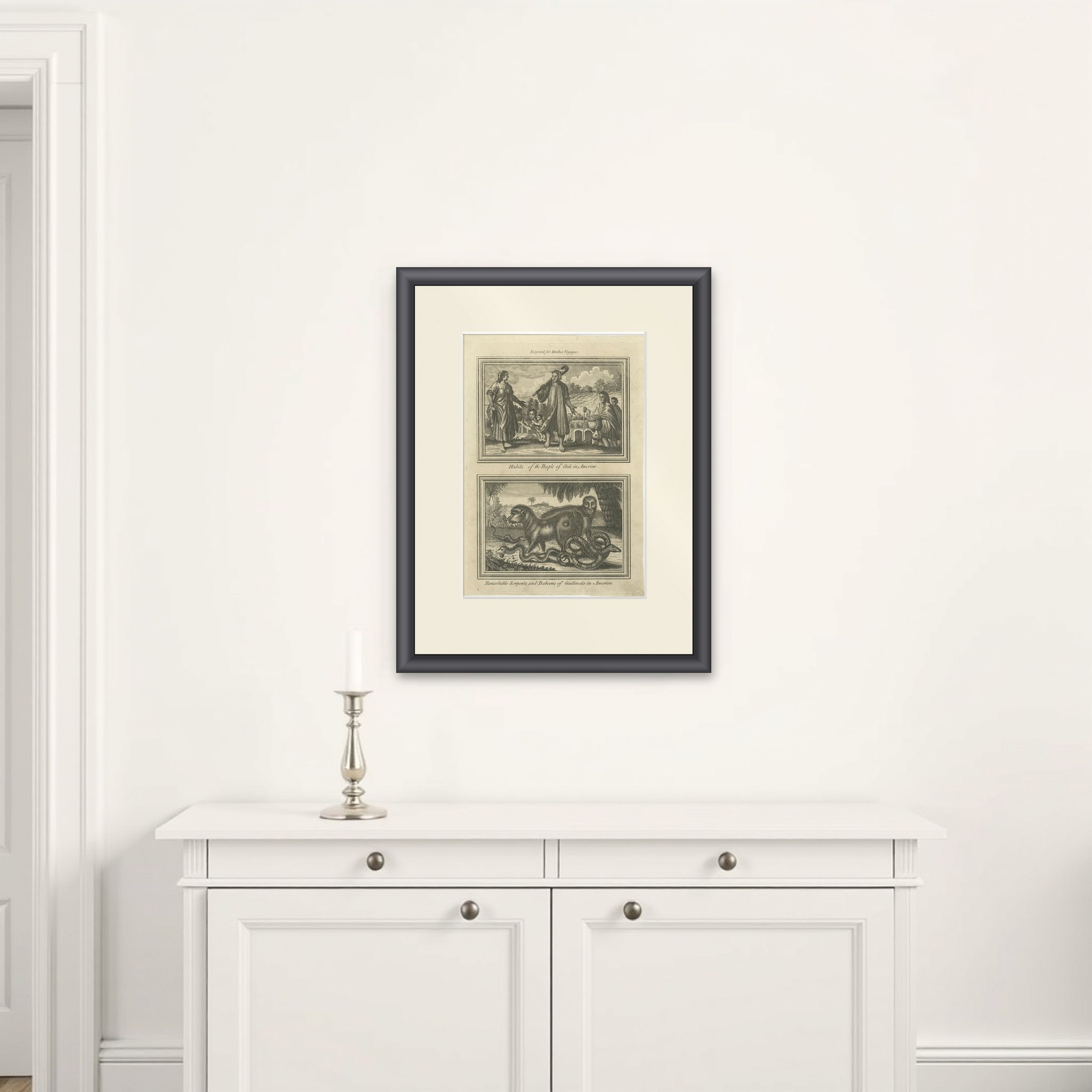
Two scenes of South and Central America on one sheet, an original copper engraving from Drake's Voyages (A New Universal Collection of Authentic and Entertaining Voyages and Travels), published in London around 1771. The words "Engraved for Drake's Voyages" run across the top of the sheet.
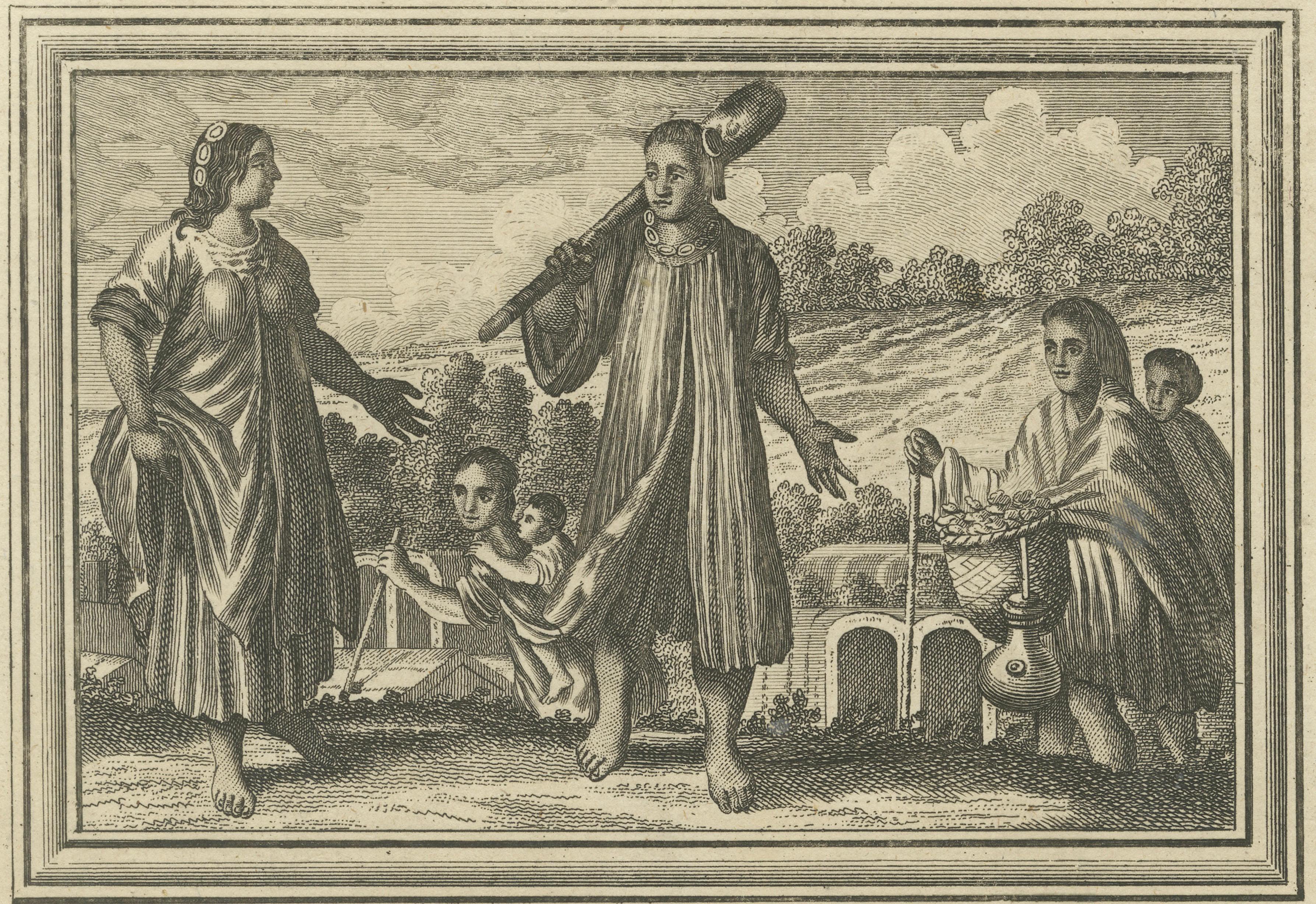
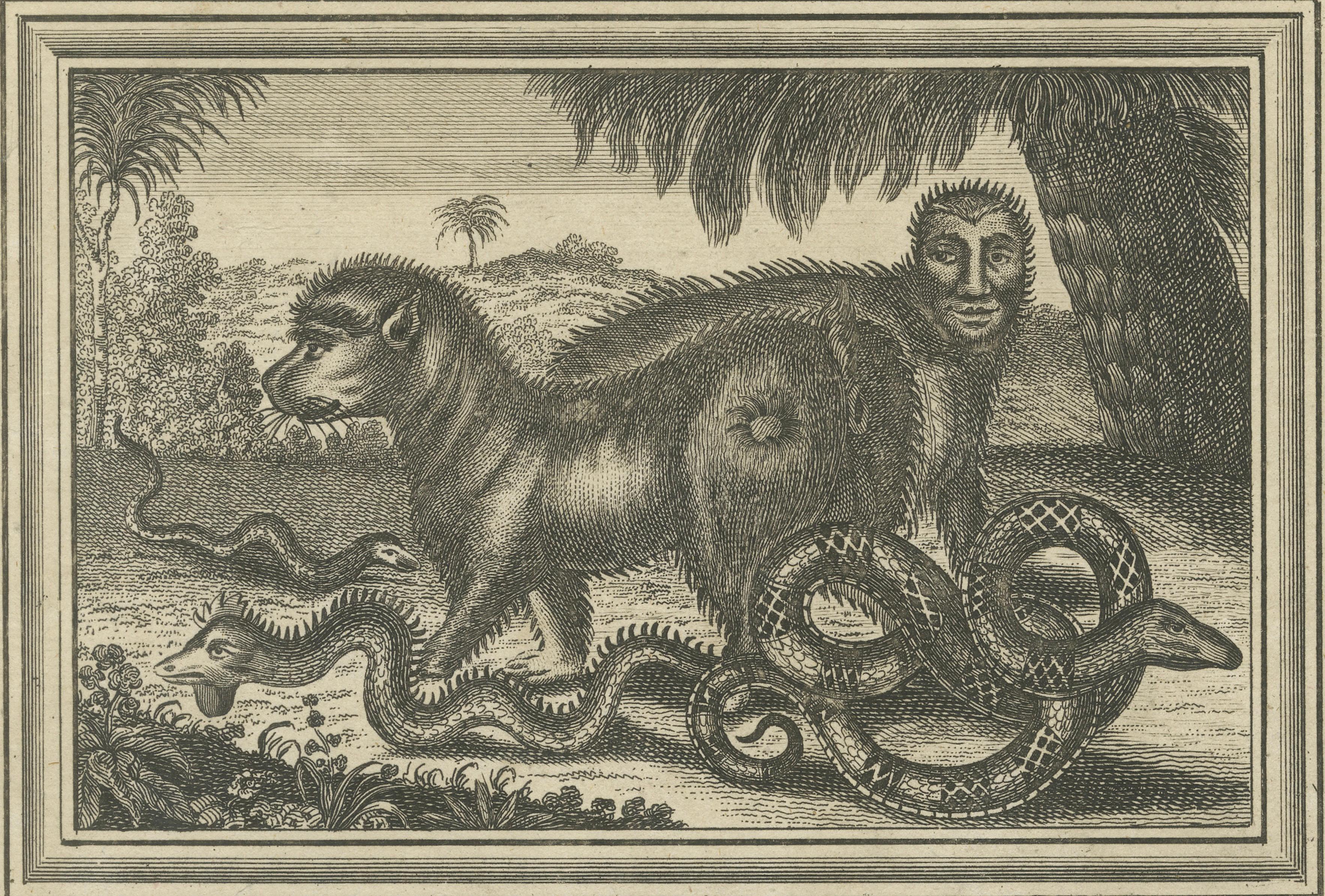
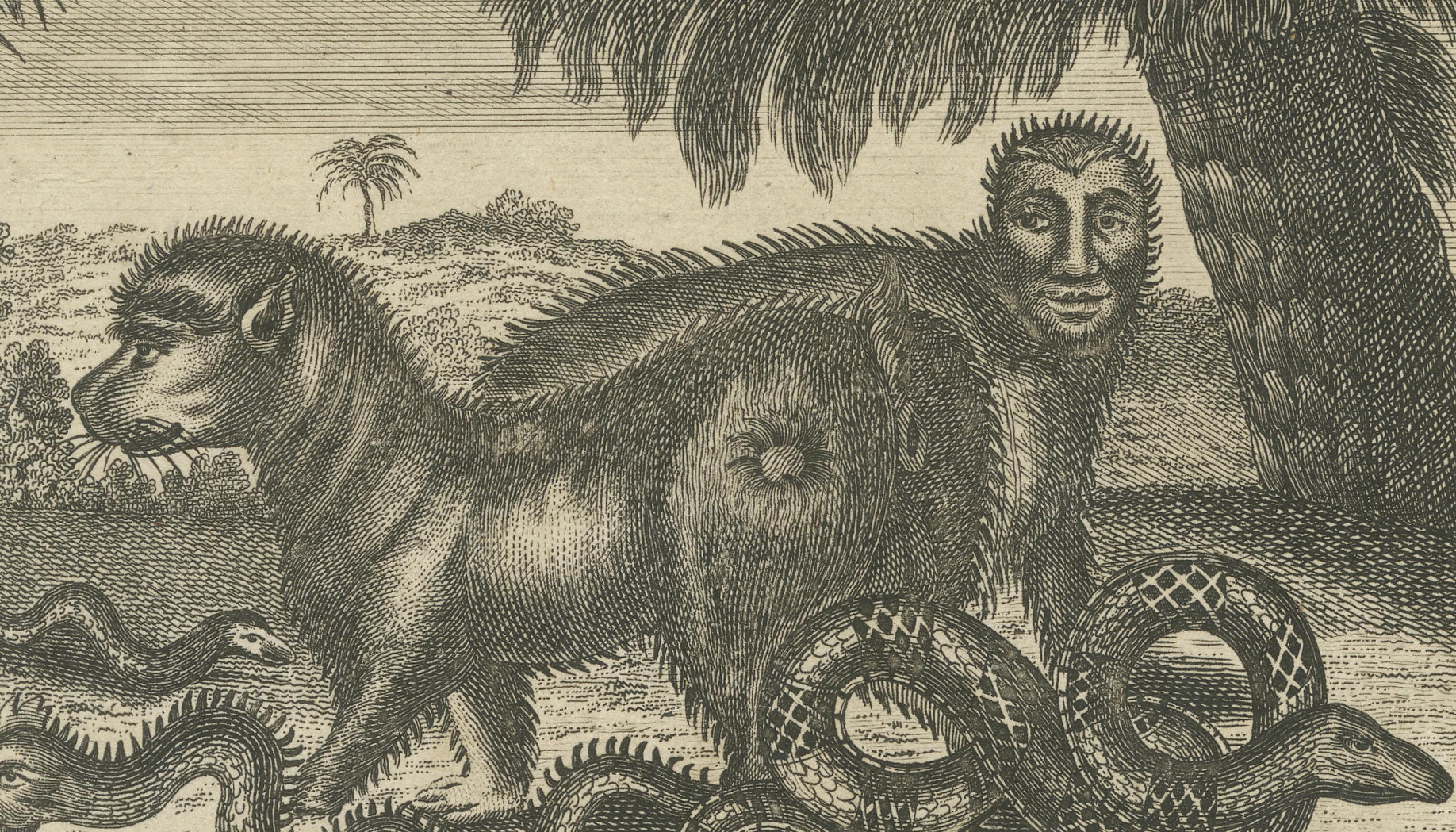
The upper scene is captioned "Habits of the People of Chili in America." It shows a woman at the left and a man at the center, who carries a tool with a hooped end over his shoulder, with two children crouching between them and, at the right, a woman with a basket and a large jug. Low walls and hills fill the background. The lower scene is captioned "Remarkable Serpents and Baboons of Gautimala in America." A large ape-like creature stands among palm trees with a human-faced animal peering over its back, while coiled serpents, one with a dragon-like head, move across the foreground. The creatures are drawn from travelers' reports rather than from life.
Many of the illustrations in Drake's compilation derive from earlier sources, among them Arnoldus Montanus's De Nieuwe en Onbekende Weereld (1671), and the plates reflect how Europeans of the period imagined the peoples and wildlife of the Americas.