About this sheet
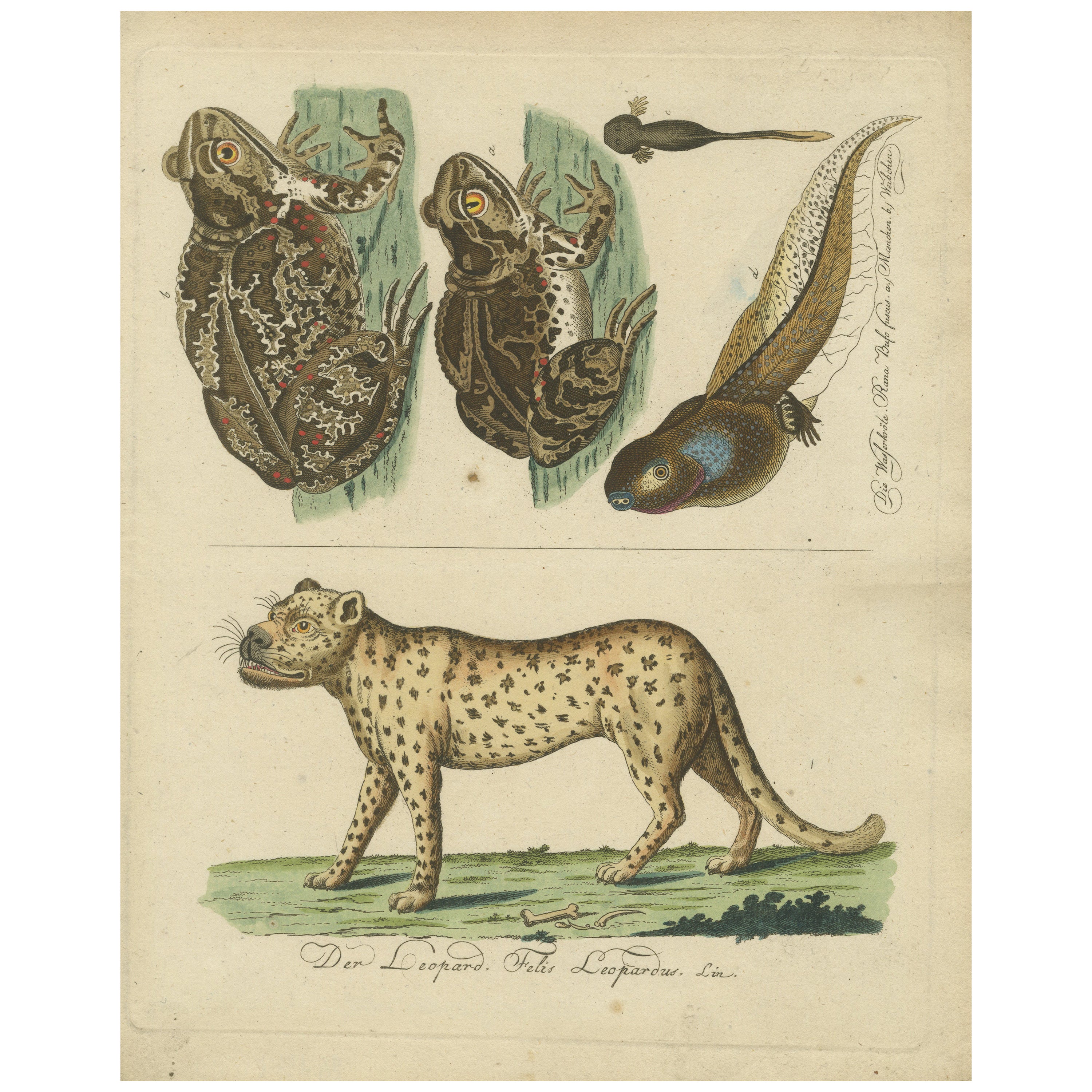
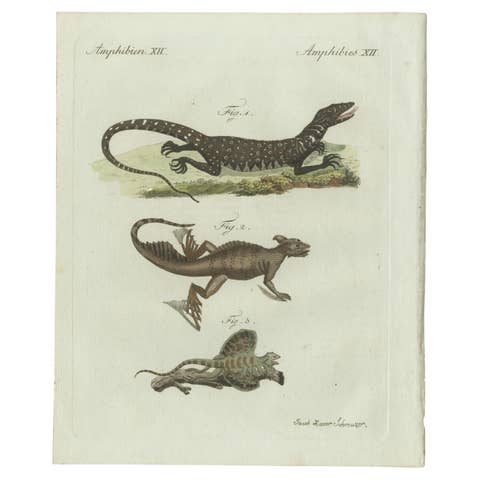
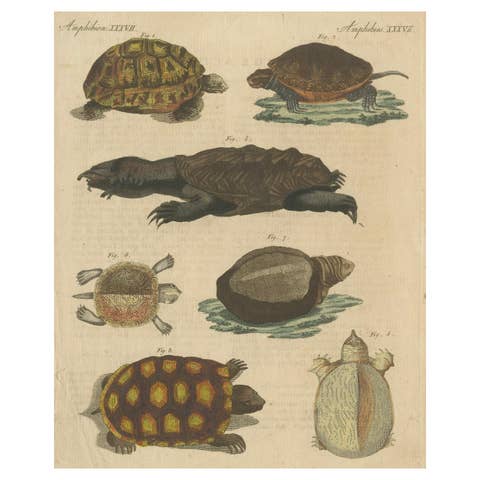
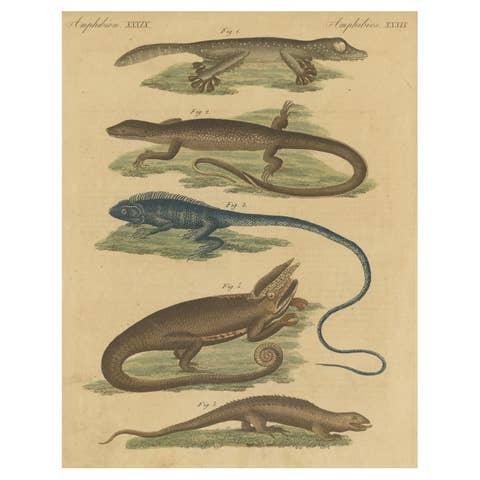
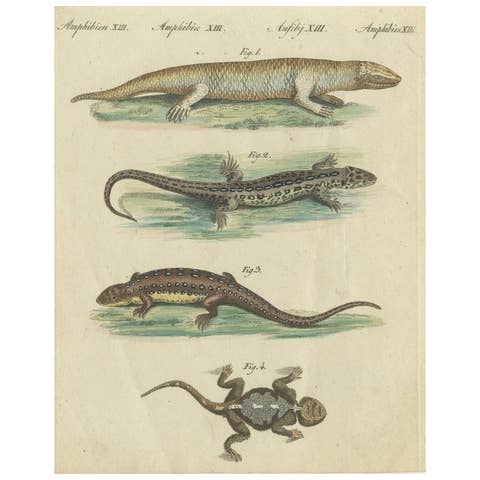
This image is an illustration from a natural history work, a collection titled "Getreue Abbildungen naturhistorischer Gegenstände in Hinsicht auf Bechsteins kurzgefasste gemeinnützige Naturgeschichte des In- und Auslandes." This title suggests that the book aims to provide accurate representations of natural history subjects in relation to a concise and useful natural history of both domestic and foreign realms.
The publication information indicates it was published in Nuremberg, by Schneider and Weigel's art and book dealership, sometime between 1793 and 1809. This places the work in the late 18th to early 19th century, a period during which natural history was a popular subject, and many scientists and enthusiasts were engaged in the classification and illustration of flora and fauna.
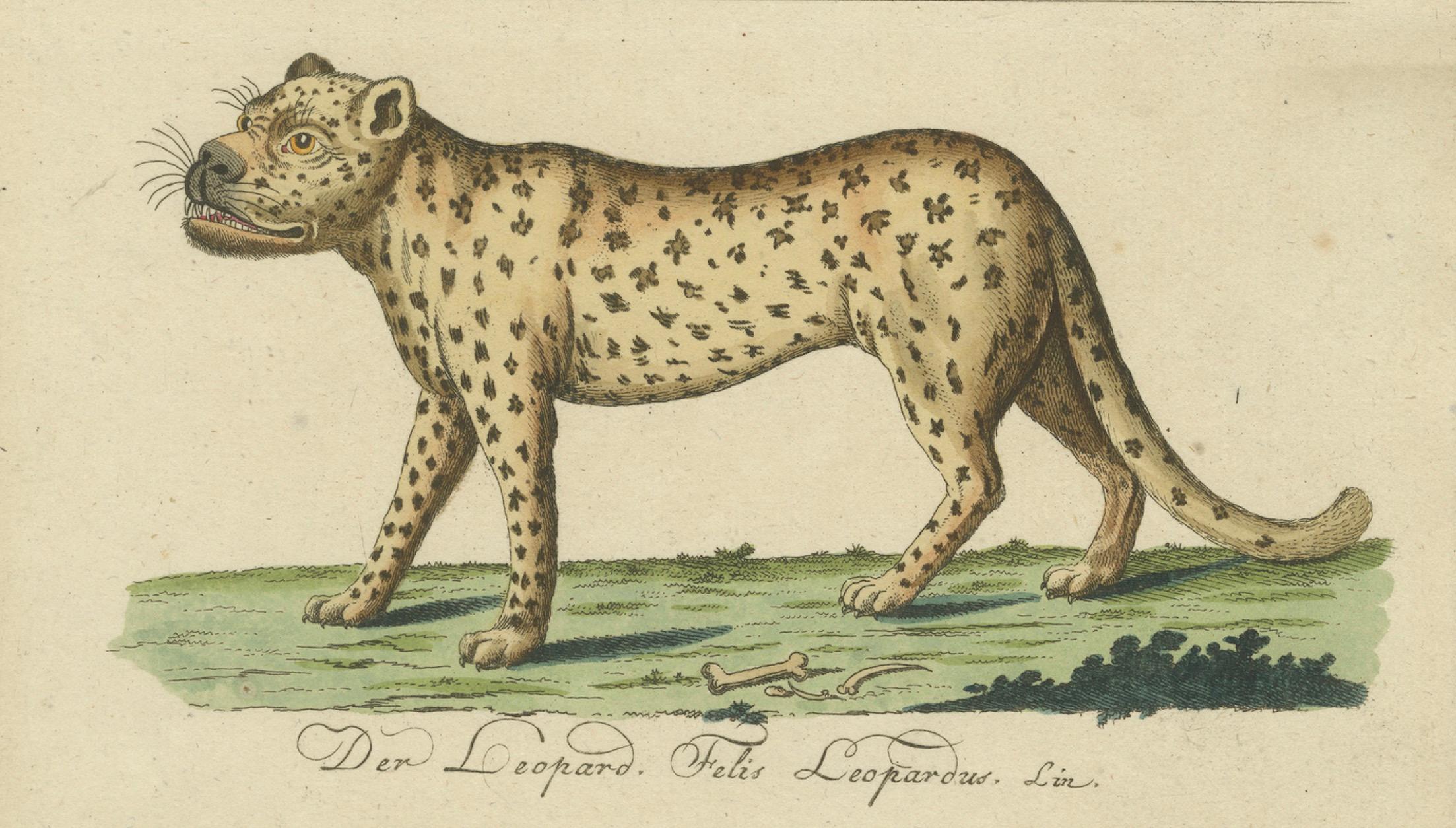
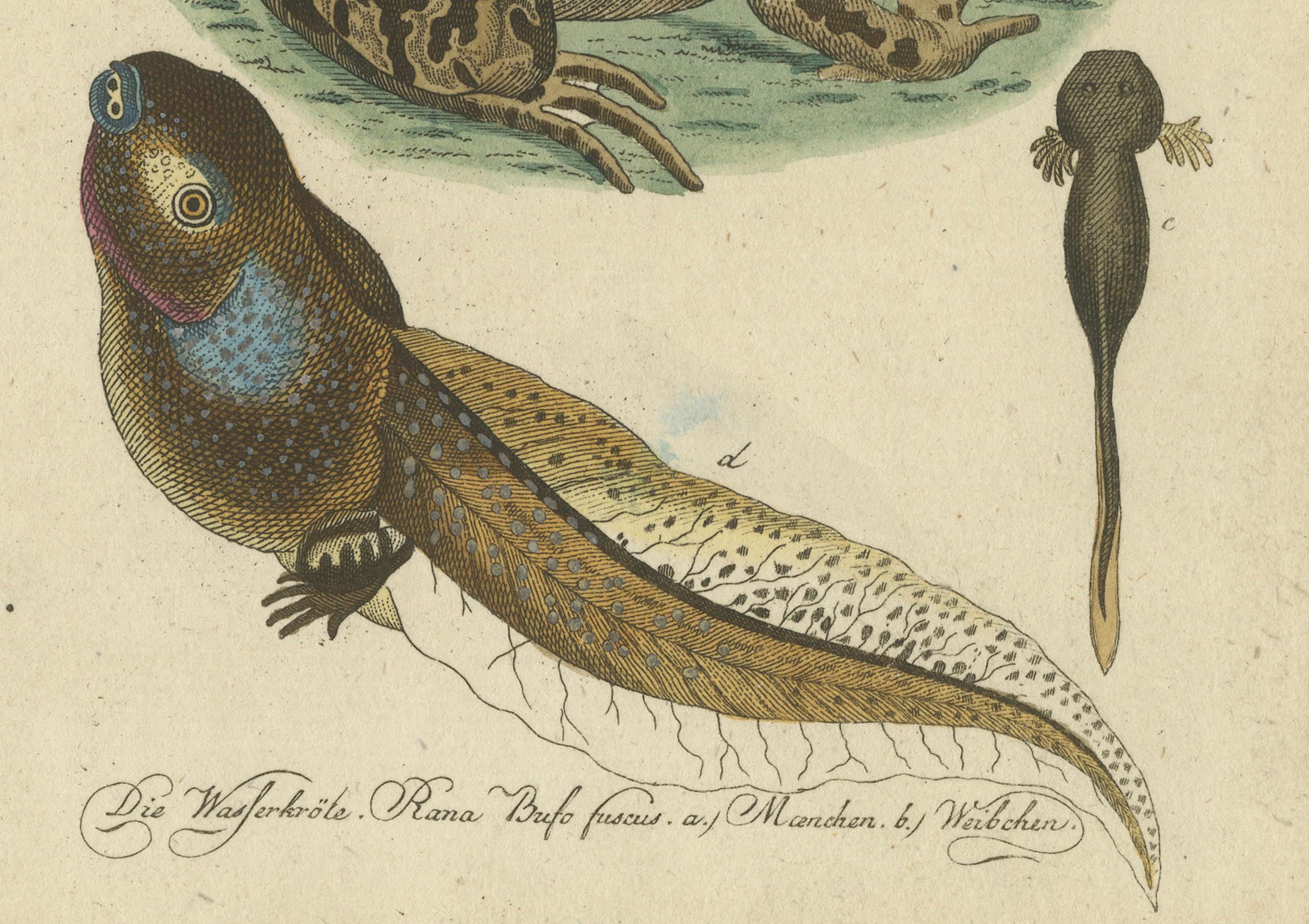
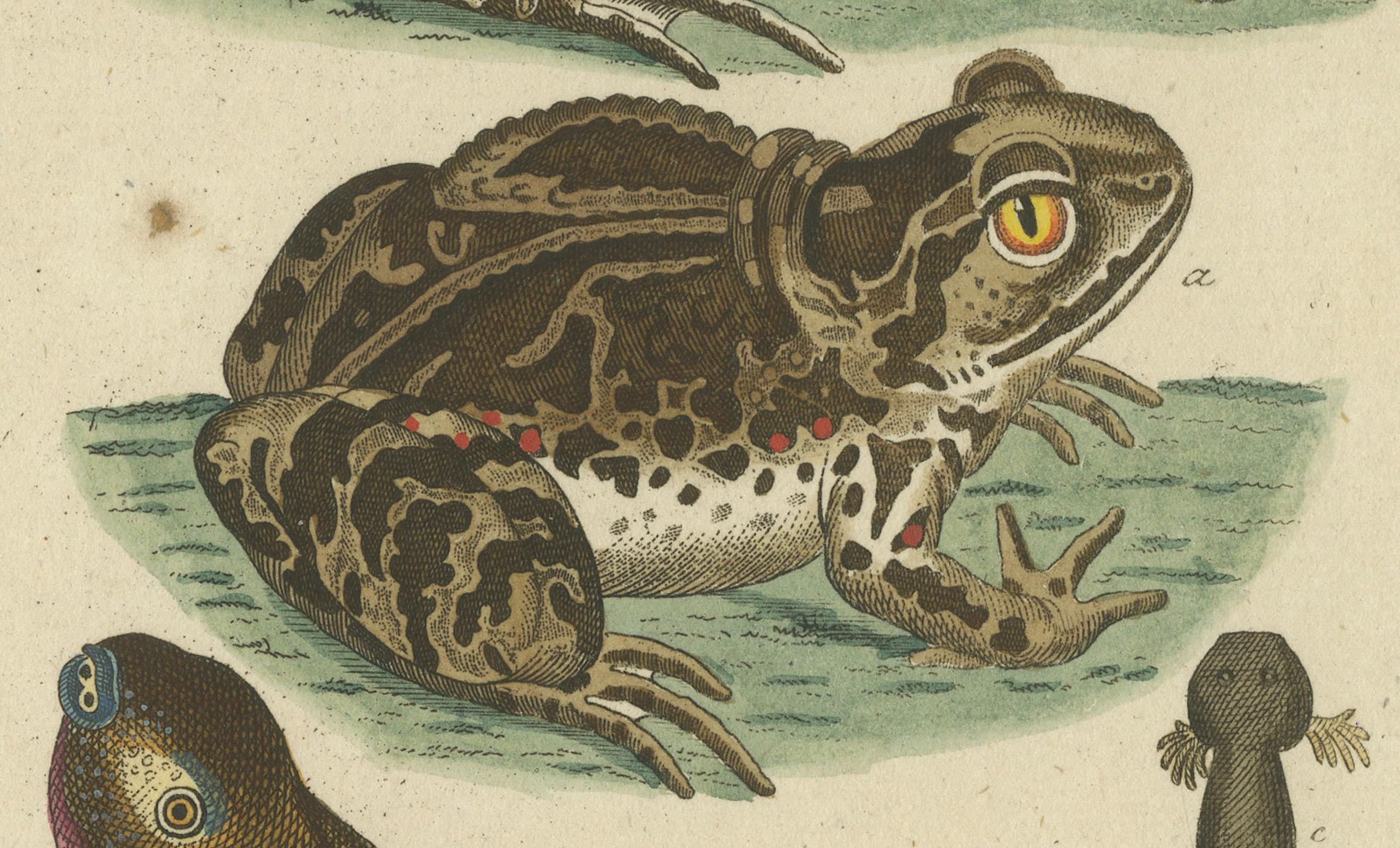
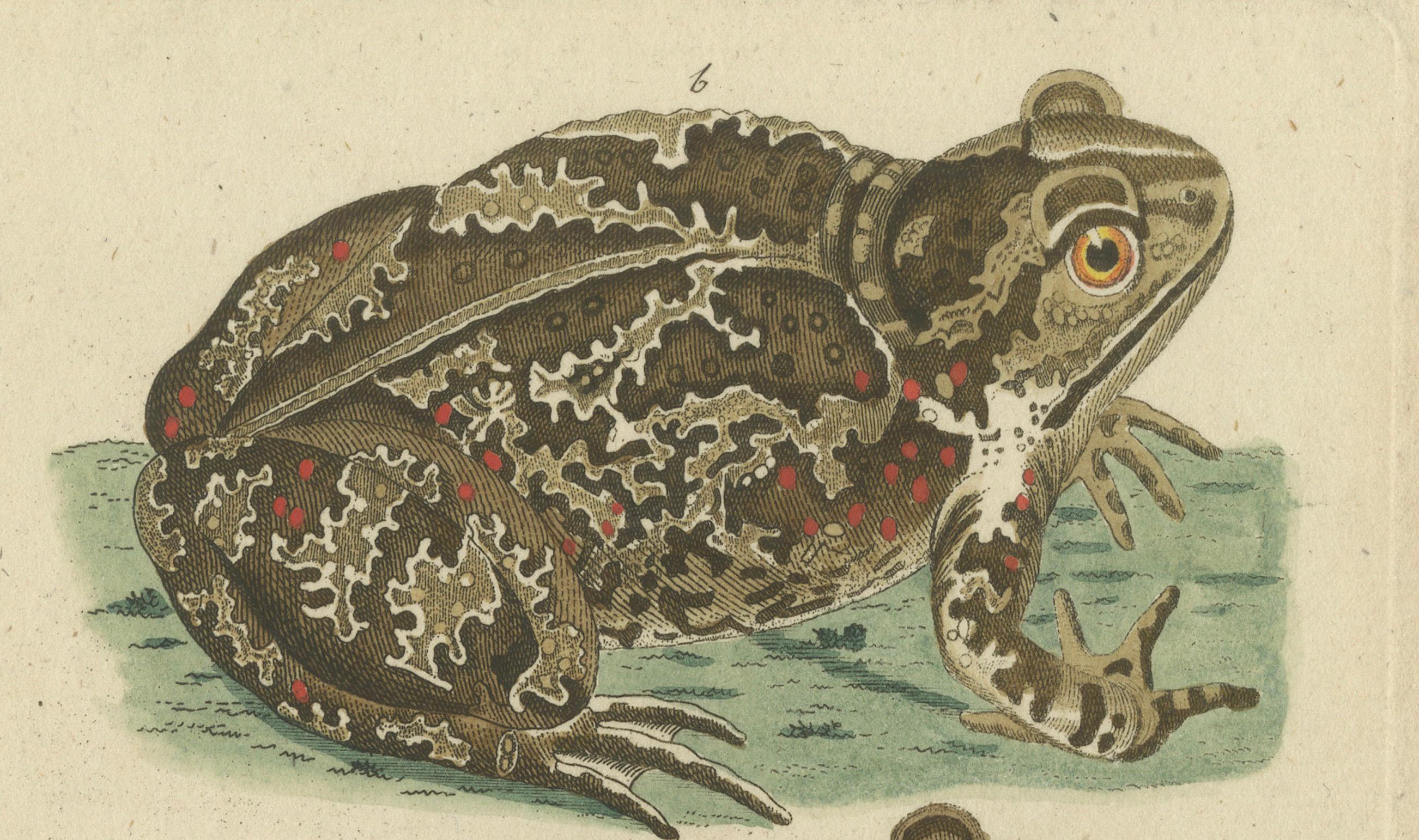
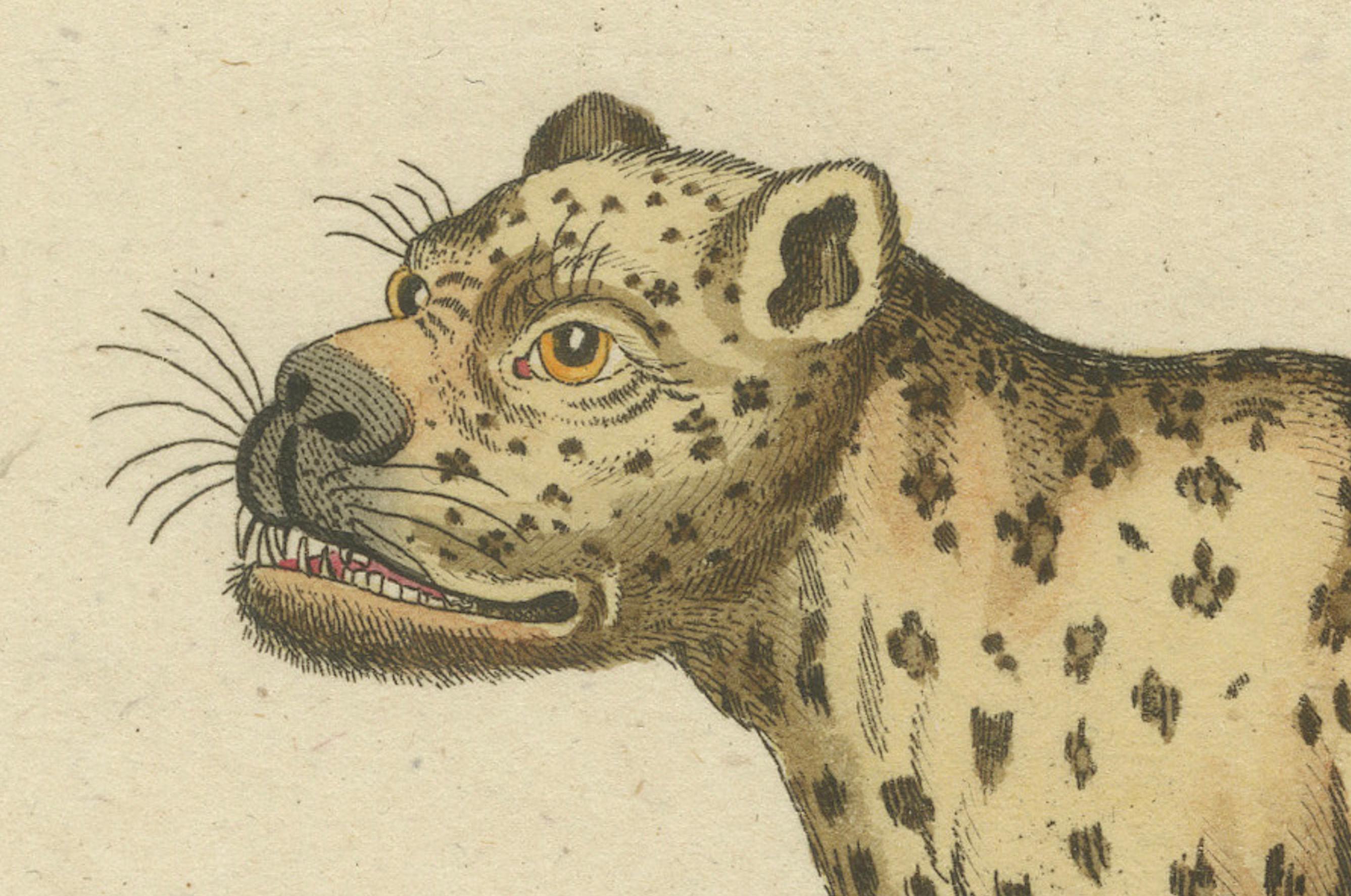
The image depicts two frogs or toads, a lizard-like creature, and a leopard. The creatures are rendered in a style typical of the time, with an attempt at scientific accuracy but also with some artistic embellishment that reflects the illustrative methods of the era.
The text below the leopard reads "Der Leopard. Felis Leopardus. Lin.", which translates to "The Leopard. Felis Leopardus. Lin." indicating the scientific classification of the leopard according to the system developed by Carl Linnaeus, the father of modern taxonomy. The "Lin." is an abbreviation of Linnaeus' name, commonly used to denote the authority who first described a species.
Such works were crucial in disseminating knowledge about the natural world to both the scientific community and the public at large, contributing to the development of natural sciences, including biology and zoology.
More about the technique used to make this print:
The image was created using hand-colored engraving, a common technique in the 18th and early 19th centuries for scientific and natural history illustrations. Here’s a breakdown of the process:
1. **Engraving**: The artist would engrave the illustration onto a metal plate, traditionally copper, by carving out the image with a burin (a fine-pointed tool). The engraved lines would hold the ink.
2. **Printing**: After the engraving, the plate would be inked, and then wiped clean, leaving ink only in the carved lines. The plate would be pressed onto a sheet of paper, transferring the inked image onto the paper.
3. **Hand Coloring**: The printed images would often be colored by hand using watercolors, gouache, or sometimes even colored inks. This step was done to add realism and visual appeal to the prints.
The hand coloring was an art in itself, requiring skilled artisans who could paint within the lines and mix colors to achieve the desired hues and effects, often making each print slightly unique. This technique was especially popular before the invention of color printing processes, which allowed for mass production of colored images later in the 19th century.