About this sheet
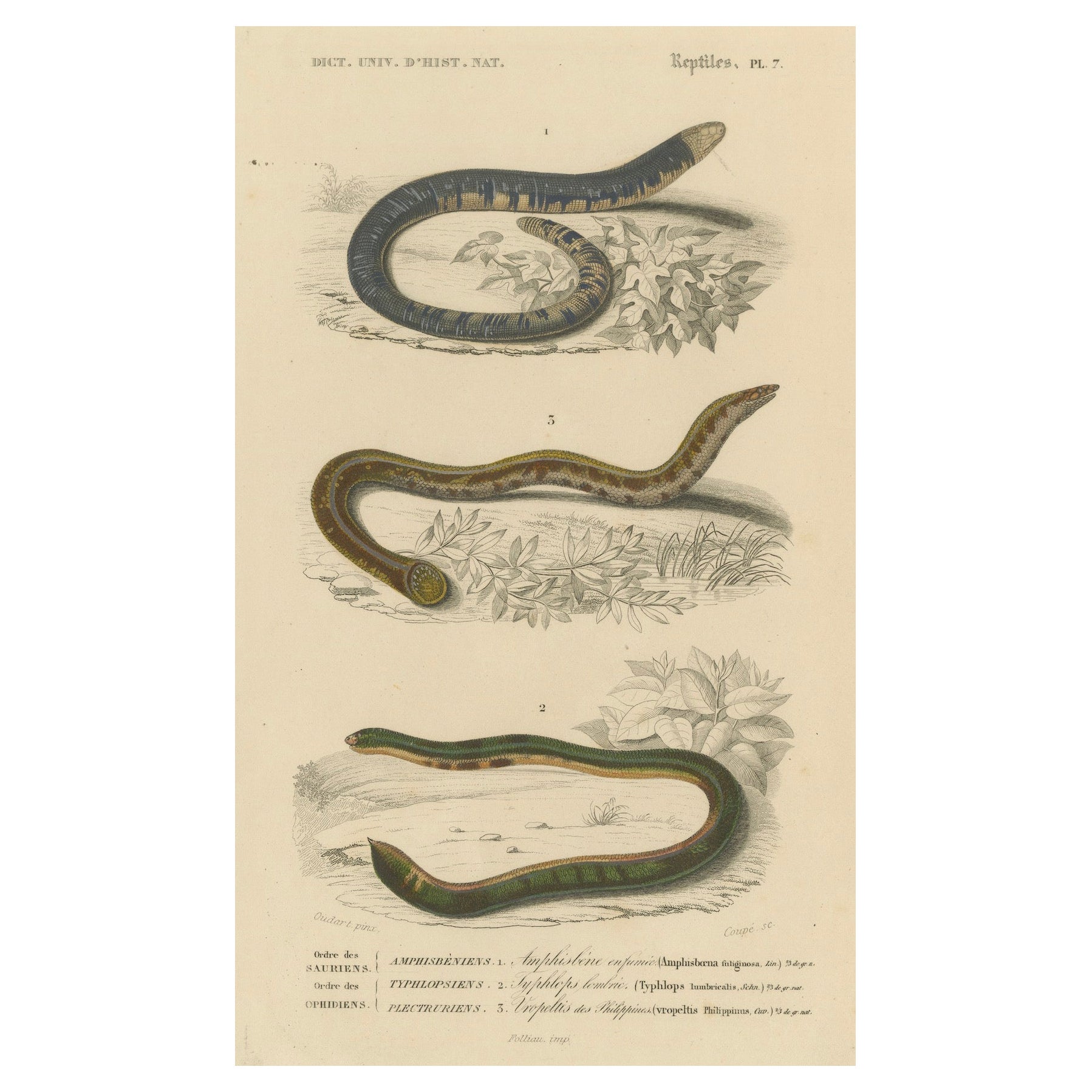
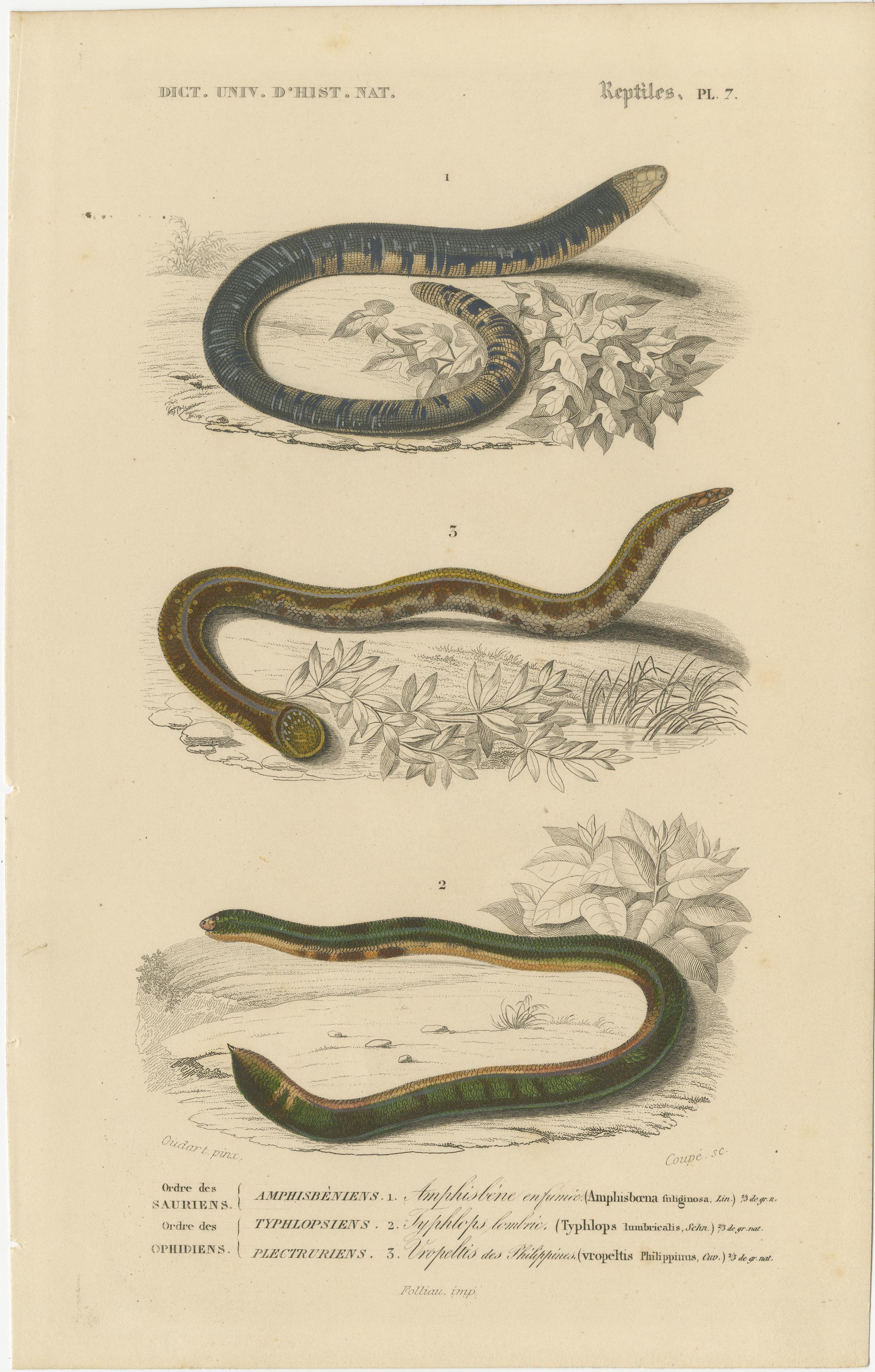
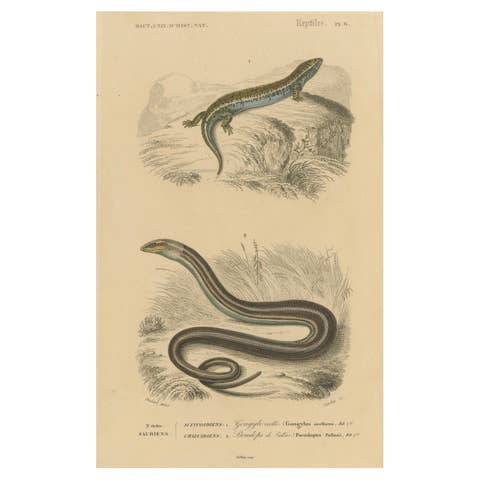
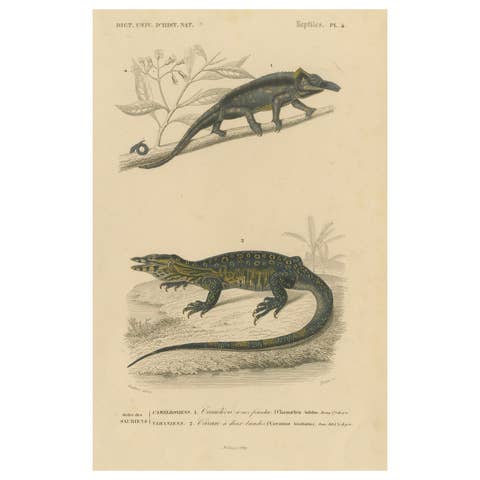
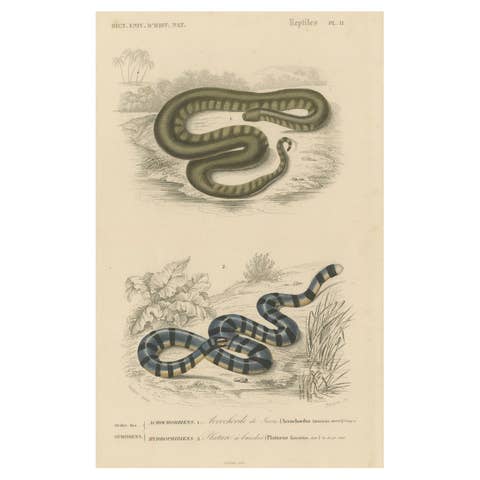
Snake Print of Worm Snake, Philippine Uropeltis and Amphisbaena, c.1850
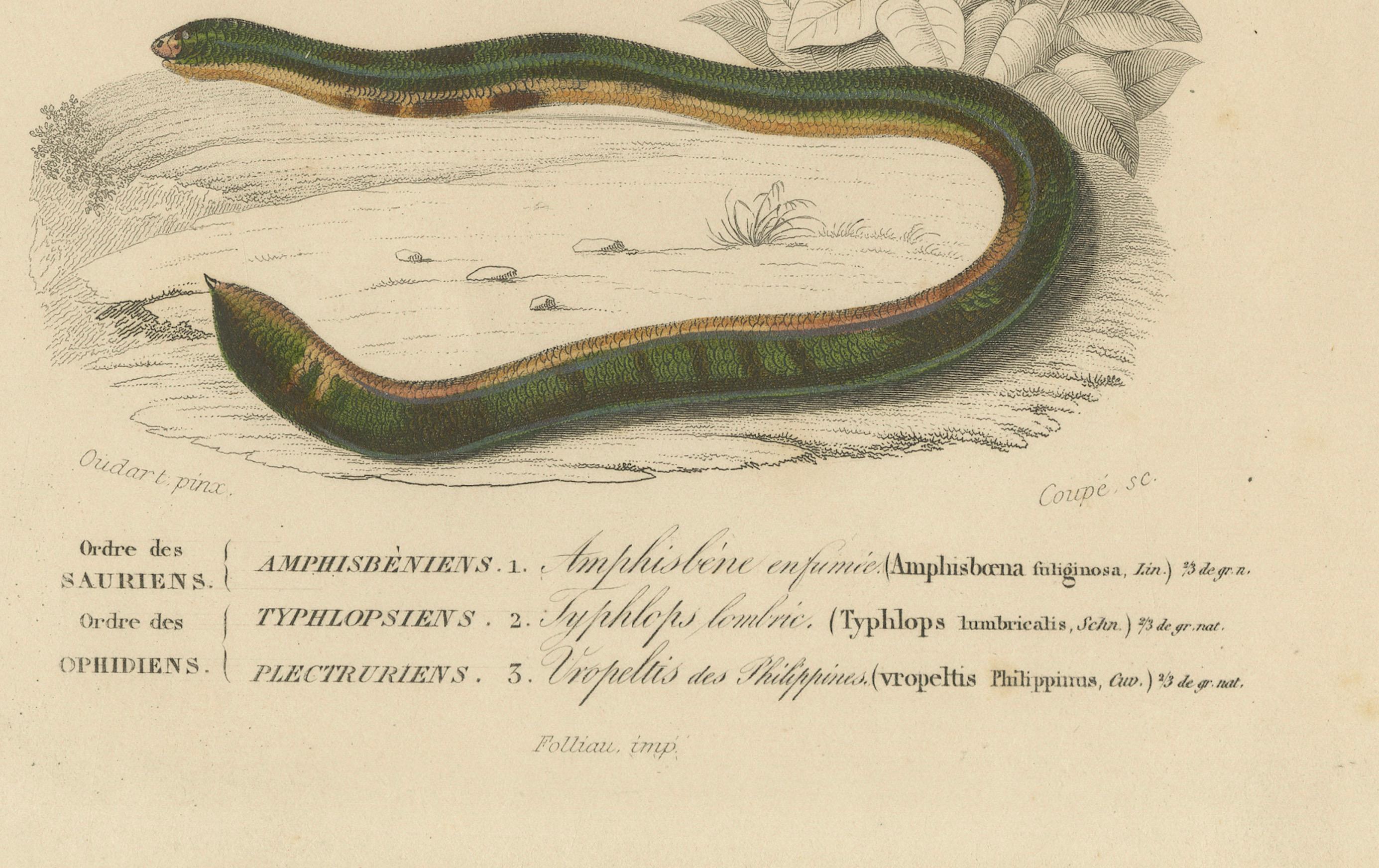
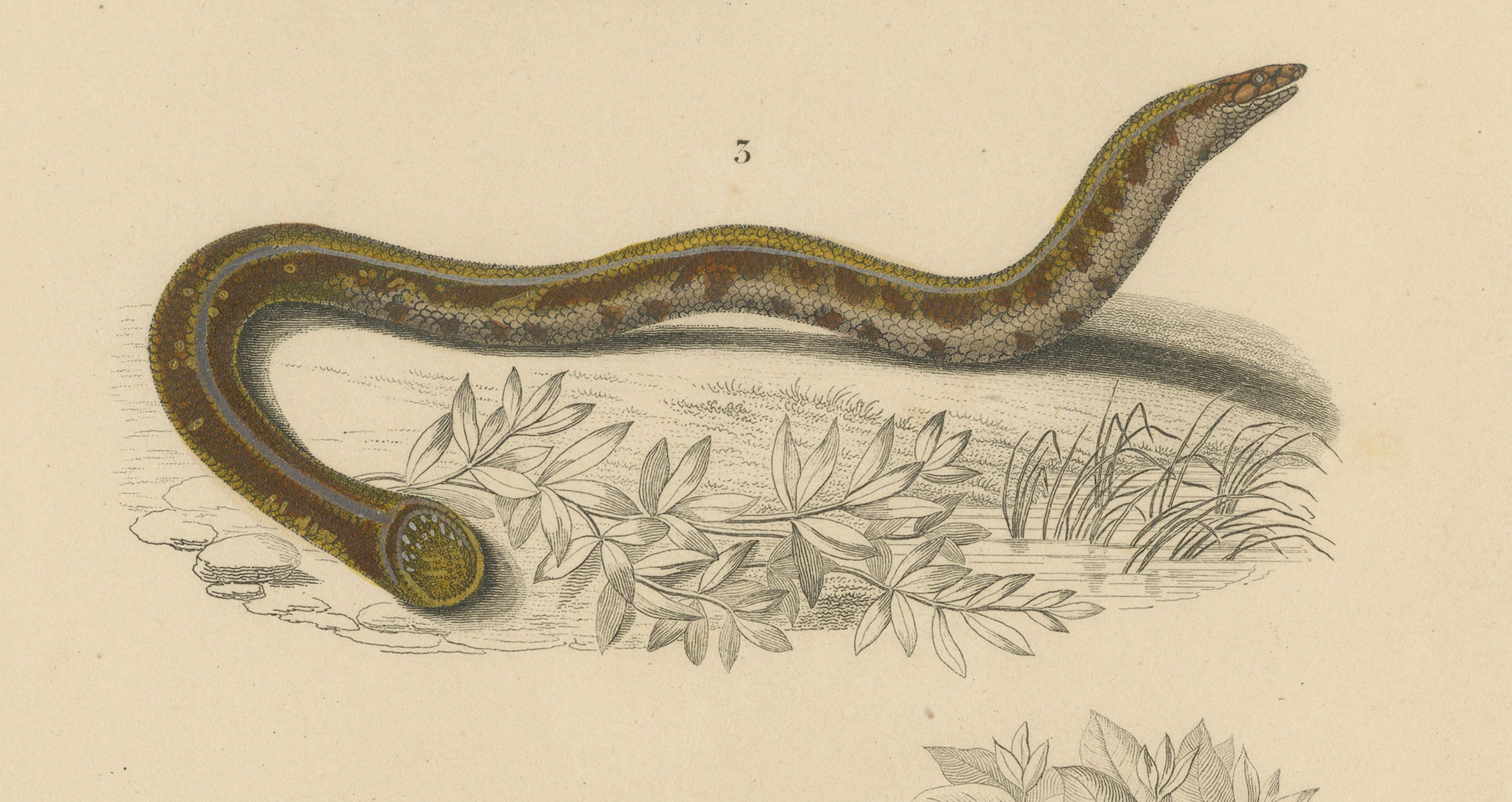
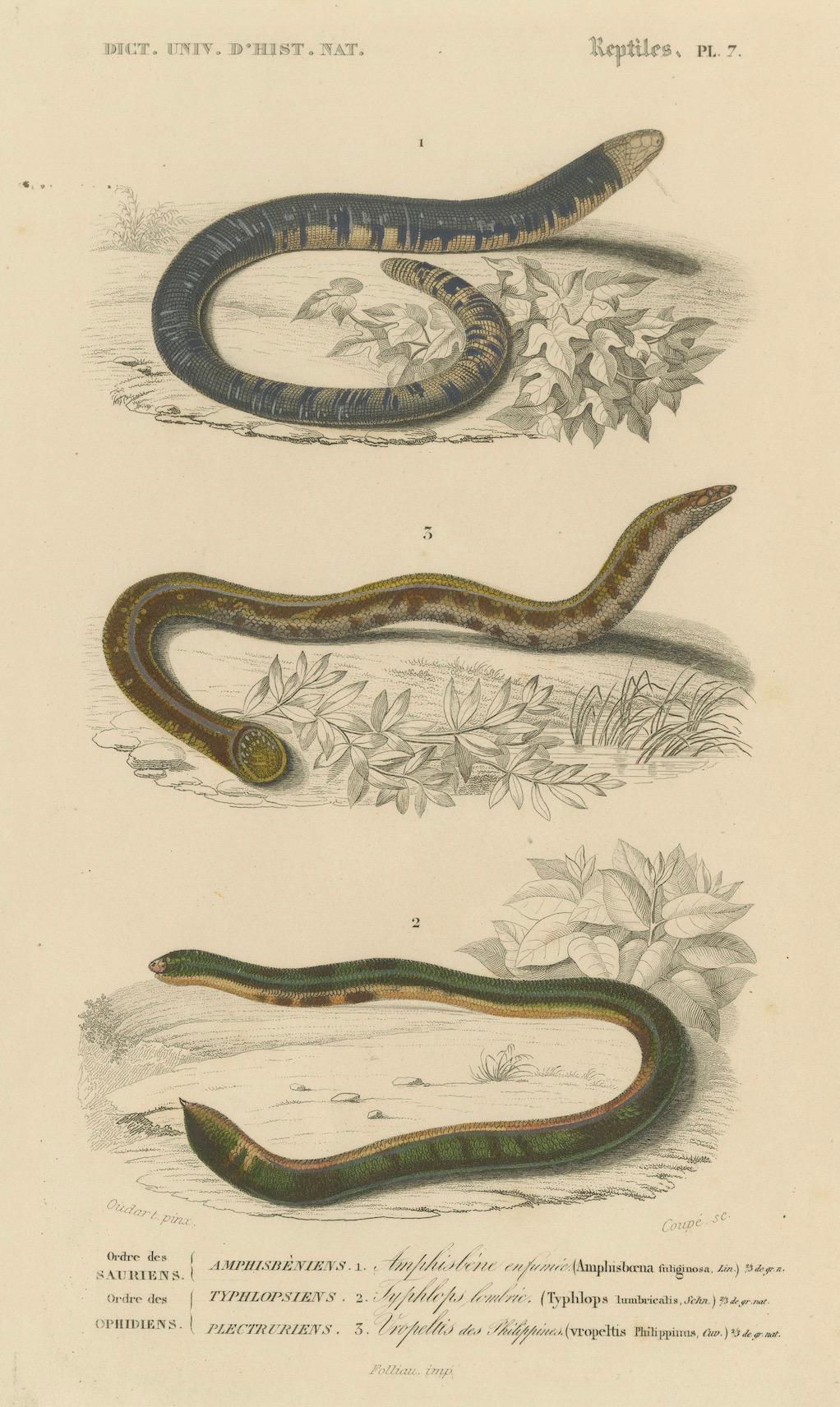
This rare and visually engaging hand-colored engraving, Reptiles Pl. 7, features three lesser-known serpentine species: the Amphisbaena (Amphisbaena caecilia), the Worm Snake (Typhlops lumbricalis), and the Philippine Uropeltis (Uropeltis philippinus). The print was published around 1850 as part of the Dictionnaire Universel d’Histoire Naturelle, the monumental natural history encyclopedia directed by Charles Dessalines d’Orbigny in Paris.
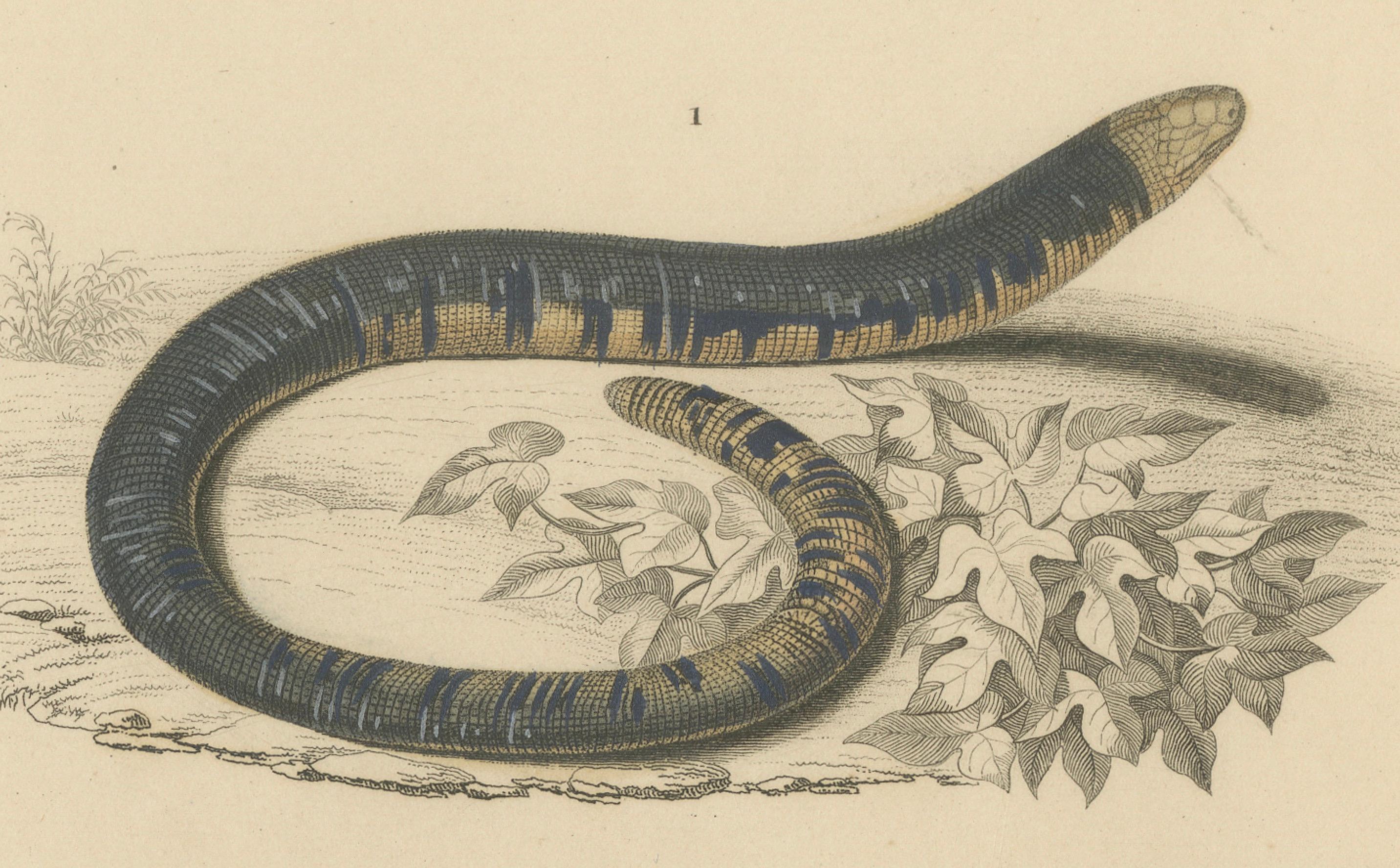
Figure 1, at the top, illustrates an Amphisbaena, also referred to as a worm lizard, which belongs to the order Amphisbaenians. These unusual creatures are limbless reptiles adapted for a burrowing lifestyle. Native to tropical regions of the Americas and Africa, they are known for their segmented, annulated bodies and reduced vision. The engraving captures its cylindrical shape, blunt head, and scale patterning in deep blue and ochre hues, set against a stylized forest floor.
Figure 2 presents the Worm Snake, scientifically known as Typhlops lumbricalis. This small, blind snake resembles an earthworm in both appearance and behavior. It is shown with subtle green and pink coloring and a rounded snout, ideal for burrowing in soft soil. These snakes are non-venomous and feed primarily on ants and termites. Their secretive nature and smooth scales are accurately portrayed in this engraving.
Figure 3 shows Uropeltis philippinus, the Philippine Uropeltis, a rare and specialized burrowing snake from Southeast Asia. The plate highlights its glossy scales and colorful pattern in shades of brown, yellow, and grey. This species, like others in the Uropeltidae family, has a shield-like tail tip that may serve as a plug when burrowing backward through tunnels.
Drawn by Oudart and engraved by Coupé, this plate is a fine example of 19th-century French scientific illustration, combining anatomical accuracy with decorative appeal. Each snake is placed in a naturalistic setting to evoke its ecological context.
Condition Summary:
Minor foxing in the margins, image area clean with strong plate lines. Hand coloring remains vibrant. A well-preserved natural history print with no tears or visible repairs.
Framing Tips:
Use a slim black or walnut frame with a warm cream or stone-colored mat to bring out the earthy tones. UV-protective glass is recommended to maintain the delicate detail and color of the print. Suitable for a study or naturalist setting.