About this sheet
Frog Print of Cape Dactylethra and Surinam Toad, c.1850, by Orbigny
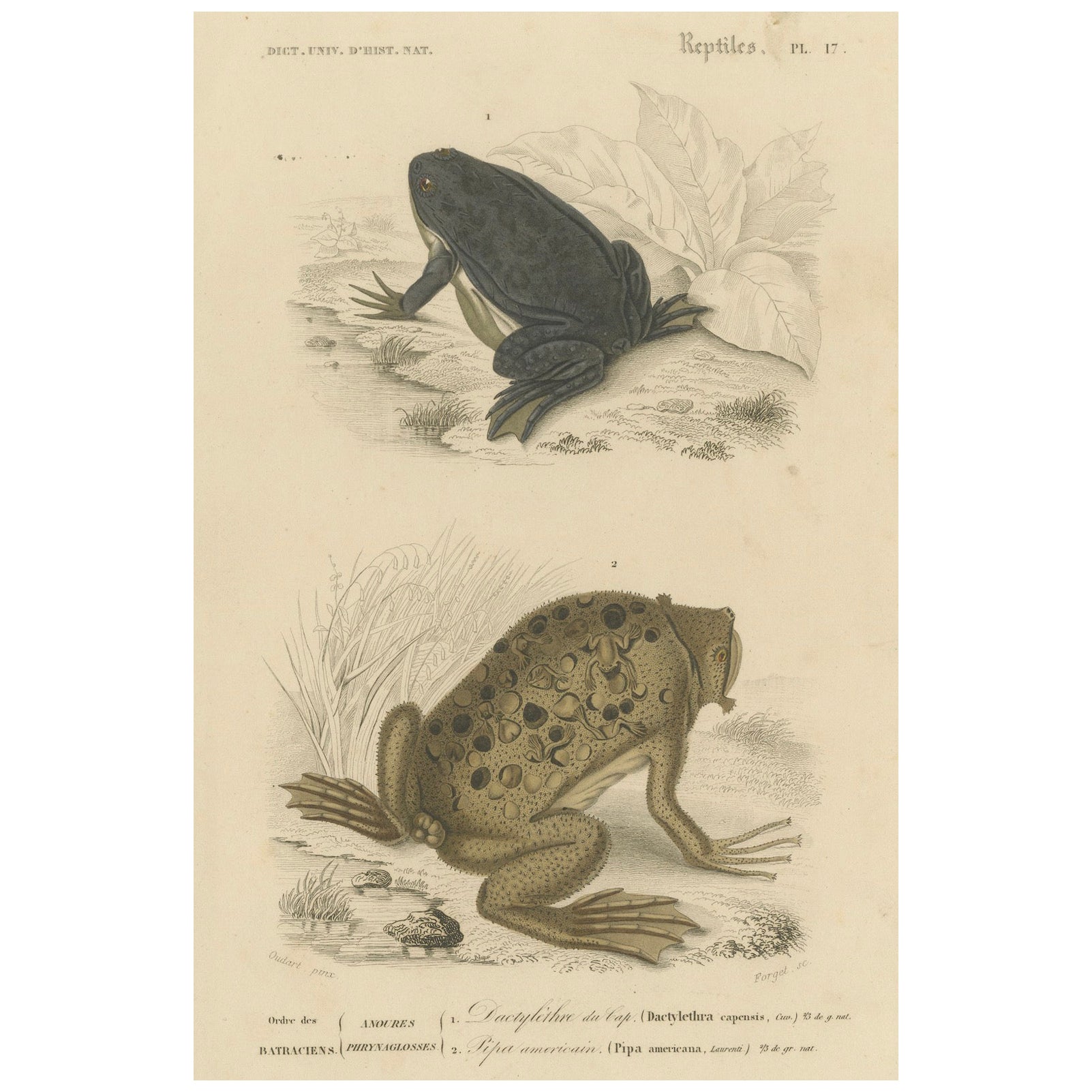
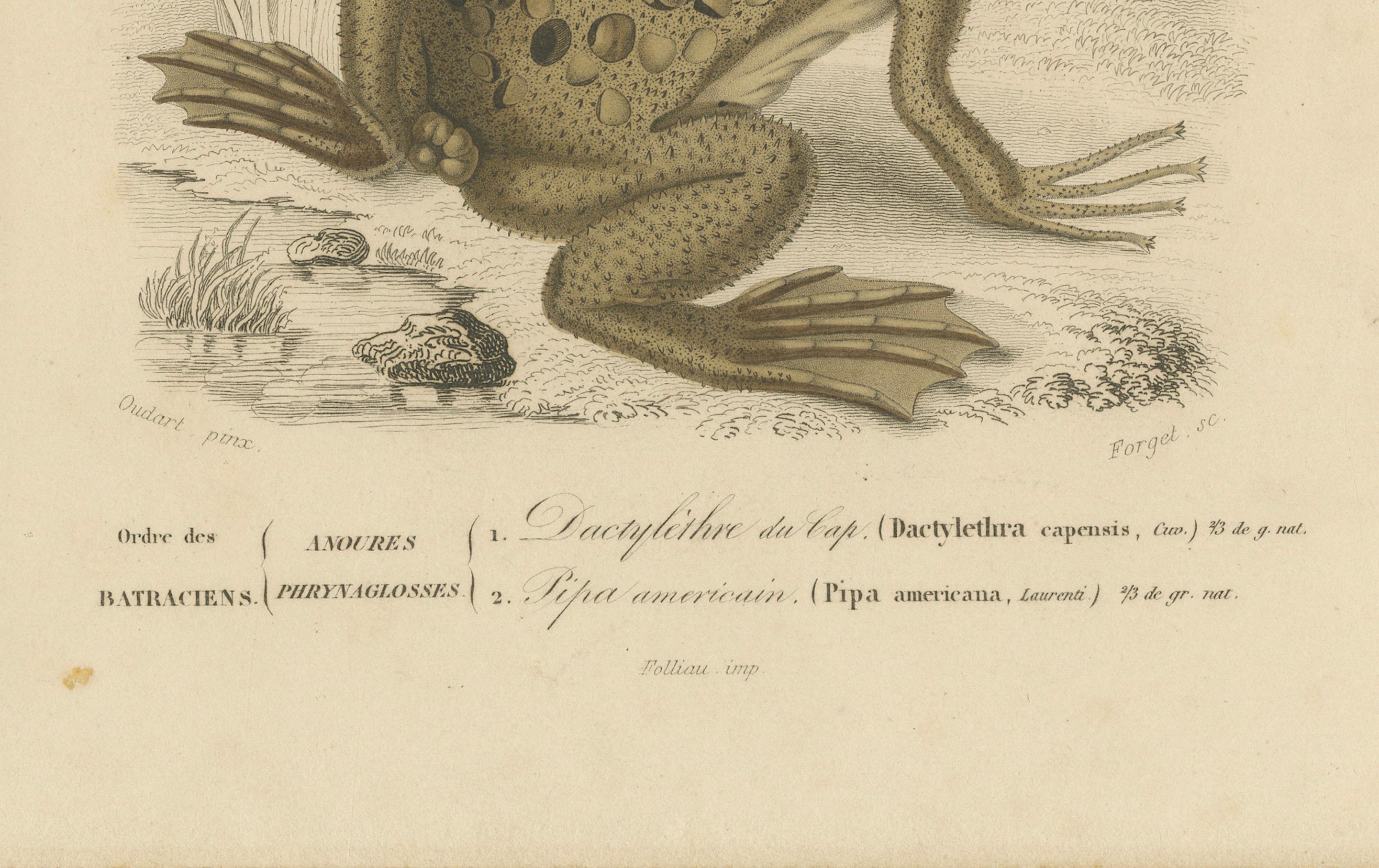
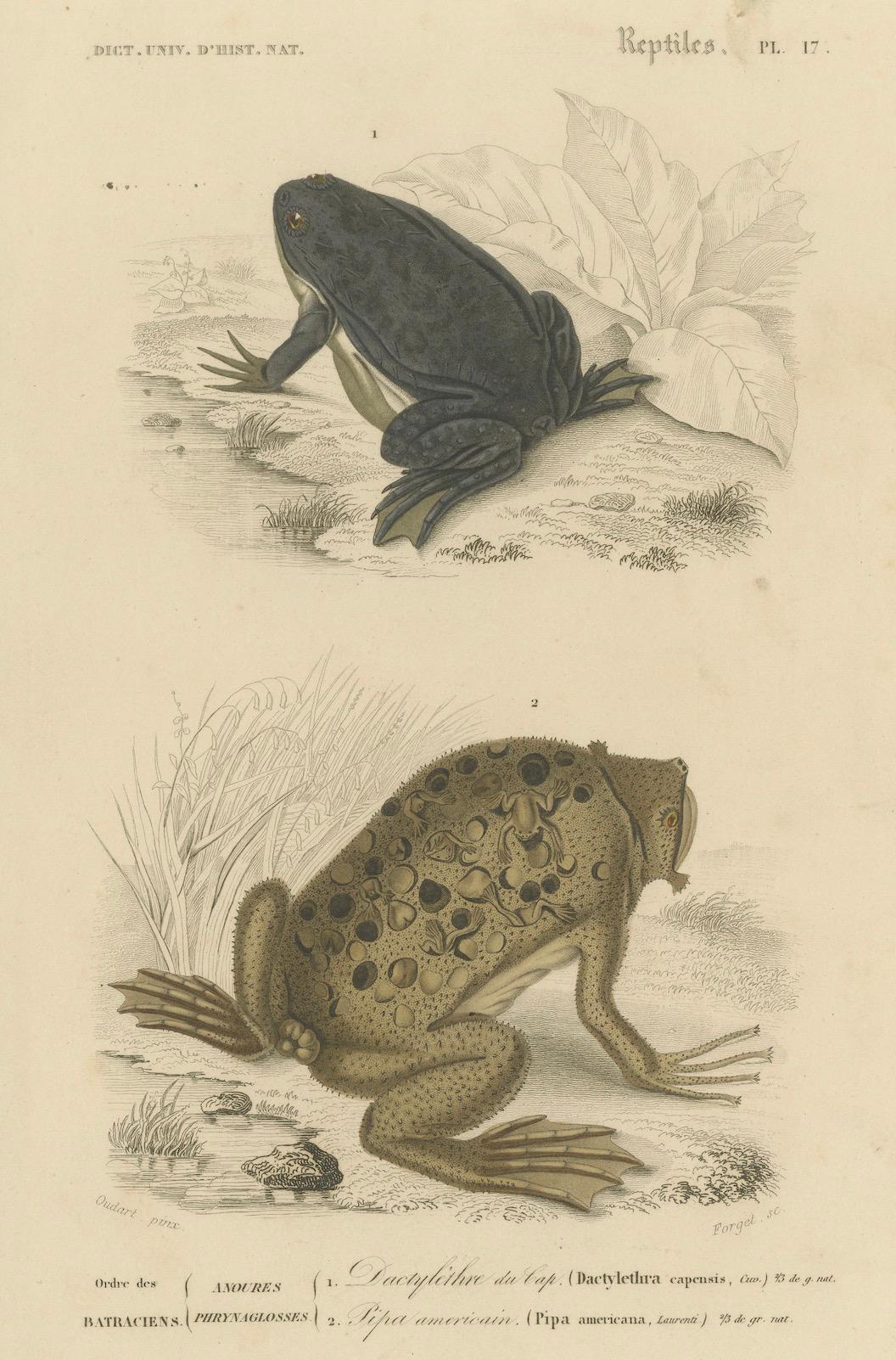
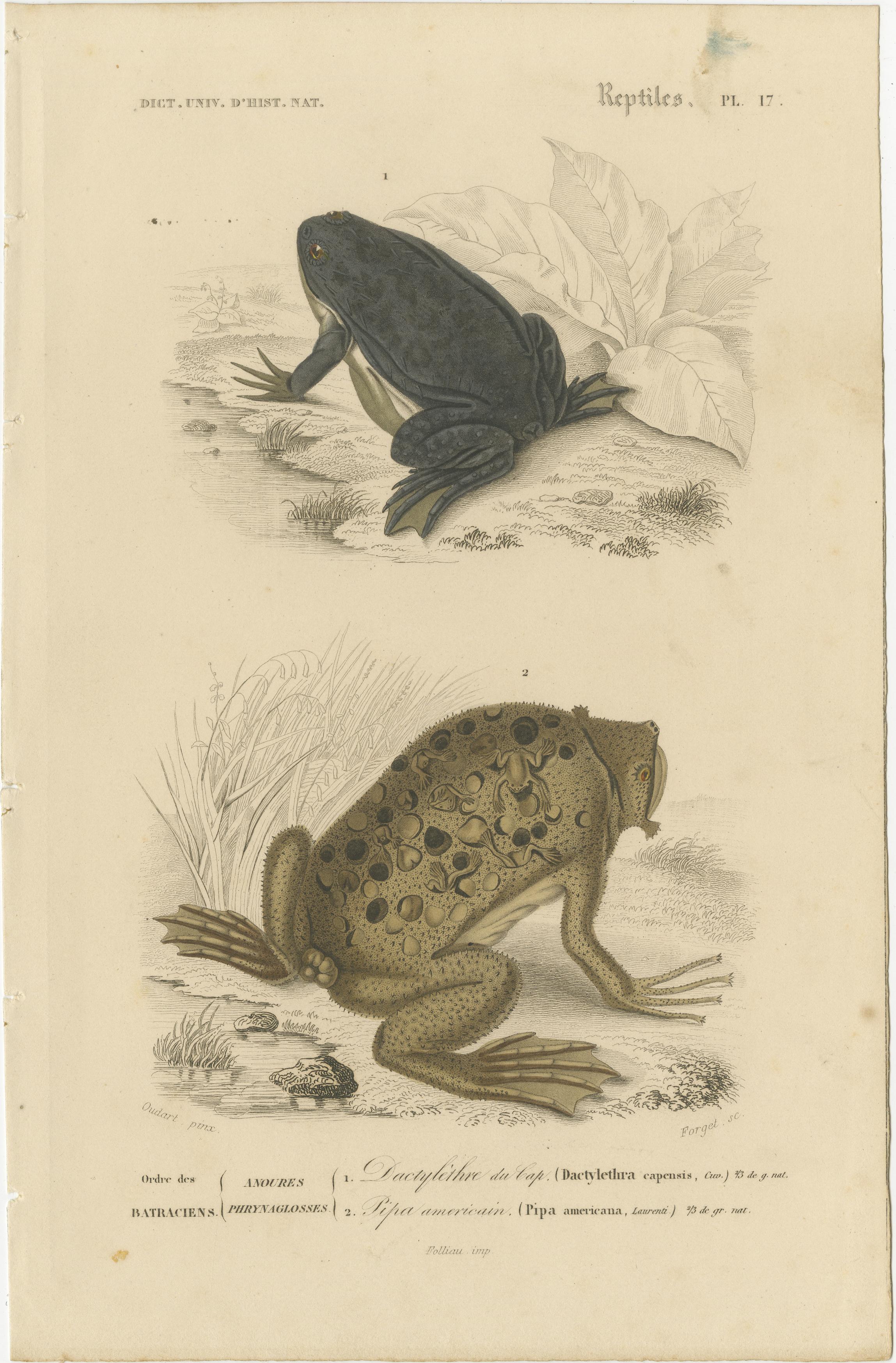
This rare and scientifically detailed 19th-century hand-colored engraving, Reptiles Pl. 17, depicts two remarkable amphibian species: the Cape Dactylethra (*Dactylethra capensis*) and the Surinam Toad (*Pipa americana*). This print was created for the *Dictionnaire Universel d’Histoire Naturelle*, a comprehensive French natural history encyclopedia edited by Charles Dessalines d'Orbigny and published in Paris circa 1850. It was drawn by Oudart and engraved by Forget, both noted for their zoological artistry.
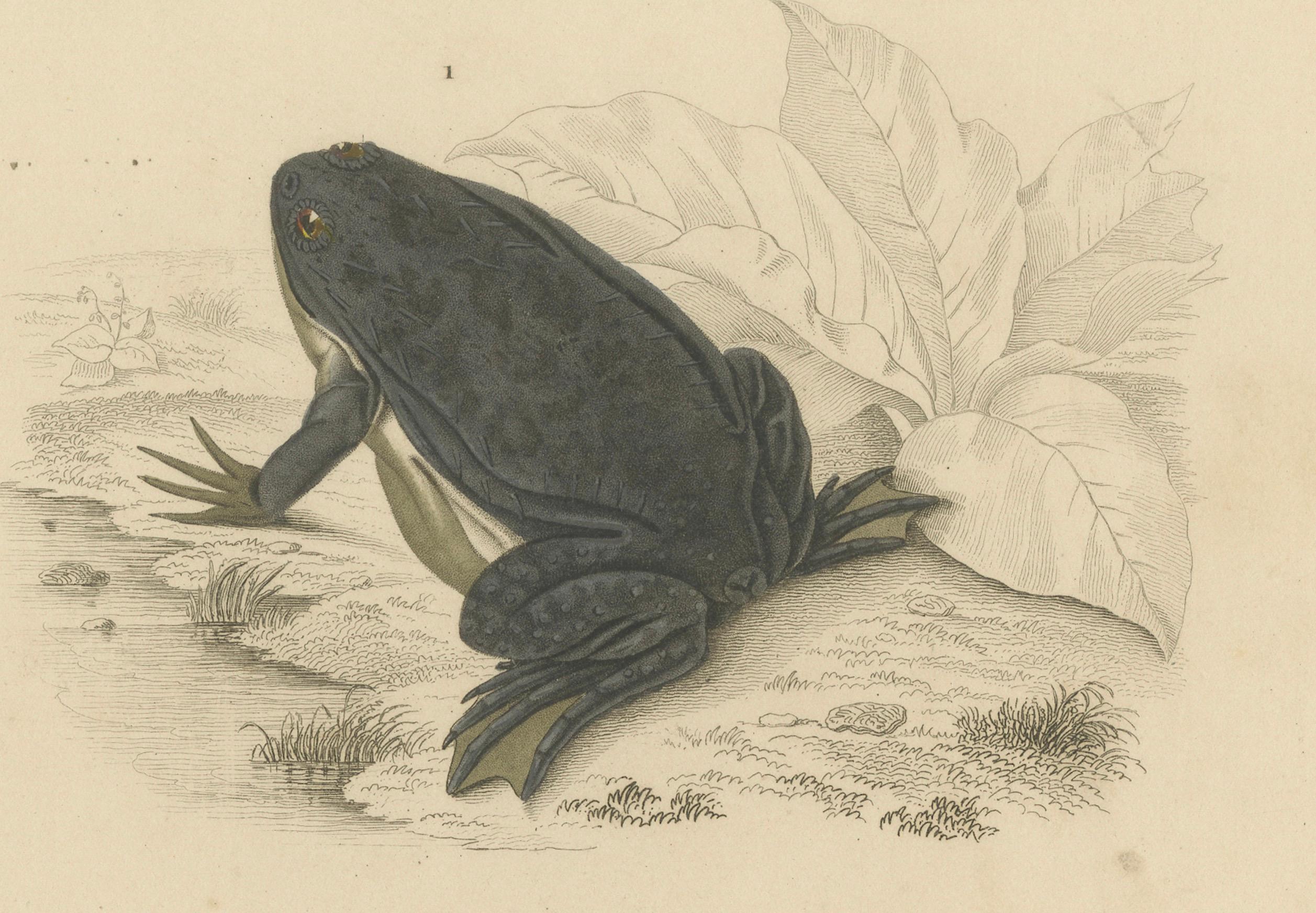
Figure 1 at the top represents *Dactylethra capensis*, an aquatic frog species native to southern Africa, now more commonly referred to as *Ptychadena capensis* or *Xenopus laevis*, depending on taxonomy. It is portrayed beside a freshwater habitat, with dark, nearly black skin, and long, powerful limbs adapted for strong swimming. Its muscular build and webbed toes are shown in detail, capturing both anatomical accuracy and natural behavior.
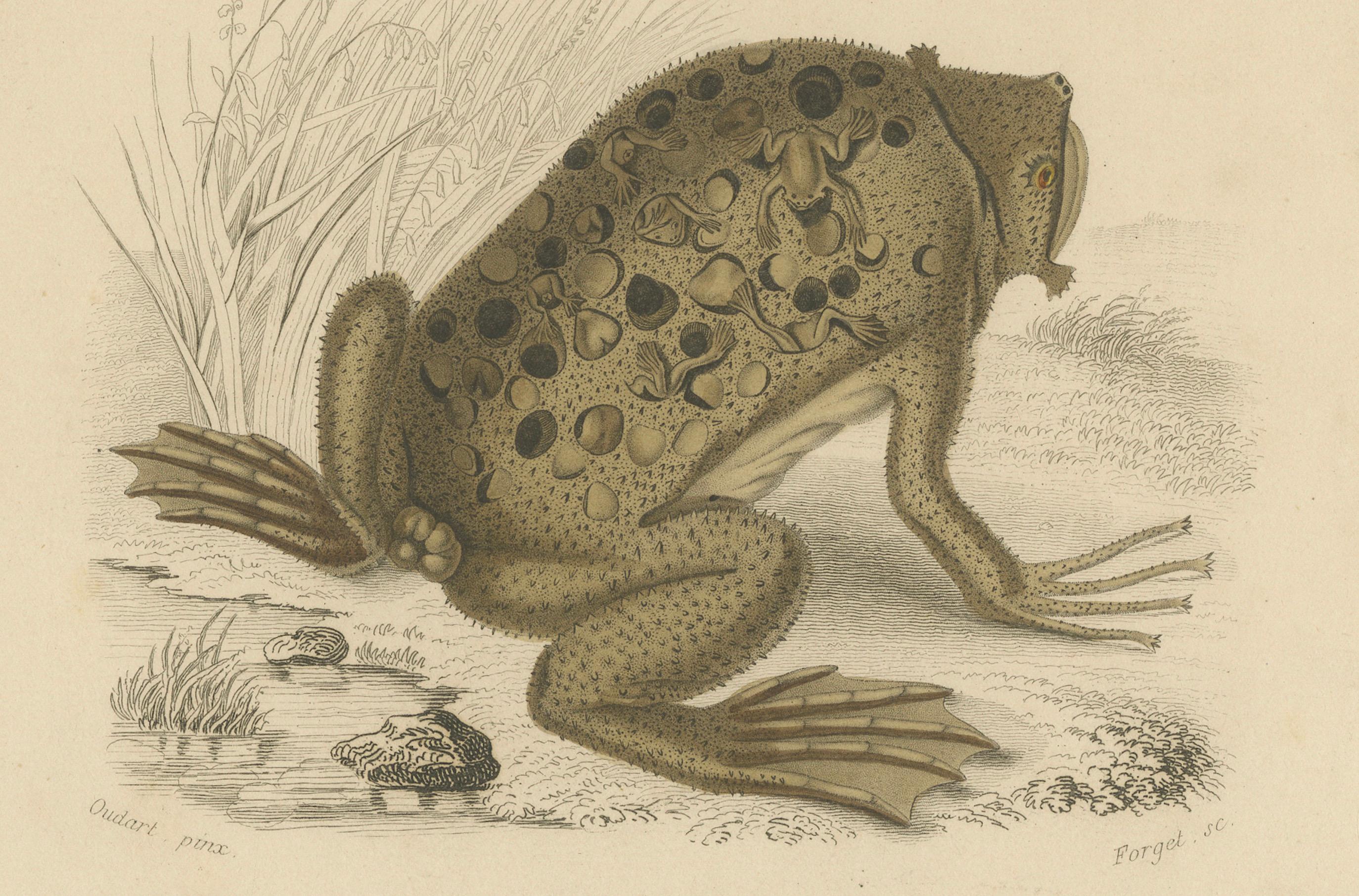
Figure 2, below, is the Surinam Toad (*Pipa americana*, now *Pipa pipa*), one of the most unusual amphibians in the world. Known for its flat, broad body and extraordinary reproductive behavior, where the female carries fertilized eggs embedded in the skin of her back, this species is illustrated in a crouching position near a swampy area. The textured, sponge-like appearance of the skin is meticulously engraved and hand-colored in shades of ochre, green, and brown, highlighting its unique form.
These frogs are notable not only for their scientific importance but also for their visual interest. The composition and lifelike settings reflect the 19th-century fascination with global biodiversity and the effort to document even the most exotic species.
Ideal for collectors of herpetological art, natural history illustrations, or antique educational prints.
Condition Summary:
Light foxing near upper right and left margins, but central image remains clean and strong. Vivid hand coloring and fine line detail intact. No tears or repairs.
Framing Tips
Frame in black or dark wood with a warm ivory or light green mat to complement the earthy frog tones. UV-protective glass recommended to preserve color and paper. A conversation piece perfect for a study, library, or naturalist setting.