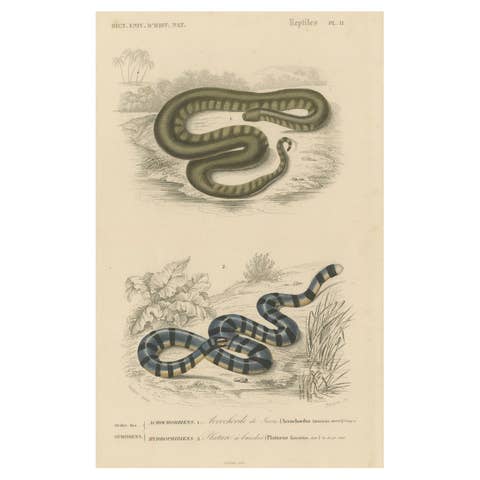
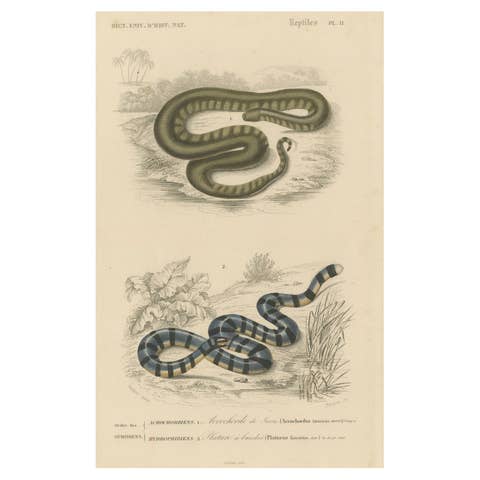
Turtle Print of Moorish Tortoise and European Pond Turtle, c.1850, Orbigny
€ 190
One of a kind: this is the sheet in the photographs. Ships from Langweer, the Netherlands.
Date
1850
Sheet size
24.7 × 16 cm (9.7 × 6.3 in)
Condition
Good
Reference
BG-13584-65
Condition
Light foxing around edges, image area mostly clean and well defined. Hand coloring remains rich and detailed. Strong impression with no tears or repairs. A fine and well-preserved natural history print.
About this sheet
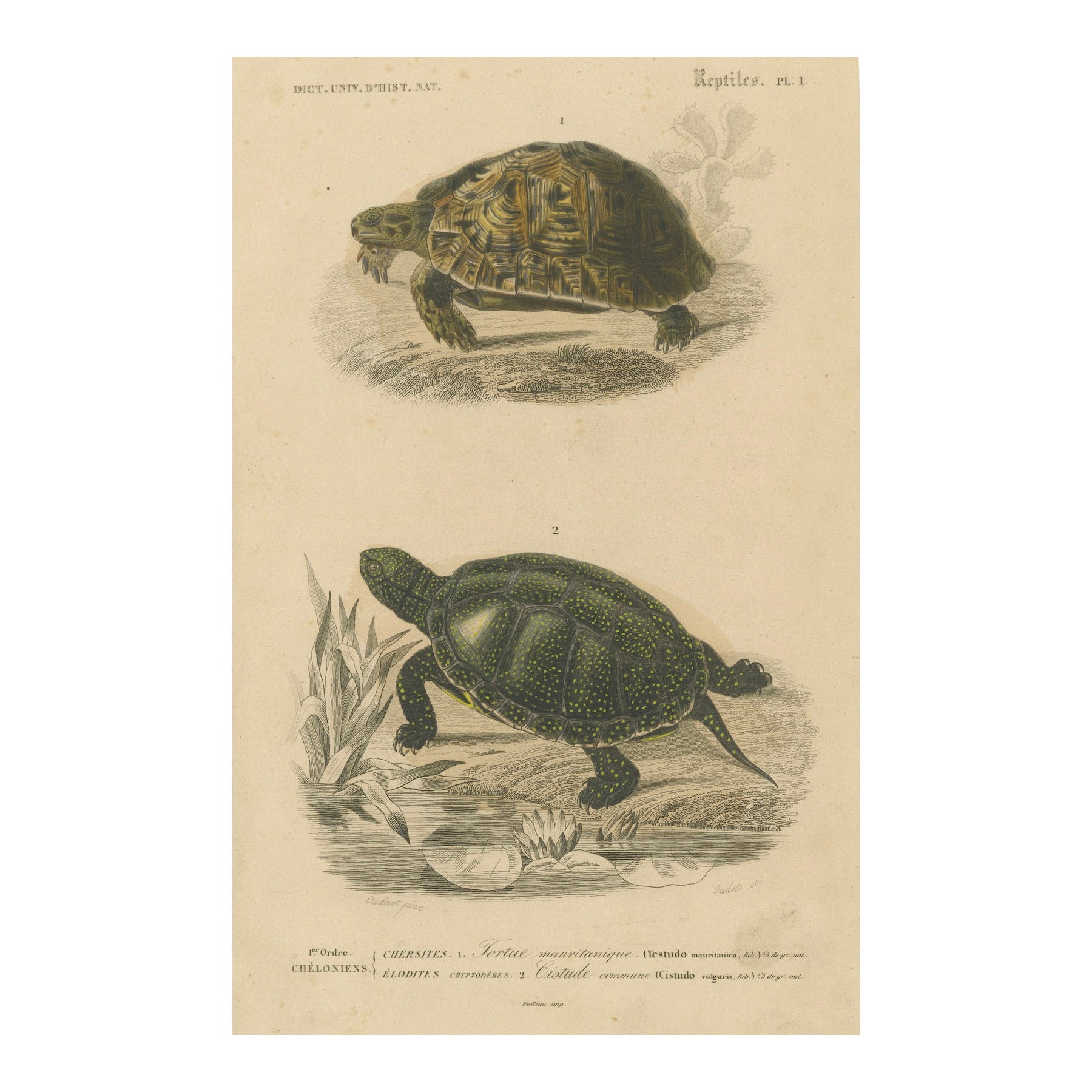
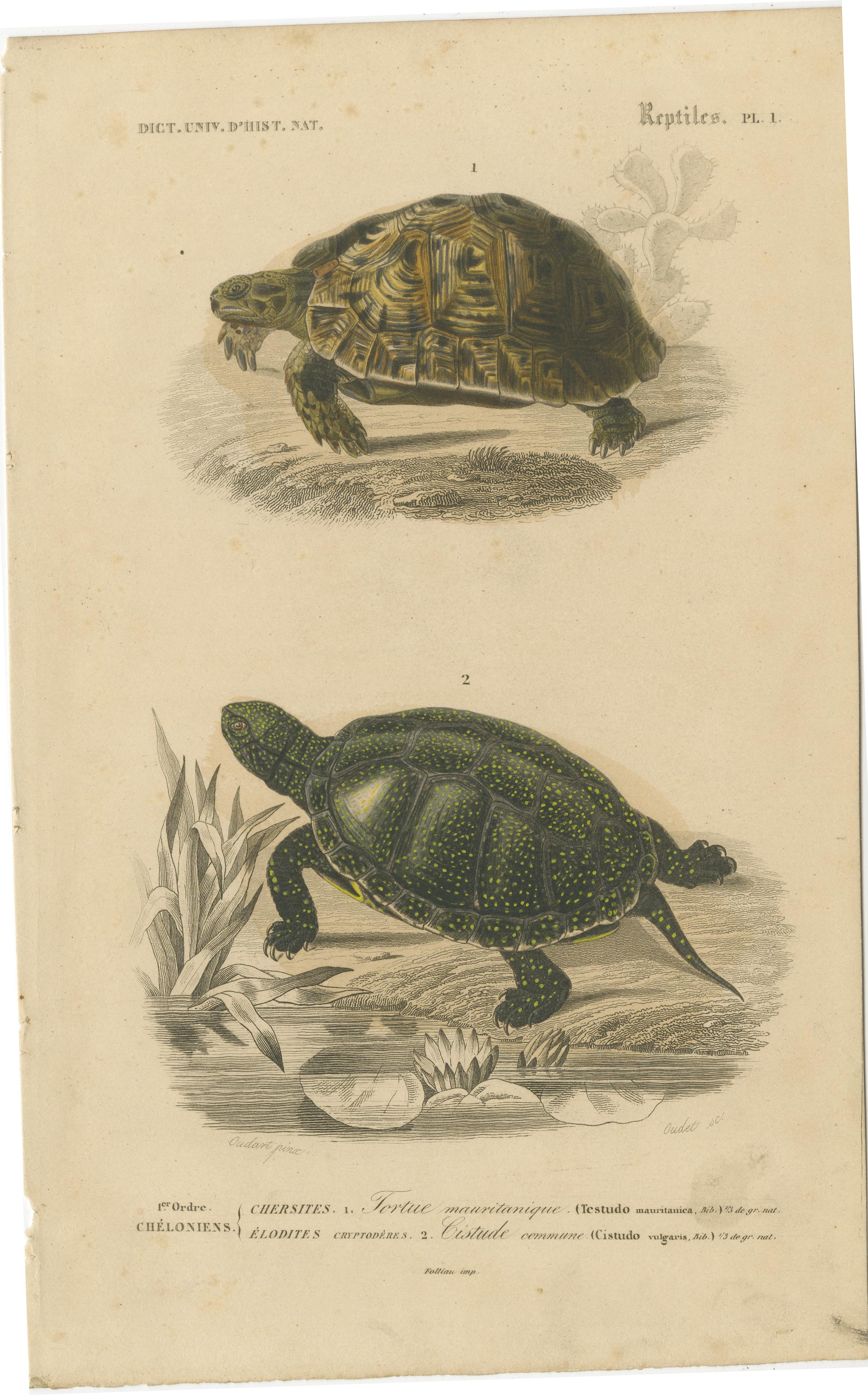
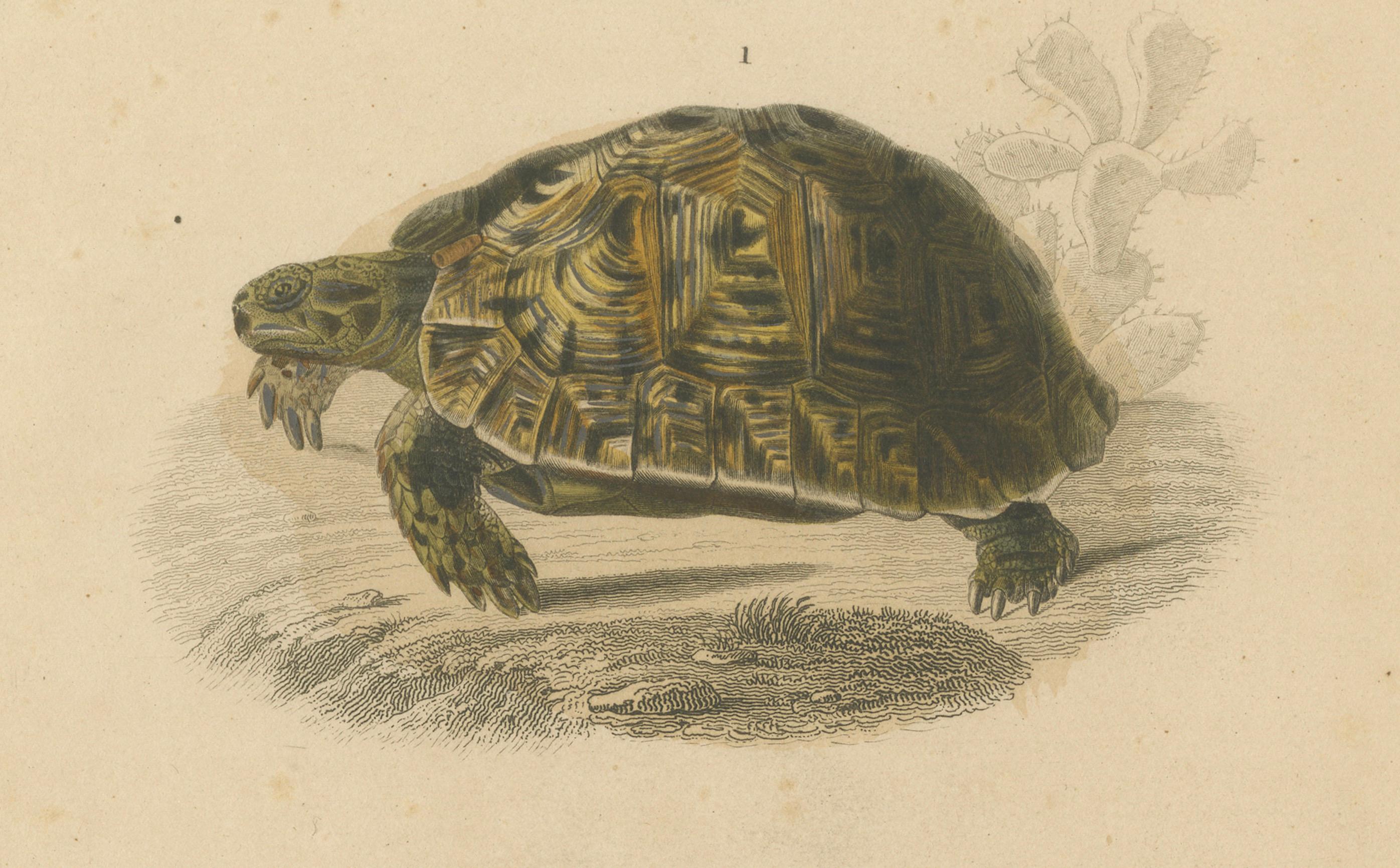
Turtle Print of Moorish Tortoise and European Pond Turtle, c.1850, Orbigny
This elegant 19th-century hand-colored engraving, Reptiles Pl. 1, features two species of turtles: the Moorish Tortoise (*Testudo mauritanica*) and the European Pond Turtle (*Cistudo vulgaris*, now *Emys orbicularis*). It was published around 1850 as part of the *Dictionnaire Universel d’Histoire Naturelle*, edited by Charles Dessalines d'Orbigny and produced in Paris, combining scientific accuracy with fine artistic execution.
Figure 1 at the top shows the Moorish Tortoise, illustrated with its distinctively domed shell and rich brown and ochre coloration. Native to North Africa, particularly in regions of Algeria and Morocco, this land-dwelling tortoise is well adapted to arid environments. The artist has captured the layered texture of the carapace and the sturdy limbs, ideal for burrowing and terrestrial mobility. Sparse vegetation in the background reinforces the arid habitat typical of this species.
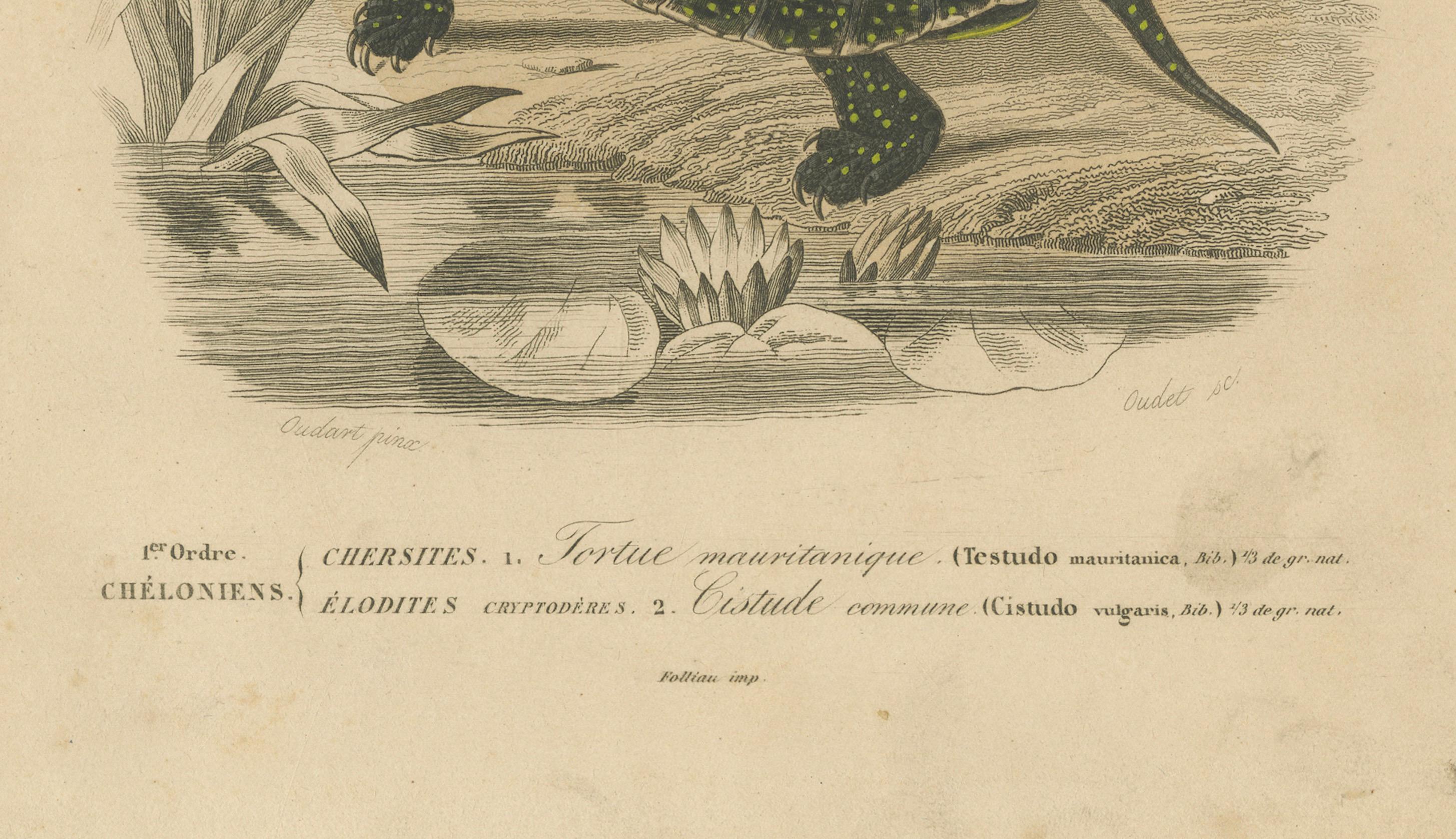
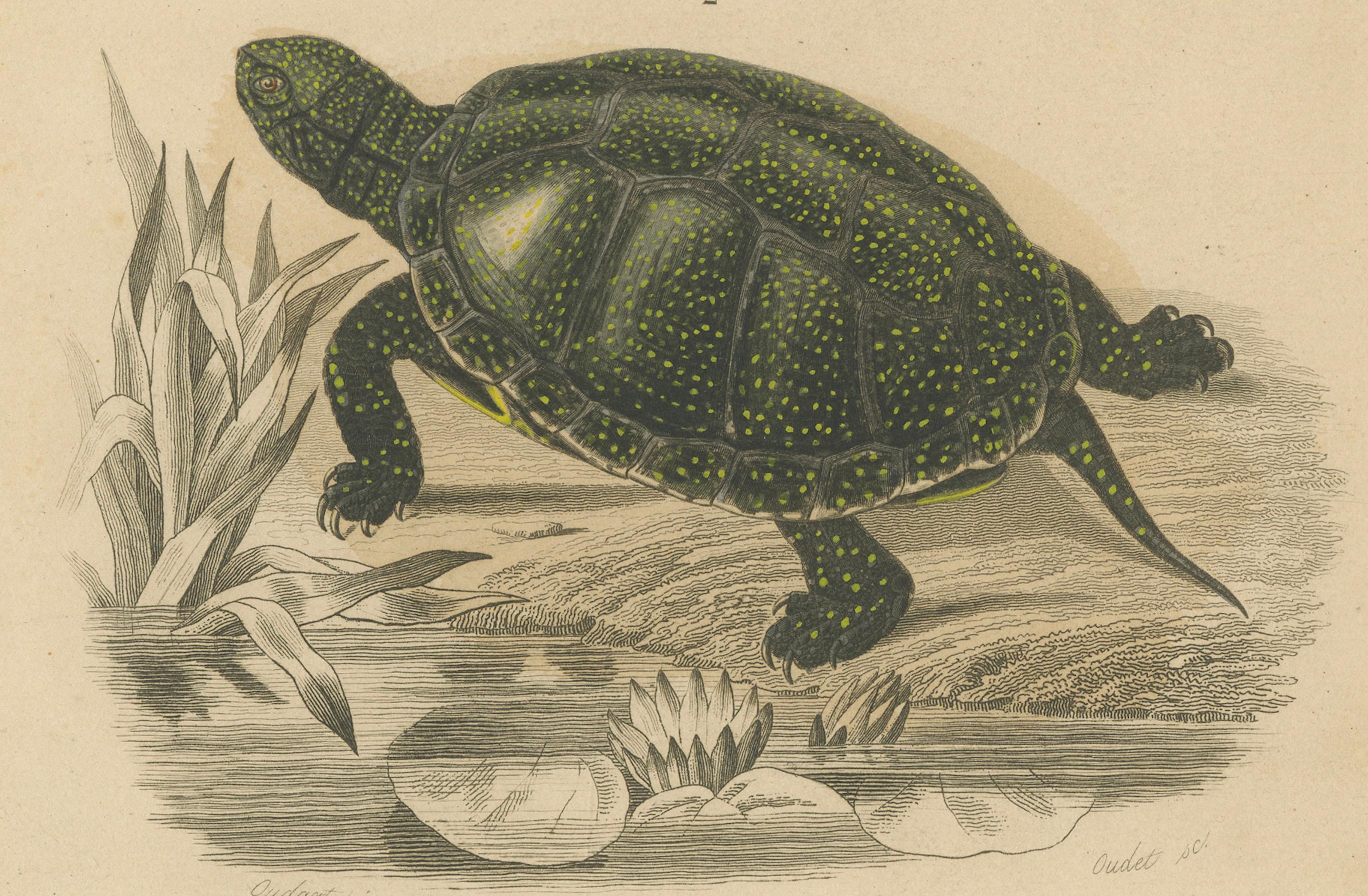
Figure 2 below depicts the European Pond Turtle, referred to here as *Cistudo vulgaris*. Now more commonly classified as *Emys orbicularis*, this freshwater turtle is native to Europe and parts of Asia. The species is known for its dark shell speckled with yellow dots, a feature well illustrated in this plate. It is shown beside a water body among aquatic plants and lily pads, highlighting its natural habitat. With a more flattened profile and webbed limbs, it is clearly adapted for swimming and life in wetlands and slow-moving rivers.
The plate was drawn by Oudart and engraved by Oudet. The fine detailing and hand-applied watercolors exemplify the high standard of zoological illustration in 19th-century France. Intended for educational as well as decorative purposes, this print brings both charm and historical scientific value.
Condition Summary: Light foxing around edges, image area clean and well defined. Hand coloring remains rich and detailed. Strong impression with no tears or repairs. A fine and well-preserved natural history print.
Framing Tips : Frame in natural wood or olive green to match the earthy tones. Use a warm ivory or light beige mat to highlight the rich shell patterns. UV-protective glass is recommended to preserve the delicate hand coloring over time.