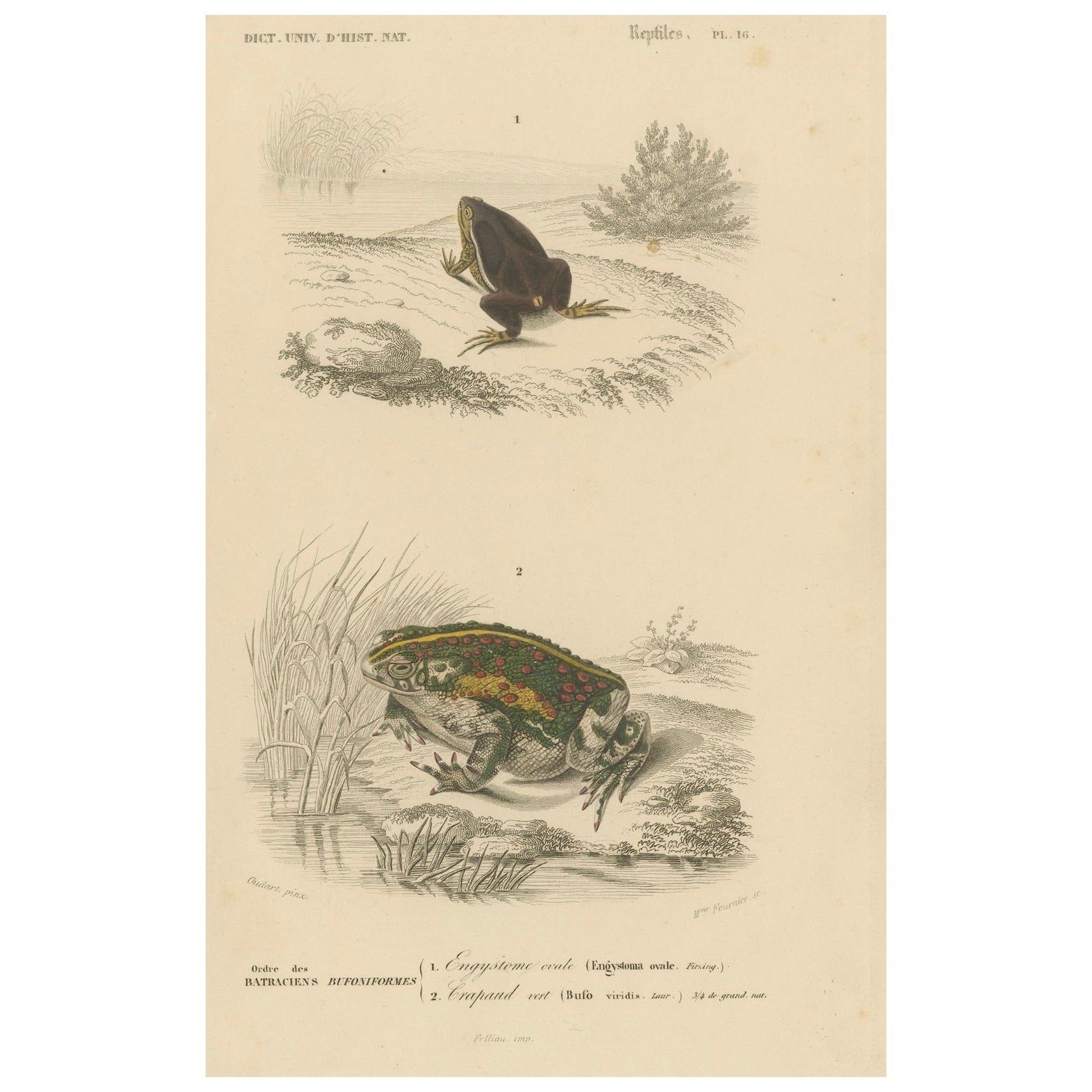
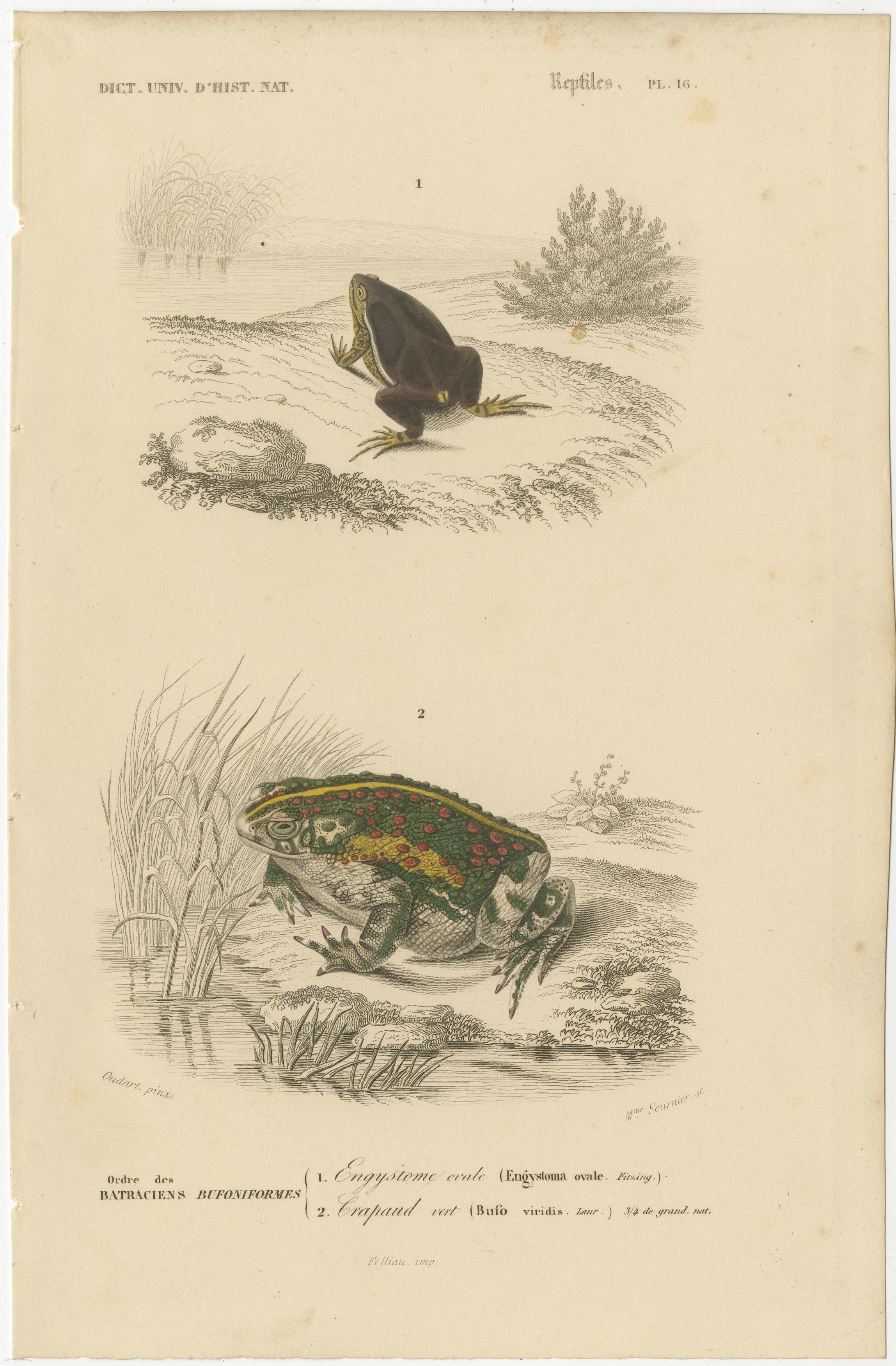
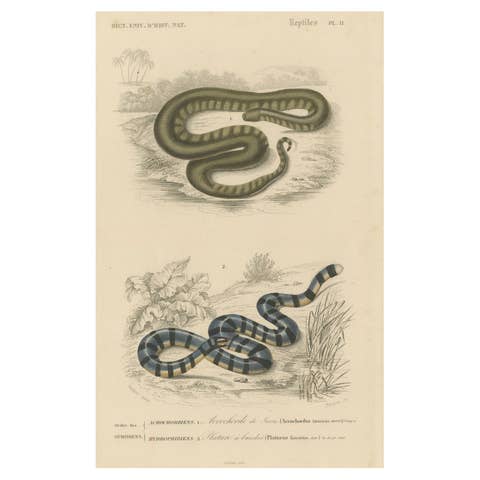
Frog Print of Oval Engystoma and Green Toad, c.1850, by Orbigny
€ 190
One of a kind: this is the sheet in the photographs. Ships from Langweer, the Netherlands.
Date
1850
Sheet size
24.7 × 16 cm (9.7 × 6.3 in)
Condition
Good
Reference
BG-13584-66
Condition
Some mild foxing at the margins, especially upper right. Main image remains sharp and clean, with vivid original hand coloring. No tears or repairs. A well-preserved 19th-century zoological print.
About this sheet
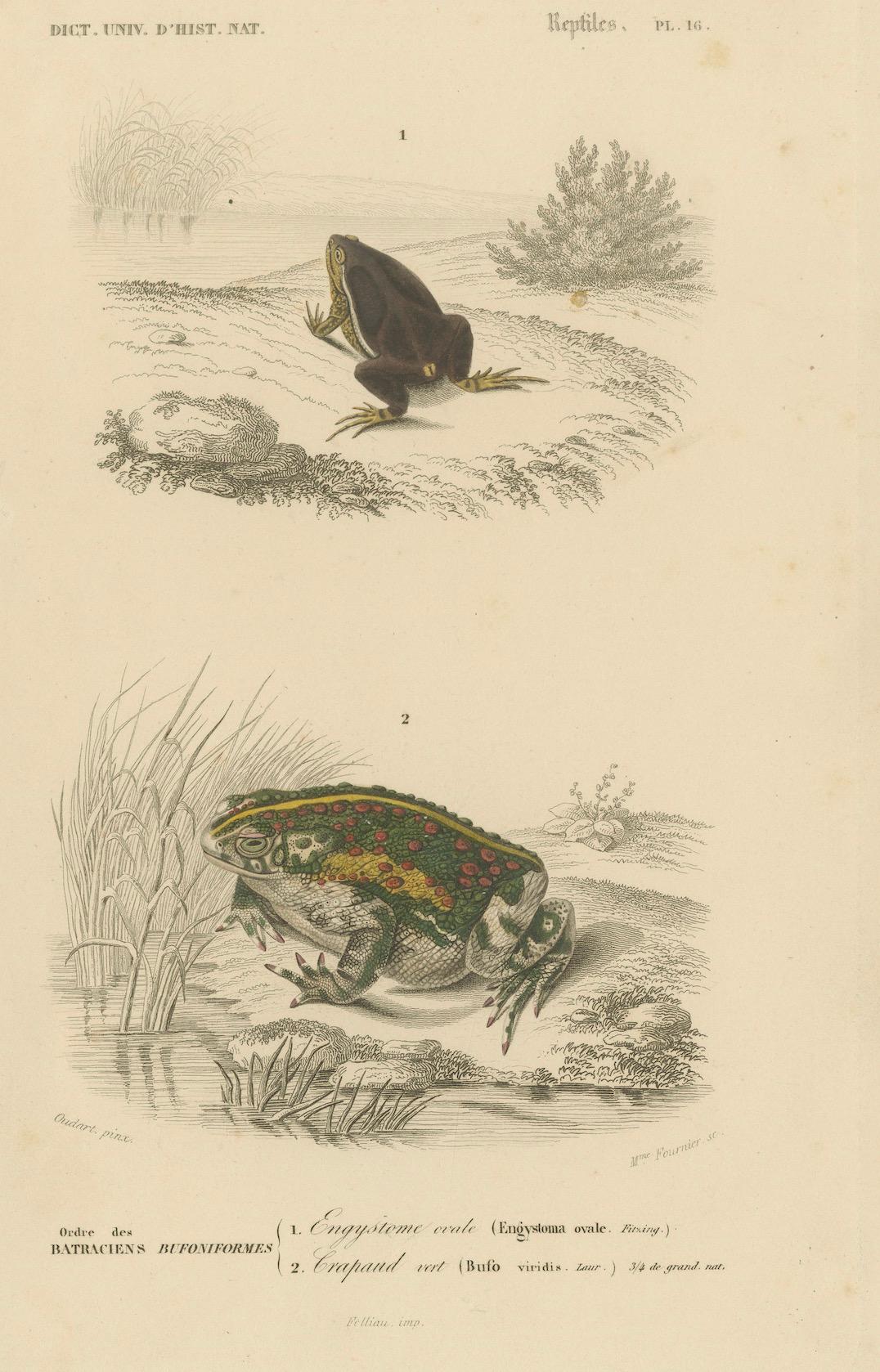
Frog Print of Oval Engystoma and Green Toad, c.1850, by Orbigny
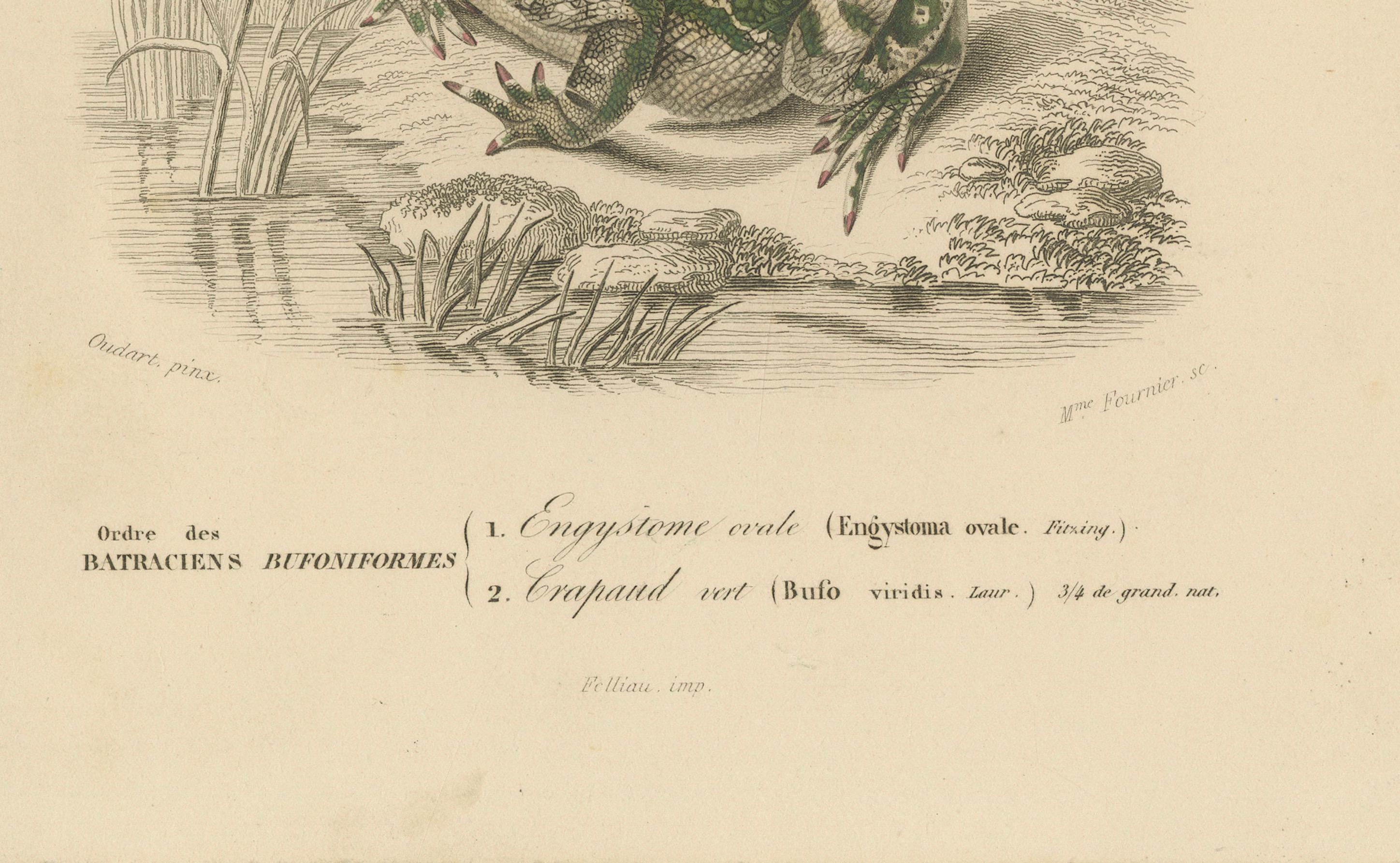
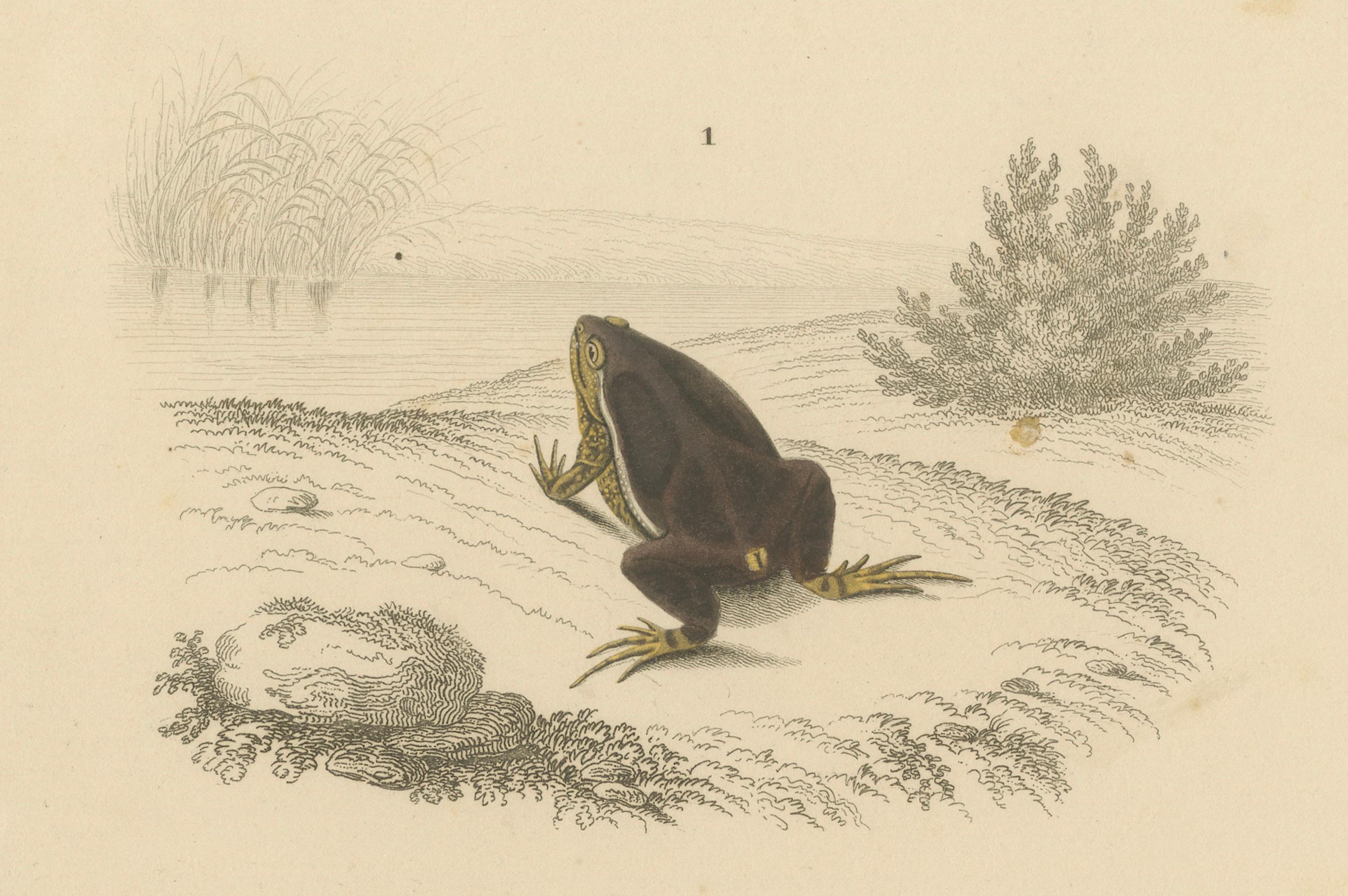
This vivid 19th-century hand-colored engraving, Reptiles Pl. 16, features two unique amphibians: the Oval Engystoma (*Engystoma ovale*) and the Green Toad (*Bufo viridis*). It was published around 1850 as part of the *Dictionnaire Universel d’Histoire Naturelle*, the celebrated French encyclopedia of natural history edited by Charles Dessalines d’Orbigny. The plate was drawn by Oudart and engraved by Mme Fournier, who together produced scientifically accurate and visually engaging illustrations for the series.
Figure 1, at the top of the composition, depicts the Oval Engystoma (*Engystoma ovale*), now more commonly classified as *Gastrophryne carolinensis*, a small burrowing frog from the southeastern United States. Shown from the back in a crouched position near a shallow body of water, it is illustrated in a simple earth-toned palette. Its smooth skin, rounded form, and short limbs are all faithfully represented, reflecting its secretive, fossorial habits.
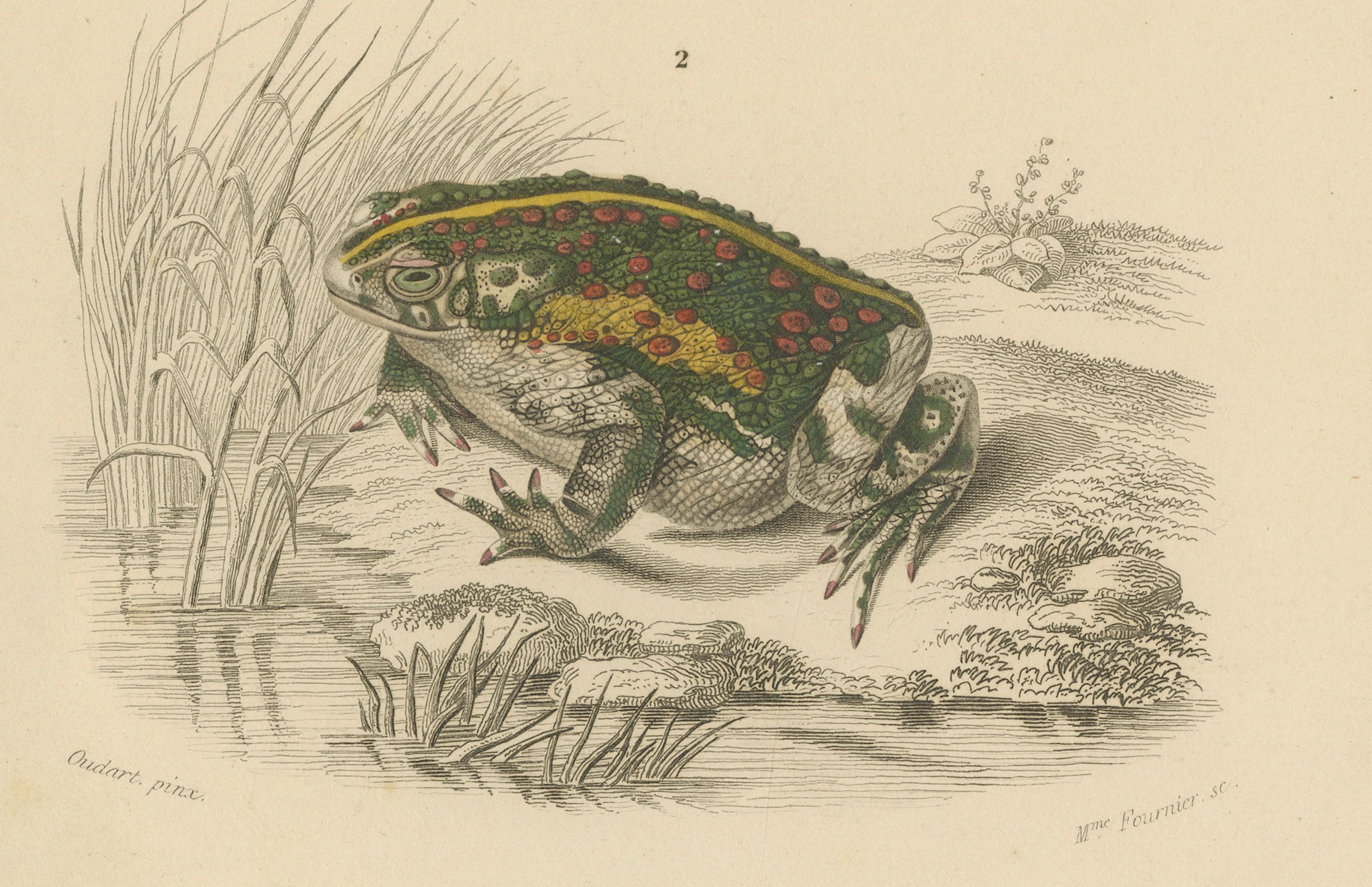
Figure 2, below, is the Green Toad (*Bufo viridis*, now *Bufotes viridis*), portrayed in full profile. This European and Central Asian species is known for its striking coloration — pale green skin dotted with red and orange spots. The artist has vividly captured the toad’s unique camouflage pattern, which is especially vibrant in this hand-colored example. It is depicted in a natural wetland environment among reeds and marsh grasses, emphasizing its preference for moist habitats during the breeding season.
This plate is a fine representation of 19th-century zoological illustration, combining anatomical observation with artistic skill. Each frog is presented in a carefully composed natural setting, emphasizing the visual and ecological diversity of amphibians.
A valuable item for collectors of antique natural history prints, frog and toad enthusiasts, or decorative purposes with a scientific or educational theme.
Condition Summary Some mild foxing at the margins, especially upper right. Main image remains sharp and clean, with vivid original hand coloring. No tears or repairs. A well-preserved 19th-century zoological print.
Framing Tips Frame in dark wood or black with a pale green or ivory mat to highlight the natural colors of the frogs. UV-protective glass is recommended to preserve the hand coloring and paper. Perfect for a nature-themed room or study wall.