Snake Print of Sand Boa and Boa Constrictor, c.1850, by Orbigny
€ 190
One of a kind: this is the sheet in the photographs. Ships from Langweer, the Netherlands.
Date
1850
Sheet size
24.7 × 16 cm (9.7 × 6.3 in)
Condition
Good
Reference
BG-13584-55
Condition
Light foxing in outer margin, central image clean and colors strong. Well-preserved example with clear plate impression and intact paper edges. No tears or repairs.
About this sheet
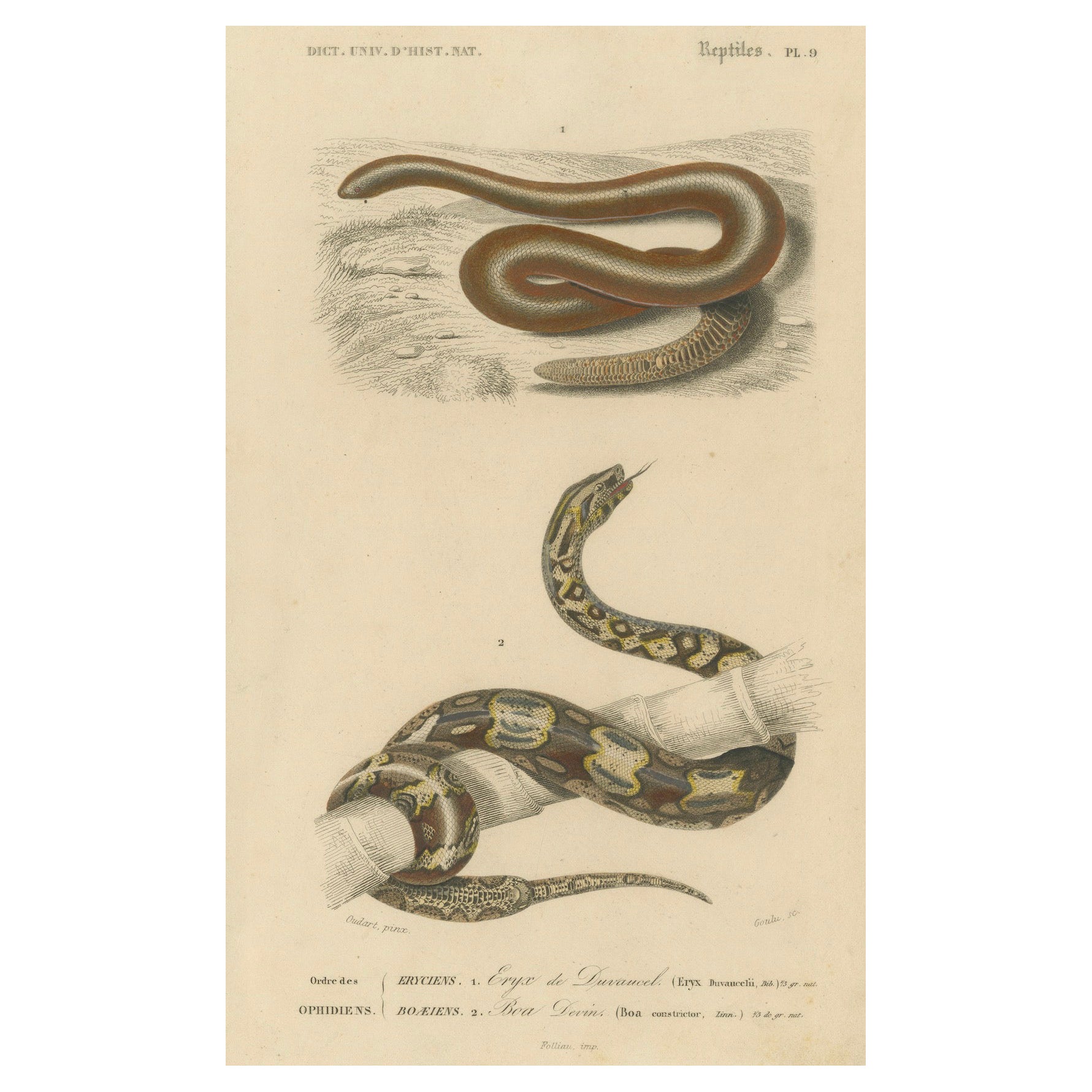
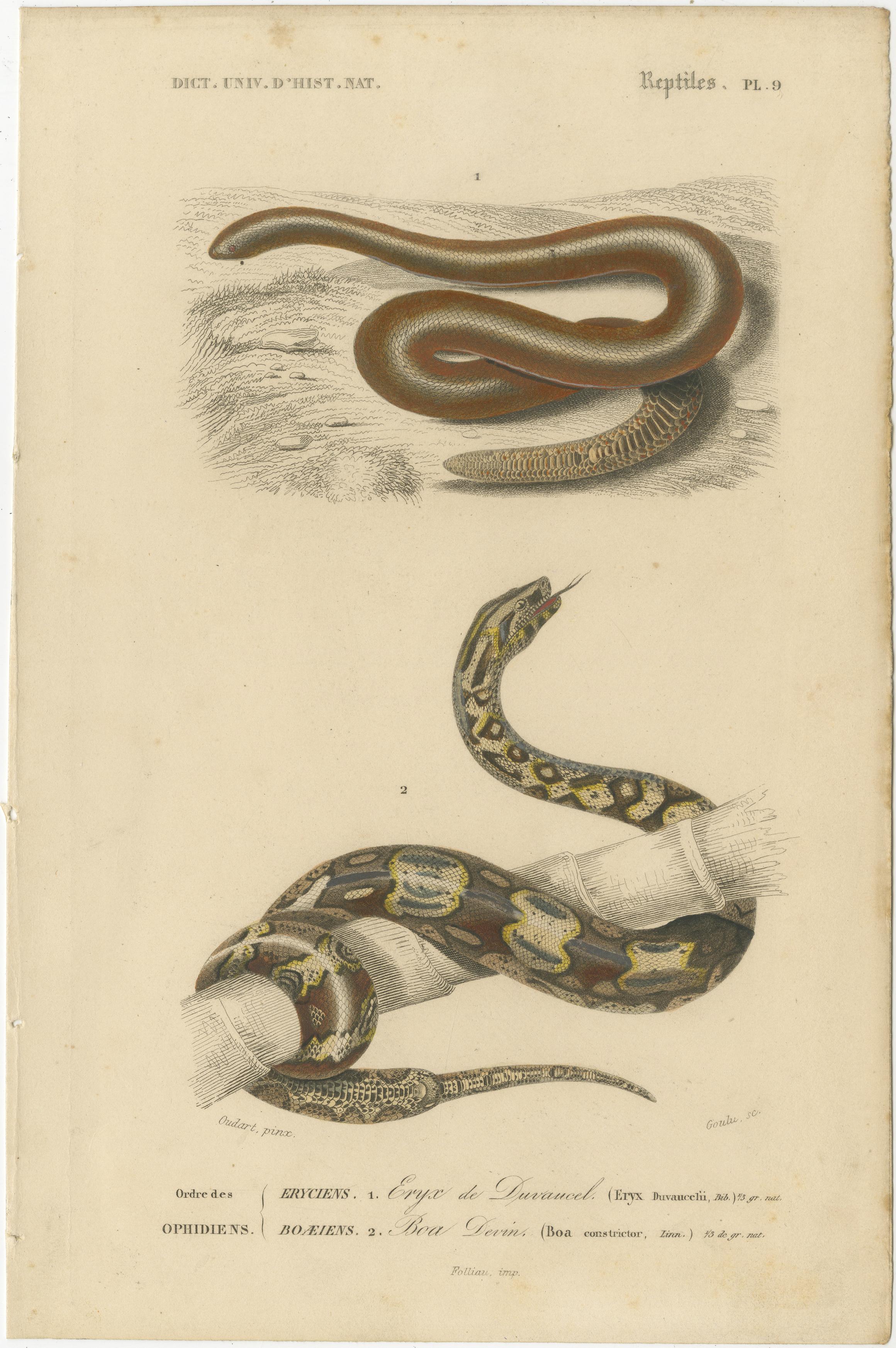
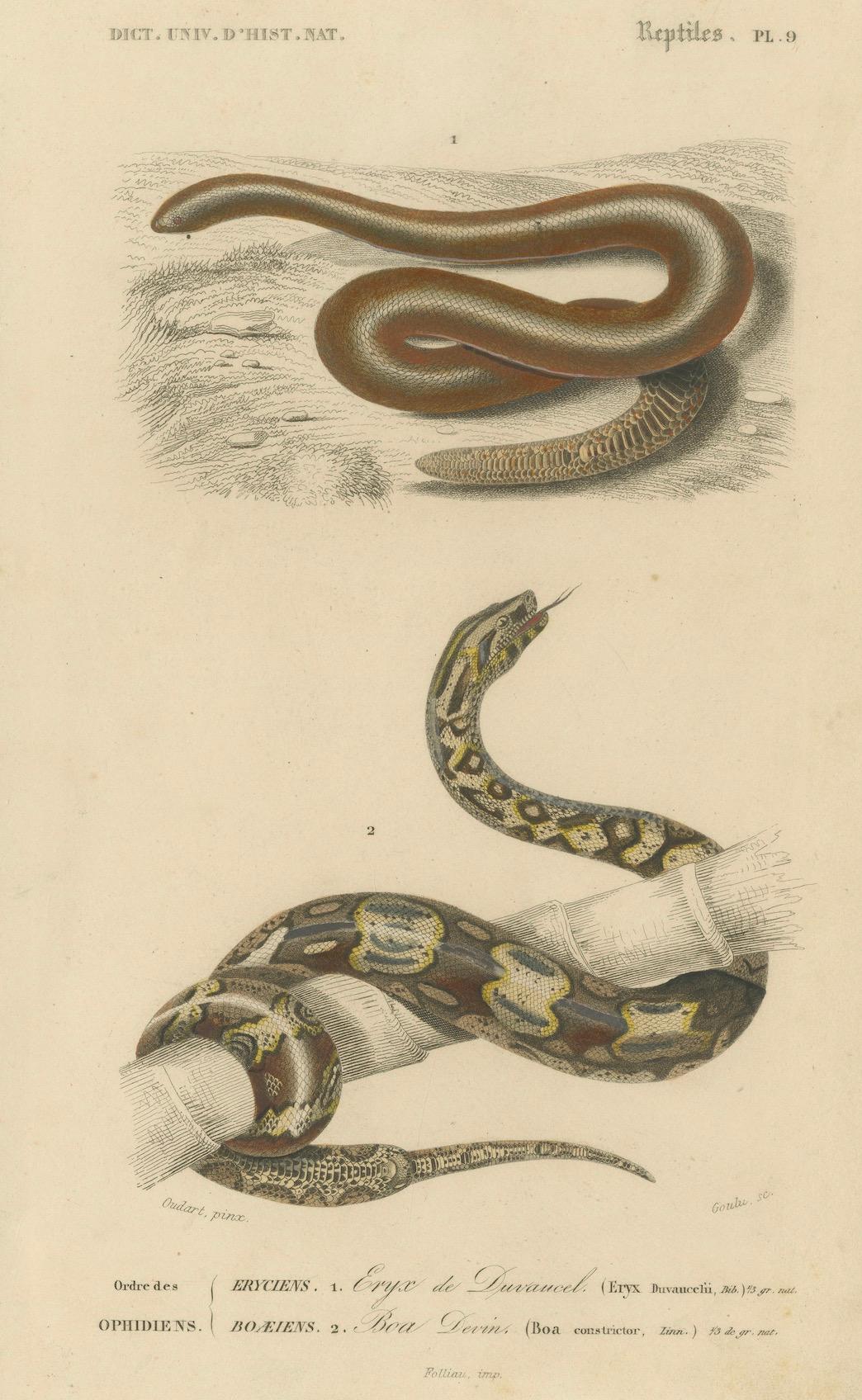
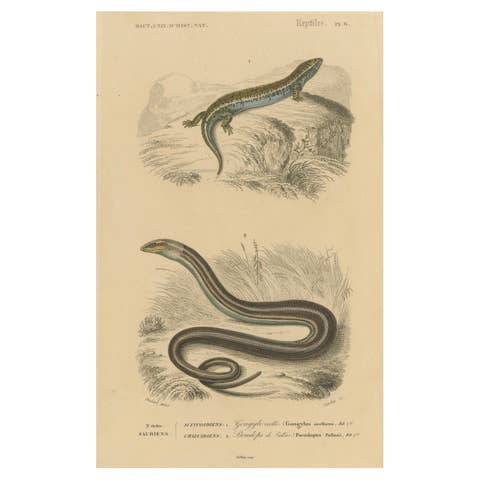
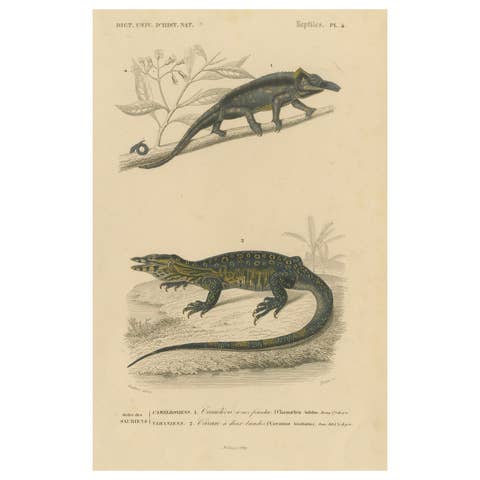
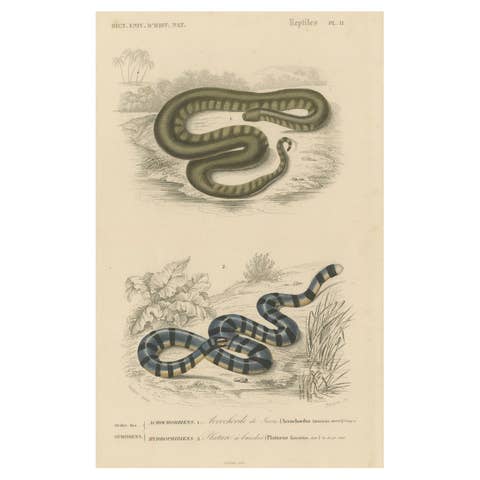
Snake Print of Sand Boa and Boa Constrictor, c.1850, by Orbigny
This beautifully detailed hand-colored engraving, Reptiles Pl. 9, features two notable snake species: the Sand Boa (Eryx duvernaii) and the Boa Constrictor (Boa constrictor). The illustration is part of the celebrated mid-19th century French natural history series Dictionnaire Universel d’Histoire Naturelle, edited by Charles Dessalines d'Orbigny. Produced in Paris around 1850, the work is admired for its blend of scientific accuracy and artistic quality.
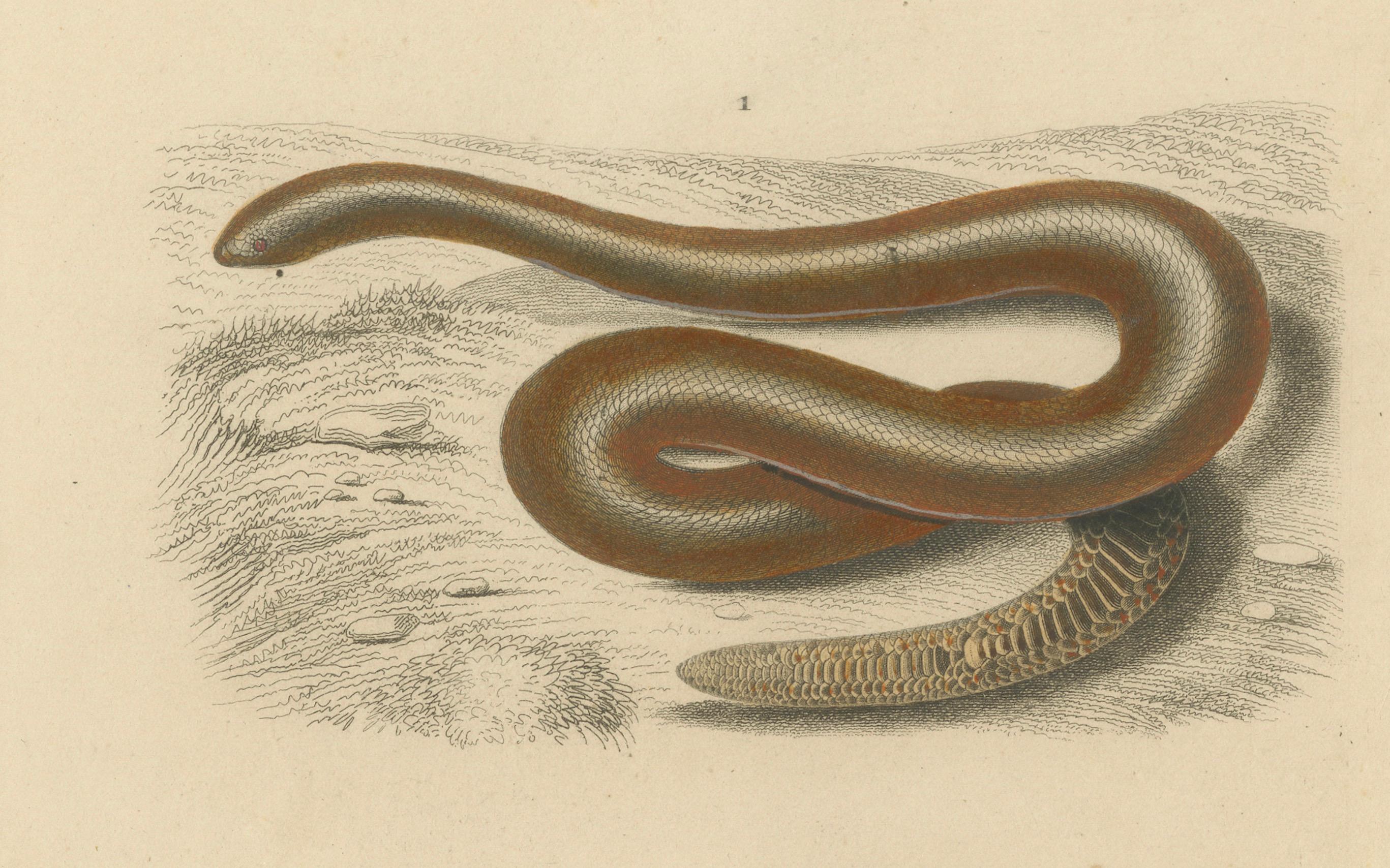
The top image (figure 1) presents the Sand Boa, a small burrowing snake native to arid regions such as India and the Middle East. The illustration shows it coiled in loose sandy terrain, highlighting its compact and muscular body adapted for digging and ambush hunting. Its smooth, shiny scales and rounded head are rendered with great care, offering an accurate depiction of this elusive species.
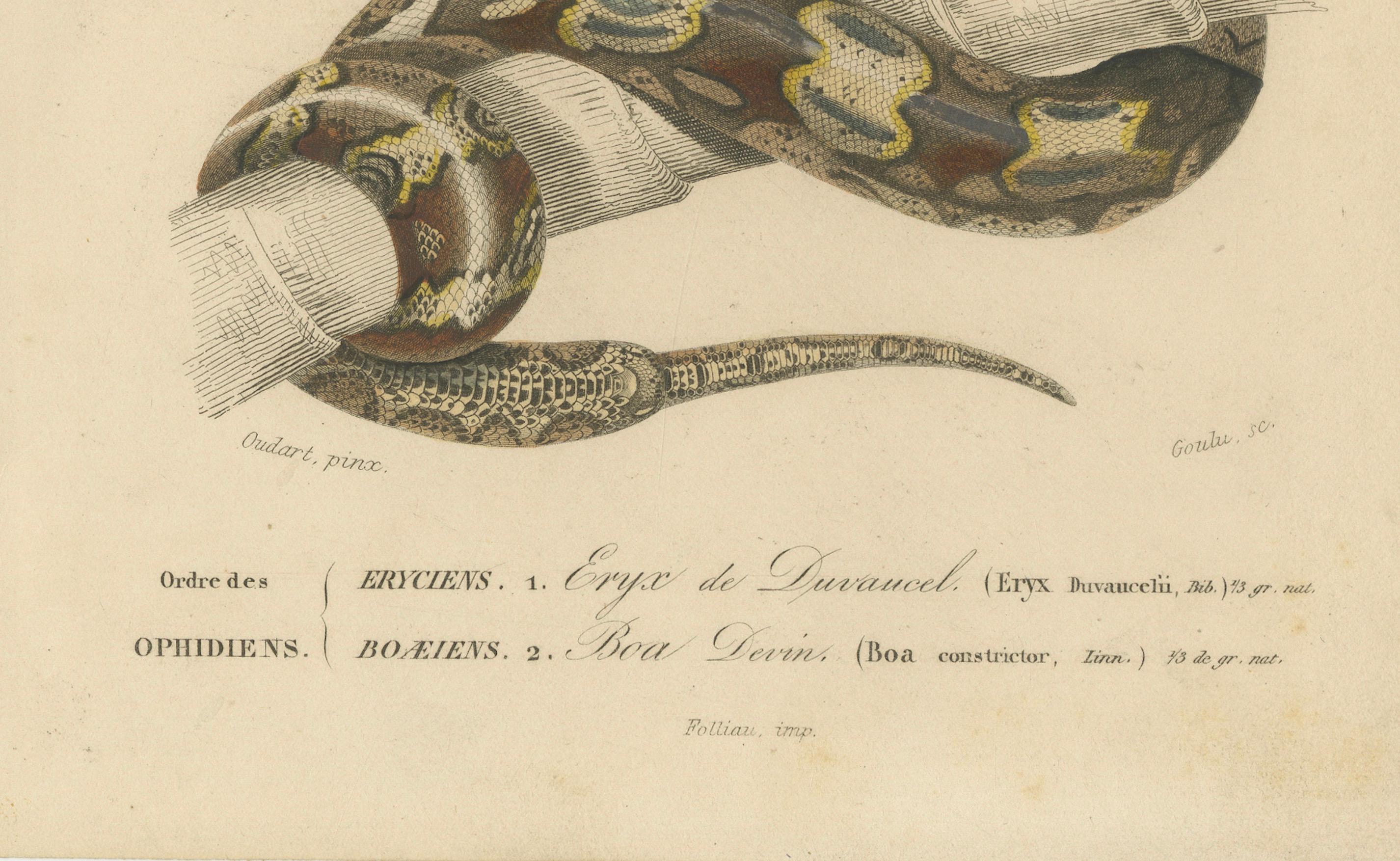
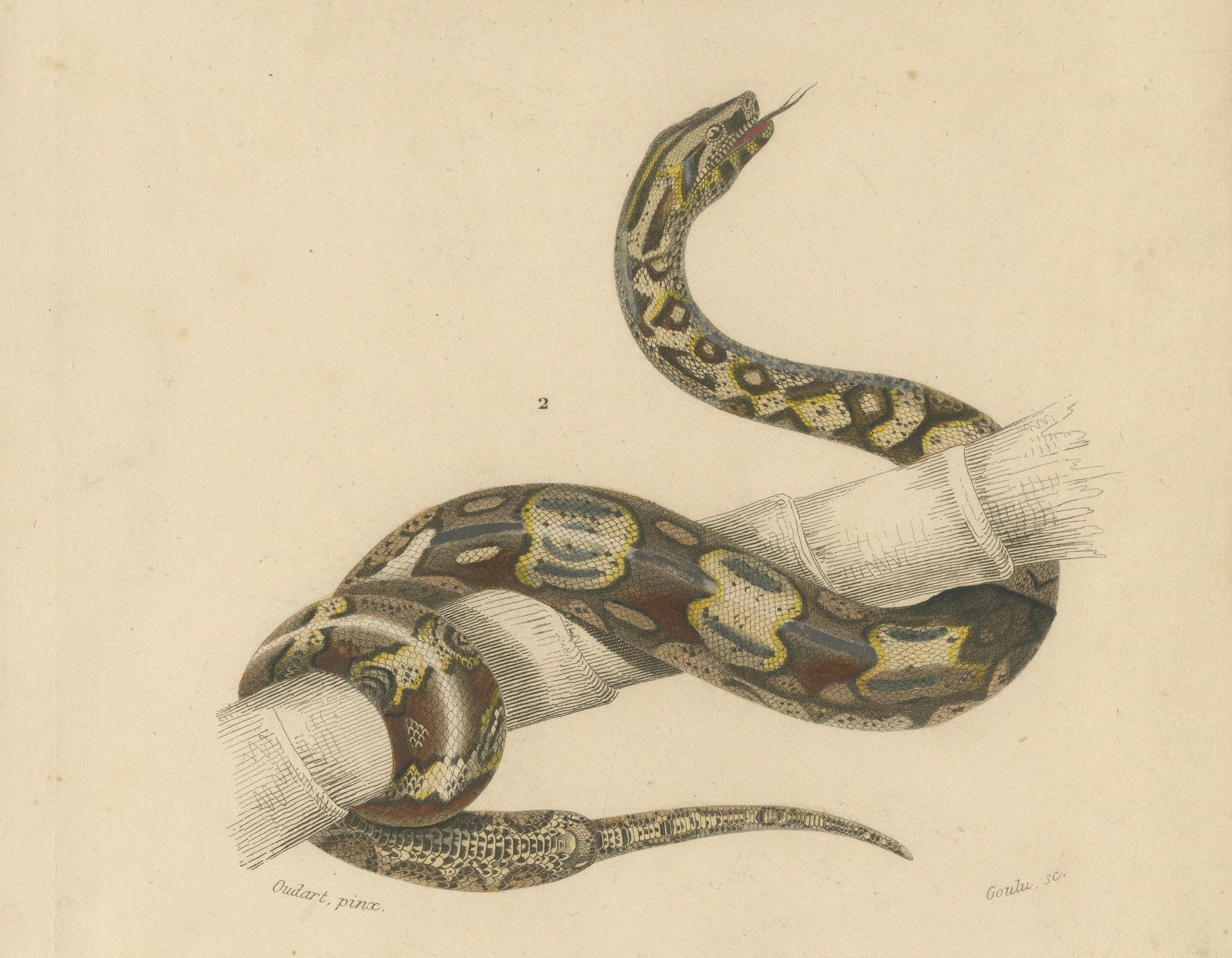
The lower image (figure 2) is a dramatic portrayal of the Boa Constrictor, one of the most iconic snakes in the world. Native to Central and South America, the boa is shown coiled around bamboo stalks, with its powerful body and distinctive patterning beautifully detailed in shades of brown, ochre, and pale blue. This non-venomous species kills by constriction and can grow to impressive lengths. The artist captures the strength and elegance of the snake in a lifelike pose that emphasizes its muscular coils and alert expression.
The plate was drawn by Oudart, engraved by Corbie, and printed by Pollian. It reflects the high standards of French zoological illustration during the 19th century, combining delicate linework with vibrant hand coloring.
This print is perfect for collectors of antique zoological prints, enthusiasts of herpetology, or as an eye-catching decorative piece that evokes the beauty and mystery of the natural world.
Condition Summary: Light foxing in outer margin, central image clean and colors strong. Well-preserved example with clear plate impression and intact paper edges. No tears or repairs.
Framing Tips: Frame in dark wood or black to complement the deep tones of the boa. Use a beige or warm grey mat for contrast. UV-protective glass recommended to preserve the detailed hand coloring. Suitable for a study or natural history-themed interior.