About this sheet
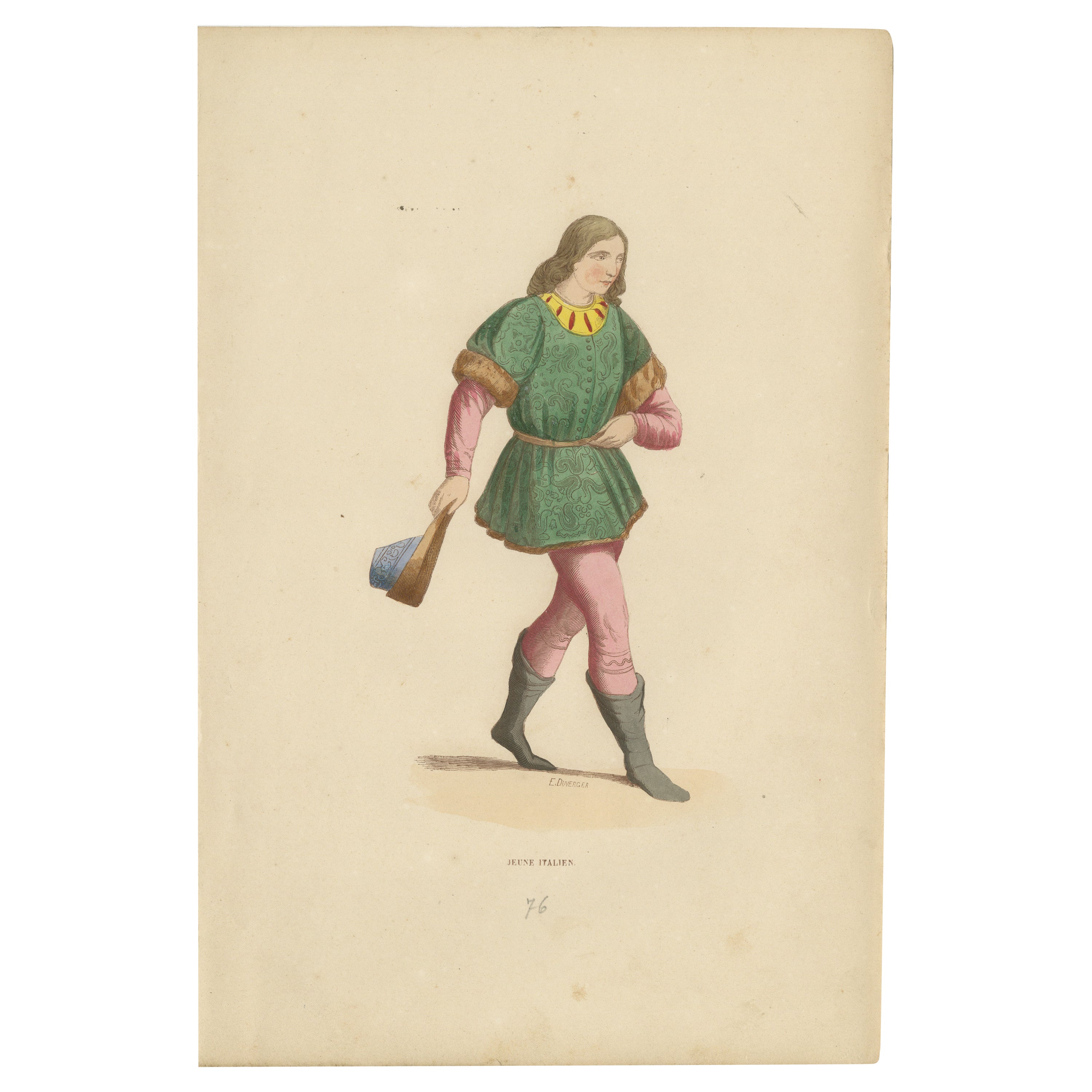
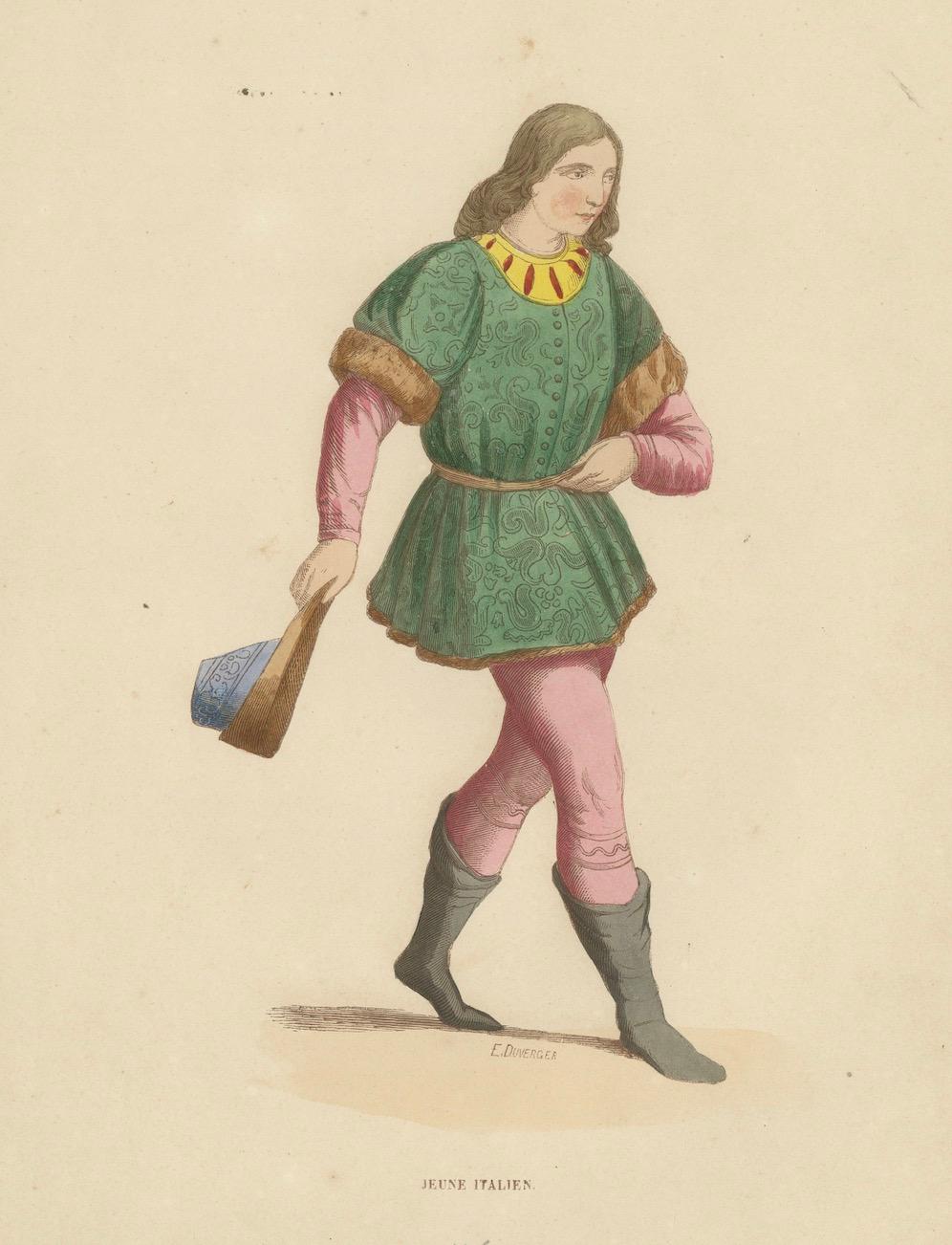
This print depicts a young Italian page, a common figure in Renaissance courts, whose duties often included serving nobility and conveying messages. His attire reflects the vibrant fashions of the Italian Renaissance, known for its love of color and elaborate designs.
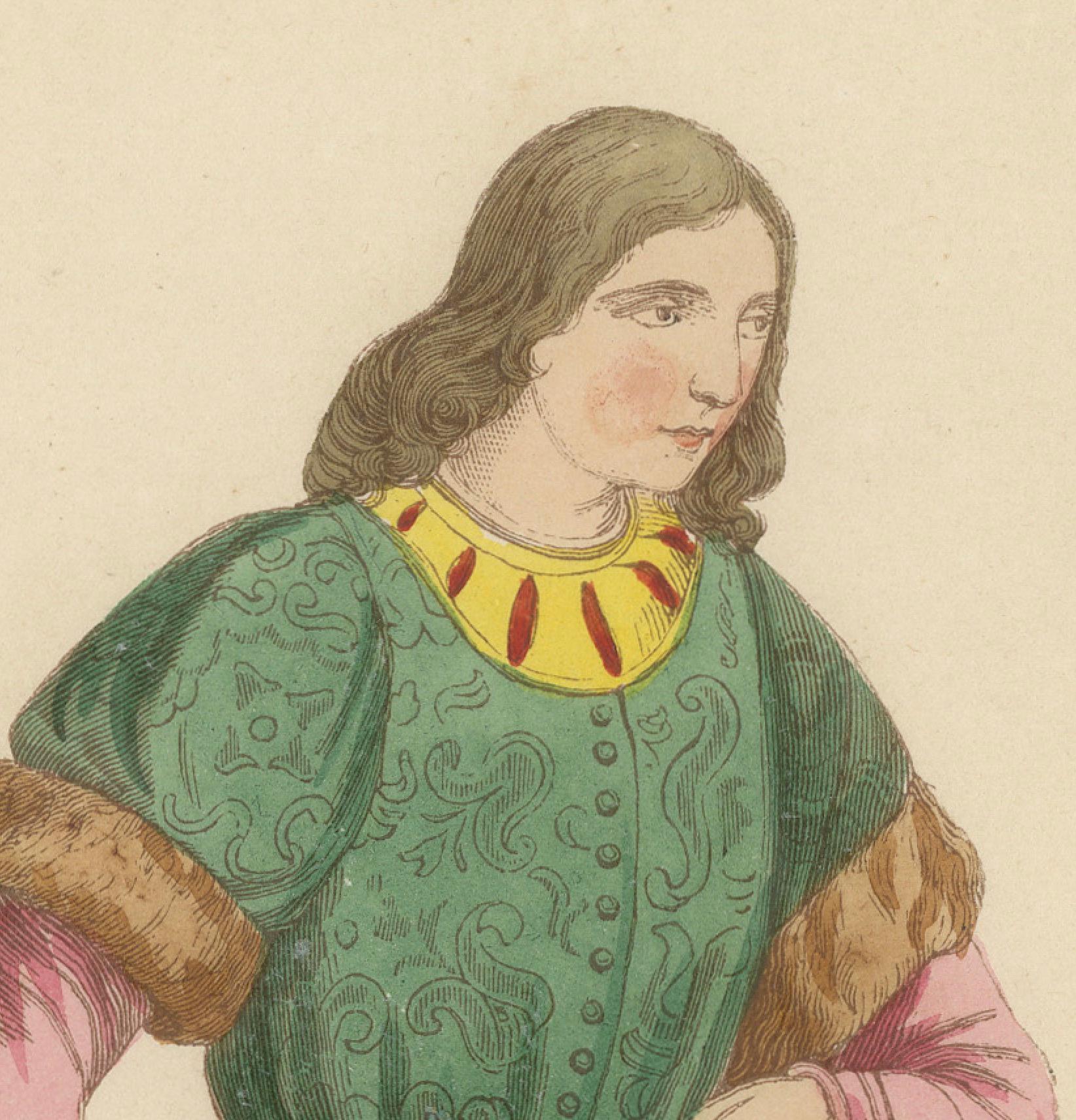
He is dressed in a short, patterned tunic in a rich shade of green, with intricate scrollwork that would have been fashionable among the Italian elite. The tunic is belted at the waist with a simple cord, emphasizing the youthfulness and slim physique characteristic of a page.
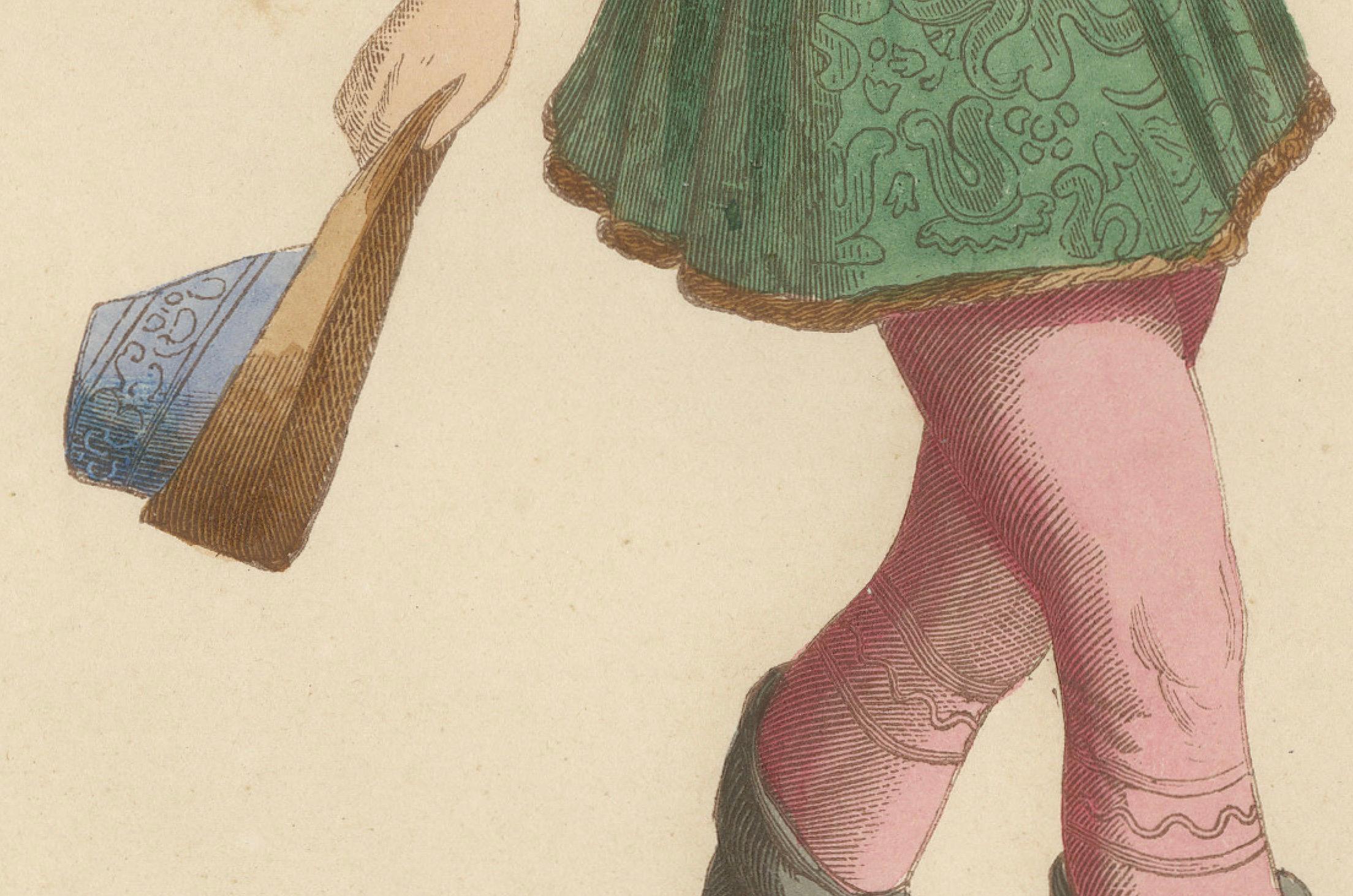
His sleeves are puffed at the shoulder, a style that was popular during the Renaissance, and they transition into a contrasting color that adds a striking visual element. Underneath the tunic, he wears tight-fitting hose in a bold pink hue, which was a common style for men during this period and showcased the wearer's legs, considered an attractive feature in male fashion at the time.
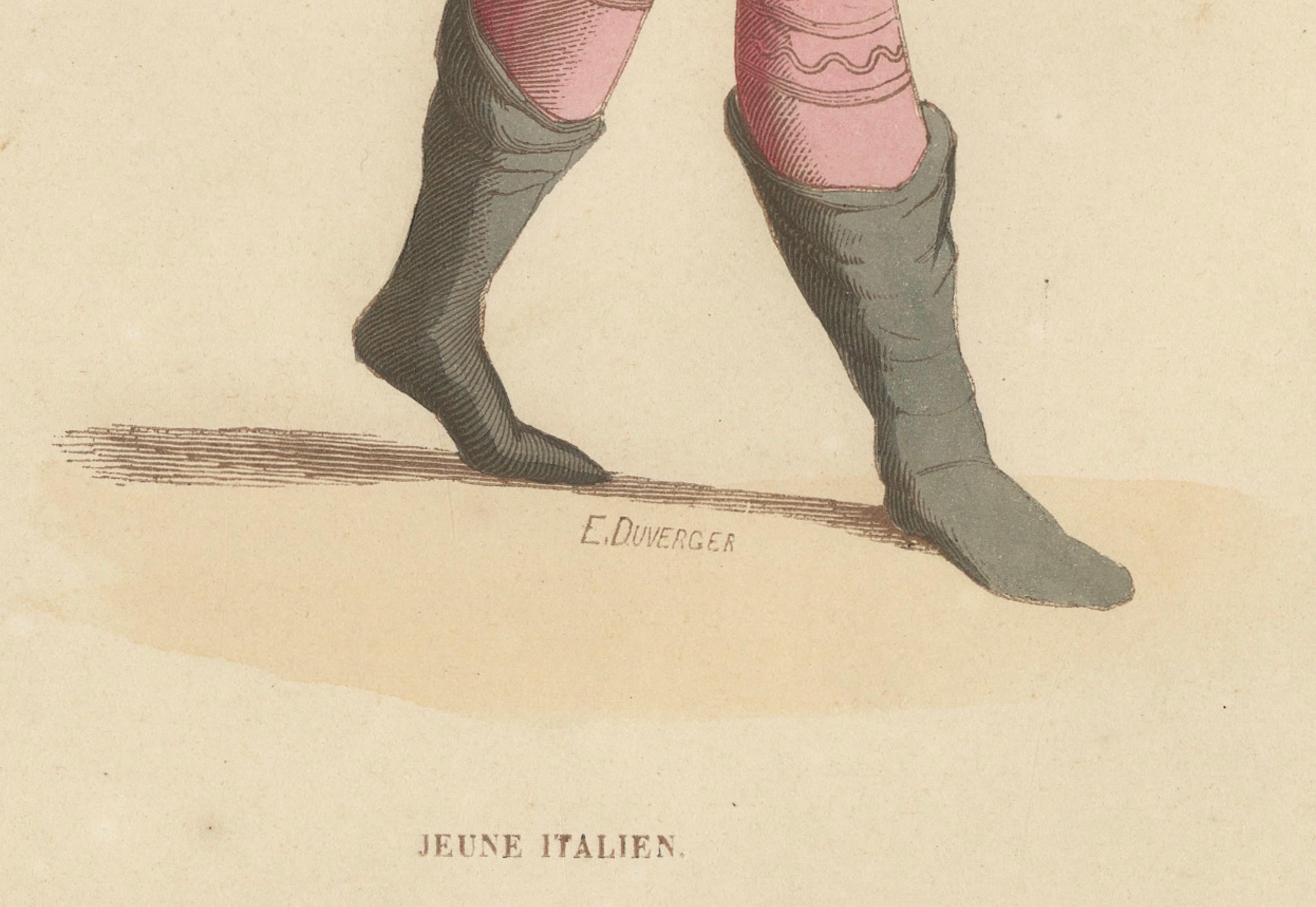
The page's footwear consists of grey boots, practical for his duties which likely involved a great deal of movement and errands. In his hand, he holds a brimmed hat, another fashion statement of the era, which also serves a practical purpose in the sunny climates of Italy.
His other hand carries a book or pouch, indicating his role in delivering messages or handling his master's affairs. His hairstyle and facial expression suggest a combination of youthful confidence and the eagerness to please that would have been expected of a servant in his position.
This image provides a glimpse into the life of a young servant in the Renaissance, showcasing the distinctive fashion and social roles of the time.
The colors have a nice glow over them. Historically, egg whites, known as glair, and sometimes egg yolk were indeed used in illumination and painting, particularly in manuscripts, to give colors a brighter appearance and to add a sheen or gloss to the work. This technique was quite common during the Middle Ages and into the Renaissance.
Egg whites can be applied as a varnish over pigments to enhance their brightness and to protect the colors. This application could make the colors appear more vivid and also add a slight glossy sheen to the surface of the image.
Egg yolk, on the other hand, was commonly used as a binding agent in paint. It forms the basis of tempera paint, a medium that was widely used before the advent of oil painting. Egg yolk helps to create a durable and long-lasting color that adheres well to various surfaces.
In the context of the print from 1847, it's less likely that egg whites or yolks were used directly on the print, as by that time, commercial printing processes would have been more advanced and less reliant on such manual methods. However, if this print is a representation of an earlier style or is meant to mimic the appearance of hand-painted manuscripts, the original artists might have employed techniques or materials that gave a similar effect to those achieved with egg-based binders and varnishes.