About this sheet
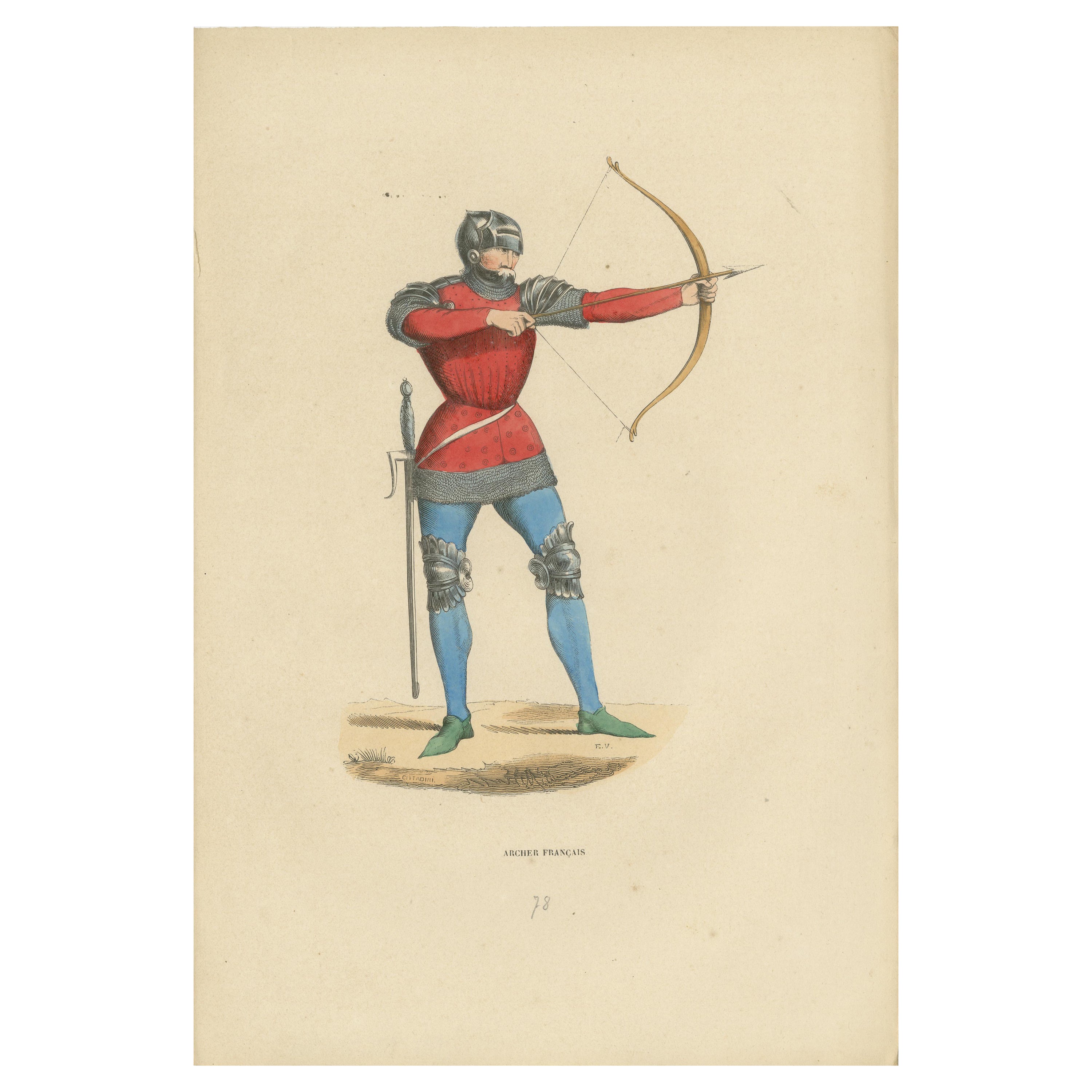
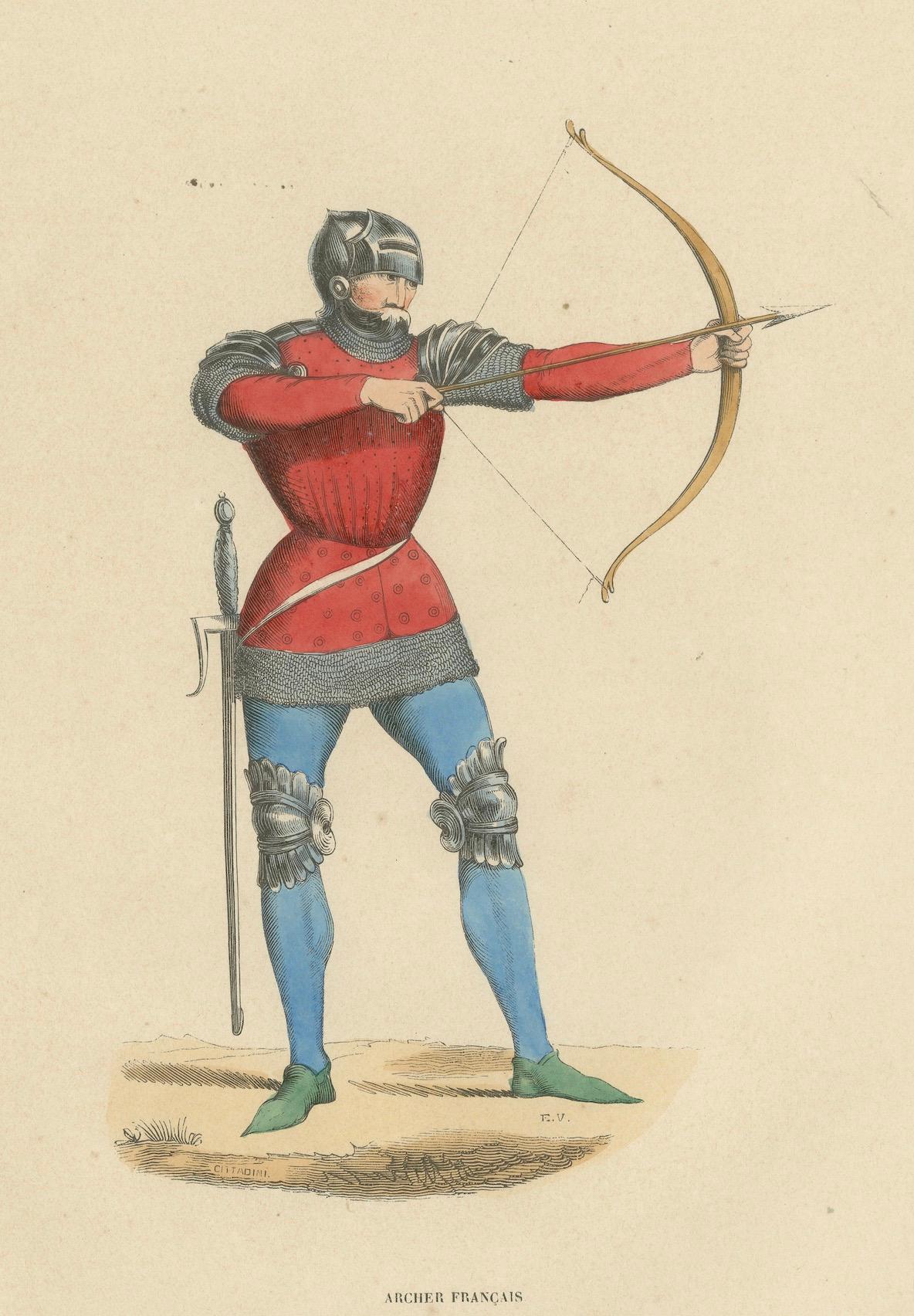
This print depicts a French archer, possibly from the late Middle Ages, demonstrating his skill and readiness for combat. The archer is in a dynamic stance, captured in the moment of drawing his bow, a testament to his expertise and role as a crucial member of the military during this era.
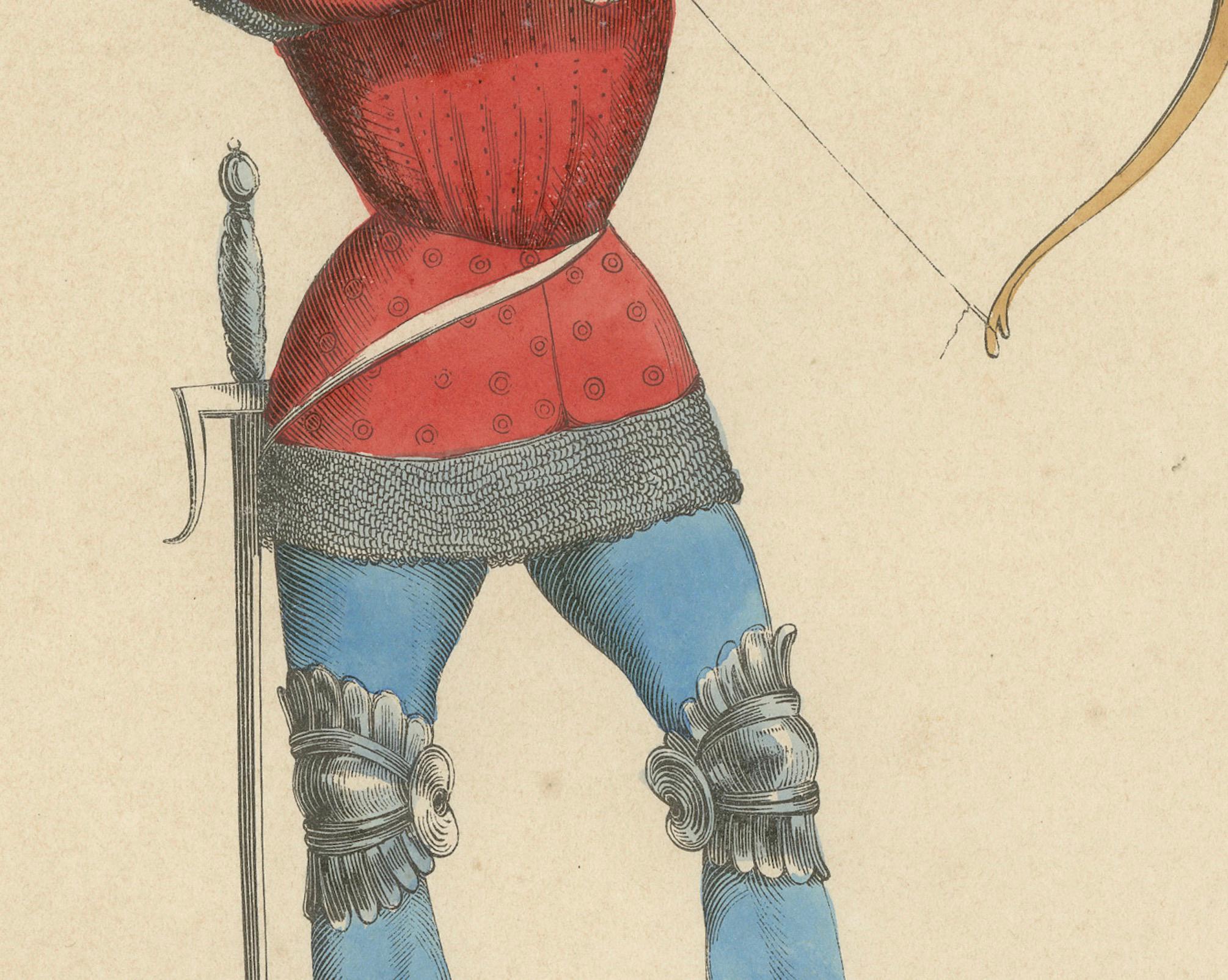
He is dressed in a red gambeson, a padded defensive jacket that was commonly worn under armor for protection and comfort. The garment is quilted, which would help to dissipate the force of blows. Over the gambeson, he wears pieces of plate armor on his arms and legs, providing a balance between mobility and defense.
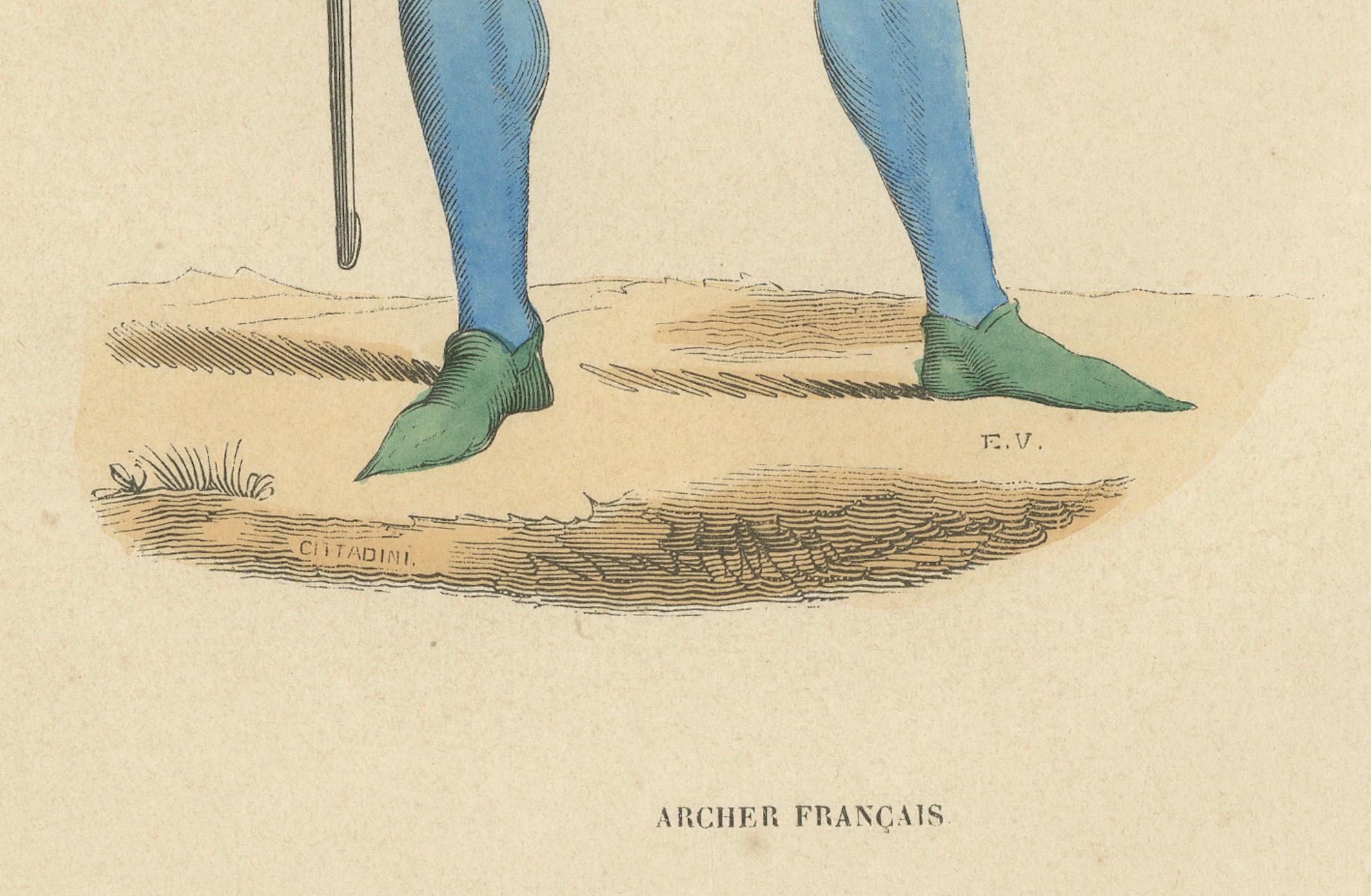
The blue hose he wears are tight-fitting, allowing for agility and freedom of movement, which were essential for an archer who needed to be able to move quickly and position himself on the battlefield. His green footwear is practical and sturdy, suitable for varied terrains.
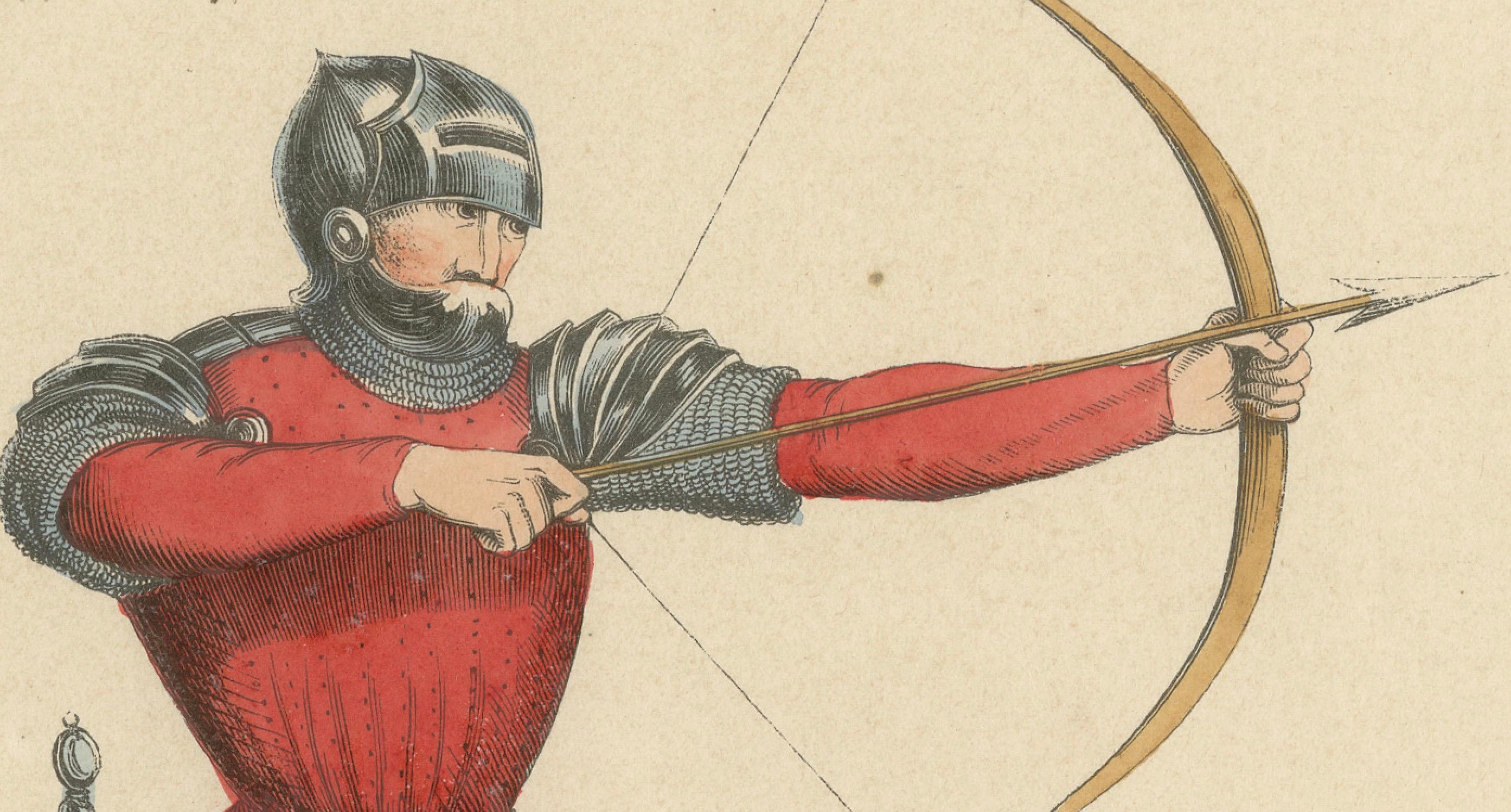
He carries a longsword at his side, indicating that he was prepared for close combat should the need arise. His helmet is simple yet functional, designed to provide protection while not obstructing his vision, crucial for an archer who must keep his eyes on the target.
The archer's expression is one of concentration and focus, underscoring the skill and precision required in archery. His gaze is fixed on an unseen target, illustrating the intense focus needed to aim and shoot effectively.
This image conveys the vital role of the archer in medieval warfare, equipped not only with the tools of his trade but also with the training and presence of mind to use them effectively in the heat of battle.
The colors have a nice glow over them. Historically, egg whites, known as glair, and sometimes egg yolk were indeed used in illumination and painting, particularly in manuscripts, to give colors a brighter appearance and to add a sheen or gloss to the work. This technique was quite common during the Middle Ages and into the Renaissance.
Egg whites can be applied as a varnish over pigments to enhance their brightness and to protect the colors. This application could make the colors appear more vivid and also add a slight glossy sheen to the surface of the image.
Egg yolk, on the other hand, was commonly used as a binding agent in paint. It forms the basis of tempera paint, a medium that was widely used before the advent of oil painting. Egg yolk helps to create a durable and long-lasting color that adheres well to various surfaces.
In the context of the print from 1847, it's less likely that egg whites or yolks were used directly on the print, as by that time, commercial printing processes would have been more advanced and less reliant on such manual methods. However, if this print is a representation of an earlier style or is meant to mimic the appearance of hand-painted manuscripts, the original artists might have employed techniques or materials that gave a similar effect to those achieved with egg-based binders and varnishes.