About this sheet
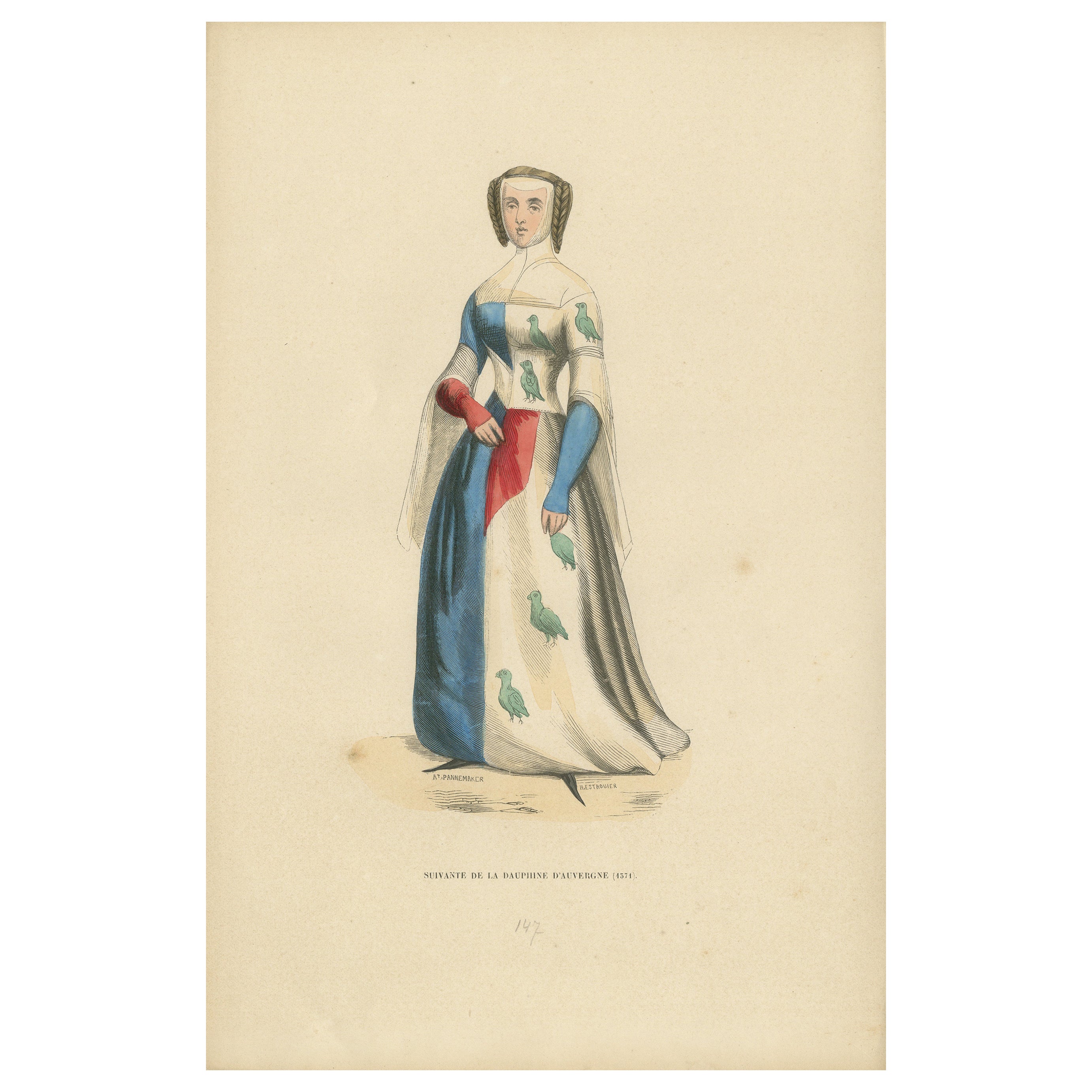
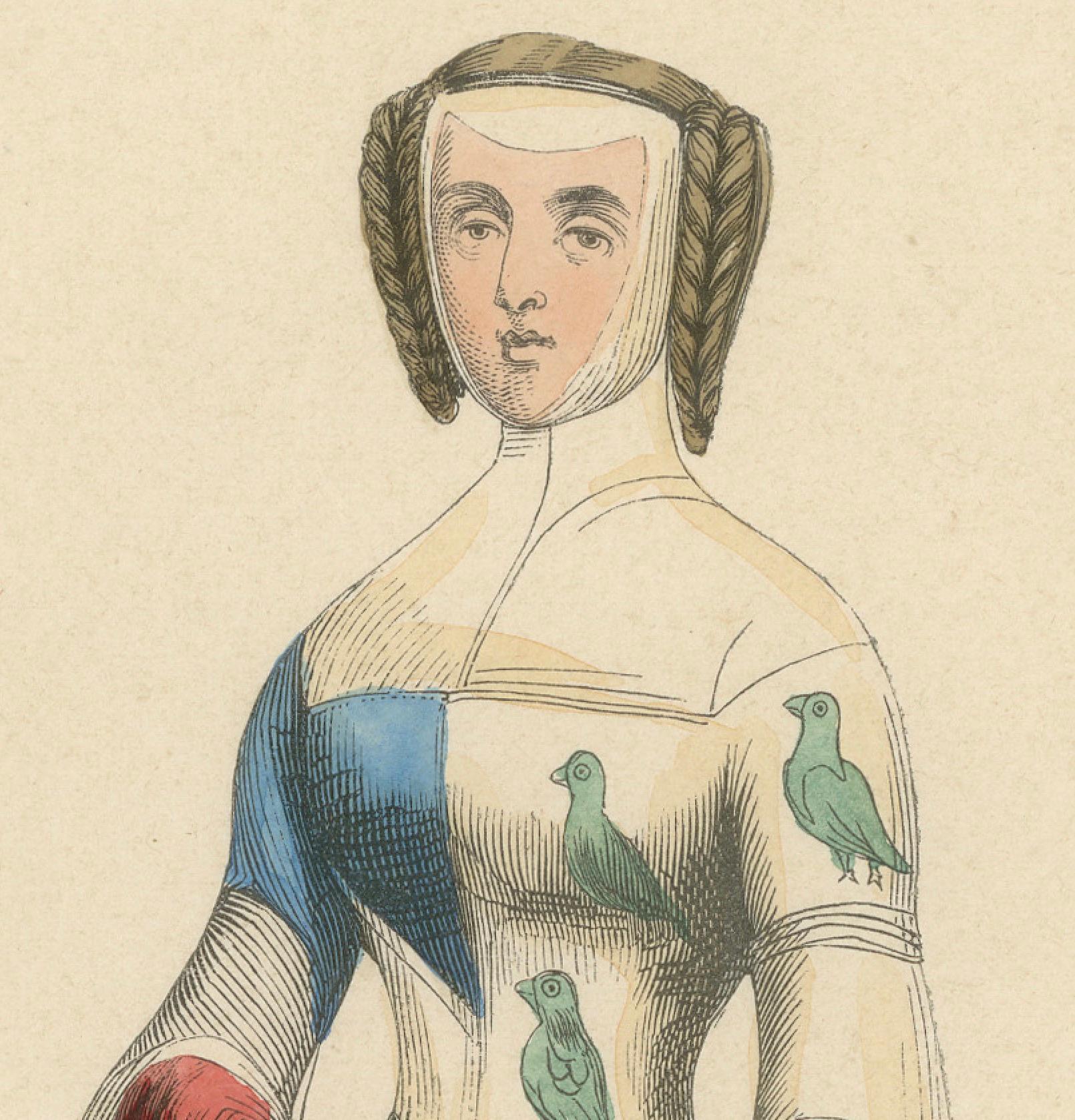
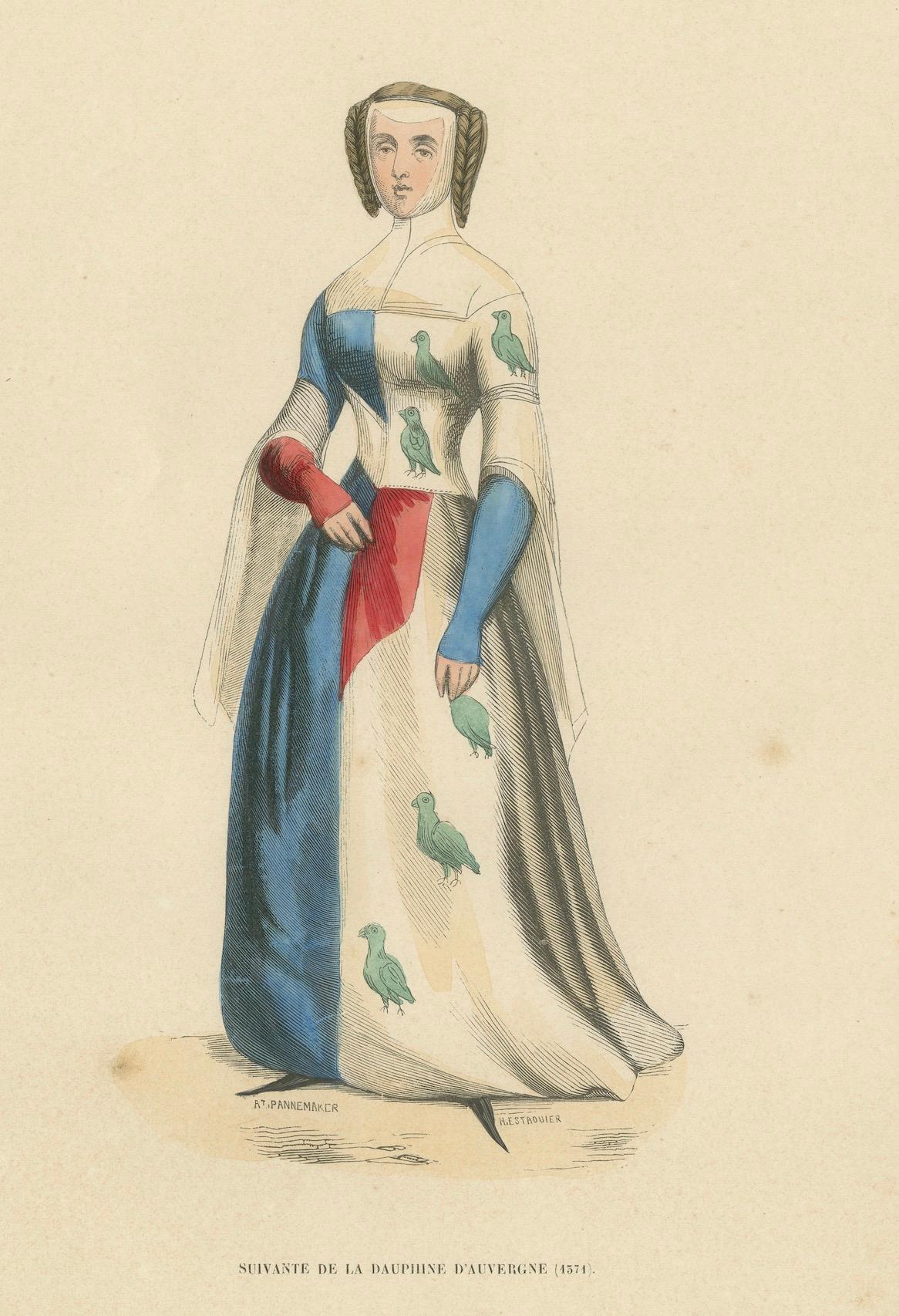
This delicate lithograph from the "Costume du Moyen Âge" series, published in 1847, presents a lady-in-waiting to the Dauphine of Auvergne, showcasing the elegance and sophistication of her courtly attire. The lady is portrayed in a side profile, her expression serene, embodying the grace and poise expected of someone in her esteemed position at court.
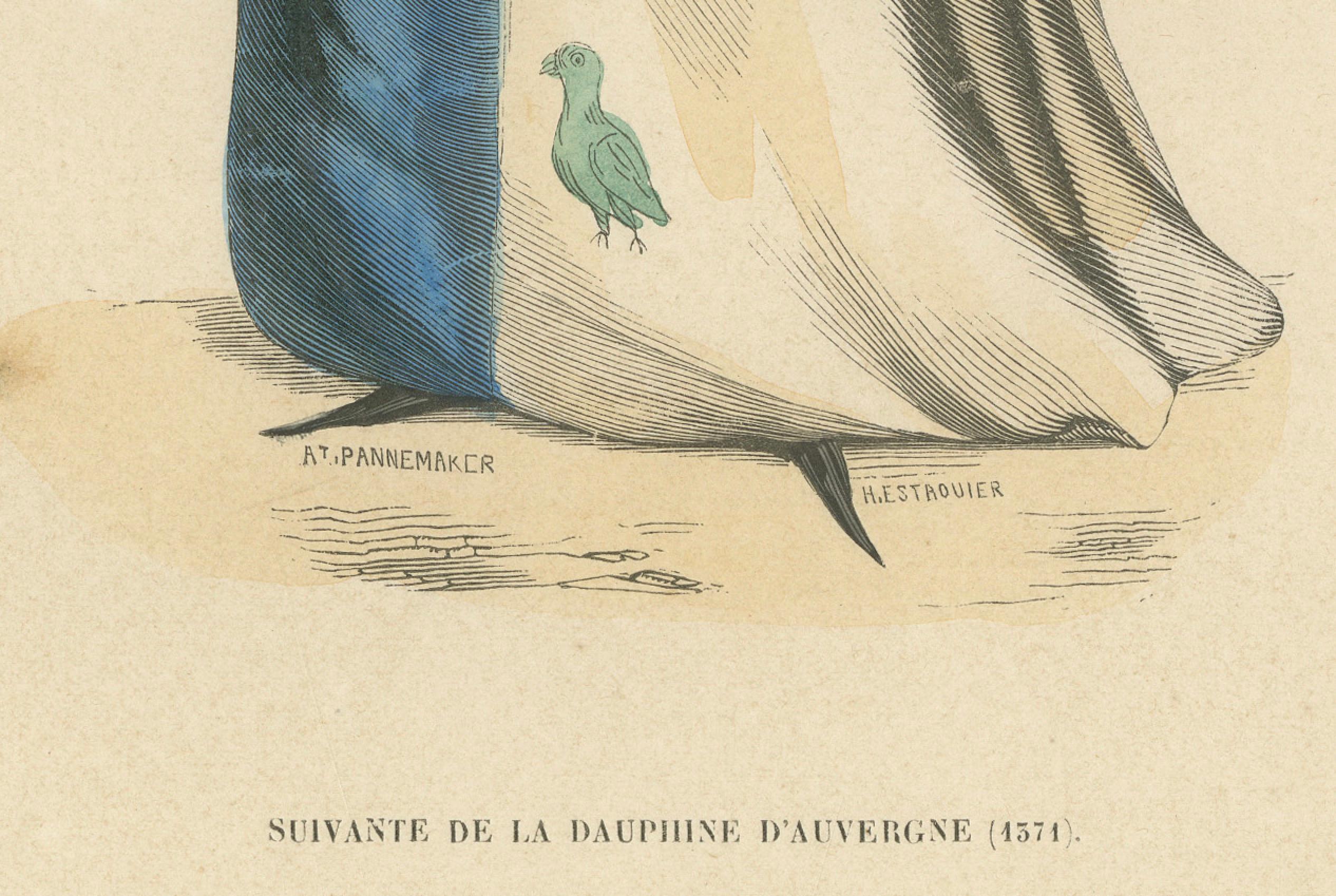
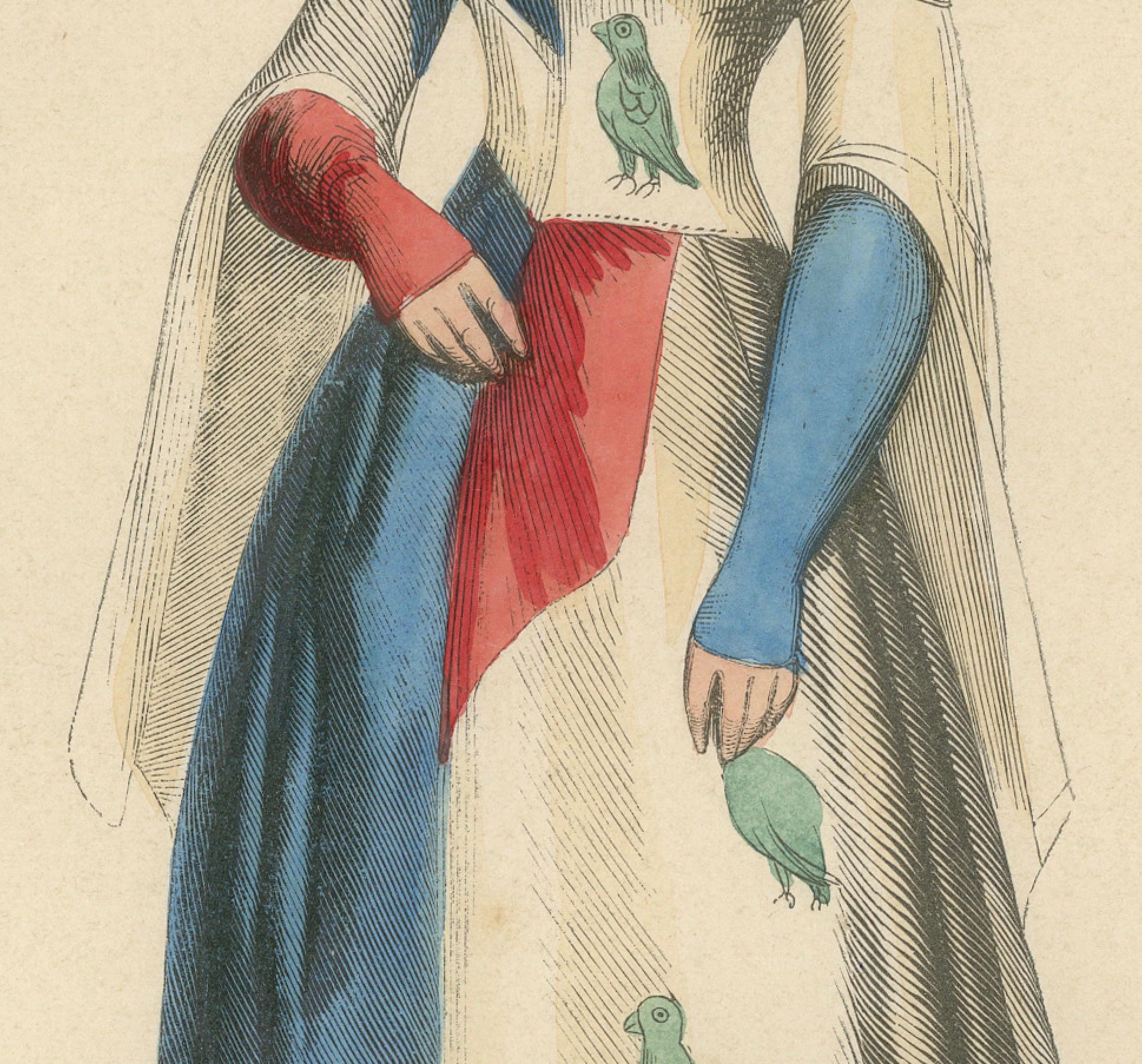
She is clothed in a dress that is a visual testament to her role within the noble hierarchy, with a fitted bodice and a flowing skirt. The dress features a striking color combination of blue and white, segmented in a manner that reflects the fashion of the era, with a red panel that provides a bold contrast. The bodice is adorned with green bird motifs, which may represent a specific heraldic symbol or perhaps a personal or regional affiliation.
Her sleeves are tight and red, a common style of the period, which contrasts with the more expansive white under-sleeves. The lady's attire is further accentuated by a flowing translucent veil that hangs from her headdress, a typical headwear style known as a hennin, which was popular among the noblewomen of the time.
The lady's posture, with one hand delicately adjusting the fabric of her skirt, suggests movement and a gentle demeanor. Her other hand is obscured in the folds of her gown, adding a demure and refined quality to her pose.
This lithograph not only captures the fashion of the time but also serves to illustrate the daily life and sartorial splendor of a lady-in-waiting to the Dauphine of Auvergne. It provides a window into the world of French nobility, highlighting the intricate details and patterns that were fashionable among the courtiers of the Middle Ages.
The colors have a nice glow over them. Historically, egg whites, known as glair, and sometimes egg yolk were indeed used in illumination and painting, particularly in manuscripts, to give colors a brighter appearance and to add a sheen or gloss to the work. This technique was quite common during the Middle Ages and into the Renaissance.
Egg whites can be applied as a varnish over pigments to enhance their brightness and to protect the colors. This application could make the colors appear more vivid and also add a slight glossy sheen to the surface of the image.
Egg yolk, on the other hand, was commonly used as a binding agent in paint. It forms the basis of tempera paint, a medium that was widely used before the advent of oil painting. Egg yolk helps to create a durable and long-lasting color that adheres well to various surfaces.
In the context of the print from 1847, it's less likely that egg whites or yolks were used directly on the print, as by that time, commercial printing processes would have been more advanced and less reliant on such manual methods. However, if this print is a representation of an earlier style or is meant to mimic the appearance of hand-painted manuscripts, the original artists might have employed techniques or materials that gave a similar effect to those achieved with egg-based binders and varnishes.