About this sheet
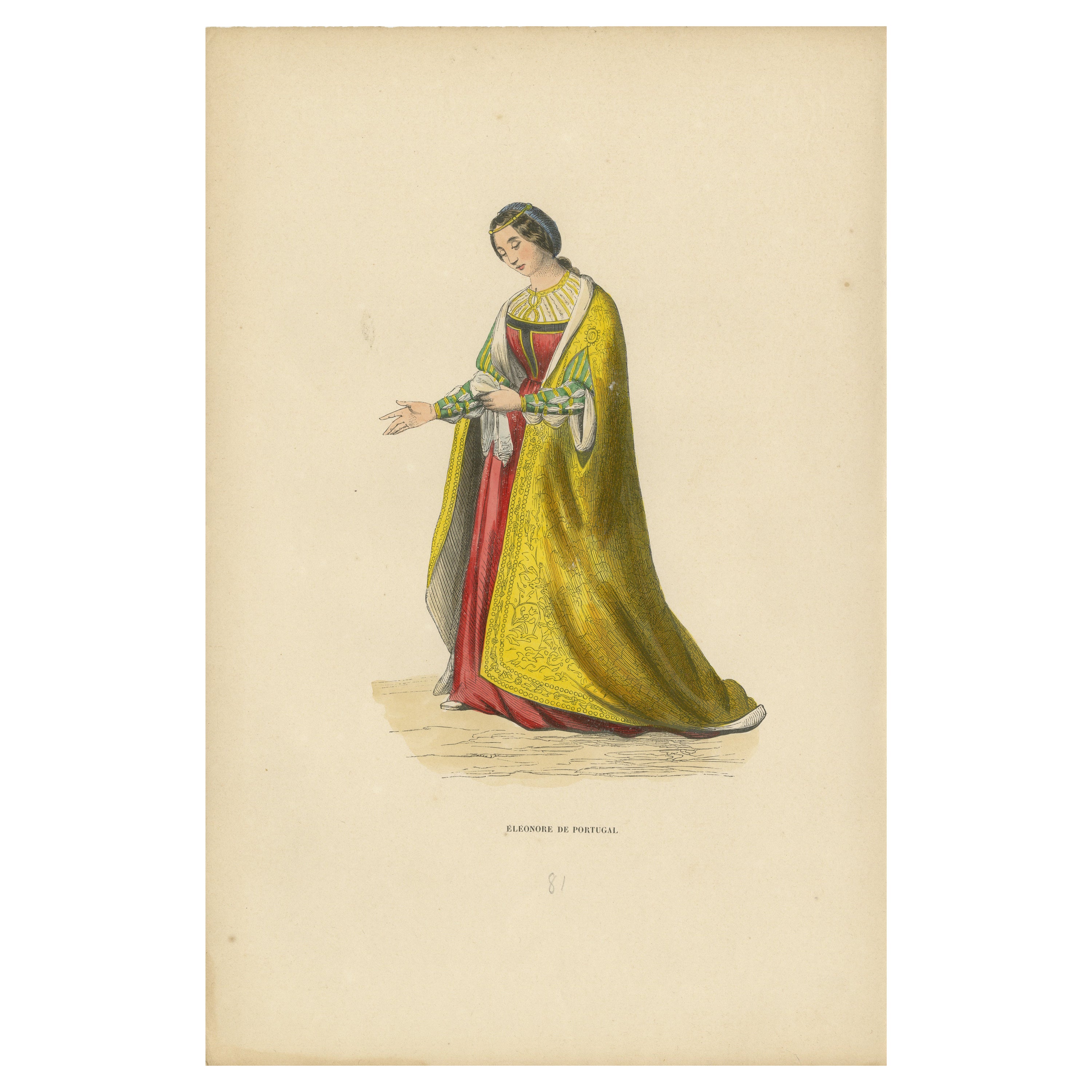
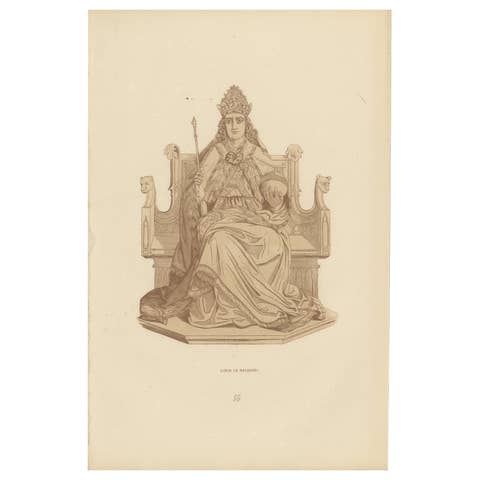
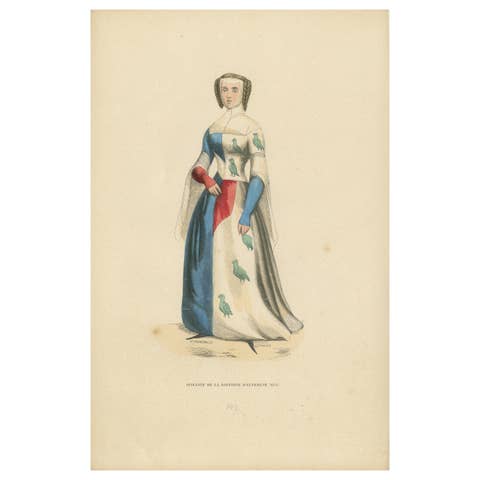
This print depicts Eleanor of Portugal, a figure of royalty and grace. Her attire is sumptuous and befitting her status as a member of the Portuguese nobility, richly adorned with the decorative patterns and vibrant colors that were popular among the European courts.
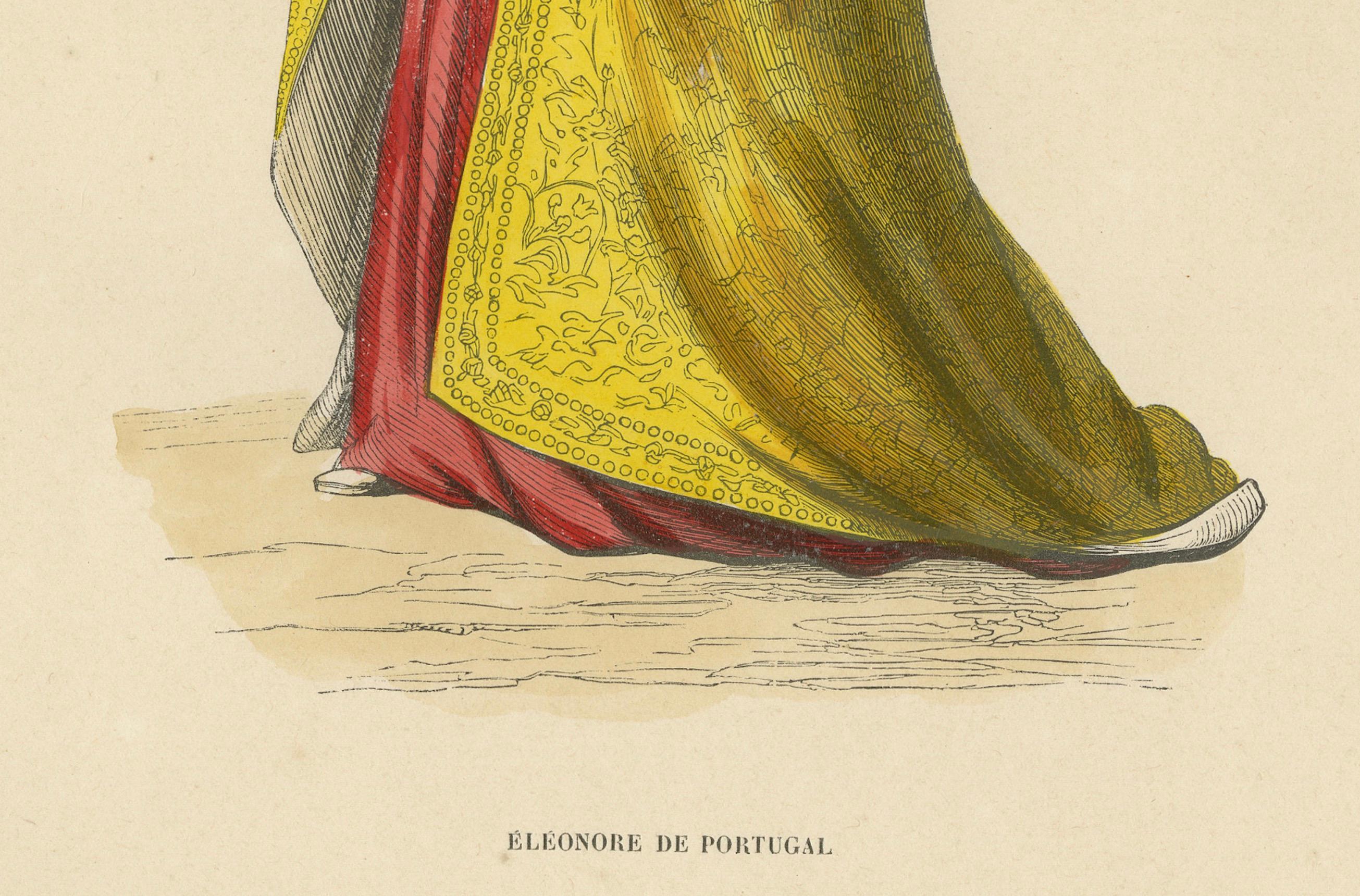
Eleanor is clothed in a gown of deep red, a color often associated with power and prestige in medieval Europe. The gown is elegantly tailored, with a fitted bodice and a full skirt that extends to the floor, signifying her royal status. Over her gown, she wears a majestic cloak in a golden yellow, featuring intricate designs that may indicate her royal house or personal emblems.
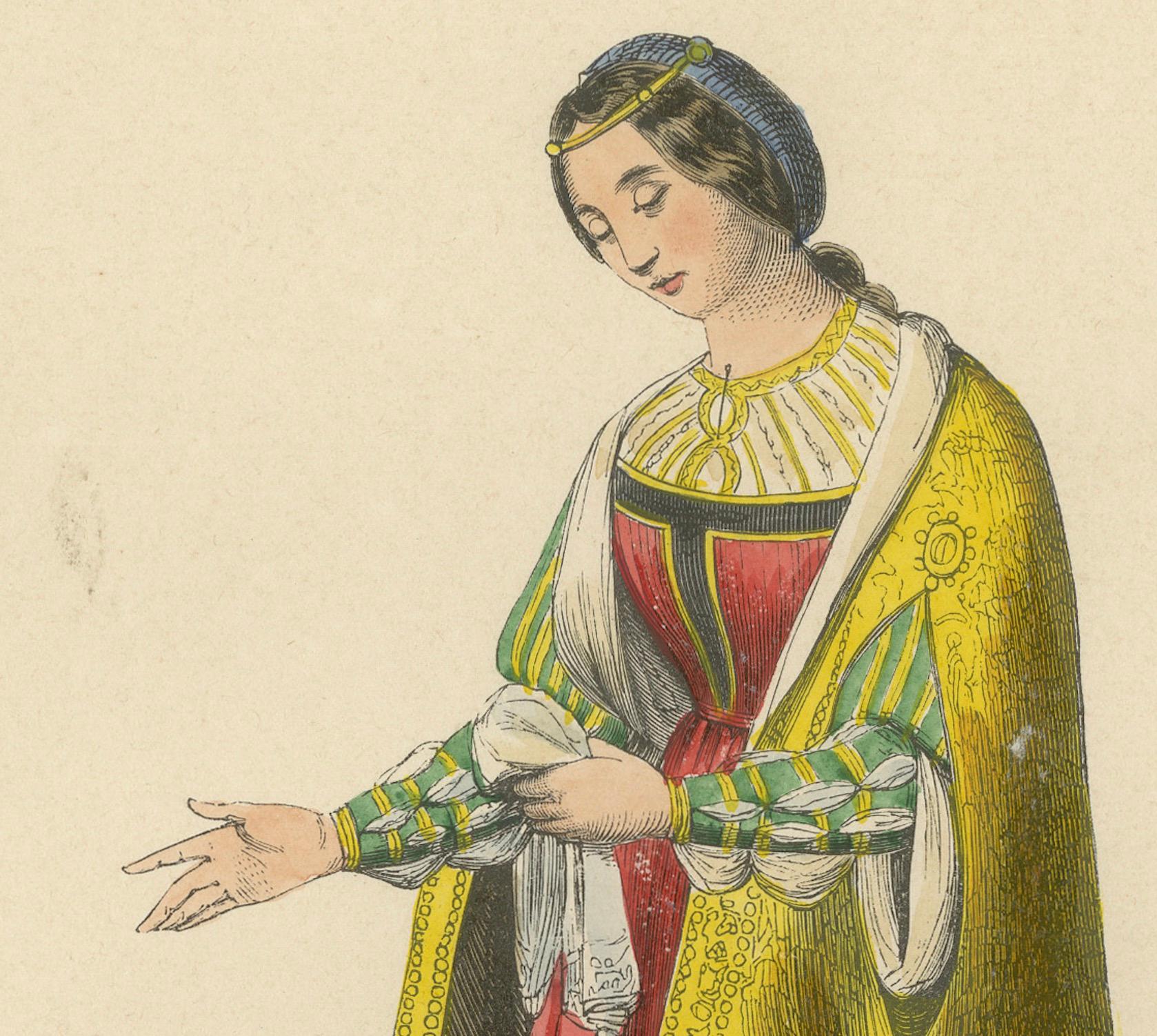
The cloak is fastened at her chest with a brooch or clasp, which is likely to be a jewel or ornament of significant value and symbolism. The sleeves of her gown are embellished with white fur trim and slashed to reveal fabric of a contrasting color, a fashion which allowed nobility to display their wealth through the layering of expensive fabrics.
Her headdress is simple yet stately, with her hair neatly tucked away, which was typical for a woman of her rank during this time. Eleanor's posture is poised and her hand is gently extended, perhaps in a gesture of benevolence or in the midst of a courtly dance.
Her expression exudes a sense of calm confidence and dignity, with a soft gaze that reflects her noble bearing. This image encapsulates the sophistication and ceremonial elegance of a Portuguese noblewoman, highlighting the cultural and aesthetic ideals of her time.
The colors have a nice glow over them. Historically, egg whites, known as glair, and sometimes egg yolk were indeed used in illumination and painting, particularly in manuscripts, to give colors a brighter appearance and to add a sheen or gloss to the work. This technique was quite common during the Middle Ages and into the Renaissance.
Egg whites can be applied as a varnish over pigments to enhance their brightness and to protect the colors. This application could make the colors appear more vivid and also add a slight glossy sheen to the surface of the image.
Egg yolk, on the other hand, was commonly used as a binding agent in paint. It forms the basis of tempera paint, a medium that was widely used before the advent of oil painting. Egg yolk helps to create a durable and long-lasting color that adheres well to various surfaces.
In the context of the print from 1847, it's less likely that egg whites or yolks were used directly on the print, as by that time, commercial printing processes would have been more advanced and less reliant on such manual methods. However, if this print is a representation of an earlier style or is meant to mimic the appearance of hand-painted manuscripts, the original artists might have employed techniques or materials that gave a similar effect to those achieved with egg-based binders and varnishes.