Louis the Bavarian in Sepia Tones: Sovereignty Enthroned, 1847
€ 130
Original antique · The actual sheet photographed · Certificate of authenticity on request · Sold unframed · Worldwide shipping from € 15 (rates)
Date
1847
Sheet size
27 × 18 cm (10.6 × 7.1 in)
Condition
Good
Reference
BG-13635-42
What the condition grades mean
Excellent
Bright and clean, with no faults worth mentioning.
Very good
Only light signs of age, such as faint toning.
Good
Normal signs of age for a sheet of this period: toning, some foxing, small marks or neat old repairs.
Fair
Clear faults such as staining, tears or repairs, priced to match.
Every fault we see is written in the condition note, and the whole sheet is shown uncropped in the photos.
Condition
Good. Overal very light toning and light soiling but the image itself clean. Aged paper with typically warm, yellowish-brown hue, mostly around the edges. Study the image carefully.
About this sheet
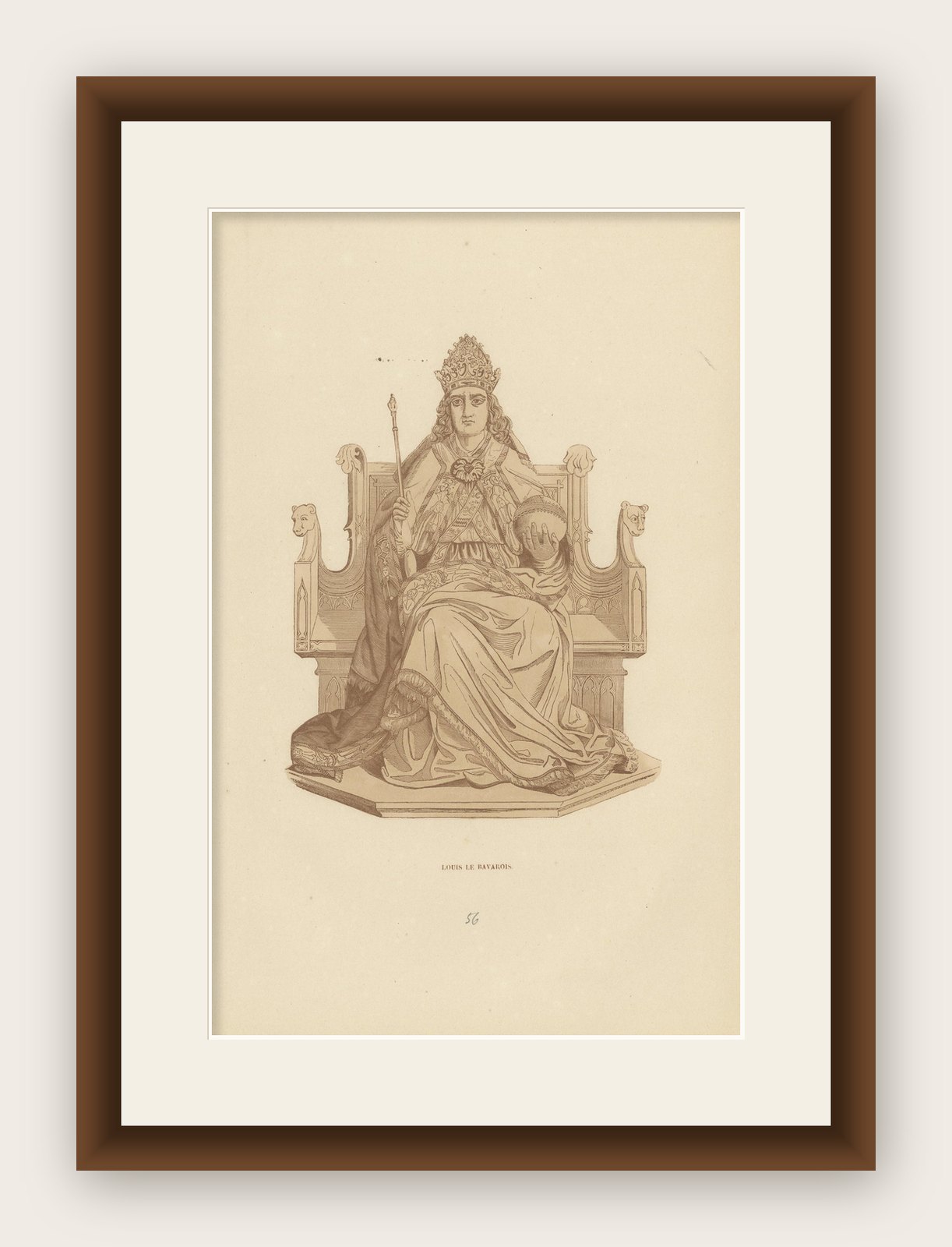
This sepia-toned print from the "Costume du Moyen Age" series likely dating from 1847, features a figure known as Louis the Bavarian, presumably Louis IV, Holy Roman Emperor, seated in a majestic posture on an ornate throne. The throne itself is adorned with carved figures, possibly lions, symbolizing the power and courage associated with sovereignty.
Louis is depicted in full royal regalia, wearing an elaborate crown that signifies his imperial status. He holds the scepter in his left hand, a traditional symbol of monarchical authority, and in his right, he grasps an orb, another emblem of dominion and his global reach as a ruler. The Emperor's robes are richly detailed with patterns and textures, suggesting opulence and the wealth of his position.
The attire includes a long, flowing cloak and intricately decorated garments underneath, each fold and crease of the fabric rendered with care to emphasize the grandeur of his station. His facial expression is one of stoic command, and his gaze appears fixed on a distant point, possibly reflecting the far-reaching nature of his reign.
The attention to detail in the print, from the embroidery on the robes to the solemnity of the Emperor's demeanor, speaks to the grandiosity and ceremonial importance of such a figure in the medieval hierarchy. This image encapsulates the idea of a monarch as both a political leader and a near-divine figure, central to the era's concepts of governance and law.